First Use of Atomic Weapons (HSC SSCE Modern History): Revision Notes
📚Revision Notes
First Use of Atomic Weapons
Context: the Potsdam Conference and the atomic bomb
In July 1945, the Allied leaders met at the Potsdam Conference to discuss post-war arrangements and the ongoing war with Japan. During this conference, President Truman received news that the first atomic bomb test had been successful. On 24 July, Truman approached Soviet leader Joseph Stalin privately and informed him about this new weapon of immense destructive power. Stalin showed little outward reaction, simply expressing hope that the Americans would use it effectively against Japan.
Important
What Truman did not know at the time was that Stalin had already learned about the American atomic programme through Soviet intelligence networks.
Three days later, on 27 July 1945, the Allied leaders issued the Potsdam Declaration to Japan via radio broadcast. This declaration demanded that Tokyo immediately proclaim the unconditional surrender of all Japanese armed forces. The statement warned that the alternative for Japan would be "utter destruction." However, the declaration made no mention of the specific means by which this destruction would be delivered. At the same time, US military commanders had already ordered that atomic bombs be prepared for deployment.
The bombing of Hiroshima: 6 August 1945
Background and preparation
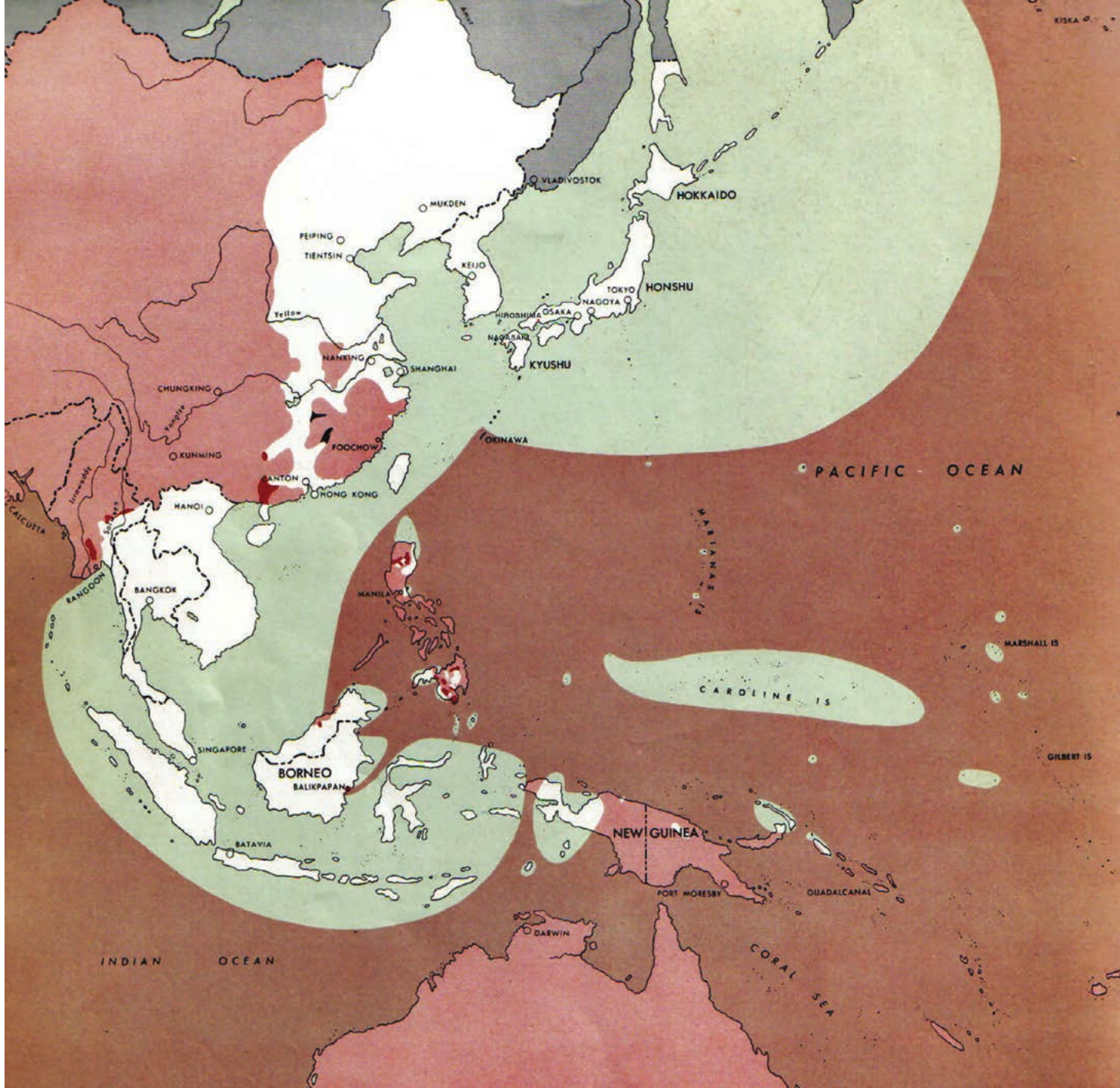
In August 1945, Hiroshima was home to approximately 290,000 civilians, with an additional 43,000 soldiers stationed in the city. For months, residents had watched formations of B-29 bombers flying overhead toward major cities like Tokyo further north. The bomber pilots used a dam west of Hiroshima as a navigation reference point before turning northward. While people had grown accustomed to seeing American aircraft, they expected their city's turn would eventually come.
The US Air Force had been conducting devastating firebombing campaigns against Japanese cities. In one raid on Tokyo alone, 300 B-29 bombers dropped 2,000 tonnes of napalm, creating a massive firestorm. This single attack obliterated 16 square miles of the city, killed 100,000 people, and left 1 million homeless.
Note
Anticipating similar attacks, Hiroshima's authorities had mobilised tens of thousands of people, including many schoolchildren, to demolish buildings throughout the city. These demolitions were meant to create firebreaks that could contain any firestorm within specific city blocks. On the morning of 6 August, thousands of children were working in the centre of Hiroshima on these preparations.
The atomic attack
On the morning of 6 August 1945, most people in Hiroshima took little notice when only a single American bomber appeared in the sky. This lone aircraft, a B-29 named the Enola Gay, was commanded by Captain Paul Tibbets. The crew had flown from the tiny western Pacific island of Tinian. At 8:16 am, they released a single bomb over Hiroshima.
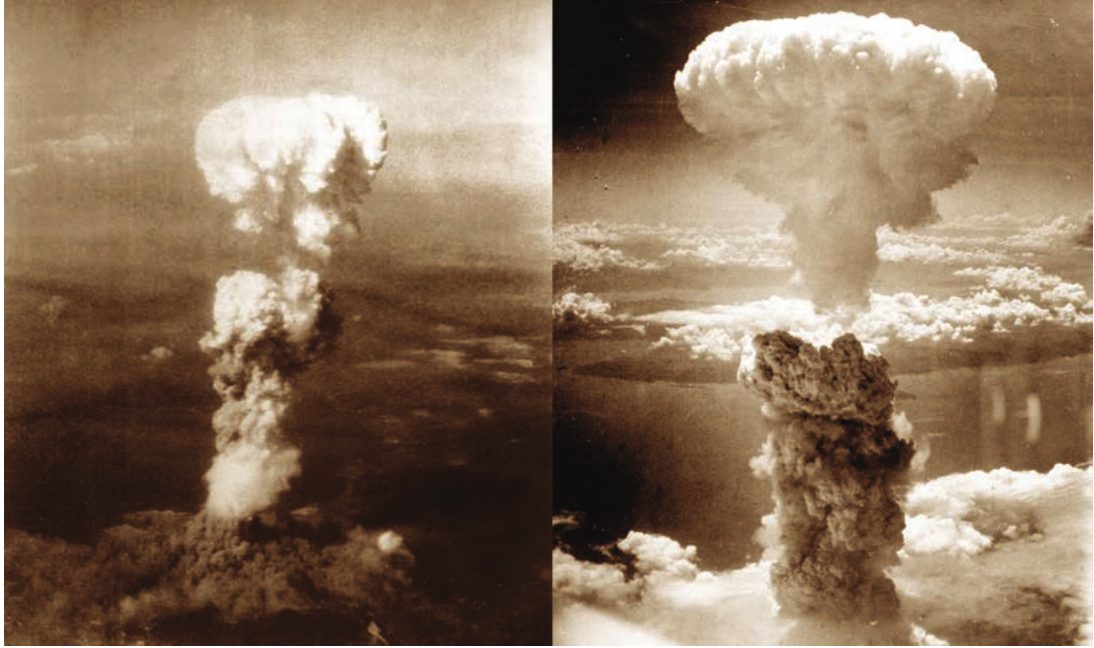
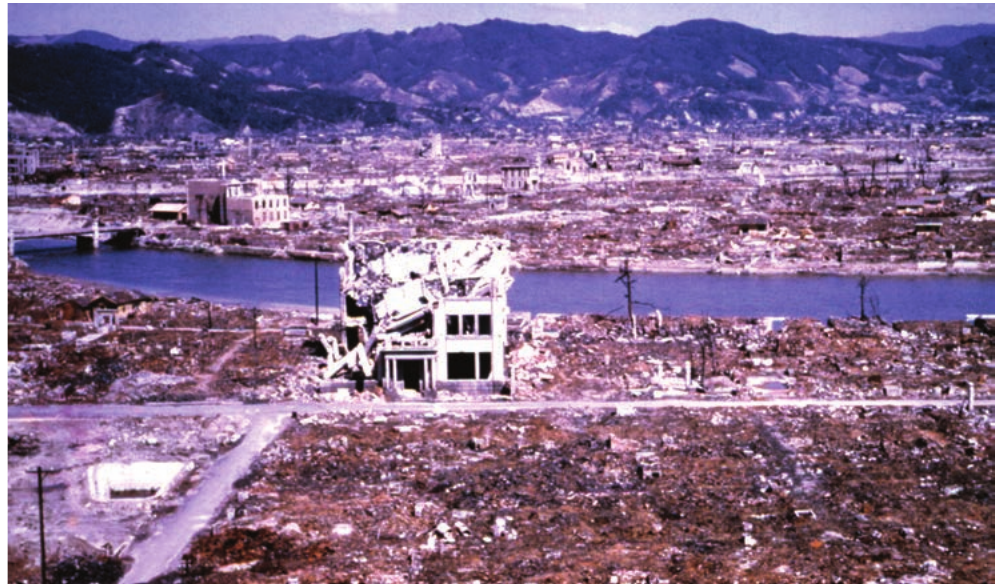
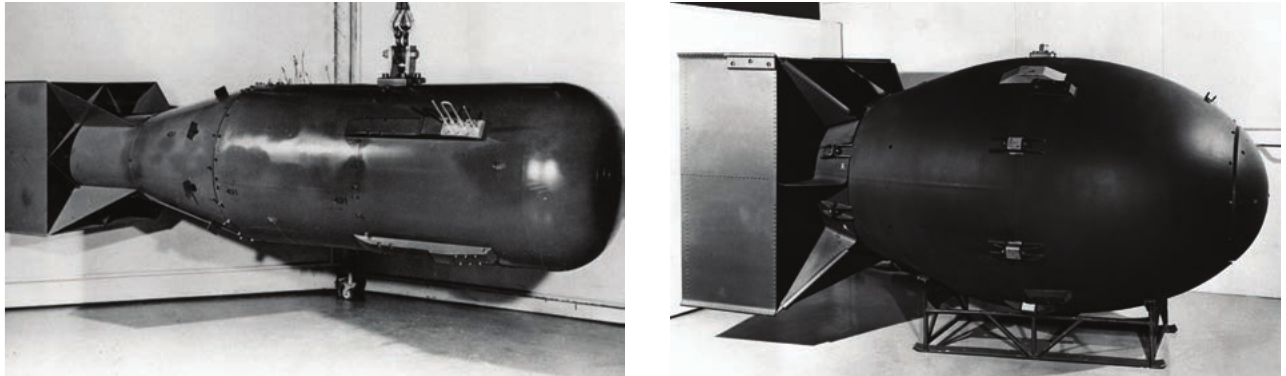
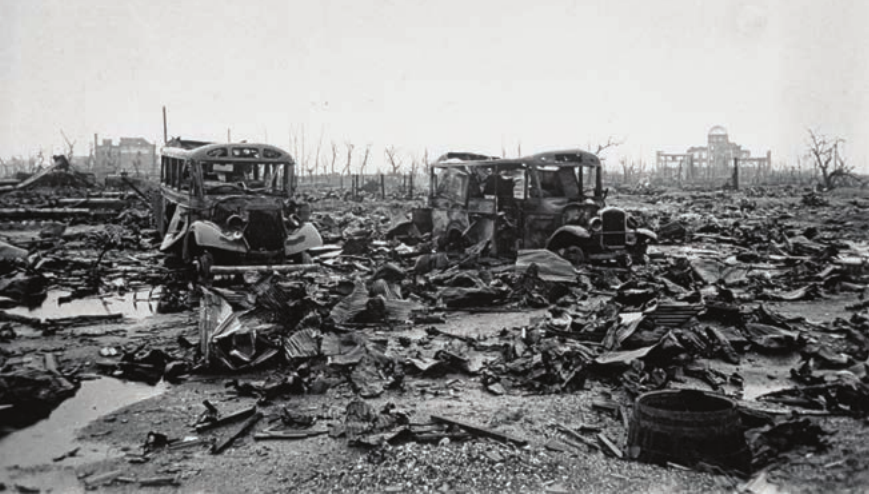
The bomb, nicknamed "Little Boy," was a uranium gun-type weapon. Its effects were catastrophic. Over 80,000 people were killed instantly by the blast, with another 35,000 injured. Four months after the bombing, the death toll had risen to approximately 166,000. Five years later, the total number of deaths directly or indirectly caused by the attack was estimated at about 237,000.
Impact statistics
The following table shows the devastating effects of the Hiroshima bombing:
| Impact category | Measurement |
|---|---|
| Ground temperatures | 3,871° Celsius |
| Hurricane force winds | 1,577 kilometres per hour |
| Energy released | 20,000 tons of TNT equivalent |
| Buildings destroyed | 62,000 |
| Immediate deaths | 70,000 |
| Deaths by end of 1945 | 140,000 |
| Total A-bomb related deaths | 237,000 |
Note
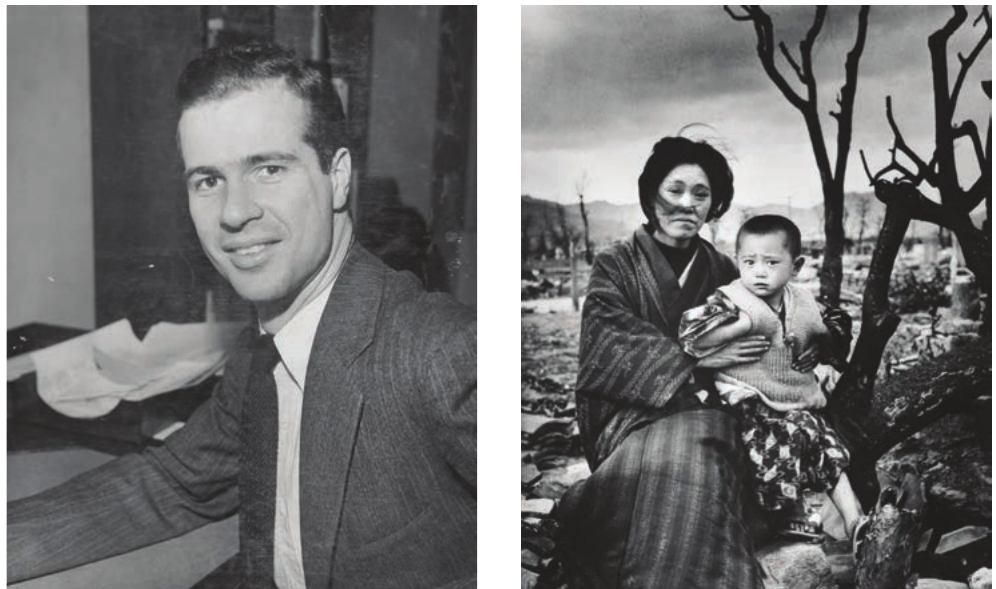
The human cost of the bombing was documented by journalist John Hersey, who wrote the book Hiroshima in 1946. His detailed description of the horrors experienced by survivors played a significant role in generating worldwide revulsion toward atomic weapons.
The bombing of Nagasaki: 9 August 1945
Different bomb technologies
Two types of atomic bombs were developed by 1945. The Hiroshima bomb was a relatively simple uranium gun-type assembly. In contrast, the bomb dropped on Nagasaki was an implosion-type weapon designated as the Mark III. Nicknamed "Fat Man" due to its wide, rounded shape, this bomb used plutonium, which was far more efficient as it required only a tiny amount of material to achieve a nuclear explosion. This design was the same type as the "Gadget" that had been successfully tested at Alamogordo in New Mexico in July 1945.
President Truman and the decision to use atomic bombs
Truman's account of the decision
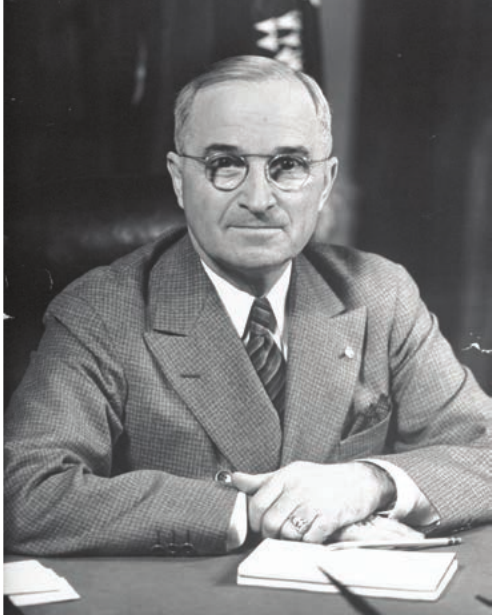
In his memoirs, President Truman claimed there was "unanimous, automatic, unquestioned agreement" among his advisors about using the atomic bomb. He wrote that he never heard "the slightest suggestion" to do otherwise. Similarly, in Britain, Prime Minister Churchill casually approved going along with whatever the Americans decided.
After the Hiroshima attack on 6 August, Truman issued a public statement declaring: "We are now prepared to obliterate more rapidly and completely every productive enterprise the Japanese have above ground in any city. We shall destroy their docks, their factories, and their communications. Let there be no mistake; we shall completely destroy Japan's power to make war."
Important
What Truman did not acknowledge was that the overwhelming majority of victims from both atomic bombings, as well as the earlier 61 firebombing raids on Japanese cities, were civilians. In his 9 August radio speech, Truman misleadingly claimed that Hiroshima was a military base. This assertion was repeated in subsequent US propaganda.
Truman also stated that America had "won the race of discovery against the Germans" and that "having found the bomb, we have used it." He described it as "an awful responsibility which has come to us. We thank God that it has come to us instead of to our enemies."
The absence of a formal decision
The historical record reveals something significant: there is no documented order for the use of atomic bombs signed by President Truman. His 6 August statement suggests that using the bomb was simply part of an existing process of attacking Japanese cities. The timing would depend on production speed rather than any specific presidential decision. In his 9 August statement, Truman's phrase "having found the bomb, we have used it" implies inevitability rather than deliberation.
Note
General Leslie Groves, who directed the Manhattan Project (the programme that developed the atomic bomb), stated that he did not need to consult with the President about "pressing the button." This suggests the decision to use the bomb had essentially been made by default rather than through a deliberate weighing of alternatives.
Alternatives to using atomic bombs
Several alternatives to dropping atomic bombs on Japan existed, including:
- Allowing the Emperor to remain: Japan's main sticking point in surrender negotiations was the fate of their Emperor. The US demand for "unconditional surrender" threatened the imperial institution, which was deeply important to Japanese culture and identity.
- Continuing the naval blockade and conventional bombing: Any planned land invasion would not occur until early 1946, giving time for these strategies to work without the massive Allied casualties an invasion would cause.
- Waiting for Soviet entry into the war: Japan's last hope was that the Soviet Union would remain neutral and help negotiate more favourable peace terms with the Americans. Once the Soviets declared war on Japan, this hope would vanish. Some historians argue that Soviet entry into the war was actually more influential in forcing Japanese surrender than the atomic bombs.
Important
Scholar Jonathan Schell suggested that President Truman deliberately avoided considering these alternatives. Rather than waiting to see the consequences of the Soviet invasion, Truman authorised the use of atomic bombs as quickly as possible.
The historical debate about atomic bomb use
Did the bombs cause Japan's surrender?
Historian Ward Wilson argued in his 2013 book Five Myths about Nuclear Weapons that the common belief that Japan surrendered because of the atomic bombs is actually a myth. He contended that the Soviet declaration of war on 8 August 1945 was the decisive factor that finally convinced the Japanese Imperial War Cabinet to surrender.
In his 2015 Foreign Policy article "The Bomb didn't beat Japan ... Stalin did," Wilson concluded that the traditional story about the atomic bombs forcing surrender is "pretty far removed from the facts." He raised a challenging question: what does it mean for our understanding of nuclear weapons if their first supposed accomplishment—forcing Japan's surrender—turns out to be a myth?
Ongoing historical controversies
There has been extensive historical debate about several aspects of the atomic bombings:
- The morality of using atomic weapons: Were the bombings justified given the civilian casualties?
- Whether the bombings caused surrender: Did the bombs force Japan to surrender, or were other factors more important?
- The historical significance: How have these events shaped subsequent history and nuclear weapons policy?
Note
These questions continue to generate divided opinions among historians, with no clear consensus on many aspects.
The historical significance of Hiroshima and Nagasaki
The nuclear taboo
One aspect of the atomic bombings generates little debate among historians: these attacks have fundamentally shaped how the world thinks about nuclear weapons. In a 2015 article, journalist Zak Beauchamp wrote that the atomic attacks on Hiroshima and Nagasaki have defined nuclear weapons in our collective imagination ever since. Without these devastating demonstrations, the concept of a nuclear taboo might never have developed.
Nuclear taboo refers to the powerful psychological and moral barrier against using nuclear weapons that has emerged since 1945. Scholar Nina Tannenwald, in her 2007 book The Nuclear Taboo, argued that nuclear weapons have not been used in warfare since Nagasaki because the "demonstration effect" of their use in 1945 created shock, horror and lasting revulsion.
The tradition of non-use
President Truman never expressed regret about the decision to bomb Japan. However, he refused to use nuclear weapons during the Korean War (1950-1953). President Eisenhower also considered using nuclear weapons in Korea but ultimately decided against it, believing that global public opinion was too hostile to the idea.
By the time of the Vietnam War, the nuclear taboo had become firmly established. President Johnson rejected using nuclear weapons in Vietnam primarily because of concerns about global public opinion, rather than fear of Soviet retaliation. President Nixon used his "madman theory" strategy—attempting to convince adversaries that he was unpredictable and might do anything—and threatened nuclear use several times, but ultimately never followed through, again largely due to public opinion concerns.
Note
Exam tip: When discussing the nuclear taboo, consider both its strength (no nuclear weapons have been used in war since 1945) and its fragility (several presidents have considered using them, and the taboo relies on continued public pressure).
Scholar Zak Beauchamp speculated that without the horrific demonstrations at Hiroshima and Nagasaki, the United States would likely have used nuclear weapons in the Korean War and possibly in Vietnam. He concluded that perhaps the only definitively positive thing that can be said about Hiroshima and Nagasaki is that without these terrible events, the stigma against nuclear weapons might never have developed. The fact that such attacks have never been repeated may be the one good outcome of those tragedies.
The false sense of security
Every US president since Truman has possessed the power to use nuclear weapons, but none has exercised that power in warfare. However, the taboo remains fragile. Many people were shocked in 2017 when President Trump threatened to "totally destroy North Korea," raising the possibility of becoming the first president to break the nuclear taboo since 1945.
Important
Historian Jonathan Schell warned in his book The Seventh Decade that the tradition of non-use since 1945 has created a false sense of security. Throughout the Nuclear Age, people have learned about the nuclear threat, only to gradually forget and become complacent again. The nuclear danger, though less visible than in the early Cold War, has never truly disappeared.
Summary
Key Points to Remember:
-
On 6 August 1945, the atomic bomb "Little Boy" was dropped on Hiroshima, causing over 80,000 immediate deaths and eventually killing approximately 237,000 people.
-
Three days later, on 9 August 1945, the plutonium bomb "Fat Man" was dropped on Nagasaki, using different technology from the Hiroshima bomb.
-
There is no documented formal order from President Truman to use the atomic bombs—the decision appears to have been made by default rather than through deliberate consideration of alternatives.
-
Historians debate whether the atomic bombs or Soviet entry into the war was the decisive factor in Japan's surrender, with some arguing the Soviet declaration of war was more significant.
-
The atomic bombings created a lasting "nuclear taboo"—a powerful psychological and moral barrier against using nuclear weapons that has prevented their use in warfare since 1945, though this taboo remains fragile and depends on continued public pressure.