The Choice: International Control or an Arms Race? (HSC SSCE Modern History): Revision Notes
📚Revision Notes
The Choice: International Control or an Arms Race?
Introduction
After the atomic bombs were dropped on Hiroshima and Nagasaki in August 1945, many people around the world realised that nuclear weapons posed an unprecedented threat to humanity. It was clear that without international supervision and control, these weapons could lead to a catastrophic arms race. In the years immediately following World War II, there were serious efforts to establish international control over nuclear technology and prevent such a race from developing.
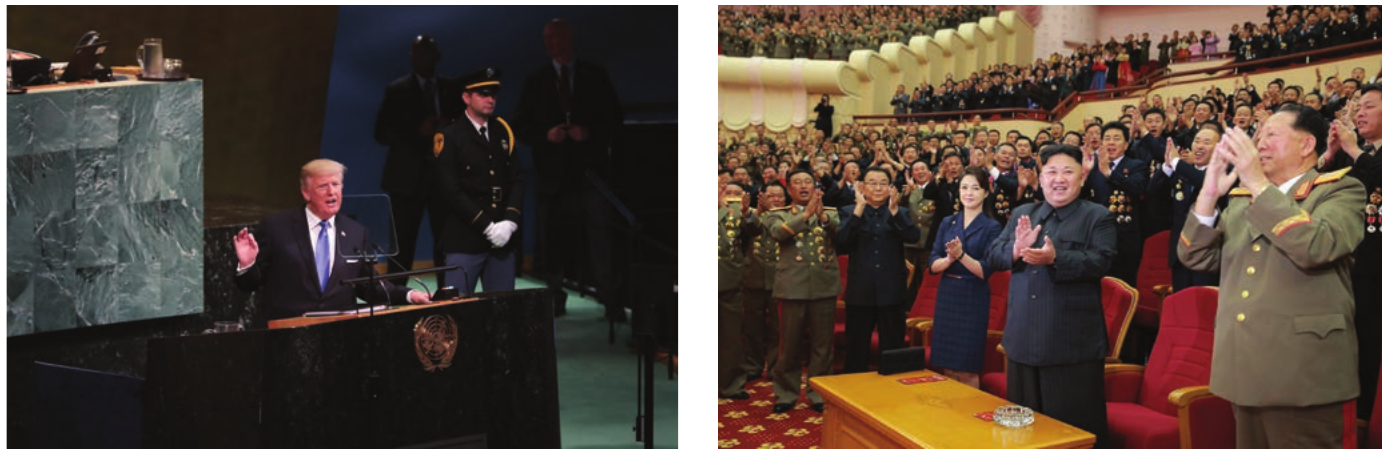
Note
The image above shows a modern perspective on nuclear threats, demonstrating that the concerns of 1945 remain relevant today. The challenge of international control over nuclear weapons continues to be a critical issue in global security.
The rebel scientists
Dismay among Manhattan Project scientists
Many scientists who worked on the Manhattan Project believed they were racing against Nazi Germany to develop the atomic bomb first. Once Germany was defeated in May 1945, this justification disappeared. When the United States dropped atomic bombs on Japan—a country without nuclear weapons—some scientists were deeply troubled by this decision.
Important
The defeat of Germany in May 1945 marked a crucial turning point. Scientists who had worked on the bomb believing they were preventing Nazi Germany from developing it first suddenly found their justification removed. This shift transformed many of them from silent researchers into vocal activists for nuclear arms control.
Formation of the Federation of American Scientists
After the bombings of Hiroshima and Nagasaki, scientists' opposition grew rapidly. Scientists' associations sprang up at Manhattan Project sites across the United States. In November 1945, scientists from Oak Ridge, Chicago, Los Alamos and New York joined together to create the Federation of Atomic Scientists. The organisation soon changed its name to the Federation of American Scientists to appeal to all citizens, not just scientists.
Key aims:
- Reduce the risks to humanity from global catastrophes
- Educate the public about nuclear weapons
- Advocate for nuclear arms control
By early 1946, the organisation had grown to 3,000 members, demonstrating widespread concern among scientists about the implications of their work.
The Bulletin of Atomic Scientists and the Doomsday Clock
The Federation of American Scientists launched a journal called the Bulletin of Atomic Scientists. This publication quickly gained influence, with 20,000 copies in circulation. Its cover featured a distinctive symbol: the Doomsday Clock.
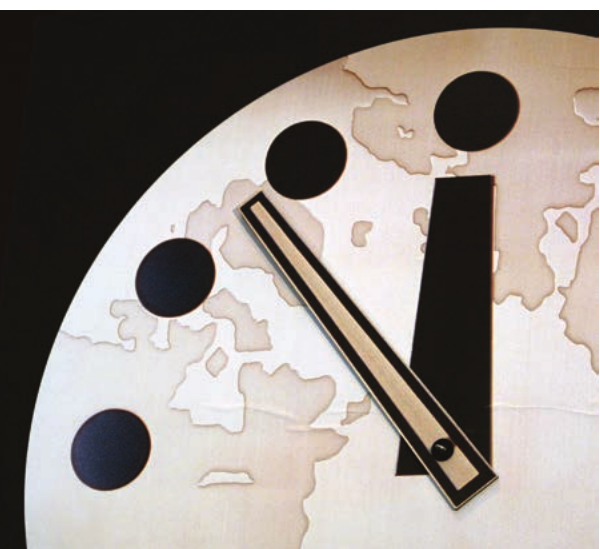
The Doomsday Clock was created in 1947 as a symbolic representation of how close humanity was to catastrophe. Midnight on the clock represents global disaster, most likely nuclear war. When first designed, the clock was set at 7 minutes to midnight. In 1949, when the Soviet Union tested its first atomic bomb, the clock moved one minute closer to midnight, reflecting the increased danger.
Note
The Doomsday Clock remains an important symbol today. It has been adjusted many times over the decades in response to nuclear threats, climate change and other existential risks to humanity. The clock serves as a powerful visual reminder of humanity's vulnerability and the need for continued vigilance in preventing global catastrophe.
Einstein and the Emergency Committee of American Scientists
In 1946, physicist Leo Szilard established the Emergency Committee of American Scientists. This organisation aimed to:
- Educate the public about the potential uses and dangers of atomic energy
- Work for nuclear arms control
- Advocate for world government
In May 1946, Albert Einstein became chairman of the committee. Despite being famous for his scientific work on atomic theory, Einstein had actually played no role in the Manhattan Project. He was considered a security risk by US authorities because of his left-leaning political views and was deliberately kept away from the weapons programme.
Important
Einstein's exclusion from the Manhattan Project reveals a striking irony: The scientist whose theoretical work laid the foundation for nuclear energy was considered too much of a security risk to participate in the bomb's development. This exclusion may have actually freed Einstein to become one of the most vocal advocates for nuclear arms control, unburdened by the moral complexities faced by those who had directly built the weapon.
Einstein was deeply opposed to the use of atomic bombs on Japan. In a fund-raising telegram, he proclaimed:
The unleashing of the power of the atom has changed everything save our modes of thinking.
This quote captures Einstein's belief that humanity needed to fundamentally change how it approached international relations in the nuclear age.
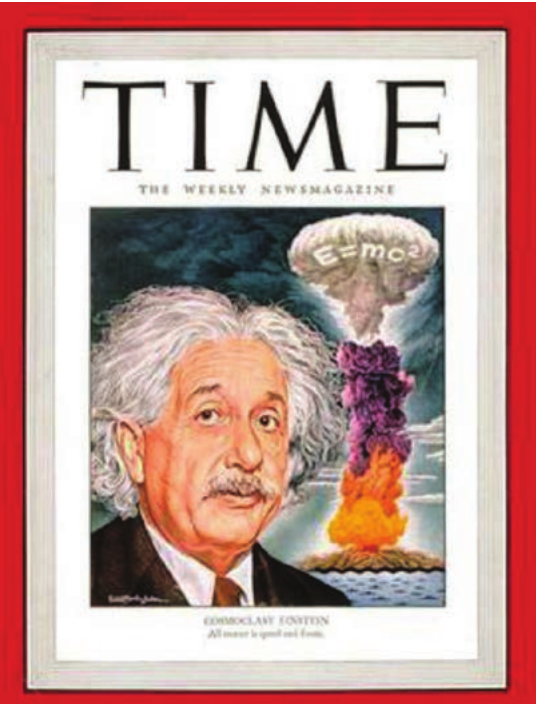
Note
Einstein famously disliked this TIME magazine cover, feeling it trivialized the serious threat of nuclear weapons. However, it demonstrates his prominence as a public advocate for nuclear arms control during this critical period.
Einstein's vision for world government
From 1946 until his death in 1955, Einstein devoted himself to promoting world government as the only realistic way to prevent a nuclear arms race. Together with his fellow scientist activists, he declared: "One world or none"—meaning that humanity must choose between unified global governance or face destruction.
Einstein did not see world government as an impossible dream. According to his biographer Walter Isaacson, Einstein believed that just as he sought unified principles in science to create order from chaos, a unified world government was a practical necessity for preventing nuclear catastrophe.
However, with the onset of the Cold War, hopes for international control over atomic energy faded. The Emergency Committee of American Scientists dissolved in 1951, though Einstein continued to pursue his vision for world government through other channels.
The sudden appearance of world federalism
Why world federalism emerged
The horror of atomic weapons combined with doubts about the United Nations' ability to manage this new threat led to a remarkable flowering of world federalist movements. Many believed that:
- The United Nations was too weak to deal with nuclear weapons
- Only a world government with real power could prevent nuclear catastrophe
- The survival of humanity demanded a unified world community and world state
These fears proved well-founded. The atomic bombings gave enormous momentum to the world federalist movement.
Growth of world federalist organisations
In the United States, world federalist organisations grew rapidly after Hiroshima. The United World Federalists attracted about 40,000 members and established 659 chapters across the country.
The World Federalist Movement was formally established in Montreux, Switzerland, in August 1947, bringing together international advocates for world government.
Early declarations
On 10 October 1945, twenty prominent figures—including Einstein, author Thomas Mann and a Supreme Court judge—issued a joint statement questioning whether the United Nations could survive even a generation. They declared:
We must aim at a federal constitution of the world, a working worldwide legal order, if we hope to prevent atomic war.
The Dublin Declaration of 16 October 1945 went further, stating:
Whatever may have been the efficacy of the United Nations Organization for the maintenance of international peace before Aug. 6, 1945, the events of that day tragically revealed the inadequacy of that organization thereafter so to do.
Note
These declarations, issued just weeks after the atomic bombings, demonstrate the immediate recognition that nuclear weapons had fundamentally changed international relations. The sense of urgency expressed by prominent figures like Einstein reflected widespread belief that humanity needed to act quickly before a nuclear arms race could begin.
Proposals for world government
World federalist groups pursued several pathways toward establishing effective global governance:
Reforming the United Nations:
- Push for a UN review conference in 1947
- Introduce weighted voting in the General Assembly
- Create a parliamentary assembly within the UN using Article 22 of the Charter
Creating a new world constitution:
- In 1948, some groups drafted a world constitution
- Proposed federal world government with responsibility for:
- Peacekeeping
- Protection of human rights
- Global currency system
- Taxation system
Establishing world law:
- The book World Peace Through World Law called for replacing international law with binding world law
- Reform the General Assembly to create binding laws on:
- Nuclear weapons
- Disarmament
- Enforcement of peace
- Transform the Security Council into an Executive Council without veto power
- Create a supranational armed force with:
- Shared command structure
- Monopoly on the use of force
Important
These were concrete, detailed proposals, not vague idealistic dreams. According to Isaacson, the world federalism advocated during America's atomic monopoly period was not unthinkable but reflected serious political thinking. The proposals included specific institutional reforms, legal frameworks and enforcement mechanisms. This demonstrates that world government was seen as a practical solution to a practical problem, not mere utopian fantasy.
Decline of the world government movement
The onset of the Cold War between 1950 and 1951 led to a sharp decline in support for world government. As tensions between the United States and Soviet Union intensified, the pathway toward international control of nuclear weapons through world government closed. It would not open again until the 1980s.
The United Nations First Committee
First resolution on nuclear weapons
The very first resolution adopted by the United Nations General Assembly, on 24 January 1946, concerned nuclear weapons. This demonstrates how seriously the international community took the nuclear threat from the organisation's inception.
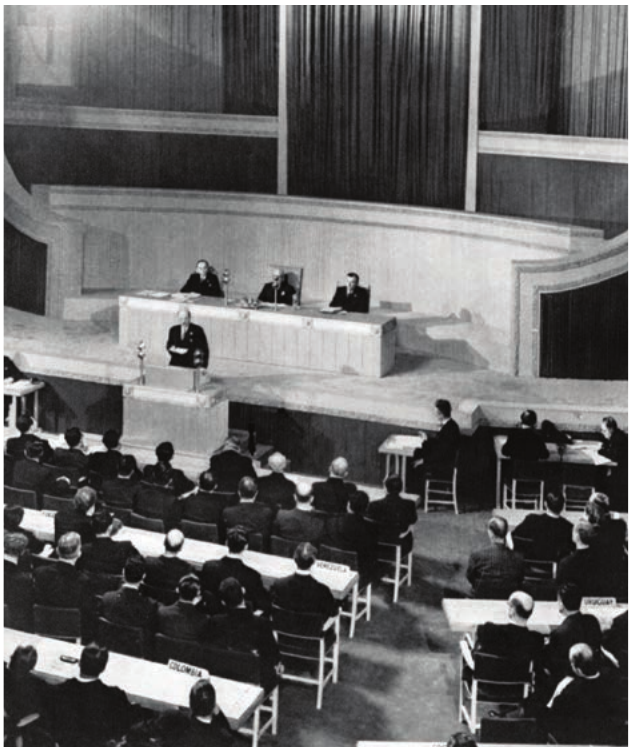
The resolution called for:
- The elimination from national arsenals of atomic weapons and all other major weapons of mass destruction
- A commission of the UN Security Council to control atomic energy and ensure its use only for peaceful purposes
Formation of the First Committee
The UN General Assembly established the First Committee on Disarmament and International Security. Nuclear weapons became a significant part of its agenda from the beginning. Today, this committee remains the world's primary forum for open discussion of issues concerning global safety and security.
Note
The UN First Committee continues to function today, demonstrating the enduring importance of international forums for discussing nuclear weapons and global security. While the hope for international control of nuclear weapons faded with the Cold War, the institutional framework for such discussions remained in place and continues to provide a venue for addressing nuclear threats.
Summary
Key Points to Remember:
-
After Hiroshima and Nagasaki, many scientists who worked on the Manhattan Project became activists for nuclear arms control, forming organisations like the Federation of American Scientists (1945) and the Emergency Committee of American Scientists (1946).
-
The Doomsday Clock, created in 1947 and set at 7 minutes to midnight, symbolised humanity's proximity to nuclear catastrophe and moved closer to midnight when the Soviet Union tested its first atomic bomb in 1949.
-
Albert Einstein became a leading advocate for world government, believing it was the only practical way to prevent a nuclear arms race. He and fellow activists declared "One world or none".
-
The shock of atomic weapons led to a flowering of world federalist movements that proposed concrete plans for world government, including reforming the UN, creating a world constitution and establishing binding world law with a supranational armed force.
-
The United Nations made nuclear weapons its first priority, with the General Assembly's first resolution on 24 January 1946 calling for the elimination of atomic weapons, though the onset of the Cold War (1950-51) ended hopes for international control and led to the decline of world federalist movements.