US–Soviet Nuclear Arms Race (HSC SSCE Modern History): Revision Notes
📚Revision Notes
US–Soviet Nuclear Arms Race
Overview of the arms race
After the United Nations was sidelined on the issue of nuclear weapons control, the United States and the Soviet Union embarked on an intense nuclear arms race that would last for over four decades. This competition fundamentally shaped the Cold War period and brought the world closer to nuclear catastrophe on several occasions.
Note
The nuclear arms race developed through a series of interconnected stages and involved multiple components working together. Understanding how these elements reinforced each other helps explain why the arms race gained such dangerous momentum.
Development of the nuclear arms race
The nuclear arms race began with political commitment from the leadership of both superpowers to develop nuclear weapons programmes. This commitment then triggered a chain of developments that built upon each other.
Key stages of development
The arms race progressed through several crucial stages:
- Both nations mobilised their scientific expertise and recruited top physicists and engineers to work on weapons development
- They acquired fissile material through uranium mining operations, which provided the fuel needed for nuclear weapons
- Construction of extensive infrastructure followed, including nuclear power plants, weapons manufacturing facilities, and testing sites
- Scientists and engineers designed and built nuclear bombs, which then required testing to verify they would function as intended
- The tests served both technical and political purposes, demonstrating military capability to potential adversaries
Initially, the only way to deliver nuclear weapons was by dropping bombs from aircraft. However, this method had limitations, so both nations invested heavily in developing new delivery systems. The primary method eventually became the nuclear missile, which could be launched from various platforms including underground silos, mobile launchers mounted on vehicles, fighter aircraft, and submarines.
The military-industrial complex
In both the United States and Soviet Union, a powerful military-industrial complex emerged. This term describes the network of individuals in the military and in arms-producing industries that operates as a powerful force influencing government policy. The complex created a self-reinforcing cycle where military officials and arms manufacturers worked together to promote continued weapons development and production.
Important
This alliance between military personnel and arms producers exerted immense political influence on the leadership of both superpowers. The main concern of this group was to continue building up more weapons and military hardware, regardless of whether they were actually needed for national security. The military-industrial complex developed its own momentum, making it extremely difficult for political leaders to slow down or stop weapons production even when they wanted to.
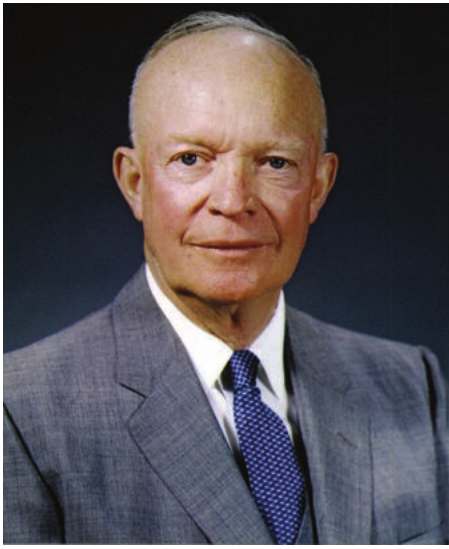
President Dwight D Eisenhower recognised this danger and warned against it in his farewell address on 17 January 1961.
New military doctrines were developed to justify the use of these weapons, along with numerous war plans designed to deal with every possible scenario for nuclear conflict. The entire structure was connected through command and control systems that could efficiently and reliably launch thousands of nuclear weapons according to predetermined military plans.
Civil defence and public concerns
Both governments developed civil defence plans and educational programmes to prepare their populations for the possibility of nuclear war. However, these schemes had more to do with reassuring the public than ensuring their survival. In reality, surviving a full-scale nuclear exchange would have been impossible for most people.
Note
Public concern about nuclear weapons increased dramatically as testing continued, particularly atmospheric testing of massive hydrogen bombs. The destructive power of these weapons led many people to question official propaganda claiming that nuclear war was survivable. People also became increasingly worried about radioactive fallout from hundreds of nuclear tests and its impact on public health.
Nuclear warheads and delivery systems
By the time of the Trinity Test in July 1945, the United States had already built a massive network of industrial facilities and scientific laboratories. These facilities continued operating seamlessly to produce more atomic bombs and to develop new types of weapons, delivery systems, and operational plans.
Development of the hydrogen bomb
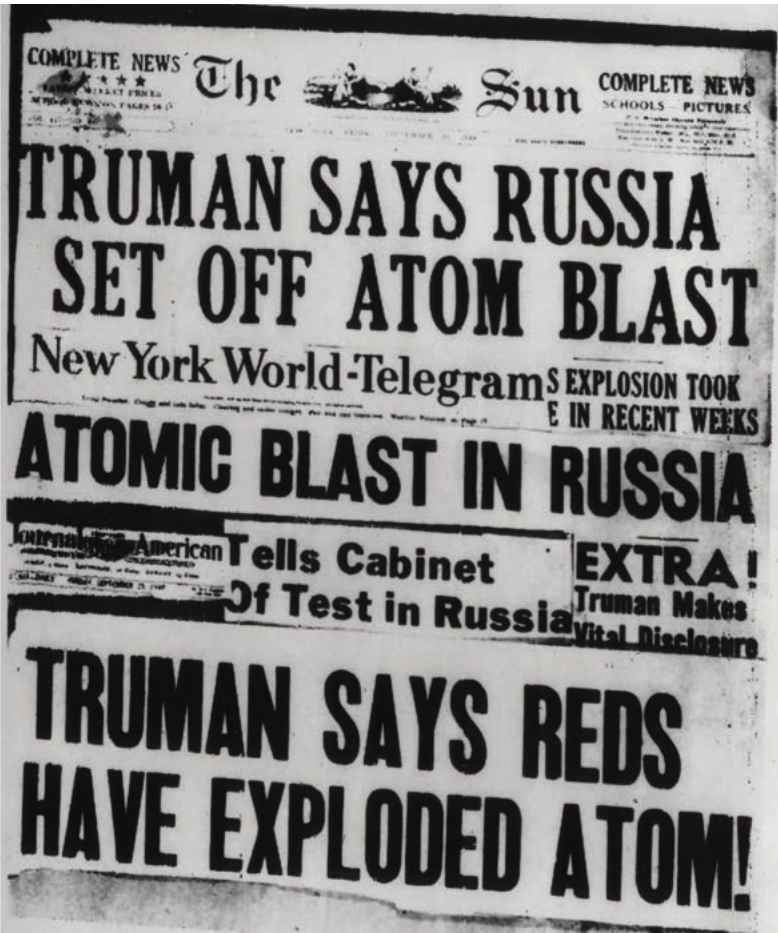
US scientists believed they could create an even more powerful bomb than the atomic bomb, which they called the 'Super'. After the Soviet Union tested its first atomic bomb on 29 August 1949, President Truman was convinced by scientists such as Edward Teller that the United States must maintain technological superiority. He ordered development of this new bomb, which became known as a hydrogen or thermonuclear bomb.
Important
The hydrogen bomb represented a major escalation in the Nuclear Age. Unlike atomic bombs, which use fission (splitting atoms), hydrogen bombs use fusion (combining atoms). Fusion releases much more energy, creating a far more powerful blast. This means hydrogen bombs can be vastly more destructive than atomic bombs.
The United States detonated its first hydrogen bomb on 1 November 1952. The Soviets followed and exploded their first hydrogen bomb on 12 August 1953 at Semipalatinsk in Kazakhstan. This bomb had a yield of 400 kilotons (the destructive force equal to 400,000 tonnes of TNT), which was 20 times larger than the 20-kiloton Nagasaki explosion. However, it wasn't a true hydrogen bomb and was much smaller than the American test, which had been 10 megatons (10,000 kilotons). On 22 November 1955, the Soviets detonated their first 'true' hydrogen bomb with a yield of 1.6 megatons.
Note
From this point forward, both superpowers carried out large numbers of nuclear tests, experimenting with different explosive yields and types of nuclear weapons. The Hiroshima and Nagasaki bombs became known as 'baby nukes' compared to the massive hydrogen bombs that followed.
Evolution of delivery systems
The nuclear warhead is the actual explosive part of the bomb, but various delivery systems were developed to transport the warhead to its target. These systems evolved significantly over time.
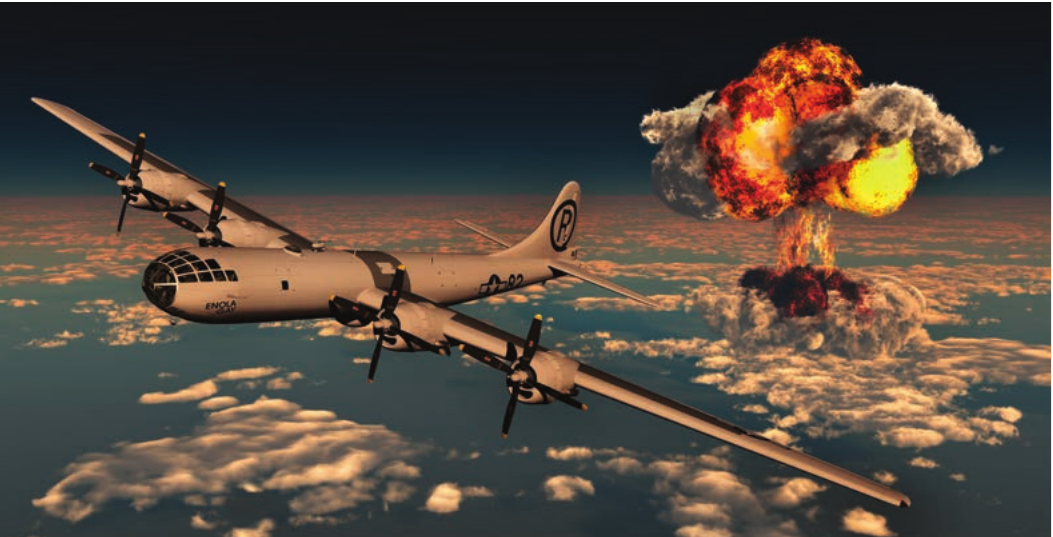
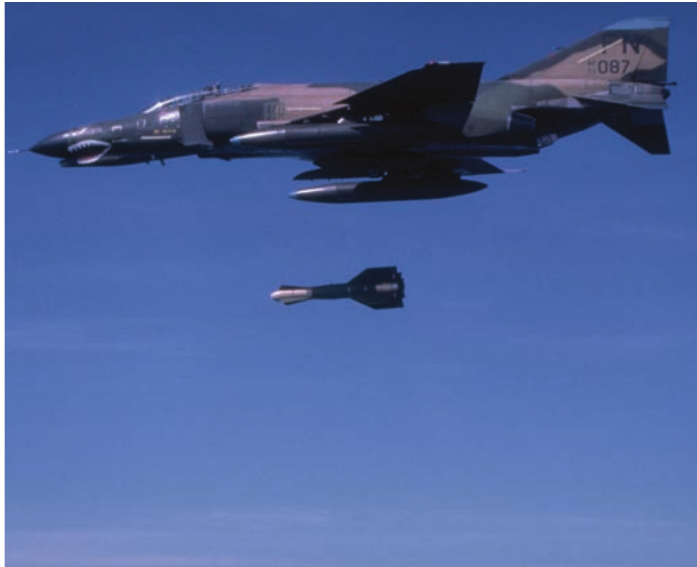
The first delivery method was the gravity bomb dropped from a bomber plane. The atomic bombs dropped on Japan were delivered by B-29 Superfortress bombers. Throughout the 1950s and 1960s, new varieties of gravity bombs were developed for use by both strategic bombers (for attacking cities and industrial centres) and tactical fighter bombers (for battlefield use). The United States maintained whole fleets of B-52 Stratofortress bombers on constant alert, flying 24 hours a day, loaded with nuclear weapons and ready to attack enemy territory.
The missile revolution
The development of ballistic missiles changed everything. Both superpowers had been working on missiles based on the German V2 rocket, which they had captured at the end of World War II.
Example
The Dawn of the ICBM Era
The Soviets conducted the first successful test of an Intercontinental Ballistic Missile (ICBM) – a missile capable of travelling between continents in a very short time – on 21 August 1957. On 4 October 1957, the same rocket type launched Sputnik, the first satellite, into space.
The American public was alarmed at the thought that Soviet missiles could easily reach American cities. The United States would never again feel that the Atlantic and Pacific oceans would protect them from overseas threats. They accelerated their own missile programme and soon caught up, with the Atlas D missile entering service on 1 September 1959.
Both superpowers then expanded their nuclear forces with various types of missiles capable of carrying nuclear warheads:
- Intermediate Range Ballistic Missiles (IRBMs) for shorter ranges were developed in large numbers, with many deployed in Europe
- From 1970, missiles with Multiple Independently Targetable Re-entry Vehicle (MIRV) capability entered service. A MIRV was a ballistic missile containing multiple warheads that would separate during flight and head for different targets
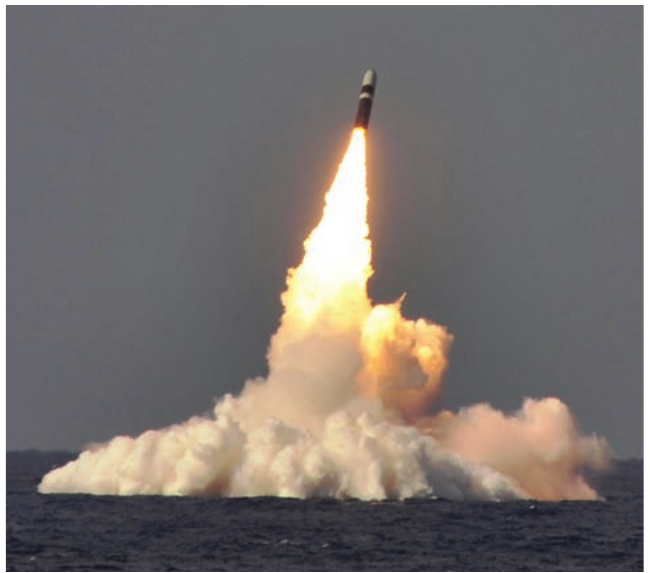
- Submarine Launched Ballistic Missiles (SLBMs) – missiles that can be fired from a submarine while still submerged – were developed and deployed to new classes of submarines like the Polaris, which entered service in 1960
The Polaris submarine carried 16 SLBMs with MIRV capability, each with three warheads, making a total of 48 warheads per submarine. Each warhead had a yield of 200 kilotons – 10 times the size of the Hiroshima bomb.
Defensive and cruise missiles
Another type of missile was the Anti-Ballistic Missile (ABM), a defensive missile designed to destroy incoming enemy missiles. In the 1960s, the Soviets were the first to deploy ABM missiles to defend Moscow. They used the nuclear-armed Galosh missile as an interceptor, which meant that ABM missiles stopped incoming missiles by detonating their own warheads in the atmosphere.
Note
Although the Soviet system had 200 interceptors by 1972, they realised it could only cope with an enemy attack of 6-8 ICBMs. The United States developed its own ABM system, but both sides ultimately signed the Anti-Ballistic Missile Treaty in 1972, which saved them from spending vast amounts on a system that didn't work effectively.
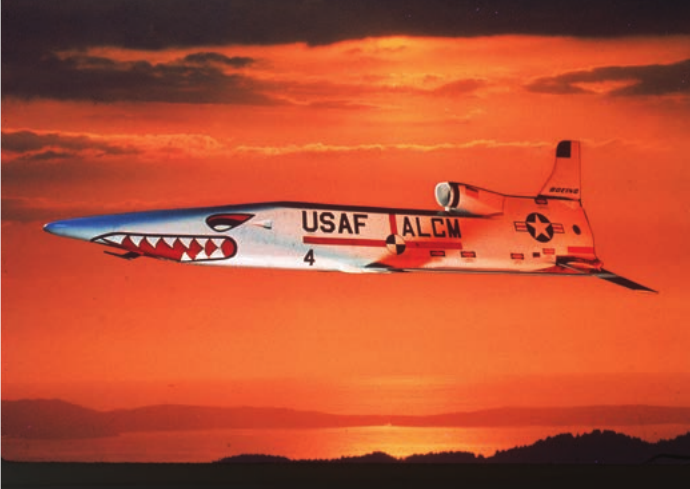
The first operational cruise missile was the German V1 flying bomb, deployed in 1944 to attack London. A cruise missile is essentially a small, pilotless aircraft carrying an explosive warhead, which could be either conventional or nuclear. In the 1970s, the US developed a revolutionary type that cruised at low altitude, closely following the terrain to evade radar detection. This made it the perfect weapon for a surprise nuclear attack.
Important
The deployment of these new cruise missiles in Europe by NATO in 1983, along with the highly accurate Pershing missiles, made Soviet leadership very concerned that the United States was planning a decapitation strike – a surprise attack targeting the Soviet leadership and command and control systems.
Military doctrine
Throughout the Cold War, a set of beliefs or doctrines about nuclear weapons and their use was developed. The challenge in developing military doctrine, strategy and plans for fighting a nuclear war is that none of these can be based on actual experience, since no nuclear war has been fought.
Note
The nuclear attacks on Japan weren't helpful for developing nuclear war-fighting theory because Japan couldn't retaliate with nuclear weapons. Hiroshima and Nagasaki are only useful for studying the humanitarian impact of nuclear weapons, something military planners showed little interest in.
Throughout the Cold War, serious theoretical thinking about nuclear war produced some dominant ideas and myths that shaped policy.
The doctrine of nuclear deterrence
One of the most influential beliefs of the US-Soviet nuclear arms race was the concept of nuclear deterrence. Deterrence means dissuading an adversary by convincing them that the costs of hostile action will outweigh any potential benefits. Deterrence works by persuading decision makers that the consequences of their actions will be unacceptable.
In everyday situations, we know that deterrence doesn't always work. However, when it came to nuclear weapons, policymakers presumed it would be different. The theory of nuclear deterrence became enormously important in shaping the thinking of foreign policy decision makers.
Important
The Myth of Nuclear Deterrence
Some historians argue that the history of nuclear deterrence has been distorted. Ward Wilson, in his 2013 book Five Myths about Nuclear Weapons, argues that studying Cold War crises shows that nuclear deterrence is not foolproof. This is serious because if we rely on nuclear deterrence, it must work perfectly – it needs to succeed 100 per cent of the time.
If nuclear deterrence can easily fail, the decision to rely on it for safety and security is reckless. As journalist Eric Schlosser said: "Nuclear deterrence works until it doesn't, and when it doesn't there won't be anyone left to find out why."
The belief in nuclear deterrence survived the end of the Cold War. Each of the nine countries possessing nuclear weapons today justifies their arsenals by claiming they need them for deterrence.
Extended Nuclear Deterrence (END)
A related concept is Extended Nuclear Deterrence (END), which means extending the protection of a country's nuclear arsenal to its allies. During the Cold War, the NATO alliance played a crucial role in deterring Soviet attacks on Western Europe. Every US president since Eisenhower has made clear that any invasion or attack on a NATO ally would be considered an attack on the United States itself, and that they would retaliate with nuclear weapons.
Example
Dulles and Massive Retaliation
John Foster Dulles, President Eisenhower's Secretary of State, made this very clear in a speech on 12 January 1954 when he said the United States would protect its allies through the "deterrent of massive retaliatory power". During his presidency, Eisenhower relied increasingly on nuclear weapons for allied defence because they were cheaper than maintaining large conventional forces.
Extended Nuclear Deterrence continued after the Cold War ended. The United States today extends the protection of its nuclear umbrella to:
- The other 28 member nations of NATO
- Its allies in Asia including Japan, South Korea, Taiwan and Australia
Since 1994, Australia has included its reliance on END in its Defence White Papers. The 2016 Defence White Paper stated: "Only the nuclear and conventional capabilities of the United States can offer effective deterrence against the possibility of nuclear threats against Australia."
Mutually Assured Destruction (MAD)
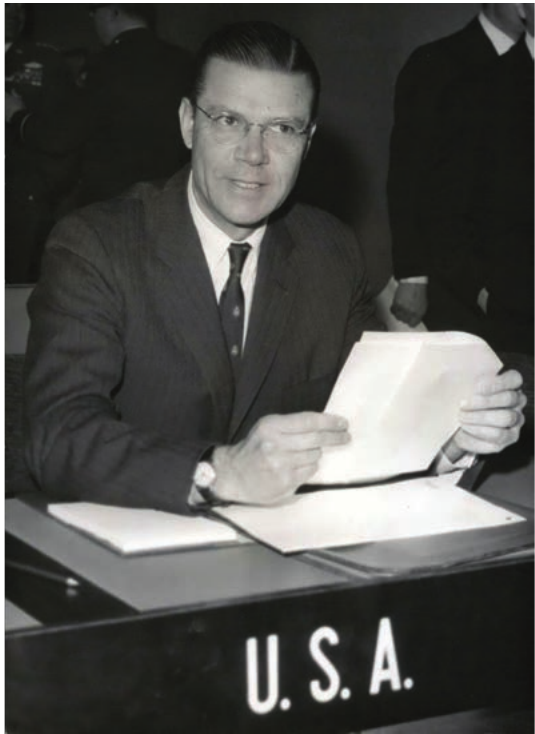
Another doctrine that came to symbolise the absurdity of the nuclear arms race was Mutually Assured Destruction (MAD). This concept was first articulated by US Defence Secretary Robert McNamara in 1962. In essence, any attack by the Soviet Union would result in such a powerful retaliation by the United States and NATO that the destruction of both sides would be 'assured'. In other words, the Soviet Union should be deterred from contemplating a first-strike attack because it would be destroyed as well.
Example
Testing MAD: The Cuban Missile Crisis
Eight months after McNamara publicly explained MAD, it was tested during the Cuban Missile Crisis. President Kennedy promised a "full retaliatory response" on the Soviet Union if any attack occurred on the United States.
Eventually, many people began to think that the acronym MAD accurately reflected the real implications of such a doctrine. The MAD doctrine intensified public fear of nuclear war throughout the Cold War, particularly during the 1980s. By that time, there was global uneasiness regarding official military doctrine on nuclear weapons. Propaganda about being able to survive a nuclear war was no longer believed by many people.
Military plans
Canadian historian Gwynne Dyer observed that we know little about the debates that occurred on the Soviet side regarding military strategy. As for the United States, there was an ongoing argument throughout the Cold War between two groups:
- Those who believed nuclear weapons should never be used again and should only deter others from using them
- Those who continually sought ways to make nuclear weapons usable in war
The Single Integrated Operations Plan (SIOP)
In the 1960s, US military strategy on nuclear weapons settled on the idea of one integrated military plan for use in the event of war, called the Single Integrated Operations Plan (SIOP). The SIOP coordinated all nuclear weapons from the Army, Air Force and Navy into one comprehensive plan.
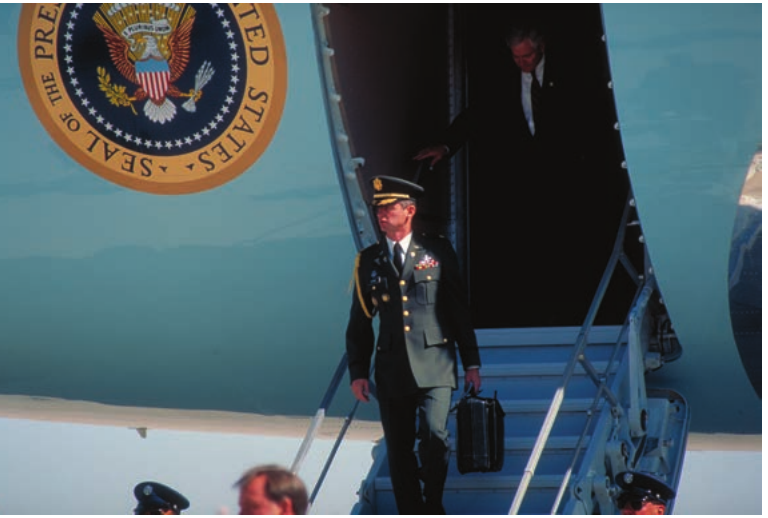
McNamara refined SIOP-63 so that it included five categories from which the US president could choose in the event of war. Only the president had authority to authorise a nuclear attack. Communication protocols were established to ensure that any message from the president was authorised and genuine. The launch codes were carried in a briefcase called the 'football' by an aide who remained constantly near the president.
Note
If the United States came under attack, the president would receive a very brief briefing from his generals. If the president decided action was necessary, the generals would ask which category of targets should be destroyed in the Soviet Union and/or China. The president would then issue an order with the codes and nuclear missiles would be launched. This system operated from 1961 to 2003.
Strategic and tactical nuclear weapons
There were two main categories of nuclear weapons: tactical and strategic:
- Strategic nuclear weapons were usually larger and targeted cities and industrial areas
- Tactical nuclear weapons were usually smaller and designed for battlefield use
- Both types would be integrated into the SIOP
Each new US president has participated in a role-play exercise of the SIOP with the Joint Chiefs of Staff (the heads of the US Army, Navy and Air Force, who advise the president on national security matters). During these exercises, the president is presented with various scenarios and asked which targets to choose.
Important
Presidential Reactions to SIOP Briefings
Presidents commonly emerge from SIOP briefings in a state of shock. President Eisenhower reportedly said: "You can't have this kind of war. There just aren't enough bulldozers to scrape the bodies off the streets."
In the 1980s, President Reagan delayed attending a SIOP briefing. When he reluctantly agreed to do so in October 1983, according to historian Beth Fischer, he was deeply disturbed by what he witnessed. He called the meeting "a most sobering experience" and compared it to the film The Day After, which he had recently watched. In his diary, he wrote: "There are some people at the Pentagon who claim a nuclear war is winnable. I thought they were crazy."
The nuclear triad
Both superpowers created nuclear arsenals based on three methods of delivery – the nuclear triad of land, air and sea. This meant that both sides' nuclear arsenals were designed to retain a second-strike capability: the ability to absorb an attack and still retaliate with massive force.
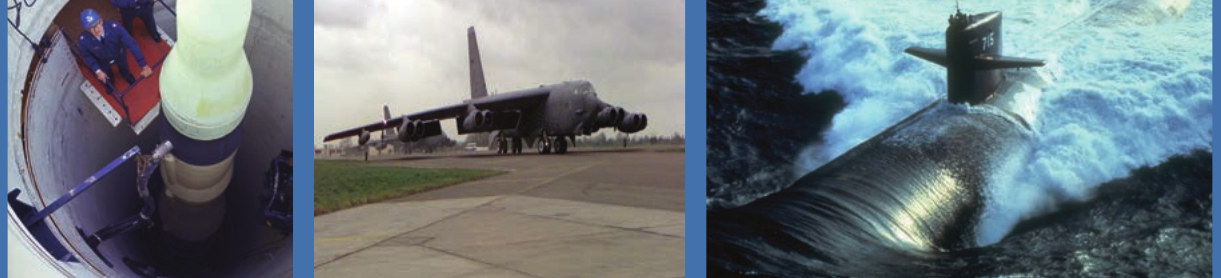
The nuclear triad consisted of:
- Land-based intercontinental ballistic missiles (ICBMs) in silos
- Strategic bombers capable of delivering nuclear weapons
- Submarine-launched ballistic missiles (SLBMs)
Note
Some theorists argued that a nation only needed the submarine force as minimum deterrence against attacks, since it is nearly impossible to destroy all nuclear submarines in a surprise attack. McNamara liked this idea, but he couldn't convince the Army, Air Force and other stakeholders in the military-industrial complex to agree.
Britain today relies solely on nuclear-armed Trident submarines for its defence. Since 2018, the United States has been pushing ahead with plans to modernise all three components of its triad at a cost of US$1.2 trillion.
The development of global strike
The end of the Cold War should have eliminated the need for nuclear deterrence. However, during the 1990s, whilst Russia dealt with massive political, social and economic problems during its rebirth as a fledgling democracy, the United States political and military establishment struggled with the loss of their old Cold War adversary. The Clinton administration failed to push hard for global military disarmament, and justifications for keeping military arsenals re-emerged. In the 1990s, the US military began targeting non-nuclear states, and political leaders talked increasingly about 'rogue states' and terrorists obtaining nuclear weapons.
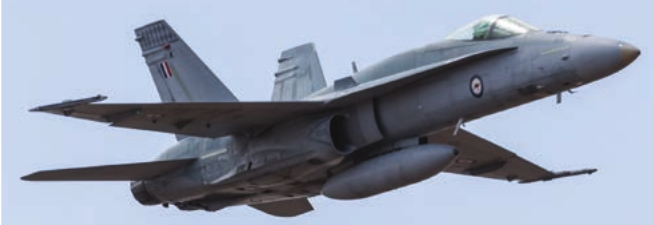
During the George W Bush administration (2001-2009), the United States developed the global strike policy. The idea was to use overwhelming US conventional and nuclear superiority to deter any nation or group from attacking the United States or its allies – essentially, to be ready to target anywhere on the planet. The SIOP was replaced by two plans:
- OPLAN 8044, which targeted the Russian nuclear arsenal
- OPLAN 8022-02, a flexible plan covering the rest of the globe
On 18 November 2005, Global Strike Command became operational. This represented a shift from the Cold War balance of terror to a policy of superiority and action, where the United States declared superiority over all adversaries and even all conceivable future adversaries.
Command and control systems
Everything in a country's nuclear war-fighting capacity depended on its command and control system. Each superpower's command and control system had to:
- Coordinate early warning systems and ensure alerts were analysed quickly and passed to military command
- Ensure all mobile missiles (IRBMs), missiles in silos (ICBMs), submarines (SLBMs), and all gravity bombs or cruise missiles carried in bomber and fighter planes were ready for use
- Ensure sound and secure communications between all people in the system
- Ensure the safety of all weapons and fissile material from accidents, mistakes or terrorist attacks
Accidents and near misses
In his 2013 book Command and Control, Eric Schlosser conducted a detailed study of the history of the United States' command and control system. Using declassified documents, he found many accidents, mishaps, malfunctions and mistakes that could have ended in nuclear catastrophe, though fortunately none did. There has been no equivalent of a Chernobyl or Fukushima disaster with a nuclear weapon – yet.
Important
The Greatest Threat
Schlosser maintains that nuclear weapons are the greatest threat to the nations that possess them because every one is an accident waiting to happen. He only examined the US command and control system and suspects that systems in other countries may be far riskier, particularly Pakistan's nuclear weapons, which he believes are the least secure.
Schlosser argues that the threat didn't disappear with the end of the Cold War. The command and control systems of the nine countries possessing nuclear weapons today remain a threat. He concluded his book with this stark warning:
"Right now, thousands of missiles are hidden away, literally out of sight, topped with warheads and ready to go, awaiting the right electrical signal. They are a collective death-wish, barely suppressed. Every one is an accident waiting to happen, a potential act of mass murder. They are out there, waiting, soulless and mechanical, sustained by our denial – and they work."
Nuclear Age tensions
The Doomsday Clock, created by the Federation of American Scientists in 1947, measures how close experts believe we are to the end of human civilisation. The board meets twice yearly to discuss the current state of global threats. Since 2007, climate change and other global threats have been included in their deliberations.
Note
The history of Doomsday Clock settings since 1947 provides a useful snapshot of danger levels at various points throughout the Nuclear Age. However, it doesn't give a complete picture. Because the clock is set at two fixed times each year based on immediate threat levels, dramatic events that are resolved quickly may not affect the clock setting.
For example, the Cuban Missile Crisis, which many historians regard as the closest we came to nuclear war, reached its climax and resolution before the clock was due to be set. Other historians argue that two events in 1983 brought the world even closer to nuclear war, though the public didn't learn about these until years later.
Crisis points during the Cold War
Several critical moments brought the world close to nuclear catastrophe:
Example
The Korean War (1950-53)
The Korean War marked an early dangerous period when Cold War tensions could have escalated to nuclear conflict.
Example
The Cuban Missile Crisis (16-28 October 1962)
The Cuban Missile Crisis is widely regarded as the moment when the world came closest to nuclear war. President Kennedy promised a "full retaliatory response" on the Soviet Union if any attack occurred on the United States.
Example
The Yom Kippur War (6-29 October 1973)
The Yom Kippur War created another tense period when regional conflict threatened to draw in the superpowers.
Example
The Serpukhov Incident (26 September 1983)
Colonel Stanislav Petrov was on duty at the Soviet early warning command centre when a false missile signal indicated US missiles were heading for Russia.

Petrov made the decision not to report the alert as a real attack, correctly identifying it as a system malfunction. His decision potentially prevented nuclear war. A 2014 documentary called The Man Who Saved the World was based on this event and its impact on Petrov's life. Petrov died in May 2017.
Example
The Able Archer NATO Exercise (2-12 November 1983)
The Able Archer NATO Exercise was a military exercise that Soviet leadership mistook for preparations for an actual attack, bringing both sides dangerously close to war.
Important
Very public confrontations between the two superpowers at various points during the Cold War frightened not just the populations of the United States and Soviet Union, but the whole world. Ultimately, the decision on whether to use nuclear weapons lay with just two people: the US president and the Soviet leader.
A different decision by either leader during the Cold War could have caused a massive nuclear war destroying all life on the planet. Many Cold War commentators believe it was either through luck or divine providence that nuclear weapons weren't used during the Cold War.
The cost of the nuclear arms race
The decisions taken by political leaders in 1945 and 1946 led to a nuclear arms race between the two superpowers that lasted 46 years. The alternative choice would have been international control of nuclear technology, but this road was not taken. Instead, the two superpowers embarked on a nuclear arms race that put the entire planet at risk and inflicted enormous costs on the economies and societies of both nations.
Economic costs
In his 2007 book Arsenals of Folly, Richard Rhodes estimates that for the United States alone, the cost of the nuclear arms race was at least US$5.5 trillion and perhaps as high as US$10 trillion. The 'overkill' in spending by the US military-industrial complex led to an inability to address problems in American cities including crime, poverty, riots, pollution and basic infrastructure decay.

Note
The American war economy consumed the civilian economy. At least US$1.6 trillion would be needed to address infrastructure deficiencies alone. The superpower nuclear arms race and militarisation of the American economy resulted in:
- Deteriorating cities
- Broken bridges
- Failing schools
- Entrenched poverty
- Reduced life expectancy
- A secretive national security state that held the entire human world hostage
Impact on the Soviet Union
If the United States paid a heavy price for 'winning' the Cold War, the Soviet Union paid an even heavier price for no gain whatsoever. The nuclear arms race, along with other dysfunctional economic policies, virtually bankrupted the communist superpower.
Important
By the time Mikhail Gorbachev was negotiating with Ronald Reagan at Reykjavík in 1986, he knew he had to achieve a nuclear arms agreement and end the arms race to save the Soviet economy.
Since the end of the Cold War, the Russian Federation has struggled with a dysfunctional and corrupt capitalist economy that strains to meet its people's basic needs whilst wealthy oligarchs have become richer.
Global impact
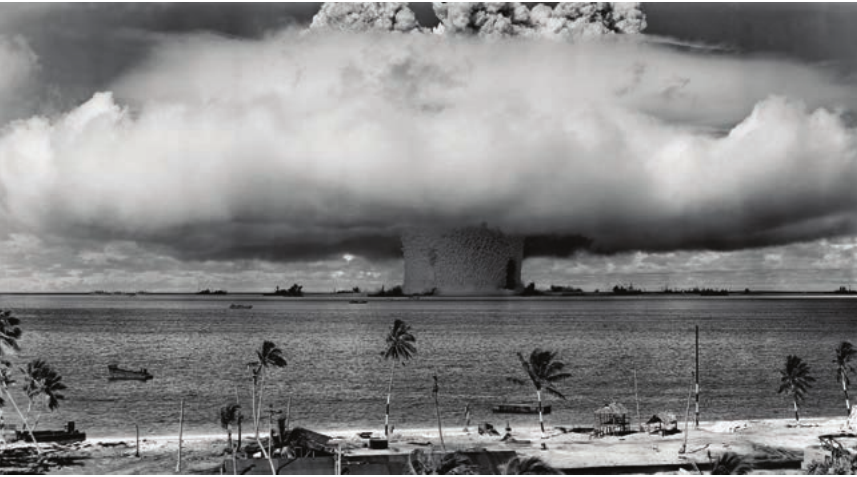
Finally, the rest of the world paid a price for the nuclear arms race. Beyond 46 years of fear, there was a humanitarian and environmental cost from 2,056 nuclear weapons tests conducted by the end of 2017 in many locations around the world. Two hundred and nineteen of these tests were conducted in the atmosphere, spreading radioactive dust around the globe.
Note
Added to this are the victims of Hiroshima and Nagasaki. However, the two superpowers weren't the only ones causing humanitarian and environmental harm. Seven other nations possessing nuclear weapons have also played a part.
Living with the bomb: civil defence
Whilst world leaders embarked on the nuclear arms race, the people of the world had to learn to 'live with the bomb'. Growing fear of nuclear weapons in the 1950s, generated by revulsion towards Hiroshima and the massive hydrogen bomb tests conducted in the atmosphere in the Pacific and over Kazakhstan, convinced successive US presidents that civil defence programmes were needed to ease public concern.
Massive amounts of money were spent on civil defence plans and educational programmes. In schools, regular civil defence drills were conducted. Communities were taught how to build makeshift fallout shelters, instructed to stockpile supplies, and given tips for surviving in a post-nuclear attack world.
Important
The Reality of Civil Defence
These civil defence schemes had more to do with reassuring the public than ensuring their survival in the event of an actual nuclear war. The programmes gave the illusion of preparedness and safety, but in reality, surviving a full-scale nuclear exchange would have been impossible for most people.
Remember!
Summary
Key Points to Remember:
-
After the United Nations was sidelined on nuclear weapons control, the US and Soviet Union embarked on an all-out nuclear arms race that lasted over four decades and shaped the entire Cold War period
-
The arms race developed through interconnected stages including scientific mobilisation, fissile material acquisition, infrastructure construction, weapons testing, and delivery system development, all driven by a powerful military-industrial complex
-
Key military doctrines emerged including nuclear deterrence, Extended Nuclear Deterrence (END), and Mutually Assured Destruction (MAD), though historians debate whether these doctrines were effective or simply myths that increased danger
-
The nuclear arms race imposed enormous economic and social costs on both superpowers and the rest of the world, with the US spending at least US$5.5 trillion whilst infrastructure and social needs were neglected, and the Soviet Union being pushed towards economic collapse
-
Several Cold War crises, including the Cuban Missile Crisis and the 1983 Serpukhov incident, brought the world dangerously close to nuclear catastrophe, with survival depending on individual decisions and, some argue, luck or divine providence