The Impact of the Nazi Regime on Life in Germany (HSC SSCE Modern History): Revision Notes
📚Revision Notes
The Impact of the Nazi Regime on Life in Germany
Between 1933 and 1939, the Nazi regime fundamentally transformed German society to align with Hitler's ideological vision. The goal was to create a Volksgemeinschaft (people's community) and establish a '1000-year Reich'. Cultural life, social structures, education, religion and daily life were all radically altered to serve as propaganda tools and to indoctrinate the German population with Nazi ideology.
Note
The term Volksgemeinschaft translates as "people's community" and represented the Nazi vision of a unified German society bound by racial purity and loyalty to the state. This concept became the foundation for restructuring every aspect of German life.
Cultural expression
Dismantling Weimar culture
Almost immediately after gaining autocratic power in March 1933, the Nazis began dismantling the progressive cultural landscape of the Weimar years. They rejected anything deemed 'unGerman', particularly bohemian culture, which the Party labelled as 'degenerate'.
In 1933, the Nazis established the Reich Chamber for Culture (Reichskulturkammer) to control all artistic output. All artists were forced to register with this organisation if they wished to continue practising their craft. This gave the Nazis complete control over Germany's cultural landscape.
Important
The Reich Chamber for Culture represented total state control over artistic expression. Artists who refused to register or whose work was deemed unacceptable were effectively banned from their profession, silencing dissenting voices and enforcing ideological conformity.
The new Nazi cultural landscape emphasised themes of 'blood and soil', reflecting the regime's racial ideology. The abstract art movement was abandoned in favour of Nazi Realism, which focused on the Aryan body and German natural landscapes. This transformation turned German culture into an ideological tool rather than a form of free expression.
The Nazi state also dictated what was unacceptable. Jewish composers such as Mendelssohn were banned, as was jazz music due to its black origins. These restrictions further demonstrated how the Nazis changed cultural life to reflect Hitler's racial worldview.
Culture as propaganda
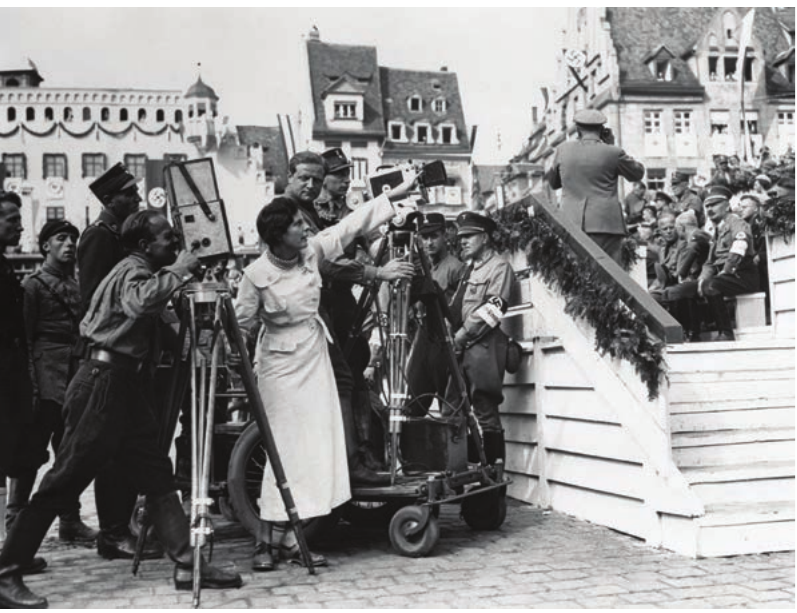
The Nazi regime not only controlled the content of the arts but also changed culture's position within society. Joseph Goebbels recognised the potential of using the arts as a propaganda tool. The previously highbrow German cultural scene was replaced with 'popular art' to make it more accessible to the working classes.
Example
Cultural Propaganda in Action: Bringing Art to the Masses
The Nazi regime implemented several innovative propaganda initiatives to reach ordinary Germans:
- Factory exhibitions: 120 art exhibitions were held in factories during 1935, bringing culture directly to workers' workplaces
- Strength Through Joy: Robert Ley's movement provided travelling performance troupes and subsidised theatre tickets specifically for working-class audiences
- Cinema propaganda: Films such as The Triumph of the Will (1935) promoted German nationalism and showcased Nazi power through grand spectacle
- Anti-Semitic films: Productions like The Eternal Jew (1939) spread Nazi racial ideology to mass audiences
These initiatives transformed culture from an elite pursuit into a tool for mass indoctrination.
The work of director Leni Riefenstahl, who filmed the Nazi Party rallies of 1933 and 1934, remains controversial. Her films The Victory of Faith and Triumph of the Will have sparked ongoing debate about whether she was a Nazi propagandist or feminist pioneer.
Social life
The ability to alter German social life was greatly aided by immediate political changes, particularly through the process of Gleichshaltung (coordination or bringing into line) in 1933. With the establishment of the Third Reich, all democratic processes were abolished.
Note
Gleichshaltung literally means "coordination" or "bringing into line." This process involved the systematic Nazification of all aspects of German society, eliminating independent organizations and forcing conformity with Nazi ideology across every institution.
The Nazi state imposed terror among the population through organisations such as the SS to consolidate power and radicalise German society. This had a direct impact on civilians' social life as the Nazi state increased controls over employment:
- Jews were banned from the civil service
- The Deutsche Arbeitesfront (German Labour Front) was established in May 1933 to impose greater control over employment
The role of women
Volksgemeinschaft had a profound impact on German society, coordinating all individuals to Nazi ideology. Hitler believed individuals found fulfilment by identifying with the nation, and all people were given a clear role in the Nazi state. Consistent propaganda and terror allowed the Nazi Party to reform German society's mindset to believe in 'collective need over individualistic greed'.
Nazi ideology on women
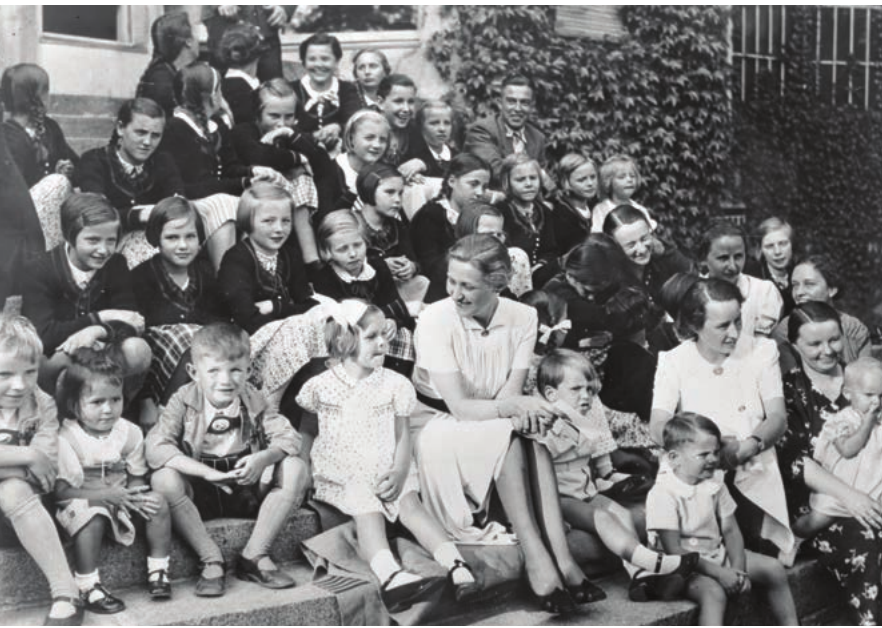
The Nazis held very traditional views on the role of women, yet still considered them extremely important. The ideal woman should recognise 'matrimony and motherhood as the singular goal'. Hitler stated that the German woman should recognise that 'her world is her husband, her family, her children, and her home'.
Important
Nazi ideology relegated women to a purely domestic sphere, reversing the progress made during the Weimar Republic when women had gained greater educational and professional opportunities. This represented a fundamental restriction of women's rights and freedoms.
Even prominent Nazi women reflected this view. Magda Goebbels, in what was the unofficial 'First Family' of the Reich, played a dutifully discreet public role, unlike Eva Braun who remained invisible. These leading ladies of the Third Reich demonstrated that women should be seen but not heard.
Policies affecting women
The Nazi state imposed discriminatory laws to achieve its vision for women:
- Women were banned from the civil service
- All married women were forced from the workforce
- Women were forced out of higher positions in the public service
- Only limited entry to universities was allowed
Financial and social incentives encouraged childbirth and homemaking:
- Mothering Day celebrations
- The Muttrkruz (Mother's Cross) programme
- Financial incentives to stay home and have children
- The central slogan: 'Children, Church, Kitchen'
Impact of women's policies
The successful impact of such policies on social life can be seen in statistics: the childbirth rate rose from below to above between 1933 and 1936.
Note
While these changes may seem radical today, most German women accepted them as a reasonable return to traditional German values, reflecting the effect of Nazi policy and indoctrination on the nation's social life. This acceptance demonstrates how effectively the regime combined propaganda with economic incentives to reshape social attitudes.
Education
The school and university system gave the Nazis an opportunity to manipulate the formative learning experiences of young people, countering the influences of the home and giving young people a Nazi outlook.
Changes to curriculum
From July 1933, the central government laid down guidelines on history textbooks, ensuring they stressed the role of heroism and leadership.
All secondary-school subjects were affected by a Nazi angle:
- Biology became focused on matters of race
- Physics became occupied with military themes such as ballistics
- Arithmetic included calculating the proportion of blonde-haired people in Aryan society
Important
The Corruption of Education
The Nazification of the curriculum demonstrates how the regime weaponized education to indoctrinate young minds. Even mathematics—traditionally a neutral subject—was twisted to serve racial ideology, showing the comprehensive nature of Nazi thought control.
Control of teachers
To achieve Nazi educational goals, it was necessary to control the teaching profession and purge it of teachers who opposed the new state. In April 1933, the Reich Law for the Re-Establishment of a Professional Civil Service led to investigative committees that drove 'unreliable' teachers out of the profession.
Religion
The role and influence of religion was radically altered as part of the Nazis' Volksgemeinschaft. Hitler believed that National Socialism was itself a religion, meaning other churches provided a rivalry of beliefs.
The Nazi state took several actions to control religion:
- The various Protestant churches were consolidated into the Reich Church in 1935
- Despite a concordat signed with the Catholic Church in 1933, the Nazis still attempted to curtail its influence on society
Impact on religious life
The Nazi state's aggressive policies had a significant impact on the population:
- Church youth groups were abandoned in favour of the Hitler Youth
- Attendance in religious schools dropped from 65% in 1933 to 5% by 1939
Important
The Eradication of Religious Influence
These statistics emphasise the Party's great impact in almost entirely eradicating the presence of religion in German social life. The dramatic decline from to attendance in just six years demonstrates the effectiveness of Nazi pressure tactics and the substitution of religious loyalty with devotion to the Führer.
Ultimately, Nazism attacked organised religion because it demanded loyalty in competition with Nazi ideology.
Youth
Hitler's vision for German youth was clear: 'In our eyes the German youth of the future must be slim and slender, swift as a greyhound, tough as leather, and hard as Krupp steel. We must educate a new type of man.'
Growth of the Hitler Youth
There had been a youth wing of the Nazi Party since Hitler came to power, but it was comparatively small before 1933:
- 1930: Only 18,000 members
- End of 1932: 20,000 members
After Hitler came to power in January 1933, pressure mounted on all young people to join. Those who did realised they were part of the tidal wave of 'Bringing Germany into line', which encouraged them to ostracise and bully those who refused.
Example
The Explosive Growth of Hitler Youth Membership
The Hitler Youth experienced unprecedented growth through a combination of social pressure, incentives, and eventually legal compulsion:
Phase 1 - Voluntary but pressured (1933-1936)
- Early 1934: 2.3 million members aged 10-18
- 1936: 4 million members
Phase 2 - De facto compulsory (1936-1939) From July 1936, only the Hitler Youth could organise sporting activities for those under 14. This was soon extended to encompass those aged up to 18. While membership remained technically voluntary, the monopoly on youth activities created immense pressure to join:
- Early 1939: 8.7 million young people ( of all those aged 10-18)
Phase 3 - Legally compulsory (1939 onwards) After 1939, membership was finally made compulsory for children aged 10 and above. Parents who did not register their children could be fined up to 150 Reichsmarks, or even imprisoned.
Note
Reichsmark: German currency from 1924 to 1948
Structure of Nazi youth organisations
The law introduced the 'duty of youth service', which involved:
- Boys aged 10-14: German Young People (Deutsches Jungvolk, or DJ)
- Boys aged 14-18: Hitler Youth (Hitlerjugend, or HJ)
- Girls aged 10-14: Young Girls' League (Jungmädelbund, or JM)
- Girls aged 14-18: League of German Girls (Bund Deutscher Mädel, or BDM)
Training and indoctrination
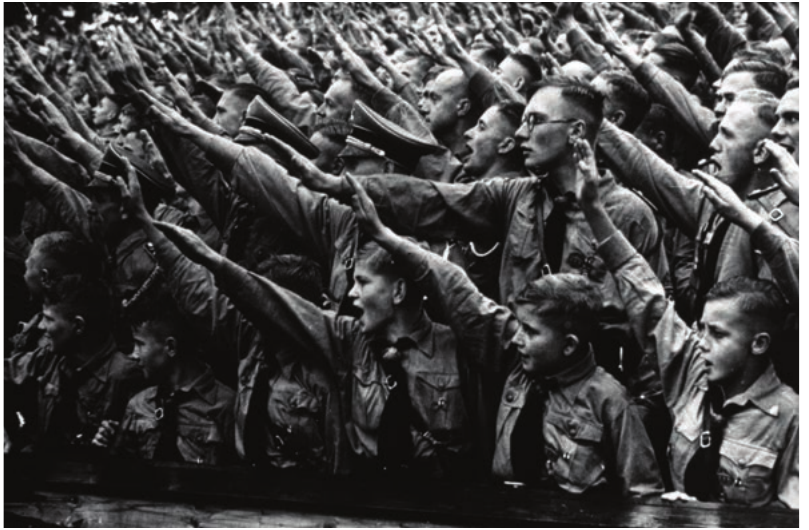
Within each group, there was a set syllabus of indoctrination into Nazi ideas, accompanied by fitness training and, eventually, military training. For girls, the programme included exercises to turn them into fit and healthy bearers of the next generation of German babies, part of the drive for 'racial hygiene'.
However, the impact of the Nazi youth programme had a greater effect on the mind than on the body. The indoctrination was carefully designed to:
- Replace all family and religious loyalties
- Bind children completely to Nazi ideology
- Develop personal devotion to the Führer
Important
The Psychology of Youth Indoctrination
Images of power and violence captured the attention of young people. They were also inspired by manipulated enthusiasm that the new Germany in the Third Reich would create lasting peace.
The true danger of the Hitler Youth lay not in physical training, but in its systematic replacement of traditional authority figures (parents, teachers, clergy) with absolute loyalty to Hitler and Nazi ideology. This represented the complete capture of the next generation's minds.
Racial policy
The centrality of anti-Semitism
Arguably, the greatest impact of the Nazi state on social life was the growth of anti-Semitism within German society. The Nazis were an unashamedly racist party, and their ultimate aims for Germany were based on this racism. The struggle against the Jews was always the core component of Hitler's worldview and the outlook of the Nazi Party.
From the mid-1920s, there was an unshakeable commitment to:
- Removing Jews from Germany
- A war of conquest to gain Lebensraum (living space) for the German people in an eastern empire
- Populating that empire with 'racially pure' Germans
Note
Lebensraum: Living space - the Nazi concept of territorial expansion to provide space for the German people
One source describes the Nazi view: 'The Jew, in Nazi ideology, was the embodiment of all enemies rolled into one. He was the "November Criminal" and the traitor; he was both a Marxist and an international capitalist... above all he was the debaser of the purity of the German race... all civilisations of the past, according to Nazi doctrine, decayed and disappeared because of race mixture.'
The Jewish population in Germany
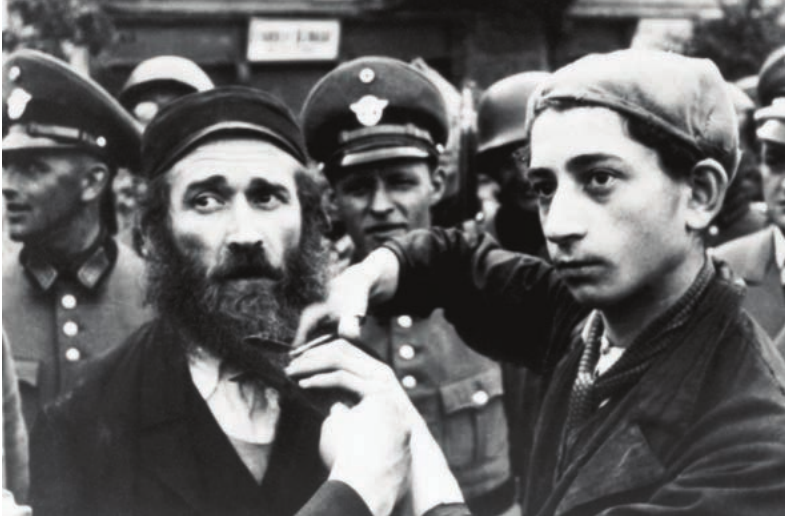
Although anti-Semitism was an obvious feature of National Socialism, it was the area of Nazi propaganda that people took less seriously than appeals on social and economic issues. This was largely because there were so few Jewish people living in Germany:
- In 1933: Only about 500,000 Jews in Germany ( of the total population)
Note
Within German society there was a fairly common low-level sense of antagonism towards Jewish people, but it was not a high priority for most German voters. This made the Nazis' ability to radicalise the population's attitudes toward Jews over just six years even more significant.
Phase 1: 1933-1935 – Early persecution
Despite their hatred of Jews, the Nazis did not have a detailed programme of what they intended to do once they achieved power. Clearly, they wished to exclude Jews from German society, but little thought had been given to how to achieve this.
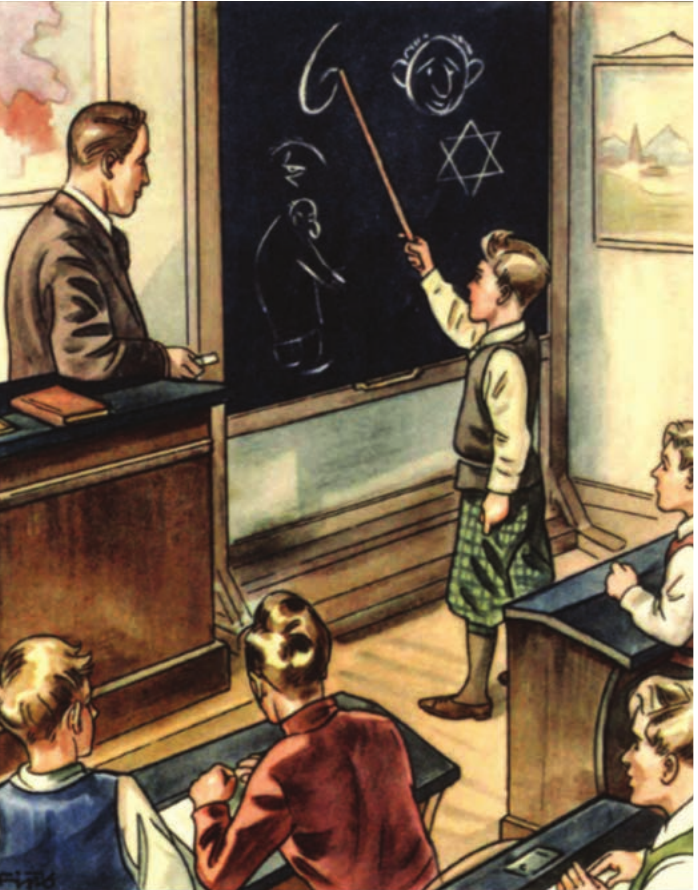
In the first phase, from 1933 to 1935, there was an initial burst of legislation putting racism into practice:
1 April 1933: An attempt to boycott Jewish businesses was called off abruptly. Many Germans objected to the disruption of their shopping routines, and the action was condemned by the international press.
Note
Boycott: Withdrawal from commercial or social relations as a punishment or protest
April 1933: Laws introduced the 'Aryan Clause', which led to the dismissal of Jewish civil servants, academics and teachers.
Jews were slowly squeezed out of the economy:
- When the Nazis came to power, about 100,000 businesses were owned by Jews
- By June 1935, the number had fallen by 25 per cent
- By mid-1938, the original figure had collapsed by almost 70 per cent
The Nuremberg Laws (1935)
In 1935, the Nazis introduced a series of laws called the Nuremberg Laws, which in effect made Jews non-citizens in Germany. This was segregation: Jews lost their civil rights and were treated not as citizens, but as subjects of the Third Reich.
Important
The Nuremberg Laws: Legalized Discrimination
Hitler, in a rare speech to the Reichstag, justified the new laws with the bizarre assertion that they had been prompted by provocative behaviour by Jews. The laws, he claimed, were designed to contain 'a problem' and create a basis from which Germans could have a 'tolerable relationship with the Jews'.
This legal framework stripped Jews of their citizenship rights and laid the groundwork for increasingly severe persecution. The laws represented the codification of racial discrimination into German law.
In the mid-1930s, Nazi racial policy openly encouraged Jews to leave Germany. Official Nazi policy was to encourage their departure, albeit leaving all their belongings, property and money behind.
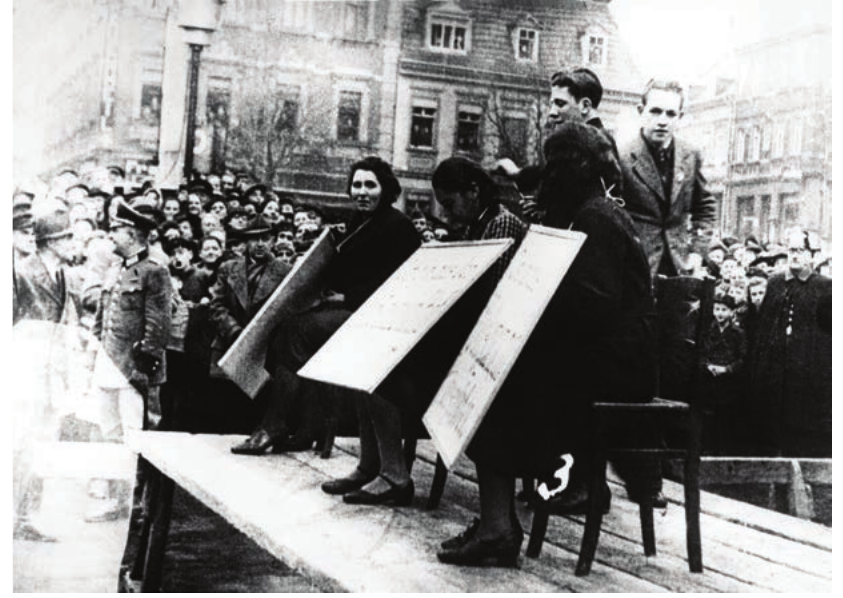
Phase 2: 1938 – Radicalisation and Kristallnacht
The year 1938 saw a steady radicalisation of Nazi Jewish policy. It accompanied a period of risk-taking by the regime and increased confidence as each gamble was successfully achieved.
On the night of 9-10 November 1938, the most radical and brutal attack on the Jews since Hitler came to power occurred. It is known as Kristallnacht (Night of Broken Glass):
Example
Kristallnacht: The Night of Broken Glass
The violence of 9-10 November 1938 marked a dramatic escalation in Nazi persecution:
Destruction of property:
- Every synagogue (about 400) was set alight
- 7,500 businesses still in Jewish ownership were ransacked, along with many Jewish homes
Human cost:
- About 25,000 Jews were arrested and sent to concentration camps
- Around 100 Jews were killed in the violence of the night
- Hundreds were badly injured
This state-sanctioned pogrom represented a turning point from legal discrimination to violent persecution.
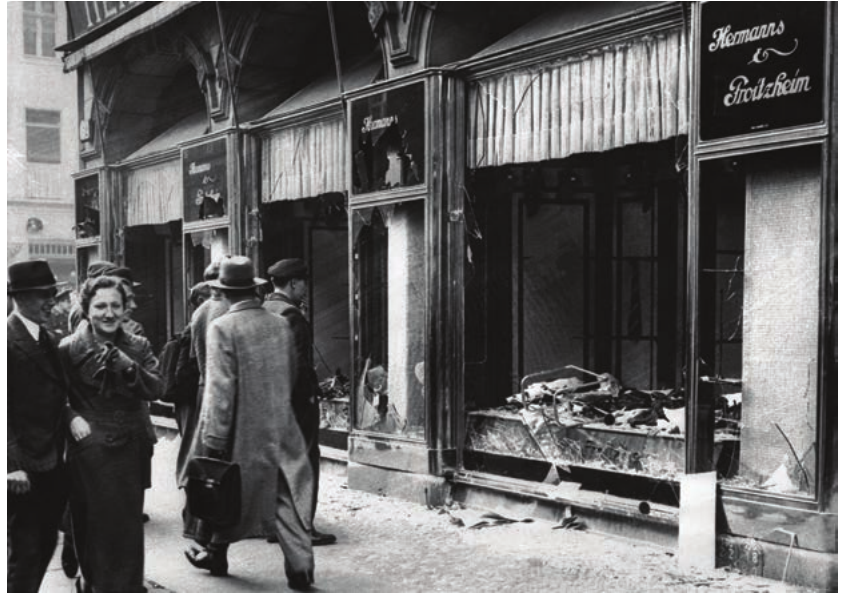
The aftermath of Kristallnacht
The aftermath of the November attacks saw the final and complete exclusion of Jews from the German economy:
- All remaining businesses were either closed or Aryanised (transferred to state-approved owners)
- A collective fine of 1 billion Reichsmarks was levied on the Jewish community
- Those Jews who remained in Germany survived on the edge of society, relying on what funds survived in Jewish community organisations or was supplied by individuals
Important
The Complete Economic Exclusion
After Kristallnacht, Jews were not only victims of violence but were also blamed and punished for it. The massive collective fine of 1 billion Reichsmarks added economic devastation to physical persecution, leaving the Jewish community impoverished and completely isolated from German economic life.
Summary of Nazi impact on Jews
Between 1933 and 1939, the Nazi regime succeeded in totally isolating the Jewish population in the territories under its control. Through a torrent of propaganda and through discriminatory laws, this once vibrant and assimilated community was reduced to poverty and desperation.
Summary
Key Points to Remember:
-
The Nazi regime radically transformed all aspects of German life between 1933 and 1939 to create a Volksgemeinschaft aligned with Nazi ideology.
-
Culture became a propaganda tool, with the Reich Chamber for Culture controlling all artistic output and promoting 'blood and soil' themes and Nazi Realism.
-
Women were relegated to traditional roles focused on 'Children, Church, Kitchen', though these policies were largely accepted as a return to traditional values. The childbirth rate increased from below to above between 1933 and 1936.
-
Education was Nazified with subjects reoriented to promote Nazi ideology, and 'unreliable' teachers were purged from the profession.
-
Youth were indoctrinated through the Hitler Youth, which grew from 20,000 members in 1932 to 8.7 million ( of 10-18 year olds) by 1939, eventually becoming compulsory.
-
Religious influence was severely curtailed, with attendance at religious schools dropping from in 1933 to by 1939.
-
Anti-Semitic policies escalated from economic exclusion to violent persecution, culminating in Kristallnacht in November 1938, which marked the complete isolation of the Jewish community from German society.