The Various Methods Used by the Nazi Regime to Exercise Control (HSC SSCE Modern History): Revision Notes
📚Revision Notes
The Various Methods Used by the Nazi Regime to Exercise Control
By the end of 1934, the Nazi regime had successfully eliminated most opposition. The Communists were gone, unemployment was falling, and the final restraints on Nazi power – the Army and President Hindenburg – had been removed. With power consolidated, the Nazis could now implement their full ideological programme, particularly their racial ideology.
The Nazis believed that race was the key to understanding human history. To translate this radical ideology into policy required extraordinary measures. The regime exercised control through three main methods: discriminatory laws and citizenship policies, terror and repression, and propaganda.
Important
The Three Pillars of Nazi Control
Understanding how the Nazi regime maintained its power requires examining three interconnected methods:
- Laws and citizenship: Systematic legal exclusion of Jews and other groups
- Terror and repression: Organizations like the Gestapo, SS, and concentration camps that created an atmosphere of fear
- Propaganda: All-encompassing control of media and culture to indoctrinate the population
These methods worked together to eliminate opposition and enforce compliance with Nazi ideology.
Laws and citizenship
The Nazi regime used legislation to systematically exclude Jews and other groups from German society. These laws became progressively more restrictive throughout the 1930s.
The Aryan Clause (1933)
In April 1933, the Aryan Clause became law, leading to the dismissal of Jewish civil servants, academics and teachers from their positions. This represented the first major legislative attack on Jewish participation in German public life.
Note
President Hindenburg insisted on exempting Jewish war veterans and relatives of war dead from these restrictions. However, this exemption was not motivated by compassion but rather by a desire to honour veterans of World War I associated with traditional German nationalism.
Restrictions on Jewish education (1933)
Around 60,000 Jewish children lived in Germany in 1933. While exclusion of Jewish adults from society took several years to implement fully, these children faced rapid deterioration in their treatment at school.
The Law Against the Overcrowding of German Schools of April 1933 established strict quotas:
- A general limit of 1.5% of a school's population for Jewish students
- In areas where Jews comprised more than 5% of the local population, the ceiling could reach 5%
These quotas effectively excluded many Jewish children from mainstream education.
The Nuremberg Laws (1935)
In 1935, the regime organised racial discrimination through two major pieces of legislation known as the Nuremberg Laws. These laws were among only four laws passed by the Reichstag during the entire 12 years of Nazi rule, demonstrating their fundamental importance to the regime.
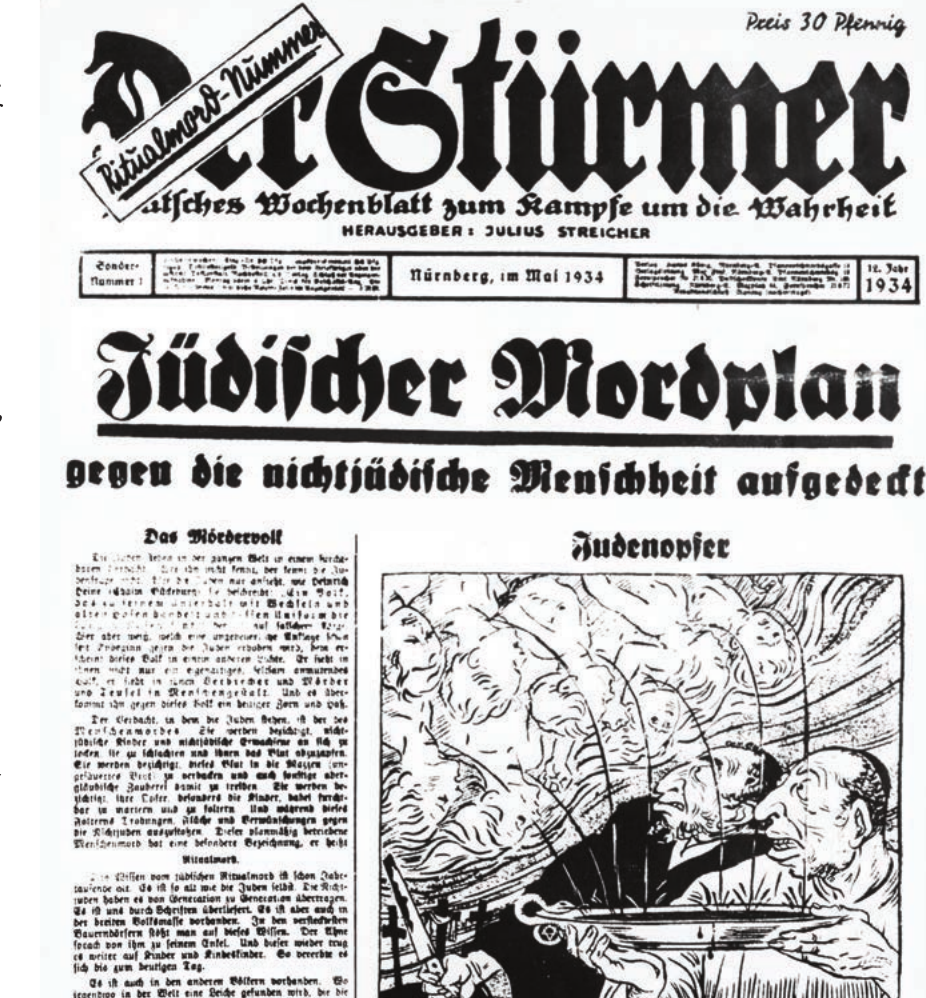
The Law for the Protection of German Blood and German Honour introduced several prohibitions:
- Banned marriages between Jews and Germans
- Prohibited extra-marital sexual relations between Jews and Germans
- Made it illegal for Jews to employ German women under the age of 45
These regulations reflected the Nazi obsession with preventing what they called the adulteration of German blood through sexual contact with Jewish men.
The Reich Citizenship Law stripped Jews of their citizenship rights. It created two categories of Germans:
- Reich citizens: Aryans with full rights
- Nationals: Those subject to racial discrimination under Nazi policy, with no citizenship rights
Note
The Hasty Creation of the Nuremberg Laws
The Nuremberg Laws were drafted hastily to be presented at the Nazi Party's annual Nuremberg Rally. Officials were hurriedly flown in from Berlin to write the first law overnight. The Reich Citizenship Law was drafted in half an hour and scribbled on the back of a hotel menu card due to lack of available paper.
This rushed creation did not diminish their devastating impact – these laws became the legal foundation for systematic persecution of Jews in Nazi Germany.
Entjudung: the policy of de-Jewification
After the Nuremberg Laws, the SS became the major agency dealing with what the Nazis called the 'Jewish issue'. Their policy was termed Entjudung (de-Jewification). This legislation was designed to make life so unpleasant for Jews that they would voluntarily leave Germany.
The SS encouraged German harassment of Jews, known as Einzalakitonen. This policy of encouraging emigration through persecution continued until 1938, when the Party began identifying Jewish assets in order to seize them. The intensification of anti-Jewish laws led to Kristallnacht in November 1938.
Important
Escalation of Persecution
The policy of Entjudung (de-Jewification) marked a critical shift from simple discrimination to active persecution. By encouraging ordinary Germans to harass their Jewish neighbours (Einzalakitonen), the Nazis transformed anti-Semitism from state policy into widespread social practice. This escalation culminated in the violence of Kristallnacht in November 1938, marking a turning point from persecution to potential extermination.
Terror and repression
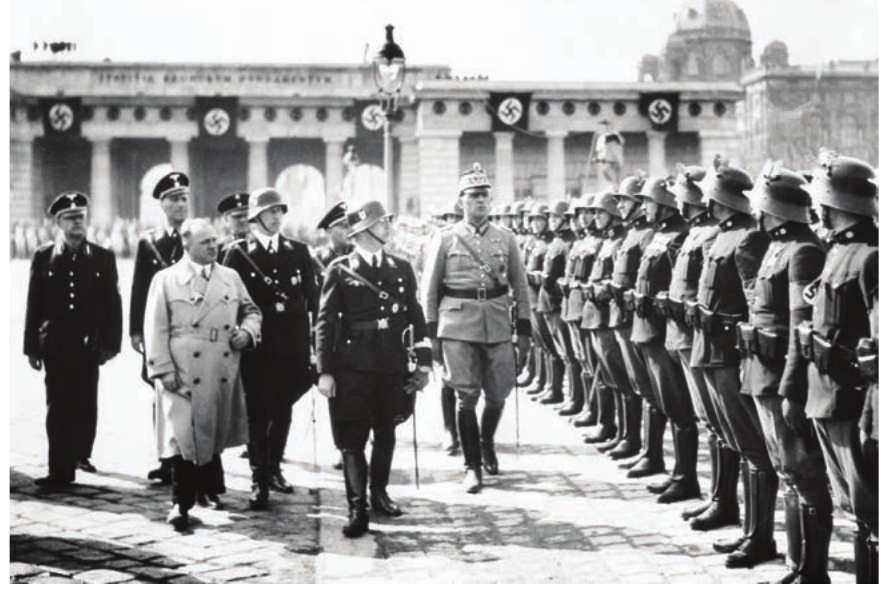
Alongside propaganda, the Nazi regime employed terror and repression to maintain power between 1933 and 1939. While propaganda persuaded German citizens to accept the new regime, terror silenced any remaining opposition. Three main organisations carried out this terror: the Gestapo, the SS, and the concentration camp system.
The Gestapo
The Geheime Staats Polizei (Gestapo) was established in November 1933 and governed by Heinrich Himmler from 1934. It was primarily responsible for the internal security of the Reich and quickly gained a reputation for ruthlessness and efficiency.
Note
The Illusion of Omnipresence
Recent research by historian Robert Gellately reveals that the Gestapo's appearance of omnipresence was somewhat superficial. Contrary to the perception of an SS officer on every corner, most towns only had around 40 Gestapo officers. The organisation relied heavily on public denunciations to identify opponents.
However, this illusion was enough to terrorise the population. Historian Richard Evans argues that public belief in the presence of terror and fear of arrest allowed the Nazi terror machine to reach even the smallest units of everyday life. The Gestapo's operations were not concealed; rather, its exploits were publicised to reinforce the illusion of strength and to encourage denunciations.
The Gestapo effectively maintained public adherence to Nazism by creating a pervasive sense of fear within the population.
The SS
The terror inspired by the SS (also known as 'Blackshirts') was highly effective in controlling German opposition and ensuring the persistence of the Reich. Under Heinrich Himmler's leadership, the organisation initially served as Hitler's bodyguard but grew rapidly in size and power.
By 1935, 200,000 Blackshirts operated in Germany. Strict intellectual, physical and racial requirements for membership ensured the SS stood out as ideal Aryan Germans, a notion commonly promoted in propaganda.
The SS publicly demonstrated its brutality and loyalty to Hitler during the Night of the Long Knives in June 1934, when it eliminated Ernst Röhm and the SA leadership during the consolidation of Nazi power. During the 1930s, the SS operated primarily as a police force to discover and remove secret opponents of the state.
The SS used various methods to silence opposition, including:
- Execution
- Forced labour
- Imprisonment
- Intimidation and surveillance
Historian William Shirer argued that the SS under Himmler was greatly feared, particularly the intelligence branch, which was capable of mass surveillance. The SS's work as an instrument of terror, both in its reputation and actions, was significant in removing opposition to the regime and ensuring continued Nazi rule.
Concentration camps
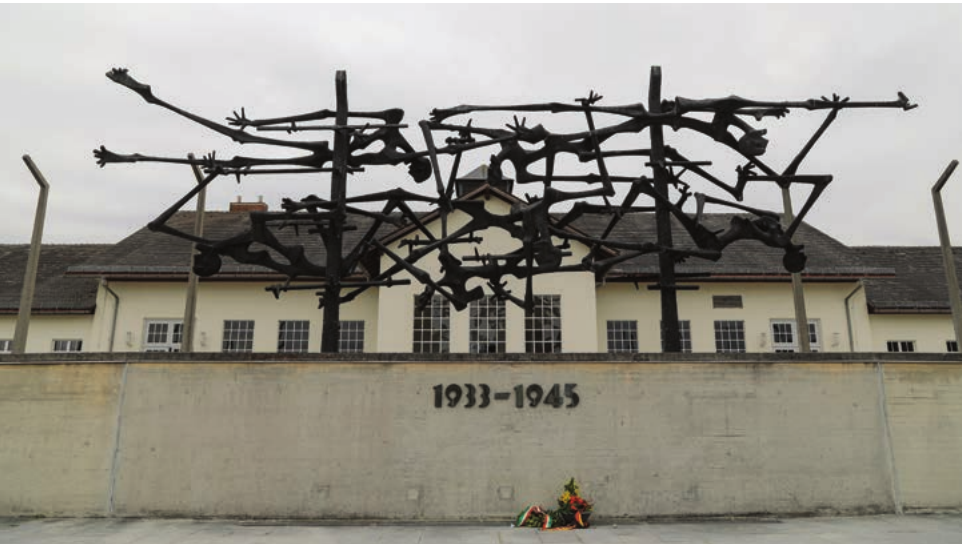
The use of concentration camps from 1933 extended aspects of terror in Nazi Germany. Initially established to detain political opponents, including Communists and socialists, the camps expanded into a centralised system to remove various groups the Nazis considered undesirable.
Operation of the camps was transferred to the SS after the purge of the SA in 1934. Between 1934 and 1939, approximately 200,000 people passed through the camps. This number continued to rise as the list of targeted groups expanded to include homosexuals, Romani people, and other minority groups.
Important
The Purpose of Public Fear
Stories of the brutal experiences of individuals detained within the camps were deliberately allowed to leak out into the public sphere. Accounts of brutality and horrific conditions added to the growing sense of terror in society, often ensuring citizens pledged loyalty to the state regardless of their political views.
Hitler himself described the camps as the 'most effective instrument' which must remain ruthless to support the regime. The camps served not only to detain opponents but to terrorise the entire population into submission.
Propaganda and censorship
Under Joseph Goebbels' leadership, propaganda was seen as a powerful tool of indoctrination, capable of silencing opposition and bringing the population in line with Nazi ideology. All aspects of cultural expression were brought under party control to promote themes of Nazi strength and unity.
Media control
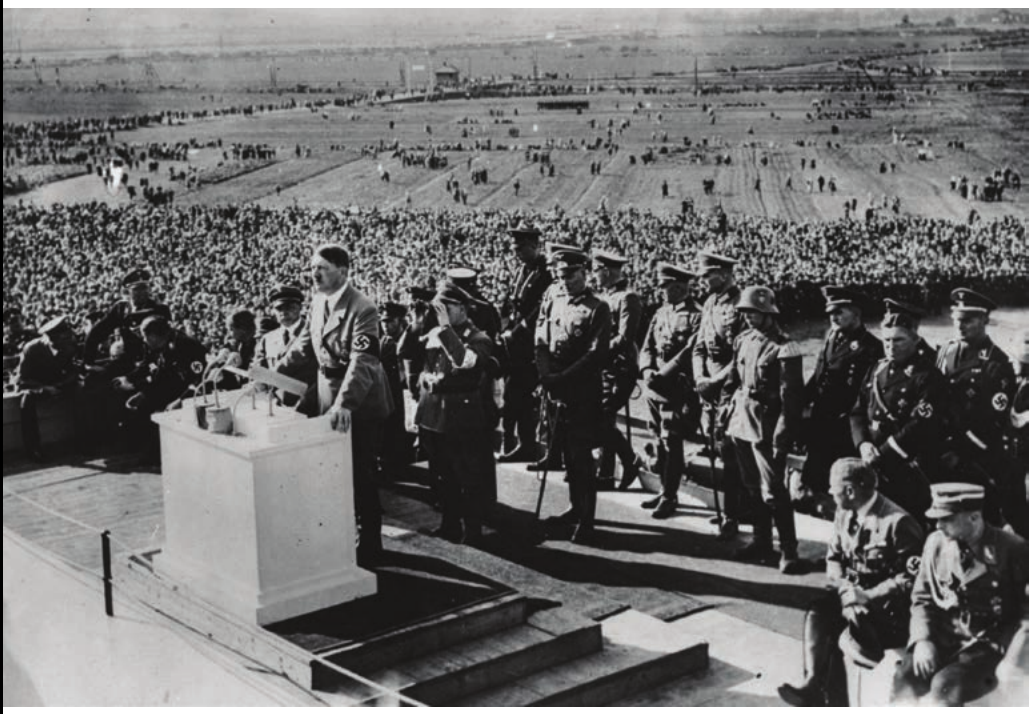
The Nazi regime exercised comprehensive control over all forms of media and cultural expression:
Press control: Through the Editorial Law of October 1933, newspaper editors were required to follow government policy, only printing news approved by Goebbels' organisation.
Radio: The radio was seen as an effective medium for easy communication and manipulation of public opinion. The regime produced cheap 'people's radios', allowing Hitler's speeches and other approved propaganda (such as music) to enter German homes.
Cinema: Propaganda entered cinemas through films such as Hitlerjunge Quex, which promoted heroic tales of German honour to audiences.
The arts: Through the establishment of the Reichskulturkammer (Reich Chamber of Culture), all aspects of the arts were censored and controlled, including literature, paintings and music.
Note
Total Control of Cultural Expression
The magnitude of the Nazi propaganda effort clearly indicates the role it played in Nazi Germany, particularly in shaping public opinion. As historian Richard Evans suggests, such promotion of Nazism served to influence even neutral Germans to 'swim with the tide of popular opinion'.
By controlling every medium through which Germans received information and entertainment, the Nazis ensured that their ideology permeated all aspects of daily life. This total control made resistance not only dangerous but increasingly difficult to conceive.
Propaganda was therefore significant in maintaining Nazi power, silencing opposition and promoting allegiance to the regime through various media.
Volksgemeinschaft: the national community
The propaganda machine was used extensively to promote the Nazi project of Volksgemeinschaft (national community) and to remove political opposition. The community envisioned was a harmonious and classless society of racially pure Germans serving the common goals of the state.
This notion was reinforced by the construction of the Führer myth, which projected Hitler as the saviour of the German people, alleviating uncertainty over the party's leadership. The effectiveness of both concepts is demonstrated in Nazi slogans such as 'Ein Reich, Ein Volk, Ein Führer' ('One nation, One people, One leader').
Unyielding belief in the Führer, and by extension the state, was the primary goal of Goebbels' ministry. As historian Ian Kershaw argues, this could only be achieved by 'blindly following the Führer'. The expert construction of the Führer myth and accompanying propaganda was therefore significant in maintaining power as it sought to remove opponents through indoctrination of the German population.
The cult of personality
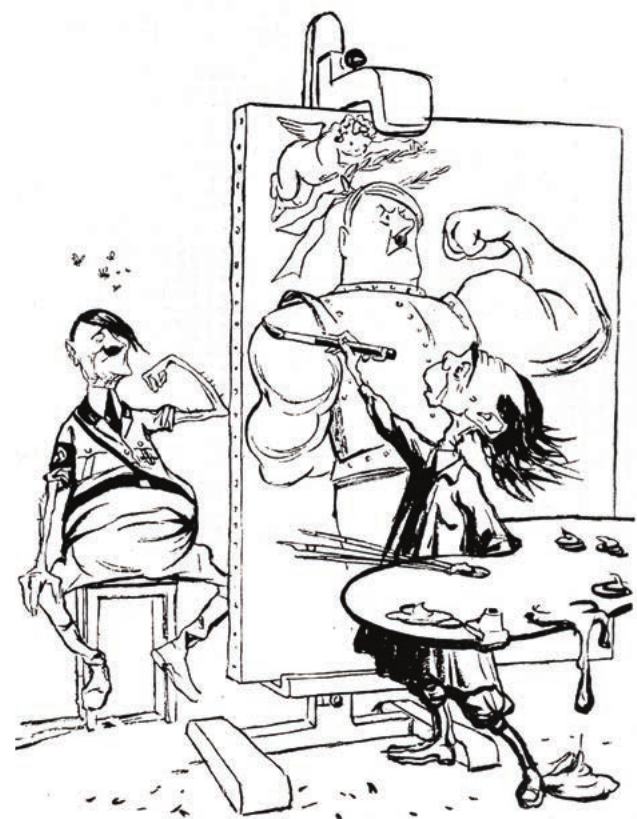
The figure of Hitler himself was crucial to the totalitarian regime. Both Hitler and Nazi Party propaganda presented him as the 'unknown soldier' who had emerged from the trenches of World War I, transformed by that experience and carrying a message of renewed greatness to a humiliated nation.
Hitler assumes total authority
After President Hindenburg died in August 1934, Hitler successfully abolished the title of Reich President and assumed the presidential powers. He wished to be referred to as the Führer, and as part of the Führerprinzip (leader principle), he assumed the identity of the all-embracing ruler of Germany with total authority.
Important
Führerprinzip: The Foundation of Nazi Power Structure
Führerprinzip was the power structure in Nazi Germany where ultimate authority flowed downwards from the Führer. This principle eliminated the democratic structures of the Weimar Republic and replaced them with a hierarchy of obedience.
Every level of German society, from national government to local communities, was reorganised according to this principle. Leaders at each level had absolute authority over those below them, but owed complete obedience to those above, with Hitler at the apex of this pyramid of power.
Joseph Goebbels played an instrumental role in deliberately structuring images and controlling mass media to project Hitler as an all-powerful leader who would resolve the divisive and weak democratic structures of the Weimar Republic.
The Führer myth
The 'Führer myth' was a term used by Joseph Goebbels to describe the 'heroic' leader image he created, which he claimed in 1941 as his greatest propaganda achievement. The German people were attracted to this image, and Hitler represented a stark contrast to the leadership they experienced during the Weimar years.
Hitler represented a strongly authoritarian regime that embodied an imperialistic ideology based on national superiority, whereas the Weimar Republic was seen as a period of political splintering resulting from social divisions. Hitler promoted the creation of an ethnically pure and socially pure Volksgemeinschaft based on achievement and merit.
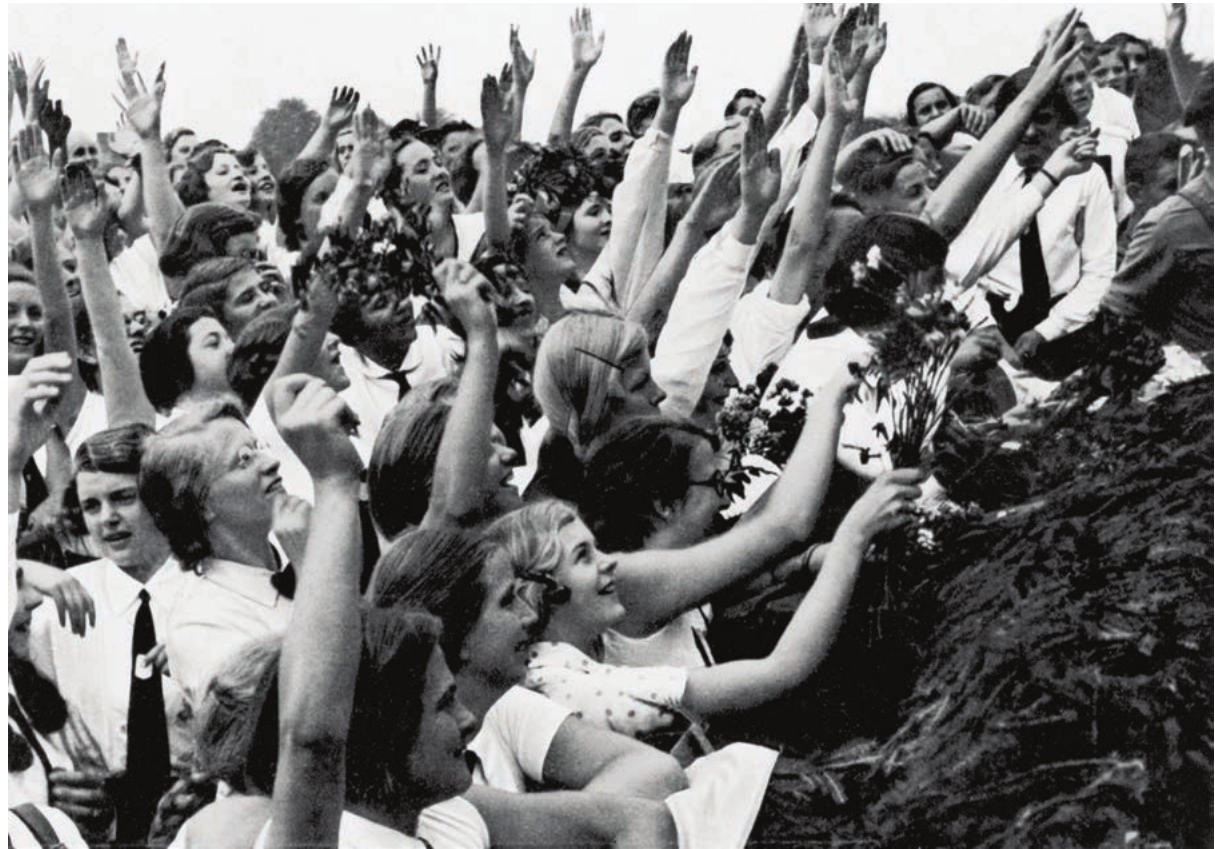
Hitler's oratory skills
Hitler's exceptional oratory skills allowed him to present himself to the German people as a strong leader. What was indisputable was that Hitler knew his audience. He was able to speak to their deepest fears and desires, explaining that he saw himself as channelling his audience's innermost feelings and convictions.
Note
The Power of Oratory
Hitler was careful to gauge the mood of his crowd and tell them what they wanted to hear. This ability to connect with his audience was central to his oratorical effectiveness. He understood the psychological needs of his listeners – their desire for national restoration, economic security, and a leader who projected strength and certainty.
His speeches combined emotional appeals with simple, repetitive messages that reinforced the core themes of Nazi ideology while making listeners feel they were part of something greater than themselves.
The impact of the cult
Historian Ian Kershaw argues that the adulation of Hitler by millions of Germans was a crucial element of political integration in the Third Reich. Without the degree of popular backing which Hitler commanded, the drive, dynamism and momentum of Nazi rule could hardly have been sustained.
Hitler himself was not immune to the extraordinary cult created around him. His own person gradually became inseparable from the myth. The more he believed in his own Führer cult and came to accept his own myth, the more his judgement became impaired by faith in his own infallibility.
Important
The Dangerous Feedback Loop
The cult of personality created around Hitler established a dangerous feedback loop. As propaganda elevated Hitler to almost god-like status, even he began to believe in his own infallibility. This self-belief, combined with a power structure (Führerprinzip) that prevented anyone from questioning his decisions, meant that Hitler's increasingly reckless judgement went unchallenged, ultimately leading Germany toward catastrophic war and genocide.
Summary
Key Points to Remember:
-
The Nazi regime used three main methods to exercise control: discriminatory laws, terror and repression, and propaganda
-
The Nuremberg Laws of 1935 systematically stripped Jews of citizenship and rights, creating two categories of Germans: Reich citizens and nationals
-
Terror organisations (Gestapo, SS, concentration camps) created an atmosphere of fear that deterred opposition, even though the Gestapo had limited actual numbers and relied on public denunciations
-
Propaganda under Goebbels controlled all media and cultural expression, promoting the Volksgemeinschaft (national community) and the Führer myth
-
The cult of personality surrounding Hitler, promoted through the Führerprinzip, presented him as Germany's saviour and demanded blind obedience from the German people
-
These three methods worked in concert: laws provided the legal framework for discrimination, terror silenced opposition through fear, and propaganda indoctrinated the population to accept and support Nazi ideology