The Cuban Revolution and Its Impact on Latin America (HSC SSCE Modern History): Revision Notes
📚Revision Notes
International Reactions and Foreign Policy, Including US Relations
Early US response to Castro's revolution (1959)
The United States government never supported revolutionary groups coming to power. However, President Eisenhower's administration wanted to understand the true nature of Castro's victory, especially given the corruption of the previous Batista regime.
American criticism of war trials
The Eisenhower administration and American press strongly condemned the war criminal trials held in Cuba against former Batista government officials. These trials targeted leading police and military figures accused of atrocities under Batista's rule.
Important
This American criticism deeply angered Cubans, who felt the US had remained silent about Batista's brutal actions. On 22 January 1959, thousands of Cubans gathered at the Presidential Palace to support Castro's government. Castro denounced the US for criticising the trials whilst having ignored Batista's crimes.
Castro's visit to Washington (April 1959)
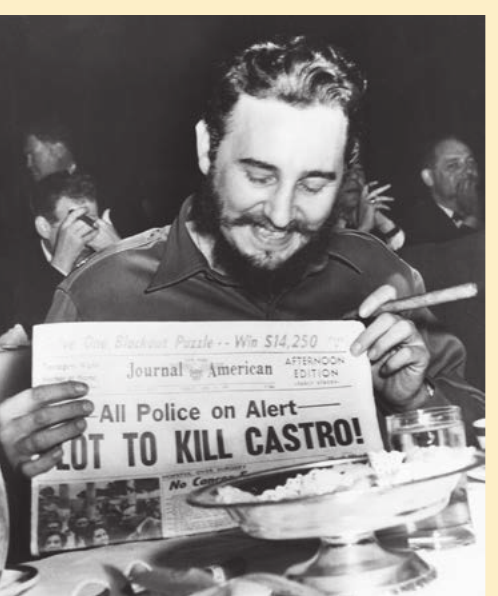
Despite tensions over the war trials, Castro accepted an invitation to address the Washington Press Club in April 1959. American observers expected Castro to praise American democracy and request financial aid, as was customary for visiting leaders.
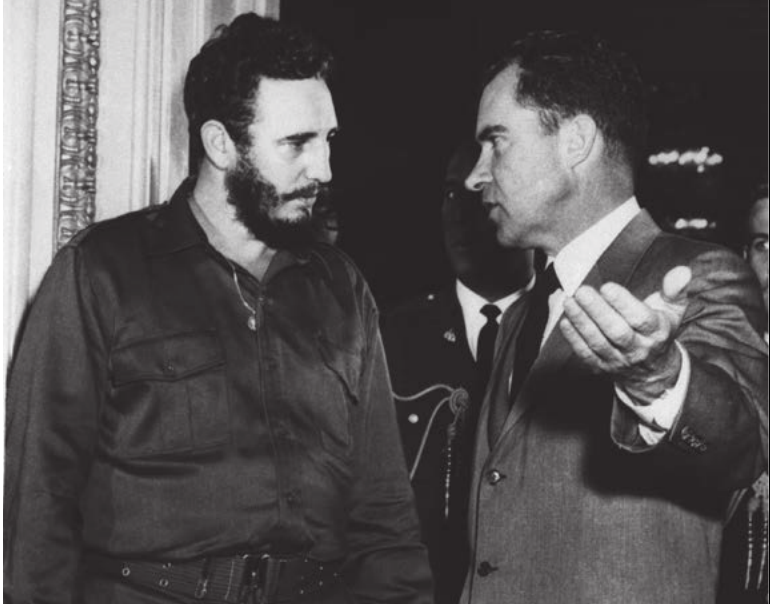
Meeting with Vice-President Nixon
President Eisenhower deliberately avoided meeting Castro. Instead, the Cuban leader met with Vice-President Richard Nixon. During their meeting, Nixon presented Castro with CIA files suggesting some of Castro's supporters were communists.
Note
Key term: The Central Intelligence Agency (CIA) is a civilian foreign intelligence service of the US federal government, responsible for gathering, processing and analysing national security information from around the world.
Castro showed little interest in these files, which displeased Nixon. Castro, who had publicly stated he was not a communist, grew annoyed by constant questioning about communism. He and his delegation felt the US cared less about Cuba's actual policies and more about whether Cuba would become communist.
Castro's independent stance
When reporters asked if Castro had come to seek foreign aid, he responded firmly: "No, we are proud to be independent and have no intention of asking anyone for anything." Castro had instructed his finance ministers not to request money, believing American officials would be more likely to offer aid if it wasn't requested.
Deteriorating US-Cuban relations (1959-1960)
Relations between the US and Cuba rapidly worsened due to several interconnected factors.
Sugar and economic tensions
Cuba's main source of revenue was sugar, virtually its only exportable product. The US had traditionally purchased almost all Cuban sugar at guaranteed high prices through a quota system. However, the US grew increasingly concerned about:
- Expropriation of American property in Cuba
- High tariffs Castro placed on American imports
- Reports of growing communist influence
Note
Key term: Expropriation means government seizure of private property, usually with compensation.
Despite these concerns about the sugar market, Castro continued making speeches attacking the US and accusing them of trying to destroy the Cuban Revolution. He made no effort to deny communist influence in Cuba, believing American fears of communism gave Cuba additional leverage in negotiations.
Soviet involvement begins
Relations deteriorated further when the Soviet Union entered the picture:
- February 1960: The Soviet Union agreed to purchase substantial amounts of Cuban sugar over five years and provide Cuba with supplies and technical aid
- This Soviet deal alarmed the US, which saw it as evidence of Cuba moving into the communist sphere
Timeline of escalating tensions (1960)
Important
4 March 1960: A French freighter delivering weapons to Cuba exploded in Havana Harbour, killing 75 Cuban dockworkers and injuring 200. Although the cause was never discovered, Castro blamed the US.
Late March 1960: Bombings of Cuban sugar-cane fields and government installations occurred almost daily, with flights originating from the US.
Note
Key term: US-based Cuban exiles refers to many Cubans who fled or left the island of Cuba, particularly after the revolution.
May 1960: The Cuban government requested three large US-owned oil refineries in Cuba to process Soviet crude oil.
June 1960: The US House of Representatives passed a bill sharply reducing imports of Cuban sugar. Castro called this a "declaration of economic war."
Castro issued an ultimatum: if American refineries refused to process Soviet oil, Cuba would seize them. When the oil arrived and American refinery managers fled, the Cuban government expropriated the companies.
Soviet support expands
Soviet leader Nikita Khrushchev quickly reacted to the breakdown in US-Cuban relations by:
- Announcing the Soviet Union would buy sugar rejected by the US
- Indicating willingness to provide Cuba with military assistance
In following weeks, most US companies in Cuba were nationalised, along with many Cuban-owned private enterprises.
Cuba becomes socialist
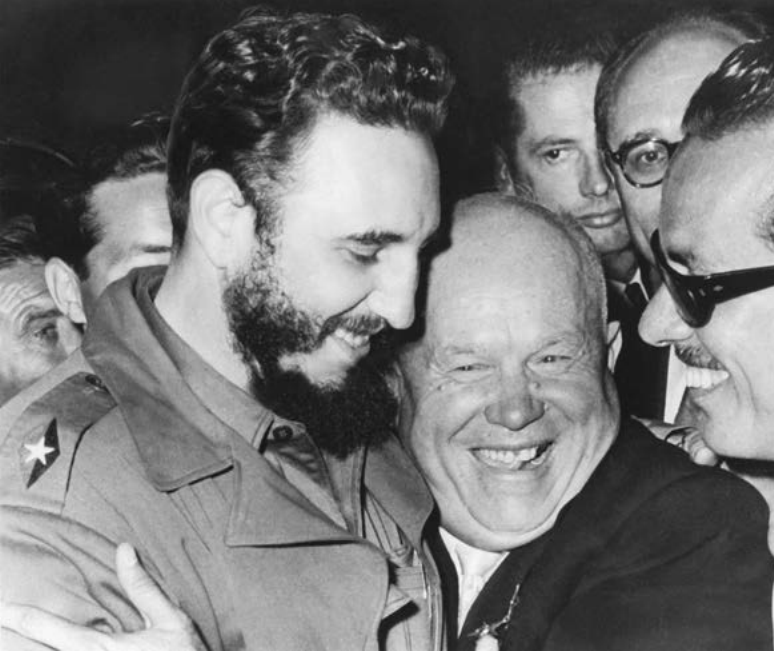
In September 1960, Castro attended the 15th anniversary celebration of the United Nations in New York. Here, Khrushchev greeted Castro with a "bear hug." The photograph of their laughing embrace later appeared on walls throughout Cuba as a symbol of Soviet-Cuban friendship.
Note
When asked about US policy towards Cuba, Khrushchev said: "Fidel Castro is not a communist now, but the United States will make him one within two years." One year later, Castro proclaimed himself a communist. By late 1960, Cuba had effectively become a socialist state.
Cold War tensions and Kennedy's election (1960)
The Cuban Revolution became a major issue in American politics. Cuba was a central topic during the 1960 presidential election.
Kennedy's campaign promises
Democrat candidate John F Kennedy accused President Eisenhower of allowing a "communist menace" to enter the Western hemisphere. Kennedy believed America needed to enforce the Monroe Doctrine and stated: "We will not be content until democracy is restored in Cuba. The forces fighting for freedom in exile and in the mountains of Cuba should be sustained and assisted."
Both Democrats and Republicans loudly pledged support for anti-Castro forces during the campaign.
Final breakdown of diplomatic relations
October 1960: Eisenhower halted all US exports to Cuba. Castro responded by seizing the remaining US-owned companies.
January 1961: Convinced the US would invade before Eisenhower left office, Castro ordered all but a few American embassy staff to leave Cuba.
Important
3 January 1961: The US broke off diplomatic relations with Cuba. Castro warned that an invasion would be "a fight to the death."
Kennedy inherits invasion plans
When Kennedy won the 1960 election, he was immediately informed about secret invasion plans already underway. The new President faced a dilemma:
Castro as a challenge to US power: Kennedy saw Castro as someone who had defied American might, refused to be intimidated, and represented an affront to American pride.
Risks of intervention: Kennedy feared that military intervention in Cuba, successful or not, could result in moral and political setbacks for the US in Latin America and other Third World nations.
Alliance for Progress
Shortly before the planned invasion, Kennedy unveiled his Alliance for Progress programme. This was a multimillion-dollar aid package to Latin American countries designed to build goodwill in the region.
The Bay of Pigs invasion (April 1961)
The Kennedy administration supported the invasion despite concerns. CIA Chief Allen Dulles assured Kennedy it would be greeted by a popular uprising against Castro. Kennedy had been trapped by his own hard-line campaign rhetoric. Cancelling an invasion so strongly endorsed would have opened his administration to severe criticism from Congress and the press.
Preparation and planning
Important
15 April 1961: Several aeroplanes piloted by Cuban exiles bombed Cuban airfields and military quarters. However, Castro had hidden his military aircraft and placed decoy planes in full view. Damage to Cuba's air force was slight, although seven people were killed and 44 wounded. Throughout Cuba, police began rounding up everyone suspected of having anti-government sentiments.
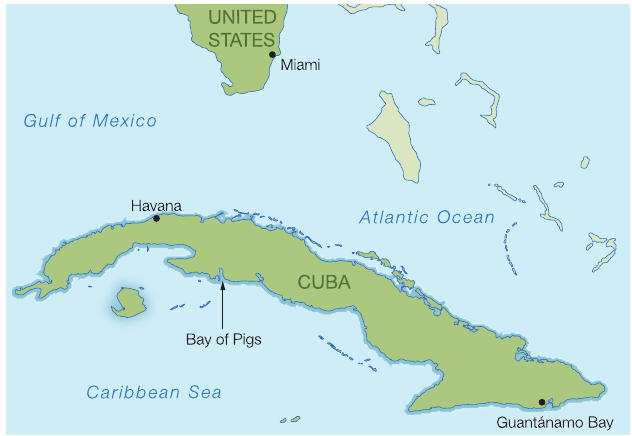
The invasion site
The destination was the Bay of Pigs, located on Cuba's south coast alongside vast stretches of treacherous swampland. The CIA's plan assumed:
- Once a beachhead was established, invaders would be hard to dislodge
- A small strip of land between beach and swamp contained an airfield
- The area would be sealed off with artillery and tanks
- Cuban air force had been destroyed, so site would be immune from air attack
This final assumption proved devastatingly wrong.
The invasion fails
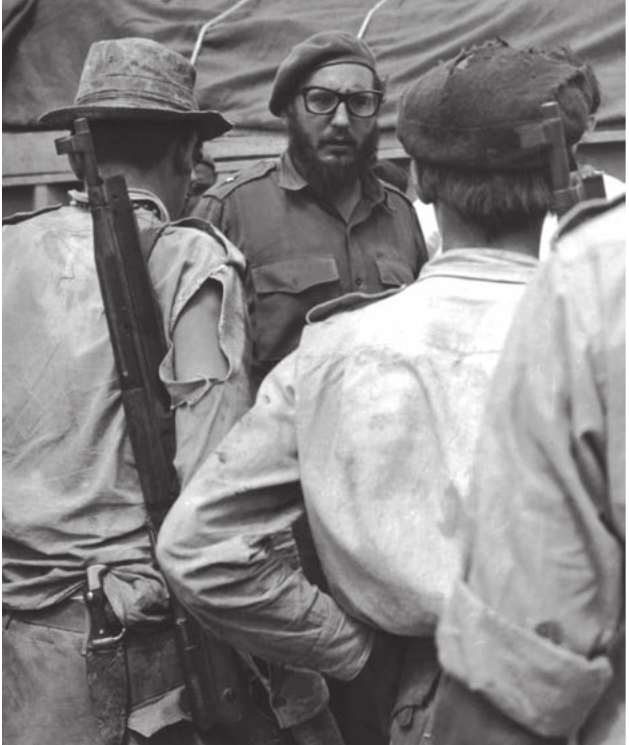
17 April 1961: Invaders met heavy resistance as soon as landing craft reached shore. The local militia, alerted by sentries, went immediately into action.
Note
The invaders overlooked a crucial factor: the Revolution had markedly improved many Cubans' lives, creating intense loyalty to Castro's regime. The Cuban air force delivered a crushing blow, sinking several ships and forcing survivors to retreat far offshore.
18 April 1961: The invaders were surrounded. Realising complete failure, Kennedy refused to commit American marines or allow US planes to make air strikes against Cuban forces.
Final toll: Castro's forces captured 1,180 prisoners; 129 invaders were killed. Castro announced 87 of his men died, though other estimates place Cuban losses as high as 1,200 dead and 2,000 wounded.
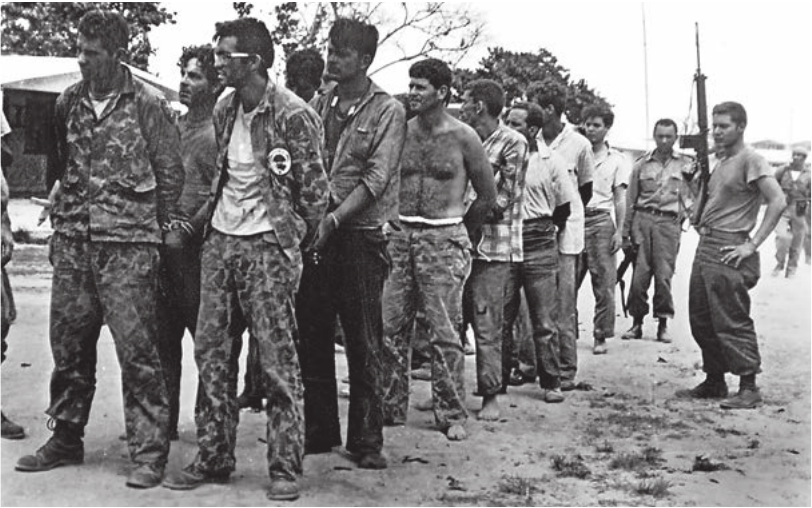
Theodore Draper wrote: "The ill-fated invasion of Cuba in April 1961 was one of those rare politico-military events – a perfect failure."
Outcomes of the Bay of Pigs
The US seriously miscalculated both Castro's popular support and the revolutionary government's military capability.
Castro's triumph: The Bay of Pigs was a personal victory for Fidel Castro and a political watershed for the Cuban Revolution. The counter-revolution received a heavy blow. Both Cuba's national pride and Castro's popularity reached new heights. Castro announced: "The invaders have been annihilated. The Revolution has emerged victorious."
Note
Key term: Counter-revolution means a revolution opposing a former one or reversing its results.
Socialist declaration: For the first time, the Cuban Revolution was publicly proclaimed socialist. On 1 May 1961, Castro announced Cuba was a "Marxist-Leninist state." He added there would be no more formal elections since the revolutionary government expressed the people's will.
Masking economic problems: The invasion came at an opportune time for Castro's regime. In 1961, Cuba faced grave economic difficulties including food shortages and lack of expertise in economic management, as most top administrators had left the country. The surge in Castro's popularity following the Bay of Pigs kept public dissatisfaction to a minimum.
Kennedy's humiliation: The invasion was a shattering blow to Kennedy, who faced international ridicule. However, it also meant Cuba would now face undying US hostility.
Economic blockade: In October 1961, Kennedy imposed a total blockade on Cuba.
Note
Key term: Blockade means stopping supplies from reaching an enemy force.
Operation Mongoose
Determined to compensate for the Bay of Pigs failure, the Kennedy administration initiated Operation Mongoose. This plan aimed to sabotage and destabilise Cuba's government and economy, including:
- Possible assassination of Castro
- Extension of Cuba's economic blockade to ban all Cuban products entering the US
- Ban on all travel by US citizens to Cuba
- Sabotage of Cuban oil sites
- Invasion exercises by 40,000 US military personnel on neighbouring Puerto Rico
The Cuban Missile Crisis (October 1962)
Tensions between Cuba and the US intensified dramatically in 1962.
Background and escalation
January 1962: The Organization of American States, responding to American pressure, expelled Cuba as a member, citing its "revolutionary belligerency" in the region.
26 July 1962: Castro spoke fervently about an impending US invasion during ceremonies celebrating the ninth anniversary of the Moncada attack, maintaining Cuba in a state of anxiety.
Soviet missiles arrive in Cuba
Cuba's ties with the Soviet Union had expanded significantly. The Soviets became Cuba's main trading partner, supplying massive economic and military aid.
Important
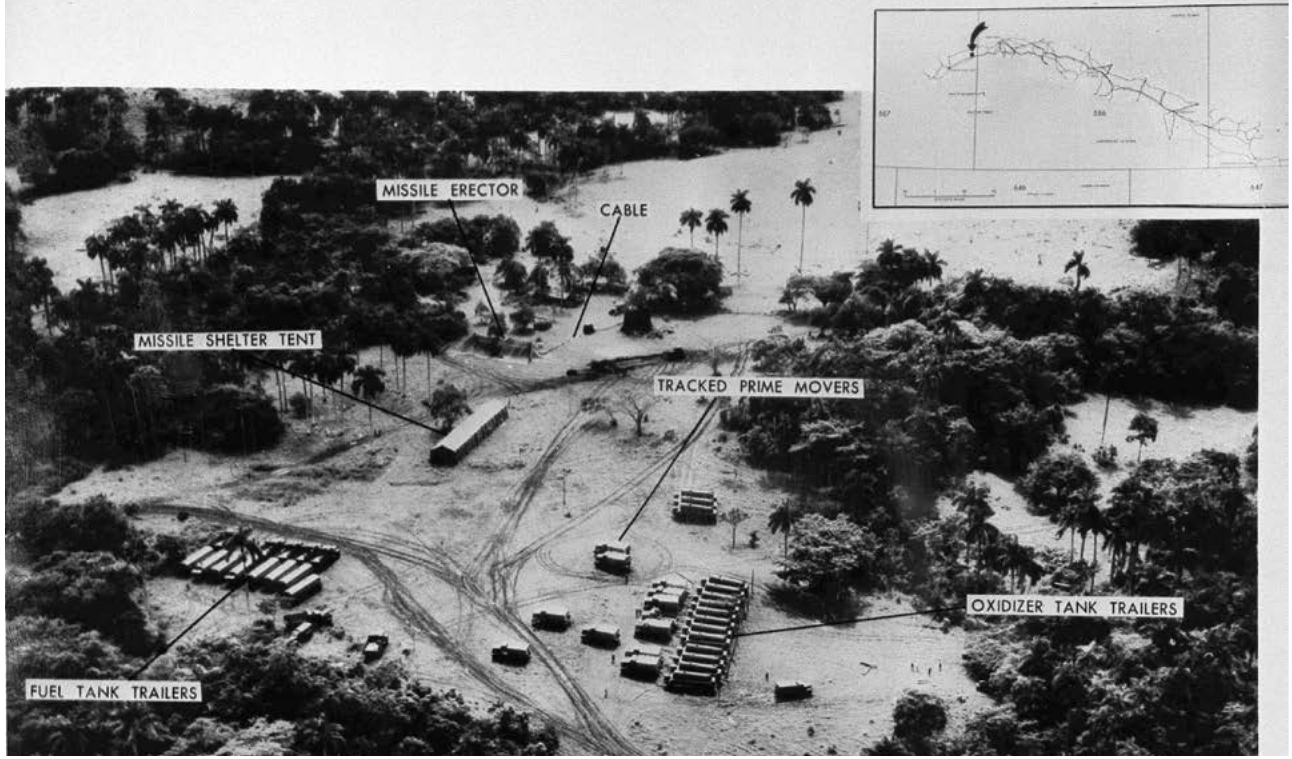
July 1962: Raúl Castro visited Soviet Premier Nikita Khrushchev. The Soviet Union promised to supply Cuba with increased defence weapons, including medium- and long-range nuclear-armed missiles.
Khrushchev's motivation: Khrushchev knew his position would be endangered if the US dislodged Cuba's openly socialist leader. He believed once Soviet missiles were securely based in Cuba, the US wouldn't risk triggering nuclear war with another invasion.
Castro's acceptance: Castro accepted the missiles partly to avoid offending Russia, but also believed the weapons (some with ranges up to 1,200 miles) would help defend Cuba.
Kennedy's response options
President Kennedy received clear proof of the missiles' existence from spy plane photographs a week before making his public announcement.
Note
The Kennedy administration considered several options, each with significant advantages and disadvantages:
- Do nothing: Would give time to prepare but was politically unpopular and represented a major Soviet success
- Nuclear strike: Would strike first but risked full-scale nuclear war
- Air strike on missile bases: Would destroy existing missiles but risked war without guarantee of destroying all sites
- Naval blockade: Provided limited pressure that could increase later, but wouldn't affect missiles already in Cuba
- Air attack on all military sites: Would destroy missiles but meant direct conflict with Cuba and possibly USSR
- Full invasion: Would destroy missiles but meant war, estimated 25,000 US casualties, and USSR might invade West Berlin
Six tense days
The Cuban Missile Crisis compressed into six tense and suspenseful days.
Example
Timeline of the Crisis
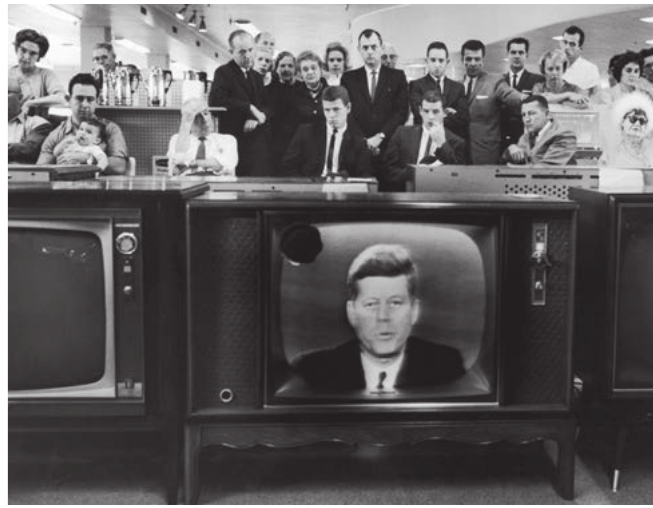
Monday, 22 October: Kennedy made a television speech revealing the "unacceptable" presence of Soviet-supplied missiles in Cuba. He announced the US was setting up a "quarantine" (naval blockade) of Cuba to prevent further Soviet arms shipments. Kennedy demanded the Soviets remove all missiles already assembled.
23 October: Castro ordered nationwide mobilisation. Thousands of soldiers and militia members were sent to coastal defence stations. Castro addressed the nation on television, arguing: "This has happened simply because, up to now, all attempts by the United States to destroy our revolution have ended in failure... What have we done? We have defended ourselves. That is all!"
26 October: Khrushchev agreed to remove missiles if the US pledged not to invade Cuba and removed its missiles from Turkey.
28 October: The US quickly accepted. Khrushchev announced the missiles would be removed.
Castro's reaction
Castro had not been consulted during negotiations. He was furious when he learned of the Soviet capitulation. The immediate Cuban response was that the Soviets had betrayed Castro and the Revolution. Many Third World nations believed revolutionary Cuba, instead of achieving independence, had merely traded masters.
Outcomes of the Missile Crisis
The crisis proved a turning point for the three leaders involved:
Kennedy: Restored his reputation after the Bay of Pigs debacle. He was revered as a symbol of strength during crisis.
Khrushchev: Perceived by colleagues as weak for failing to stand strongly against Kennedy. The humiliation he suffered became the catalyst for his political removal in October 1964.
Castro: Suffered no loss in popularity for his role but was now alert to dangers of becoming embroiled in international power politics.
Important
Leadership assessment: Both Khrushchev and Kennedy demonstrated incredible restraint and responsible leadership in stopping what would have been the most dangerous direct conflict in the Cold War. Khrushchev might even be said to have shown greater courage in making what was publicly seen as the larger concessions.
Note
Key term: Brinkmanship means the art or practice of pursuing a dangerous policy to the limits of safety before stopping, especially in politics.
Long-term consequences
The US and Soviet Union understood that brinkmanship was too deadly. They needed closer contact and more direct communication:
- 1963: A "Hot Line" teleprinter link was established between Washington and Moscow
- August 1963: A Test Ban Treaty was signed between America, Russia and Britain
- Nuclear arms control talks began in earnest
Summary
Key Points to Remember:
- The US never supported Castro's revolutionary government and criticised war criminal trials in 1959, leading to deteriorating relations
- Castro's April 1959 Washington visit revealed fundamental tensions over communism and Cuban independence
- US-Cuban relations collapsed 1959-1961 due to sugar trade disputes, Soviet involvement, and expropriation of American property
- The Bay of Pigs invasion (April 1961) was a complete failure that strengthened Castro's position and proclaimed Cuba as a socialist state
- The Cuban Missile Crisis (October 1962) brought the world to the brink of nuclear war when the USSR placed nuclear missiles in Cuba
- The crisis was resolved through negotiations, with the USSR removing missiles in exchange for US pledges not to invade Cuba