The Aftermath of the Revolution and the Communist State (HSC SSCE Modern History): Revision Notes
📚Revision Notes
The Aftermath of the Revolution and the Communist State
Introduction
Following the success of the Cuban Revolution, Fidel Castro's new administration encountered substantial challenges that would shape Cuba's future direction. The revolutionary government implemented increasingly radical policies, particularly in land reform and economic nationalisation. These measures, combined with Castro's growing relationship with the Cuban Communist Party, created tensions with the United States and ultimately pushed Cuba towards an alliance with the Soviet Union. The confiscation of American-owned businesses particularly antagonised the US government, setting the stage for decades of hostile relations between the two nations.
Land reform and agrarian transformation
The implementation of agrarian reform
From the earliest days of the 26th of July Movement, Castro had identified land reform as a fundamental objective of the Revolution. He made clear promises to Cuba's rural poor: landless peasants would receive land, whilst those with very small farms would gain additional acreage. Castro also pledged to compensate previous landowners for any property taken over by the government, attempting to balance revolutionary change with some respect for existing property rights.
On 17 May 1959, at the symbolically significant location of La Plata (where the rebel army had achieved one of its earliest victories), Castro announced a sweeping new farmland reform law. The legislation imposed dramatic restrictions on property ownership:
- Almost all farms were limited to a maximum size of 1000 acres
- All properties exceeding this limit would be expropriated (taken over) by the government
- Previous owners would receive compensation through 20-year guaranteed bonds
- Expropriated land would be organised into cooperatives or state farms
Note
Key term: Agrarian refers to matters relating to the production of foodstuffs in the countryside and rural agricultural activities.
Key term: Expropriation means the action by the state or an authority of taking property from its owner for public use or benefit.
Important
While Castro promised compensation through 20-year bonds, the actual implementation of these payments became a major source of conflict, particularly with American landowners who questioned both the valuation methods and the likelihood of receiving full compensation.
The Institute of Agrarian Reform (INRA)
To administer these sweeping changes, Castro established the Institute of Agrarian Reform (INRA). This new agency quickly became one of the most powerful institutions in revolutionary Cuba. INRA's responsibilities extended far beyond simply redistributing land. The organisation coordinated the construction of essential infrastructure including roads, schools and housing throughout rural Cuba. This development work aimed to improve living conditions for peasants whilst simultaneously building support for the revolutionary government among Cuba's rural population.
Note
INRA's dual role as both an administrative agency and a development organisation made it a crucial tool for consolidating revolutionary power in rural areas. By providing tangible improvements to peasant communities, INRA helped transform abstract revolutionary ideals into concrete benefits that ordinary Cubans could experience directly.
Opposition and economic sabotage
The agrarian reform programme directly threatened the interests of Cuba's most powerful groups, triggering the first substantial organised opposition to Castro's regime. In early June 1959, the government seized 131 large cattle ranches in the city of Camagüey. Among these properties were several estates owned by American firms and wealthy Cuban families who had accumulated vast landholdings over generations.
The cattle ranchers mounted a vigorous resistance campaign. They purchased radio and television airtime to publicly attack the government's policies and denounce land reform as an attack on property rights. More significantly, many landowners engaged in economic sabotage designed to undermine the revolution's agricultural programmes.
Note
Key term: Economic sabotage involves deliberate actions aimed at weakening a corporation or economy through subversion, obstruction, disruption or destruction.
Important
Warning: Sabotage Tactics
This sabotage took several forms that would have long-term consequences for Cuba's agricultural productivity:
- Excessive slaughter of livestock to reduce future productivity
- Deliberate overharvesting of crops
- Poor maintenance of equipment and facilities
- Underinvestment in production capacity
These actions demonstrated the fierce opposition of Cuba's traditional elite to revolutionary reforms that threatened their economic dominance. The damage inflicted would take years to repair and contributed to food shortages in the early revolutionary period.
The creation of the communist state
The spectre of communism
Alongside protests against land reform, Castro faced increasing accusations about communist influence within his government. These concerns came to a head in late June 1959 when Pedro Díaz Lanz, the chief of the Cuban air force, held a press conference warning about the dangers of communism infiltrating the revolutionary government. He then gathered his family and fled to Florida. Shortly afterwards, on 13 July, President Urrutia publicly attacked the Cuban Communist Party, claiming it was 'inflicting terrible harm on Cuba'.
Castro skilfully used these events to consolidate his power. He denounced strong anti-communist views as indicating sympathy with the United States and therefore opposition to the Revolution itself. From this point forward, Castro ceased making any anti-communist statements in his public speeches, marking a decisive shift in Cuba's political direction.
Note
Key term: Communism is the belief in a society without different social classes, where the methods of production are owned and controlled by all members, and everyone works according to their ability and receives according to their needs.
Alliance with the Cuban Communist Party
Castro's embrace of the Communist Party was driven by practical political necessity. He recognised that he had rushed into implementing agrarian reform without sufficient experienced personnel to administer such a complex transformation of Cuba's economy. Whilst Castro could count on the loyalty of his close associates from the revolutionary struggle, they formed only a small, youthful group with limited administrative experience.
In contrast, the Cuban Communist Party offered substantial resources:
- Over 15,000 well-organised members
- Many older individuals with years of political experience
- Trained administrators capable of managing complex government programmes
- An established organisational structure throughout Cuba
Following Urrutia's resignation, Castro installed Osvaldo Dórticos as the new President. Dórticos was a well-respected lawyer who had quietly supported the Revolution. Castro then orchestrated a dramatic public display of support, organising a massive rally in Havana on 26 July (the anniversary of the Moncada Barracks attack). Thousands of people attended, including many peasants brought in from the countryside, who unanimously proclaimed they wanted Castro to return as Prime Minister. Castro's popularity appeared unquestionable, yet beneath the surface, dissatisfaction continued to grow.
Note
Strategic Alliance
Castro's alliance with the Communist Party was not primarily ideological but pragmatic. The Party provided the administrative capacity that the young revolutionary government desperately needed. This partnership of convenience would gradually evolve into a more genuine communist orientation as Castro's policies became increasingly radical and his relationship with the Soviet Union deepened.
Counter-revolutionary activities
Opposition to Castro's increasingly radical policies manifested in several ways. Small counter-revolutionary guerrilla groups began forming in the Sierra del Escambray mountains, using the same guerrilla tactics Castro himself had employed against Batista. In mid-August 1959, authorities uncovered a plot against the government organised by cattle ranchers in Las Villas province.
As members of the government continued heated debates about how much authority should be granted to Cuba's communists, Castro chose to intensify rather than moderate the revolutionary process. He targeted medium-sized agricultural estates for expropriation, seizing more cattle ranches and implementing new laws that imposed firmer controls and higher taxes on foreign-owned businesses.
Important
The government dealt harshly with perceived counter-revolutionaries. Both Cuban and North American opponents received stiff sentences after trials that international observers regarded as unfair, lacking proper due process protections. This harsh treatment established a pattern of intolerance for dissent that would characterise the revolutionary government for decades to come.
With reports of increased anti-Castro guerrilla activity, Castro began organising a students' and workers' militia to defend the revolution from internal threats.
The Hubert Matos affair
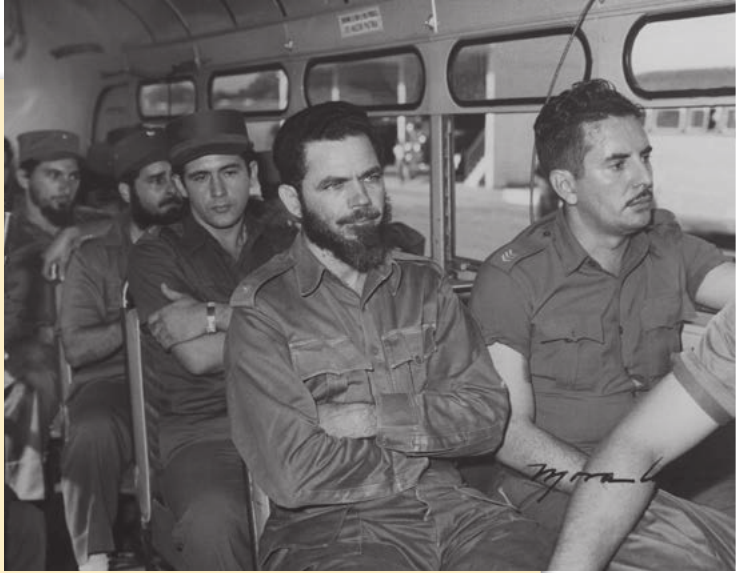
The growing tensions within the revolutionary movement reached a critical point in mid-October 1959 with the resignation of Hubert Matos, the military Governor of Camagüey and one of Castro's old comrades-in-arms from the guerrilla struggle. Matos made his position clear: he was resigning because of his profound dismay over the increasing influence of communists within the government.
This defection represented a serious threat to Castro's authority. Camagüey was a vital region of the country, and the possibility that its military commander might lead an armed uprising seemed very real. Convinced that the Revolution faced genuine danger and enraged by his former ally's betrayal, Castro personally travelled to Camagüey to arrest Matos. He publicly denounced Matos as 'a traitor who had obstructed agrarian reform'.
Important
The Price of Dissent
Matos was subsequently tried for 'anti-revolutionary conduct', found guilty, and sentenced to 20 years in prison. This harsh treatment of a former revolutionary hero sent a clear message: opposition to Castro's increasingly communist direction would not be tolerated, even from those who had fought alongside him to overthrow Batista.
The Matos case marked a turning point in the Revolution, demonstrating that loyalty to Castro's leadership had become more important than the original revolutionary ideals that had united the 26th of July Movement.
Note
Exam tip: The Matos incident illustrates how revolutionary governments often turn against former allies who question their direction. This pattern appears in many 20th-century revolutions, from the French Revolution's Reign of Terror to the Soviet purges of the 1930s.
Summary
Key Points to Remember:
-
Land reform was central to Castro's revolutionary programme, implemented through the May 1959 law limiting farms to 1000 acres and creating the powerful INRA agency to redistribute land and build rural infrastructure.
-
Opposition to agrarian reform came from powerful Cuban landowners and US businesses, who engaged in economic sabotage including excessive livestock slaughter and underinvestment to undermine the revolutionary government.
-
Castro strategically allied with the Cuban Communist Party because it provided over 15,000 experienced administrators needed to implement complex reforms, despite his earlier anti-communist rhetoric.
-
The Hubert Matos affair demonstrated Castro's intolerance of dissent, as even a former revolutionary comrade received a 20-year prison sentence for opposing communist influence in the government.