The Ideology and Influence of Castro and Guevara (HSC SSCE Modern History): Revision Notes
📚Revision Notes
The Ideology and Influence of Castro and Guevara
Castro's rise to power and early ideology
When the revolutionaries seized power in Cuba in January 1959, they were a group of young, inexperienced leaders. Fidel Castro was only 32 years old at the time. Unlike many twentieth-century revolutions, the Cuban conflict had caused relatively little destruction. The economy remained strong, with high employment and business activity intact.
Note
The relatively peaceful transition of power and intact economy gave Castro's government a strong foundation to implement reforms, unlike many other revolutionary movements that inherited devastated nations.
Castro's ideological position
Castro entered Havana without a clear political programme to address Cuba's problems. Che Guevara later reflected that they were simply combatants with high ideals and little preparation who began making changes without a proper plan.
Importantly, Castro was not a member of the Communist Party when the Revolution succeeded. He deliberately emphasised this point, stating that the Cuban rebels were:
- Neither capitalists nor communists, but humanists
- Opposed to both capitalist freedom without bread and communist bread without freedom
Important
The exact moment when Castro adopted communism remains unclear, but after officially embracing it, he claimed to have been a Marxist for a long time. This shift in ideology would profoundly shape Cuba's future relations with both the Soviet Union and the United States.
Marxist: A supporter of the political and economic theories of Karl Marx and Friedrich Engels, which advocate for a classless society and the overthrow of capitalism.
Castro's style of governance
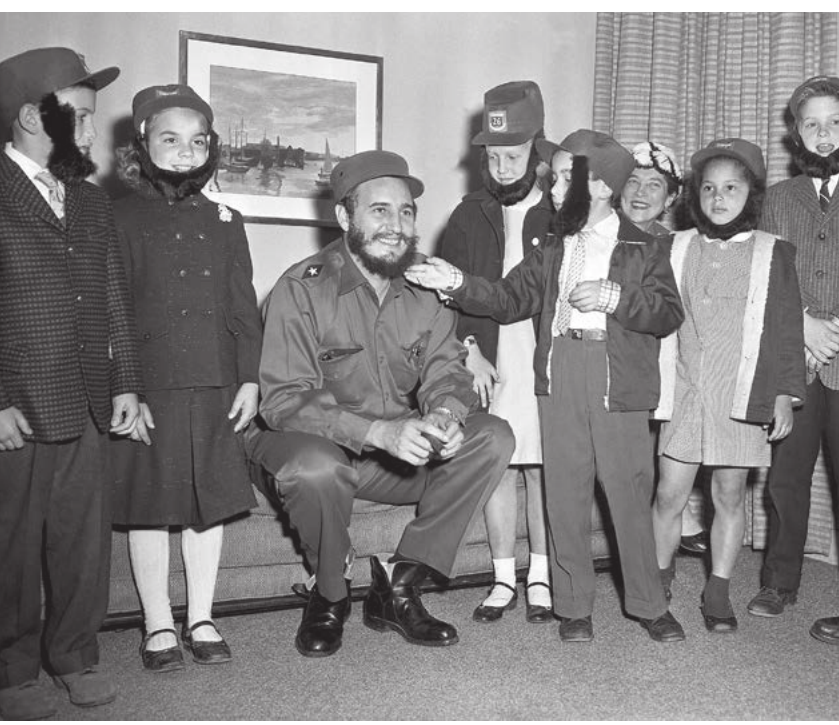
Castro developed a unique approach to leadership that he called direct government. This involved maintaining constant contact with the Cuban people through lengthy television and radio broadcasts. He was a natural orator who:
- Never prepared speeches in advance
- Spoke for four to five hours at a time
- Relied on his eloquence and personality to hold audiences
- Used his dramatic image to connect with every Cuban town and village
The cult of personality
Despite Castro's prominent role, he maintained that there was no cult of personality in revolutionary Cuba. According to Castro himself, there were no statues, official photographs, street names, or institutions named after living revolutionary figures.
Important
The Reality Behind Castro's Claims
However, the reality was somewhat different in practice:
- Portraits of Castro appeared prominently in homes alongside religious icons
- Small statues of the revolutionary leader were sold on street corners
- Schools and government buildings were renamed after revolutionary heroes
This contradiction between Castro's claims and actual practice demonstrates how even leaders who claim to reject personality cults can become central figures in their movements.
Early government structure
The first provisional government formed in 1959 had several notable features:
- It was meant to govern until elections could be held 18 months later
- Most members were moderate, middle-class, middle-aged men with anti-Batista credentials
- Manuel Urrutia, a former judge, became President
- Only two members of the 26th of July Movement served in the first cabinet
- Castro himself was only included due to his position as commander-in-chief of the rebel army
However, it soon became clear that two governments existed in Cuba: the official one in government offices, and the real one wherever Castro happened to be. Castro often arrived late to cabinet meetings, having already made key decisions through behind-the-scenes discussions with his closest advisers.
Major achievements of the Revolution
Castro moved quickly to implement social and cultural reforms during his first hundred days in power. These reforms transformed Cuban society in several key areas.
Education reform
Education reform was one of Castro's passionate priorities. Before the Revolution, Cuba faced a serious literacy crisis:
- 23.6 per cent of the population could not read or write
- In rural areas, over half the population was illiterate
- 61 per cent of children did not attend school
Note
Dramatic Educational Transformation
Castro's education reforms produced remarkable results:
- By 1970, illiteracy had fallen to just 4 per cent
- The number of secondary schools increased significantly
- Enrolments in industrial schools and universities rose substantially
This represented one of the most successful literacy campaigns in modern history, dramatically transforming Cuban society in just over a decade.
Health care reforms
The new government immediately tackled Cuba's health care problems. Before the Revolution, over 64 per cent of doctors worked in Havana, serving mainly affluent residents. Castro:
- Ordered doctors to be redistributed across the country
- Built three new medical training schools when many doctors left Cuba
- Introduced a free health service for all Cubans
- Launched a massive inoculation programme
The health reforms achieved remarkable success. Infant mortality, which stood at 60 deaths per 1000 live births in 1959, fell to just 15 per 1000 by 1980.
Social reforms
The revolutionary government implemented sweeping social changes:
- Rents were reduced by up to 50 per cent for low-wage earners
- Property owned by Batista and his ministers was confiscated
- The telephone company was nationalised and rates cut by 50 per cent
- Land was redistributed among peasants, including Castro family land
- Separate facilities for blacks and whites (swimming pools, cemeteries, beaches, hotels) were abolished
Moral reforms
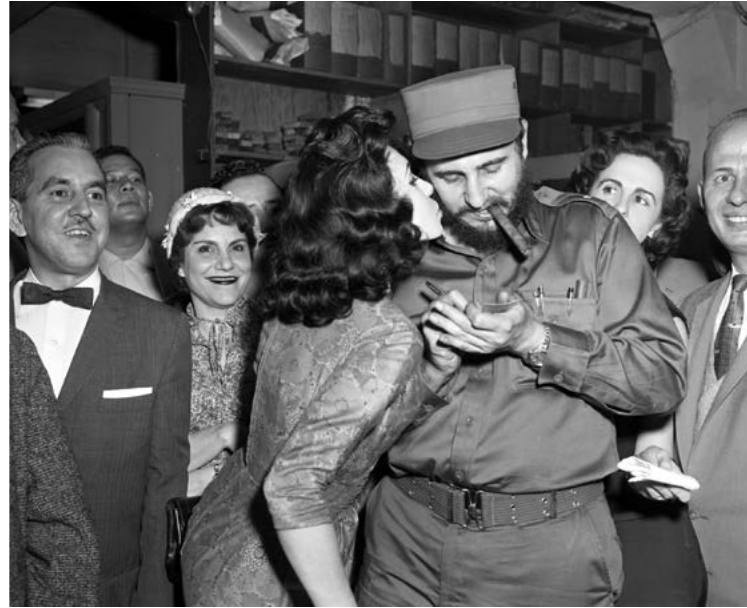
Castro held strong views on morality and sought to eliminate what he saw as sources of corruption and temptation:
- Gambling establishments were closed
- Casinos and nightclubs were shut down
- This effectively eliminated Mafia involvement in Cuba
- Castro also opposed alcohol, drugs, homosexuality and prostitution
Note
The government was known for its integrity. Castro proclaimed: "For the first time, there are worthy men at the head of the country who neither sell themselves nor falter nor are intimidated by any threat."
This emphasis on moral reform and government integrity helped legitimize the revolutionary government in its early years.
Dealing with Batista's supporters
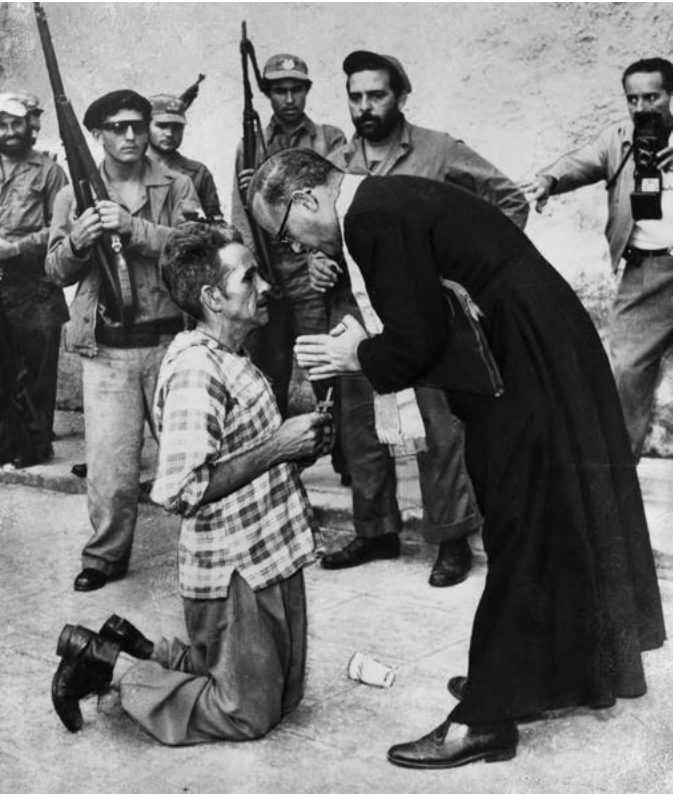
After Batista fled, most of his regime's leading officials either escaped, went into hiding, or were arrested. The rebel army took control of police stations and military garrisons. As the full horror of the Batista regime became apparent through the discovery of torture chambers, mutilated bodies, and unmarked graves, the Cuban people demanded justice.
Trials and executions
The revolutionary government conducted trials of those accused of crimes under the Batista regime:
- Initial trials were hasty and conducted by military courts
- Raúl Castro, for example, ordered the execution of military prisoners in Santiago
- Later trials involved courts made up of rebel army officers and local civilians
- Prosecutors and defence counsels were appointed by the government
- By most accounts, the trials were generally fair with genuine efforts to determine guilt or innocence
Army garrison: The collective term for a body of troops stationed in a particular location, originally to guard it but now often simply using it as a home base.
Revolutionary justice
A notable exception to fair trials occurred in March 1959. When 44 Batista air force pilots accused of bombing civilians were acquitted in Santiago, public protests erupted. Castro ordered a retrial with specially chosen prosecutors and judges. This time, the pilots were found guilty and sentenced to 20 to 30 years imprisonment.
Important
Revolutionary Justice vs. Legal Procedures
Castro justified this by arguing that revolutionary justice is not based on legal precepts, but on moral conviction.
These show trials and executions served several purposes:
- They exposed the brutality and corruption of the previous regime
- They demonstrated that the new government represented the people's interests
- They helped consolidate revolutionary authority
However, this approach set a dangerous precedent for political trials without proper legal procedures, undermining the rule of law.
Note
Exam tip
When discussing revolutionary justice, consider both the context (the brutality of the Batista regime) and the implications (setting a precedent for political trials without proper legal procedures).
Che Guevara: revolutionary icon
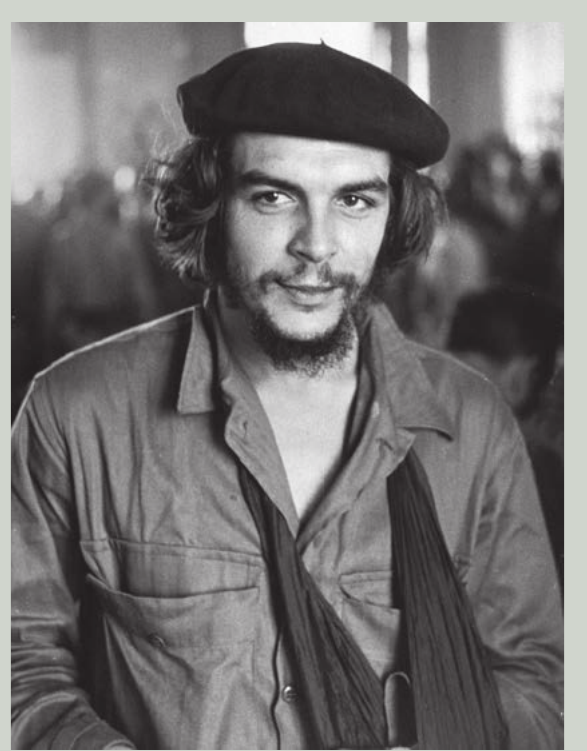
Ernesto 'Che' Guevara became one of the most significant figures of the Cuban Revolution and a lasting symbol of revolutionary struggle worldwide.
Early life and radicalisation
- Born in 1928 into an upper-middle-class Argentine family
- Trained as a doctor
- During a 1951 motorcycle trip across South America, witnessed the poverty and powerlessness of the masses
- This experience moved him to dedicate his life to revolution
- Met Fidel and Raúl Castro in Mexico City
- Joined their campaign to overthrow Batista
Role in the Cuban Revolution
Guevara proved himself to be a skilled and ruthless guerrilla fighter during the revolutionary campaign. He played a crucial role in several key battles and demonstrated both military competence and ideological commitment.
After victory in 1959, Castro appointed Guevara to high military and government positions in recognition of his contributions and abilities.
Character and influence
Fidel Castro later described Guevara's personal qualities:
Note
He had a gift for people. He was one of those people that everyone immediately cares about – it was his naturalness, his simplicity, his sense of comradeship and all of his virtues.
These qualities made Guevara an effective leader and a compelling symbol of revolutionary ideals, contributing to his enduring iconic status.
Revolutionary internationalism
Guevara believed that the Cuban Revolution should not stand alone. He was committed to the principle of internationalism – a key aspect of Marxist theory holding that full communism can only be achieved when all countries become communist. The ultimate goal is world revolution, not just revolution in one country.
Internationalism: The principle that no revolution can succeed in isolation and that communism requires worldwide revolutionary change.
Later revolutionary activities
Guevara was determined that his contribution to world revolution not end with Cuba:
Congo (1964):
- Led an unsuccessful rebel campaign
- Failed to establish a viable revolutionary movement
Bolivia (1965-1967):
- Resigned from all Cuban government and military posts
- Renounced his Cuban citizenship
- Went to Bolivia to raise a guerrilla army
- Believed Bolivia's terrain was ideal for guerrilla warfare
- Hoped success there would spread to neighbouring countries
- His group had some early victories but faced serious problems
Death and legacy
Guevara's Bolivian campaign ended in failure:
- Many Bolivian peasants did not support the guerrillas
- The Bolivian army, trained by the CIA, proved too strong
- In October 1967, a deserting guerrilla revealed Guevara's position
- He was quickly captured
- Before execution by a Bolivian soldier, he reportedly said: "Shoot coward. You're only going to kill a man"
Note
Guevara's Enduring Legacy
Guevara's iconic image lives on and has become associated with:
- Rebellion against oppression
- The struggle of the exploited poor against the exploiting rich
- Anti-imperialism and revolutionary change
His image has transcended his actual historical role, becoming a universal symbol of revolution and resistance recognized worldwide.
Cuba's impact on Latin America
The success of the Cuban Revolution sent shockwaves throughout Latin America. Cuba's achievements in health, education, and nationalisation, combined with its defiance of the United States, made it an attractive model for change across the continent.
Cuba as a revolutionary model
Castro's Cuba inspired various groups throughout Latin America:
- Established leftist political parties
- Disaffected students and intellectuals, mainly from middle-class backgrounds
- Rural and urban revolutionary movements
Throughout the 1960s, much of Latin America experienced an upsurge of:
- Rural guerrilla conflict
- Urban terrorism
- Revolutionary activity in response to social inequality and political repression
Cuban support for revolutionary movements
From 1962 onwards, Cuban foreign policy actively supported guerrilla movements throughout Latin America. Cuba provided:
- Moral support and revolutionary inspiration
- Material support including weapons and training
- Military advisers and expertise
- Safe haven and training facilities
Countries receiving Cuban support included Guatemala, Bolivia, Peru, and Venezuela. Castro hoped that establishing further communist governments would break Cuba's isolation as the sole communist country in the region.
Che Guevara's role in exporting revolution
Guevara led Cuba's efforts to spread revolution. In April 1959, speaking about Cuba's foreign policy, he said: "In the chess game of power politics, you will never find us playing the part of a docile pawn." He explicitly linked Cuba with Latin America and other underdeveloped Third World nations.
Guevara believed most Latin American countries were ready for revolutionary change and left Cuba to work directly with guerrilla movements in other countries.
United States response
To combat Cuba's influence, the United States took action through the Organization of American States (OAS). This American-led coalition swiftly imposed economic sanctions on Cuba in 1964.
Organization of American States: An American-led coalition of countries within the American continent, initially established to achieve peace, justice, solidarity, and collaboration among member states.
The OAS used a four-pronged approach based on:
- Democracy
- Human rights
- Security
- Development
Organization of Latin American Solidarity
In 1967, Cuba established the Organization of Latin American Solidarity (OLAS) in Havana. Its aim was to encourage similar revolutions throughout Latin America.
Organization of Latin American Solidarity: Established in Havana in 1967 with the aim of encouraging Cuban-style revolutions in other Latin American countries.
Why revolutionary movements failed
Despite Cuba's support and inspiration, guerrilla movements were in decline by the late 1960s. Cuba failed to trigger successful revolutionary activities in other Latin American countries during this period.
Important
Key Reasons for Revolutionary Failures
The major reasons why revolutionary movements failed included:
- Poor military and tactical preparation by revolutionary groups
- Lack of popular support for revolution within many countries
- Effective counter-insurgency campaigns by local governments
- US military and intelligence support for anti-communist forces
- Different social and economic conditions from those in Cuba
Understanding these factors is crucial for analyzing why the Cuban model could not be easily replicated elsewhere.
Impact on specific countries
Bolivia (1967):
- Guevara entered under a false identity and formed a guerrilla force
- He believed Bolivia's terrain suited guerrilla warfare
- Success could serve as a base for revolutionary activity in neighbouring countries
- However, Bolivian peasants were largely unsupportive
- CIA-trained Bolivian rangers defeated the guerrillas
- Guevara was captured and executed
Chile (1968-1973):
- Established economic relations with Cuba in 1968
- Election of Marxist government led by Salvador Allende in 1970
- Cuba gained an ally in South America
- Alliance ended when Allende was overthrown in a CIA-backed coup led by General Pinochet in 1973
Nicaragua (1979-1990):
- The Marxist Sandinista government received Cuban support
- This provided Cuba with an ally in Central America
- Cuba gave particular support during the war against the American-backed Contra Army
- The Contras fought to overthrow the Sandinistas
El Salvador (1970s-1980s):
- Cuba provided training and weapons to leftist rebels
- Revolutionary movements challenged the government
- Civil war continued for many years
Argentina (1983):
- Cuban support of Argentina during the Falklands War
- This strengthened relations between the two countries
Venezuela (1999-present): In 1999, bilateral relations were significantly enhanced during Hugo Chávez's presidency.
Bilateral relations: The conduct of political, economic, or cultural relations between two sovereign states.
Note
The Cuba-Venezuela Alliance
Chávez and Castro became strong allies through:
- Joint business ventures
- Extensive financial exchanges
- Trade in information technology and innovation
- Shared cooperation in military and intelligence services
The Cuba-Venezuela partnership proved highly beneficial, especially in trade. Both leaders emerged as symbols of resistance against US dominance in the Caribbean. Chávez described Castro as his mentor and Cuba as a revolutionary democracy.
Remember!
Summary
Key Points to Remember:
-
Castro initially described the Cuban revolutionaries as humanists rather than communists, but later adopted Marxism as his political ideology.
-
The Revolution achieved remarkable success in education (reducing illiteracy from 23.6% to 4%) and health care (reducing infant mortality from 60 to 15 per 1000 live births).
-
Castro developed a style of direct government, maintaining constant contact with the people through lengthy television and radio broadcasts.
-
Che Guevara exemplified revolutionary internationalism, believing that the struggle for communism could not be limited to one country and ultimately giving his life attempting to spread revolution to Bolivia.
-
Despite Cuba's support and the inspirational example of the Revolution, attempts to export revolution to other Latin American countries largely failed due to poor preparation, lack of popular support, and effective US counter-insurgency efforts, though Cuba did develop important alliances with countries like Venezuela under Hugo Chávez.