The Nature and Course of the Revolution (HSC SSCE Modern History): Revision Notes
📚Revision Notes
The Nature and Course of the Revolution
Introduction
The Cuban Revolution was a transformative conflict that overthrew the oppressive Batista dictatorship and brought Fidel Castro to power in 1959. This revolution fundamentally changed Cuba's political landscape and had far-reaching implications for Latin America. Understanding the nature and course of this revolution requires examining the key movement that led it, the factors contributing to its success, and the military campaign that ultimately defeated Batista's forces.
Note
The Cuban Revolution stands as one of the most significant political upheavals in 20th-century Latin American history, fundamentally reshaping not only Cuba's future but also influencing revolutionary movements across the continent for decades to come.
The 26th of July Movement
Formation and early activities
The 26th of July Movement was the revolutionary organisation led by Fidel Castro. The name derived from the failed attempt to storm the Moncada Barracks on 26 July 1953, which, despite its failure, became a rallying point for Cuban revolutionaries.
After his release from prison, Castro immediately resumed opposition activities. He wrote newspaper articles criticising the regime and spoke at demonstrations. However, his personal safety was constantly threatened. Police surveillance and the ever-present risk of assassination by Batista's agents convinced Castro that his options in Cuba were limited. Following the example of José Martí, Cuba's independence hero, Castro determined to launch an invasion from foreign soil.
Note
José Martí (1853-1895) was Cuba's national hero and a key figure in the struggle for independence from Spain. Castro's decision to follow Martí's example by launching an invasion from foreign soil connected his revolution to Cuba's proud tradition of independence struggles, lending historical legitimacy to his movement.
Exile in Mexico (1955-1956)
Castro left Cuba for Mexico on 7 July 1955. It would be 17 months before he returned to his homeland. Life in Mexico proved extremely difficult for the revolutionaries:
- The movement had virtually no money
- Mexican authorities continually harassed them
- They lived under constant threat of expulsion from the country
To improve their financial situation, Castro embarked on a fundraising tour of the United States. He visited Cuban emigré communities in New York, Philadelphia, and Miami, holding meetings and delivering speeches. This tour proved successful, raising several thousand dollars for the movement.
Preparation for invasion
By March 1956, preparations for the invasion were underway:
- The men purchased weapons
- A Cuban veteran of the Spanish Civil War trained them in essential skills: cleaning and reassembling guns, making bombs, and producing Molotov cocktails (firebombs)
- Castro's militant stance attracted growing numbers of supporters in Cuba
- Support for the 26th of July Movement became increasingly visible, with cries of support heard at political rallies and the number "26" painted on walls across the country
In November 1956, Castro received a crucial financial boost of $40,000 from Prio Socarras, a sympathetic Cuban opposition leader and former president. This money was used to purchase the Granma, a weatherbeaten yacht that would carry the revolutionaries back to Cuba.
Note
The Granma was a small, 60-foot cabin cruiser originally designed to carry only 12 passengers. Castro would crowd 82 men aboard this vessel for the perilous journey to Cuba—a testament to both the revolutionaries' determination and the desperate nature of their undertaking.
The Granma landing
In late November 1956, Castro's headquarters were raided by Mexican authorities collaborating with Batista's secret police. Arms were confiscated and more than 25 men arrested. This forced Castro's hand. On the stormy night of 25 November, Castro and his men crowded onto the Granma and began their journey towards Cuba.
The plan was to land in Oriente Province on Cuba's southern tip, coordinating with a simultaneous uprising by fellow revolutionaries in Santiago de Cuba. They hoped these combined actions would trigger a national revolt to topple the Batista regime.
However, the landing went badly:
- The Granma landed on 2 December, several miles off course
- The 30 November uprising in Santiago had already been crushed
- The military had been alerted to Castro's arrival
- A government aeroplane spotted them as they waded ashore
- They were forced to abandon most of their supplies on the beach
Important
On 5 December, disaster struck. Castro's men were surrounded by soldiers who opened fire:
- At least 20 of Castro's men were killed in the ambush
- Several surrendered and were shot
- A few were captured for trial
- The rest fled in small groups
This catastrophic beginning nearly destroyed the revolution before it truly began. The survival and eventual triumph of the movement from such a devastating start demonstrates the resilience of Castro's forces and the weakness of the Batista regime.
Regrouping in the Sierra Maestra
Despite this catastrophic beginning, the revolution survived. On 17 December, Castro and two companions reached the isolated farmhouse of Ramon Perez, a peasant whose brother had joined the movement months earlier. Over successive days, surviving members of the Granma expedition straggled in, including Raúl Castro, Che Guevara, and Camilo Cienfuegos.
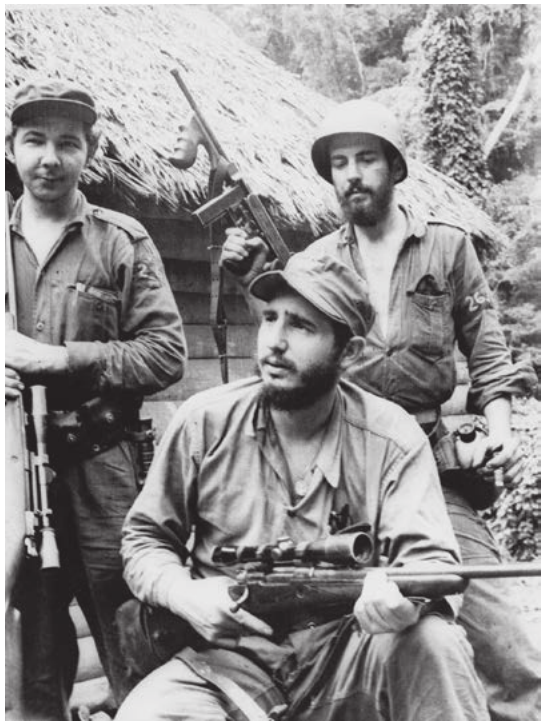
Although only 17 of the original 82 rebels had made it to the Sierra Maestra mountains, Castro remained optimistic. He famously declared:
"We are in the Sierras. The days of the dictatorship are numbered."
Note
Castro's unwavering optimism in the face of such devastating losses reveals a crucial aspect of his leadership—his ability to maintain morale and inspire confidence even in the darkest moments. This quality would prove essential throughout the guerrilla campaign.
Main factors leading to the success of the Cuban Revolution
The unpopularity of the Batista regime
The Batista regime was deeply unpopular for several interconnected reasons that created fertile ground for revolution.
Political repression: The government used terror to destroy any opposition. Key repressive measures included:
- Abolishing Cuba's constitution
- Dissolving Cuba's congress (parliament)
- Outlawing the Cuban Communist Party
- Using violence and intimidation against opponents
Important
These authoritarian measures eliminated legal channels for political opposition, leaving many Cubans feeling that armed revolution was the only path to change. This erosion of democratic institutions created widespread resentment that Castro's movement would exploit.
Social and economic inequality: Despite Cuba's relatively high national wealth, extreme inequality persisted:
- Wealth was not equally distributed
- There were stark extremes of wealth and poverty
- The regime only enjoyed support from old politicians, the wealthy, and Americans
- The majority of Cubans experienced little benefit from the nation's prosperity
Failed policies: The Batista government's methods failed to work in the best interests of Cuba. Instead, policies favoured elite interests and foreign (particularly American) economic control.
Note
The concentration of wealth and American economic dominance created a sense that Cuba's resources were being exploited by foreigners and a small Cuban elite, while ordinary Cubans remained poor. This economic nationalism became a powerful rallying point for the revolution.
The appeal of Fidel Castro and guerrilla warfare
Castro's success was built on several key factors that distinguished him from previous opposition leaders.
Strong leadership: Castro demonstrated exceptional leadership skills. His personal qualities included:
- A compelling vision for social justice
- Promises of democratic reform
- Commitment to ending endemic corruption
- Focus on national independent interests
- Ability to inspire and motivate followers
Example
Castro's Leadership in Action
Castro's leadership style combined practical action with inspirational rhetoric. He didn't just command from a distance—he shared every hardship with his men, often pushing himself harder than anyone else. His willingness to endure the same difficulties as the lowest-ranking guerrilla earned him deep loyalty and respect, making his followers willing to risk their lives for the revolutionary cause.
Guerrilla warfare tactics: The combination of urban resistance to Batista with successful guerrilla warfare in the mountains proved decisive. This dual approach enabled Castro and his followers to successfully overthrow the Batista government.
Popular support: Unlike traditional Latin American coups d'état, Castro's revolution was rooted in popular support, particularly from Cuba's rural poor.
The nature of guerrilla warfare and the activities of revolutionaries
Revolutionary significance
The triumph of the Cuban people over the Batista regime changed authoritarian beliefs about population control in Latin America. It demonstrated that ordinary people could free themselves from oppressive government through guerrilla warfare.
Important
The Cuban Revolution contributed three important lessons to revolutionary movements in Latin America:
- Popular forces can win a war against an oppressive government through armed struggle
- Population unrest and political drive are sufficient to create conditions for revolution
- Revolution should take place in rural areas
These lessons would inspire revolutionary movements across Latin America for decades, from Nicaragua to El Salvador to Colombia, fundamentally changing the nature of political conflict in the region.
Guerrilla warfare tactics and peasant support
Guerrilla warfare depended heavily on power and support gained from the people. Castro's approach contrasted sharply with the customary coup d'état rebellions of Latin American politics.
Living conditions in the Sierra Maestra: In 1956, the rebels found themselves in Cuba's roughest, wildest, and poorest area. The region's characteristics included:
- Largely illiterate residents
- Tiny wooden shacks with earth floors
- No indoor plumbing
- No electricity
Note
The harsh conditions of the Sierra Maestra actually worked to the revolutionaries' advantage. The impoverished peasants who lived there had little loyalty to Batista's government, which had done nothing to improve their lives. Furthermore, the rugged, mountainous terrain was ideal for guerrilla warfare, providing natural cover and making it extremely difficult for Batista's conventional forces to operate effectively.
Building peasant support: Initially suspicious, the peasants slowly began to trust the strangers and support Castro. They:
- Sold supplies to the rebels
- Provided information about water sources and other necessities
- Offered local knowledge crucial to survival
Castro's leadership style: Castro and his men lived in Spartan conditions, with little food or sleep and only the companionship of fellow guerrillas. Castro shared all hardships but pushed himself harder than anyone else. His ability to march for hours without rest earned him the nickname el Caballo (the horse). He travelled throughout the mountains, making contacts with peasants and winning allies.
The relationship between Castro and the peasants proved decisive to the effectiveness of guerrilla warfare against Batista's forces.
Key revolutionary figures
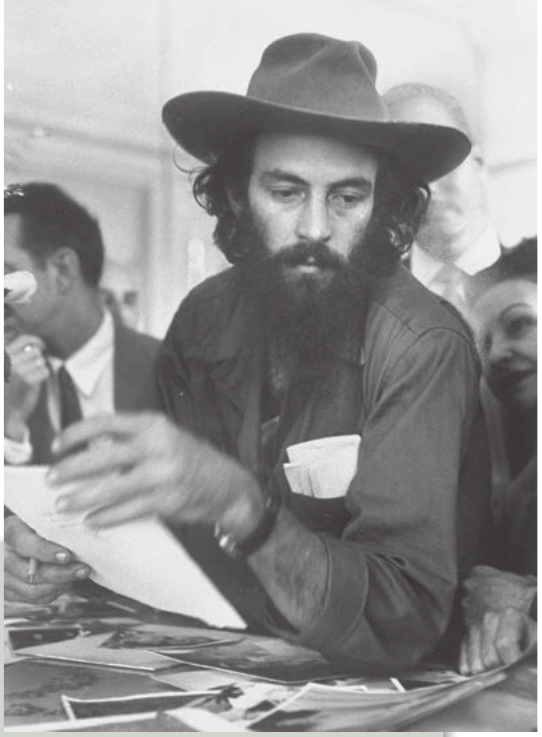
Camilo Cienfuegos (1932-1959): Before Batista's downfall in 1958, four men epitomised the revolution's spirit to Cuban people: the Castro brothers, Che Guevara, and Camilo Cienfuegos. Cienfuegos emerged as Castro's most trusted and competent ally during the two-year guerrilla war in the Sierra Mountains. He rapidly rose to the rank of Commandante and led one of two legendary columns that successfully occupied Santa Clara on 31 December 1958.
In the early stages of Castro's government, Cienfuegos became Army Chief of Staff and Castro's loyal right-hand man. However, just months after the revolution, his plane vanished during a night flight from Camaguey to Havana, and he was presumed dead. Cienfuegos is revered in Cuba as a revolutionary hero, with landmarks, monuments, and annual celebrations commemorating his role.
Note
Castro described Cienfuegos and Guevara's complementary qualities:
Camilo wasn't as intellectual as Che but he was very, very brave, an eminent leader, very daring, very humane. They respected each other, and loved each other very much. Camilo had distinguished himself, he'd been commander of the advanced party, in Column I, during the hardest days of those first few months... Che was exemplary. He had great moral authority over his troops, great leadership. I believe he was a model for the revolutionary man.
This quote reveals how Castro valued different qualities in his commanders and how the combination of Che's intellectual rigor and Camilo's bravery made them such effective revolutionary leaders.
The battle of Santa Clara
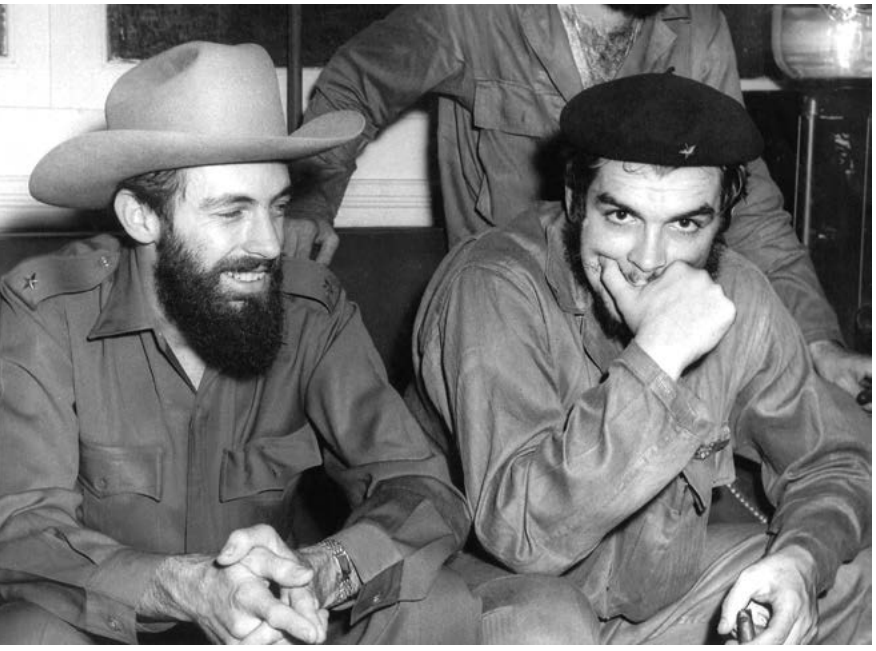
One of the most significant moments in the guerrilla campaign came in the battle of Santa Clara. The two legendary figures of Castro's rebel army – Ernesto Che Guevara and Camilo Cienfuegos – commanded the two guerrilla columns that attacked Santa Clara, Cuba's third largest city and capital of Las Villas Province.
Che Guevara's tactics: Guevara's approach comprised three key elements, which he called the secrets of guerrilla warfare:
- Constant mobility
- Constant distrust
- Constant vigilance
Example
Guerrilla Tactics in Practice at Santa Clara
Guevara's three principles worked together to create an unpredictable, adaptable force. Constant mobility meant the guerrillas never stayed in one place long enough for Batista's forces to surround them. Constant distrust kept them questioning everything and everyone, preventing infiltration by government spies. Constant vigilance ensured they were never caught off guard by enemy movements.
These tactics, combined with knowledge of the local terrain and support from the population, allowed a smaller guerrilla force to defeat a much larger conventional army.
Local population involvement: The local population proved instrumental in restricting Batista's forces by:
- Creating blockades throughout the cities
- Halting and looting supply trains
The battle of Santa Clara was the final fight in the Cuban Revolution, where rebel forces triumphed over Batista's army, demonstrating the effectiveness of guerrilla tactics combined with popular support.
Key events of 1958
The year 1958 proved decisive in the Cuban Revolution. A series of military events gradually weakened Batista's position and strengthened the revolutionary forces.
March: US arms embargo
Event: The United States suspended the supply of arms to Batista's forces. However, President Eisenhower continued to support Batista as he distrusted potential revolutionary governments.
Significance: This severely weakened Batista's position as he relied heavily on US military aid to fight the rebels. The Cuban air force rapidly lost its power as planes could not be repaired without spare parts from the United States.
Important
The US arms embargo was a turning point in the revolution. Despite continuing political support, the practical withdrawal of military supplies crippled Batista's ability to wage war. This demonstrated that even superpower backing has limits when it's not matched by tangible military support.
May: Operation Verano
Event: Batista launched a new military offensive called Operation Verano. He sent 10,000 soldiers supported by Sherman tanks to Oriente Province to crush the rebels.
Significance: Although outnumbered, Castro's rebel army defeated Batista's men because of their superior knowledge of guerrilla warfare and the superiority of their intelligence network.
July: Battle of El Jigue
Event: One of the most important battles occurred at El Jigue from 11 to 21 July. Castro's forces defeated an entire battalion.
Significance: This was a humiliating defeat for Batista. When Castro realised that Batista's forces were commanded by Major Jose Quevedo, a former university classmate, he proposed a ceasefire. Quevedo's men had lost the heart to fight, and his 146 men surrendered, laying down their arms. The guerrillas gained a large cache of weapons.
Note
The surrender at El Jigue was particularly significant because it showed that even Batista's better-trained and better-equipped forces could not sustain the will to fight against the guerrillas. This psychological collapse was as important as any military defeat.
August: Army retreat
Event: On 7 August, a demoralised and confused army retreated to the garrisons, never to return to the Sierra Maestra.
Significance: Batista's army was in disarray. They could not handle the torrential rains of the hurricane season, forcing the government to end its offensive. This inspired Castro to plan a counteroffensive, which he hoped would lead to a victorious drive to the capital city of Havana.
October: Advance to Las Villas
Event: By mid-October, Che Guevara's forces had reached Las Villas after a 40-day campaign. They joined with other revolutionary groups and delivered one of the war's most decisive military thrusts.
Significance: Together, the rebel groups launched an offensive that included major efforts to cut roads and link the province with the rest of the island.
November: Siege of Santiago and Guisa
Event: Fidel and Raúl Castro's command stayed in Oriente and moved to capture Santiago. On 20 November, a squad of 180 rebels under Castro's direction moved against the strategic garrison at Guisa de Miranda.
Significance: The threat of rebel ambushes had completely stopped traffic along the central highway. The roads were littered with skeletons of army trucks and jeeps. Telephone wires were down, and in many provinces cities were without electricity.
December: Final victories
Event: By 6 December, the army had suffered over 250 casualties and decided to abandon the garrison. By mid-December, Guevara's forces controlled all of Las Villas province. On 18 December, they attacked Santa Clara. On 31 December, Santa Clara fell to Guevara's troops.
Significance: These events demonstrated the significance of Castro's psychological warfare and his elaborate set of ambushes, complete with mines and traps. The United States realised the Batista army was crumbling and sent William Pawley, an American businessman with extensive interests in Cuba, to try to persuade Batista to resign.
Summary
Key Turning Points of 1958:
- March: US arms embargo crippled Batista's military capability
- May-August: Operation Verano's failure marked the end of Batista's offensive capability
- July: El Jigue victory demonstrated guerrillas could defeat conventional forces
- October-December: Rebel advance from Sierra Maestra to Las Villas and Santa Clara showed unstoppable momentum
- 31 December: Fall of Santa Clara sealed Batista's fate
These events show how military defeats, loss of foreign support, and psychological collapse combined to doom the Batista regime by year's end.
Fidelistas come to power
Batista's flight and the collapse of the regime
When Santa Clara fell, Batista finally realised his situation was hopeless. At 3:00 am on 1 January 1959, he and a handful of close associates boarded an aeroplane for the Dominican Republic, leaving Cuba for good.
News of his departure spread quickly as telephone lines jammed with people trying to call friends. In the early dawn, thousands of people walked the streets of Havana in intense excitement. Students gathered at the university with the red and black flags of the 26th of July Movement.
By evening, however, the city's mood turned darker. Crowds attacked offices and buildings that symbolised the Batista regime, and angry rioters looted the houses of Batista officials.
Note
Batista's sudden midnight flight demonstrates how completely his regime had collapsed. Rather than attempting negotiation or an orderly transfer of power, he simply fled, taking with him a small circle of loyalists and reportedly millions of dollars in government funds. This abrupt departure left a power vacuum that Castro would quickly fill.
Castro's entry into Santiago
When Castro learned of Batista's flight, he prepared to move on Santiago. The city's military commander, however, surrendered without a battle, and Castro entered the city in peace.
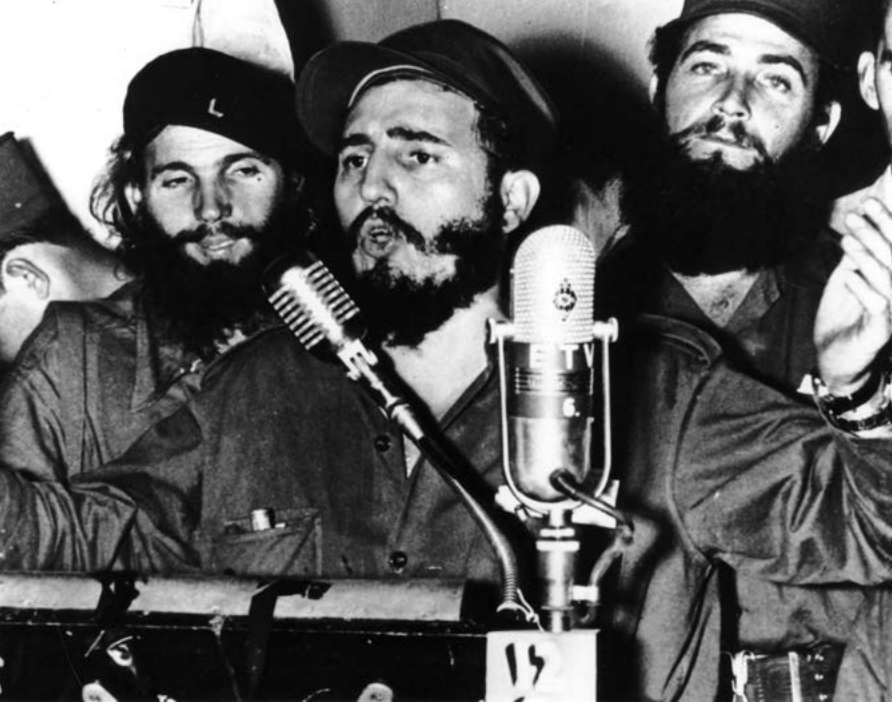
From Santiago, Castro broadcast an emergency appeal to the people of Havana, urging them to refrain from violence and vigilante justice. He promised that rebel forces would move into Cuba's cities to restore order and prevent a counter-revolution by the still relatively intact Batista army. Castro declared:
The dictatorship has collapsed, but that does not mean the revolution has triumphed. Revolution, yes! Military coup, no!
Important
Castro's call for order and his distinction between "revolution" and "military coup" was crucial. By emphasizing that this was a popular revolution rather than just another military takeover, he positioned himself as a legitimate leader representing the people's will, not just another strongman seizing power.
Occupation of Havana
Castro ordered Guevara and Cienfuegos to march to Havana. On 2 January, they occupied the army garrisons. All over Cuba, revolutionary troops took possession of:
- Government buildings
- Police stations
- Radio stations
- Military installations
At the same time:
- Ex-Batista officials and policemen were captured and jailed to await trial
- People imprisoned by Batista as political criminals were released
Castro's triumphant journey
Castro set out from Santiago on 2 January, turning Cuba's highway into a 500-mile-long parade. Thousands of people lined the streets carrying signs reading Gracias Fidel (Thank you, Fidel). Castro reached Havana on 8 January, where more than half a million Cubans waited to greet him at the Presidential Palace.
As Castro spoke to the crowds, two white doves (symbols of peace) were released. One flew to Castro's shoulder, where it remained as he delivered his speech. He declared:
We cannot ever become dictators. Those who do not have the people with them must resort to being dictators. We have the love of the people, and because of that love, we will never turn away from our principles.
Note
The white dove landing on Castro's shoulder became one of the revolution's most iconic images. Whether by chance or design, this moment was interpreted by many Cubans as a sign of divine approval, lending Castro an almost mystical authority in those early days of revolutionary triumph.
It was clear that Castro had won his battle with Batista. The rebels remained in remarkable control, providing people with a vision of hope and optimism after the Batista dictatorship.
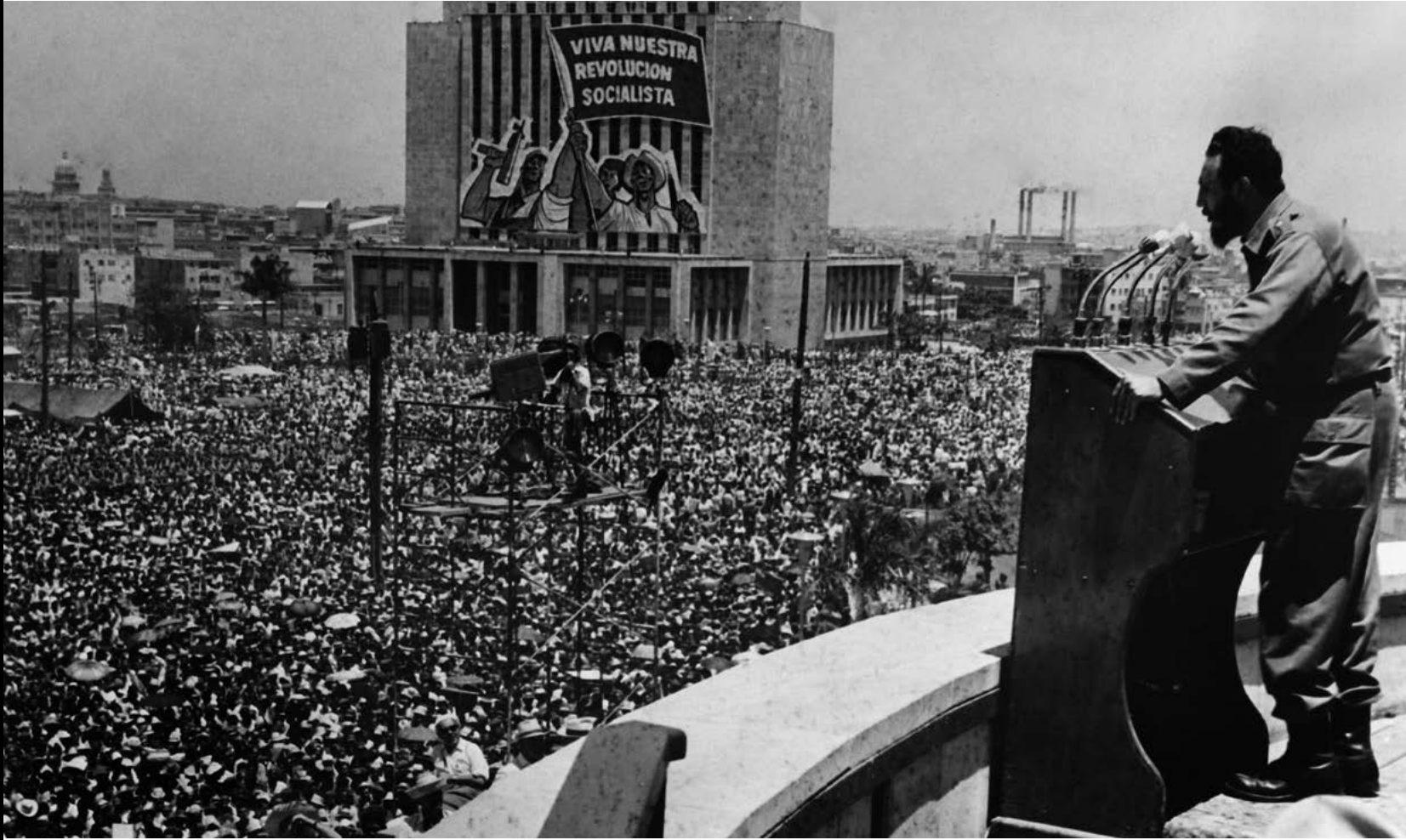
A New York Times correspondent described Castro's triumphant arrival in Havana, addressing the large crowd of 500,000 cheering Cubans:
He seemed to weave a hypnotic net over his listeners making them believe in his own concept of the functions of government and the destiny of Cuba.
Summary
Castro's Path to Power (1-8 January 1959):
- 1 January, 3:00 am: Batista flees Cuba for Dominican Republic
- 1 January: News spreads; celebrations and riots in Havana
- 2 January: Guevara and Cienfuegos occupy Havana garrisons; Castro begins journey from Santiago
- 2-7 January: Castro's triumphant 500-mile parade across Cuba
- 8 January: Castro enters Havana to crowd of 500,000; revolution complete
The smooth transition demonstrated the revolution's popular support and Castro's organizational ability, establishing him as Cuba's new leader without significant opposition or bloodshed in the capital.
Important
Exam tip: Analyzing the Cuban Revolution
When answering questions about the Cuban Revolution, remember to:
- Distinguish between the different phases: preparation in Mexico, the Granma landing, guerrilla warfare in the Sierra Maestra, and final victory
- Explain how guerrilla warfare tactics differed from traditional military approaches: emphasize mobility, popular support, and psychological warfare versus conventional force-on-force battles
- Link Castro's success to both military factors (guerrilla tactics, peasant support) and political factors (Batista's unpopularity, Castro's leadership, US arms embargo)
- Use specific examples of battles (El Jigue, Santa Clara) to illustrate broader points about the revolution's progress and demonstrate detailed knowledge
- Consider both internal and external factors: domestic opposition to Batista AND international context (US policy, Cold War tensions)
Summary
Key Points to Remember:
-
The 26th of July Movement was named after the 1953 Moncada Barracks attack and became the revolutionary organisation that overthrew Batista
-
Castro spent 17 months in Mexico (July 1955-November 1956) preparing for the invasion, despite financial hardship and harassment
-
Only 17 of 82 rebels survived the Granma landing disaster to reach the Sierra Maestra mountains
-
The revolution succeeded due to: Batista's unpopularity, Castro's leadership, effective guerrilla warfare, and crucial peasant support
-
Three key lessons from the Cuban Revolution:
- Popular forces can win through armed struggle
- Population unrest creates revolutionary conditions
- Revolution should occur in rural areas
-
The year 1958 was decisive, with key events including the US arms embargo (March), Operation Verano's failure (May-August), and the fall of Santa Clara (31 December)
-
Castro entered Havana on 8 January 1959 to a crowd of 500,000 people, marking the revolution's complete triumph
-
Che Guevara's three secrets of guerrilla warfare: constant mobility, constant distrust, constant vigilance