Political, Social, and Economic Grievances (HSC SSCE Modern History): Revision Notes
📚Revision Notes
Political, Social, and Economic Grievances
Introduction
By the turn of the 20th century, Russia had Europe's largest population according to the 1897 census. However, the size of the population was not the main problem. The real issue was Russia's social structure, which was based entirely on privilege by birth rather than on merit or utility.
Note
Understanding Key Concepts
Two important concepts help us understand this:
- Utility means a person's value or usefulness to society
- Merit means a person's individual skills and abilities
In Russia, neither utility nor merit mattered. What determined a person's position in society was the social class they were born into.
This created massive inequality and resentment across all levels of Russian society.
Nicholas II's leadership
Historical sources reveal concerns about Nicholas II's capacity as an autocratic ruler. British Ambassador Sir George Buchanan noted in 1910 that Nicholas had not inherited his father's commanding personality or the strong character needed for autocratic rule. Alexander Kerensky, who later became Prime Minister in 1917, observed that Nicholas found the daily work of monarchy intolerably boring and could not stand listening to ministers' reports or reading them. He preferred ministers who could tell amusing stories rather than those who focused on serious government business.
Important
Critical Leadership Weakness
These leadership weaknesses would prove significant as political, social and economic grievances mounted across Russian society. A weak autocrat at the helm meant the government was poorly equipped to address the growing crisis.
Russian social hierarchy
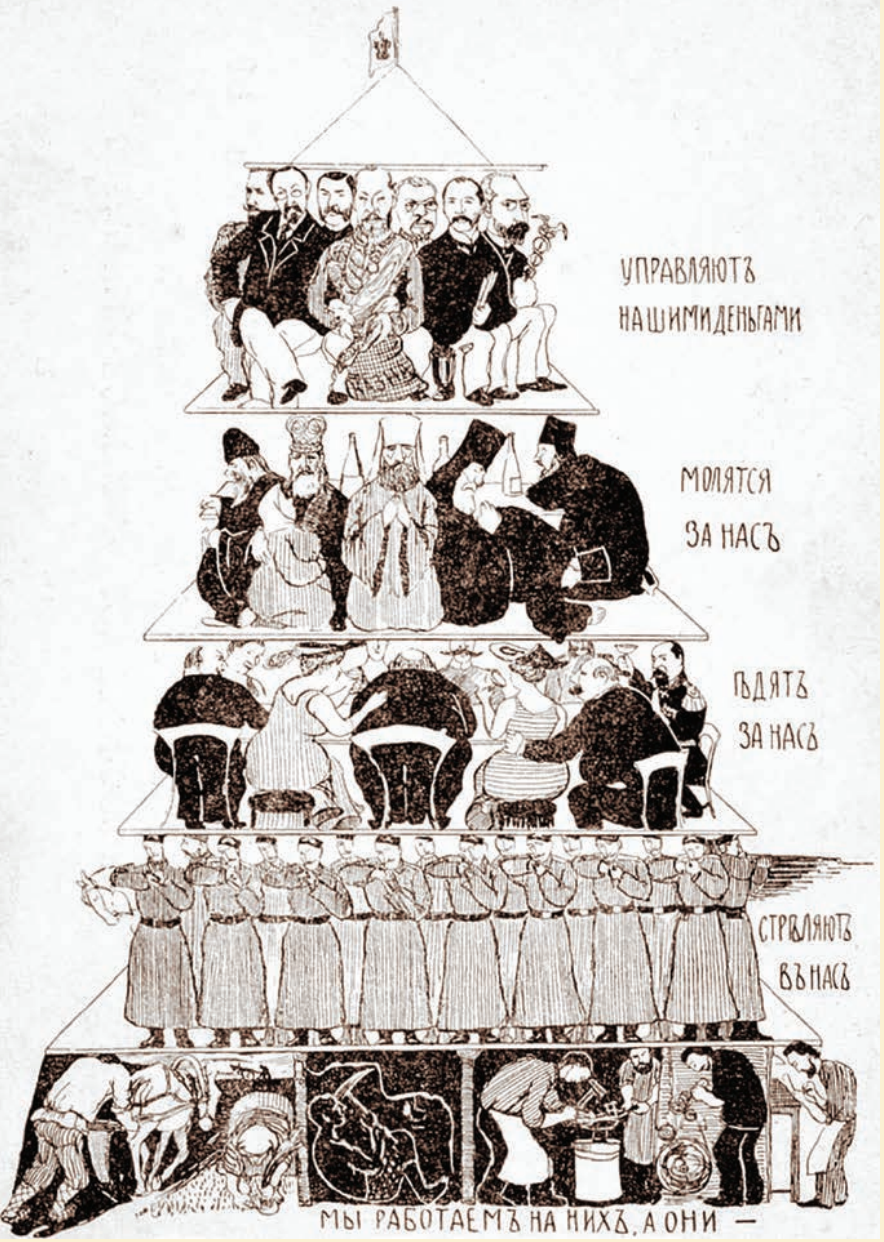
Russian society was structured as a rigid pyramid, with a tiny elite at the top and the vast majority of the population at the bottom.
Ruling class
At the very top sat the Tsar and the royal family, together with members of the government. This ruling class made up just 0.5% of the population. Despite being such a tiny fraction of society, they controlled the entire nation with absolute power.
Upper class (nobility)
The nobility comprised 12% of the population. This class included:
- Hereditary landowning nobles
- Wealthy merchants
- Church leaders
- Leaders in the bureaucracy
- Higher ranks within the army
What unified this class was their complete protection from the harsh realities of Russian life. They enjoyed disproportionately high incomes despite doing very little work. While the classes below them struggled with poverty and hardship, the nobility lived in comfort and luxury.
Note
The nobility's privileged position meant they had little understanding of or concern for the suffering of the lower classes. This disconnect between the elite and the masses was a fundamental source of social tension.
Middle class
The middle class was difficult to define because it lacked unity or a common function. It consisted of:
- People in business, such as small-scale manufacturers and factory managers
- White-collar workers
- Educated thinkers, writers and artists
This class was much smaller in Russia than in Western European countries, which limited the potential for moderate political reform.
Industrial working class
Russia was late to industrialise compared to other European nations. However, by the start of the 20th century, a growing industrial working class had emerged in the major cities of the Empire. These workers would become increasingly important politically as their grievances mounted.
Peasants
The peasants formed the base of the social pyramid and the vast majority of the population. Agriculture was the foundation of the Russian economy. An estimated 90 million peasants produced over half of the nation's income.
Despite their crucial economic role, peasants lived in terrible conditions. The agrarian economy was underdeveloped and feudal in nature. Russia's agricultural system was simply one of the worst in Europe.
Note
Understanding Feudalism
Feudal refers to the medieval social system whereby privileged nobles controlled hard-working peasants. This outdated system persisted in Russia long after it had disappeared from most of Western Europe.
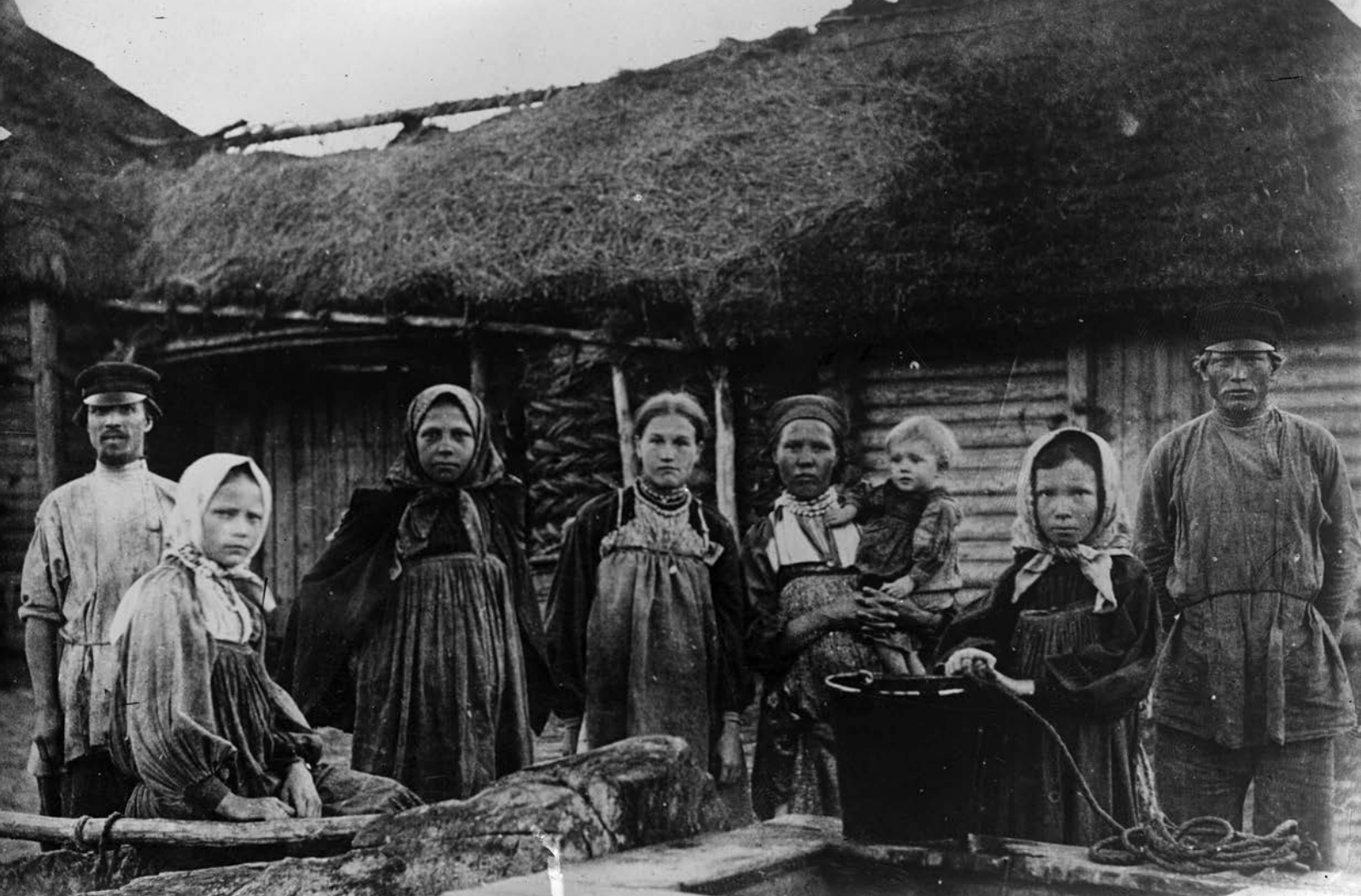
The amount of food produced rarely met the nation's demands and was especially scarce during famines. The peasantry was conservative and had a high illiteracy rate, making many resistant to change. The ruling classes were actually content with the backward nature of the peasants. They feared that educating peasants might make them politically dangerous.
However, the increasing difficulty of rural life created growing social discontent and demands for government reforms.
The emergence of discontent and demands for change
At the turn of the century, discontent among the Russian people in both rural and urban areas was widespread. Just about every social group was unhappy under Nicholas II, due to a range of political, social and economic factors.
Discontent in the countryside
Peasant discontent grew increasingly intense. Peasants were preoccupied with a desperate need for more land and were angry about their poverty. This 'land hunger' arose from several factors:
Population growth
There had been enormous population growth, which reduced the amount of land each family possessed. More people meant less land per family to farm.
Note
The population explosion created a vicious cycle: more mouths to feed but less land available per family to grow food. This made already difficult conditions even worse.
Poor agricultural productivity
Peasants felt they needed more land because of the low productivity of the land they worked. This low productivity had multiple causes:
- Poor-quality soil unsuitable for farming (despite Russia's vast size, most of the land was unusable)
- Short growing season due to Russia's cold climate
- Backward nature of the peasant economy, with outdated farming methods
- Inefficiencies of communal agriculture
Persistent poverty
Had economic conditions for the peasants improved, their dream of owning more land might have faded. But poverty kept their dreams and grievances alive. They saw no way out of their desperate situation under the existing system.
Important
The Root of Rural Discontent
The combination of land hunger, backward farming methods, and crushing poverty created a powder keg of resentment in the countryside. With 90 million peasants affected, this represented a massive threat to social stability.
Discontent in the cities
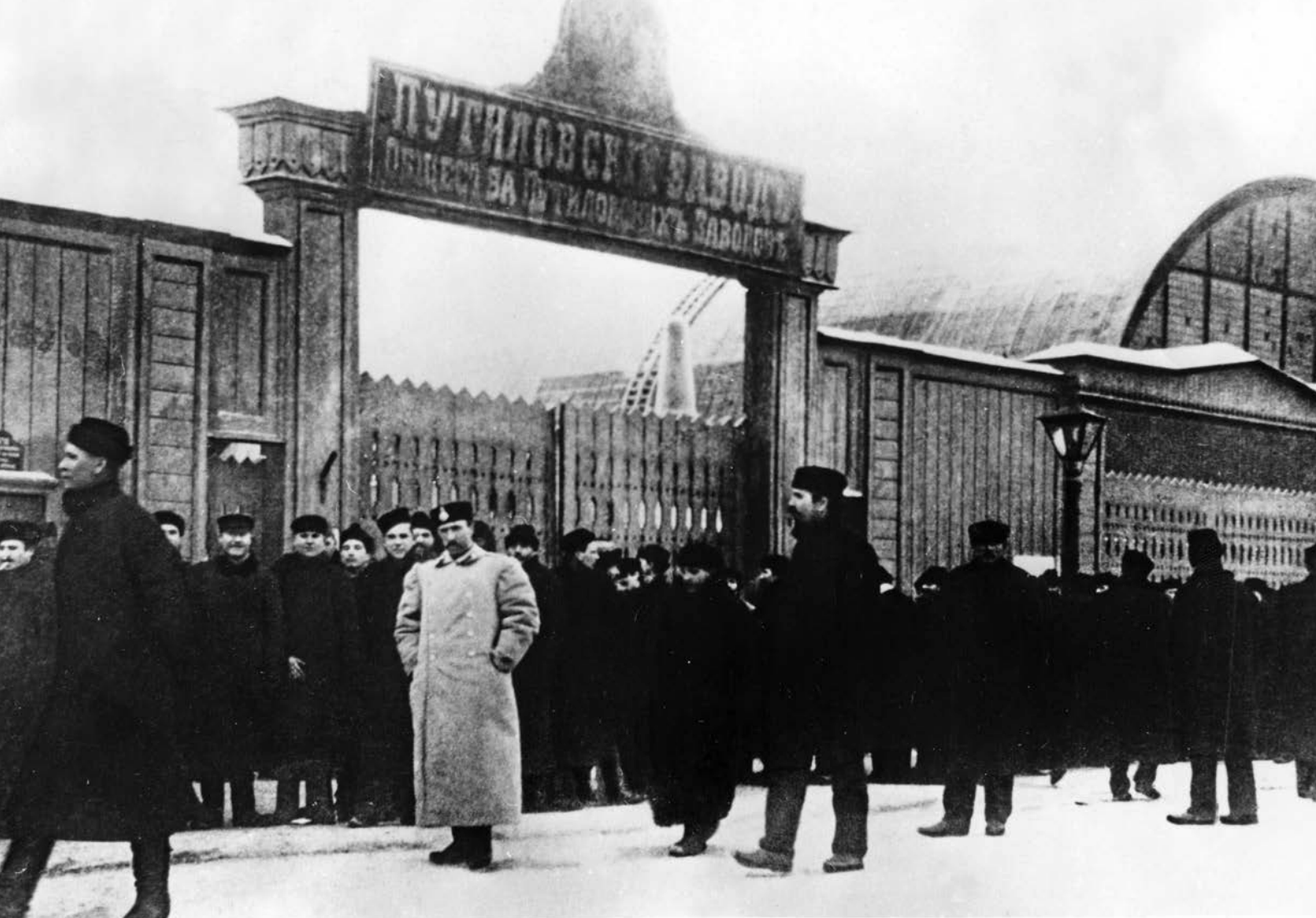
Dissatisfaction among the growing class of urban workers was also rising. Workers in the expanding industrial areas had many reasons to be unhappy.
Housing crisis
The material situation in cities like St Petersburg and Moscow was often horrible, which was typical of early industrialisation. Housing became severely overcrowded as workers flooded into the cities. Nothing adequate was built for them.
Example
Living Conditions in 1904
A 1904 survey revealed shocking statistics:
- Average of 16 people per apartment
- Average of 6 people per room
These cramped conditions were the norm, not the exception, for urban workers.
Sanitary conditions were deplorable. It was not unusual for workers to be living in basement apartments with mould and mildew on the walls and rats crossing through their small rooms.
Working conditions
Workers faced long hours, with a 10 to 12-hour day being normal. They were at constant risk of injury from unprotected machinery. There were no laws to protect them from dangerous wheels, belts or other equipment. Industrial accidents were common.
Important
No Protection for Workers
Workers had virtually no legal protections. There were no safety regulations, no limits on working hours, and no compensation for injuries. Employers could exploit workers with impunity.
Exposure to new ideas
However, worker discontent involved more than just demands for a better physical life. Workers were more likely to be literate than peasants. This meant they began to be exposed to new ideas through the relatively liberal press. They became aware of the extreme inequalities of city life. They learned about workers in other countries who had better conditions. This political awareness made them increasingly dangerous to the existing order.
Note
The Power of Education and Information
Literacy transformed workers from merely dissatisfied laborers into politically conscious activists. They could read about revolutionary ideas, workers' rights movements in other countries, and organize more effectively. This made urban workers a much greater threat to the autocratic system than the largely illiterate peasantry.
Exam tip: When discussing discontent in Russia, organise your answer around the three types of grievances: political (lack of representation, autocratic rule), social (inequality, class divisions) and economic (poverty, working conditions, land hunger). Use specific examples for each category.
Summary
Key Points to Remember:
- Russian society was based on privilege by birth rather than utility (usefulness) or merit (ability), creating a rigid hierarchy with the Tsar at the top and peasants at the bottom
- The peasants formed 90% of the population and produced over half the nation's income, yet lived in poverty with inadequate land and outdated farming methods
- Peasant grievances centred on 'land hunger' caused by population growth, poor soil, cold climate and backward agricultural practices
- Urban workers faced overcrowded housing (16 per apartment, 6 per room), deplorable sanitary conditions, 10-12 hour workdays and dangerous working conditions with no legal protections
- Political awareness was growing among workers as literacy increased and they were exposed to new ideas through the press, making them increasingly politically dangerous to the existing order
- Nicholas II's weakness as a leader meant the government was poorly equipped to address these mounting grievances