The Russian Empire and Its Relationships with Foreign Powers (HSC SSCE Modern History): Revision Notes
📚Revision Notes
The Russian Empire and Its Relationships with Foreign Powers
Understanding tsarism and the Russian autocracy
Before we explore Russia's relationships with other nations, we need to understand the system of government that shaped these relationships. Tsarism refers to the system of rule by a Tsar (the Russian word for 'ruler'). The Tsar could be either male or female (when female, she was called a Tsarina). This system was fundamentally autocratic, meaning the ruler held complete political power without limitation from a constitution or parliament.
Note
The nature of tsarism was deeply embedded in Russian culture. As German intellectual August von Haxthausen observed in 1844, Russian society was like a colony of bees that could not exist without its queen. Similarly, Russians believed their society required the Tsar's leadership to function properly.
The Fundamental Laws of the Empire, first issued in 1716 and reaffirmed in 1832, made the Tsar's power crystal clear. These laws described the Tsar as an autocratic and unlimited monarch whose supreme power was commanded by God himself. This meant:
- No constitution or other institutions could limit the Tsar's authority
- All laws came directly from the Tsar
- Government officials swore personal loyalty to the Tsar, not to the state
- Civil servants and ministers required the Tsar's permission even to resign from their positions
Important
This absolute power was seen by Russian rulers as a sacred trust, with the empire considered the dynasty's personal property to be passed intact to the next generation.
The founding and growth of the Romanov Dynasty
The Time of Troubles and the rise of the Romanovs
In the early 1600s, before the Romanov Dynasty began, Russia experienced a period of severe crisis known as the Time of Troubles. During this chaotic era, Russia suffered from:
- Political fragmentation with weak central authority
- Economic and cultural underdevelopment
- Foreign invasions
- Rapid succession of rulers who could not establish stability
Russia was essentially an unstable European power struggling to maintain its existence.
This instability ended in 1613 when Michael Romanov was declared Tsar. Over his 32-year reign, he unified Russia under one leader and established a powerful autocratic tradition that would define Russian governance for centuries. The Romanov family would continue to rule Russia for 304 years, from 1613 until their dramatic overthrow in 1917.
Notable Romanov rulers
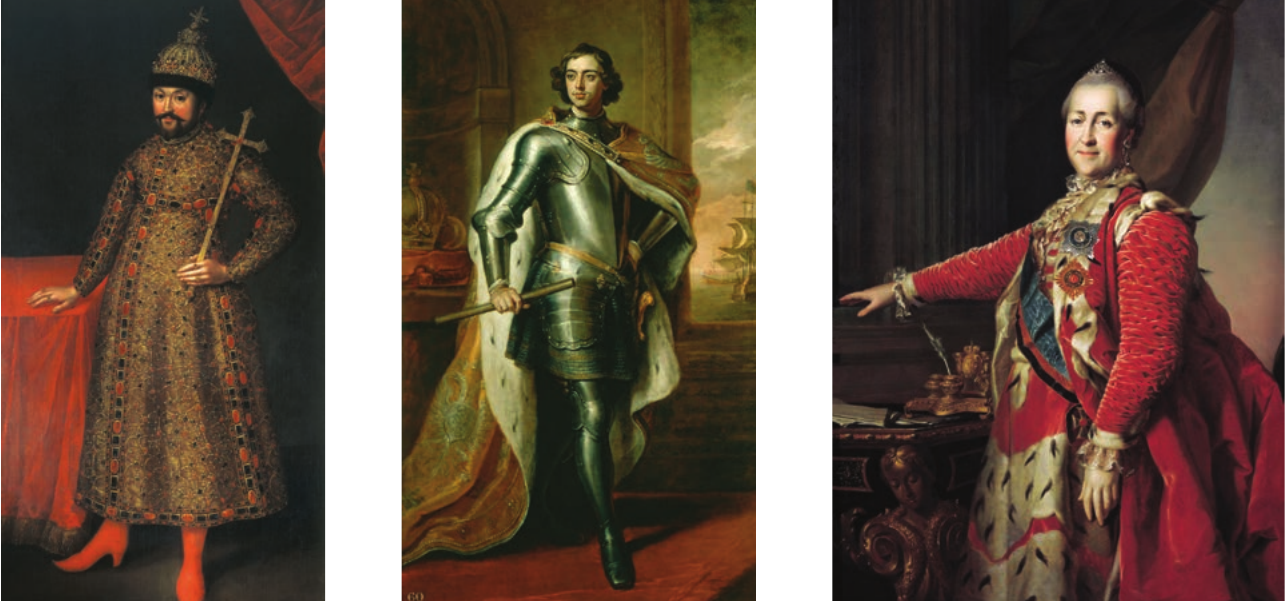
Eighteen different Romanov autocrats ruled Russia throughout the dynasty. Some of the most significant leaders included:
- Michael Romanov (ruled 1613-1645): The founder of the dynasty who brought stability after the Time of Troubles
- Peter I, known as Peter the Great (ruled 1696-1725): Modernised Russia and expanded its territory significantly
- Catherine II, known as Catherine the Great (ruled 1762-1796): Continued expansion and promoted education and the arts
Important
These rulers built the foundation of Russian power, but their legacy also included political instability. Remarkably, of the last dozen Romanov autocrats before Nicholas II, half were assassinated, revealing the dangerous tensions within Russian society.
The expansion of the Russian Empire
Geographic growth
Under various Romanov rulers, Russia's boundaries expanded dramatically to create the modern world's largest and most powerful empire. By the time Nicholas II became Tsar in 1894, the Russian Empire had grown to cover one-sixth of the total land surface of Earth.
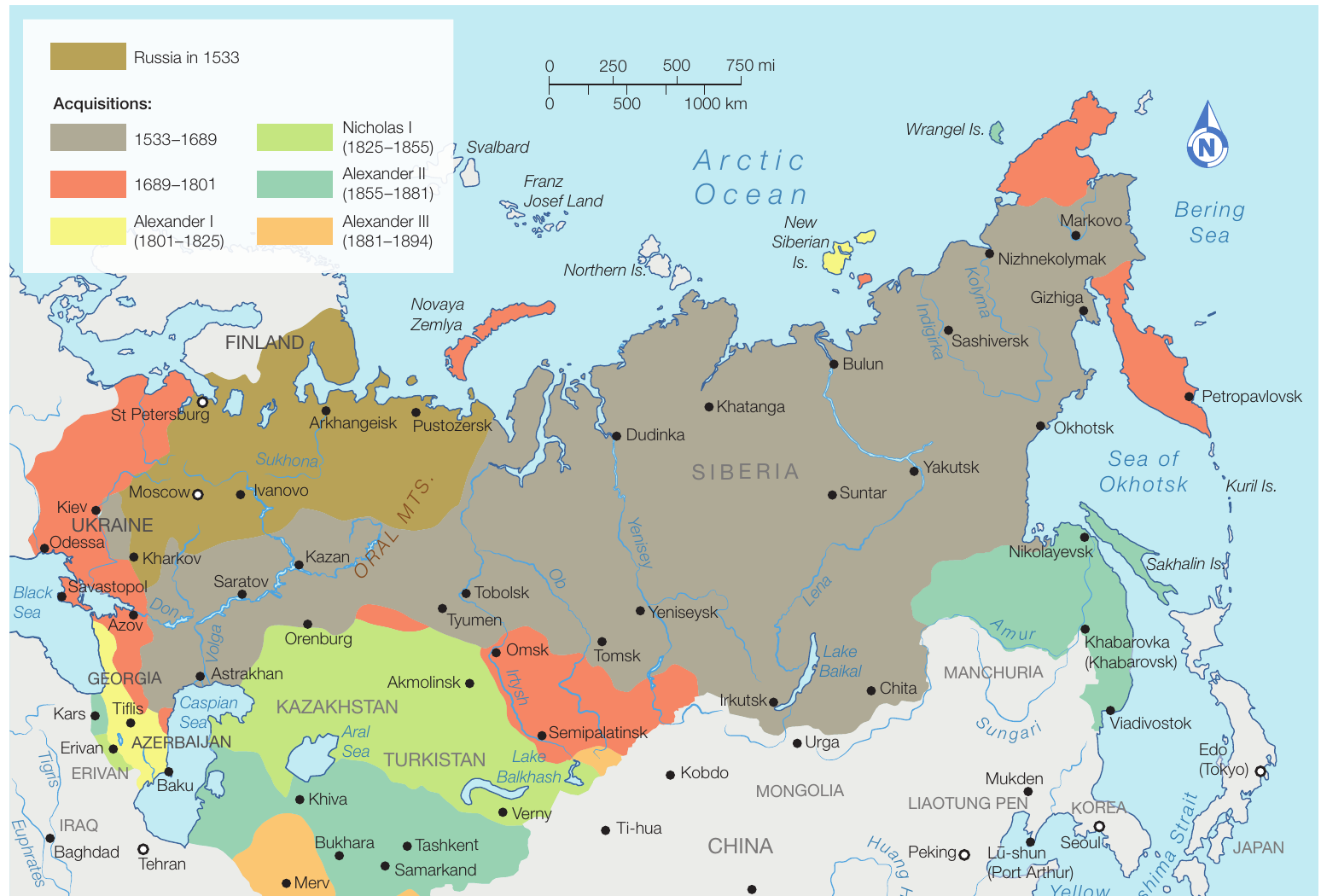
The empire's expansion was truly remarkable:
- It stretched from Eastern Europe deep into Asia (known at the time as the Far East)
- At one point, it even included Alaska and northern parts of California in North America
- The empire encompassed both European and Asian territories, making it a unique transcontinental power
A multinational empire
One significant consequence of this territorial expansion was increasing ethnic diversity. The Russian Empire became home to approximately 70 distinct nationalities, each with their own languages, customs, and ways of life.
Note
The Russian Imperial Census of 1897
The first and only census conducted in the empire revealed fascinating statistics:
- Total population: almost 126 million people
- Ethnic Russians: nearly 68 million (just over half the population)
- Other nationalities: approximately 58 million (the remainder)
This meant that for five out of every ten people living under the Tsar's rule, Russian was a foreign language, and Russian people themselves were foreigners.
These conquered peoples had been brought into the empire by Nicholas II's ancestors but maintained their distinct identities.
Population distribution and economic structure
The population of the empire was not evenly distributed across its vast territory:
- The cold lands of Siberia remained thinly populated
- Most people lived in the five per cent of land suitable for farming
- This concentration occurred because Russia operated as a largely agrarian economy, which relied on growing crops for survival and trade
Note
Urban areas faced overcrowding issues. According to the 1897 census, fewer than 17 million of the 125 million people lived in cities, yet these urban centres were often densely packed and struggling with poor living conditions.
Russia as a great power
By 1900, Russia commanded respect as a significant political and cultural force on the world stage. The empire had developed a sophisticated cultural identity that impressed European observers. Russia had produced renowned literary figures such as Leo Tolstoy (author of War and Peace) and celebrated composers such as Pyotr Tchaikovsky.
Important
However, European travellers to Russia noticed stark contradictions. While educated Russians displayed sophistication equal to their Western European counterparts, the vast majority of Russian people lived in poverty under the dictatorial power of the monarchy. This combination of cultural achievement and social inequality would eventually contribute to revolutionary pressures.
Russia's approach to foreign policy
Traditional diplomatic style
Historian Simon Sebag Montefiore, in his comprehensive 2016 study of the Romanovs, identified a consistent pattern in Russian foreign policy. Throughout the dynasty, Russian rulers maintained a dual approach to international relations. On the surface, they engaged in Western diplomatic niceties and participated in European political conventions. However, beneath this veneer, they clung firmly to traditional Russian notions of absolute rule and pursued Russian interests with determination and force.
This approach was particularly effective under the most powerful Romanov leaders, who combined diplomatic skill with firm resolve. The autocrat made all major decisions regarding foreign powers, ensuring strong uniformity in Russia's international position.
Economic expansion into Asia
By the start of the twentieth century, Russia had significantly expanded its territorial control and economic interests into Asia. This eastward expansion included several important developments:
Note
The Trans-Siberian Railway
The Trans-Siberian Railway represented one of Russia's most ambitious economic projects. This massive railway line connected Moscow in the west to Vladivostok on the Pacific coast, crossing the entire breadth of Siberia.
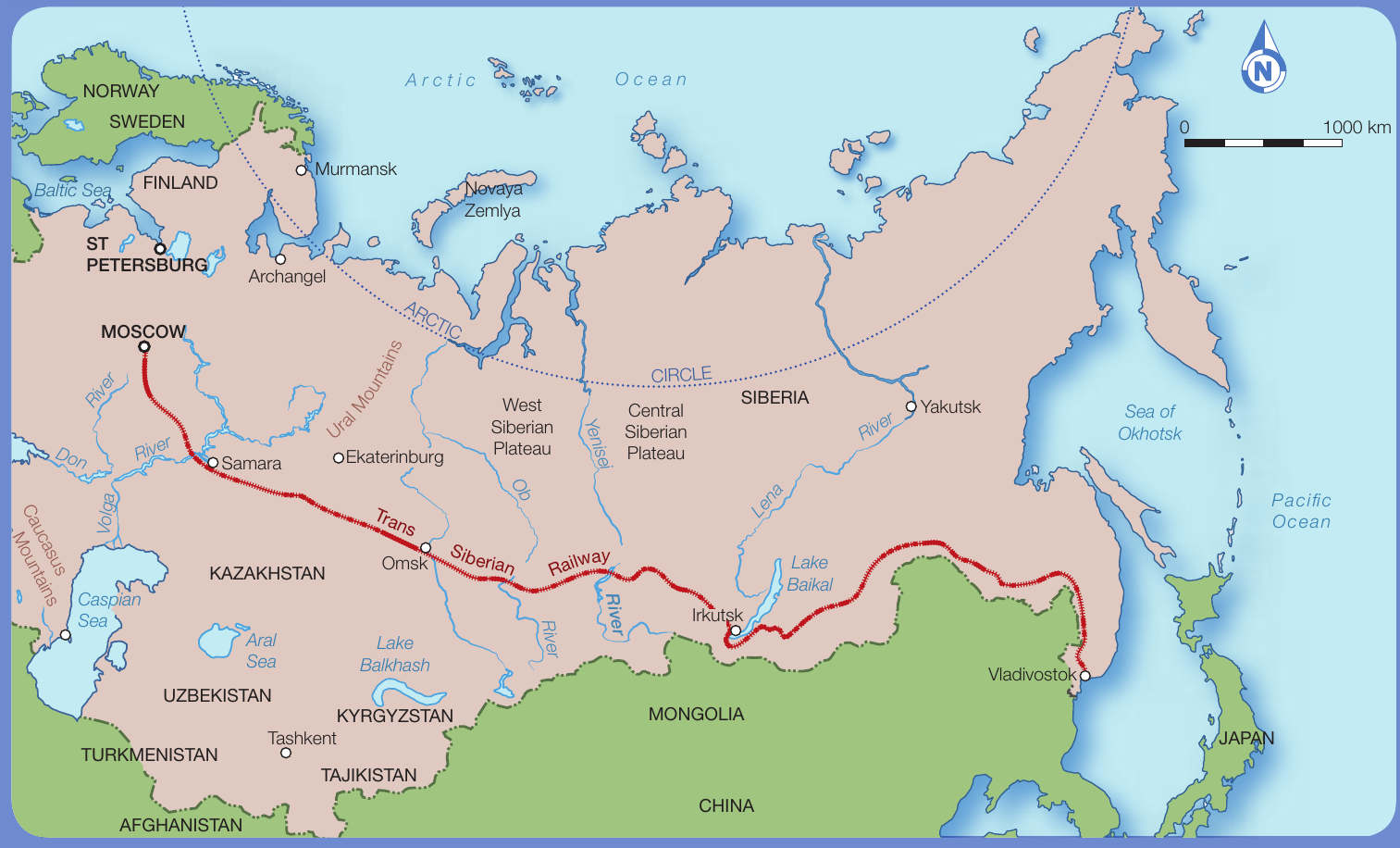
The railway served multiple purposes:
- It facilitated the movement of people and goods across the vast empire
- It strengthened Russian control over Siberian territories
- It enabled economic development in previously isolated regions
- It projected Russian power into East Asia
Russia also developed strong economic relations with the Chinese region of Manchuria. These expanding interests in Asia would eventually lead to military conflict with Japan, as both powers competed for influence in the region.
European alliances
Russia's relationships with European powers became increasingly important as the twentieth century began. The balance of power in Europe was shifting, and Russia needed to position itself strategically.
Alliance with France: France emerged as Russia's primary ally during this period. France needed Russia's massive size and military power to protect itself from the increasingly powerful German Empire, which posed a threat to French security. This alliance proved mutually beneficial, as Russia also gained from French support.
The Triple Entente: Russia and France eventually joined with Great Britain to form the Triple Entente alliance. This diplomatic arrangement aimed to encircle the German Empire, which was growing in power and ambition. The formation of these opposing alliance systems would ultimately contribute to drawing Europe into World War I.
Royal family connections
Nicholas II benefited from extensive family connections to other European monarchs, which helped shape diplomatic relationships. Most notably, his first cousin was King George V of Great Britain. These blood ties helped strengthen political and diplomatic bonds between the two nations, as royal families maintained personal relationships that complemented official diplomatic channels.
The German connection
Nicholas II's wife, Alexandra, was German by birth. During peacetime, this connection represented a link to one of Europe's major powers. However, when Russia eventually went to war against Germany in World War I, Alexandra's German heritage would be held against her by Russian people who questioned her loyalty. This created additional problems for the royal family during an already difficult period.
Summary
Key Points to Remember:
-
Tsarism was an autocratic system where the Tsar held absolute power, limited by neither constitution nor parliament, and was seen as divinely appointed.
-
The Romanov Dynasty lasted 304 years (1613-1917), beginning with Michael Romanov who ended the Time of Troubles and established a powerful autocratic tradition.
-
The Russian Empire became the world's largest empire, covering one-sixth of Earth's land surface and including approximately 70 different nationalities with a total population of 126 million by 1897.
-
Russia's foreign policy combined Western diplomatic engagement with traditional autocratic principles, developing economic interests in Asia (including the Trans-Siberian Railway), forming alliances with France and Britain (the Triple Entente), and maintaining family connections to European monarchs.