A Digital Journey (HSC SSCE Modern History): Revision Notes
📚Revision Notes
A Digital Journey

Introduction to the Digital Revolution
You are living through the fourth major industrial transformation in human history. The technological changes of the past 25 years have fundamentally altered how humans communicate and participate in society. Today, your smartphone gives you access to the collective knowledge of humanity and provides tools for global citizenship and influence.
Through social media posts, photographs, or videos, you can reach audiences worldwide within seconds. Content can spread rapidly, giving individuals unprecedented power to shape opinions and influence events. This would have been unimaginable to even the most powerful leaders of the past.
Note
The Digital Revolution represents a shift from analogue technologies (which degrade over time) to digital technologies (which can be easily created, shared, and distributed). This transformation has changed lifestyle, society, culture and politics in profound ways.

The four industrial revolutions
Understanding the Digital Revolution requires recognising its place in the broader context of industrial history. Humanity has experienced four major industrial revolutions:
Important
The Four Industrial Revolutions:
First Industrial Revolution: Based on water and steam power to mechanise production. This revolution transformed manufacturing by introducing machinery powered by water wheels and steam engines.
Second Industrial Revolution: Based on electric power to create mass production. Electricity enabled factories to produce goods on a much larger scale, fundamentally changing manufacturing processes.
Third Industrial Revolution: Based on electronics and information technology to automate production. This revolution introduced computers and digital technology into manufacturing and business processes. It is often called the Digital Revolution.
Fourth Industrial Revolution: Characterised by a fusion of technologies that blurs the lines between physical, digital and biological spheres. This ongoing revolution combines artificial intelligence, robotics, and biotechnology in unprecedented ways.
Early television technology

Television arrived in Australia in September 1956, coinciding with the Melbourne Olympics. For many families, the television represented a revolutionary new form of home entertainment. Early televisions were bulky devices that families gathered around to watch programmes together.
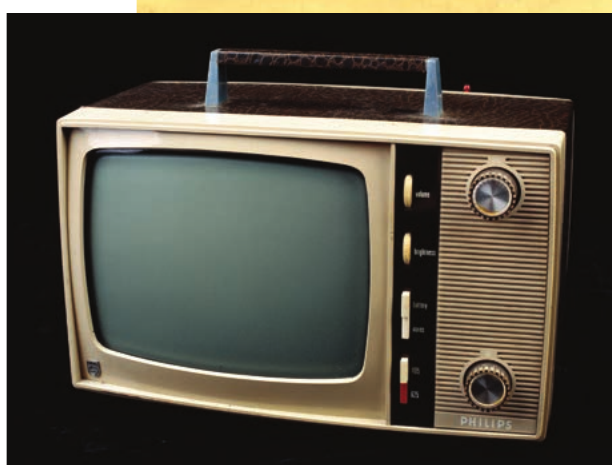
In the 1950s and 1960s, home entertainment centred on four main technologies:
- Television
- Radio (also called wireless)
- Record players
- Telephone
Note
Television technology remained largely unchanged from the 1950s through to the mid-1970s, with modifications mainly relating to styling and design. Australian television broadcasts remained in black and white until March 1975, when colour television was introduced.
The arrival of video recorders in the early 1970s revolutionised home entertainment again. People could now record their favourite programmes and films from free-to-air television, watch them at their convenience, and fast-forward through advertisements.
Evolution of music technology
From records to cassettes
Music technology underwent several transformations throughout the twentieth century. In the 1950s and 1960s, record players were the primary way to listen to recorded music at home. However, vinyl records were expensive, leading many people to record music from radio broadcasts onto reel-to-reel tape recorders.
The invention of compact cassettes in 1962 made recording music much easier and more portable. Cassette tapes used magnetic tape housed in a plastic case. Radio cassette players became widely used in Australia by the late 1960s, making music truly portable for the first time.
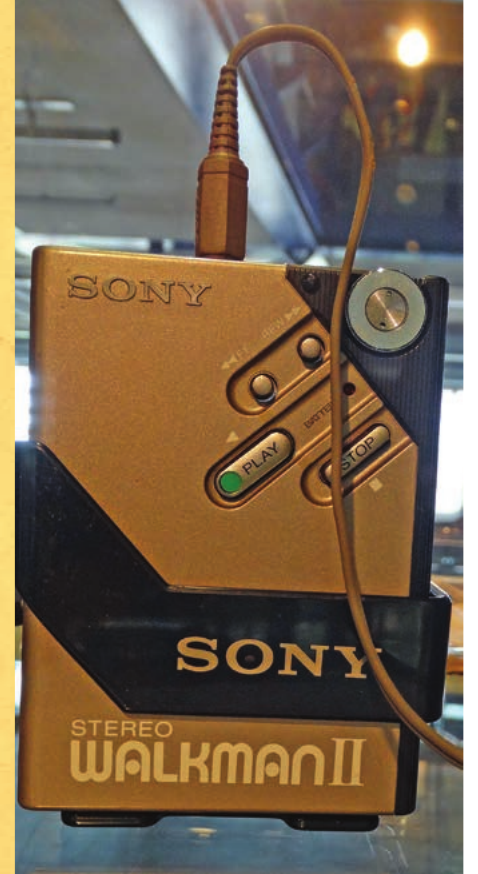
Note
Analogue recording works by changing sound waves into electrical signals of the same type. The signals are then stored on magnetic tape or vinyl records.
However, cassette recorders had limitations. The tapes inside cassettes would wear out with repeated use and eventually break. Despite this, many teenagers built extensive music collections on cassette tapes because they were more affordable than purchasing vinyl records.
The digital music revolution
The shift from analogue to digital music fundamentally changed how people consumed music. Compact Discs (CDs) and CD players, introduced in 1996, offered better sound quality and durability than cassette tapes or vinyl records.
Note
Digital recording stores information as a series of numbers (1s and 0s), indicating whether a signal is present or absent. This method prevents degradation of sound quality over time.
The next major innovation was the MP3 file format, which compressed digital music files to make them easy to store and share. MP3 players allowed people to carry hundreds or thousands of songs in a pocket-sized device.
Example
Apple's Digital Music Revolution
Apple revolutionised digital music with two key innovations:
- iTunes (1998): Software that made it easy to organise and purchase digital music
- iPod (2001): An MP3 player with an exceptionally user-friendly interface
These innovations made downloading and listening to digital music accessible to millions of people worldwide.
Communication technology revolution
Traditional communication methods
Until the 1990s, communication beyond the home relied on just two technologies:
- Postal mail (now called 'snail mail')
- Landline telephones
Most Australian homes had only one telephone line, and the phone had to be shared by all family members. Telephones were stationary devices connected to the network via physical telephone lines. This often caused conflicts, particularly when teenagers spent long periods talking to friends.
The mobile phone transformation
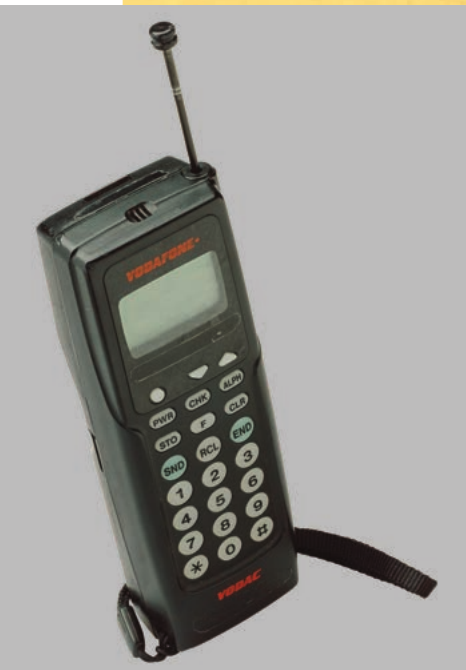
The first mobile phones became available in Australia in 1987, but they were initially impractical for most people. Early mobile phones:
- Cost thousands of dollars
- Weighed over half a kilogram
- Used analogue technology
- Had limited battery life
By the mid-1990s, mobile phones became smaller, cheaper, and more practical. The shift from analogue to digital technology made phones even smaller and more capable. By 2002, mobile phones commonly included cameras.
The smartphone revolution
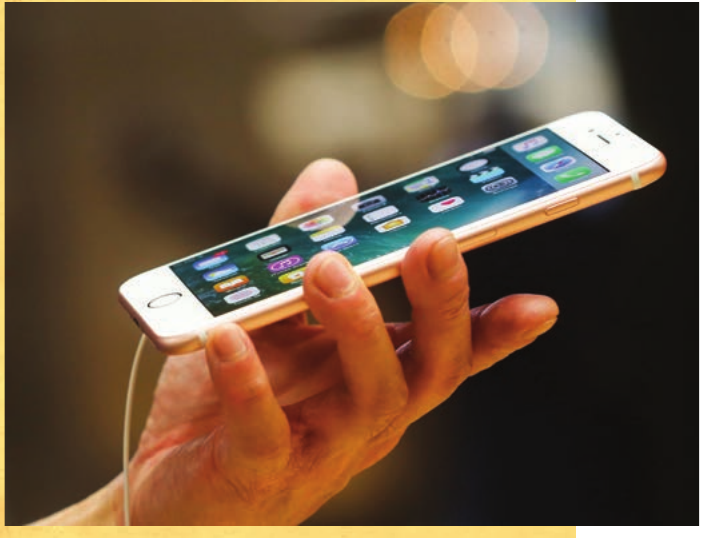
Important
The most significant communication technology development was the smartphone: a mobile phone that can be used as a small computer and connects to the internet.
Apple's iPhone, released in 2007, combined multiple technologies into one device:
- Mobile phone
- MP3 player
- Internet browser
- Camera
- Computer applications
By 2018, nearly five billion people worldwide owned mobile phones, making this technology one of the most widely adopted in human history.
Computer technology in the home
Early home computers
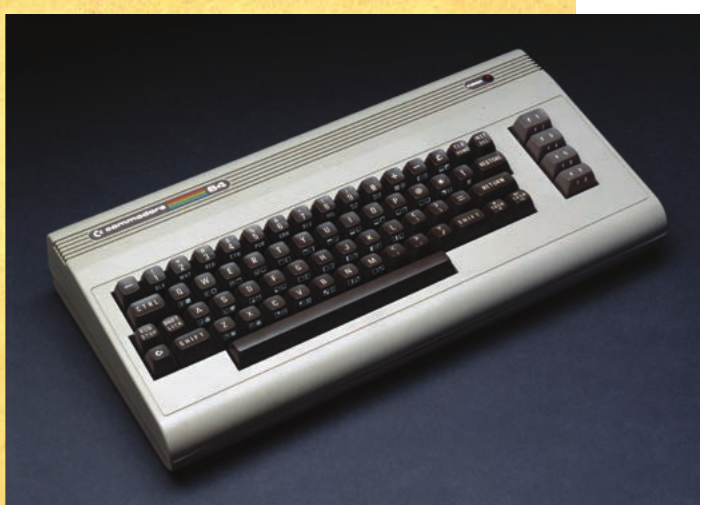
Personal computers began appearing in homes during the 1980s. The Commodore 64, introduced in the mid-1980s, became one of the most popular early home computers. These early computers:
- Connected to television sets instead of dedicated monitors
- Were used for both work and playing games
- Had very limited processing power compared to modern standards
IBM introduced their first personal computers (PCs) in the early 1980s, whilst Apple released the Macintosh computer in 1984. Initially, computers appeared mainly in workplaces and schools. It took several years before enough computers existed to have widespread impact.
The convergence of technologies
The most significant development has been the convergence of previously separate technologies. Four distinct electronic technologies that dominated homes in the 1960s - telephone, radio, record player, and television - have now merged into single devices.
Note
Modern Smartphone Capabilities
Modern smartphones combine:
- Communication (phone calls, text messages, email, social media)
- Music and audio (streaming services, podcasts, audiobooks)
- Video entertainment (streaming services, YouTube)
- Photography and videography
- Internet browsing
- Banking and shopping
- Navigation and mapping
- Health monitoring
This convergence represents what has been called the 'revolution in our pockets'. Powerful computers that connect to the global internet enable users to access information, communicate instantly, and participate in global communities from anywhere.
Smart devices and artificial intelligence
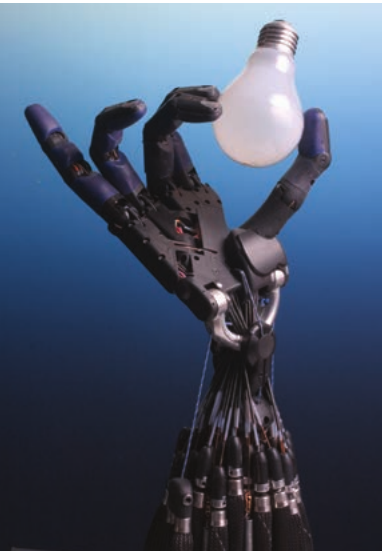
The Digital Revolution continues to accelerate. Smart watches and fitness trackers now monitor every step, heartbeat, and aspect of daily activity. These devices provide continuous analysis of health and behaviour patterns.
Note
Artificial intelligence (AI) is increasingly being incorporated into digital devices, enabling them to learn from user behaviour, make predictions, and automate tasks. This represents a fundamental shift in how humans interact with technology.
Digital natives and the transformed world
Important
The term digital native refers to people born during or after the widespread adoption of digital technology. These individuals have grown up surrounded by computers, mobile phones, and the internet. For digital natives, digital technology is not revolutionary - it is simply the normal environment of daily life.
However, understanding the history of technological change remains important. The transformations that occurred in the shift from analogue to digital, and the arrival of computers and the internet, happened relatively quickly. Many people now use advanced digital technologies without understanding how significantly society has changed in a short period.
Examining technology's impact
Consider these questions about technology in your life:
Personal technology experience:
- What are your earliest memories of using technology?
- What do you think are the most significant technological changes that have occurred in your lifetime?
- What forms of technology do you use daily?
Historical perspective:
- What would life be like with only 1930s technology?
- How would your daily routine differ with only 1960s technology?
- What limitations would you face with only 1980s technology?
Future developments:
- What major technological changes do you anticipate in the coming years?
- What benefits has digital technology brought to contemporary society?
- What debates exist today about technology-related issues?
Technology and human history
The twentieth century witnessed rapid increases in technological power. Necessity drove invention, particularly during two world wars, which accelerated developments in transportation and military technology.
On 6 August 1945, an atomic bomb was dropped on Hiroshima, Japan, killing 80,000 people instantly. This weapon demonstrated that technology had reached a frightening new level of destructive capability. The atomic bomb's power was both technological and symbolic - possessing such weapons gave nations immediate advantages in any conflict.
This development pushed the United States and Soviet Union into an arms race that created the possibility of catastrophic global destruction. Humanity now had the capacity for instant, massive destruction. However, the decision to use such weapons remained a human choice.
Important
When examining technological advancement and its historical impact, you must consider the human ways in which technology is used and the human consequences that result. Technology itself is neither good nor evil - its impact depends on how people choose to employ it.
Data, privacy, and power
The Digital Revolution has created new questions about privacy, power, and citizenship. The data you create and share online has become central to the political and economic structure of modern society. Massive global institutions collect, own, and sell your data, knowing almost every element of your online life.
Important
Critical Questions About Digital Citizenship:
This raises important questions about what defines public and private citizenship. Individuals like Edward Snowden have used digital technologies to leak classified information, revealing what some consider illegal behaviour by democratically elected governments. Depending on perspective, such individuals might be considered whistleblowers, patriots, or traitors.
As a participant in this revolution, you must consider:
- How will you participate in digital society?
- What will you do with the power that digital technology provides?
- How will you protect your privacy whilst engaging with digital platforms?
- Where will the revolution lead, and what role will you play?
Summary
Key Points to Remember:
- The Digital Revolution represents the Third Industrial Revolution, characterised by the shift from analogue to digital technology.
- Four major technological areas transformed between the 1980s and 1990s: television, music players, communication devices, and computers.
- Analogue technologies degrade over time, whilst digital technologies maintain quality and can be easily shared.
- The smartphone represents the convergence of previously separate technologies into a single powerful device.
- Digital natives have grown up with this technology but may not understand the historical significance of recent technological changes.
- Technology's impact depends on human choices about how to use it, raising important questions about power, privacy, and participation in digital society.