The Fourth Industrial Revolution (HSC SSCE Modern History): Revision Notes
📚Revision Notes
The Fourth Industrial Revolution
Introduction: a new kind of revolution
The Fourth Industrial Revolution represents a fundamental shift in how humanity lives and works. Unlike traditional revolutions led by protesters with pitchforks and torches, this revolution is driven by digital networks, robots, and machine intelligence. It builds upon the Digital Revolution of the early 21st century but goes much further, potentially replacing human workers with automated systems.
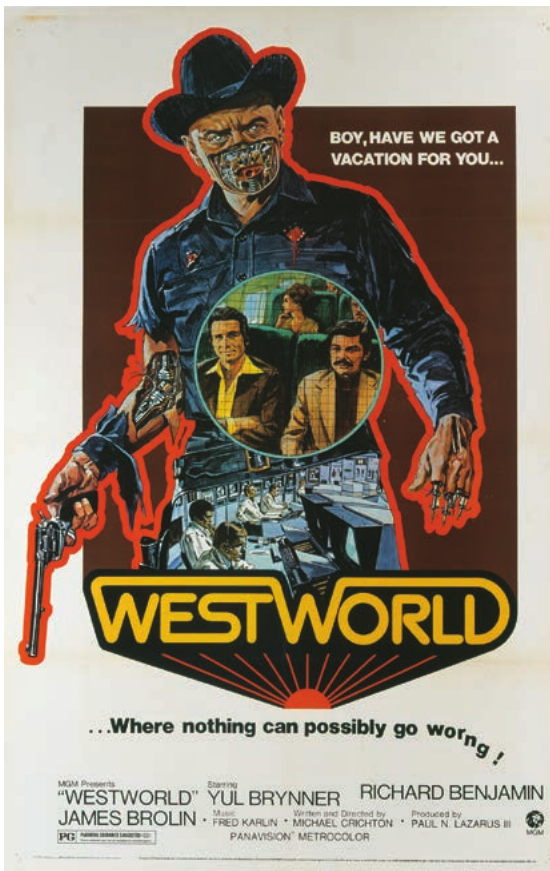
The 1973 science fiction film Westworld imagined a futuristic theme park where humans interacted with lifelike robots. Whilst fears of rogue robots may still be distant, the real impact of this revolution will be deeply human, affecting employment, privacy, freedom of speech, and the power balance between individuals, governments, and corporations.
Note
This revolution differs fundamentally from historical revolutions: instead of political upheaval or industrial mechanization, it centers on digital intelligence and automation that can learn, adapt, and make decisions previously requiring human judgment.
The role of individuals
Individual power and influence
Digital technology has granted ordinary individuals unprecedented power to influence millions. Social media platforms have created a new class of influencers who can affect economic and social outcomes through a single smartphone post.

Example
Case Study: The Kardashian Phenomenon
The Kardashian family demonstrates the extraordinary reach individuals can achieve through mastering social media technology. By 2017, the five sisters (Kim, Khloe, Kourtney, Kendal, and Kylie) shared 420 million Instagram followers combined. Their influence translates directly into economic power:
- When Kylie launched her cosmetic brand on Instagram, it sold out within minutes
- Khloe's denim brand made $1 million on its first day
- Kim's smartphone game, allowing users to pretend to be her, has been downloaded 42 million times and generated over $200 million since 2014
These individuals are not traditional artists, musicians, scientists, or political leaders. They are ordinary people who have mastered social media and smartphone technology to build immense influence. Their reach extends beyond entertainment. When Kim took her children to be vaccinated on their reality television show, she potentially influenced the behaviours of hundreds of millions of followers, demonstrating power that exceeds most governments.
This phenomenon represents a fundamental shift in how influence operates in modern society. Digital technology has democratised the ability to reach mass audiences, though the content and value of that influence remains debatable.
Freedom of speech in the digital age
Freedom of speech is a cornerstone of democratic societies like Australia. It allows ordinary people to express their opinions and criticise authority without fear of punishment. However, this right comes with the understanding that others can also respond and disagree.
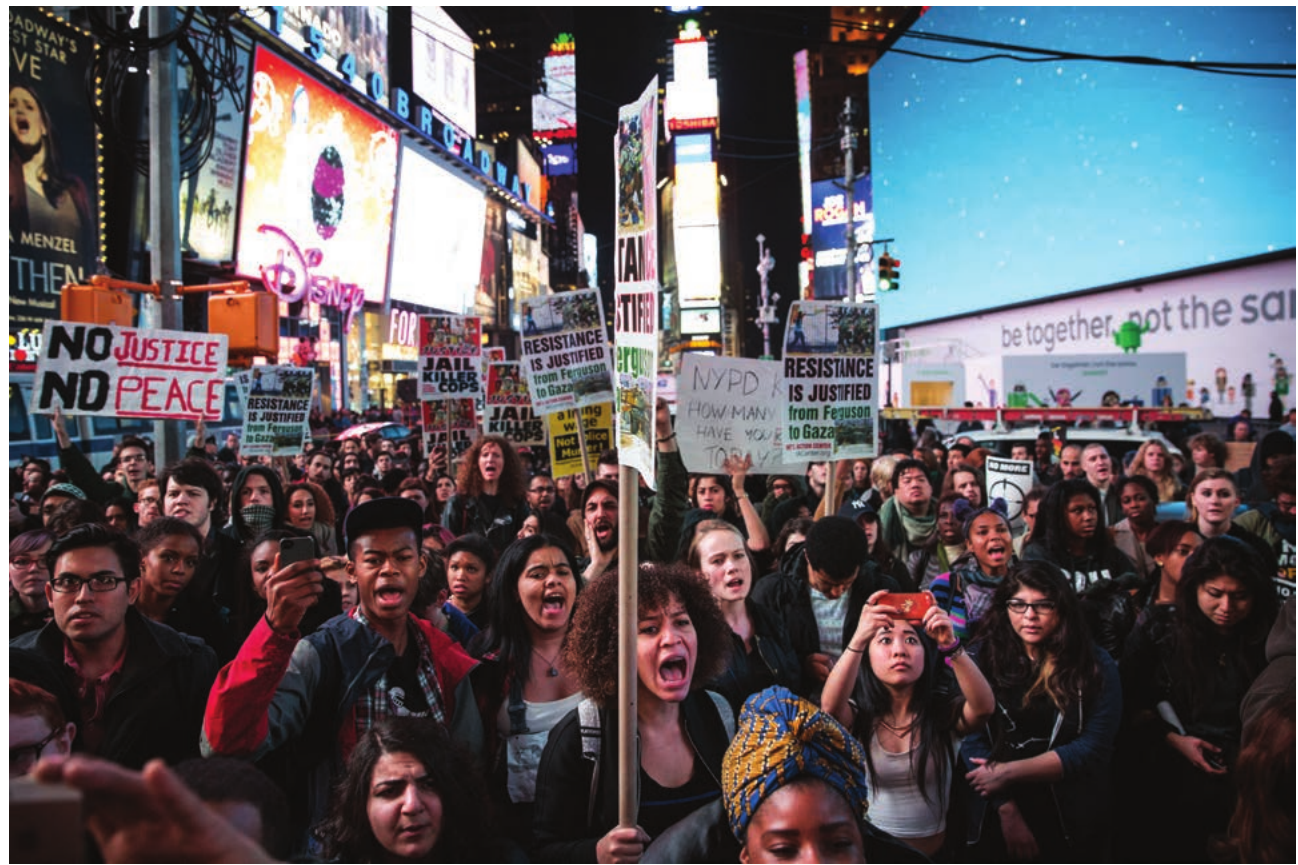
Social media technologies have enabled millions to exercise free speech in new ways, but this has also created challenges. Anyone can hide behind a keyboard and use assumed identities to comment on, harass, or troll others who are exercising their own free speech rights.
The debate over digital speech
Private companies like Twitter, Instagram, and Facebook own the platforms where billions exercise free speech. These corporations control the private data, likes, comments, and views of users. Their financial power is so vast that few governments can effectively challenge them.
Important
This raises important questions about individual rights to their own identity and data. Countless cases exist where individuals have faced consequences for previous social media comments that never disappear from the internet.
Government responses
Different governments have responded to digital speech challenges in various ways:
Germany's approach: In 2017, the German government legislated to fine social media platforms and their users for posting hate speech. Justice Minister Heiko Maas stated:
Freedom of opinion ends where criminal law begins. Calls to commit murder, threats, insults, incitement to hatred or the Auschwitz-lie [denying Nazi death camps existed] aren't expressions of freedom of opinion but attacks on the freedom of opinion of others.
This approach reflects Germany's historical experience and commitment to preventing the spread of extremist ideology online.
Australia's approach: The Australian government has taken a different path, focusing on data retention and security concerns rather than content regulation (discussed in the next section).
Contrasting views
Linguist and philosopher Noam Chomsky distinguishes between traditional news sources and social media commentary:
If I want to find out what's going on in Ukraine or Syria or Washington, I read The New York Times, other national newspapers, I look at the Associated Press wires, I read the British press, and so on. I don't look at Twitter because it doesn't tell me anything. It tells me people's opinions about lots of things, but very briefly and necessarily superficially, and it doesn't have the core news.
Note
This highlights a key concern: social media comments are more easily consumed than in-depth news articles, potentially shaping how individuals understand important global issues in superficial ways.
Online and offline identity
In free societies like Australia, individuals have a legal right to privacy. They are protected from intrusions into their personal lives and maintain some control over their personal information. However, the digital world is rapidly eroding this right.
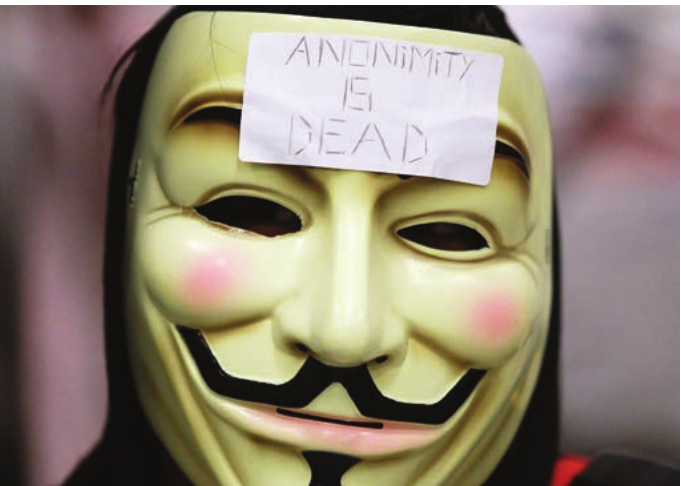
Whilst users can hide their identity to some extent online, the vast majority of online activity is recorded. The success of platforms like Google, Facebook, YouTube, and Instagram relies heavily on recording user data:
- Google's search algorithm uses your previous searches and the behaviour of millions of other users to provide results
- Facebook and Instagram know everything you like and share
- YouTube tracks your viewing habits and preferences
Important
Whilst users agree to terms and conditions when signing up for these services, the permanent nature of digital technology means an individual's entire past can be uncovered with a few clicks.
Metadata retention in Australia
Metadata refers to information that describes or helps you use other information. In telecommunications, this includes data about who you contacted, when, and for how long (but not the content of communications).
In an era of terrorism and heightened cybercrime, criminal investigations often rely on metadata details. In 2016, the Australian government legislated to force telecommunications companies to retain their users' metadata for security services like the Federal Police to access when needed.
The privacy debate
Human Rights Commissioner Tim Wilson objected to this legislation:
We're going to have telcos keeping data on the assumption that there is a potential for average Australians to potentially commit crimes and therefore the data to be available should the Government seek to use it for their own purposes. We all want a free society, we all want a safe society, but people should be innocent until they are proven guilty. There is the risk that it may amount to treating people as though they are guilty until they are proven innocent.
Note
This raises a fundamental question: should privacy rights be redefined in the digital age to increase safety? The debate centres on balancing individual liberty against collective security in an era of new digital threats.
The power of digital institutions
Google: corporate power and responsibility
The debate over privacy and content extends beyond governments to massive international technology corporations.
In 2017, major companies including McDonald's, Johnson & Johnson, and PepsiCo began pulling advertising money from YouTube (owned by Google) after discovering their advertisements played before videos from extremist hate groups. The potential loss was estimated at $750 million. However, Google was valued at nearly $500 billion in 2017, raising questions about whether this financial pressure was significant enough to drive change.
The controversy prompted Google to apologise and commit to changes allowing brands more control over ad placement. Google's advertising policy prohibits monetisation of content that:
- Threatens or advocates for harm to oneself or others
- Harasses, intimidates, or bullies individuals or groups
- Incites hatred against, promotes discrimination of, or disparages individuals or groups based on race, ethnic origin, religion, disability, age, nationality, veteran status, sexual orientation, gender, gender identity, or other characteristics associated with systemic discrimination or marginalisation
Important
Critical questions: What power do governments have to force companies like Google to remove harmful content? If videos don't seek to make money through advertisements, can they avoid these restrictions? These questions highlight the complex relationship between corporate power, government authority, and individual rights in the digital age.
Apple: privacy versus security
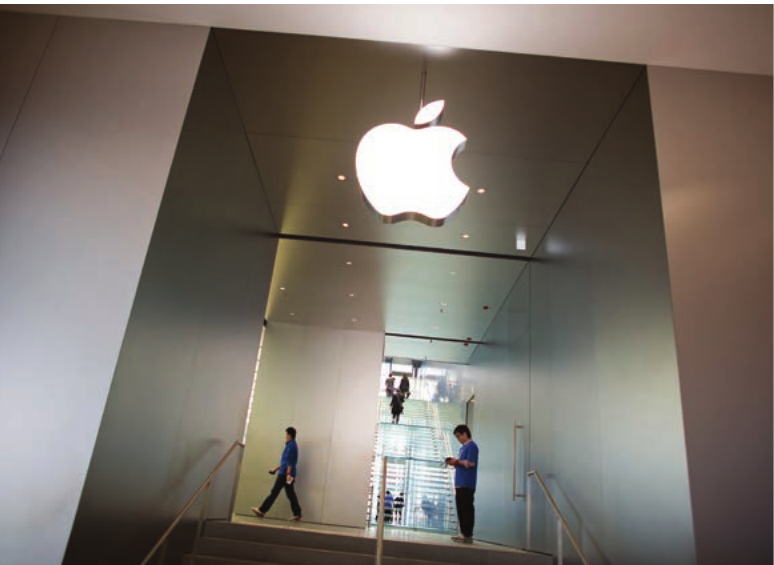
Apple's power and influence became evident in a 2016 controversy involving the FBI. After a terrorist attack in San Bernardino, California, the FBI demanded that Apple provide a 'back door' to access data stored in the perpetrator's iPhone. Apple refused.
Example
Case Study: Apple vs. FBI
Apple's argument: If they allowed the FBI into one user's phone, they could potentially allow access to every iPhone in America, fundamentally compromising user privacy.
The outcome: Apple won the argument. The company is simply too large for any national government to realistically challenge in court. They employ vast numbers of people and contribute significantly to most nations' economies, making governments reluctant to take strong action against them.
The scale of power: In 2017, Forbes magazine predicted Apple would become the first company to reach a market value of one trillion dollars. Both Apple and Google have headquarters in California, which in 2017 was the world's sixth-largest economy by itself.
This case study demonstrates how digital institutions have grown so powerful that they can successfully resist government demands, fundamentally altering the traditional balance of power between corporations and states.
Digital disruption
What is digital disruption?
Digital disruption occurs when new digital technologies fundamentally change how industries operate, often making existing methods obsolete. Consider the apps on a typical smartphone. Each has caused significant disruption:
- Email, chat, and video calls have nearly eliminated the need for physical mail
- Music and video streaming services have destroyed entire industries of record stores and DVD rental services
- News services are reduced to apps that reach users primarily through social media
- Google Maps knows your location, destination, and estimated travel time, reducing the need for traditional navigation skills
- Mathematics apps can photograph complex equations and provide answers with working shown
Digital technology has disrupted not only how we access information but also how we work, what we learn, and why we learn it at all.
Note
Ryan Avent, writing in The Economist in 2014, defined digital disruption as:
driven by a handful of technologies including machine intelligence, the ubiquitous web and advanced robotics capable of delivering many remarkable innovations: unmanned vehicles; pilotless drones; machines that can instantly translate hundreds of languages; mobile technology that eliminates the distance between doctor and patient, teacher and student. Whether the digital revolution will bring mass job creation to make up for its mass job destruction remains to be seen.
This definition captures both the potential benefits (innovation, convenience, accessibility) and the concerns (job destruction, economic disruption) associated with these technologies.
The disruption of governments
Technology and government have long been intertwined. In the twentieth century, governments primarily used technology to control populations and maintain ideologies, for better or worse. However, digital technology has fundamentally disrupted traditional government power.
Power no longer resides exclusively with a few. It is now shared, to varying degrees, by millions. Whilst institutions like Facebook create the technology enabling individual power, this power only exists because users actively create content. Meanwhile, governments have seen their role as protectors diminish in this age of disruption.
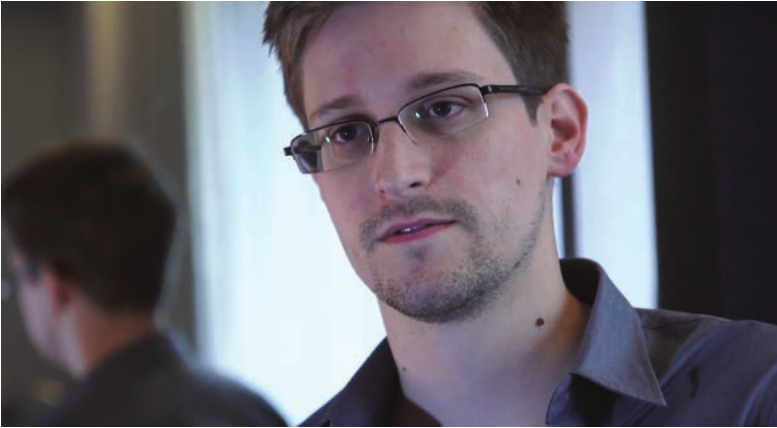
Hacktivism refers to gaining unauthorised access to computer systems to achieve political aims. Hacktivists have the capacity to cause significant disruption to governments:
Edward Snowden case: This former CIA worker copied countless sensitive documents onto a USB drive and shared them with the world online, exposing supposedly secret government activities. Whilst Snowden's actions divide opinion, they demonstrate how a single individual can challenge government secrecy.
Hillary Clinton email hack: In the lead-up to the 2016 US election, hacking groups broke into the private emails of presidential candidate Hillary Clinton and Democratic Party leaders. The exposed emails revealed private and sensitive conversations that potentially derailed Clinton's entire campaign.
Example
Case Study: The Panama Papers

In 2016, the biggest data leak in history revealed the private financial details of countless individuals in what became known as the Panama Papers. The leak contained 11.5 million individual files detailing how the wealthy and powerful keep their money and avoid paying tax in their home countries.
The leak brought about the downfall of Iceland's Prime Minister, Sigmundur Davíð Gunnlaugsson, demonstrating the power of digital information to destabilise entire governments.
Key implications: The speed at which hacktivists can obtain and distribute information far exceeds traditional journalism. This raises profound questions about the future stability of governments and the balance between transparency and security in the digital age.
The disruption of work
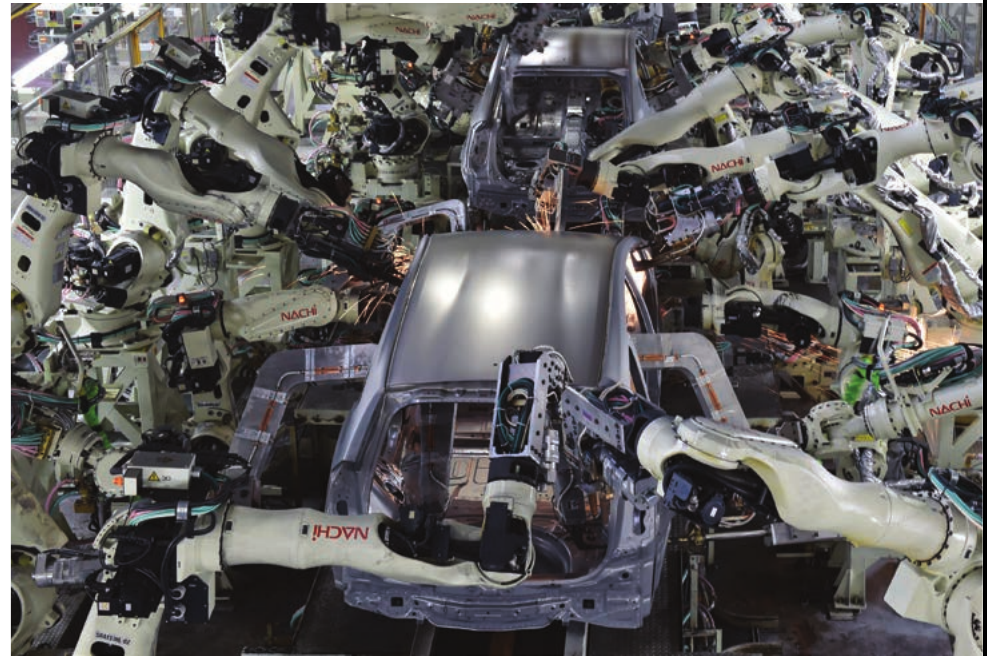
The First Industrial Revolution dramatically disrupted how people lived and worked. As factories absorbed workers into cities, daily life changed forever. Workers moved from outdoor agricultural work to windowless factories and deep mine shafts, from intimate rural communities to anonymous cities where crime and disease were prevalent. However, this transformation paved the way for the mass production era of the late 1900s.
The Digital Revolution has similarly changed how we communicate and interact, with more time spent on devices rather than face-to-face. However, the Fourth Industrial Revolution presents even more significant challenges, particularly for employment.
Important
The fundamental question: What is the purpose of education if the job you're studying for will be taken by a machine?
Automation and employment: The automation of work has the potential to cause another great revolution, forcing millions out of work. Unlike the First Industrial Revolution, when farm workers traded agricultural work for factory jobs, the Fourth Industrial Revolution requires digital skills and literacy that may be too difficult for some to learn. The divide between rich and poor may soon be defined by 'skilled' versus 'unskilled' workers.
Example
Case Study: Amazon's Disruption of Retail
In 2017, the American online retailer Amazon arrived in Australia. Through their webstore, individuals can buy practically anything and have it delivered within hours in some major cities. Amazon's disruption has had devastating effects on traditional 'bricks and mortar' stores worldwide. Many have closed, and thousands of retail workers have lost their jobs. Amazon has also explored using drones for deliveries, potentially eliminating human delivery services entirely.
Example
Case Study: Fast Food Automation
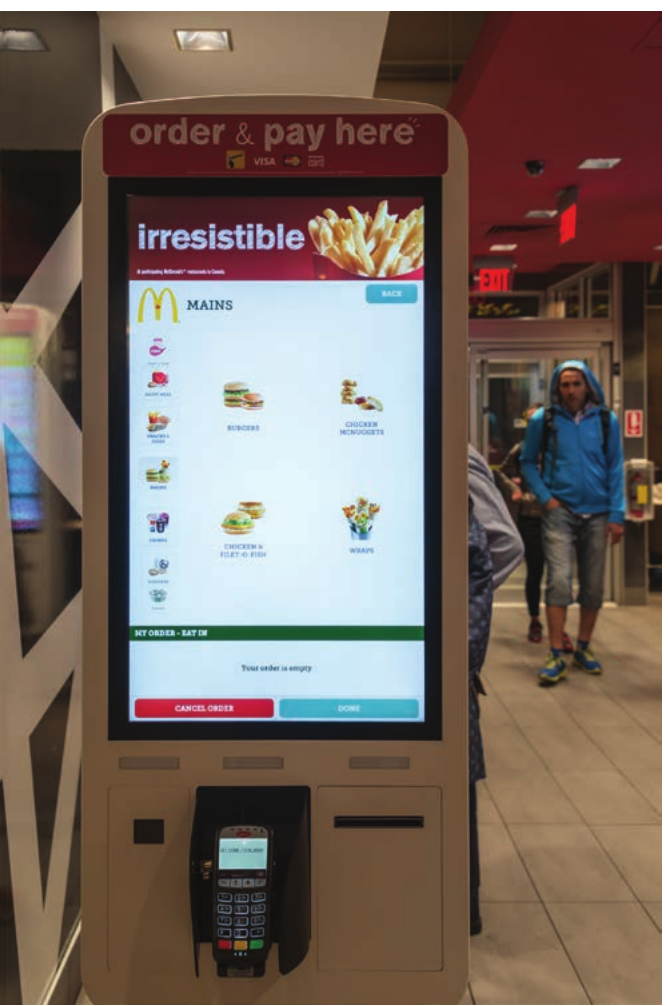
In March 2017, the American fast food chain Wendy's announced plans to replace workers with automated self-serve kiosks in 1,000 stores to reduce labour costs and hire fewer people. Former McDonald's CEO Ed Rensi commented:
I have said that robots are going to replace people in the service industry going forward. And a self-service kiosk is nothing more than automation taking over people.
Rensi suggested this decision resulted from people and governments seeking higher minimum wages. The implication: if wages increase, companies will simply replace workers with robots.
Important
Critical questions for students:
- How will you position yourself in the future job market?
- What skills will remain valuable when machines can perform many routine tasks?
- How will society support those whose jobs are automated away?
These questions are not distant concerns. They will directly affect your working life and require consideration now, as you plan your education and career path.
Summing it all up: the three-way power struggle
Media technologies were once tools wielded only by the rich and powerful. However, digital technology has systematically dismantled these traditional power structures, placing control in the hands of individuals. The Digital Revolution has launched a transformation in which ordinary people are key players.
Summary
The Three-Way Power Struggle
Control of this revolution is now a three-way battle between:
- Individual users: Empowered by social media and digital platforms to influence millions, but also vulnerable to surveillance and data collection
- Governments: Struggling to maintain security and order whilst respecting civil liberties, and often unable to effectively regulate massive technology corporations
- Global technology institutions: Companies like Google, Apple, Facebook, and Amazon that have grown so wealthy and powerful they can resist government pressure and shape society through the technologies they create
Key understanding: How and where you fit into this evolving landscape is ultimately your decision. However, making informed choices requires understanding the historical context, current dynamics, and future implications of the Fourth Industrial Revolution.
Key definitions
Fourth Industrial Revolution: The current period of rapid technological change characterised by automation, artificial intelligence, robotics, and machine learning, fundamentally transforming work and society.
Digital disruption: When new digital technologies fundamentally change how industries operate, often making existing methods and jobs obsolete.
Metadata: Information that describes or helps you use other information. In telecommunications, this includes details about communications (who, when, how long) without including the content itself.
Hacktivism: Gaining unauthorised access to computer systems to achieve political aims or expose information deemed to be in the public interest.
Algorithm: A set of instructions or rules followed by a computer to solve problems or complete tasks, such as directing search results or recommending content.
Free speech: The right to express opinions and ideas without fear of government retaliation or censorship, a cornerstone of democratic societies.
Privacy rights: Legal protections preventing intrusions into personal lives and providing individuals with control over their personal information.
Automation: The use of technology and machines to perform tasks previously done by human workers.
Exam tips
Summary
Exam Tips
- When discussing the Fourth Industrial Revolution, always connect technological change to human impacts: employment, privacy, freedom, and power relationships
- Use specific case studies (Kardashians, Snowden, Panama Papers, Amazon) to illustrate broader concepts
- Compare the Fourth Industrial Revolution to previous industrial revolutions to demonstrate historical understanding
- Consider multiple perspectives: individual rights, government responsibilities, and corporate power
- Link digital disruption to questions about democracy, civil liberties, and economic inequality
- When analysing sources, identify the author's perspective and any potential bias
- Remember that this is an ongoing revolution – events are still unfolding
Remember!
Summary
Key Points to Remember
- The Fourth Industrial Revolution is characterised by automation, artificial intelligence, and robotics, fundamentally transforming work and society beyond the initial Digital Revolution
- Individual power has increased dramatically through social media, but this comes with new challenges around privacy, free speech, and personal data control
- Massive technology corporations like Google and Apple have grown so powerful they can resist government pressure, creating a new three-way power struggle between individuals, governments, and tech companies
- Digital disruption is eliminating traditional jobs across many sectors, from retail to fast food to delivery services, raising urgent questions about the future of employment
- The balance between privacy and security, individual rights and collective safety, and free speech and harmful content remains contested and unresolved in the digital age