The End of Japan’s Isolationism & The Meiji Restoration (HSC SSCE Modern History): Revision Notes
📚Revision Notes
The End of Japan's Isolationism & The Meiji Restoration
Introduction: Perry's arrival and the unequal treaties
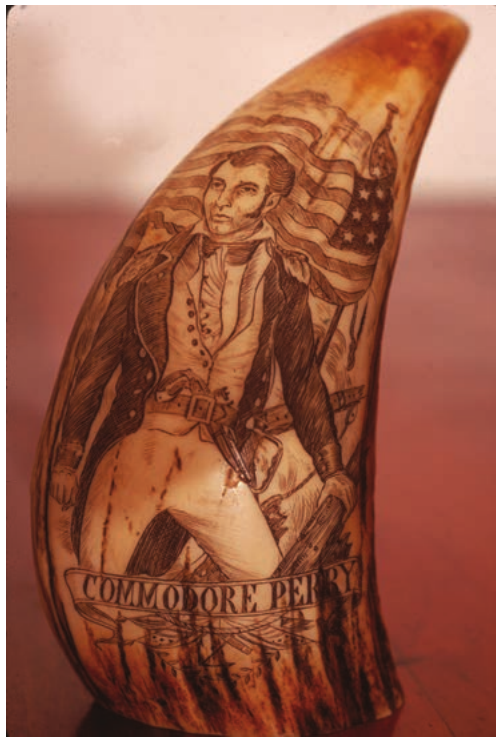
In the mid-19th century, Japan's long period of isolation came to an abrupt end when American Commodore Matthew Perry arrived with his 'Black Ships' in 1853-1854. Perry forced Japan to sign the Treaty of Kanagawa in 1854, which contained several key provisions that fundamentally changed Japan's relationship with the outside world.
Note
The arrival of Perry's 'Black Ships' marked a pivotal moment in Japanese history. These advanced Western naval vessels demonstrated the vast technological gap between Japan and Western powers, making military resistance futile and forcing Japan to reconsider its centuries-old policy of isolation.
The Treaty of Kanagawa included four main terms:
- Protection for American sailors shipwrecked in Japanese waters
- Opening of the ports of Shimoda (Izu Peninsula) and Hakodate for supplying and trading with American vessels
- American diplomatic representation at Shimoda to resolve any disputes
- A 'most favoured nation' clause, granting low tariffs for imported goods and extra-territoriality (American citizens would not be subject to Japanese laws)
Extra-territoriality refers to a system of diplomatic rights where a person remains subject to the laws and policies of their home nation rather than those of the place they are visiting. This was a significant infringement on Japanese sovereignty.
Important
These agreements are known as unequal treaties because they were unfair arrangements between Western powers and Japan. These treaties made Japan's sovereignty, economic and military interests subject to impositions from the West and were often negotiated under the threat of military force. This humiliating position would drive Japan's determination to modernize and regain its independence.
The end of Japan's isolationism
The Treaty of Kanagawa marked the beginning of the end for Japan's Seclusion Policy, which had been enforced by the Tokugawa Shogunate for over two centuries. Once America had opened the door, other Western nations quickly followed, demanding similar privileges.
Subsequent treaties with Western powers
Between 1854 and 1855, several European nations secured their own unequal treaties with Japan:
Britain (October 1854): Successfully negotiated the opening of Nagasaki and Hakodate ports to provide supplies for British ships.
Russia (February 1855): Gained access to Shimoda, Hakodate and Nagasaki, along with extra-territorial rights for Russian citizens.
Netherlands (November 1855): Secured similar access rights to the other Western powers.
The Emperor had refused to give royal consent for these treaties, creating tension between the imperial court and the Shogunate. Foreign policy in Japan became increasingly focused on revoking these unfair provisions, though this proved difficult given Western military superiority.
The Harris Convention and Treaty of Edo
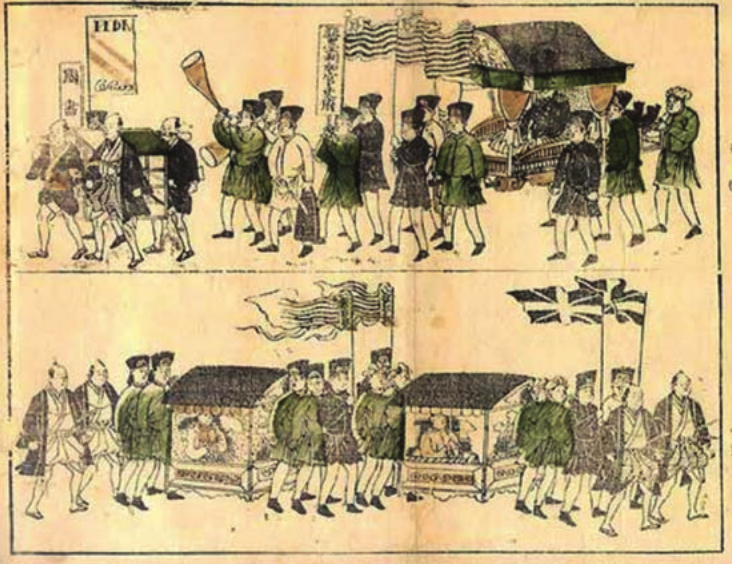
In 1857, Townsend Harris became the first American diplomatic representative to Japan. Harris gained a degree of respect and trust within the Shogun's government, allowing him to negotiate the Japanese-American Convention. This agreement opened Nagasaki to American steamships, granted Americans the right to permanent residency at Shimoda and Hakodate, and established fixed currency exchange rates for trade between the two countries.
Note
Harris aimed to achieve the complete opening of all Japanese ports to American interests. The Japanese government, aware of the harsh treatment China had received during the Opium Wars (armed conflicts between the Chinese Qing Dynasty and combined Western powers in the mid-19th century), believed that a voluntary treaty would be less punitive than one imposed by force. This strategic calculation showed Japan's pragmatic approach to dealing with Western pressure.
On 29 July 1859, the Harris Treaty, also known as the Treaty of Edo, opened Japan commercially to American interests. The treaty's six main provisions were:
- Opening of additional ports within Japan
- Opening of important cities such as Edo and Osaka to foreigners
- Establishment of diplomatic consular representation
- Granting of extra-territoriality and freedom of religion to Americans
- Provision for treaty revision in 1872 if desired
- Recognition of America as the 'most favoured nation'
This treaty represented a comprehensive opening of Japan to Western influence and marked a decisive break from centuries of isolation.
The decline of the Shogun
The new relationships with the West and the granting of extra-territoriality created enormous political pressure on the Tokugawa Shogunate. Foreign policy disagreements led to divisions among the daimyo (feudal lords) clans, and the bakufu (shogunate government) could not escape its obligations to foreign powers and residents. As the Shogunate lost legitimacy, a political vacuum emerged (a situation where someone has lost power but is yet to be replaced).
The Sonno Joi movement
In this unstable political environment, a nationalist anti-foreign sentiment known as the Sonno Joi movement emerged and spread rapidly. The name translates as 'Revere the Emperor, expel the barbarians', and the movement was strongly supported by the western clans of Japan.
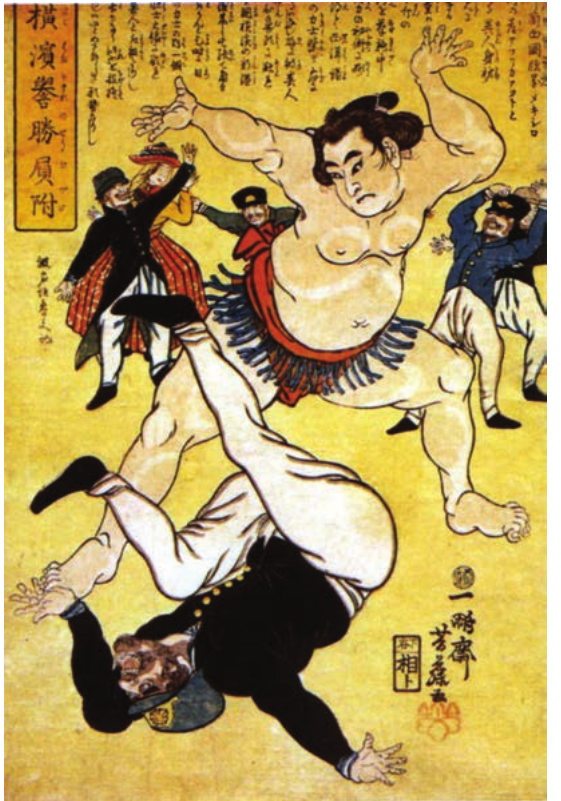
From the late 1850s onwards, attacks and assaults were carried out against foreigners in Japan. In 1861, Harris's own secretary was murdered. The following year, a British man named C.L. Richardson was killed by Satsuma samurai, prompting immediate retaliation by the British navy. The British squadron bombarded the Japanese at Kagoshima in 1863, resulting in the surrender of the daimyo of Satsuma and a substantial compensation payment to Britain.
Important
The violent incidents against foreigners and subsequent Western military retaliation exposed Japan's military weakness. These defeats demonstrated that emotional nationalism and traditional military tactics were no match for modern Western weaponry, reinforcing the need for comprehensive modernization if Japan was to maintain its independence.
The Emperor's intervention and Western military victories
The political situation intensified dramatically when Emperor Komei took the unprecedented step of summoning the Shogun to Kyoto and demanding that foreigners be expelled by June 1863. This action indicated a sudden reversal of power between the Emperor and the once-dominant Shogun.
When the Shogun returned to his court at Edo, he declared that he was unable to expel the foreigners without assistance. The Choshu clan decided to take matters into their own hands and act on the Emperor's request. They fired on foreign vessels from their well-fortified positions across the Shimonoseki Straits.
Note
The response was swift and devastating. A joint naval operation between the British, Dutch and Americans retaliated, capturing the Choshu fortifications along the straits. These military defeats of two of the most powerful western clans (Choshu and Satsuma) demonstrated the dramatic decline in the bakufu government's effectiveness and Japan's vulnerability to Western military power.
Western powers quickly demanded more commercial treaties and the opening of additional ports. The Shogun refused to negotiate directly with the Western powers and deferred to the Emperor's authority. These symbolic and practical shifts revealed the extent of the Shogun's decline in power and legitimacy.
Additionally, the political influence of the pro-Shogun Choshu clan and their mercenary samurai or ronin (masterless, wandering samurai who sought paid work) were contained when the Satsuma samurai drove Choshu forces to the edges of Kyoto to protect the Emperor.
The death of the Shogun and the end of Tokugawa rule
The sudden death of Shogun Iemochi (who ruled 1858-1866) signalled the end of the Choshu uprising. Emperor Komei, who had ascended to the throne in 1846, attempted to broker peace among the clans and court of Japan.
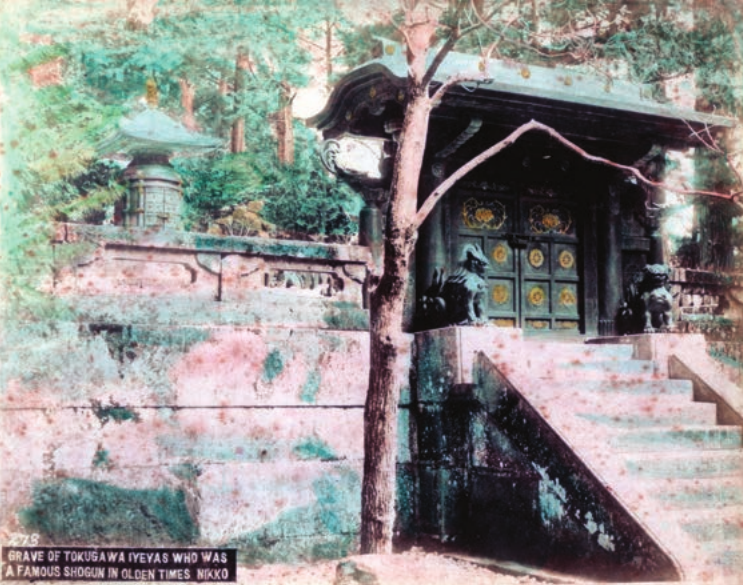
Iemochi's successor, Keiki (1866-1867), recognised the precarious position of the bakufu and agreed to relinquish his power to Emperor Komei's fourteen-year-old son, Mutsuhito. When Mutsuhito ascended to the throne in 1867, he assumed the name Meiji, meaning 'Enlightened Rule'.
The Shogun was expected to be included in the council of daimyo that supported the Emperor. However, the powerful daimyo clans opposed this arrangement and conducted a coup d'état (a sudden defeat of a government through illegal force by a small group, often a military one), overthrowing the Shogun. These powerful clans seized the Shogun's lands and crushed the initial resistance to their plans in a brief civil war.
Important
The decisive defeat occurred at Fushimi-Toba on 27 January 1869, ending the military power of the Shogun. In March 1869, the court of the Shogun at Edo was renamed Tokyo, and Meiji moved the imperial court to be housed in this new centre of power. By 1869, the 265-year rule of the Tokugawa Shogunate had ended.
The Meiji Restoration: political and social transformation
Emperor Meiji: a biographical overview
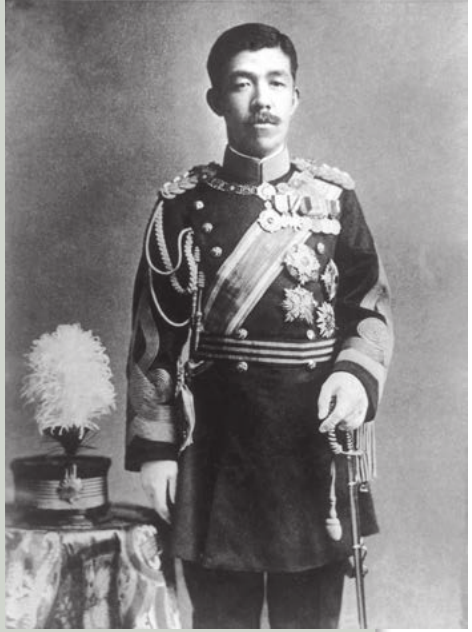
Prince Mutsuhito was born in 1852 as heir to the Imperial palace at Kyoto. His mother was Nakayama Yoshiko and his father was the ruling Emperor Komei. He received a traditional education at the palace, unaware of the period of dramatic change his life would bring about.
He was only four years old when Commodore Perry arrived and the unequal treaties were forced upon Japan. His father, Emperor Komei, wanted to repel foreign advances and weaken the Shogun's position. It is suggested that Komei sanctioned violent attacks on foreigners but then pressed for civil obedience in an attempt to reduce foreign unrest.
Note
Emperor Komei's untimely death at age 37 was caused by smallpox (an extremely infectious disease that causes fever, spots on the skin and often death). In the imperial court, traditional processes and medicines were strictly followed. The vaccine that existed against smallpox was denied to members of the imperial court due to opposition to Western innovations. This resistance to modernisation, in a sense, cost the Emperor his life.
Upon his father's death, Prince Mutsuhito came to power at fourteen years of age. His direct influence over the formation of the Charter Oath and the rapid modernisation process is difficult to determine, given the power of the samurai clans and later the genro (a privy council of men who had played a leading role in the 1868 Meiji Restoration and in the organisation of the new government that followed; they were personal advisors to the throne who virtually ran the bureaucracy).
However, the establishment of reverence for the Emperor and nationalism within Japan was highly successful under Meiji's reign. His name 'Enlightened Rule' and his adoption of Western dress were powerful symbols of the changes taking place. He assumed command of the new Imperial Army to defeat supporters of the Shogun and to oppose feudalism. This demonstrates the Emperor's strength and practical approach in accelerating the modernisation programme.
Important
Perhaps Meiji's greatest achievement was the decision to retain Japanese values, religion and traditions while adopting technological and political innovations from the West. This balance was due in part to Meiji's traditional imperial upbringing combined with the opening of Japan to Western influence.
Over time, Meiji was able to expand Japan's imperialism into parts of China and Russia. The unequal treaties were eventually dissolved and an alliance with Great Britain was established before World War I. He died on 30 July 1912 after a chronic illness, leaving behind a wife, three concubines (women who lived and had sexual relations with a man they were not married to, with lower social rank than wives but who could produce male heirs) and 15 children. Upon his death, Japan had been transformed beyond recognition.
Political reforms: the Charter Oath and new government structure
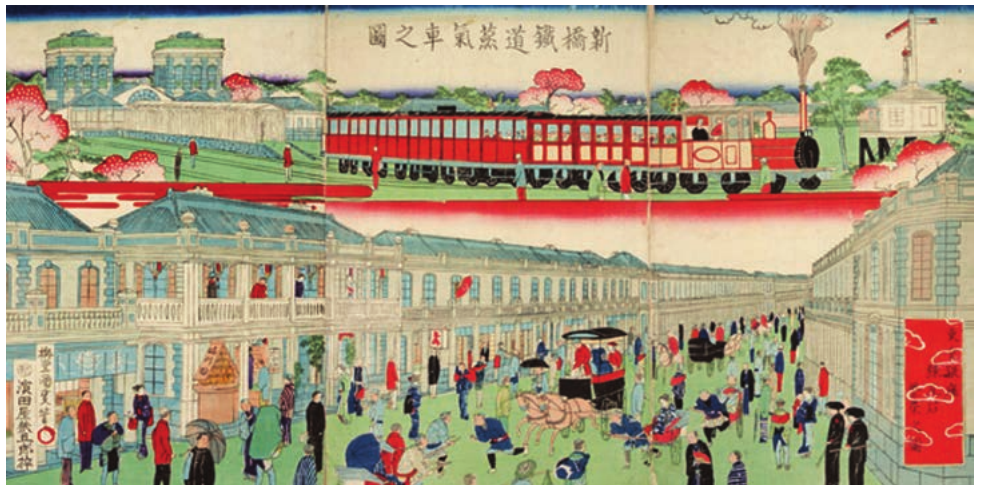
The Meiji Restoration was a period of comprehensive reform across all aspects of Japanese society. Japan embarked on an ambitious industrialisation process, implemented an oligarchic government, modernised its military, created a civil service, introduced compulsory education and eventually pursued its own imperialistic agenda in Asia and beyond.
The political vacuum created by the overthrow of the Shogun required the establishment of a new form of government and the abolition of the dysfunctional feudal system. In 1869, with the Emperor exerting divine authority, a temporary government was formed with three powerful bodies:
- The Supreme Controller (the imperial prince)
- The Senior Council of State (composed of young samurai leaders and daimyo lords)
- The Junior Council of State (also comprising young samurai leaders and nobles)
This structure was refined and a constitution was declared in June 1869. This constitution provided a blueprint for the restoration and modernisation programme.
The Charter Oath (1868)
Important
The Charter Oath publicly declared the aims of the Meiji government. It contained five important articles that set out the principles guiding Japan's transformation:
- Creation of deliberative assemblies: All government decisions would be discussed in deliberative assemblies
- Unification of all classes: All classes, high and low, should unite to modernise Japan
- Abolition of class determination: Freedom for all people to pursue their own vocations, ensuring no discontent
- Rule of law and justice: Laws and policies to be based on the rule of law and the concept of justice, breaking away from evil customs of the past
- Pursuit of knowledge: Commitment to pursue knowledge and education from throughout the world to strengthen the Empire
Although the Charter Oath appeared to be a rejection of feudalism and a commitment to abolish it, in reality all classes came under the centralised control of the state. The government used the influential samurai class to persuade the daimyo to surrender their lands to the imperial state.
Social reforms: abolition of feudalism and the new class system
The 1871 decree abolishing feudalism
The government's persuasion of the daimyo led to the 1871 decree abolishing feudalism. The feudal lands were divided into 43 prefectures (ken) - political regions or local government areas - to be controlled by governors appointed by the imperial government.
The daimyo, released from their burden of supporting the samurai class, were frequently encouraged to join the newly expanding merchant class. This represented a significant change, as merchants had previously been among the lowest social classes under the feudal system.
The plight of the samurai
Note
However, the samurai class faced severe difficulties. Despite their skills in warfare and learning, they were not compensated for their loss of status. They were well-educated but resented their impoverishment and the option of joining the merchant ranks. The further establishment of a national conscripted army reduced their value as a military power.
The samurai were forced to abandon bushido (the samurai code) and found the loss of status and their noble profession extremely difficult to accept. The pensions they received were lower than their previous stipends, causing financial distress that made many disillusioned and willing to resist the new Meiji government.
From 1874 onwards, there were a series of samurai uprisings that attempted to overthrow the Restoration. The most significant was the Satsuma Rebellion of 1877, led by the samurai Saigo against the Meiji government. This was a final attempt to re-establish the strict class system of feudalism. However, it was quickly suppressed by Yamagata Aritomo, who led the newly modernised Imperial Army.
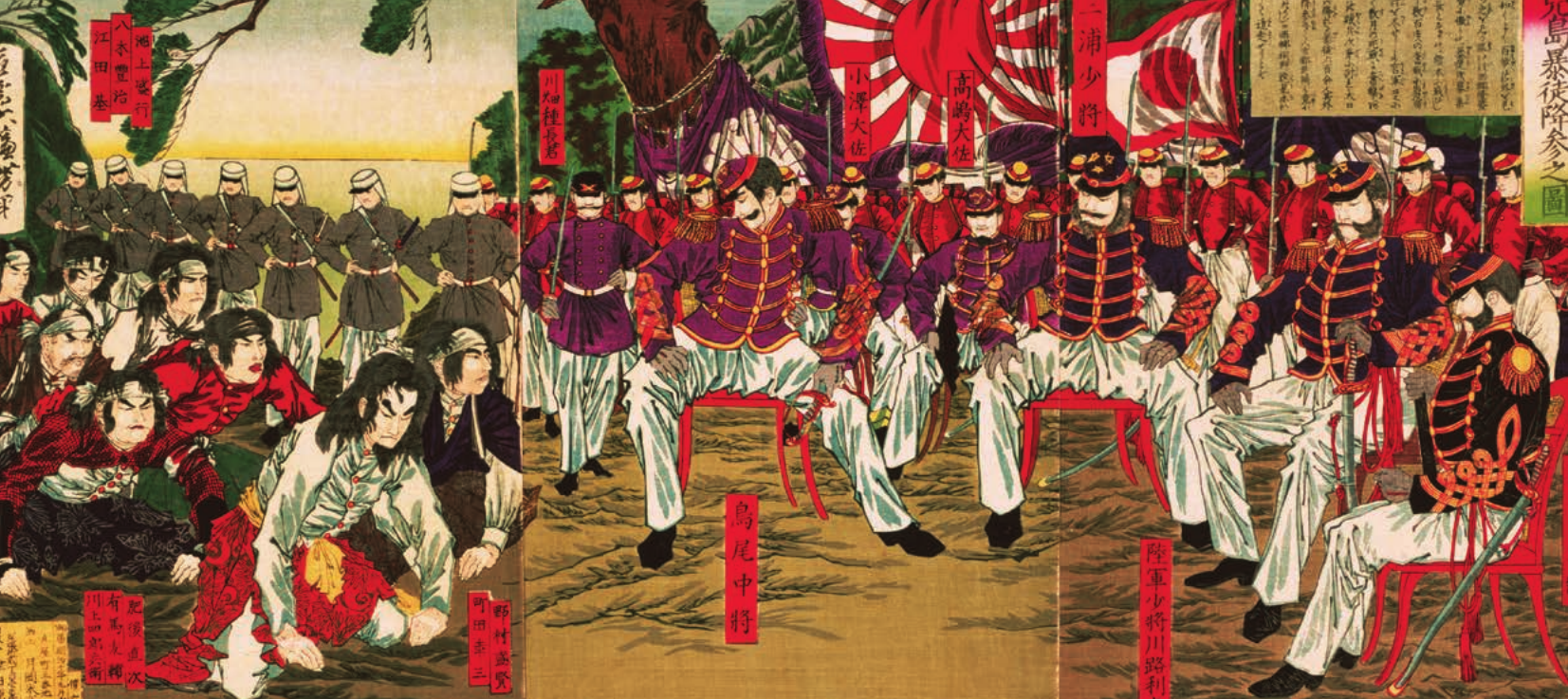
Impact on other social classes
In contrast to the samurai, the chonin (merchant) classes were finally released from their debts and were supportive of the new Emperor. However, the peasant farmers found themselves in a precarious situation. Although they no longer had to contend with taxes imposed by their daimyo lords, many had lost their tenancy on the land. Many peasants were forced to find employment in the newly established factory labour force.
The new social structure
The Meiji period dissolved the feudal system and in its place three main social classes emerged:
- Kazoku: Court nobles and former daimyo
- Shizoku: Derived mainly from the old samurai class
- Heimin: Commoners
This stratification (the arrangement of different parts into separate layers or groups) was now based on occupation rather than ancestry and title. This represented a fundamental shift in how Japanese society was organised. However, all classes shared in the burdens of a nation attempting rapid industrialisation and modernisation, and the transition was not easy for any group.
Remember!
Summary
Key Points to Remember:
-
Perry's arrival (1854) forced Japan to sign unequal treaties that ended over 200 years of isolation, opening ports and granting extra-territoriality to Americans.
-
The Sonno Joi movement ('Revere the Emperor, expel the barbarians') reflected growing anti-foreign sentiment and nationalist feeling, leading to attacks on foreigners and eventually Western military retaliation that exposed Japan's weakness.
-
The death of Shogun Iemochi (1866) and military defeats led to a coup d'état by powerful daimyo clans, ending 265 years of Tokugawa Shogunate rule and transferring power to the 14-year-old Emperor Meiji in 1867.
-
The Charter Oath (1868) outlined five key principles for Japan's transformation: deliberative assemblies, class unity, freedom of vocation, rule of law, and pursuit of knowledge.
-
Feudalism was abolished in 1871, creating a new three-class system (kazoku, shizoku, heimin) based on occupation rather than birth. The samurai class faced impoverishment and loss of status, leading to the unsuccessful Satsuma Rebellion (1877).
-
The Meiji Restoration represented rapid, comprehensive modernisation across political, social, military, economic and technological spheres, whilst attempting to preserve traditional Japanese values and culture.