The Significance of the Meiji Restoration and Historical Debates (HSC SSCE Modern History): Revision Notes
📚Revision Notes
The Significance of the Meiji Restoration and Historical Debates
Japan's transformation under the Meiji Restoration
The Meiji period brought about the modernization of Japan and ended the feudal system that had dominated Japanese society for centuries. This transformation was comprehensive, affecting virtually every aspect of life including the economy, daily routines, industrial development, political systems, legal codes, social class structures, and foreign policy approaches.
Note
The Meiji Restoration was not a single event but a complete social transformation that touched every element of Japanese society - from how people worked and governed themselves to how they related to the outside world.
Population growth and urbanization
Between 1873 and 1903, Japan experienced remarkable population growth. The population increased from 35 million people in 1873 to 46 million by 1903, reflecting improved living conditions and economic opportunities in the rapidly modernizing nation.
Industrial and economic development
The zaibatsu, powerful family-controlled business conglomerates, played a central role in building Japan's modern infrastructure. These industrial groups constructed:
- Modern railway networks
- Telegraph communication systems
- Ships for maritime trade and military purposes
- Factories for manufacturing goods
The feudal economic system gave way to modern quasi-capitalist structures. These new economic arrangements focused on producing manufactured goods and relied on an increasingly urbanized workforce. The shift from agriculture to industry fundamentally changed how Japanese people worked and lived.
International relations and military success
Japan achieved significant improvements in its relationships with Western powers during the Meiji period. By 1899, all nations had terminated their extra-territorial agreements with Japan, which had previously allowed Western citizens in Japan to avoid Japanese law. This represented a major diplomatic victory and demonstrated Japan's growing status as a modern nation.
The Anglo-Japanese Alliance of 1902 with Britain marked another milestone, indicating Japan's emergence as a significant imperial power. Japan's military prowess was demonstrated through successive victories in two major conflicts:
- The Sino-Japanese War (1894-1895)
- The Russo-Japanese War (1904-1905)
Important
Through these wars, Japan extended its empire into Manchuria and remarkably defeated the substantial Russian military forces, shocking the world with an Asian nation defeating a European power. This victory demonstrated that Western military dominance was not inevitable.
Social and educational reforms
Educational reforms during the Meiji period increased literacy rates across the population, including among women. The government reformed the land taxation system, moving from a yield-based approach to a land-based system. These changes, combined with educational improvements, helped the Japanese population become more literate, more skilled, and less rigidly divided by hereditary titles.
The paradox of modernization
Although Japan appeared modern and western-friendly on the surface, the new nation state was fundamentally anti-democratic in nature. The Meiji Restoration reinforced traditional power structures centred on a hereditary ruler rather than establishing genuine democratic governance.
Important
The Central Paradox:
While Japan adopted the outward appearance of a modern Western nation - with industrial development, constitutional government, and diplomatic relations - the underlying power structures remained deeply traditional and authoritarian. This contradiction between modern form and traditional substance became a defining feature of Meiji Japan.
The Constitution of 1889
The Constitution of 1889, based on the Charter Oath, was presented as a generous gift from the benevolent and powerful Emperor to his people. While it granted certain privileges to citizens, the constitution carefully preserved the Emperor's supreme authority to govern and influence major decisions regarding:
- Political affairs
- Military matters
- Economic policy
- Education
- Taxation
- Religious practice
The promotion of Shintoism
The Meiji government actively promoted Shintoism, Japan's traditional religion, through the establishment of the Bureau of Shinto Religion. This religious framework served important political purposes by reinforcing the divine nature of the Emperor and encouraging citizens to demonstrate loyalty through religious observance and traditional worship practices.
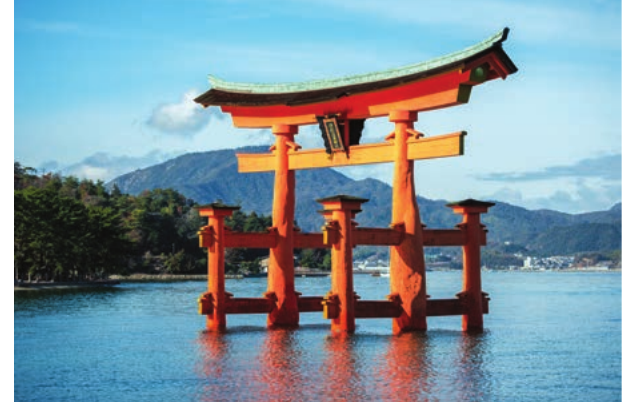
The promotion of Shintoism helped maintain traditional power structures within an apparently modernized society. While education improved literacy rates, the emphasis remained on collective national goals rather than individual rights and freedoms. The needs of individuals were considered less important than the requirements and objectives of the national state.
Education and nationalism
Educational reforms delivered knowledge and skills that contributed to factory production and scientific and technological advancement. However, Western ideologies about liberalism and democracy were deliberately not promoted in Japanese schools.
The Imperial Rescript on Education, issued in 1890, demonstrated how nationalism became intertwined with educational reform. Education served to reinforce loyalty to the state and Emperor rather than to develop critical thinking about political systems or individual rights.
Note
Education in Meiji Japan was a tool for nation-building and modernization, but not for promoting individual freedoms or democratic values. The goal was to create skilled, literate, and loyal subjects - not critical, independent citizens.
Limited democracy
The governmental model, influenced initially by the genro (elder statesmen) and the military, was based on an autocratic Prussian system. This approach maintained oligarchic methods similar to those used during the former Shogunate period.
Democratic participation remained severely restricted. The franchise extended only to men who paid at least 15 yen in taxes, excluding the vast majority of the population from political participation. The Diet, Japan's parliament with its two houses, had no control over the Cabinet or the Emperor's decisions.
Important
Restricted Democracy:
Only a tiny elite could participate in politics through voting. The vast majority of Japanese people - all women, workers, peasants, and anyone who didn't pay sufficient taxes - had no political voice. The Diet itself was largely powerless against imperial authority.
Although Japanese society appeared outwardly westernized, the Meiji Restoration actually reinforced traditional religious beliefs and political structures. This resulted in an increasingly militaristic and authoritarian society by the mid-twentieth century. Japan's emergence as a world power with imperial ambitions resulted from both its rapid industrialization and its determination to restore traditional Japanese ideals while proving itself impregnable to Western domination.
Historical interpretations of the Meiji Restoration
Historians have developed multiple theories to explain how Japan achieved such rapid modernization during the Meiji period. Understanding these different interpretations helps us appreciate the complexity of this historical transformation.
Traditional interpretation
Many historians initially argued that gunboat diplomacy by Western powers, combined with the political strategy of the Meiji leadership, alone accounted for the dramatic social transformation. This view emphasizes external pressure and elite political decision-making as the primary drivers of change.
Economic interpretations
More recent scholarship, particularly by BR Tomlinson, has suggested alternative theories. One interpretation proposes that the rise of the chonin class (merchant class) during the late Tokugawa period created the necessary market conditions and capital accumulation for Japan to undergo changes to class structures and move toward industrialization. This view sees economic developments before the Restoration as laying the groundwork for later changes.
Example
Competing Economic Theories:
Agricultural Surplus Theory (Rosovsky): Agricultural surpluses during the Meiji period, resulting from technological advances, provided the economic resources for government investment in industry.
Taxation Reform Theory (Nakamura): Agricultural production actually remained steady or declined, but changes to the land tax system (from yield-based to land-based taxation) fundamentally altered the economic fabric of society, enabling modernization regardless of production levels.
Agricultural surplus theory
Historian Rosovsky suggested that agricultural surpluses during the Meiji period, resulting from technological advances, provided the economic resources for the government to develop investment in industry. This interpretation emphasizes agricultural productivity as the foundation for industrial growth.
Taxation reform theory
Japanese historian James Nakamura challenged earlier assumptions about agricultural production. His research indicated that agricultural production or yield was actually less than during the Tokugawa years and had declined rather than increased. Nakamura argued that agricultural production remained steady relative to population growth. However, he suggested that changes to the land tax system fundamentally altered the economy. The shift from a yield-based taxation system to a land-based one changed the economic fabric of society, regardless of actual production levels.
Marxist interpretation
Note
Key Definitions:
Marxist: A supporter of the political and economic theories of Karl Marx and Friedrich Engels.
Proletariat: The name Karl Marx gave to the industrial workers.
From a Marxist perspective, the rise of the chonin class created conditions in which this merchant class exploited the emerging working classes. This interpretation suggests that the capitalist development during the Meiji period led to the exploitation of the proletariat in favour of controlling the means of production. The Marxist view emphasizes class conflict and economic exploitation as central features of the Meiji transformation.
Debating the nature of the reforms
Were the Meiji reforms oppressive and reactionary?
Left-wing historians contend that the Meiji reforms served to oppress the Japanese people rather than liberate them. According to this perspective, the Meiji Restoration represented a top-down revolution implemented by forces at the top of society, particularly the powerful and elite genro.
Lower social groups, including peasants, women, and urban workers, desired greater freedoms than the Meiji regime was prepared to grant. These groups sought genuine democratic participation and improved rights. However, their demands for a more democratic political and social system were largely rejected.
Important
The Oppression Argument:
Rather than empowering ordinary citizens, the reforms concentrated power in the hands of a small ruling class while modernizing the tools of state control. This resistance to democratic reform from below led to what critics describe as the reactionary development of a strong and repressive militaristic state controlled by the elite ruling group.
Key questions to consider
When evaluating whether the Meiji Restoration was oppressive and reactionary, consider these important questions:
- Was the Meiji Restoration fundamentally oppressive and reactionary in nature?
- Why is democracy important for society?
- How did the quality of life change for different social classes before and after the Meiji reforms?
- What evidence supports different interpretations of the reforms' impact?
- What elements of Japanese society remained highly traditional during the Restoration?
- To what extent was the character of the Emperor critical to the success of modernization?
Summary
Key Points to Remember:
-
The Meiji Restoration transformed Japan from a feudal society into a modern industrial nation, with population growing from 35 million (1873) to 46 million (1903) and zaibatsu building modern infrastructure.
-
Despite outward modernization, Japan remained fundamentally anti-democratic, with the 1889 Constitution preserving the Emperor's supreme authority and franchise restricted to men paying at least 15 yen in taxes.
-
The government promoted traditional Shintoism and nationalism through education while deliberately avoiding Western democratic ideals, creating a paradox of modern appearance with traditional authoritarian power structures.
-
Historians debate the causes of modernization, with theories ranging from external pressure (gunboat diplomacy) to internal economic changes (rise of merchant class, agricultural development, land tax reform) and Marxist class exploitation.
-
Left-wing historians argue the reforms were oppressive and reactionary, representing a top-down revolution by elites that denied freedoms to lower classes and ultimately led to a militaristic authoritarian state rather than genuine democracy.