The Making of Trump (HSC SSCE Modern History): Revision Notes
📚Revision Notes
The Making of Trump
Introduction
Note
This topic uses narrative history as its approach. Narrative history involves weaving together a story about a historical event or person, drawing on various historical sources as evidence.
The sources used include biographies, autobiographies, news articles and opinion pieces about Donald Trump's rise to prominence. Understanding Trump's background helps us see how his character and experiences shaped his eventual path to the US presidency.
Historians and biographers have examined Trump's life through different lenses, revealing both positive and negative character traits that would later influence his political career.
Trump's early life influences
Family background and childhood
Donald John Trump was born on 14 June 1946 in New York City. He was one of five children in a family with immigrant heritage. His grandfather came from Germany, whilst his mother, Mary McLeod, emigrated from Scotland.
Trump's father, Fred Trump, exerted the most powerful influence on Donald's early development. Fred worked as a builder and real estate developer in the suburbs outside Manhattan (the main part of New York City, located on Manhattan island, which measures 22 kilometres long and 4 kilometres wide).
Fred Trump's influence
Fred Trump has been described by biographers as a workaholic who devoted most of his time and energy to his real estate and construction business. He maintained very strict standards for his children, teaching them to be:
- Ruthless
- Competitive
- Aggressive
Important
According to several biographers, this strict upbringing had significant effects on young Donald Trump. He became argumentative, aggressive and at times acted as a bully towards fellow students.
Military academy education
Perhaps in an attempt to discipline his son, Fred sent thirteen-year-old Donald to military academy high school. Donald attended the New York Military Academy, where he surprisingly thrived in the tough environment. He graduated in 1964, then spent four years at university studying business, graduating in 1968.
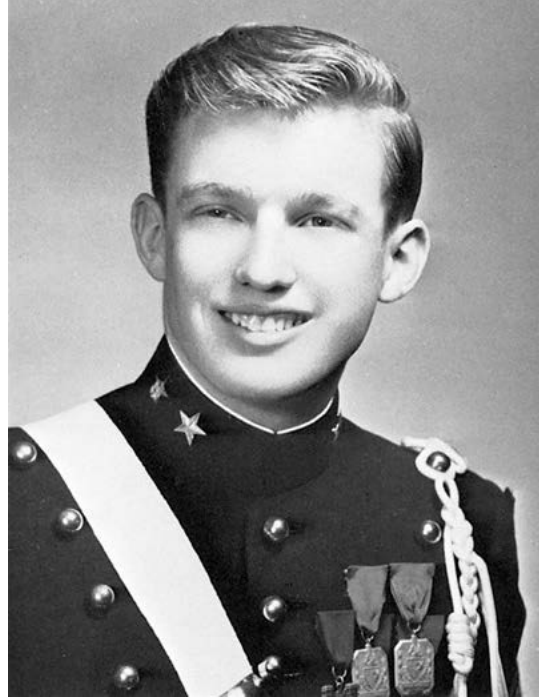
In 1971, Donald Trump left the family home and rented a unit in Manhattan, where he dreamed of one day constructing magnificent buildings.
Religious influence: Norman Vincent Peale
As a child, Trump's religious education was limited. He attended the Marble Collegiate Church in New York on some occasions, where the widely known Reverend Norman Vincent Peale preached.
Note
Reverend Peale's main message centred on the idea that with positive thinking and willpower, anything could be achieved. He outlined these ideas in his best-selling book The Power of Positive Thinking, first published in 1952.
Biographer David Cay Johnston claims Trump absorbed this positive thinking philosophy but did not learn a great deal about Christianity or the Bible itself. Trump once reportedly claimed that his autobiography The Art of the Deal was the 'greatest book ever written except for the Bible'.
Trump's mentor: Roy Cohn
Who was Roy Cohn?
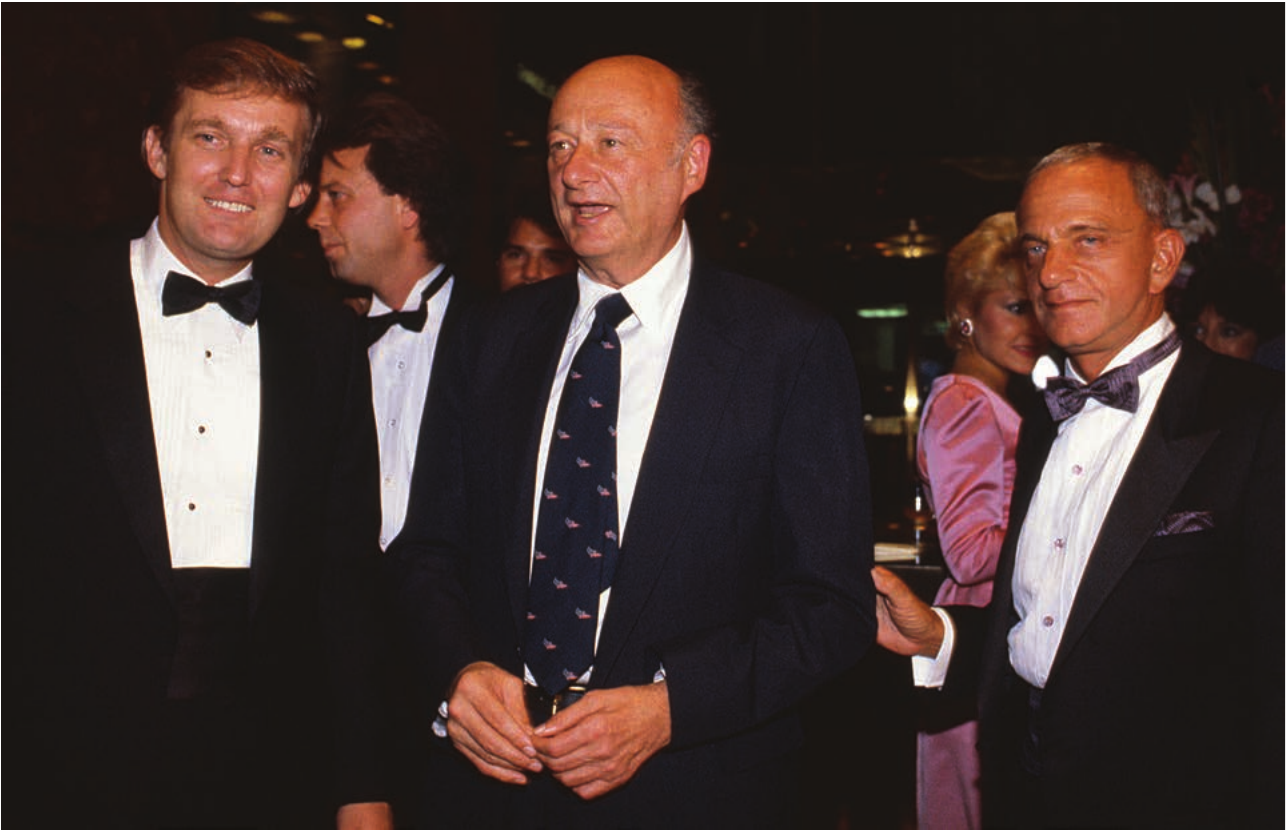
Roy Cohn became perhaps the greatest influence on Donald Trump, possibly even more significant than his father. Cohn worked as a lawyer with allegedly strong connections to the American Mafia. He had previously worked for Senator Joseph McCarthy during the communist investigations of the 1950s.
Cohn becomes Trump's mentor
Trump first met Roy Cohn in 1973 at Le Club, a private New York disco. At that time, the Justice Department was suing both Donald Trump and his father for racial discrimination, specifically for refusing to rent apartments to people from minority groups.
Cohn advised Trump to tell the Justice Department to 'go to hell' and to countersue them for $100 million. From that point, Cohn became Trump's mentor and lawyer. According to journalists Robert O'Harrow Jr and Shawn Boburg, writing in The Washington Post, Cohn soon:
- Represented Trump in legal battles
- Counselled him about his marriage
- Introduced Trump to New York power brokers, money men and socialites
Cohn's teachings
Important
Cohn allegedly instructed Trump to exploit power and instil fear through a simple formula: attack, counterattack and never apologise.
According to Sidney Blumenthal (a former aide to President Bill Clinton), writing in the London Review of Books, Donald Trump, like his father Fred, was 'married to the Mob'. Blumenthal argued that Trump 'didn't really need an education in heartlessness, but he learned the finer points from Cohn'.
Cohn's alleged connections
Trump biographer David Cay Johnston, an investigative journalist who won a Pulitzer Prize in 2001, spent many years investigating alleged organised crime connections. Johnston asserted that from the public record, a clear picture emerged showing that Trump's career benefitted from a decades-long effort to limit and deflect law enforcement investigations into his dealings with top mobsters, organised crime associates, labour fixers, corrupt union leaders, con artists and even a one-time drug trafficker whom Trump retained as head of his personal helicopter service.
In Trump's 2011 autobiography Time to Get Tough, he wrote: 'Look, I do deals — big deals — all the time … I'll do nearly anything within legal bounds to win.'
Trump the businessman
Early ambitions
From his teenage years, Donald Trump's ambition was to own his own real estate and construction business based in Manhattan. He wanted to follow in his father's footsteps but with one key difference:
Note
The Key Difference:
- Fred Trump had constructed and rented residential properties to low-income people
- Donald Trump wanted to operate in the high end of town and live there as well
In 1971 he bought a small studio apartment in Manhattan and struck out on his own career path.
Real estate ventures
Real estate first made Trump's name. Two Manhattan ventures set him on his path to fame:
Grand Hyatt Hotel (1978)
Trump remodelled the old Commodore Hotel into the Grand Hyatt Hotel in 1978. This achievement made Trump famous in New York.
Trump Tower (1983)
Trump Tower, a 58-storey skyscraper, was completed in 1983. This building houses Trump's private residence and serves as the headquarters of the Trump Organization.
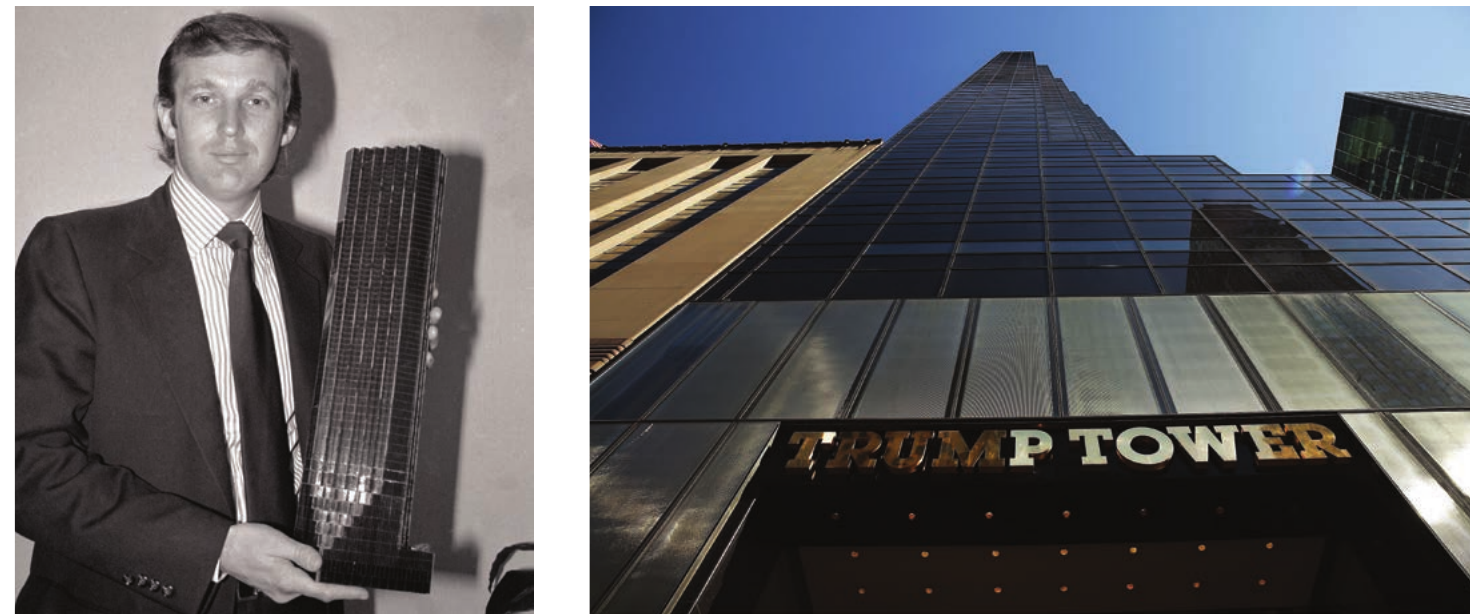
According to biographers Kranish and Fisher in Trump Revealed, Trump Tower permanently ingrained Trump, his name and his celebrity into the fabric of Manhattan, just as he had dreamed about as a young boy looking over the bridge from Queens (an outlying suburb). The Grand Hyatt had made Trump famous in New York, but Trump Tower made him famous everywhere.
Following Trump Tower's completion, banks became willing to lend Trump whatever he needed to finance other real estate deals. By 1990, Trump had become what he always wanted to be: a star. According to Kranish and Fisher, many of Trump's associates sensed a change and left. Trump surrounded himself with people who did not argue with him or question him.
Trump's business ventures
Donald Trump did not limit himself to real estate and construction. Over his career, Trump engaged in many other business ventures. The table below summarises his major business activities:
| Venture | Details | Assessment |
|---|---|---|
| Real estate | Grand Hyatt 1978 – first major achievement; Trump Tower in New York 1983 | Trump became a star and celebrity. Banks now willing to loan money |
| Casinos | Built and managed multiple casinos in Atlantic City, New Jersey, including Trump's Castle and the Taj Mahal Casino | Established presence in gambling industry but faced financial challenges |
| Trump Shuttle | Bought fleet of 21 Boeing 727 aircraft in 1989 for $365 million | Failed venture - sold off by 1992 after running at a loss |
| Gridiron football | Bought New Jersey Generals (USFL team) in 1983 | USFL collapsed in 1986; Trump claimed he got 'a billion dollars' publicity' |
| Beauty pageants and modelling | Bought controlling share of Miss Universe pageants in 1996; formed Trump Model Management in 1999 | Raised international profile but involved in various scandals and lawsuits |
| Reality TV | Starred in The Apprentice (2004-2014) | Highly successful - paid $1 million per episode; claimed total of $214 million |
| Marketing the Trump brand | Licensed Trump name for clothing, products, buildings from 2004 onwards | Very successful - brand worth $200 million to $1 billion by 2011 |
| Trump University | Founded in 2005 as educational venture | Multiple fraud lawsuits; settled in 2016 for undisclosed amount |
Note
Many of Trump's ventures ended in financial trouble, requiring restructuring of debt, financial deals with governments and the selling of assets. Only the last two ventures (reality TV star and marketing the Trump brand) steadied the financial side of his empire.
Casinos
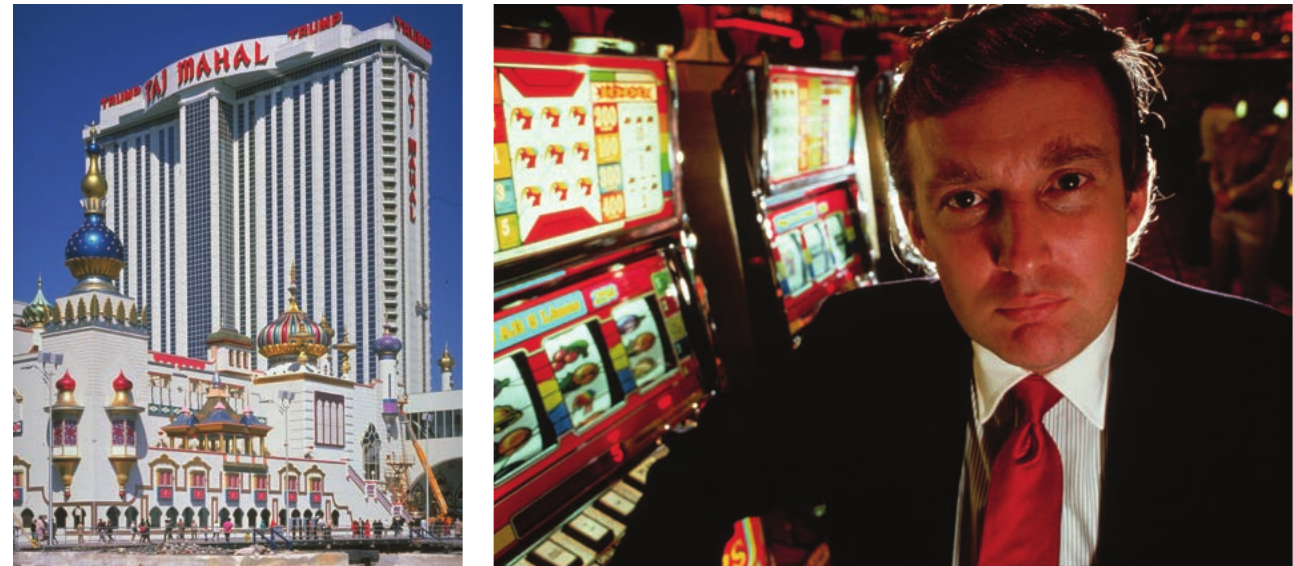
Trump's next biggest venture after real estate involved casinos. He moved to the neighbouring state of New Jersey, where commercial casinos had been legalised in 1976. Trump ended up owning (and in some cases building) several casinos in Atlantic City. One was named Trump's Castle, but his crowning achievement was the Taj Mahal Casino.
The Trump Shuttle
Trump began moving beyond real estate and casinos. In 1989 he bought a fleet of twenty-one ageing Boeing 727 aircraft for $365 million and created his own airline, called the Trump Shuttle.
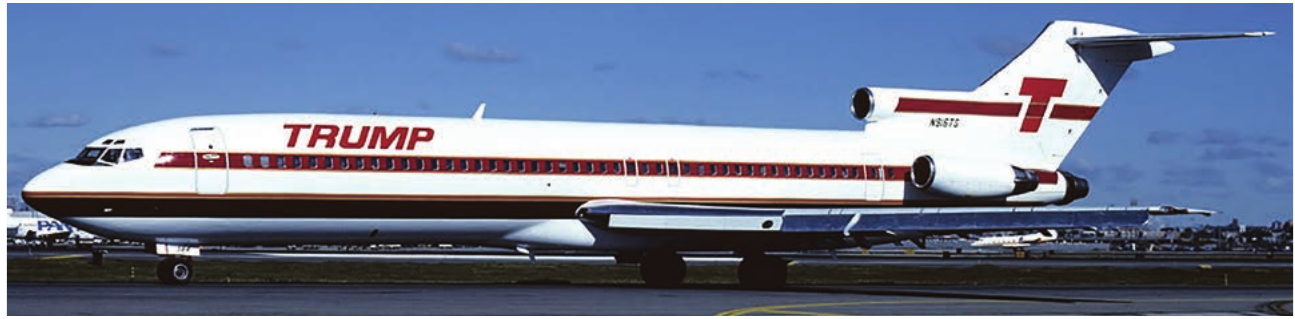
However, Trump had no prior experience running an airline and it ran at a loss from the start. By 1992, with the Trump empire in massive debt, the airline was sold off.
Gridiron football
Trump also branched out into sport and became involved in the United States Football League (USFL). Gridiron is the type of football played in the US. The USFL provided a televised football competition in the spring, whilst the main NFL (National Football League) played in autumn and winter.
The USFL was growing in popularity and signing up top players such as Herschel Walker for The New Jersey Generals. In 1983 Donald Trump bought the Generals and apparently enjoyed the media attention that came with it.
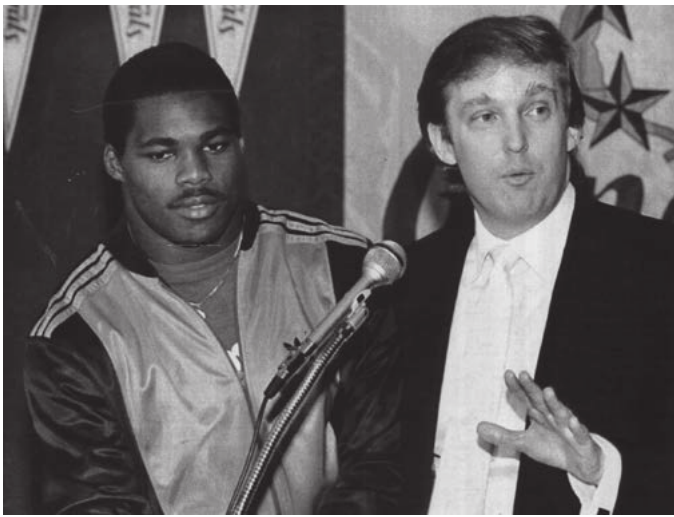
Trump then persuaded the other owners of team franchises to embark on a risky plan: to move the USFL to autumn and winter in direct competition with the NFL and to compete for lucrative television contracts. He went on a spending spree with his Generals.
Important
However, this plan to compete with the NFL failed. By 1985, the USFL started losing massive amounts of money. Trump's solution was to sue the NFL, accusing it of being an illegal monopoly.
In July 1986 Trump won the case, but the court awarded the USFL only $3.76 million in damages. The USFL collapsed six days later.
Many people involved in the USFL blamed Trump, who was reported to have said: 'After taxes, I would say I lost $3m. And I got a billion dollars' publicity.'
Beauty pageants and modelling
Donald Trump extended his business interests further by getting involved in beauty pageants and modelling. This diversified his investment portfolio and gave him exposure to a large international television audience. In 1996 he bought a controlling share of the Miss Universe pageants and became very actively involved.
However, several scandals emerged during that time:
- He publicly attacked Miss Universe 1996 for putting on weight
- A business partner, Jill Harth, claimed Trump had sexually assaulted her in 1993 and filed a lawsuit in 1997 (later dropped; Trump denied the claims)
- In 2015, the partnership with NBC ended when Trump made controversial remarks about Mexican people
Trump sued NBC for breach of contract, and the case was settled out of court. In September 2016, he sold his interest in the Miss Universe pageant and walked away from the industry. However, his involvement in beauty pageants had helped raise his international profile.
As a spin-off from Miss Universe, Trump formed a company called Trump Model Management in 1999. The company brought 250 foreign fashion models to the US. Trump often used the models to support events for his other business ventures. In 2014, the company faced lawsuits for allegedly failing to pay foreign models properly. In early 2016 a New York judge dismissed the lawsuits, citing lack of evidence.
'You're fired': Trump the reality TV star
One of Donald Trump's most successful ventures was his participation in the long-running reality TV show The Apprentice on the NBC Network. He starred in the show from 2004 until its fourteenth season in 2014.
Note
Reality TV shows are based on the idea of members of the public living or taking part, in an unscripted way, in programs under conditions created specially by the producers of the programs.
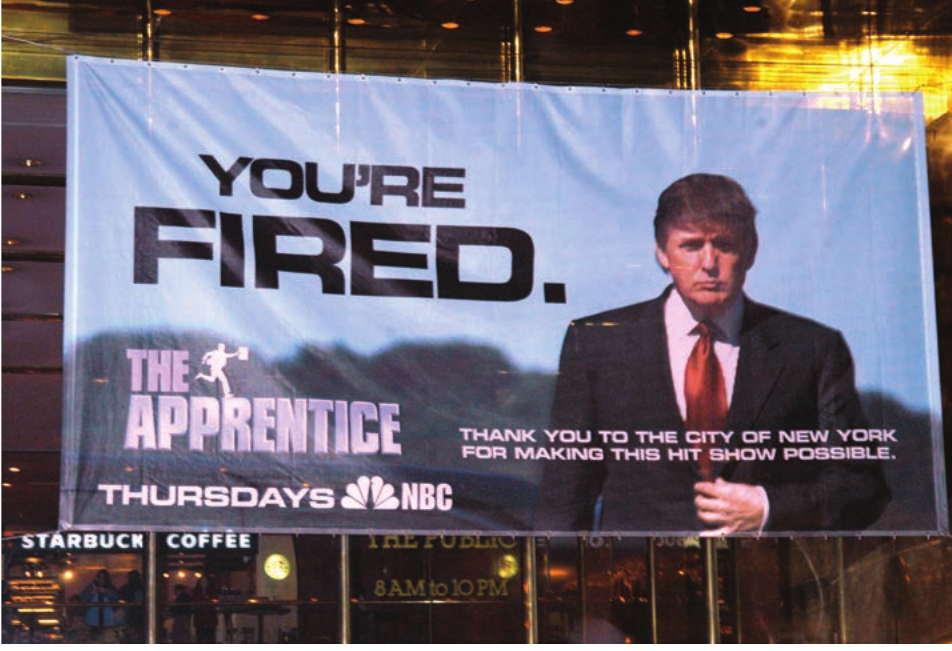
The Apprentice became a top 10 show nationwide in its first season and quickly became a global hit. The show involved people competing for a high-level executive job, with contestants progressively eliminated. Trump's 'You're fired!' phrase became the show's trademark.
When the show became wildly successful, Trump was paid $1 million per episode. In 2015 he claimed he received a total of around $214 million for his fourteen seasons with the show.
Trump loved the show and became obsessed with its ratings. He was now a genuine star. The Apprentice boosted his image with the American public and made him start thinking again about the possibility of running for the presidency. (He had seriously considered running in 2000.)
Important
According to biographers Kranish and Fisher in Trump Revealed, the reality TV show 'sold an image of the host-boss as supremely competent and confident, dispensing his authority and getting immediate results. The analogy to politics was palpable.'
Kranish and Fisher maintained that the show was 'a sustained development of character, a powerful mainline into the American consciousness, an essential bridge on the journey from builder to politician'.
However, his relationship with The Apprentice did not end well. In June 2015, the NBC network ended their business relationship with Trump before the planned fifteenth season, due to his derogatory comments about immigrants.
Brand Trump
Donald Trump used his popularity from The Apprentice to aggressively market the Trump brand. In 2004 he approached male clothing company Phillips-Van Heusen to have his name associated with their products. Over the following eleven years, Phillips-Van Heusen had Trump's name stitched onto clothing manufactured in China, Bangladesh and Honduras. Due to this alliance, Trump received $1 million per year.
He went on to market his name for a wide range of products and projects:
- Building projects
- Mattresses
- Eyeglasses
- Furnishings
- Ties
- Bottled water
- Wallets
- Lamps
- Credit cards
- Fragrances
Developers even paid to have the Trump name on their properties. By 2011, Trump's brand was worth somewhere between $200 million and one billion US dollars, depending on whose figures you believe.
Trump's children also managed their own share of the brand empire, with thirty-three licensing projects valued at a total of $562 million.
Note
In all these deals, Trump found that he could license his name without putting up any money and that he could make a good profit even if the ventures failed. By this point, Trump's main business had become his brand itself.
Trump University
Trump University was founded in 2005. Reports indicate there was intense sales pressure on university staff to sign up students for expensive courses.
The university's business model worked as follows:
- Free seminars were offered to attract attendees
- Staff allegedly pressured attendees to sign up for a three-day seminar costing $1,495
- Students were then encouraged to upgrade to classes with a mentor for $9,995
- Staff used financial information from enrolment forms to push those with available funds towards the $34,995 'Gold Elite' package
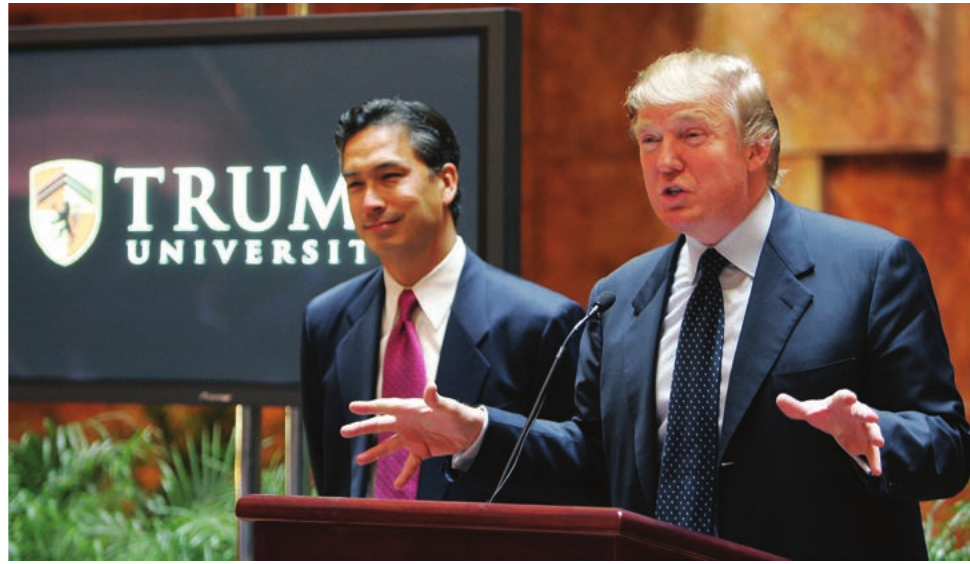
However, many students allegedly received little for their money, other than a photo taken with a cardboard cut-out of Trump and a certificate.
Class action lawsuits soon followed:
- Two lawsuits filed in San Diego, California, in 2012
- One lawsuit filed in New York in 2013
In each case, plaintiffs claimed that Trump had defrauded thousands of people. All 7,000 plaintiffs claimed that everything Trump had said about the university was false. For instance:
- None of the instructors were handpicked by him, as advertised
- None of the profits went to charity, as claimed
During the US election campaign in 2016, Donald Trump criticised Judge Gonzalo Curiel, who was overseeing the case. Trump suggested the judge's 'Mexican heritage' was influencing his 'unfair judgments'.
Important
On 19 November 2016, President-elect Trump agreed to settle the lawsuits out of court. There was no admission of guilt, though New York State Attorney-General Eric Schneiderman called Trump University's actions the 'hallmark of snake-oil salesmen'.
In March 2017, the settlement was put in jeopardy because one student, Sherri Simpson, wanted to be excluded so that she could sue separately. She had been one of the students encouraged to sign up for the $35,000 'Gold Elite' program.
Character assessments
Michael D'Antonio's perspective
Trump biographer Michael D'Antonio, author of The Truth About Trump: an Unauthorised and Comprehensive Biography, presented a more balanced view of Trump's character. According to D'Antonio:
For all of his flaws and all of the provocation that he dishes out on the campaign trail and things that he says that upset a lot of people, Donald has a lot of positive qualities that come out, especially in private. When you're with him, he's able to focus on the conversation at hand. He's rather kindly. He smiles. He can make fun of himself, and with his staff you can see that there's a loyalty and a mutual admiration that goes back and forth among them.
D'Antonio noted that Trump:
- Hired many people and gave them more responsibility and reward faster than most other major executives
- Would give talented young people increasingly tougher assignments
- Would reward success appropriately
- Would sometimes give second chances if he understood why someone failed
Note
D'Antonio suggested this was contrary to the 'you're fired' image that people got from The Apprentice.
Books by Donald Trump
Trump himself has authored numerous books that provide insight into his thinking and character:
- The Art of the Deal (1987)
- Trump: Surviving at the Top (1990)
- Trump: The Art of the Comeback (1997)
- The America We Deserve (2000)
- Trump: How to Get Rich (2004)
- Think Like a Billionaire: Everything You Need to Know about Success, Real Estate, and Life (2004)
- Think Big and Kick Ass in Business and Life (2007)
- Time to Get Tough: Making America #1 Again (2011)
- Crippled America: How to Make America Great Again (2015)
- Great Again: How to Fix Our Crippled America (2016)
These books reveal Trump's philosophy of business, his competitive nature and his approach to success.
Remember!
Summary
Key Points to Remember:
-
Donald Trump was shaped by multiple influences: his strict father Fred Trump (a real estate developer), military academy education, and mentor Roy Cohn (a lawyer with alleged Mafia connections who taught him to 'attack, counterattack and never apologise').
-
Trump's business career was mixed: whilst his early real estate ventures (Grand Hyatt Hotel 1978, Trump Tower 1983) brought him fame and financial backing, many later ventures failed, including his airline, football team and casinos. Only reality TV (The Apprentice) and brand licensing brought sustained financial success.
-
'The Apprentice' was transformative: the reality TV show (2004-2014) made Trump a household name across America, paid him $1 million per episode, and helped bridge his transition from businessman to politician by creating an image of a supremely competent, confident leader.
-
Trump valued publicity highly: even when business ventures failed (like the USFL), Trump claimed he gained 'a billion dollars' publicity', suggesting he understood the value of maintaining a public profile regardless of business outcomes.
-
Character assessments vary: whilst biographer Michael D'Antonio highlighted Trump's positive qualities (loyalty, ability to give people opportunities), investigative journalist David Cay Johnston documented alleged connections to organised crime, and the Trump University lawsuits suggested questionable business practices.