Trump the Politician (HSC SSCE Modern History): Revision Notes
📚Revision Notes
Trump the Politician
Early political involvement
Donald Trump's interest in politics began in the 1980s, long before his 2016 presidential campaign. In the 2000 election, he considered running as a third-party candidate, showing his early political ambitions.
Between 2010 and 2012, Trump became the symbolic leader of the 'Birther issue'. This was a movement led by people who falsely believed that President Barack Obama was not born in the United States. If this had been true, it would have made Obama's presidency illegitimate according to the US Constitution. Trump used this controversial issue to raise his public profile among certain sections of the American population.
Note
The 'Birther issue' was a conspiracy theory that questioned President Obama's birthplace and, by extension, his eligibility to serve as President. Despite being thoroughly debunked with the release of Obama's birth certificate, this issue remained a rallying point for Trump's early political engagement.
President Obama publicly mocked Trump about the Birther issue at the White House Correspondents' Dinner on 30 April 2011. This public humiliation may have influenced Trump's future political ambitions.
Important
The day after Mitt Romney lost the 2012 presidential election to Obama on 7 November 2012, Trump took out a patent on the phrase 'Make America Great Again'. This showed he was already planning a future political campaign built around this slogan - demonstrating strategic political thinking well before his official announcement.
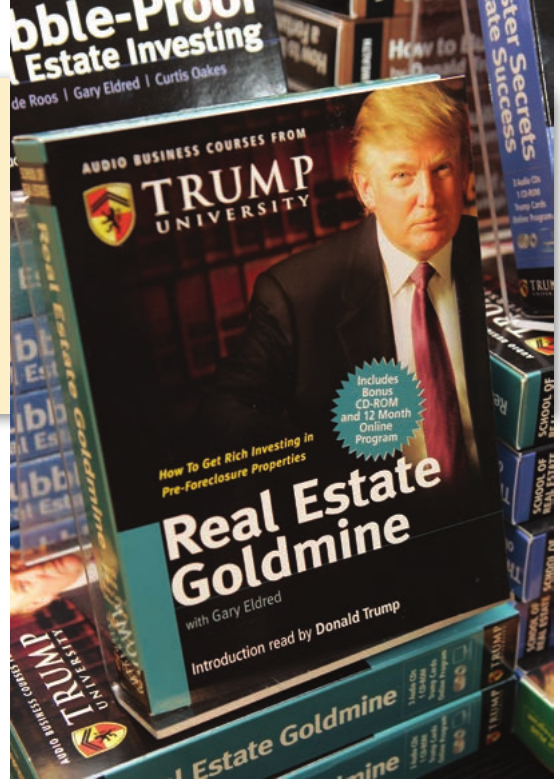
Trump enters the presidential primaries
On 16 June 2015, Donald Trump officially announced he would run in the November 2016 presidential election for the Republican Party. He declared that "we are going to make the country great again" and that he would be "the greatest jobs president that God ever created".
Appeal to the 'forgotten Americans'
Trump's announcement was specifically designed to appeal to Americans who had been directly affected by the global financial crisis of 2007-2008. A global financial crisis is a catastrophic global recession. Many economists consider this crisis to have been the worst financial crisis since the Great Depression of the 1930s.
Many of these affected Americans lived in a region known as the Rust Belt. This is a term for the region of the US stretching from the Great Lakes to the upper Midwest States. The name refers to economic decline, population loss and urban decay caused by the shrinking of the region's once-powerful industrial sector. This process is also known as deindustrialisation.
Note
Understanding the Rust Belt
The Rust Belt region includes states such as Pennsylvania, Ohio, Michigan, and Wisconsin. These areas were once thriving manufacturing centers but experienced severe economic decline as factories closed and jobs moved overseas. The term "rust" refers both to the deteriorating industrial infrastructure and the declining economic fortunes of these regions.
Voters in these states had previously worked in manufacturing industries that had closed down. Their jobs were sent overseas where production costs were cheaper. This was a negative symptom of globalisation – the increase of trade around the world, especially by large companies producing and trading goods in many different countries.
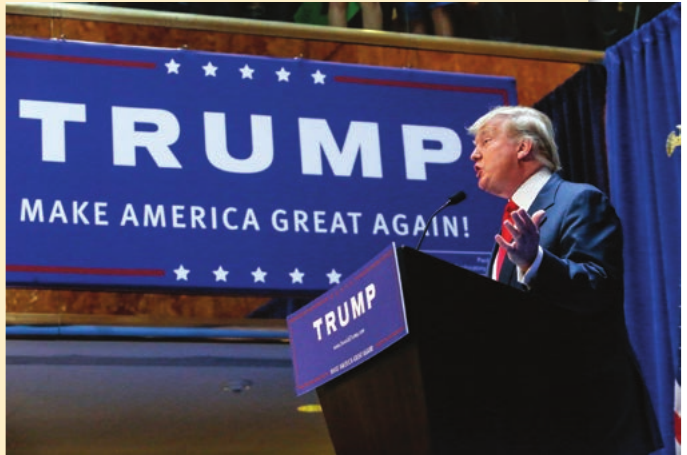
These voters were called the 'forgotten Americans'. They used to be strong supporters of the Democratic Party but felt ignored by successive governments. Trump directly appealed to these voters by:
- Claiming he would bring American manufacturing jobs back to these regions
- Reminding voters of his business experience
- Highlighting his deal-making abilities
Controversial statements
In his announcement speech, Trump made highly controversial statements about Mexican immigrants:
When Mexico sends its people, they're not sending the best ... They're sending people that have lots of problems and they're bringing those problems. They're bringing drugs, they're bringing crime. They're rapists and some, I assume, are good people, but I speak to border guards and they're telling us what we're getting.
Important
Consequences of Controversial Rhetoric
These comments were widely criticised as racist and inflammatory. NBC Universal ended its business relationship with Trump, stating this was 'due to the recent derogatory statements by Donald Trump regarding immigrants'. However, these controversial statements also generated free publicity and attention for his campaign - demonstrating how controversy can serve strategic political purposes even when widely condemned.
Winning the Republican primaries
Primaries are a series of votes among members of political parties to decide who will be their party's candidate for the presidential election. Trump had to win the Republican Primaries to become the Republican candidate for President.
A populist campaign
Throughout the Primaries, Trump continued to build support by running a populist campaign. Populist means representing or relating to the ideas and opinions of ordinary people. His campaign focused on national concerns over global ones.
One political commentator, Dr Thomas Wright, explained Trump's world view:
Donald Trump believes the United States is in a steep decline because of its activities on the world stage. He believes the US-led liberal international order has failed Americans. He wants others to do more and pay more and he wants the US to focus on a very narrow set of national interests, rather than the broader notions of liberal order that have shaped US strategy since the Second World War.
Note
Understanding Liberal International Order
Liberal international order refers to a situation in which like-minded nations agree that they should work together and try to understand one another in the name of peace and international law. This system emerged after World War II and included institutions like the United Nations, NATO, and various trade agreements. Trump's campaign explicitly rejected this approach in favour of an "America First" philosophy.
Securing the nomination
Trump made controversial comments throughout the campaign that were deplored even by some Republicans. However, these also generated free publicity. Initially, many commentators considered it very unlikely that he would be successful in the Republican Primaries. However, one by one, he defeated each of his competitors.
By May 2016, Trump had won 53 per cent of the Primary vote. At the Republican Party Convention in July 2016, he chose Mike Pence, the Governor of Indiana, as his vice-presidential nominee. On 21 July, Trump secured enough votes to win the Republican Party's nomination.
Important
In his very long acceptance speech, he outlined many key issues. He said the main difference with his opponent was that "Americanism, not globalism, will be our credo". This statement encapsulated the core message of his entire campaign and marked a significant shift in Republican Party rhetoric.
US election campaign: Trump versus Hillary Clinton
Hillary Clinton: the Democratic candidate
Hillary Clinton became the first female candidate to be nominated for President by a major US political party. Born on 26 October 1947, Clinton was a member of the Democratic Party and had studied at Yale Law School.
Political background:
- First Lady of the United States (1993-2001)
- US Senator from New York (2001-2009)
- 67th United States Secretary of State under President Obama (2009-2013)
- Democratic presidential nominee (2016)
Strengths:
- Measured speaker
- Diplomatic experience
- Passionate about issues such as women's rights and health care
Note
Clinton's Controversies
Clinton had been involved in some scandals throughout her public life:
- Questions raised about her ethics as a lawyer
- Doubts over financial donations from foreign governments to her charity, the Clinton Foundation
- Concerns about Clinton's alleged misuse of classified government information as Secretary of State
- Investigation into whether she had sent content from an unsecured email account in breach of national security protocols
The FBI investigated these concerns and cleared her of any wrongdoing in July 2016. However, these controversies affected Clinton's image with some voters and became a recurring theme in Trump's campaign attacks.
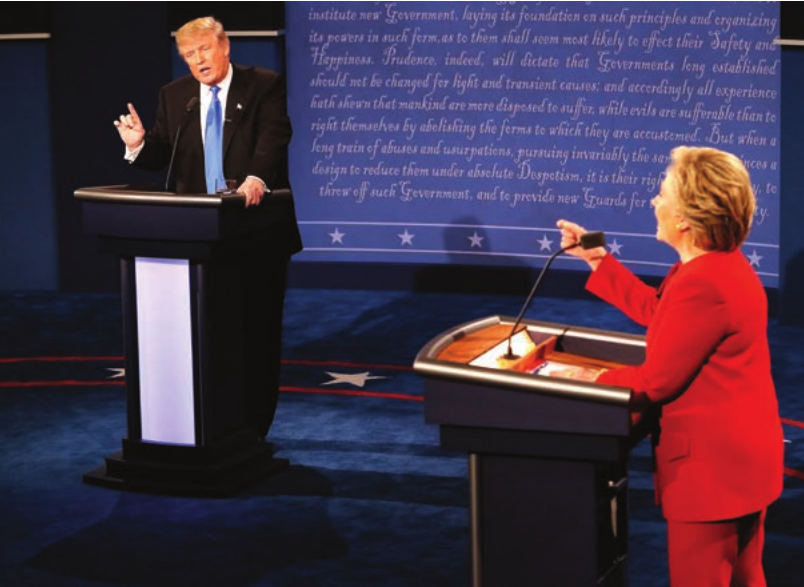
Trump's campaign strategy
During his election campaign, Trump highlighted certain fears that many Americans had about unemployment, crime, Islamic terrorism and globalisation. He proposed radical solutions:
Key policy proposals:
- Targeting Muslims: Banning them from entering the US, putting American Muslims on a watch list, and deporting any with criminal convictions
- Building a wall: Constructing a wall along the border with Mexico, making Mexico pay for it, and deporting 11 million undocumented immigrants
- Trade policy: Pulling the USA out of the Trans Pacific Partnership (TPP) and pursuing a protectionist trade policy (favouring domestic producers)
- Defence spending: Making America's allies pay for their own defence
Trump's campaign centred on his phrase 'Make America Great Again'. Many of his ideas were outlined in his book Crippled America: How to Make America Great Again.
Criticisms of Trump
During the campaign, Trump was criticised for:
- Misogynistic views on women: A number of women made sexual harassment allegations against him (Trump denied the allegations and threatened to sue)
- Racist statements: Comments about Mexicans and discriminatory remarks about people of the Muslim faith
- Encouragement of violence: Towards people who protested at his rallies
- Praise for Vladimir Putin: Implied backing of Russian hacking of the Democratic Party campaign when he jokingly asked Russia to reveal Hillary Clinton's emails
Important
Campaign Controversies and Media Coverage
Despite facing numerous controversies and criticisms from both Democrats and some Republicans, Trump's campaign benefited from extensive media coverage. Many of his controversial statements generated significant free publicity, keeping him constantly in the news cycle and dominating political discourse throughout the campaign period.
Remember!
Summary
Key Points to Remember:
-
Trump's political involvement began in the 1980s, but he became prominent through the 'Birther issue' (2010-2012) before announcing his presidential candidacy in June 2015
-
Trump's campaign focused on appealing to the 'forgotten Americans' in the Rust Belt who had lost manufacturing jobs due to globalisation, promising to 'Make America Great Again'
-
His populist campaign emphasized 'Americanism, not globalism', rejecting the liberal international order in favour of narrower national interests
-
Trump won the Republican nomination despite being initially considered unlikely to succeed, defeating all competitors by May 2016 with 53% of the Primary vote
-
The 2016 campaign against Hillary Clinton featured controversial policies (Muslim ban, Mexico wall, TPP withdrawal) and criticism of Trump's statements about women, minorities and his praise for Putin, while Clinton faced her own controversies regarding emails and the Clinton Foundation