The Contribution of Archaeology and Science in the Investigation of the Past (HSC SSCE Modern History): Revision Notes
📚Revision Notes
The Contribution of Archaeology and Science in the Investigation of the Past
Introduction to archaeological investigation at Q Station
Between 2014 and 2015, a major archaeological conservation project took place at the Q Station's Third Cemetery. Led by Dr Louise Steding from Swinburne University and commissioned by the Sydney Harbour Federation Trust, this project demonstrates how modern archaeological and scientific methods help us understand Australia's quarantine history.
Note
The investigation combined several complementary approaches:
- Archaeological research and fieldwork
- Geophysical surveys using advanced technology
- Conservation work on historic graves
- Interpretation of evidence found at the site
This multi-disciplinary approach allowed researchers to build a comprehensive understanding of the site's history and significance.
This case study shows how archaeology and science work together to reveal hidden aspects of the past and preserve them for future generations.
Ground Penetrating Radar (GPR) technology
What is GPR?
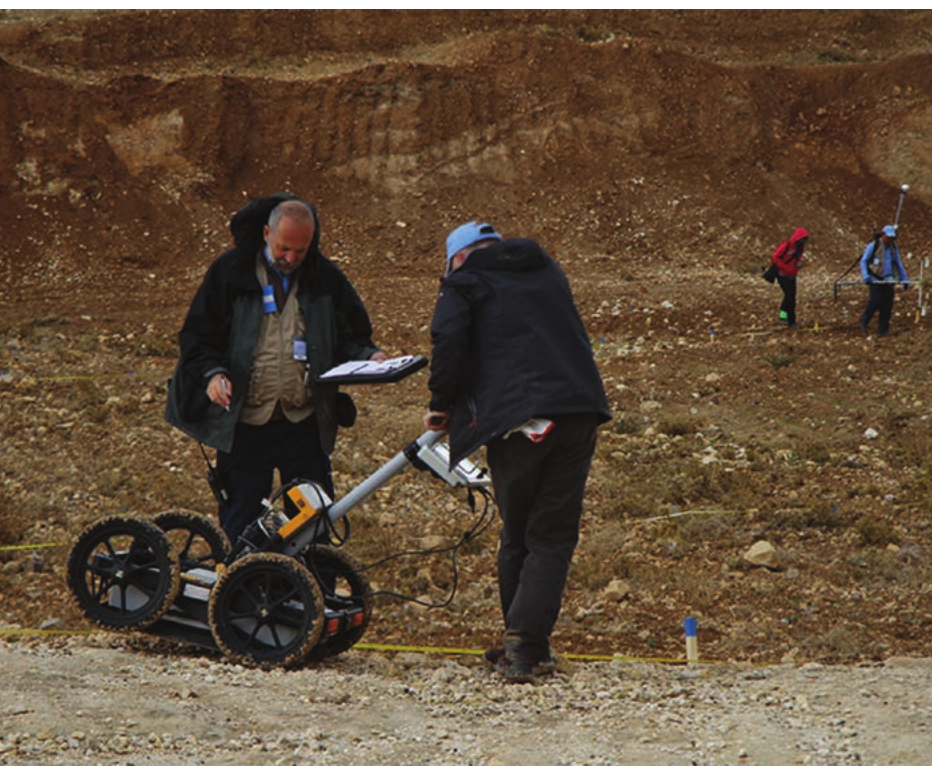
Ground Penetrating Radar (GPR) mapping is a method used to conduct a geophysical survey of a site. It provides a non-intrusive way to develop an understanding of what lies beneath the surface or create a topographic profile. At heritage sites, GPR is commonly used to locate graves and headstones and even to determine if a burial space is available for use.
How GPR works
GPR technology uses sound waves to reveal changes in ground density and locate underlying features and objects. The system is particularly reliable in sandy soils found in coastal regions, making it ideal for the Q Station location.
Note
The technology works by sending radar sound waves into the ground. Different materials and disturbances reflect these waves back at different rates, creating an image of what lies below the surface. This creates a kind of "underground map" without disturbing the soil.
Why GPR is effective for detecting human remains
GPR can detect human remains and burial sites for several important reasons:
Important
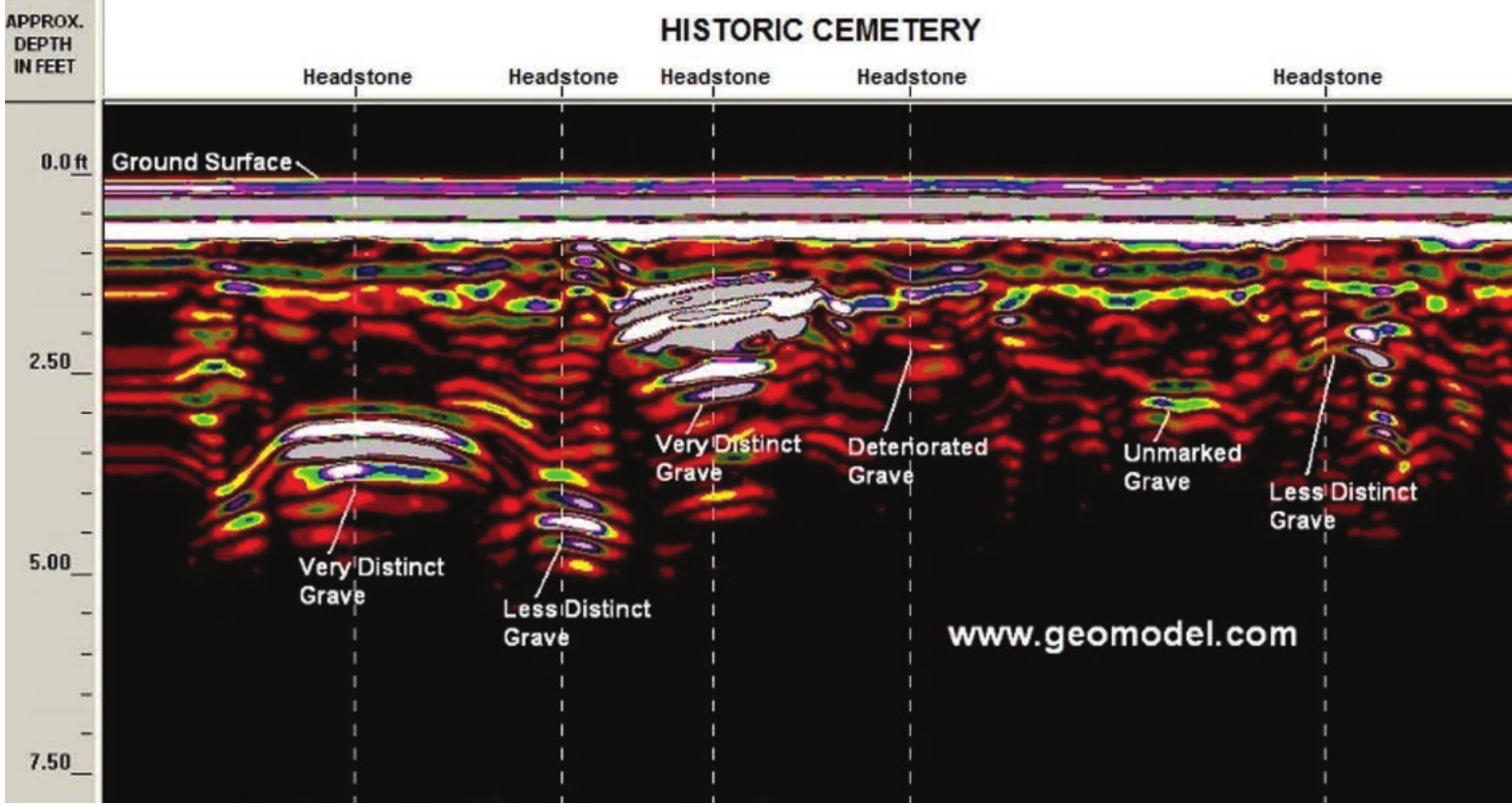
Soil disturbance detection: The radar shows graduation or changes in the soil stratigraphy (layers) from the digging of graves. This disturbance is called the graveshaft - the shaft created when a grave was dug.
Material culture identification: Objects placed with the deceased appear on GPR scans. These include:
- Coffins
- Bones
- Sheets
- Clothing
- Jewellery
Chemical changes in soil: When human remains decompose, calcium from the deceased's bones can leach into the surrounding soil. This changes the soil composition, making it conduct radar sound waves more effectively and creating a distinct signal on the GPR scan.
Application of GPR at the Third Cemetery
Forensic archaeologists used GPR mapping along with grid references to systematically survey the Third Cemetery. Grid references allowed them to determine and record different locations within the cemetery precisely. The ground was carefully scanned using the radar to reveal the sites of both marked and unmarked graves.
This systematic approach ensured comprehensive coverage of the cemetery area and enabled accurate documentation of findings.
Findings from the Third Cemetery investigation
Historical context
Historic records and surviving headstones documented 241 graves in the Third Cemetery area, dating from 1881 to 1925. The Third Cemetery was established around the 1880s as part of continual improvements and expansions to the quarantine site.
Note
The earlier Second Cemetery had become poorly maintained during this period. It was described as giving off an offensive odour and being linked to water contamination, necessitating the establishment of a new burial ground. This demonstrates the practical health concerns that drove expansion of the quarantine facilities.
Distribution of burials
The archaeological excavation revealed important information about who was buried at the site:
Disease-related burials:
- 105 burials were attributed to bubonic plague
- Nellie's unmarked grave was identified as the first plague victim buried here
- Spanish flu, smallpox and scarlet fever accounted largely for the remaining graves
Important
Unmarked graves: Dr Steding's investigation suggests there could be more than 100 unmarked graves located in the Third Cemetery. Her hypothesis is that remains from other cemeteries on the site were exhumed and reinterred here without grave markings.
This discovery significantly changes our understanding of the cemetery's true size and the number of people who died during quarantine.
Significance of burial patterns
The investigation revealed an important aspect of the Quarantine Station's social history. The temporal and cultural divisions experienced during the station's operational existence did not matter at the point of death.
Evidence shows that:
- An Aboriginal man who had died of smallpox was buried in the 1880s alongside European victims
- Victims of plague and Spanish flu are buried close together despite a gap of 17 years between these two epidemics
Note
This pattern demonstrates that in death, the social segregation practices of the living population were set aside. This provides valuable insight into attitudes toward disease, mortality, and human dignity in quarantine settings.
Conservation and adaptive reuse
The concept of adaptive reuse
Adaptive reuse is the creation of a new viable purpose for a heritage site by preserving the site's features and adding modern elements that have a limited impact on the site's cultural or historic significance.
This approach addresses a key challenge in heritage conservation: how to preserve a site's unique heritage value while adapting it to meet current public needs.
Benefits and challenges of adaptive reuse
Note
Benefits of adaptive reuse:
- Provides ongoing enjoyment and opportunities for the public to visit
- Enables research and educational activities
- Allows people to experience life from the past
- Generates funding for costly preservation and documentation work
- Creates viable opportunities for public engagement
Important
Challenges that must be carefully managed:
- Refurbishment can change the historical character and interpretation of the site
- Building and construction processes can disrupt the physical site and the strata
- Balancing modern needs with historical authenticity requires careful planning
The success of adaptive reuse depends on finding the right balance between preservation and modernization.
Administrative history and adaptive reuse at Q Station
In 1984, the Quarantine Station was transferred from the Commonwealth Government to the State Government of New South Wales under arrangements made in the 1908 Quarantine Act. It then came under the administration of the New South Wales National Parks and Wildlife Service.
The Premier and Prime Minister pledged funding for conservation, but this funding was not provided. This led to public debate about the heritage value and future purpose of the site.
In the 1990s, the Mawland Group successfully tendered on a project with adaptive reuse as a central part of their bid and vision for the Quarantine Station. The site was opened to the public for conferences and accommodation, with careful attention to preserving historical integrity.
Specific conservation measures
Building preservation
Modern conservation work at Q Station has included a range of structural, aesthetic, and functional improvements that respect the site's historical character.
Example
Worked Example: Structural Repairs
The conservation team tackled deteriorating building infrastructure using historically appropriate methods:
Step 1: Assessment
- Identified rotted wooden flooring requiring replacement
- Located broken drainage pipes compromising building integrity
- Found sewers and stormwater drains clogged with tree roots and vegetation
Step 2: Repair methodology
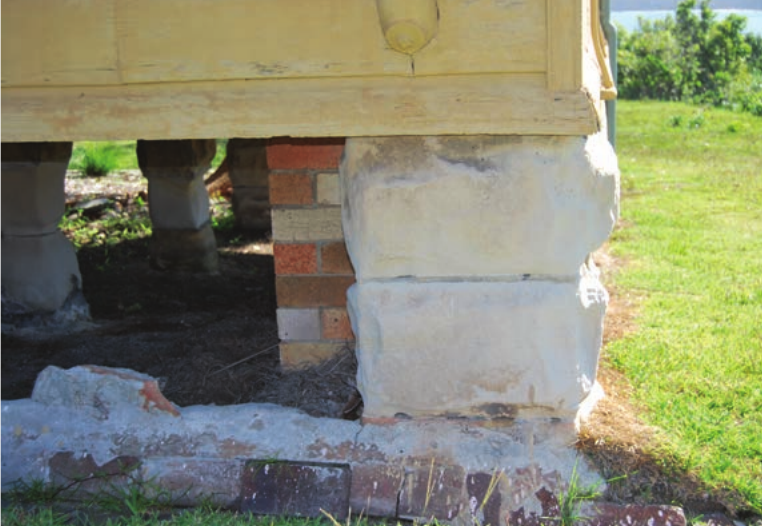
- Used traditional methods of repair with complementary materials
- Ensured new materials matched the historical character
- Maintained structural authenticity while improving functionality
Heritage painting:
- Internal and external painting using heritage colours
- Modern paints that contain no lead
- Painting roofs in their original colours to protect the substrate from heat
- This eliminated the need for air conditioning in guest rooms during summer months
Modern amenities:
- Adapting facilities to include modern plumbing and bathrooms
- Laying new ceramic tiles over original floors
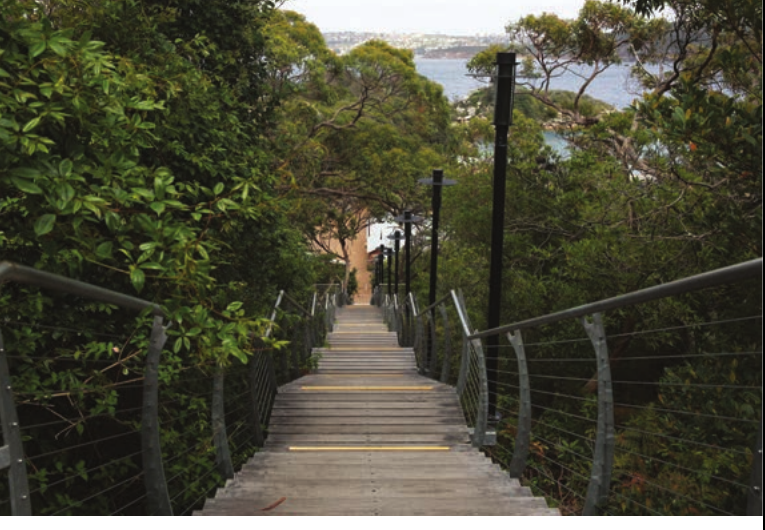
- Building structures such as the funicular stairway over the original funicular trackway
Note
The original funicular trackway was used to transport luggage from the Wharf Precinct to the First Class Precinct. The original funicular cable was 90 metres long. By building the new stairway over the original trackway, both the historical feature and modern access needs were accommodated.
Site protection:
- New walkways erected over the site to protect natural and built features from modern-day visitors
- These elevated structures prevent damage to the ground and original pathways
Machinery preservation
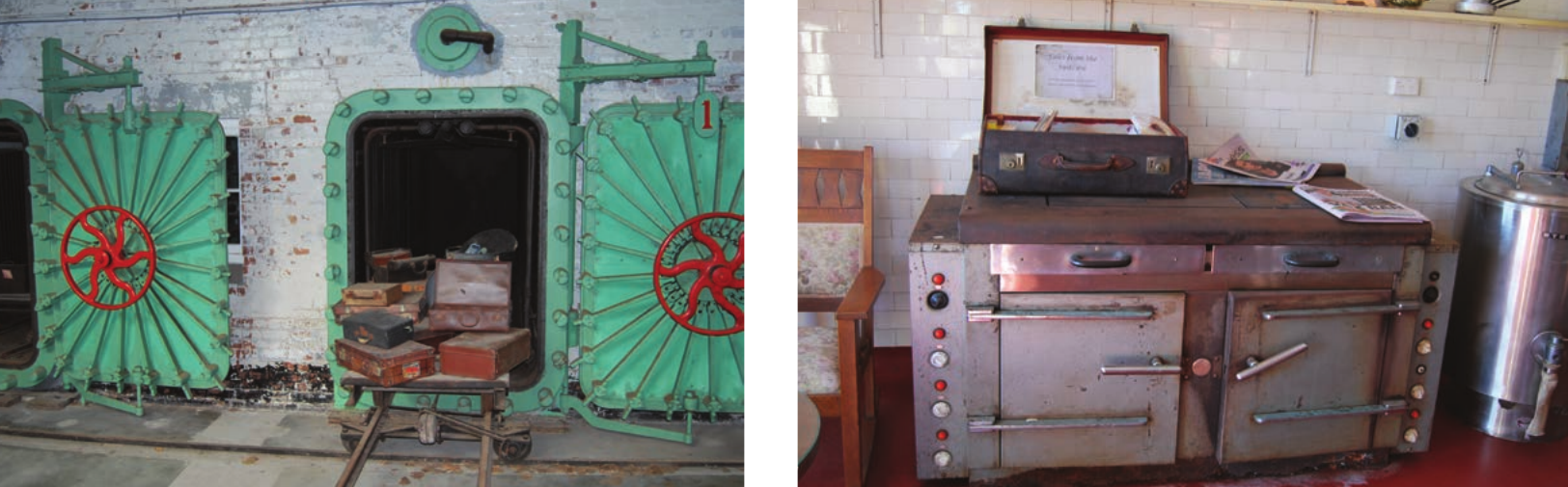
The site's historical machinery has been preserved through various methods that make these artefacts both visible and interpretable to modern visitors.
Metal fittings and equipment:
- Brass, copper and iron fittings have been replaced, repainted or had oxidation removed
- This restoration work makes the historical equipment visible and interpretable
Note
Autoclaves: These large sterilisation chambers have been cleaned and repainted. Guests can now see how this heavy machinery sterilised clothing and luggage through the use of heat and steam. The preserved autoclaves help visitors understand the quarantine process and the importance of disease prevention measures.
Artefact conservation and display
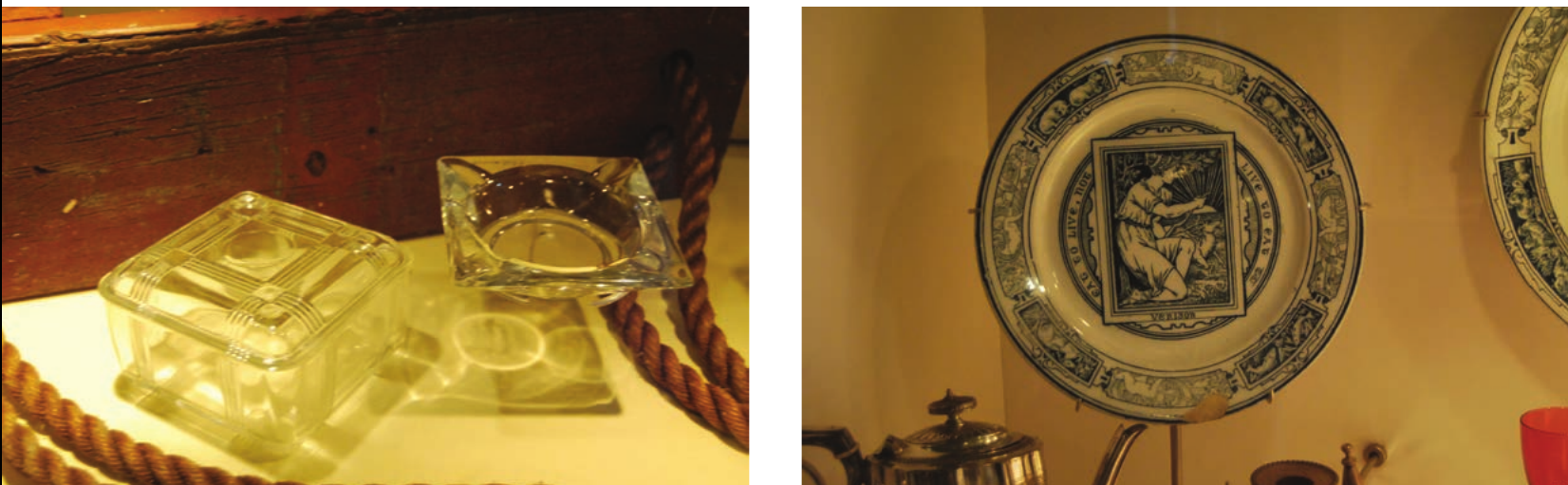
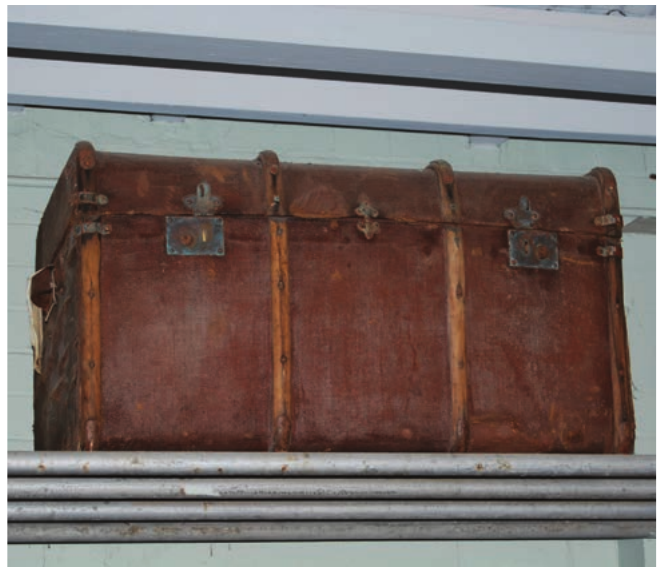
Conservation and documentation of artefacts located on the site has involved several systematic processes that ensure both preservation and public accessibility.
Artefact identification: Items discovered at the site include:
- Glass objects
- China and ceramics
- Cutlery
- Luggage and violin cases
- Leather suitcases
- Chinese wicker baskets
Example
Worked Example: Artefact Conservation Process
Each discovered artefact undergoes a systematic conservation workflow:
Step 1: Identification
- Each artefact is examined and classified by type, material, and probable age
- Initial condition assessment is conducted
Step 2: Cataloguing
- Detailed records are created for each item
- Photographs and measurements are taken
- Historical context is researched and documented
Step 3: Restoration
- Where necessary, items are carefully restored using appropriate techniques
- Priority is given to items of particular historical significance
Step 4: Display
- Items are displayed either in the museum or in various spaces around different precincts
- Display locations are chosen to enhance visitor understanding of site history
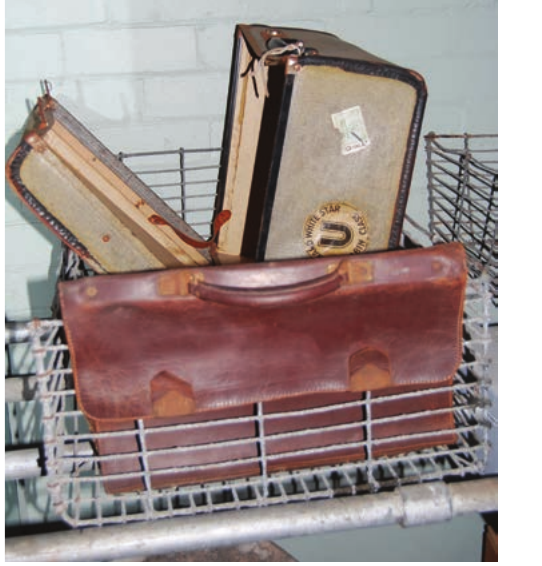
Museum display: The former Luggage Store has been converted into a Visitor Museum. Luggage has been mounted on rails to recreate how these items were stored on ships arriving at Spring Cove. This display gives visitors a sense of how luggage was stored at the site in the mid-twentieth century.
Rock inscription preservation
The Q Station's rock inscriptions represent an important form of material culture - personal records left by quarantined individuals.
Initial survey: In 1983, archaeologist Wendy Thorp conducted surveys of the inscriptions. This archaeological project documented 800 historical inscriptions across the site.
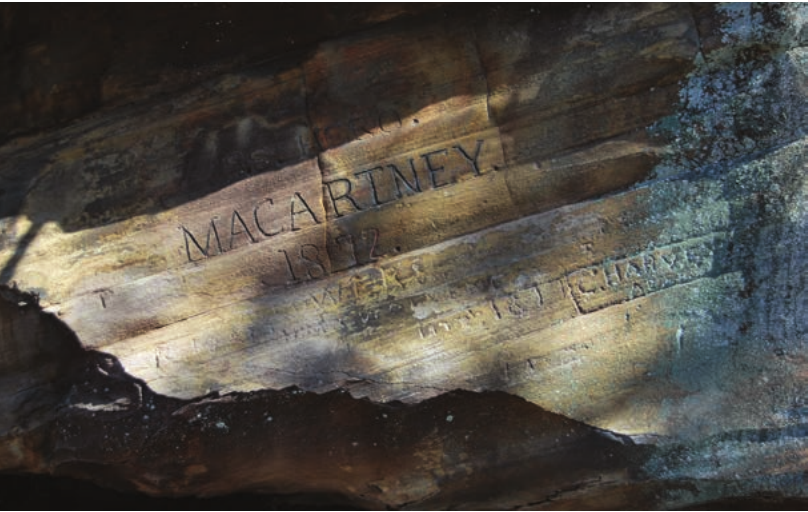
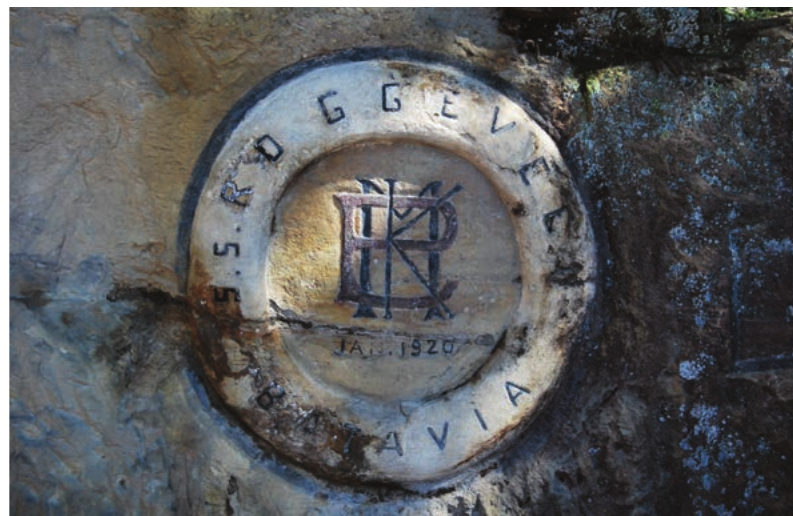
Documentation techniques: Each inscription was recorded using a variety of techniques:
Important
Sketching: Inscriptions were individually sketched by hand at different times of the day. This captured how light reflected or obscured the inscription at various times. The sketches allowed archaeologists to consider how each letter was formed and understand the construction process.
Analysis of style: The stylistic conventions, flourishes, formation of letters and use of symbols were captured and interpreted. Patterns and similarities in motifs and flags were linked to show these inscriptions as an assemblage that could be interpreted collectively.
Photography: Inscriptions were photographed using high-resolution cameras in situ (in their original location). This provided permanent visual records.
Conservation work: Faded inscriptions have been carefully conserved through careful repainting of some of the lettering and stylistic conventions.
Note
Why documentation is important: These techniques of documentation and conservation are essential because the inscriptions are subject to weathering, lichen growth and erosion. Without intervention, these personal historical records would be lost forever, erasing the voices of those who were quarantined at the site.
Funding and ongoing maintenance
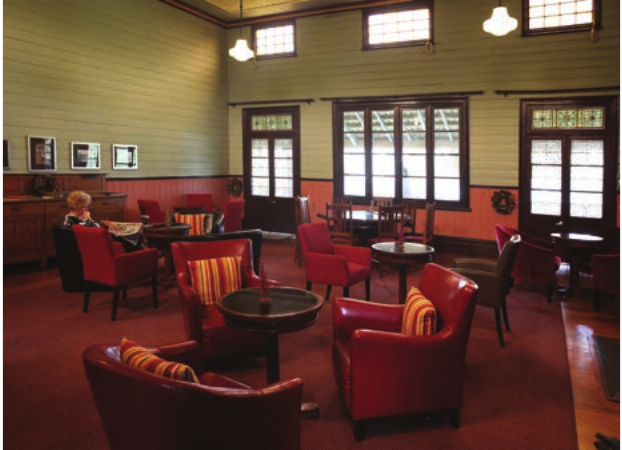
Current costs for conservation work are approximately $7 million, with ongoing funding being sourced through various commercial activities:
Revenue sources:
- 70 rooms available in different precincts for overnight stays
- ICT conference and entertainment facilities
- Large conference or wedding spaces in the rebuilt Hospital
- A bar and restaurant in the historic Boilerhouse in the Wharf Area
Educational activities:
- Historical tours highlighting the site's social and medical history
- Ghost tours exploring the spiritual and cultural aspects
- The morgue and shower block are used for historical immersion experiences
Important
However, there is ongoing debate about how much of these tours is historically based and how much is fanciful recreation. This raises important questions about the balance between entertainment and historical accuracy in heritage site interpretation.
This tension between generating revenue and maintaining historical integrity is a common challenge in heritage conservation projects.
Examining the contribution of archaeology and science
The Q Station demonstrates several important contributions that archaeology and science make to our understanding of the past:
Revealing hidden histories: GPR technology and systematic excavation revealed more than 100 unmarked graves that would otherwise remain unknown. This gives voice to people whose deaths were not officially commemorated.
Understanding social practices: Archaeological evidence showed that racial and temporal divisions were set aside in death, revealing attitudes toward disease and mortality in quarantine settings.
Note
Material culture analysis: The preservation and study of artefacts - from luggage to inscriptions - provides tangible connections to the experiences of quarantined individuals. These physical objects tell stories that written records alone cannot convey.
Scientific dating and identification: Modern archaeological techniques allow precise dating of graves and identification of disease-related deaths, building a more complete historical picture.
Conservation for future study: Careful documentation and preservation ensures that future historians and archaeologists can continue to study and learn from the site using new technologies and methodologies.
Public engagement: By making archaeological findings accessible through museum displays and site interpretation, these scientific methods help the public connect with and understand Australia's quarantine history.
Summary
Key Points to Remember:
-
Ground Penetrating Radar (GPR) uses sound waves to detect subsurface features without excavation, making it ideal for locating graves in sandy coastal soils through detection of soil disturbance, material culture and chemical changes from decomposition.
-
Archaeological investigation at the Third Cemetery (2014-2015) revealed 241 documented graves from 1881-1925, with 105 attributed to bubonic plague, and evidence suggesting over 100 additional unmarked graves exist.
-
Adaptive reuse balances heritage preservation with modern functionality by creating new viable purposes for historic sites while maintaining their cultural significance, demonstrated at Q Station through conversion to accommodation, conferences and public tours.
-
Conservation techniques combine traditional repair methods with modern materials, including heritage colour painting, careful artefact cataloguing and restoration, and systematic documentation through sketching, photography and style analysis, particularly for fragile rock inscriptions.
-
Scientific and archaeological methods reveal hidden aspects of Australia's past that written records alone cannot show, including social equality in burial practices, material culture of quarantined individuals, and the physical impact of epidemic diseases on communities.