What Led to Quarantena in the New Colony? (HSC SSCE Modern History): Revision Notes
📚Revision Notes
What Led to Quarantena in the New Colony?
The threat of disease in colonial Australia
From the 1800s through to the twentieth century, the fear of disease dominated both public consciousness and government policy in colonial Australia. The threat of deadly infectious diseases such as cholera, typhus, smallpox, bubonic plague and Spanish influenza posed a serious risk to the survival of the new colony and emerging nation. Containing these diseases became a critical priority for colonial authorities.
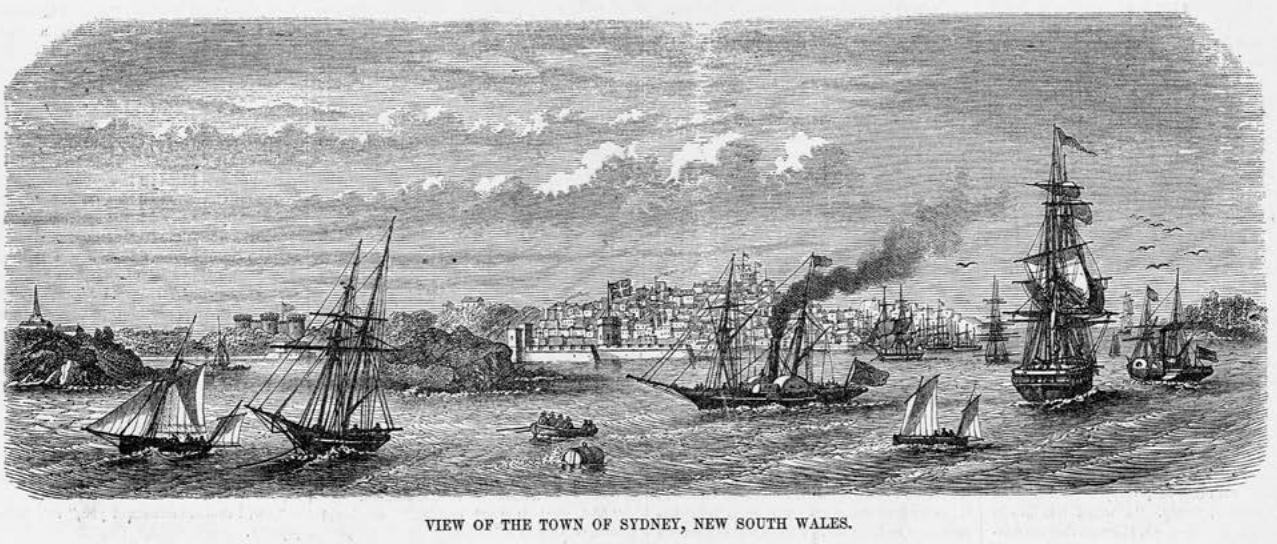
Quarantine refers to the isolation of people, animals, goods or vessels to prevent the spread of infectious disease. In colonial New South Wales, the site at Spring Cove (later known as North Head) became the location where authorities contained outbreaks of various deadly diseases arriving by ship.
Note
Spring Cove's selection as the primary quarantine location was strategic—its geographical isolation from the main settlement at Sydney Cove provided a natural barrier against disease transmission while still being accessible by sea.
Early quarantine responses: the 1832 and 1837 outbreaks
The Bussorah Merchant incident (1832)
The first significant quarantine event at Spring Cove occurred in 1832 when the ship Bussorah Merchant arrived carrying convicts and crew exposed to smallpox. The infected passengers and crew were quarantined at Spring Cove, North Head, where they were housed in basic tent accommodation along the cove. This geographical isolation kept both the European crew and convicts separated from the wider colonial population.
The Lady M'Naghten tragedy (1837)
A more devastating outbreak occurred in 1837 aboard the Lady M'Naghten, which had travelled from England. During the voyage, crew and passengers contracted scarlet fever and typhus. The mortality rate was catastrophic:
Important
The Human Cost:
- 10 adults and 44 children died during the sea passage
- A further 14 adults died whilst in quarantine on board the ship
This tragic incident highlighted the urgent need for proper quarantine facilities on land rather than keeping infected passengers aboard ships.
This tragic incident, combined with the financial costs of delaying ships at port (known as demurrage), prompted the Legislative Council of New South Wales to authorise the construction of permanent quarantine facilities at North Head.
Establishing the permanent Quarantine Station (1837-1838)
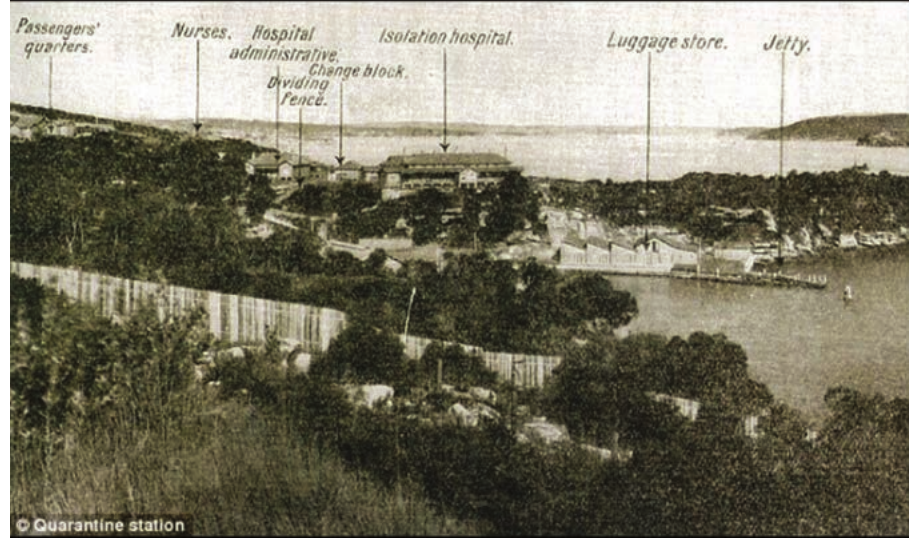
Construction of the North Head Quarantine Station began in May 1837, with facilities ready to receive detainees by October 1838. The new station included several key features:
Physical infrastructure
- Wharf: A landing area built at Spring Cove for vessels to dock
- Hospital: A 32-bed facility established in the Sick Ground
- Accommodation: Basic amenities suitable for Steerage Class passengers (equivalent to modern economy class travellers)
Segregated precincts
The station was deliberately divided into two separate zones to prevent cross-contamination:
Note
Sick Ground: This area was designated for those already infected with disease. It was located on the southern side of the site, closest to the wharf and with direct access to the hospital facilities.
Healthy Ground: This space housed ship passengers who had been exposed to infected individuals but had not yet developed symptoms. This precinct was geographically isolated from the Sick Ground and positioned at a higher elevation, requiring a steep climb from the beach area.
Security measures
A dozen stone cairns (mounds of stacked stones used as markers) were positioned to clearly mark the boundaries between the different precincts. These cairn boundaries were visible from the shore and were patrolled at night to prevent detainees from the Sick or Healthy Grounds from escaping or intermingling.
Expansion during the gold rush era (1852-1853)
When gold was discovered in western New South Wales in 1852, it triggered a massive influx of immigrants arriving by sea. The existing Quarantine Station facilities quickly proved inadequate for the enormous wave of migration.
Note
The gold rush transformed Australia's demographic landscape almost overnight. The promise of wealth attracted thousands of hopeful migrants, creating unprecedented pressure on quarantine facilities designed for much smaller numbers.
To address the capacity crisis, authorities implemented several urgent measures:
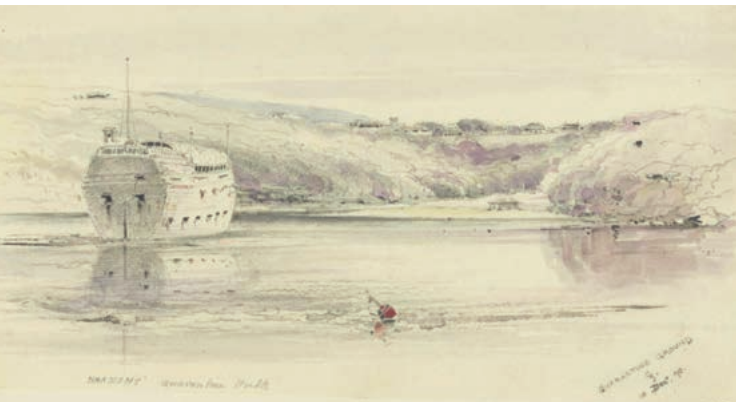
The convict hulk Harmony
The former convict ship Harmony was repurposed as a floating hospital for infected male passengers. It was moored in Spring Cove with a yellow flag hoisted to signal the presence of disease and sickness on board. Single female passengers, meanwhile, were accommodated in newly constructed barracks in the Sick Ground.
Additional buildings (1853)
In 1853, two more substantial buildings were erected to house a further 60 inmates. These new structures featured:
- Wide verandas for dining and recreational activities
- On-site accommodation for the Superintendent of Quarantine
Cemetery relocation
The original cemetery was visible from both the Healthy Ground and from incoming ships, which authorities considered unsightly. The cemetery was relocated to a less visible location.
Important
The remains of those already buried in what became known as the 'First Cemetery' were left undisturbed—only the headstones were removed from view. This decision reflected both practical constraints and some respect for the deceased, despite the authorities' primary concern being the visual impact on incoming passengers.
The steam age and class distinctions (1880s)
Technological transformation
The 1880s brought significant changes to sea travel with the development of steam-powered ships. These vessels made journeys:
- Much shorter in duration
- More frequent
- More comfortable for passengers
The new technology enabled different levels of accommodation for different social classes (positions in society based on wealth, hereditary titles, influence and education). Following the wealth generated by the gold rush and the arrival of free settlers rather than convicts, ship voyages became stratified by class.
The smallpox crisis
During the 1880s, two major smallpox outbreaks caused significant concern for the colony, particularly troubling because no effective vaccine existed at the time.
Note
Understanding Smallpox
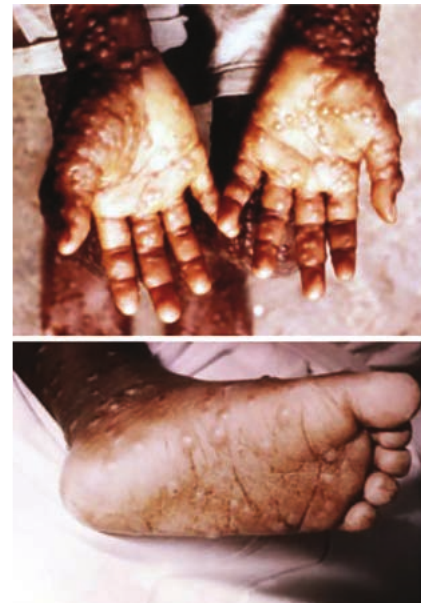
Smallpox is an extremely infectious disease caused by the variola virus. Key features include:
- Fever and progressive skin rashes
- Distinctive 'pocks' or blisters on the skin
- Spread through direct contact with infected individuals
- Historical mortality rate of 3 in 10 infected people
- Survivors often left with permanent scarring or blindness
- First documented in Egyptian mummies from the third century BCE
- Successfully eradicated worldwide through vaccination (last case in 1977)
Royal Commission and reform
The housing of different social classes together in temporary accommodation was considered grossly inadequate and negligent. A Royal Commission investigation into quarantine procedures led to important reforms:
- Establishment of the Board of Health to regulate quarantine procedures
- Commencement of a large-scale building programme
- Construction of facilities to house 300 inmates
- Creation of platforms for additional guests in tents and temporary accommodation
Federation and national quarantine control (1901-1908)
Transfer to Commonwealth control
When the Australian colonies federated to form the Commonwealth of Australia in 1901, responsibility for quarantine shifted from state governments to the new federal government. The federation movement was partly built on the idea of Australia as a 'working man's paradise' that needed protection from outside threats through strong quarantine regulations.
The White Australia Policy connection
Fears about contagious diseases became intertwined with racial prejudices in the popular imagination. Smallpox and other incurable diseases were wrongly associated with Chinese migrants and other Asian peoples in the racist thinking of the time.
Important
The Intersection of Health Policy and Racism
Migration from China and other non-British nations was increasingly restricted or controlled. These social and political attitudes contributed to the introduction of the White Australia Policy, enacted in 1902 shortly after Federation through two key pieces of legislation:
- The Immigration Restriction Act 1901
- The Pacific Island Labourers Act 1901
This discriminatory policy remained in place until finally abolished in 1973.
The 1908 Quarantine Act
In 1908, the Commonwealth government passed the Quarantine Act, which provided extensive powers to protect the new nation. According to Section 4 of the Act, quarantine encompassed:
Measures for the exclusion, detention, observation, segregation, isolation, protection and disinfection of vessels, persons, goods, animals, or plants and having as their object the prevention of the introduction or spread of diseases or pests affecting man, animals, or plants.
This legislation gave authorities sweeping powers to control, detain and exclude people, goods, animals or plants in order to safeguard public health.
Note
Exam tip: When analysing the Quarantine Act, consider how its broad definition reflects the government's priorities at the time, including both genuine public health concerns and discriminatory immigration policies.
Remember!
Summary
Key Points to Remember:
-
Disease fears drove policy: From the 1800s onwards, the threat of deadly infectious diseases like smallpox, typhus, cholera and bubonic plague shaped colonial and national policy in Australia.
-
Spring Cove became the quarantine centre: After devastating outbreaks in 1832 and 1837, permanent quarantine facilities were established at North Head, with segregated areas (Sick Ground and Healthy Ground) to prevent cross-contamination.
-
Social class shaped quarantine experiences: By the 1880s, different classes of passengers were housed in separate facilities, reflecting the social hierarchies of colonial society.
-
Federation centralised control: In 1901, quarantine responsibility shifted from state to Commonwealth control, with the 1908 Quarantine Act providing extensive powers to exclude, detain and control people and goods.
-
Quarantine intersected with racism: Fears about disease became wrongly associated with Chinese and Asian migrants, contributing to the racist White Australia Policy that restricted non-British immigration until 1973.