After The Day After and Safe Versus Unsafe History (HSC SSCE Modern History): Revision Notes
📚Revision Notes
After The Day After and Safe Versus Unsafe History
The impact of The Day After
When The Day After finished screening on 20 November 1983, it left 100 million American viewers with a powerful message: nuclear war would turn Earth into a giant graveyard with no hope of survival. The film's epilogue expressed the filmmakers' hope that it would inspire nations and leaders to find ways to prevent nuclear catastrophe.
Note
For many Americans, especially children, the film created lasting trauma. Young viewers developed intense anxiety about nuclear war, spending years watching the sky fearfully whenever planes flew overhead. School sirens that tested weekly became moments of terror as children wondered if this was the real thing.
During drills, students learned to distinguish between tornado warnings (scramble into hallways) and nuclear attack warnings (hide under desks), though they understood these measures would be useless against nuclear weapons.
A significant cultural event
The Day After was far more than a popular television movie. It became a genuine cultural event that brought families and communities together. In the weeks before screening, the film was discussed extensively in the press and debated by politicians, doctors, psychologists and other experts. Schools and households prepared children for what they would see.
On screening night, many viewers stayed tuned afterwards to watch the discussion programme Viewpoint. Surprisingly, there was little negative feedback. Only a handful of callers to helplines expressed concern about the impact on children.
A survey commissioned by ABC after the screening revealed:
- Most viewers evaluated the film favourably
- The majority felt children coped well, helped by teachers and schools
- Many discussed the film in schools and found the Viewer's Guide helpful
- 75% thought the film should be shown more
- 85% believed it should be shown overseas
Important
Despite warnings about potential harm, no research or anecdotal evidence emerged of any actual harm. Whilst the film didn't immediately increase antinuclear sentiment or change political views, it did condition the population to consider the idea of a nuclear freeze.
One report praised the film, stating that when television responsibly presents controversial yet thought-provoking issues, an educational and enlightening experience can result. The film's director, Nicholas Meyer, later reflected that any movie that changed the President's mind about winnable nuclear war was not an insignificant achievement.
Ronald Reagan and the great reversal
No immediate public response
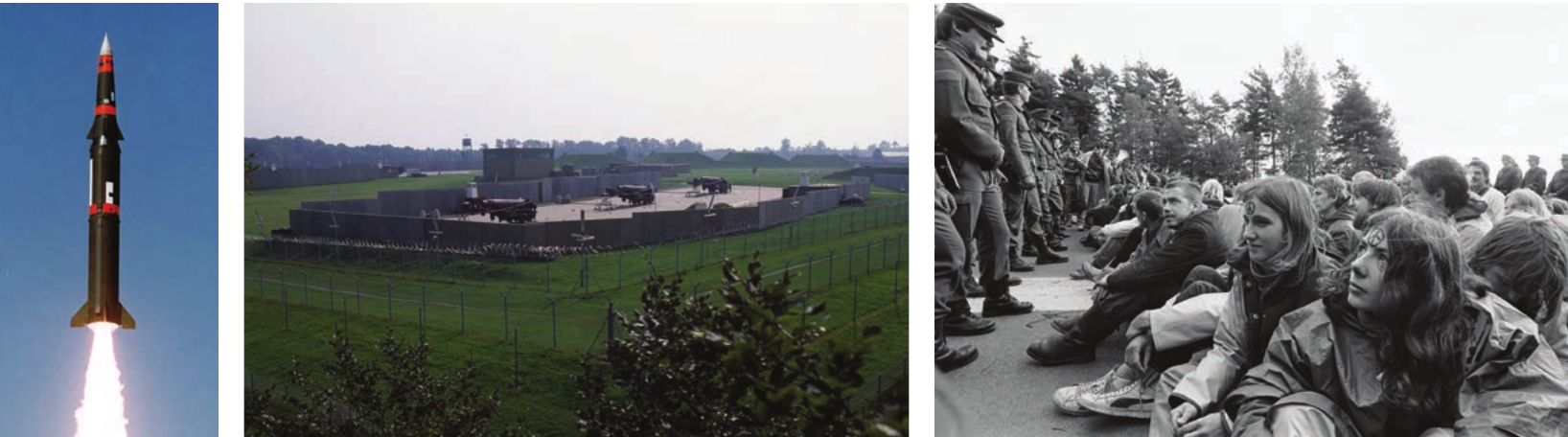
President Reagan made no public statement following The Day After's screening. To the public, it appeared to be business as usual. On 22 November 1983, just two days after the public screening, Reagan ordered the immediate deployment of Pershing II missiles to West Germany. This decision sparked outrage from the Nuclear Freeze movement and mass protests in Europe.
However, something was happening behind the scenes with Reagan that would prove historically significant.
Background: the KAL 007 incident
In September 1983, Korean Air Lines flight 007 was shot down by a Soviet fighter jet, killing all passengers. Reagan condemned it harshly, calling it the "Korean Airline massacre", a "crime against humanity that must never be forgotten", and an "act of barbarism and inhuman brutality".
Note
Reagan later learned this tragedy occurred due to human error on the Soviet side. This realisation troubled him deeply. He began wondering what would happen if the Soviets had a similar human or computer error with their nuclear weapons. It was in this darkened mood that Reagan watched an advance screening of The Day After.
Reagan watches The Day After
The President received a videotape copy of The Day After weeks before the public screening. On Monday morning, 10 October 1983, whilst staying at Camp David, Reagan decided to watch the film.
Example
Reagan's Diary Entry - 10 October 1983
His diary entry that day revealed:
It has Lawrence, Kansas wiped out in a nuclear war with Russia. It is powerfully done – all $7 mil. worth. It's very effective & left me greatly depressed ... My own reaction was one of our having done all we can to have a deterrent & to see there is never a nuclear war.
This diary entry is remarkable because it was the only time in his entire diary that Reagan expressed emotion. His biographer, Edmund Morris, noted that the normally optimistic President remained depressed for days and speculated that the film led Reagan to pursue talks with the Soviet Union.
The SIOP briefing
Two weeks after viewing The Day After, Reagan received a full Single Integrated Operational Plan (SIOP) briefing. This was the US secret nuclear war plan, which involved role-playing presidential decision-making during a nuclear crisis.
During this briefing, the President learned that the US would target over 50,000 military sites in the Soviet Union, half of these being cities and population centres. Reagan was shaken by this briefing and wrote in his diary: "In several ways the sequence of events described in the briefings paralleled those in the ABC movie. Yet there were still some people at the Pentagon who claimed a nuclear war was 'winnable'. I thought they were crazy."
Able Archer 83
The October 1983 SIOP briefing prepared Reagan for his role in Able Archer 83, NATO military exercises scheduled for 2-11 November. However, on 18 November 1983, after the exercises concluded, President Reagan received a shocking secret briefing: the Soviet Union had placed their nuclear forces on high alert during Able Archer 83.
Important
The President's advisers reported that Soviet leader Andropov had been convinced the military exercise would be a cover for a first-strike nuclear attack on the Soviet Union. As a result, the Soviets placed their forces on high alert throughout the exercise period. Reagan couldn't believe that the two superpowers had come so close to nuclear war.
Five factors leading to policy reversal
Important
The Five Factors Behind Reagan's Nuclear Policy Reversal
The following factors combined to cause President Reagan's dramatic policy reversal on nuclear weapons:
- The shooting down of KAL 007 on 1 September 1983
- Watching The Day After on 10 October 1983
- The SIOP briefing in October 1983
- Realising the US and Soviet Union had come close to nuclear war during Able Archer 83 (2-11 November 1983)
- Constant pressure from the Nuclear Freeze movement
Reagan's speeches and policy change
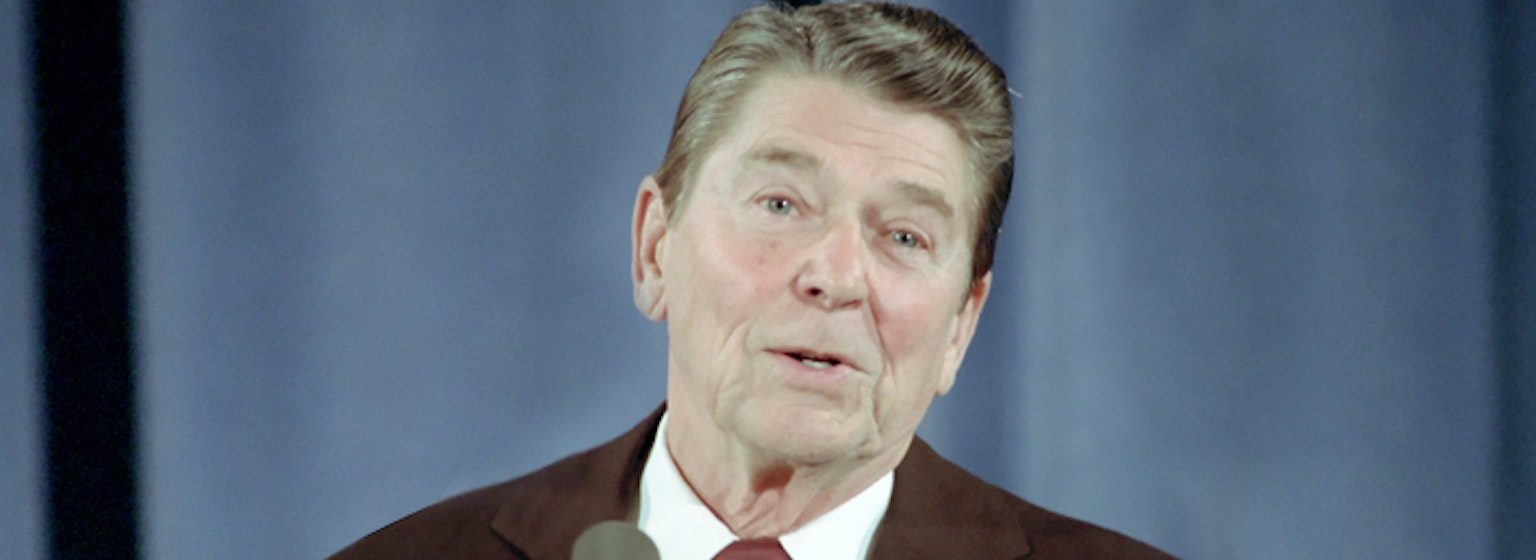
As a result of these events, President Reagan made a dramatic policy reversal, reflected in two important speeches in January 1984.
On 16 January 1984, in his Address to the Nation and Other Countries on US-Soviet Union Relations, President Reagan talked of "reducing the chances for dangerous misunderstandings and miscalculations", the dream of "eliminating the risk of nuclear war", and joining with the Soviet Union to fight their "common enemies of poverty, disease, and above all, war".
Example
Reagan's State of the Union Address - 25 January 1984
President Reagan called for peace with the Soviet Union and a nuclear-free world:
Tonight, I want to speak to the people of the Soviet Union, to tell them it's true that our governments have had serious differences, but our sons and daughters have never fought each other in war. And if we Americans have our way, they never will. People of the Soviet Union, there is only one sane policy, for your country and mine, to preserve our civilization in this modern age: A nuclear war cannot be won and must never be fought. The only value in our two nations possessing nuclear weapons is to make sure they will never be used. But then would it not be better to do away with them entirely?
This speech appears to have been sincere. After these speeches, Reagan dropped his inflammatory rhetoric about the Soviet Union and continued raising the possibility of nuclear disarmament negotiations.
Historian Beth Fischer, in her book The Reagan Reversal (2000), argued that Reagan began pursuing a more conciliatory policy with Soviet leadership after these speeches. Fischer claimed this January 1984 reversal could be interpreted as the "beginning of the end of the Cold War". However, the Soviets made no immediate response. It wasn't until 1985, when Gorbachev became Soviet leader, that the Soviets responded to Reagan's overtures on nuclear disarmament.
Note
One thing is certain: The Day After played a significant role in changing Reagan's policy towards the Soviet Union and nuclear weapons.
Safe versus unsafe history
The Serpukhov-15 incident: 26 September 1983
We now know that 1983 was the most dangerous period of the Cold War. However, at the time, the public had no idea how close the world came to nuclear catastrophe. There were two serious incidents in the second half of 1983 where the US and Soviet Union nearly triggered full-scale nuclear war. The first was the Able Archer exercise (described above). The second incident wasn't known about until 1998.
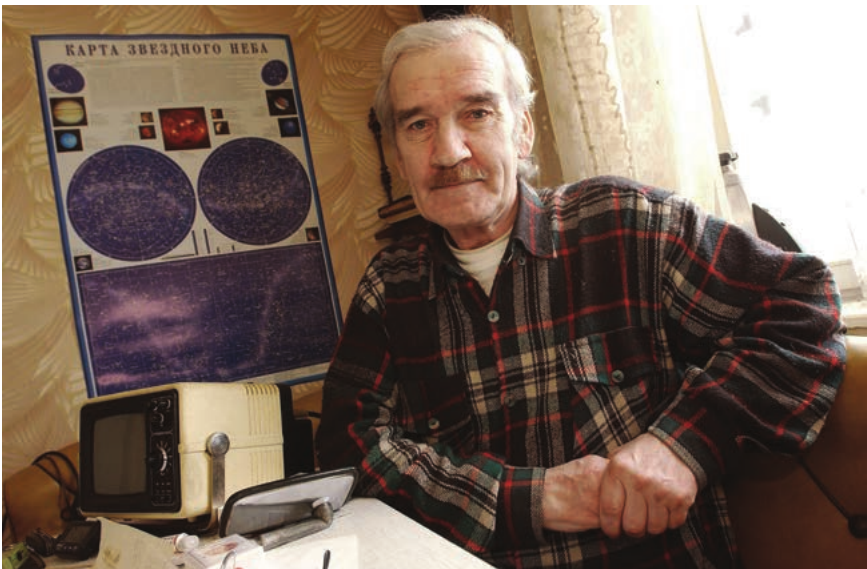
On 26 September 1983, Colonel Stanislav Petrov was on duty at Serpukhov-15, a Soviet top-secret early warning command centre. Computers there analysed data from satellites to detect a pre-emptive nuclear first strike from the US.
In the early hours of the morning, the alarm sounded and red lights flashed warnings that US missiles were heading for the Soviet Union. The alarms went off several more times and the atmosphere in the facility became extremely tense. Everyone knew that if this was real, the full-scale nuclear war they'd dreaded for decades would become reality.
Important
Petrov's Critical Decision
Petrov's job was to report enemy missile launches to Soviet command. He knew that if he informed his superiors, they would launch a massive nuclear attack against the US. Despite having nothing to confirm it was a false alarm, Petrov reported it as such. They then had to wait 15 minutes to verify whether he was right. If he was wrong, it would be the end for all of them.
As it turned out, it was a computer error. The satellites had picked up flashes of light on the horizon - not missile launches, but the sun rising and sunlight reflecting off the horizon. The computer had misinterpreted these flashes as missiles being launched.
The story of Stanislav Petrov on 26 September 1983 remained buried in archives for years. Petrov was reprimanded by his commanding officer for not following protocol. The incident was forgotten until 1998, when Petrov's commanding officer revealed details in his memoir.
Journalists eventually tracked down Petrov, and in 2006 he was flown to the United Nations in New York to receive an award from The Association of World Citizens for being "the man who saved the world". In 2014, a documentary film titled The Man Who Saved the World was released about Petrov and this incident. Petrov passed away in May 2017.
The Doomsday Clock
Note
What is the Doomsday Clock?
The Bulletin of the Atomic Scientists created the Doomsday Clock in 1947 to assess the likelihood of global catastrophe caused by human means. The closer the minute hand is to midnight, the closer the world is to catastrophe.
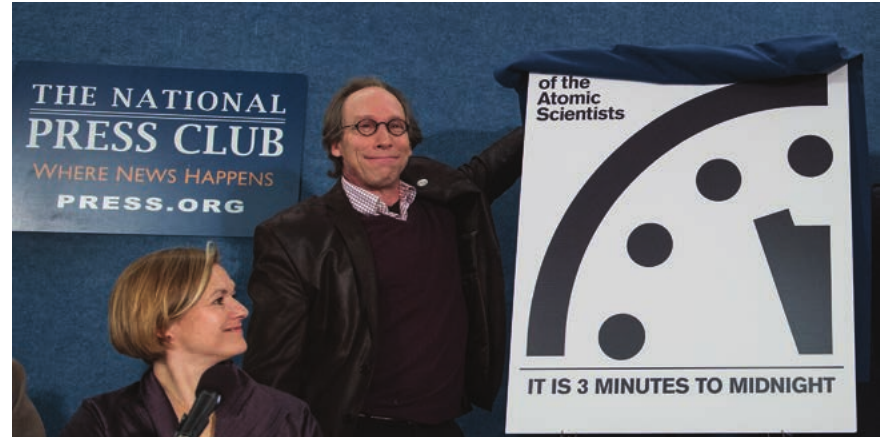
According to the Bulletin, 1984 was one of the most dangerous years of the Cold War. Yet we now know that 1983 was far more dangerous than anyone realised at the time. The 100 million viewers who watched The Day After were horrified at the prospect of nuclear war, yet they had no idea they'd come close to nuclear war just weeks before the screening (Able Archer) and in September (Serpukhov-15).
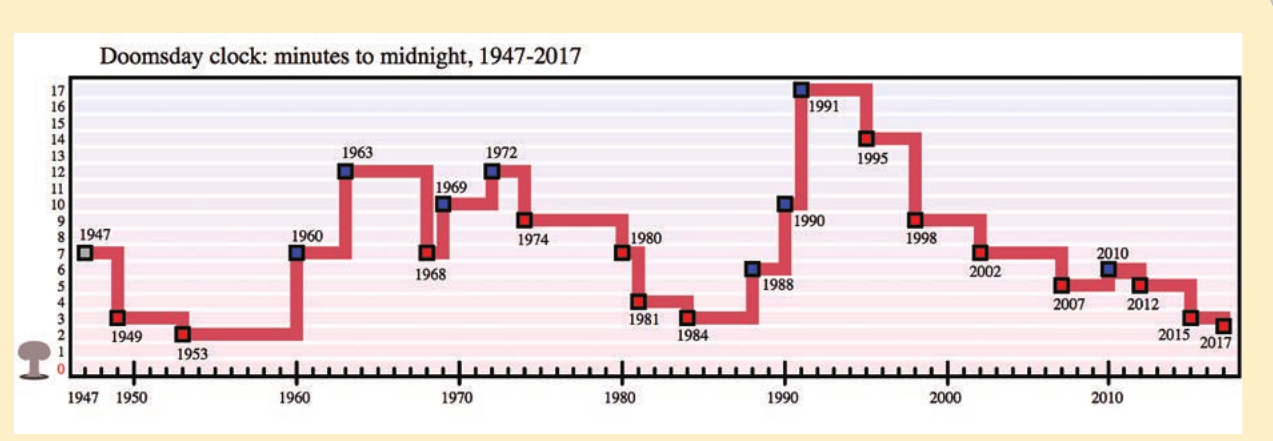
The Bulletin continues to monitor the nuclear threat level. In 2016, the Doomsday Clock was set at three minutes to midnight. Since then, the nuclear threat has increased. On 26 January 2017, the clock was moved to two-and-a-half minutes to midnight. However, there is minimal public awareness of the serious threat nuclear weapons still pose today.
Defining unsafe history
The story of The Day After is part of nuclear history. Nuclear history is unsafe history. A historical period is "unsafe" if its underlying forces have still to be played out.
Important
Safe History vs. Unsafe History
World War II is an example of "safe history" because it is over and the conflicts of that time have been resolved. Nuclear history is unsafe history because the dynamics unleashed by the invention of the atomic bomb have not yet been resolved satisfactorily.
The nuclear age began with the explosion of the first atomic bomb in the New Mexico desert on 16 July 1945. The nuclear age will end in one of two ways:
- Through the annihilation of all life on the planet in nuclear war, or
- When every nuclear weapon is destroyed and a system is established to ensure they are never built again
As Jonathan Schell wrote in The Fate of the Earth (1982):
The choice is really between two entire ways of life. One response is to decline to face the peril, and thus to go on piling up the instruments of doom year after year until, by accident or design, they go off. The other response is to recognise the peril, dismantle the weapons, and arrange the political affairs of the earth so the weapons will not be built again.
The slow death of nuclear civil defence
One effect of The Day After and similar films in the 1980s was that they killed off any notion that nuclear war could be survived or would be worth surviving. The old civil defence plans and educational material seemed absurd once people had a much clearer picture of what nuclear war would really be like.
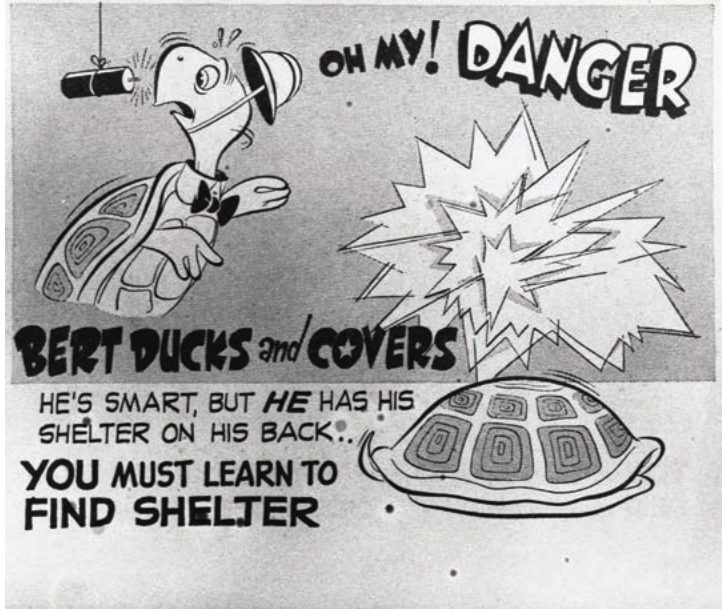
As a result of this more realistic view, civil defence plans in countries around the world gathered dust. By the end of the 1980s, governments struggled to develop credible civil defence plans that wouldn't be torn apart by experts and anyone with basic knowledge of nuclear weapons. Governments stopped identifying underground levels of buildings in city centres as suitable shelters in the event of nuclear attack.
The Humanitarian Impact Initiative
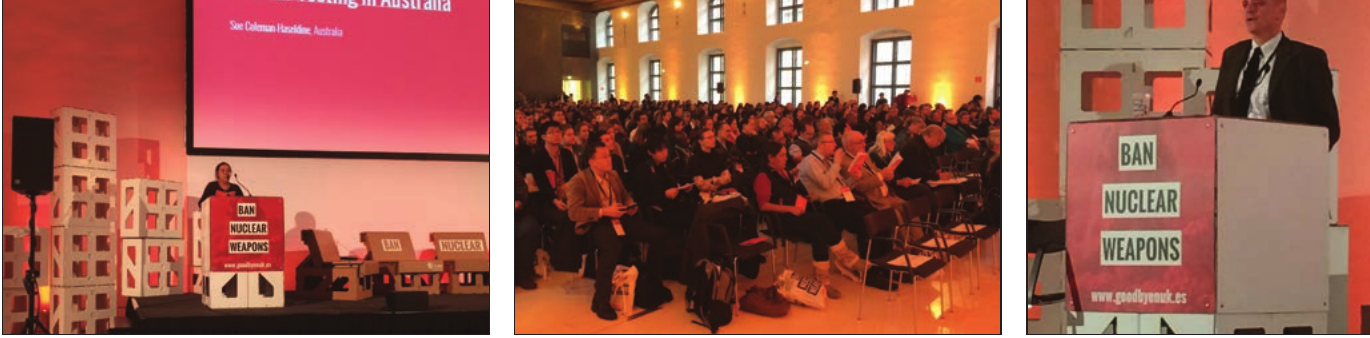
Between 2013 and 2014, the Humanitarian Impact Initiative held three international conferences in Oslo (Norway), Nayarit (Mexico) and Vienna (Austria). These conferences surveyed all the evidence about the impact of nuclear weapons on people and the environment.
Important
At the Vienna conference's conclusion, 160 countries agreed there was no humanitarian response possible to the explosion of even just one nuclear weapon, let alone hundreds or thousands. This led to calls for a treaty to ban nuclear weapons.
The idea of civil defence in the event of nuclear war died in the 1980s, thanks partly to films like The Day After. However, the idea that a few countries possessing nuclear weapons keeps us safe has not yet died.
Commemoration and lasting legacy
The Day After has become part of American popular culture and has been viewed around the world. Millions more saw it when screened in Europe in 1984, and it was even shown in the Soviet Union after 1987. It is now an important source for understanding the most dangerous year in the Cold War and how the prospect of nuclear war hung like a dark cloud over ordinary people.
Many people who watched the film in 1983, whether as adults or children, remember that event as one of significance. Over the 35 years since the original screening, many people have been affected by the film in some way.
Note
The screening on 20 November 1983 was itself a national event. On that night, 100 million Americans were confronted with the horror of nuclear war. This had a lasting impact on the nation and was one factor that influenced President Reagan to change his approach to the Soviet Union and nuclear weapons.
Recreation in popular culture
The impact of The Day After screening on 20 November 1983 was recently recreated in the TV series The Americans. Episode 9 in Season 4, screened in the US on 11 May 2016, showed the Jennings family and their neighbours huddled in their living room watching The Day After.

One reviewer stated this episode "stitches the characters together through the depiction of destruction, mutual and perhaps assured". The reviewer noted that the four minutes of The Day After appearing in this episode "typifies The Americans's treatment of television not as mere chronological marker, but as cultural hearth, worthy of examination in its own right".
Reviewer Dustin Rowles said this episode brought back a forgotten aspect of the 1980s "in full force", remembering how as children in America's heartland, second-graders had nuclear war drills where they hid under desks. He recalled how emergency sirens blaring once a week served as a constant reminder that their existence was "on the precipice" - heavy stuff for eight-year-olds.
Alexander Zaitchik wrote: "The nuclear autumn of 1983 was arguably the tensest and most dangerous season of the entire Cold War. It involved at least two close calls. It was bookended by a diplomatic crisis and a destabilising missile deployment. The popular culture was drenched to the bone in nuclear dread – a dread so deep it deeply affected the political development not just of third graders like me..."
Current nuclear threats
Today, nuclear weapons remain a pressing concern. Lawrence Krauss, chair of the Bulletin of the Atomic Scientists Board of Sponsors, stated in 2017 that nuclear weapons remain the most urgent pressing concern. He noted that 70 years after Einstein said "Everything has changed save the way we think", we're still thinking the same way.
Important
The Current Nuclear Situation
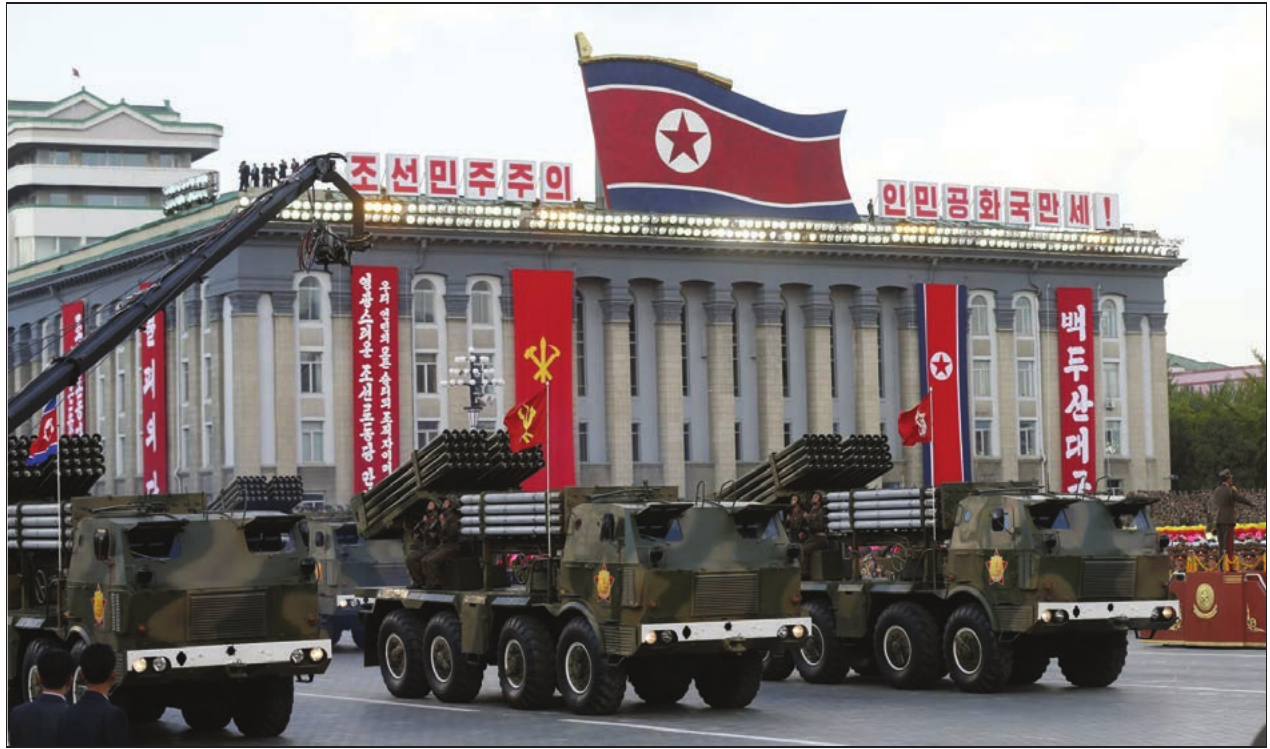
No one is currently talking about disarmament. Nuclear countries are actually violating the Non-Proliferation Treaty. This treaty requires countries without nuclear weapons (like North Korea and Iran) not to acquire them, whilst countries with nuclear weapons must work towards disarmament.
Instead, both the US and Russia are spending money to modernise nuclear weapons, with the US having a $1 trillion programme to modernise its nuclear arsenal.
Remember!
Summary
Key Points to Remember:
-
The Day After was a major cultural event: 100 million Americans watched it on 20 November 1983, making it one of the most-watched TV events in history.
-
Reagan's five-factor reversal: The combination of watching The Day After, the KAL 007 incident, the SIOP briefing, the Able Archer scare, and Nuclear Freeze movement pressure led Reagan to dramatically change his nuclear policy in January 1984.
-
The Serpukhov-15 near-miss: On 26 September 1983, Colonel Stanislav Petrov prevented nuclear war by correctly identifying a false alarm when Soviet computers detected what appeared to be US missile launches. This incident remained secret until 1998.
-
Nuclear history is unsafe history: Unlike World War II (safe history), nuclear history is unsafe because the forces unleashed by nuclear weapons haven't been resolved - the nuclear age will only end through catastrophe or complete disarmament.
-
The death of civil defence: The Day After and similar films made it clear that nuclear war couldn't be survived, making civil defence plans seem absurd. By 2014, 160 countries agreed no humanitarian response to nuclear weapons was possible.