Cold War Tensions (HSC SSCE Modern History): Revision Notes
📚Revision Notes
Cold War Tensions
Introduction
The Day After is a film set during the Cold War, a period of intense rivalry between the United States and the Soviet Union that lasted from approximately 1947 to 1991. The film depicts a scenario where this rivalry escalates into nuclear war, exploring the devastating consequences of the nuclear arms race that defined this era. Understanding the Cold War context is essential for appreciating the historical significance of this film and its impact on public awareness about nuclear weapons.
Origins of the Cold War and the arms race
The Cold War began around 1947 when President Harry Truman delivered a speech on 12 March declaring that the United States would support any nation resisting communist takeover. This became known as the Truman Doctrine and effectively announced a Cold War with the Soviet Union, which the US viewed as orchestrating communist movements worldwide.
Note
The Truman Doctrine represented a fundamental shift in American foreign policy from isolationism to active global involvement in containing communism. This single speech set the stage for decades of superpower rivalry and proxy conflicts around the world.
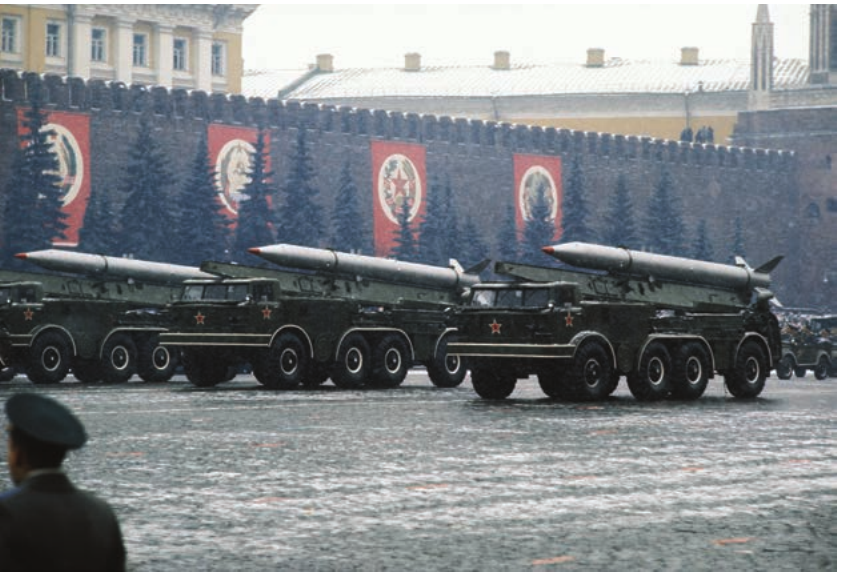
The United States successfully tested the first atomic bomb in New Mexico in July 1945. Shortly after, on 6 and 9 August 1945, American bombers dropped atomic bombs on the Japanese cities of Hiroshima and Nagasaki. These attacks contributed to Japan's surrender and the end of World War II. During the war, the USSR had been America's ally, but the US chose not to share atomic bomb technology with them, anticipating future rivalry.
Key terms
- Cold War: The period of political and military tension between the United States and the Soviet Union from 1945 to 1991, characterised by rivalry, suspicion and the threat of nuclear conflict without direct warfare between the superpowers.
- Atomic bomb: A weapon that derives its destructive power from nuclear fission, releasing enormous energy through heat, blast and radioactivity.
- Conventional forces: Traditional military forces and weapons that do not involve nuclear capabilities.
The nuclear arms race begins
After World War II, President Truman adopted a harder stance toward the Soviet Union. He feared the USSR's large conventional military forces in Europe and sought to use America's nuclear monopoly as a deterrent. Truman believed it would take many years before the Soviets could develop their own atomic weapons. He was profoundly mistaken.
Important
In 1949, the Soviet Union successfully detonated its first atomic bomb—far earlier than American leaders expected. Suddenly, there were two nuclear powers in the world, fundamentally changing the global balance of power.
This marked the beginning of the nuclear arms race, in which both superpowers competed to develop more nuclear weapons and improve their delivery systems.
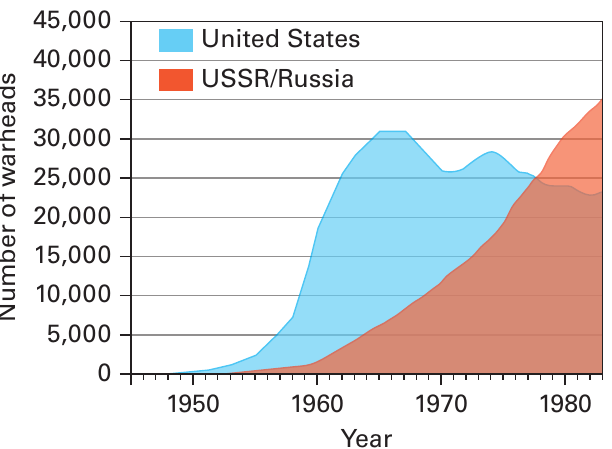
- Nuclear arms race: The competition between the United States and Soviet Union to build, deploy and constantly improve nuclear weapons and their delivery systems.
'Hiroshima was peanuts': Rising Cold War tensions
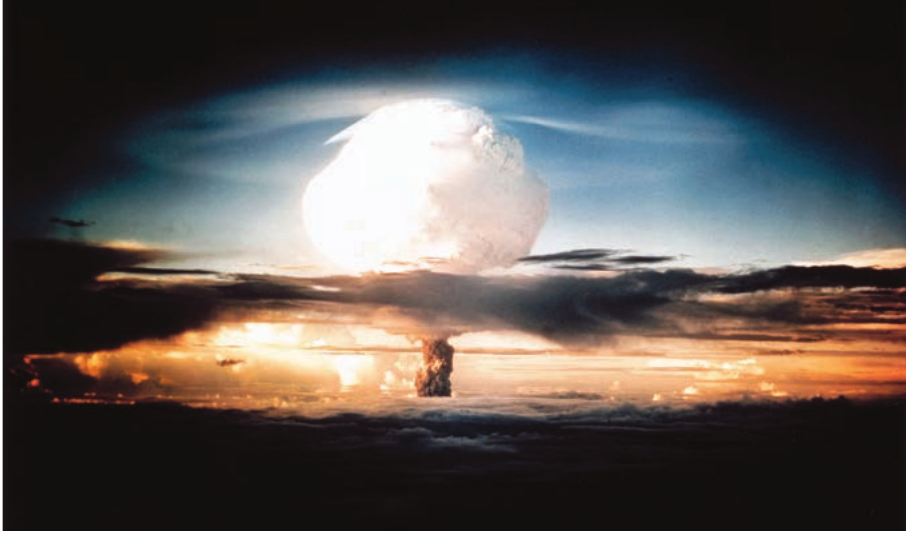
During the 1950s, both superpowers made significant advances in nuclear weapons technology. The United States developed the hydrogen bomb in 1952, testing it at Eniwetok Atoll in the South Pacific. This new weapon was far more powerful than the atomic bombs dropped on Japan.
Important
The first hydrogen bomb test yielded 10.4 megatonnes of explosive power—more than all the explosives detonated during the entire Second World War combined. The Soviet Union followed with its own hydrogen bomb in 1953.
Understanding the hydrogen bomb
- Hydrogen bomb: A weapon created through nuclear fusion rather than fission, making it vastly more powerful than atomic bombs. Also called a thermonuclear bomb, its explosive power is often measured in megatonnes.
- Megatonne: A unit measuring the destructive force of a nuclear weapon, equivalent to one million tonnes of TNT.
- Nuclear warhead: The explosive component of a nuclear weapon that can be fitted to various delivery systems.
By the early 1980s, when The Day After was set, nuclear weapons had become enormously more destructive than those used in 1945. In the film, Dr Landowska explains this to other characters, noting that Hiroshima was "peanuts" compared to the hydrogen bombs filling the arsenals of both superpowers. The filmmakers understood that a hydrogen bomb attack would be far more catastrophic than what occurred at Hiroshima and Nagasaki.
Escalating tensions in the 1950s
Throughout the 1950s, several crises threatened to turn the Cold War into actual warfare:
- 1948: Soviet Union established the Berlin Blockade, restricting Western access to Berlin
- 1949: Communist revolution succeeded in China, adding a major power to the Soviet side
- 1950-1953: Korean War, in which communist North Korea (supported by China and the USSR) fought South Korea (supported by the United States)
Note
During the Korean War, the United States seriously considered using nuclear weapons against China but ultimately decided against this action. This restraint would not always characterize Cold War decision-making.
Advanced weapons delivery systems
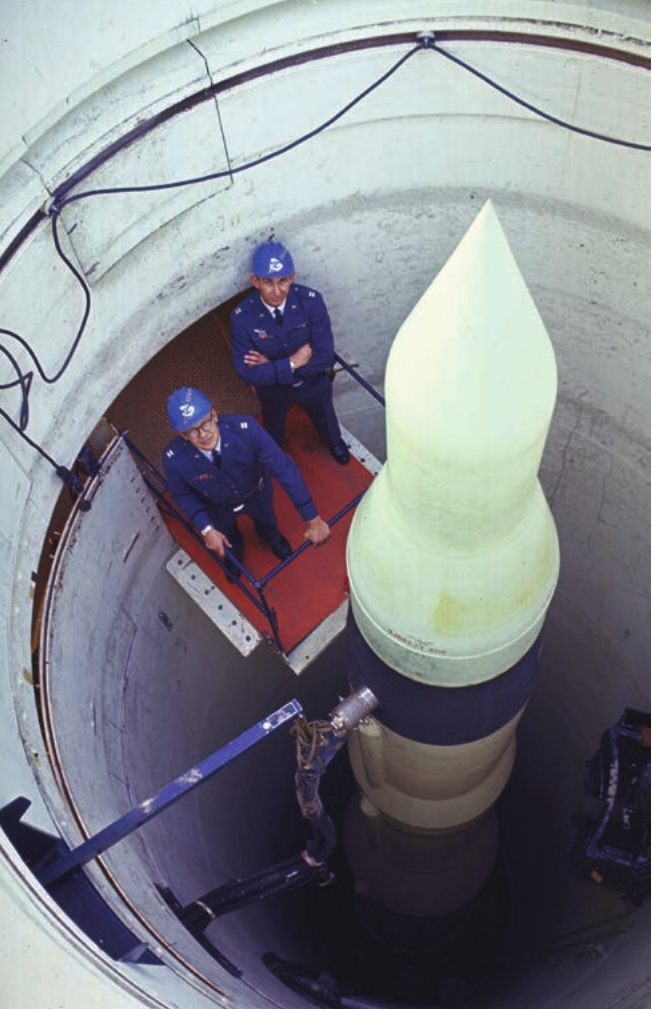
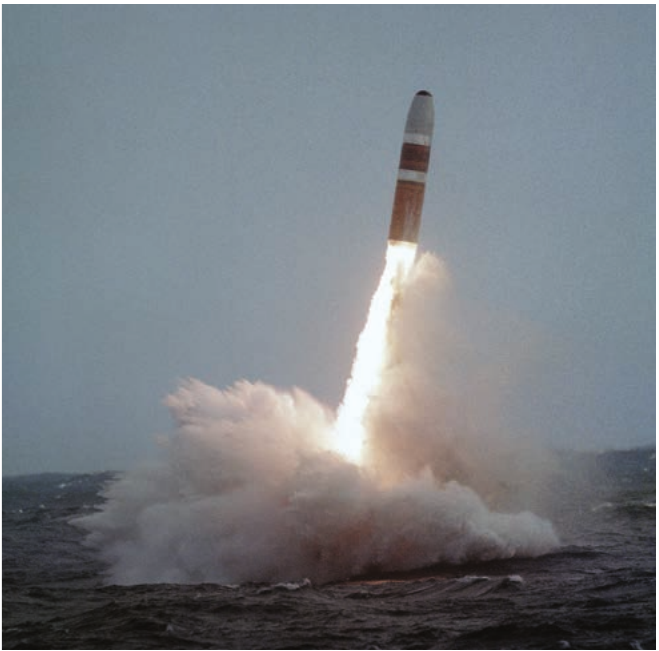
In 1959, both superpowers achieved the capability to mount nuclear warheads on rockets that could be fired at enemies across continents and oceans, reaching anywhere on Earth within a short time. These became known as intercontinental ballistic missiles (ICBMs).
Key weapons systems
- ICBM: An intercontinental ballistic missile capable of travelling across continents and oceans rapidly, with some missiles able to reach enemy territory within 30 minutes depending on launch location.
- SLBM: A submarine-launched ballistic missile that can be fired from a submerged submarine, making detection and defence extremely difficult.
Important
ICBMs dramatically increased the danger of the Cold War because they drastically reduced warning time. Leaders might have only 30 minutes to decide whether to launch a retaliatory nuclear strike—barely enough time to confirm an attack was occurring and make life-or-death decisions affecting millions of people.
Massive retaliation
From 1954, the United States adopted a policy called massive retaliation. This meant America would respond to any Soviet attack—even a conventional one—with overwhelming nuclear force. Both superpowers developed elaborate plans to fight a nuclear war using different components of their nuclear arsenal:
- Bomber aircraft carrying nuclear weapons
- Submarine-launched ballistic missiles (SLBMs)
- Land-based missiles fired from silos or mobile launchers
- Tactical nuclear weapons designed for battlefield use
- Strategic nuclear weapons reserved for destroying cities and major military/industrial centres
Note
Tactical nuclear weapons were smaller nuclear weapons designed for battlefield use, while strategic nuclear weapons were larger, measured in megatonnes, and intended to destroy cities and major targets. This distinction showed how both superpowers planned to fight nuclear wars at multiple scales.
The capability of ICBMs grew so they could destroy targets up to 8,000 kilometres away. In 1961, the USSR detonated its largest bomb ever—measuring 58 megatonnes, more than all explosives used in World War II combined.
The nuclear triad
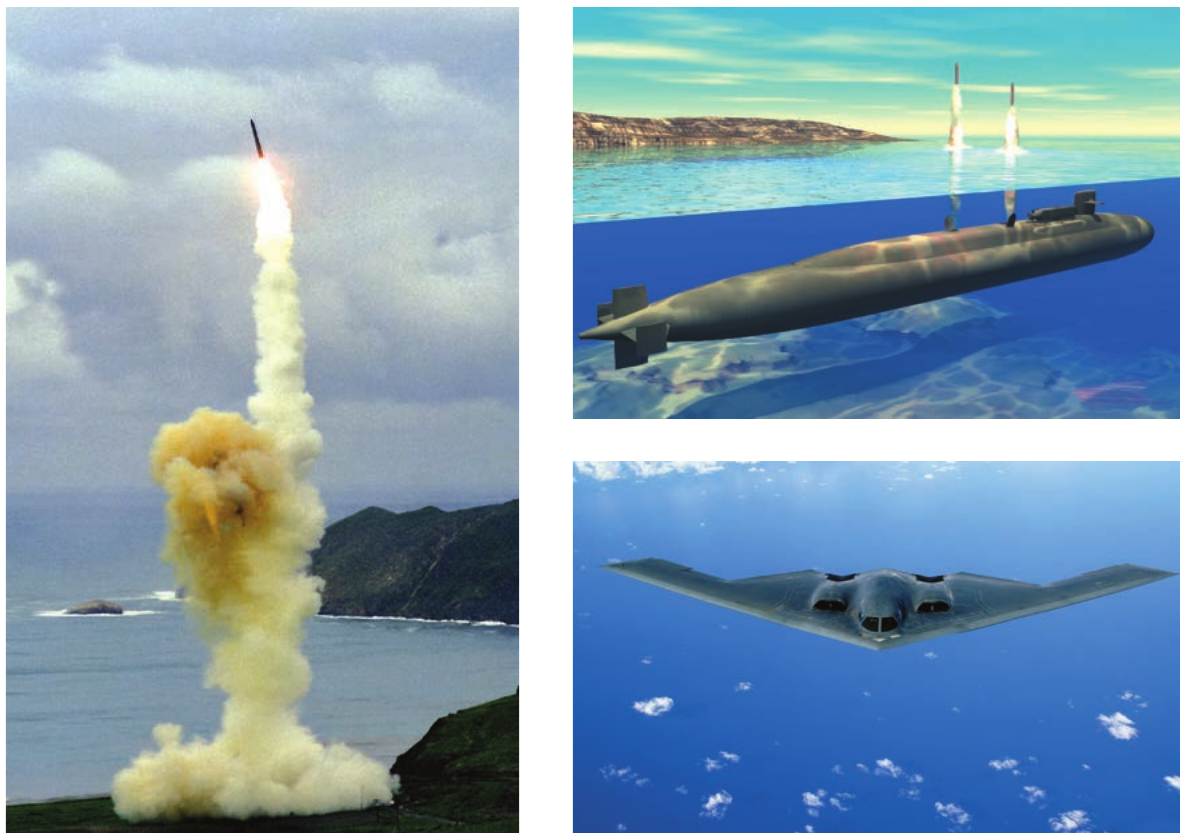
Both superpowers developed what became known as the nuclear triad—a strategic nuclear arsenal consisting of three components:
- Land-based intercontinental ballistic missiles (ICBMs)
- Submarine-launched ballistic missiles (SLBMs)
- Strategic bomber aircraft
- Nuclear triad: The three-part nuclear weapons delivery system consisting of land-based ICBMs, submarine-launched SLBMs, and strategic bombers, providing multiple ways to launch nuclear attacks.
Note
From 1961, the United States had the Single Integrated Operations Plan (SIOP), which gave the President various targeting options and integrated all three components of the nuclear triad. The major problem was that in a crisis involving an attack or imminent attack, leaders of both superpowers would have barely ten minutes to decide whether to launch thousands of nuclear weapons.
- SIOP: Single Integrated Operations Plan—a plan providing the President with various targeting options for launching nuclear attacks, integrating all components of America's nuclear arsenal.
Civil defence programmes
From the 1950s, both superpowers created elaborate civil defence programmes to deal with the possibility of nuclear attack. These plans involved building fallout shelters and establishing educational programmes for the public and schoolchildren on surviving a nuclear attack.
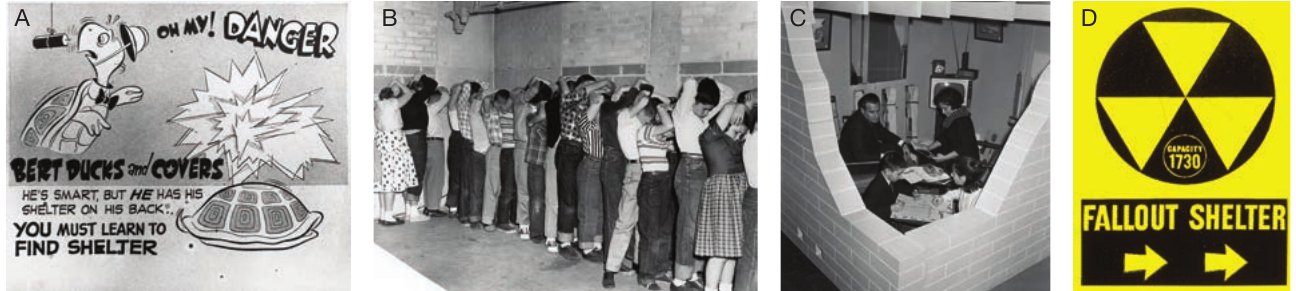
Initially, educational programmes and civil defence measures were taken very seriously. However, considerable scepticism eventually developed about their effectiveness in a real nuclear war. The "Duck and Cover" cartoon and song, which played a central role in 1950s education, was ridiculed by the 1980s.
Important
By the time The Day After was screened, more evidence had been presented to the public about the futility of civil defence measures through books, films, speeches and nuclear disarmament publications. The main difference from the 1950s was that people were no longer as naive about their chances of surviving a nuclear war.
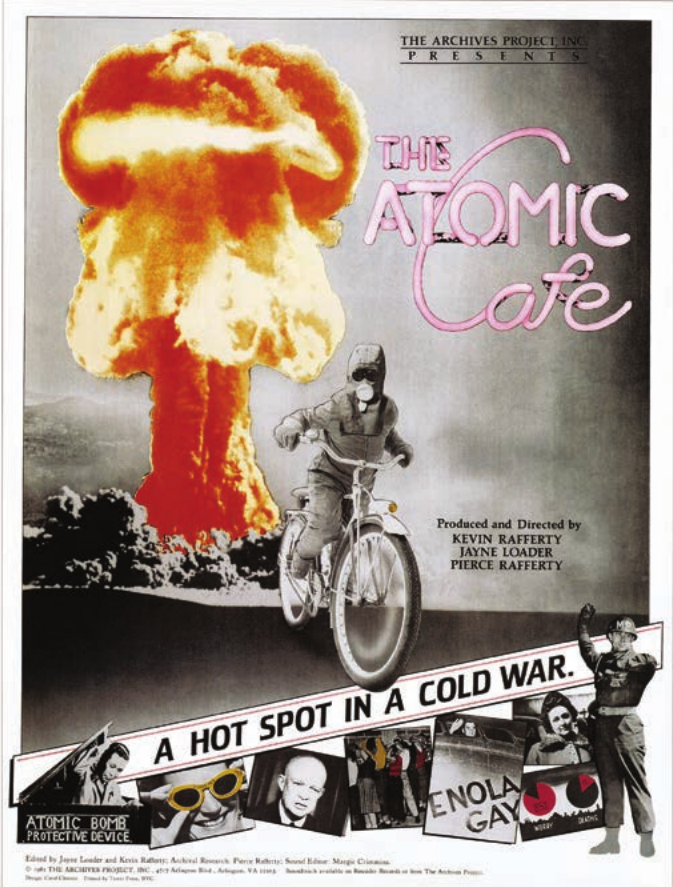
The 1982 documentary The Atomic Café compiled 1950s film clips from the US government about the nuclear bomb and civil defence. Without commentary, it simply arranged original footage in a way that highlighted the absurdity of civil defence programmes that seemed more about reassuring the public than actually protecting them. To 1980s audiences, civil defence programmes looked increasingly inadequate.
From the Cuban Missile Crisis to détente
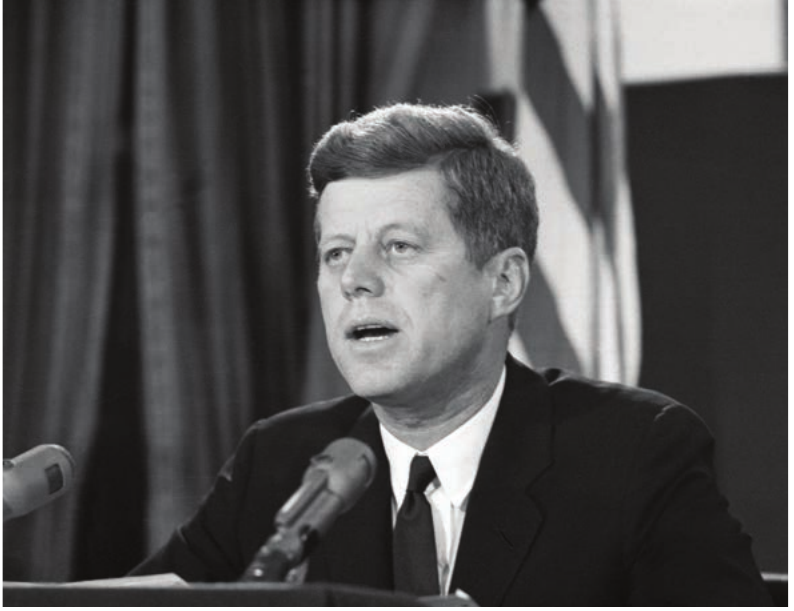
The Cuban Missile Crisis of October 1962 was the closest the world had come to nuclear war since the Cold War began. President Kennedy discovered that the Soviet Union had secretly installed nuclear missiles on Cuba, just 500 kilometres from the American coast.
Important
In a televised address, President Kennedy threatened a "full retaliatory response" if the Soviet Union did not remove the missiles—code for a nuclear attack on the USSR. For thirteen days in October 1962, a tense stand-off occurred as Kennedy enforced a naval blockade to prevent more missiles reaching Cuba.
Many people living at the time remember how close they seemed to nuclear war and how relieved they were when it was resolved peacefully. Soviet leader Nikita Khrushchev backed down and had the nuclear weapons removed from Cuba. In The Day After, characters Dr Oakes and his wife Helen reflect on their experience during this crisis.
Aftermath of the Cuban Crisis
After the Cuban Crisis, relations between Kennedy and Khrushchev improved, resulting in:
- A telephone hotline installed for direct communication between the Kremlin and the White House
- The Partial Test Ban Treaty (1963) banning all atmospheric testing of nuclear weapons
However, Kennedy's assassination in November 1963 ended this cooperation. Lyndon Johnson, Kennedy's successor, escalated American military intervention in Vietnam, leading to a war that raged from 1964 to 1975. During the 1960s, both superpowers continued expanding their nuclear arsenals in quantity, variety and delivery capability.
Détente: Easing tensions
The easing of tensions between the superpowers from the late 1960s became known as détente (French for "loosening" or "relaxing"). During this period, there was gradual increase in trade and cooperation between the superpowers.
Note
Both nations developed highly complex plans for waging nuclear war while simultaneously signing treaties promising to limit their nuclear weapons, called Strategic Arms Limitation Talks (SALT I and SALT II). This paradox characterized the détente era—preparing for war while working toward peace.
Nuclear Non-Proliferation Treaty
One positive development in the late 1960s was the creation of the Nuclear Non-Proliferation Treaty (NPT) in 1968, which came into force in 1970. This treaty was essentially a bargain between the five countries possessing nuclear weapons (United States, USSR, Great Britain, France and China)—called Nuclear Weapons States (NWS)—and the rest of the world.
- Nuclear Non-Proliferation Treaty (NPT): A 1968 treaty that entered force in 1970, aimed at preventing the spread of nuclear weapons to countries beyond the five that already possessed them.
Note
The NWS promised to eventually eliminate their nuclear weapons. In return, other countries agreed not to obtain nuclear weapons. This was encouraging because it prevented many countries, including Australia, from developing nuclear weapons. Without the NPT, up to 40 countries might possess nuclear weapons today.
However, the Nuclear Weapons States failed to fulfil Article VI of the NPT, which required them to progressively reduce their nuclear arsenals.
End of détente
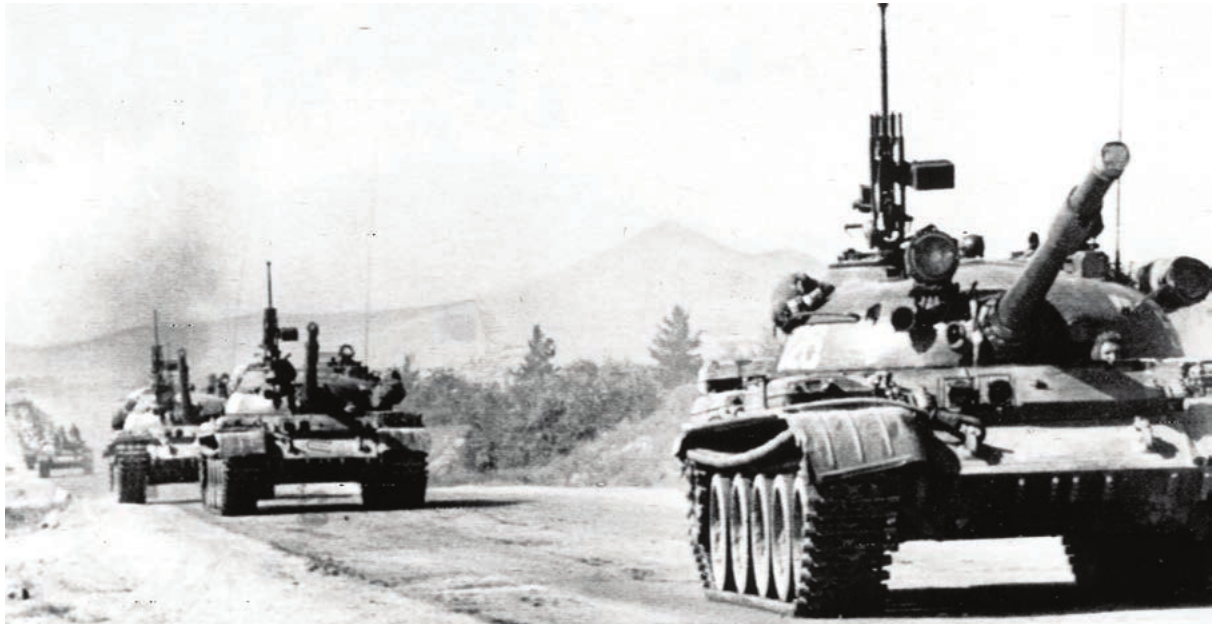
Détente dramatically ended with the Soviet invasion of Afghanistan in December 1979.
The American response was swift:
- President Carter requested postponement of the SALT II Treaty
- Recalled the US ambassador from the Soviet Union
- Enacted economic sanctions against the USSR
- Called for a boycott of the 1980 Moscow Olympics
This marked the end of détente.
Hyping up the Cold War: The Reagan era
At the end of 1980, Ronald Reagan was elected President of the United States, taking office in January 1981. Reagan promised a much more aggressive anti-communist foreign policy.
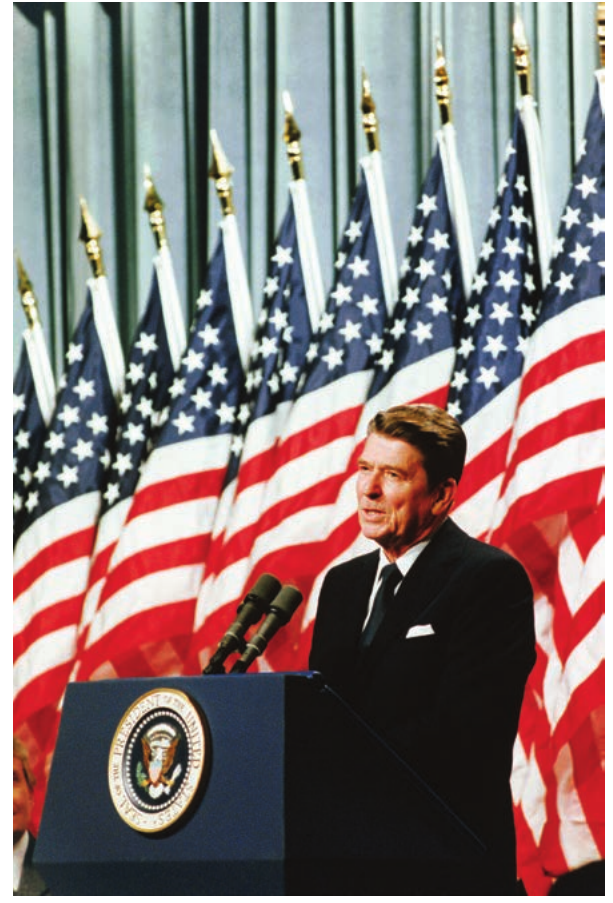
Ronald Reagan was the most right-wing and hawkish president in American history up to that time. During his 1980 election campaign, Reagan made alarming remarks:
- Quoting the Bible to link nuclear weapons to Armageddon
- Promising to build and deploy new nuclear weapons including the B-1 Bomber, Trident submarine and MX missile
- Denouncing Soviet leaders as "monsters" and "godless communists"
Reagan's controversial policies
After becoming President, Reagan pursued controversial policies:
- Dramatically increasing US military spending
- Advocating a missile defence system called "Star Wars", which the Soviet Union believed would enable a first strike in nuclear war
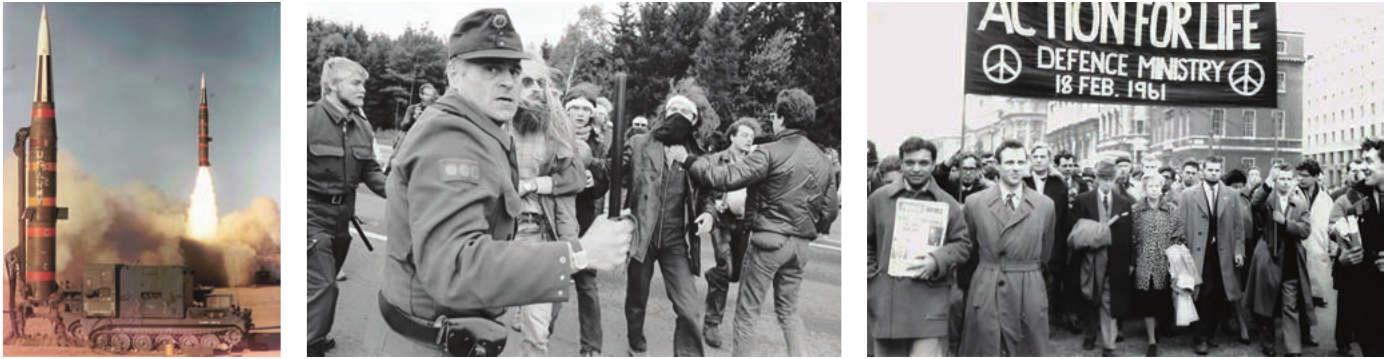
- Beginning deployment of Pershing II missiles in Europe
- Allowing people in his administration to discuss winning a nuclear war
Important
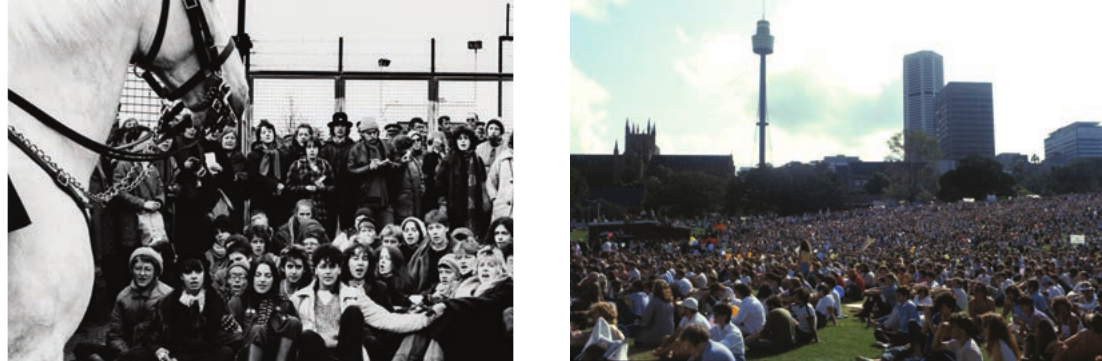
At a time when more than 50,000 nuclear warheads existed worldwide, Reagan's policies alarmed and frightened many people everywhere. His approach energised the nuclear disarmament movement like nothing before. In Europe, the United States and many other countries, the nuclear disarmament movement experienced massive growth.
Nuclear Freeze movement
The Nuclear Freeze movement suddenly appeared at the end of 1981 in the United States. It centred on a simple proposition by Randall Fosberg: the US and Soviet Union should freeze production and deployment of any new nuclear weapons and reverse the arms race.
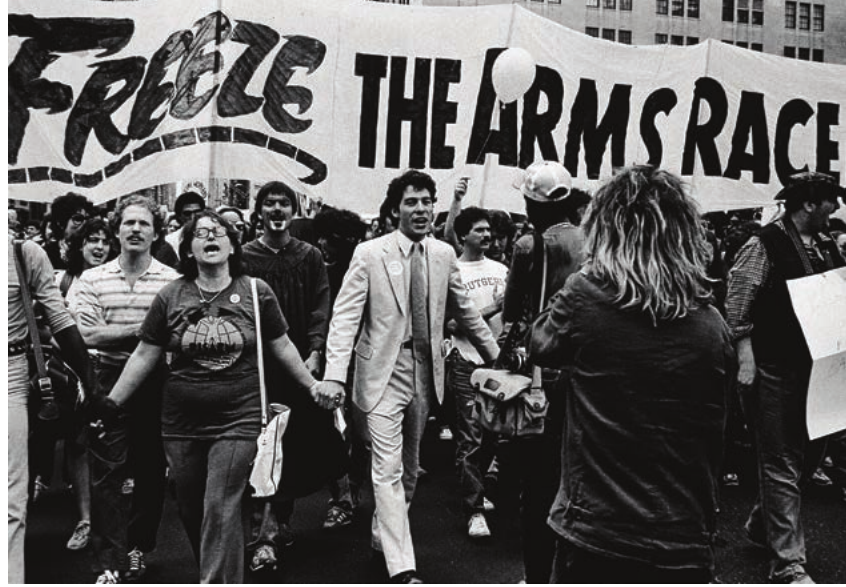
Nuclear Freeze initially began with local initiatives in a decentralised way, but by the end of 1982 it had become a national campaign with 20,000 activists in 40 states. All American peace and disarmament movements eventually focused their efforts on the Freeze.
Scale of the movement
Example
The Historic New York Rally:
On 12 June 1982, one million people marched in New York in the largest political rally ever held in American history, under the banner "Freeze the Arms Race—Fund Human Need". Senator Ted Kennedy led the Freeze campaign in Congress, sponsoring Freeze motions.
By November 1983:
- The Freeze was endorsed by 370 city councils and 71 county councils
- Over 60% of voters supported the Freeze
- Opinion polls throughout 1983 showed an average of 72% support and 20% opposition
- The Freeze delivered petitions from 2.3 million people to the US and Soviet missions at the United Nations
Reagan's response
One reason for the massive support for Nuclear Freeze was President Reagan's aggressive policies and rhetoric. Reagan attacked the Nuclear Freeze movement, calling it "a very dangerous fraud" that was weakening America. He accused Freeze leaders of being communist sympathisers and claimed some were "foreign agents".
Note
Simultaneously, massive antinuclear movements were making headlines in Europe and many other countries worldwide, including Australia. It was in this context that the film The Day After was made. It too was attacked by the Reagan administration.
Summary
Summary
Key Points to Remember:
-
The Cold War began around 1947 with the Truman Doctrine and lasted until 1991, characterised by rivalry between the United States and Soviet Union without direct warfare.
-
The nuclear arms race started in 1949 when the USSR developed its own atomic bomb, leading to competition in developing more powerful weapons like hydrogen bombs (1952-53) and advanced delivery systems like ICBMs (1959).
-
The Cuban Missile Crisis of October 1962 brought the world closest to nuclear war but was resolved peacefully, leading to improved communication and the Partial Test Ban Treaty (1963).
-
Détente (easing of tensions) in the late 1960s-1970s brought treaties like SALT I and SALT II and the Nuclear Non-Proliferation Treaty (1968/1970), but ended with the Soviet invasion of Afghanistan in 1979.
-
President Reagan's election in 1980 marked a return to aggressive anti-communist policies, sparking massive nuclear disarmament movements including Nuclear Freeze, which organised the largest political rally in American history (one million people in New York, June 1982).