The Making of The Day After, Screening, and Controversy (HSC SSCE Modern History): Revision Notes
📚Revision Notes
The Making of The Day After, Screening, and Controversy
Context: the Nuclear Freeze Movement
In the early 1980s, the Nuclear Freeze Movement became one of the largest grassroots campaigns in American history. This movement called for a halt to the nuclear arms race between the United States and the Soviet Union.
The movement achieved remarkable public support:
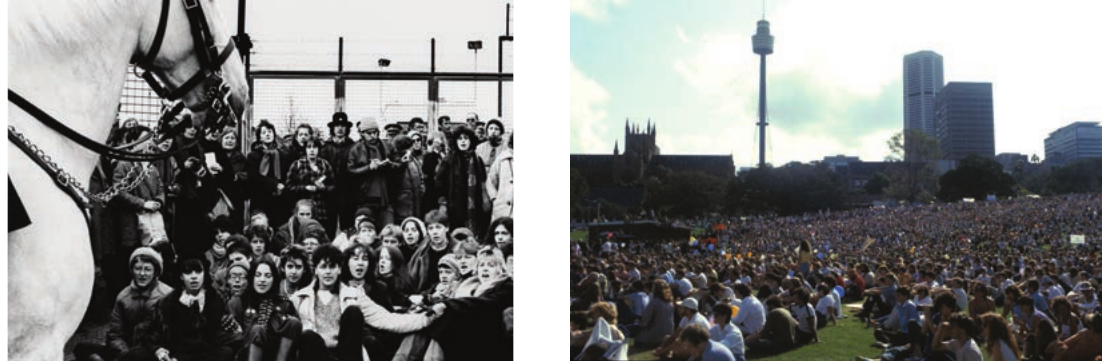
- On 12 June 1982, one million people marched in New York City under the banner "Freeze the Arms race – Fund Human Need" – the largest political rally in American history
- Senator Ted Kennedy led the campaign in Congress
- The movement delivered petitions signed by 2.3 million people to the US and Soviet missions at the United Nations
- By November 1983, the Freeze was endorsed by 370 city councils and 71 county councils
- Over 60 per cent of voters supported the movement
- Opinion polls throughout 1983 showed an average of 72 per cent support with only 20 per cent opposition
Note
This massive support emerged partly in response to President Ronald Reagan's aggressive nuclear policies and rhetoric. Reagan attacked the Nuclear Freeze Movement, calling it "a very dangerous fraud" that was weakening America. He accused Freeze leaders of being communist sympathisers and claimed some were "foreign agents".
It was in this tense political climate that The Day After was created, and the film itself became a target of the Reagan administration.
Jonathan Schell and The Fate of the Earth
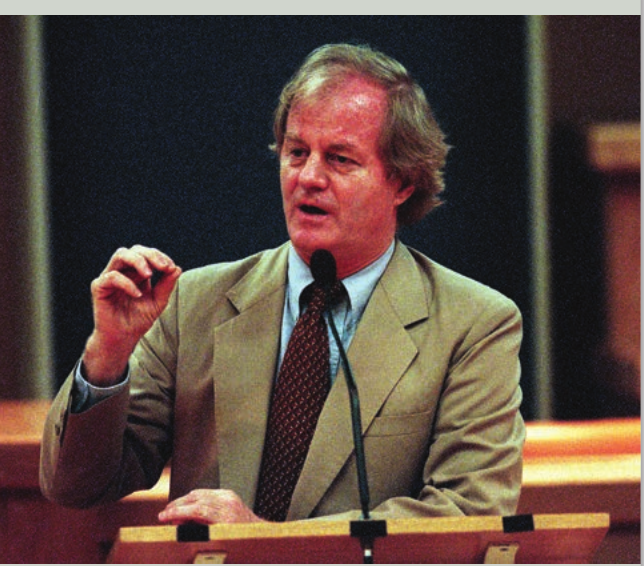
Jonathan Schell (1943-2014) played a crucial role in raising public awareness about nuclear dangers. He first gained attention in 1967 with The Village of Ben Suc, about the destruction of a Vietnamese village during the Vietnam War. However, his most influential work came in 1982 with The Fate of the Earth, which examined the extreme dangers of the nuclear arms race.
The Fate of the Earth remained on The New York Times bestseller list for many months and helped rally ordinary people to the nuclear disarmament movement. In his book, Schell wrote:
Important
When one tries to face the nuclear predicament, one feels sick, whereas when one pushes it out of mind, as apparently one must do most of the time in order to carry on, one feels well again. But this feeling of well-being is based on a denial of the most important reality of our time, and therefore is itself a kind of sickness.
Many felt the book's bleak picture of nuclear war's aftermath was brought to life in the television movie The Day After. For the rest of his life, Schell devoted himself to alerting the public to the threat of nuclear extinction through journalism, teaching, and writing.
His 2007 book The Seventh Decade warned that "the awful facts of nuclear life have repeatedly been taught and learned, only to be forgotten again, in a pattern of boom and bust". According to Schell, only total abolition of nuclear weapons would secure the world's future.
The making of The Day After
The idea
The original concept for the film came from Brandon Stoddard, president of ABC's (American Broadcasting Company's) motion picture division. After watching the 1979 film The China Syndrome, which dealt with a nuclear power plant meltdown, Stoddard decided he wanted to create a film about the effects of nuclear war on the United States.
Note
ABC: The American Broadcasting Company, one of the oldest and largest television networks in the US.
Stoddard aimed to make an apolitical film that would appeal to ordinary Americans. He chose the title The Day After because he wanted the film to focus on the aftermath of a nuclear attack. In an ABC interview, Stoddard explained the film would provide an "unrelenting and detailed view of three nuclear explosions in and around Kansas City, and what the effects might be for average American citizens, far removed from political origins or explanations".
He emphasised it was "not a story of war rooms, hot lines and cabinet meetings, but a drama about ordinary people immediately before, during and after a massive nuclear attack". Stoddard stated: "it is hoped that The Day After will inspire the nations of this earth, their people and their leaders, to find means to avert the fateful day".
In 1981, Stoddard hired Edward Hume to write the screenplay. Hume conducted extensive research, including:
- Interviewing government officials
- Consulting with scientists at the Massachusetts Institute of Technology
- Reading numerous books on nuclear war
- Studying FEMA (Federal Emergency Management Agency) pamphlets on surviving nuclear war
Note
FEMA: The Federal Emergency Management Agency, created in 1978 to coordinate disaster relief. It oversaw civil defence plans in the event of a nuclear attack and provided educational materials.
Important
Nothing Hume read supported the Reagan administration's claims that nuclear war could be survivable. This research profoundly influenced the film's realistic and sobering portrayal.
Hume chose to set the film in Kansas, in the geographic centre of the US. He initially selected the area around Kansas City but later decided on the satellite city of Lawrence (though it was called "Hampton" in early scripts). Lawrence offered better filming locations, including a hospital, football stadium, and surrounding farms on flat countryside. Additionally, Lawrence would be a prime target in a real nuclear war due to the 150 Minuteman missile silos on the city's outskirts.
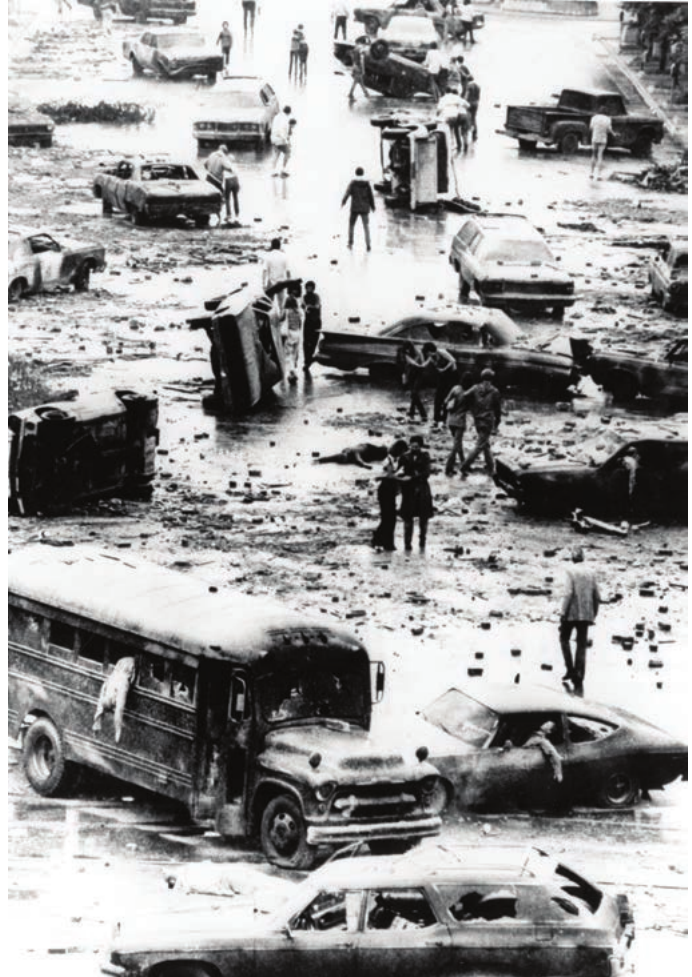
Later, residents of Lawrence requested that the city's real name be used rather than a fictional one. During filming, thousands of Lawrence residents volunteered as extras, and many speaking roles were played by local people.
Production and filming
Nicholas Meyer, who had directed the Star Trek film The Wrath of Khan, was chosen to direct. After several months researching nuclear weapons, Meyer became depressed but also more determined to make the film. From the start, Meyer wanted to present facts about nuclear war rather than create another feature film or disaster movie with famous stars.
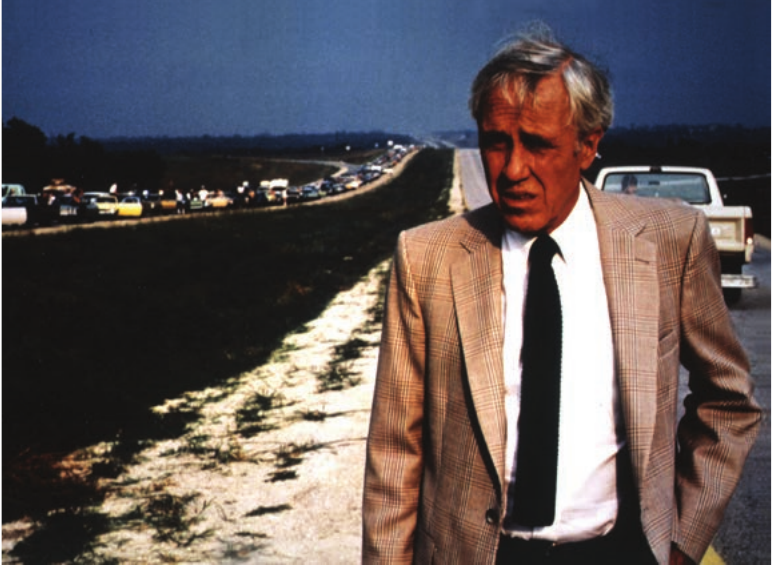
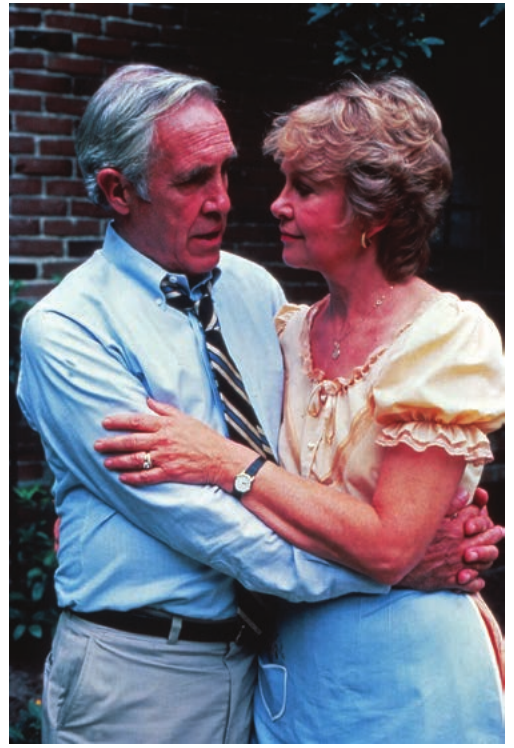
Though Meyer insisted there be no famous TV stars, ABC management demanded at least one recognisable actor. Jason Robards was enlisted to play Dr Oakes, one of the main characters. Robards agreed to participate because he liked the film's social conscience. Meyer was also concerned about potential government and network censorship attempts.
Filming began on 16 August 1982 and lasted six weeks through August and September. The production used:
- Up to 500 extras each day
- A total of 2500 Kansas University students as extras
- Extensive makeup including latex scar tissue and burn marks
- Artificial mud
- Instructions for extras not to bathe during filming days
Meyer understood they couldn't show complete authenticity without alienating viewers. He had seen horrific photographs from Hiroshima, such as images of people with melted eyeballs, but knew he couldn't show such graphic content. As Meyer explained: "My purpose was not to make viewers sick". He wanted to "create reality, but not horror".
Note
However, a disclaimer was added at the film's end stating: "The catastrophic events you have just witnessed are, in all likelihood, less severe than the destruction that would actually occur in the event of a full nuclear strike against the United States".
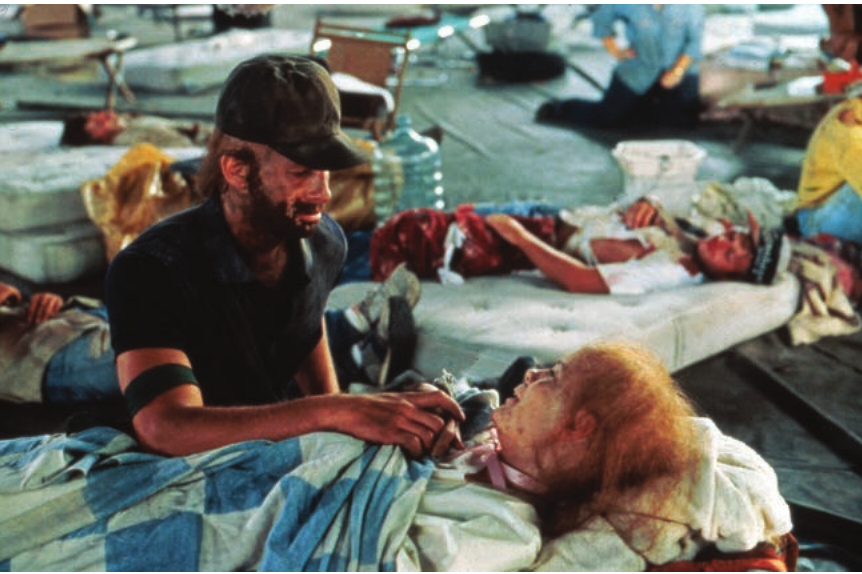
The entire city of Lawrence was mobilised for filming:
- An IGA supermarket was taken over for the panic-buying scene
- A five-kilometre stretch of freeway was shut down for the mass exodus scene with hundreds of cars
- A partly demolished hospital was used for destruction scenes
- Key public buildings, including the football stadium and basketball arena, were used for various scenes
The military refused to allow use of any footage of US nuclear explosions, requiring special effects instead. The production team achieved this by injecting coloured ink into a tank of water and filming it at high speed with an upside-down camera. File footage of fires and disasters from various sources was interspersed with new location footage. The final scene, showing Jason Robards looking out over devastated Kansas City, used a doctored photograph of Hiroshima in 1945 after the bombing.
Filming finished by May 1983, but arguments about editing delayed screening until November.
Editing fights
Originally planned as a four-hour two-part movie, the film was cut down to two hours. This editing process left many personal stories in the second half unresolved. However, as public controversy surrounding the film intensified, ABC management grew increasingly nervous about the remaining content and made significant cuts.
Meyer fought back, demanding that 40 cuts be restored. In the end, management agreed to restore 38 cuts. One excluded scene showed a child having a nightmare about nuclear war.
Important
Meyer refused to compromise on one crucial element: the film would not show who started the war – the US or the Soviets. He made this choice because ultimately it didn't matter; the effect would be the same. Additionally, his research had shown that nuclear war could start accidentally through a computer glitch or to pre-empt an expected enemy attack.
Despite its shortcomings, the finished film was a powerful indictment of the Reagan government's civil defence policies, which claimed nuclear attack was survivable. By showing utter death and destruction, the film brought home the horrible reality of nuclear war. After nine months of post-production editing, the screening was scheduled for 20 November 1983. The controversy then moved from the studio to the nation.
Screening and controversy
Controversy
The pre-screening period for The Day After was unprecedented. For months, spirited debate filled the press, and the film was viewed as a national event. ABC's marketing plan became redundant as press coverage took on a life of its own and became a source of heated community debate. Day after day in the months and weeks before screening, newspapers published articles discussing the film.
Celebrities joined the antinuclear bandwagon to promote the film. Paul Newman and Meryl Streep publicly supported it. Former Democratic presidential candidate George McGovern said: "there is no role for nuclear war. If the film can get that across, maybe it will contribute to world peace".
Nuclear Freeze activists hailed The Day After as shockingly realistic and adopted the film as part of their campaign against the Reagan administration. Peace activists:
- Circulated bootleg copies of the film in the two months before the official screening
- Distributed nuclear disarmament literature to households across the country in the weeks before the screening
Right-wing groups attacked the film as "a two-hour commercial for disarmament". Many Reagan supporters were enraged and staged protests outside ABC offices.
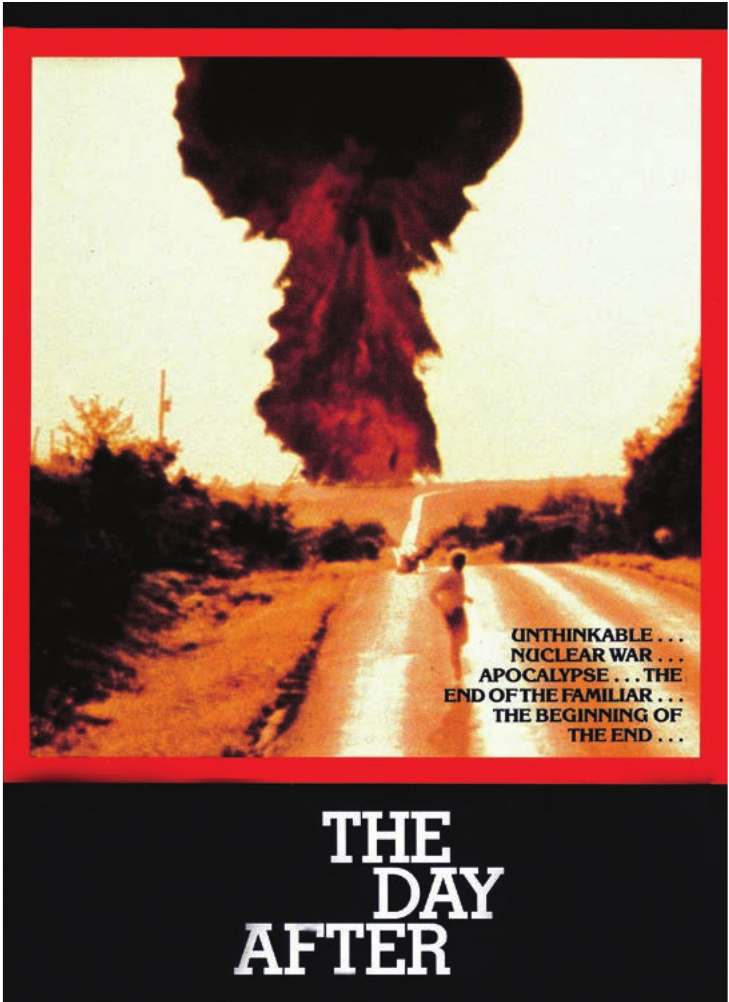
The White House and leading conservatives were upset by the film's message. They objected to:
- The idea of moral equivalence between the "freedom-loving" US and the "evil and totalitarian" Soviet Union
- The underlying message that nuclear weapons themselves were inherently evil
- The contradiction to Reagan administration rhetoric that nuclear war was "winnable" and that America could "bounce back" from nuclear war
Important
The film also made the Reagan administration's civil defence plans seem laughable. In early 1982, Reagan had proposed spending $4 billion on a plan to evacuate major cities before nuclear attack and house refugees in above-ground shelters. Reagan's FEMA distributed leaflets to local authorities declaring that "with reasonable protective measures, the United States could survive nuclear attack and go on to recovery within a few years".
One conservative commentator, TK Jones, even claimed everyone could make their own nuclear shelters by digging a hole in the backyard, taking doors off the house, and covering them with dirt. Combined with the Reagan administration's "peace through strength" policy, belligerent rhetoric towards the Soviet Union, and planned deployment of nuclear-tipped Pershing II missiles in Europe, The Day After seemed like an outright attack on the White House's entire approach to nuclear policy.
Debate escalated, forcing the Reagan administration to comment. Administration spokesman Mr Gregen said the film was "a very powerful graphic, but it leaves unanswered the central question: How do we prevent this from happening?"
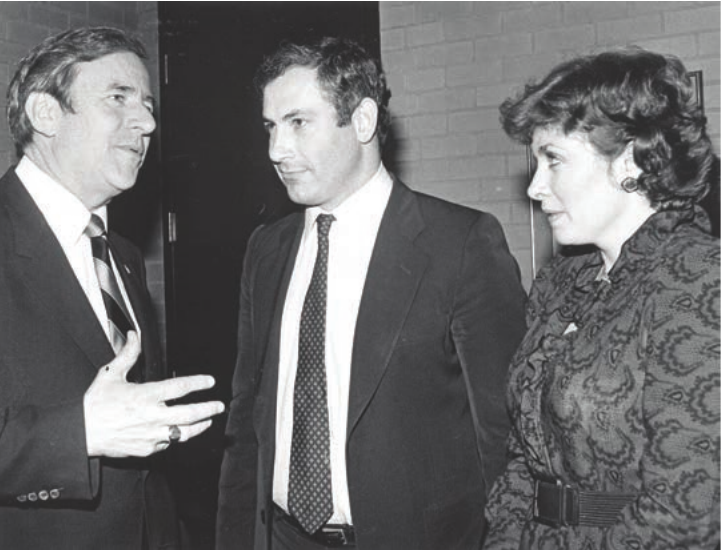
Reverend Jerry Falwell, leader of the Christian right lobby group Moral Majority, demanded air time to offer an opposing point of view and threatened to boycott the 16 companies sponsoring the film. In a speech in Kansas City, Falwell accused the film of being "a pre-emptive strike" in the debate over nuclear weapons. Phyllis Schlafly, representing a pro-family lobby group with 50,000 members, also demanded air time to give a contrasting view to what she called a "two-hour political editorial".
As controversy raged, corporate sponsors dropped away, likely pleasing government supporters. ABC was forced to cut prices for 30-second commercials to bargain rates. Though advertisers got a great deal when the film screened to 100 million people, ABC only broke even after international sales.
In response to attacks, Meyer told Time magazine:
Note
We never intended the film to be a political statement. The movie says simply that war is horrible. That is all it says. This is a very safe statement. The Day After does not advocate disarmament, build-down, build-up, or freeze. I don't want to alienate any viewers.
The ABC's nervousness
All the criticism made ABC management nervous. To head off further attacks, ABC arranged advance screenings for political, religious, and community leaders, and even President Reagan. Publicly, Reagan said he "welcomed the nation-wide dialogue The Day After was anticipated to prompt".
Before the public screening, the film was viewed by the Joint Chiefs of Staff, who sat stony-faced throughout.
Note
Joint Chiefs of Staff: The heads of the army, navy, and air forces, who advise the President on national security matters.
The White House complained about the Reaganesque voice of the President in a scene near the film's end where the President makes an announcement to the nation. In response, ABC changed the voice.
ABC management took extensive measures to deal with the anticipated social impact:
- Set up special 1800 number telephone hotlines manned by hundreds of crisis specialists
- Filmed a disclaimer as a prologue, in which actor John Cullum cautioned parents to use discretion in allowing children to watch
- Commissioned a post-screening national survey of 2000 adults and children to determine the film's impact on children and families
- Printed and distributed half a million copies of a Viewer's Guide to high schools, libraries, and community and religious groups across the US
- Scheduled a special edition of the ABC news program Viewpoint to broadcast immediately following the screening
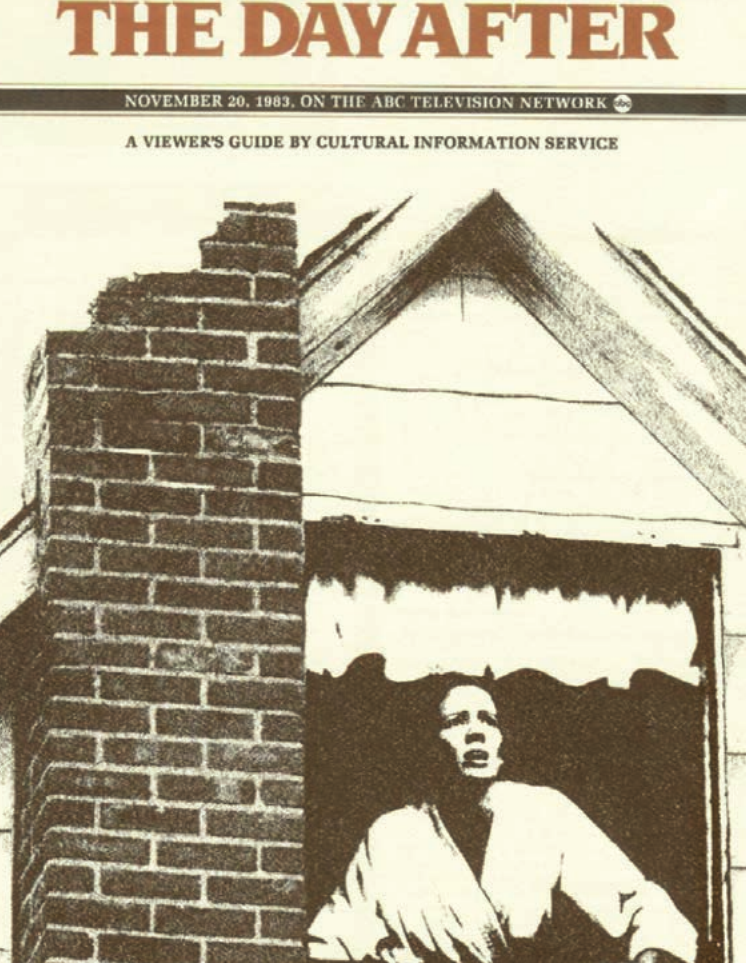
The Viewer's Guide encouraged parents to watch the film with their children.
Teachers' efforts
The upcoming screening of The Day After significantly impacted schools. Many school districts issued warnings to parents, and some sent letters advising parents not to allow children to watch the film. Many school principals were concerned that children might watch the film at home alone.
Teachers and educators responded in two ways:
- Some were motivated by public warnings from educational experts and child psychologists that viewing might be harmful to children, particularly those under 12 years of age
- Others welcomed the opportunity to educate students about nuclear war
Many teachers used the Viewer's Guide to prepare students in advance for the screening and then to debrief them at school on Monday 21 November, the day after.
20 November 1983: the night of the screening
On 12 October 1983, five-and-a-half weeks before its public screening, film-makers gave 2000 Lawrence residents a sneak preview.
On 20 November, the night of the official screening:
- Nearly 40 million households watched the film on 62% of all televisions
- About 100 million viewers watched – a record audience for a made-for-television film
- This was the most watched made-for-TV movie up to that time
Note
Today, similar television events would be lucky to achieve an audience of 20 million viewers.
In most cases, families gathered together to watch the film. Antinuclear groups held "viewing parties" to help mobilise the nuclear disarmament cause. This was truly a national event that provoked worldwide political debate in a way that other similar, and perhaps better, films had failed to do.
The film ended with the following statement:
It is hoped that the images of this film will inspire the nations of this earth, their peoples and leaders, to find the means to avert the fateful day.
Immediately following the film, ABC broadcast a special edition of the news program Viewpoint, hosted by well-known ABC newsman Ted Koppel. The panel guests were:
- US Secretary of State George Shultz (representing the Reagan administration)
- Henry Kissinger (former Secretary of State)
- William F Buckley (leading conservative commentator)
- Robert McNamara (former Defence Secretary under Kennedy and Johnson)
- Carl Sagan (scientist)
- Elie Wiesel (author)
The panel was weighted towards the conservative side. George Shultz attempted damage control, defending the Reagan government's nuclear policies. Unconvincingly, Shultz stated: "the only reason we have for keeping nuclear weapons is to see to it that they are not used".
Henry Kissinger accused the film of being "a very simple-minded notion of the nuclear problem", and William Buckley attacked the film because it "seeks to debilitate the United States".
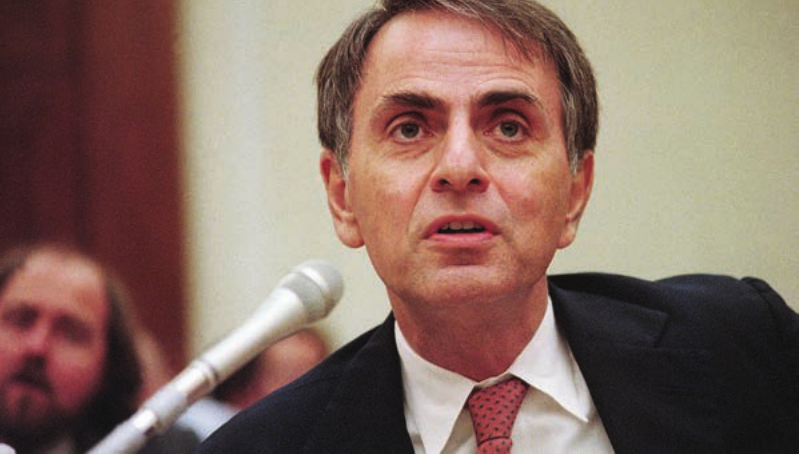
However, Carl Sagan, the only scientist on the panel, introduced Americans to the concept of "nuclear winter". He pointed out that biologists agreed nuclear war would probably result in human extinction.
Note
Nuclear winter: The scientific theory that all the firestorms created by even just a hundred cities hit with nuclear bombs will send so much soot and debris into the atmosphere that the sun will be blocked out for months, resulting in plummeting temperatures that in turn will destroy all agricultural production.
Sagan explained:
Important
The "nuclear winter" that will follow even a small nuclear war, especially if cities are targeted, as they almost certainly would be, involves a pall of dust and smoke which would reduce the temperatures not just in northern and mid latitudes, but pretty much globally to sub-freezing temperatures for months. In addition, it's dark, the radiation is much more than we've been told before. Agriculture will be wiped out, and it's very clear that beyond the one or two billion people who would be killed directly in a major nuclear war – five to seven thousand megatons, something like that – that the overall consequences would be much more dire and the biologists who have been studying this think that there is a real possibility of the extinction of the human species from such a war.
Even more controversially, Carl Sagan used a disturbing analogy to explain how nuclear deterrence worked:
Example
Carl Sagan's Gasoline Room Analogy:
Imagine a room awash in gasoline, and there are two implacable enemies in that room. One of them has 9000 matches. The other has 7000 matches. Each of them is concerned about who's ahead, who's stronger. Well, that's the kind of situation we are actually in. The amount of weapons that are available to the United States and the Soviet Union are so bloated, so grossly in excess of what's needed to dissuade the other, that if it weren't so tragic, it would be laughable. What is necessary is to reduce the matches and to clean up the gasoline.
After the screening that night, candlelight vigils were held in many places, particularly in Kansas City and neighbouring areas. In Lawrence, Kansas, 5000 people congregated for a candlelight vigil at which the mayor said: "I did not want this film to be a preview of coming attractions. We must not wait till the day after". A number of rallies and forums were held around Lawrence over the following days.
Summary
Key Points to Remember:
-
The Day After was created during the height of the Nuclear Freeze Movement, when over 60% of Americans supported halting the nuclear arms race.
-
The film was conceived by Brandon Stoddard of ABC to show the realistic effects of nuclear war on ordinary Americans, intentionally avoiding political war room scenarios.
-
Filmed in Lawrence, Kansas, with 2500 local students as extras, the production deliberately toned down the horror of nuclear war while still including a disclaimer that the real effects would be worse.
-
The Reagan administration and conservative groups attacked the film as a "two-hour commercial for disarmament" and threatened to boycott sponsors.
-
On 20 November 1983, approximately 100 million Americans watched the film – the most-watched made-for-TV movie of its time – followed by a Viewpoint panel discussion where Carl Sagan introduced the concept of "nuclear winter" to the American public.