The Rise of the Chinese Communist Party (CCP) (HSC SSCE Modern History): Revision Notes
📚Revision Notes
The Rise of the Chinese Communist Party (CCP)
Introduction
While the Guomindang (GMD) was experiencing revival, the Chinese Communist Party (CCP) was born and began to grow. The CCP initially enjoyed success and benefited from support from both the Soviet Union and Sun Yixian. However, it soon faced violent and unrelenting opposition from Nationalist forces.
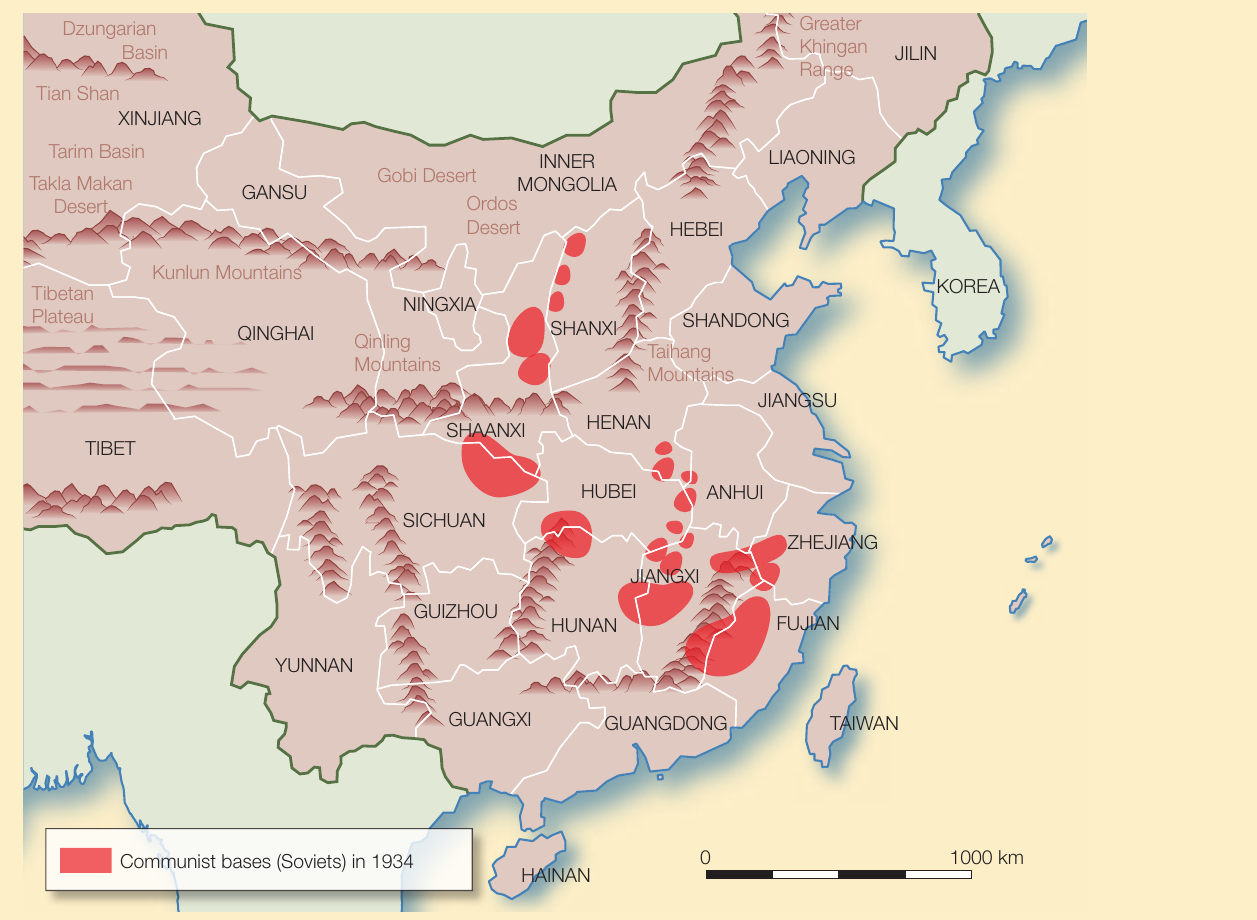
Following the collapse of the brief First United Front with the GMD and massacres in the cities, elements of the CCP took refuge in mountainous rural areas. Here they established soviets (the Russian word for 'council').
Note
What were Soviets?
Soviets were local councils or revolutionary governments established by communist forces in rural areas. The term comes from the Russian word meaning 'council' and was adopted by Chinese communists to describe their base areas of control.
The most famous of these was the Jiangxi Soviet, established by Mao Zedong. Eventually, the Central Committee of the CCP moved to this soviet, though they initially displaced Mao as leader.
The ideology behind the CCP
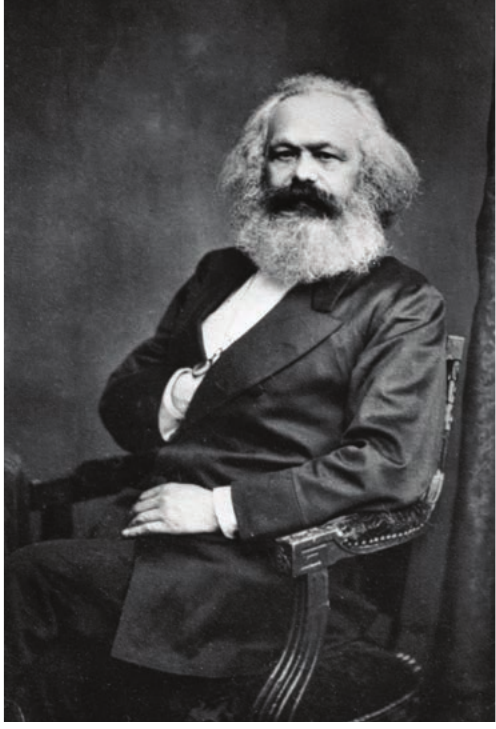
The theoretical foundation of communism comes from The Manifesto of the Communist Party, published by Karl Marx and Friedrich Engels in 1848. This influential text argued that all history represents a story of class struggle, and that a series of revolutions would eventually bring about a classless society.
The stages of revolution
According to Marxist theory, society would progress through three final revolutionary stages:
Note
The Three Revolutionary Stages
The capitalist revolution
In this stage, the middle classes (capitalists or the bourgeoisie) overthrow the aristocracy. They would then create and exploit the urban working classes (the proletariat, who were formerly peasants) through factories, mines, shops and banks.
The socialist revolution
During this stage, the working classes overthrow the capitalists. The government would then run industry on behalf of the workers.
The communist revolution
In the final stage, the workers overthrow the government itself, and a classless, communal society emerges.
Adaptations of Marxist theory
Marx and Engels believed the French Revolution of 1789 was a capitalist revolution. They viewed the failed revolutions of 1848 as attempts at the next stage. Traditional Marxist theory taught that socialist revolutions were inevitable, would be led spontaneously by urban working classes, and would spread across the world.
However, Marxism was adapted by different revolutionary leaders:
- Vladimir Lenin (Russian) accelerated the revolution by using a professional vanguard of revolutionaries rather than waiting for spontaneous uprising
- Joseph Stalin introduced the concept of 'Socialism in One Country', focusing on consolidating socialism in the Soviet Union whilst patiently 'exporting' revolution elsewhere
- Mao Zedong made the crucial variation of identifying peasants, rather than urban workers, as the revolutionary class
Important
Mao's Critical Adaptation
This last adaptation would prove particularly significant for China, where the vast majority of the population were peasants rather than industrial workers. This represented a fundamental departure from orthodox Marxist theory, which emphasized the urban proletariat as the revolutionary class.
How Marxism entered China
The 1911 Revolution and the May Fourth Movement of 1919 encouraged new ideas, particularly from Western sources. The writings of Marx and Engels had been translated into Chinese. Additionally, the Bolshevik Revolution in Russia (1917) and Lenin's establishment of the Comintern helped promote Marxism in China. These factors proved inspirational for certain academics at Beijing University, which had become a centre for new ideas.
Key founding figures
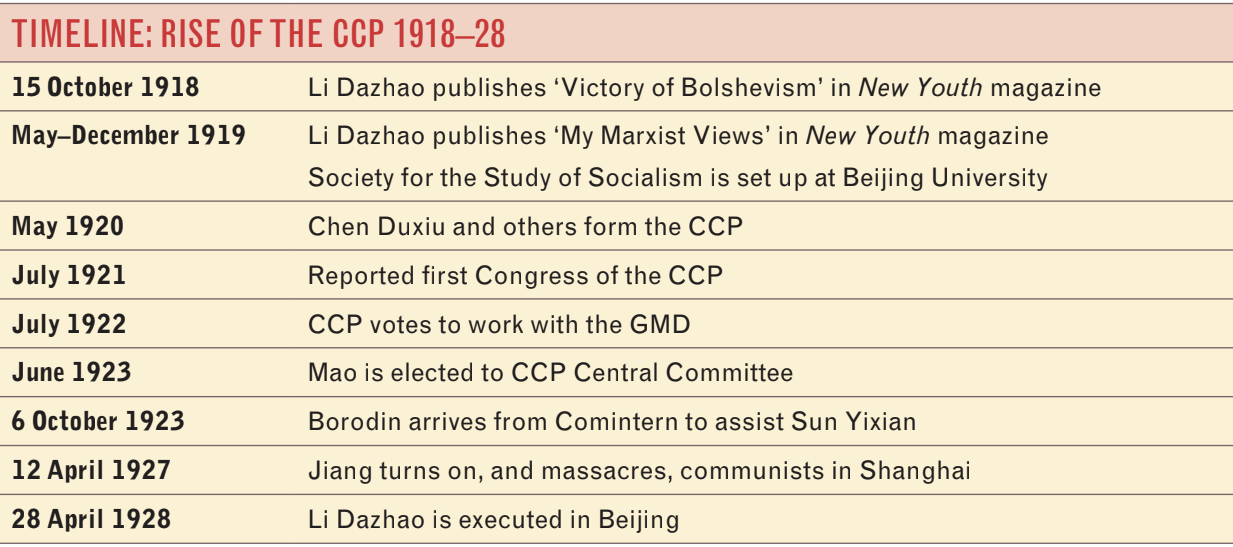
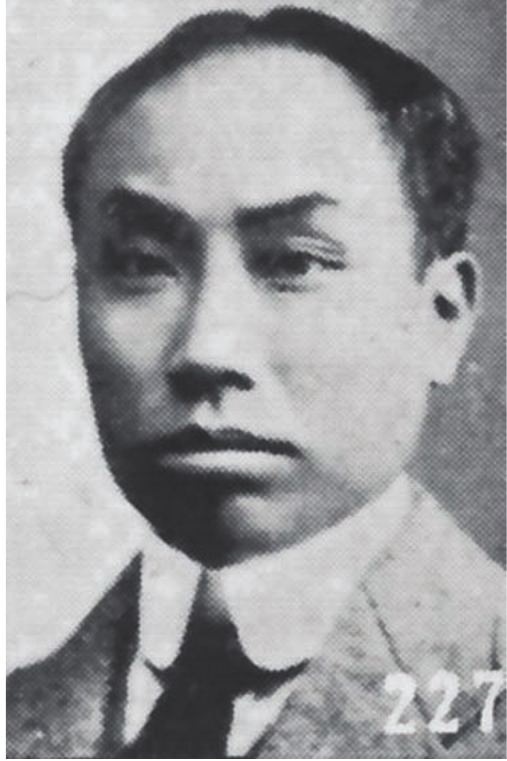
Li Dazhao, the librarian at Beijing University, began a Marxist study group in 1918. His assistant, Mao Zedong, and Chen Duxiu were among those converted to communist ideas. With help from Comintern agent Grigori Voitinsky, Li and Chen established the CCP.
Note
The Founding Date Controversy
The party is believed to have held its first meeting of 12 or 13 delegates in Shanghai in 1921, in the French Concession. However, there is some controversy about whether 1921 was indeed the first meeting, with some historians (including Jung Chang and Jon Halliday) believing the initial meeting was in 1920.
Early divisions
The party was not strongly united from the start. Li's base was in Beijing whilst Chen's was in Guangzhou. The expression 'Nan Chen, Bei Li' ('Southern Chen, Northern Li') summed up this geographical divide.
More crucially, there was an ideological divide. Chen held an orthodox view of Marxism, believing the proletariat would lead the revolution. Li believed the peasants could be the vanguard. Whilst Chen's orthodox view dominated the party initially, Li's view greatly influenced his assistant, Mao Zedong. This would have profound implications for the future direction of Chinese communism.
Many men who later rose to prominence in the CCP were either studying in Paris and became converts to communism (such as Zhou Enlai and Deng Xiaoping) or were existing members who went to the Soviet Union for training (such as Liu Shaoqi).
The CCP-GMD alliance (First United Front)
Under orders from the Russian Comintern, the newly founded CCP was instructed to cooperate with the re-emerging GMD, which was also receiving assistance from the Soviet Union. This alliance resulted directly from negotiations between Comintern agent Adolf Joffe and Sun Yixian in 1922.
Sun held firm on two important matters:
- CCP members were to join the GMD, not vice versa
- His Three Principles were not to be replaced by communism
Note
Conflicting Agendas
Sun hoped the CCP would soon be absorbed into the GMD, whilst Moscow hoped the CCP would, like a parasite, eventually dominate its host. This fundamental disagreement about the alliance's purpose would eventually lead to its collapse.
Communist influence within the GMD
The most powerful body in the new GMD was the Central Executive Committee. Three of its 24 regular members were communists. Communists were well represented in other key bodies of the GMD as well. Significantly, the deputy head of the Huangpu Military Academy's Political Education Department was Zhou Enlai. The communists remained within the GMD until the Shanghai Massacre of 1927.
The CCP after the Shanghai Massacre
With Jiang Jieshi severing ties with the CCP in brutal fashion, the communists became increasingly reliant on the Russian Comintern for direction. They briefly allied with the left wing of the GMD in Wuhan, but eventually split and set up headquarters in Jiujiang in Jiangxi Province.
Back in Russia, Stalin (anxious to prove his strategic skills to his rival Trotsky) ordered a series of communist uprisings in key Chinese cities. The Nanchang uprising of 1 August 1927 proved that the CCP could not hold onto the cities. CCP soldiers fled to border areas for safety, setting up soviets or mini-communist governments.
Note
Leadership Changes Under Pressure
Chen Duxiu, who led the CCP at that time, had to shoulder the blame. The task of organising further revolts fell to the new CCP leader, Li Lisan. The Red Army was placed under the command of Peng Dehuai. In 1930, he was ordered to take the capital of Hunan Province, Changsha. He succeeded but could only hold it for three days before fleeing with the remnants of his forces to the Jinggang Mountains (Jinggangshan) in Jiangxi.
The role of Mao Zedong
Influenced by Li Dazhao, Mao Zedong was quick to embrace the idea of a peasant-led revolution. In September 1927, he had been directed by the party to lead an uprising in Hunan Province, which became known as the Autumn Harvest Uprising.
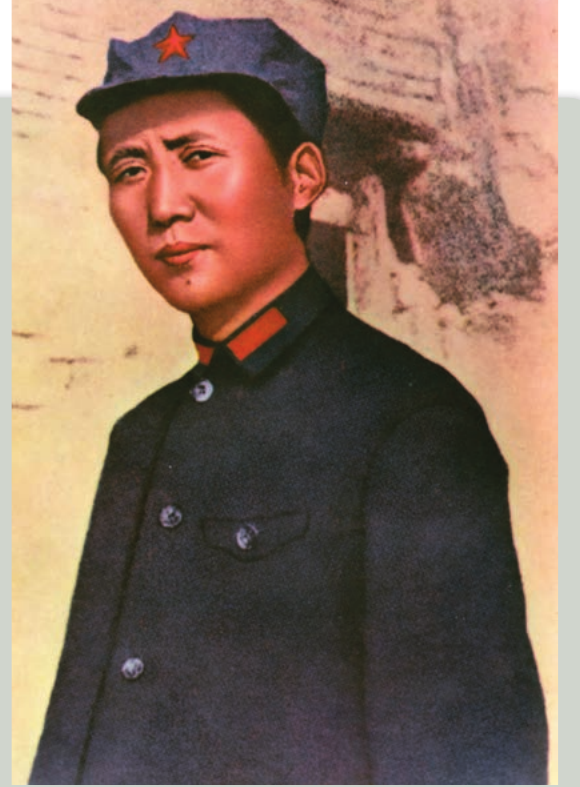
It was initially successful but was soon crushed. However, Mao was inspired by the ferocity of the Hunanese peasants. His investigation of the peasant movement in Hunan led him to write a famous report emphasising the revolutionary potential of the peasantry.
In his report, Mao challenged the prevailing attitudes towards peasants within the revolutionary movement. He observed that many in the party dismissed or feared the peasant movement, but he saw it as an unstoppable force:
Example
Mao's Vision: The Revolutionary Power of Peasants (1927)
In his famous report on the peasant movement in Hunan, Mao wrote:
In a very short time, in China's central, southern and northern provinces, several hundred million peasants will rise like a mighty storm, like a hurricane, a force so swift and violent that no power, however great, will be able to hold it back.
This represented Mao's crucial diversion from orthodox Marxism, placing peasants rather than the urban proletariat as the revolutionary vanguard.
The rise of Maoism: The Jiangxi Soviets
After the failed uprising, Mao and his soldiers escaped and established a soviet in Jinggangshan (Jiangxi Province). They struck a bargain with local bandits, who then joined his Red Army. He was joined by Zhu De in January 1928, who was retreating from the Changsha failure.
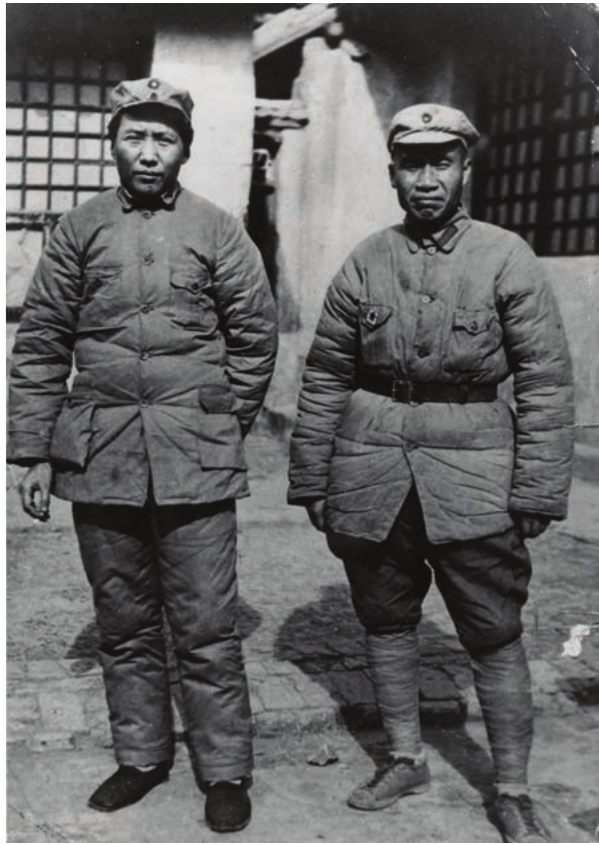
Together, they became a formidable pair, fused under the collective name of Zhu-Mao. Their combined force of 10,000 soldiers became the Fourth Red Army. Mao was the political leader whilst Zhu was the military commander.
By July, they were under GMD pressure, so they moved to south-east Jiangxi where they re-established the Jiangxi Soviet in the mountains near the Fujian border. Ruijin became the new capital.
Changes in CCP leadership
Stalin's policy in China was failing and scapegoats were needed. First, it was Chen Duxiu, who was removed as leader. After Peng Dehuai's failure at Changsha, Li Lisan was criticised and then removed. This left leadership of the CCP to the 28 Bolsheviks (those trained by Moscow) under the guidance of Wang Ming and Bo Gu.
Meanwhile, the only places where communism was thriving or surviving were in the rural soviets, of which the Jiangxi Soviet was predominant. By virtue of this soviet's remoteness and the fact that it had its own army, it was able to survive when party cells in the cities suffered. Even Moscow was forced to recognise the achievements of the Jiangxi Soviet, whilst still criticising Mao's deviant line.
Reforms in the Jiangxi Soviet
In the Jiangxi Soviet, Mao and Zhu implemented radical land reforms and changes. The Red Army was placed under political control and the soldiers were educated in communist politics. Part of that training was for them to consider themselves as an army for the people.
Important
Breaking with Tradition
Traditionally, armies in China looted and ransacked any villages they passed through. To change this, their commander Zhu De drew up the Red Army Rules of Conduct. These emphasised respect for the people and their property.
The rules included:
- Prompt obedience to orders
- No confiscations from poor peasants
- Being courteous and polite to the people
- Paying for all articles purchased
- Returning all borrowed articles
- Replacing all damaged articles
Note
Zhu De's Military Tactics
Zhu's military tactics were summed up in four principles:
When the enemy advances, we retreat. When the enemy halts and encamps, we harass them. When the enemy seeks to avoid battle, we attack. When the enemy retreats, we pursue.
These guerrilla warfare principles would become fundamental to CCP military strategy.
Mao and Zhu also began a land redistribution programme. At first, it was severe on landlords and other landowners but, after a while, it was moderated to avoid scaring off poorer peasants as well. Mao was later criticised for this more moderate view.
Why was Mao moved aside?
Following the massacre of CCP members in Shanghai in 1927 and the failure of CCP uprisings in various cities, the Communist Party executive (the '28 Bolsheviks') were forced to retreat to Mao's Jiangxi Soviet to take stock and work out how to rebuild the party's programme.
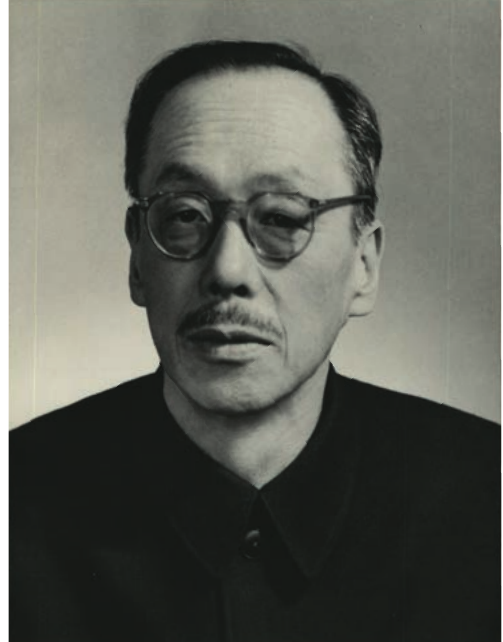
Whilst Mao retained his title as Chairman of the Soviet Republic, he was not, by 1934, included in the Politburo (the chief policy-making body of the CCP). He was replaced by Zhou Enlai as political head of the Red Army. Zhou took military advice from the Comintern representative, Otto Braun (who was given the Chinese name of Li De).
Note
Mao was now only a figurehead. By July 1934, he was confined to a house in the town of Yudu, where he spent his time recovering from malaria and calculating how he could be included in the approaching Long March.
The Long March and its consequences (1934-36)
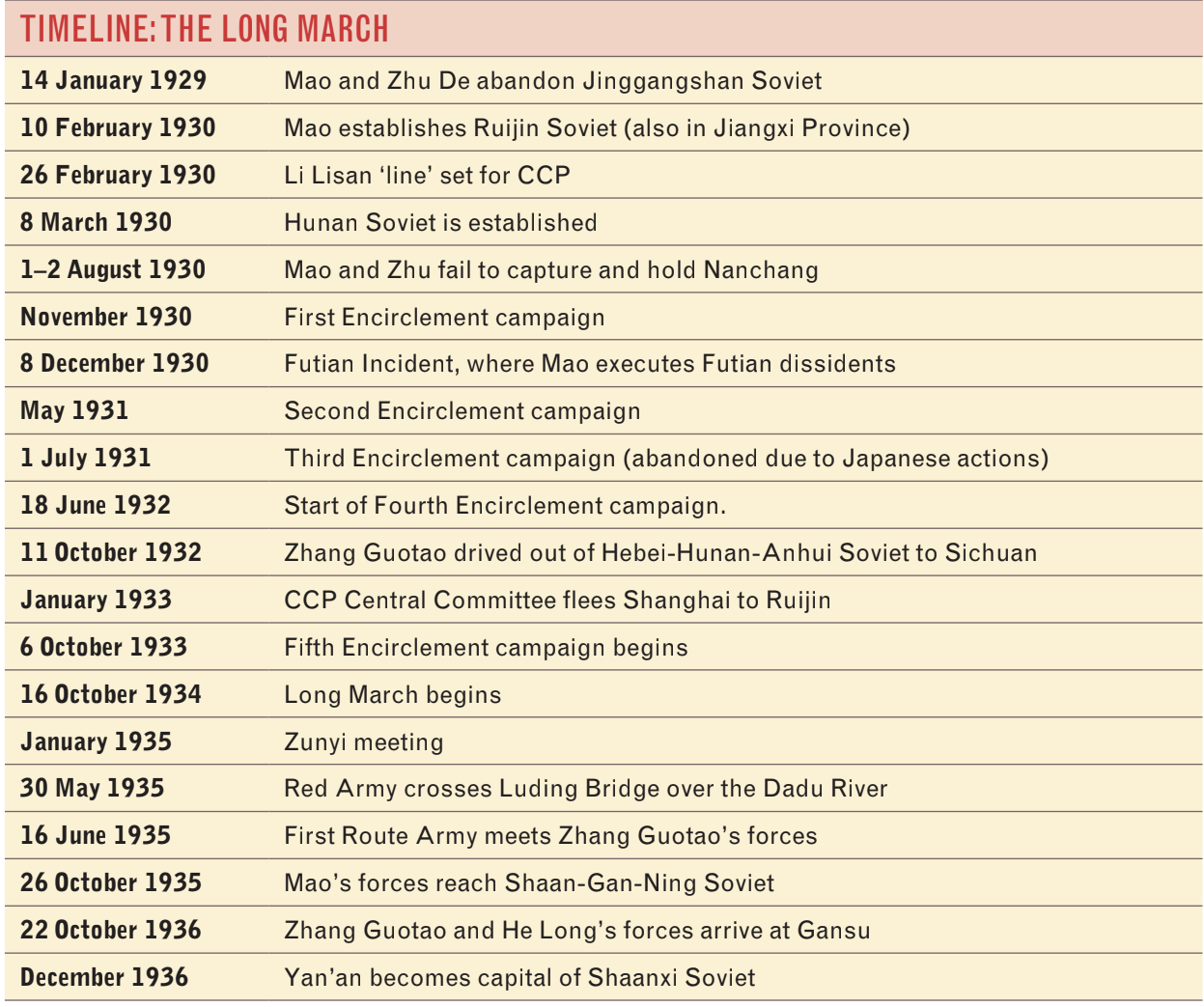
The famous Long March, where the CCP fled from GMD armies, has been seen by the CCP and many historians as an example of a military loss being converted into victory. It was certainly a victory for Mao, as it enabled him to regain control of the CCP.
The Encirclement Campaigns
Jiang Jieshi turned his back on the growing menace of the Japanese armies in the north and was determined to extinguish the CCP once and for all. In particular, he was determined to destroy the Jiangxi Soviet.
The first four campaigns (1930-33)
The initial three campaigns were launched against the soviets, especially the key one based in Jiangxi. The first two campaigns were military failures, as GMD forces could not cope with communist guerrilla tactics. The third campaign in July 1931 was led by Jiang himself with 130,000 soldiers, but the invasion of Manchuria by Japan forced him to halt the attack. The fourth campaign in 1933 saw Jiang launch a force of 153,000 against the soviets, but Japanese encroachment, defections, and Red Army tactics tested the GMD forces.
The Fifth Encirclement Campaign (1934)
With help from German military advisers (von Falkenhausen and von Seeckt), an army of 700,000 men, supported by aircraft and using a blockade approach, the Fifth Encirclement Campaign strangled and starved the soviets. The key target this time was the Ruijin Soviet.
Important
The Human Cost
According to Edgar Snow, the siege resulted in over 60,000 Red Army casualties, with estimates of about 1,000,000 people killed or starved to death in the process of recovering Soviet Jiangxi.
Who went on the breakout?
The decision was made to break out of the Jiangxi Soviet. The destination at the time was unclear. Not everyone could go. Except for a remnant of soldiers to 'defend' the soviet, the Red Army went. The leaders went. Boys who were mobile also went.
Of the 80,000-100,000 marchers, only 30-35 women went. Most were wives of officials, with 11 other women included to make the 'wife factor' less blatant. Women, children and the wounded stayed behind to suffer the retribution of GMD troops. Mao's brother, Mao Zetan, was left behind and was killed.
Note
What Each Soldier Carried
Each evacuating soldier carried:
- A rifle
- A quilt
- A mug
- Chopsticks
- 10 days' rations of rice
- Spare sandals
- A needle and thread placed in his cap
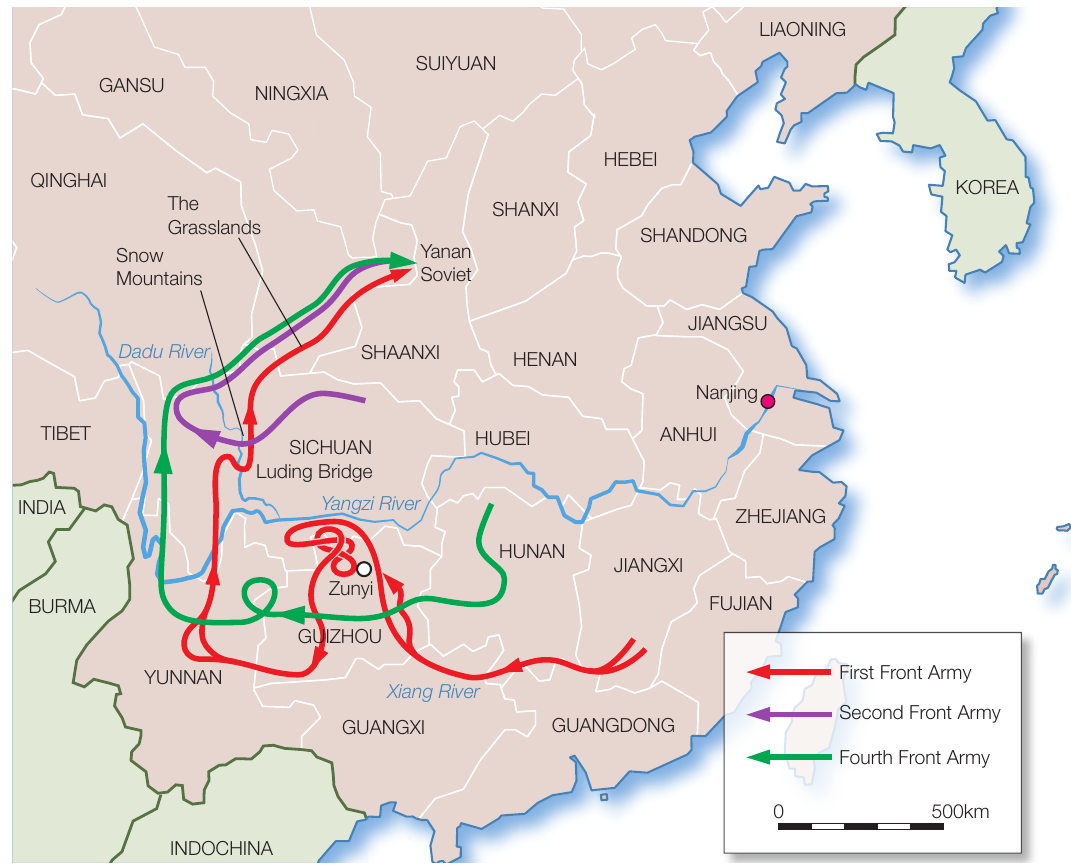
In two columns which joined at the rear, they broke through the triple encirclement and headed for the Xiang River.
The Xiang River crossing
After 500 kilometres and ten battles, the Red Army reached the Guizhou border with only 45,000 men left. The best estimations suggest 15,000 were killed at the Xiang River crossing, leaving 30,000 absences unexplained.
Note
Some historians suggest many deserted at this point, as these men did not know they were going so far away from their families (who they had left behind at extreme risk).
The Zunyi meeting: Mao rises from the ashes
In Guizhou Province, the Red Army approached and captured Zunyi. If you check the map, you'll notice the route doubles upon itself after Zunyi, goes back to the city, and then heads south before resuming a westerly direction. This has been presented as an illustration of a change of tactics reflecting a change of leadership.
The official Maoist view is that the Zunyi meeting (January 1935) triumphantly put an end to the domination of the 'Left' line in the central leading body of the Party and inaugurated a new central leadership with Mao at its head. According to this view, Mao, with the support of Zhou Enlai, Zhu De and others, resumed leadership of the party. Then, using unpredictable routes, he was able to make it more difficult for Jiang's armies to catch them.
Note
Alternative Historical Interpretation
However, some historians present a different view. Jung Chang and Jon Halliday argue that Mao was not made chief of either the Party or the army at Zunyi, but he did achieve one critical breakthrough: he became a member of the Secretariat, the decision-making core.
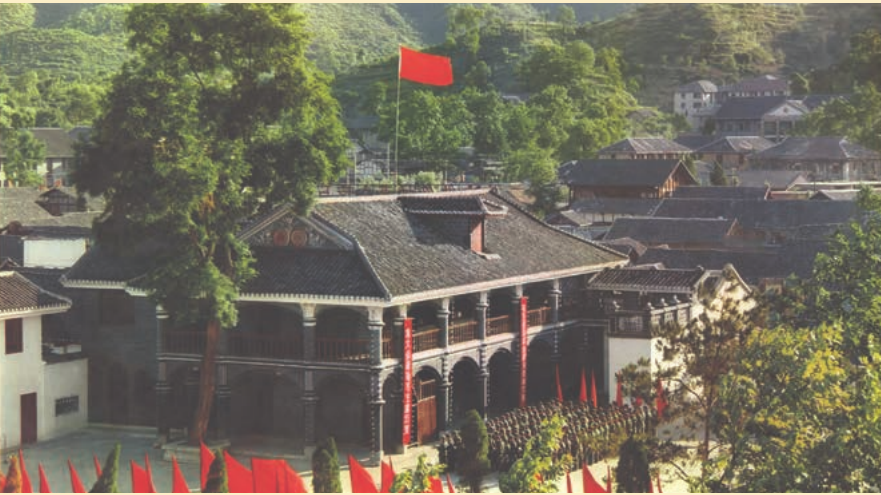
Either way, Zunyi did see Otto Braun removed from command and it did mark the resurrection of Mao as a political force.
The Luding Bridge crossing
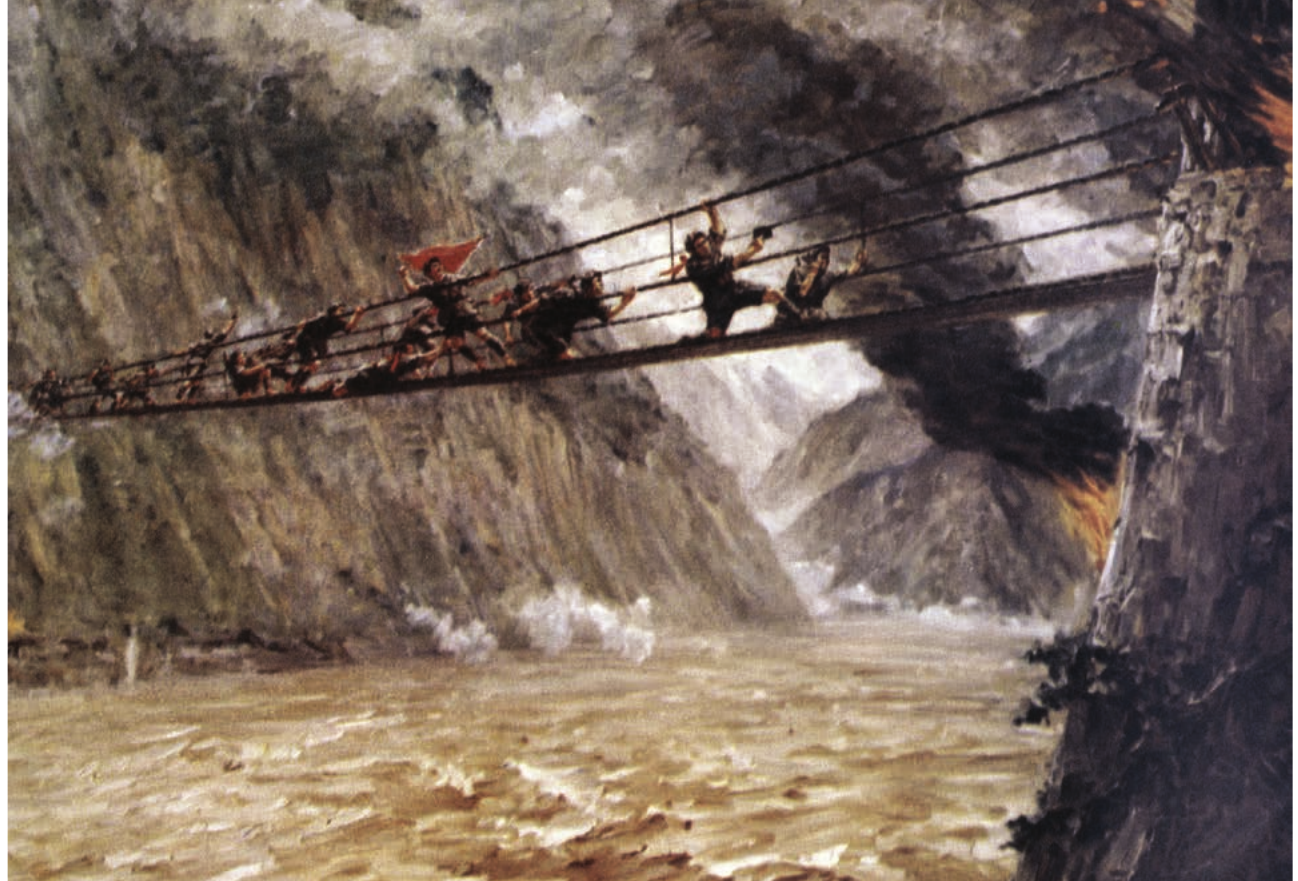
Perhaps the most vivid image of the Long March is the crossing of the Dadu River over the Luding Bridge. The Luding Bridge was constructed from 13 huge chains strung 100 metres across the Dadu gorge.
Example
The Legend of Luding Bridge
The legend tells of 22 volunteer Red Army soldiers led by Commander Liao crawling across chains and through fire whilst under heavy machine gun fire, with some falling into the river valley below. The legend emphasises not just the heroism of these men but the vital nature of their task. A failure to cross the bridge would have meant the Red Army would have been bottled up and annihilated south of the Dadu River.
However, accounts by Long Marchers are less dramatic than the propaganda versions. They mention fighting through flames and street fighting but do not describe soldiers falling from the chains under machine gun fire. This suggests the accounts were glamorised for propaganda purposes.
On the mountains and in the marshes
After the Dadu River, the obstacles encountered were more likely to be geographical than military. Ahead of the Red Army were the Snow Mountain Ranges. They were within 150 kilometres of their comrades in the Fourth Route Army led by Zhang Guotao, but it would take them seven weeks to traverse the mountains.
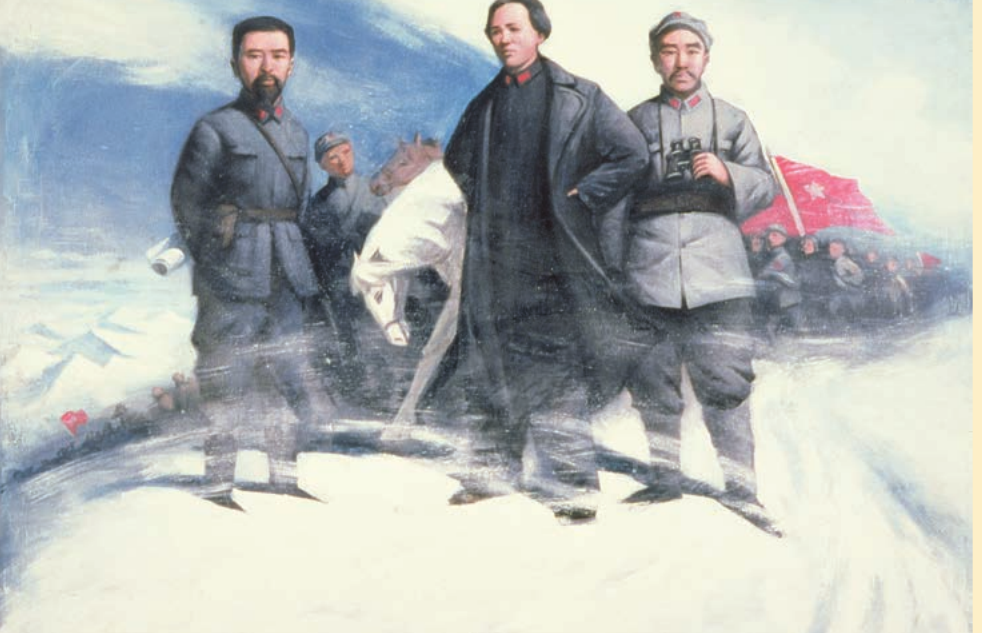
Many soldiers grew up in semi-tropical Jiangxi and their sandals and clothing proved woefully inadequate. They had seven ranges to cross, with the highest peak at 4,800 metres.
Heavily depleted in numbers, the First Route Army eventually met up with the Fourth Route Army. The latter were greater in numbers and were fresher, due to their shorter journey from their base in Sichuan. There was a falling out between Mao and Zhang Guotao. Zhang headed west whilst Mao continued north to Shaanxi.
Important
The Deadly Grasslands
The route chosen by Mao meant crossing the high-altitude grasslands on the eastern border of Tibet. Before even reaching the grasslands, they were often ambushed by nomadic herdsmen. The grasslands were, in fact, marshes with no inhabitants, no perceptible paths and almost no food supply. The evenings were freezing cold. Soldiers often had to sleep sitting back-to-back to avoid sinking to their deaths. In the mornings, some soldiers would not stir as they had frozen to death. For many Long Marchers, this was the worst stage of the journey.
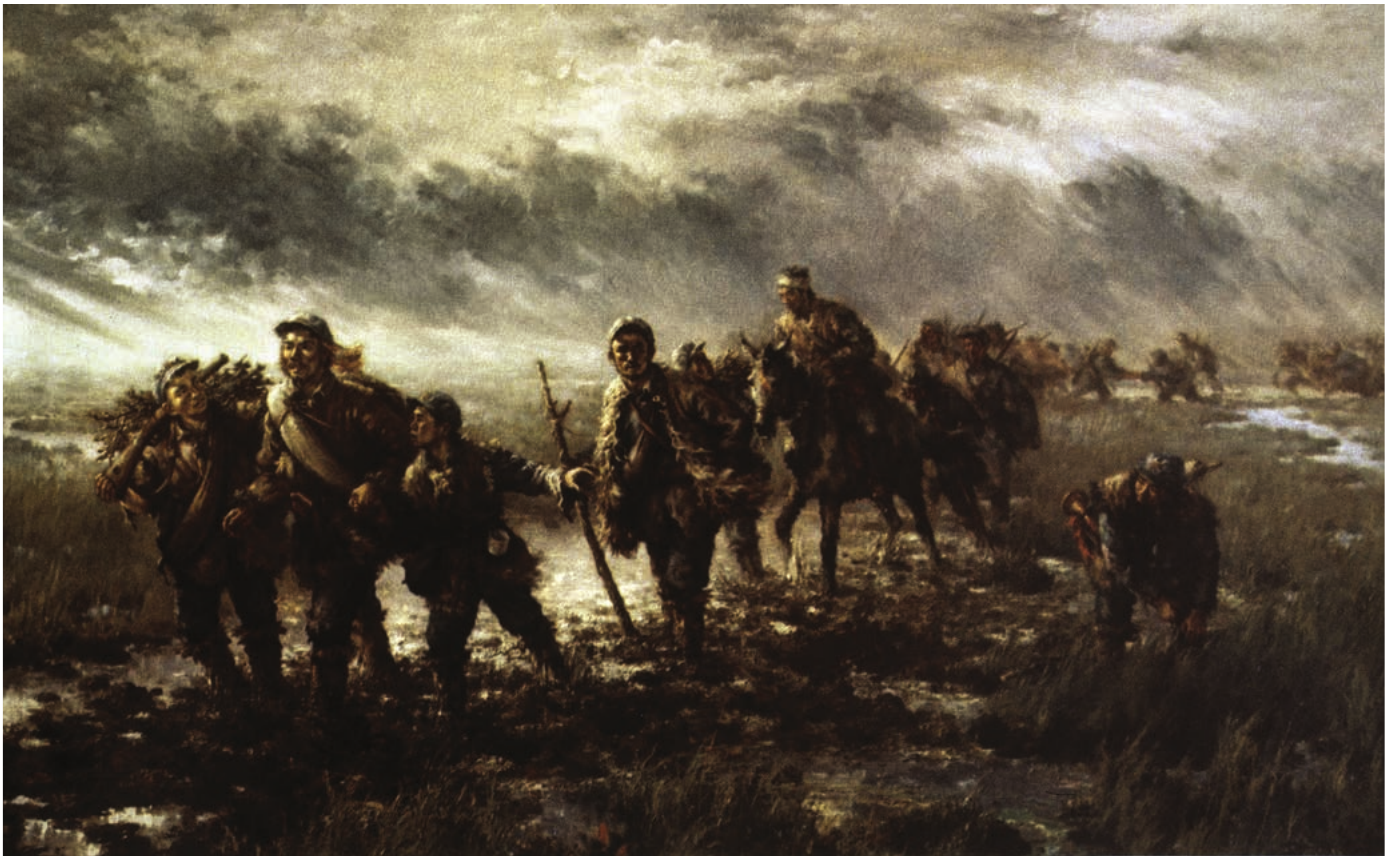
They emerged from the grasslands and continued towards the Shaanxi Soviet. The final obstacle was a battle at Lazikou, a narrow pass in the mountains. In late October 1935, Mao's weary remnant of the First Route Army straggled into Shaanxi to be welcomed by local Soviet leaders. It was a year before the Second Route Army under He Long and the Fourth Route Army led by Zhang Guotao joined the others in Shaanxi. In 1936, the Long March concluded and a new base was established in the town of Yan'an (Yenan). Zhang Guotao soon realised he could not suffer Mao being the leader and defected to the Nationalists (GMD).
Verdict on the Long March
Of the 80,000-100,000 who set out from Jiangxi, only 10,000 straggled into Shaanxi under Mao. Perhaps one-third of these were recruited along the way. So, about one soldier in 10 finished the journey. From one perspective, this was a colossal defeat.
However, the positives for Mao's CCP were:
- They survived
- Mao became undisputed leader of the CCP
- The Long March created a myth of invincibility for the survivors
- Yan'an proved strategically important as a base from which to later challenge the GMD Government
Note
Mao's Perspective
Mao reflected that the Long March was "a seeding-machine" that "sowed many seeds which will sprout, leaf, blossom and bear fruit" in the future.
The consolidation of Maoism
Russia's Lenin modified Marxism by not waiting for the capitalist phase to be fully installed and not waiting for a spontaneous revolution. Similarly, China's Mao replaced the proletariat with the peasants as the revolutionary vanguard whilst also not waiting for the capitalist revolution.
The Russian Comintern was critical of Mao's unorthodox Marxism. However, following the failure of the CCP in the cities and the Central Committee's retreat to Mao's Jiangxi Soviet, there was a tacit admission of his correct view. It was not until after Zunyi that Mao gained control of the Long March and the Party. However, it was in the Yan'an Soviet that Mao established himself and his philosophy as beyond challenge.
Key to this consolidation were his three policies on the relationship between the CCP and the people:
On New Democracy
Mao needed to explain the political process for future expansion and eventual government. He also needed to garner broader support for his style of government. In his On New Democracy (1940), he seemed to offer broader involvement in politics (at lower levels at least) where Lenin's 'dictatorship of the proletariat' was converted to 'dictatorship of the people'.
Note
Democratic Dictatorship
The contradictory term 'democratic dictatorship' reflects the position that there was a democratic-like process at lower levels but not further up the ladder. This remains the situation today, where the Party has complete control and the people do not directly elect anyone to key positions of power.
The Mass Line
The 'mass line' is democratic in theory but authoritarian in practice. In theory, it involved the Party listening to the masses and then incorporating their wishes into Party policy. Mao taught that the Party should "love the people and listen attentively to the voice of the masses" and "identify with the masses wherever they go".
However, there was an 'escape clause' in the theory. The Party would listen to the masses "according to their present level" and then "awaken them or raise their political consciousness". In practice, this meant the Party could claim to represent the people's interests without necessarily following their wishes.
The Rectification Campaign (Zhengfeng)
Not everything went smoothly in the Yan'an Soviet. In 1941, Mao launched a campaign of 'rectification' (zhengfeng) in Chinese, literally meaning 'correct the style' - though the character for 'correct' can also mean 'punish'. This lasted until 1944.
The stated aims of rectification included:
- Converting Marxist theory to practical reality
- Applying Marxism to Chinese conditions (Sinification)
- Uniting the growing numbers with a consistent ideology
- Installing 'Mao Zedong thought' as the sole philosophy of the CCP
Note
The Benign Presentation
Mao presented rectification in benign terms, using the medical metaphor of "curing the sickness to save the patient" rather than causing harm. He claimed mistakes should be exposed through criticism, but the aim was solely to help the person improve, not to destroy them.
However, the effects were severe. Whilst it began mildly as self-criticism and group study sessions, it soon degenerated into 'struggle sessions' (humiliation, sometimes painful, in front of a crowd), the writing of confessions, isolation, and informing on colleagues. Some were driven to suicide and some were tortured and executed by the head of the secret police, Kang Sheng.
Important
The Reality of Rectification
Mao called it to a halt with tears in his eyes, admitting it had gone too far (an admission he would never make again). However, he had achieved a personal victory. He was undisputed leader of the soviet, and those who might challenge him received a clear warning not to do so.
Summary
Key Points to Remember:
- The CCP was founded around 1920-21 by Li Dazhao and Chen Duxiu with Soviet Comintern support, holding its first congress in Shanghai
- Mao Zedong made a crucial adaptation of Marxism by identifying peasants, rather than urban workers, as the revolutionary class in China
- After the Shanghai Massacre of 1927 and failed urban uprisings, the CCP retreated to rural soviets, with the Jiangxi Soviet becoming most important
- The Long March (1934-36) was both a military defeat (only about 10% survived) and a political victory (Mao gained undisputed leadership)
- Key Long March events included the Xiang River crossing, the Zunyi meeting, the Luding Bridge crossing, and traversing the Snow Mountains and grasslands
- In Yan'an, Mao consolidated his leadership through three key policies: On New Democracy, the Mass Line, and the Rectification Campaign
- The Rectification Campaign, whilst presented as constructive criticism, became a tool for eliminating dissent and establishing Mao's absolute authority