The Bolsheviks and the Power Struggle Following the Death of Lenin (HSC SSCE Modern History): Revision Notes
📚Revision Notes
The Bolsheviks and the Power Struggle Following the Death of Lenin
Introduction
Following the Russian Civil War, the Bolsheviks consolidated their control over the former Russian Empire. This period saw the creation of the USSR, the development of a one-party state, and ultimately a fierce power struggle after Lenin's death in 1924. Understanding this power struggle is essential for comprehending how Stalin emerged as the dominant leader of the Soviet Union by the late 1920s.
Bolshevik consolidation of power
Eliminating opposition
After the Civil War, Lenin moved to strengthen Party unity by removing critics and opposition. This process became known as eliminating 'radishes' – people who appeared red (communist) on the outside but were actually white (anti-communist) on the inside. The secret police force, the CHEKA, received complete authority to carry out this purge.
By 1922, approximately one-quarter of Party members had been expelled. This created a Party dominated by bureaucrats who followed orders rather than debating policy. This shift towards bureaucratic centralism allowed figures like Joseph Stalin to become deeply embedded in the Party structure when he became General Secretary in April 1922.
Important
Bureaucratic centralism refers to a system where a small group of officials at the top of an organization make all important decisions, which lower levels must implement without question. This concentration of power proved crucial for Stalin's later rise to dominance.
Note
The purge of Party members in 1921-1922 fundamentally changed the character of the Bolshevik Party. By removing those who questioned policy and replacing them with obedient bureaucrats, Lenin inadvertently created the perfect conditions for an authoritarian leader like Stalin to accumulate power.
Formation of the USSR (1922-1924)
Lenin had promised that various nationalities within the former Tsarist empire could choose whether to join a communist Russia or become independent. Stalin, himself a Georgian rather than a Russian, became Commissar of Nationalities. Both Stalin and Lenin hoped the different ethnic groups would voluntarily join a federation of communist states.
In practice, the Bolsheviks ignored these promises. They refused to allow economically valuable regions to become independent. As the Red Army captured territory during the Civil War, they imposed communist governments and converted these areas into Soviet Socialist Republics.
At the beginning of 1924, a new constitution replaced the 1918 version. Russia officially became the Union of Soviet Socialist Republics (USSR). Each republic had its own government with control over areas like education, health and justice. However, economic affairs and secret police activities remained under Moscow's control through Union Commissars. Foreign and defence policy were entirely controlled by All-Union Commissars based in Moscow.
Note
The capital had moved from Petrograd to Moscow during the Civil War because Petrograd was too close to the fighting front. This strategic decision reflected the Bolsheviks' prioritization of security over tradition.
Important
Exam tip: When discussing the formation of the USSR, emphasize the gap between Bolshevik promises of self-determination and the reality of centralized Moscow control. This demonstrates how ideals were compromised for practical political control.
Changes to the secret police (1924)
The CHEKA was abolished in February 1922 and replaced by the GPU (State Political Organisation). The GPU was then replaced in 1924 by the OGPU (Unified State Political Organisation). Despite these name changes, Felix Dzerzhinsky headed all three organizations. The secret police remained a powerful tool for controlling dissent and enforcing Party discipline.
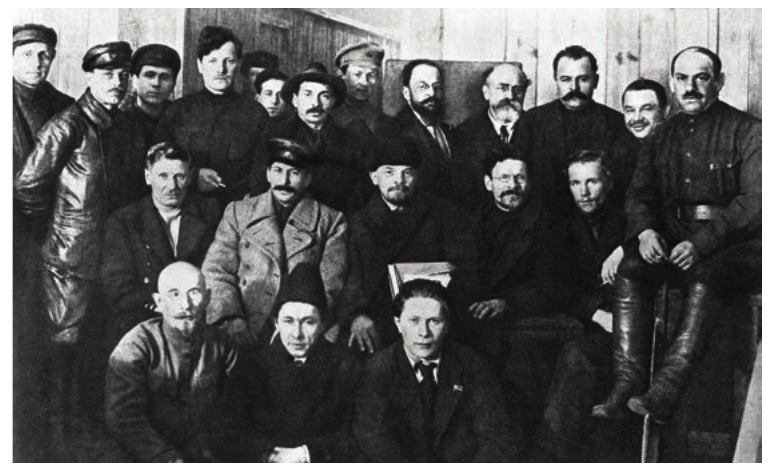
The death of Lenin
Lenin's health deteriorated following an assassination attempt in 1918 and the enormous pressures of the Civil War. From 1922 onwards, he suffered a series of strokes that left him partially paralyzed and unable to govern the USSR effectively.
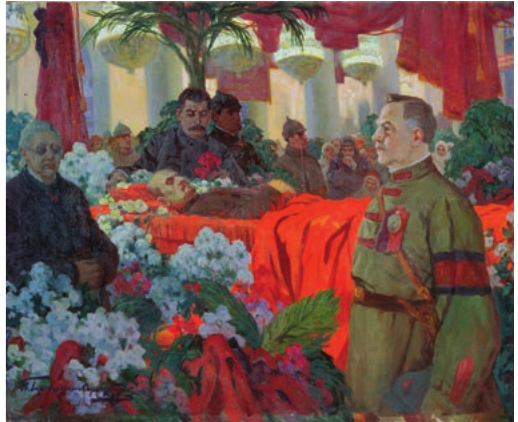
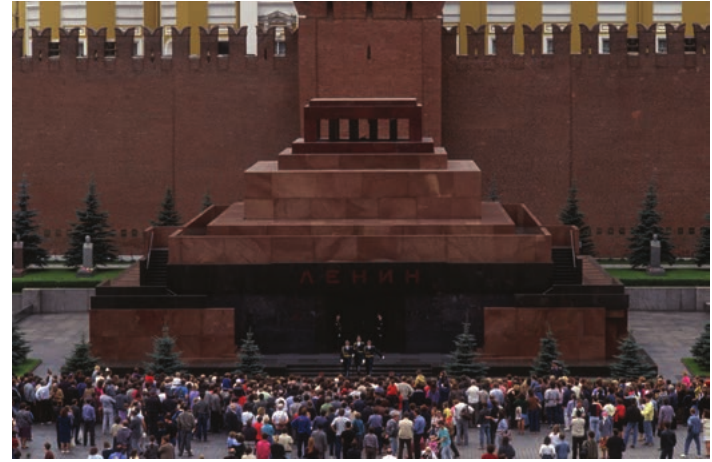
Lenin died on 21 January 1924. His body was embalmed and placed in a glass case within a mausoleum in Moscow's Red Square, turning it into a pilgrimage site for communists. The city of Petrograd was renamed Leningrad in his honour.
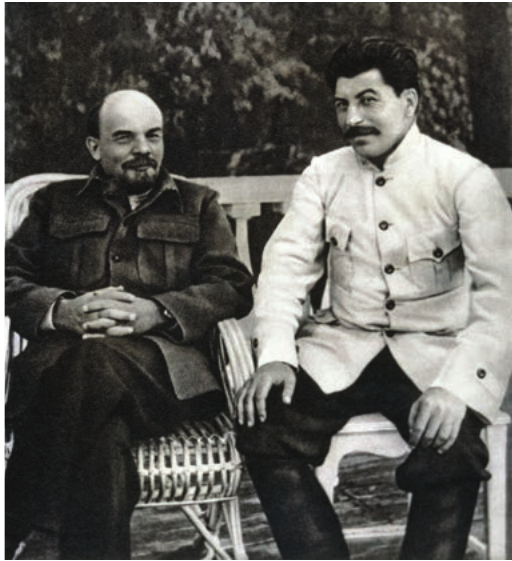
Lenin's Political Will
After his first strokes, and against medical advice, Lenin dictated his Political Will in December 1922. This document was not published openly despite being one of his final writings. It contained Lenin's assessment of key Party leaders and recommendations about who should succeed him.
Lenin commented that Leon Trotsky was "too much possessed by self-confidence" and that Joseph Stalin "has accumulated enormous power into his hands, but I am not sure whether he will always use this power carefully enough." Lenin was particularly alarmed by Stalin's hunger for power, which had been evident during the Civil War, and his harsh treatment of Party colleagues.
Important
In his postscript, Lenin wrote a damning assessment of Stalin that should have ended his political career:
Stalin is too rude and this defect, although quite tolerable in our midst and dealings amongst us communists, becomes intolerable in a General Secretary. That is why I suggest that the comrades think about a way of removing Stalin from the post and appointing another man in his stead.
Lenin argued that this seemingly minor character flaw could become decisive in preventing a split within the Party leadership. History proved Lenin's fears were tragically justified.
Key features of the USSR
Constitution
The 1924 constitution outlined basic rights and freedoms for Soviet citizens:
- All adults received the vote (except monks, people with mental illness, and private traders)
- Freedom of conscience and religion was guaranteed (although the USSR promoted atheism)
- The constitution described the system for electing local, Republican and All-Union Soviets
Note
While the constitution promised democratic rights and freedoms, in practice the one-party state and centralized control meant these guarantees were largely theoretical rather than practical protections for citizens.
Parliament
The Soviet parliamentary system had multiple layers:
- All-Union Congress of Soviets: The highest body, which only met for a few days each year
- Central Executive Committee: A smaller body elected by the Congress that met more regularly and held more actual power
- SOVNARKOM: The cabinet of the USSR, appointed by the Central Executive Committee
The Communist Party
Parallel to the governmental structure existed the Communist Party structure:
- All-Union Congress: A large body elected by Party members
- Central Committee: A smaller, more powerful body
- Politburo: A small group of senior Communists at the top who decided Party policy
Note
The USSR was a one-party state, and many members of the Politburo also served in the SOVNARKOM, giving the Party direct control over government. This overlap between Party and state structures meant that real power resided in the Party hierarchy, particularly in the Politburo, rather than in the nominal parliamentary system.
Achievements of the Bolshevik government
Despite the authoritarian nature of their rule, the Bolsheviks could point to several achievements:
- Introduced a socialist society
- Negotiated peace in World War I (March 1918)
- Implemented the Decree on Land (November 1917)
- Achieved social transformation in education, judicial equality and relative freedoms for women
- Defeated counter-revolutionary forces in the Civil War
- Defeated foreign intervention during the Civil War
- Created unity by dismissing the Constituent Assembly (1918), crushing the Kronstadt sailors' rebellion (1921) and abolishing all political parties except the Bolsheviks (1922)
- Stabilized the economy by replacing the failed War Communism policy with the New Economic Policy (NEP) in 1921
Power struggle between Stalin, Trotsky and other leading Bolshevik figures
Background to the struggle
The New Economic Policy (NEP), introduced to address popular discontent, had a dramatic impact on the economy. However, significant challenges remained. There was insufficient capital to expand the economy beyond pre-war levels, making it impossible to overcome Russia's economic backwardness and widespread poverty.
Much of the old middle-class culture returned, with expensive restaurants, cafés, casinos and nightclubs appearing. However, living conditions in cities remained terrible for ordinary workers. Social problems persisted, workers remained subordinate, and crime was widespread. Many Bolsheviks felt the NEP represented a betrayal of revolutionary ideals or, at minimum, a temporary retreat that needed to end soon.
Note
These conditions formed the background to the major debates of the 1920s. The fundamental tension between socialist ideals and capitalist economic methods under the NEP created deep divisions within the Party about the future direction of the Soviet Union.
Two fundamental challenges faced Russia:
- How to overcome economic backwardness and build socialism
- Following Lenin's death, who would guide Russia's future? Who would become its new leader?
Two influential individuals came to define this debate: Leon Trotsky and Nikolai Bukharin.
Leon Trotsky (1879-1940)
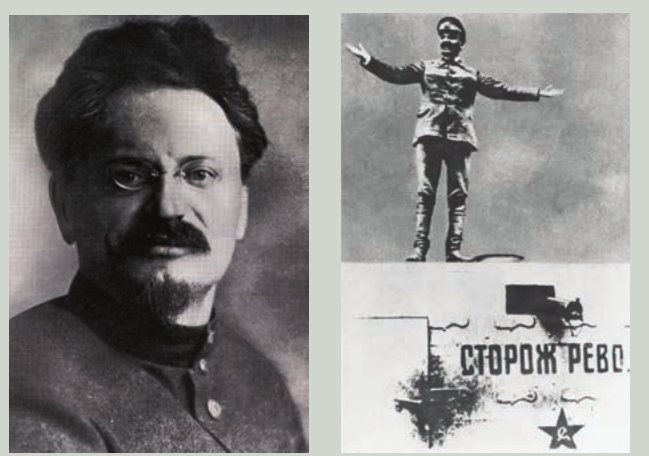
Leon Trotsky (real name: Lev Davidovich Bronstein) was born into a Russified Jewish family near Ukraine. As a student, he became involved in the socialist underground and embraced Marxist ideology. He was first arrested for revolutionary activity in 1898 and exiled to Siberia, but escaped abroad in 1902.
At the 2nd Congress of the Russian Social Democratic Workers' Party in 1903, Trotsky initially sided with the Mensheviks. During the 1905 revolution, he became a leader of the St Petersburg Soviet of Workers' Deputies, leading to another exile to Siberia, from which he again escaped.
Trotsky returned to Russia in May 1917 and gained leadership of an autonomous left-wing faction. After the failed July uprising, authorities detained him. He then joined the Bolshevik Party and was elected to its Central Committee. He also became chairman of the Petrograd Soviet. In October 1917, Trotsky played a prominent role in planning and leading the Bolshevik seizure of power.
In the Soviet Government, Trotsky served as:
- Commissar of Foreign Affairs (1917-18), leading negotiations at Brest-Litovsk
- Commissar of War (1918-25), founding and leading the Red Army
- Member of the Politburo (1919-26)
Trotsky's political beliefs
During the 1920s, Trotsky's arguments were shaped by two key beliefs shared with many Communists, including Lenin:
First, Russia's severe backwardness was its greatest problem and the main obstacle to building socialism. This meant not just economic backwardness, but also deep cultural backwardness – poor working habits among workers, excessive drinking and swearing, widespread ignorance, and superstitious religious belief.
Second, the central importance of a vanguard. Since the people were too backward to liberate themselves, the vanguard (the state, party and its leaders) had to lead. This idea about backwardness, leadership and coercion shaped his criticisms of mainstream Party policies during the NEP period.
Trotsky's economic policy
To overcome Russia's economic backwardness, Trotsky argued that industrialization had to become the top priority. This required:
- Long-term economic planning
- Capital investment accumulated by the state to build up the economy
- "Squeezing" the private sector through high taxes
- High industrial prices set by the state
- Low wages controlled by the state
- Low investment in consumer goods to redirect resources toward industry
Note
Trotsky believed the only way to overcome Russia's backwardness and create a foundation for a happy, free socialist society was through activist, intrusive state economic policy. This represented a fundamental rejection of the market mechanisms allowed under the NEP.
Trotsky's political concerns
Paradoxically, Trotsky also complained about the Party's growing authoritarianism and bureaucratization. He criticized the tendency, developed during the Civil War, to appoint Party leaders at the local level, where Party secretaries became local dictators.
Trotsky called for Party members to develop better habits of free expression and independent thought. He reminded Party members that a Bolshevik was not just a disciplined person, but someone "who forges a firm opinion of his own and defends it courageously and independently." He particularly worried about Stalin's role in limiting free discussion within the Party.
Note
Historian AJP Taylor observed that Trotsky "was the only Marxist who had possessed literary genius" and that his theory of permanent revolution identified the central challenge facing revolutionary Russia: how to maintain itself in a hostile world when backwardness made revolution easy but survival difficult.
Nikolai Bukharin (1888-1938)
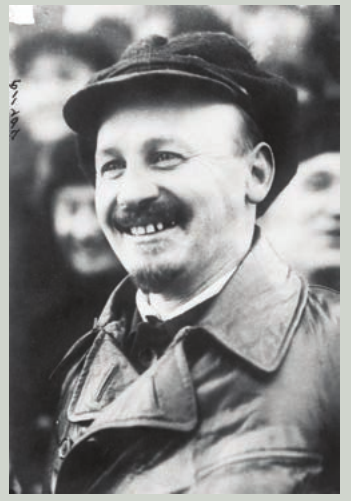
Nikolai Bukharin was a Bolshevik, Marxist theoretician, economist and prominent Party leader. He joined the Russian Social Democratic Workers' Party in 1906. Following the February 1917 uprising, Bukharin returned to Russia and was elected to the Bolshevik Central Committee.
After the Bolsheviks took power, he became editor of Pravda, the Party newspaper. In 1918, Bukharin led the Left Communists, who opposed the Brest-Litovsk Treaty and called for revolutionary war to spread communism throughout Europe.
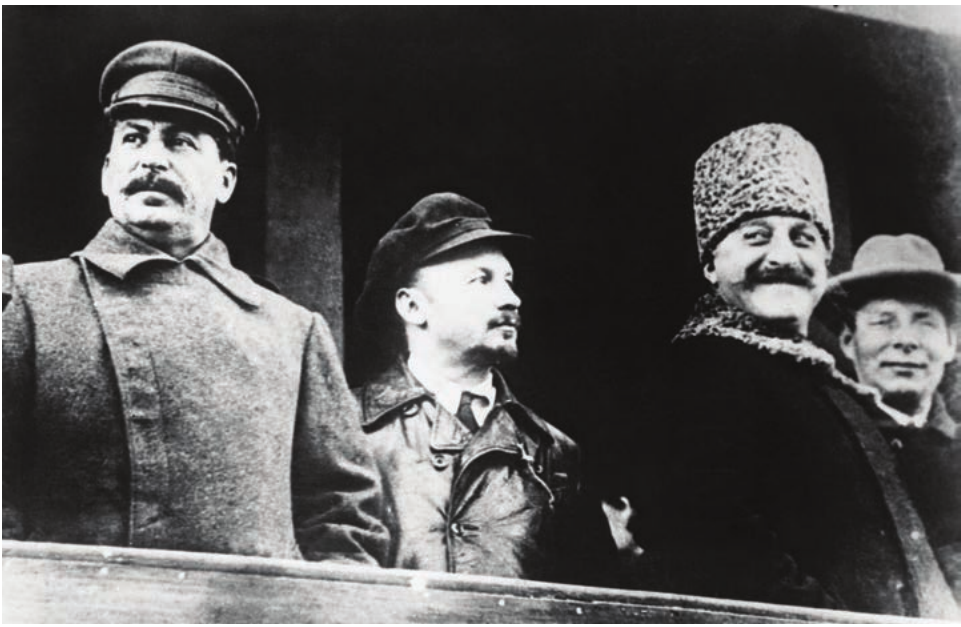
After Lenin's death in 1924, Bukharin became a full member of the Politburo. As a strong advocate for the NEP as a method for developing socialism without violence, Bukharin initially allied with Stalin against Trotsky and the Left. However, in 1928, Stalin accused Bukharin and his supporters of being a "Right Deviation" and expelled him from the Politburo. Forced to recant his views, Bukharin was partially rehabilitated before being driven out of the Party in 1937. He was tried in the last of the Great Purge Trials in 1938, coerced into confessing, and executed.
Bukharin's personality and approach
In contrast to Trotsky's self-confidence bordering on arrogance, Bukharin was one of the best-liked Party leaders. Lenin called him "the beloved of the whole Party" while describing Trotsky as "the most-able man in the whole Party." Even Bukharin's ideological opponents agreed he was pleasant, sensitive and good-natured.
Unlike most Bolsheviks who dressed in military uniform to project toughness, Bukharin dressed like an old Bohemian intellectual. These personal characteristics reflected his deeper convictions and values.
Bukharin's economic policy
Bukharin opposed the economic arguments of Trotsky and the Left, considering them economically flawed. While he agreed that Russia's backwardness was a serious obstacle, he drew different conclusions.
Bukharin was skeptical about the Left's plans for central planning and forced accumulation. He feared these strategies would create a massive, inefficient apparatus that would impede rather than promote economic growth.
Bukharin agreed industrialization was necessary and that resources would have to come from the peasant economy, but he favored a plan based on consumption rather than forced production. He argued that:
- Investment capital would grow naturally from the market if Russia focused on consumer goods rather than large machine plants
- If Russia produced more consumer goods, people would buy more
- As people bought more, more money would flow back into industry
- This natural cycle would develop the economy more effectively, even if more slowly
Bukharin's political and moral arguments
At the heart of Bukharin's thinking was maintaining peasant support for Bolshevism. He argued, as Lenin had, that the Party must teach peasants why socialism benefits them. Effective persuasion rather than coercion was critical for successful industrialization.
Note
As Bukharin stated, "one should approach the peasant with love, not hate." He feared Trotsky's program would alienate peasants and lead to rebellions similar to those experienced in 1920-21. This represented a fundamentally different approach to building socialism – one based on consent rather than force.
Bukharin's vision was a gradual evolutionary road to socialism – not a road of violent class struggle or state coercion. As he said in 1925, he believed in "a road to socialism that would be peaceful and bloodless, without the clanging of metal weapons."
Important
Beyond economic and political considerations, Bukharin argued there was a moral and ethical dimension. He believed socialism – this emancipatory ideal – could not be built with the same tools as capitalism. Socialism was meant to be transformative and uplifting. Different ends required different means.
Key question: Which plan, Trotsky's or Bukharin's, would have been more likely to overcome Russian economic backwardness and create a viable, just society?
Stalin attacks the Left
The Left Opposition consisted of key personalities including Trotsky, Zinoviev and Kamenev. Their main positions included:
- Strong disagreement with continuing the NEP
- Advocacy for rapid and immediate industrialization
- Collectivization of farms with use of force to ensure peasants produced enough food
- Obtaining money by taxing peasants
- Use of "shock brigades" to build factories, power stations and railways
Timeline of Stalin's campaign against the Left
1923: Stalin purged Party membership of "lukewarm members."
1924:
- A major influx of new members through the "Lenin Enrolment" meant Stalin-admitted members outnumbered the Old Bolsheviks
- Stalin, Zinoviev and Kamenev formed a troika (the Russian word for triumvirate) to block Trotsky
- Lenin was "deified" – any criticism of Party policy was denounced as heresy and led to expulsion
- Trotsky made several fatal mistakes that undermined his position:
- He criticized the cult of Lenin
- He criticized Stalin
- He failed to attend Lenin's funeral
- Stalin reminded the Party that Trotsky had only been a Bolshevik since 1917
Important
Trotsky's failure to attend Lenin's funeral was a catastrophic political error. Stalin skillfully used this absence to portray Trotsky as arrogant and disrespectful toward Lenin's memory, severely damaging Trotsky's standing within the Party.
1925:
- Zinoviev and Kamenev sided with Trotsky regarding the NEP
- Stalin moved to support the moderate Rightists
- At the Party Congress, all left-wing motions were defeated
- Zinoviev and Kamenev were removed from Moscow and Leningrad Soviets
- Stalin increased the size of the Politburo with his supporters
1927: Zinoviev and Kamenev were denounced as "traitors to the revolution" and, along with Trotsky, expelled from the Party.
Stalin attacks the Right
The Rightists included key personalities such as Bukharin, Rykov and Tomsky. Their main positions were:
- Continuation of the NEP to encourage peasants to produce more food for profit
- Growth of town population and movement into factories to produce consumer goods for peasants to buy
- Achieving prosperity for both peasants and townspeople
Timeline of Stalin's campaign against the Right
1925: Stalin and Bukharin together controlled the Politburo after the removal of Zinoviev and Kamenev.
1927: Stalin abandoned Bukharin's economic policy, arguing that industrialization should take precedence over agriculture.
Stalin introduced "Extraordinary Measures" to keep kulaks (wealthier peasants) in line:
- Article 107 of the Criminal Code made concealing grain a crime
- All grain hoards were liable to confiscation
- Soldiers were sent into the countryside to find grain
Important
Kulaks – a "capitalist" class of peasant invented by the Bolsheviks to describe wealthier peasants who employed labour and sold produce for profit. Stalin would later use the kulak label to justify brutal collectivization policies and the persecution of millions of peasants.
Stalin declared war on "internal enemies" following sabotage at the Shakty Mines on the Don River. Bukharin denounced Stalin as a tyrant.
1928:
- Purge of the Moscow branch of the Party
- Bukharin resigned as editor of Pravda
- Bukharin, Rykov and Tomsky were expelled from the Politburo by 1929
Note
Historian Alan Bullock observed:
In the years following Lenin's death, Stalin played a waiting game, leaving it to the other side to move first, and then exploiting its mistakes... Stalin's persistence was phenomenal; so, in the period, was his patience and caution.
This observation captures Stalin's methodical approach to accumulating power – he never rushed, always waited for his opponents to make errors, and systematically eliminated rivals one by one.
Reasons for Stalin's rise to power
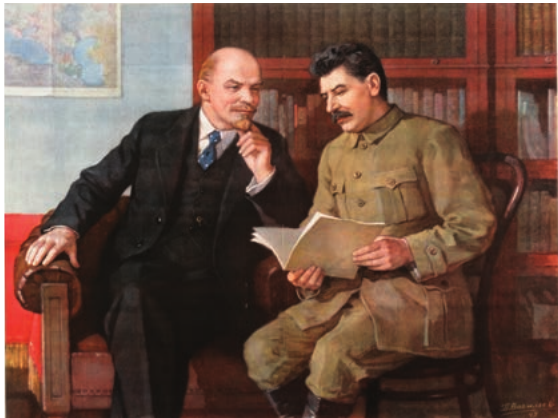
By the late 1920s, Stalin had emerged as the dominant leader of the USSR. Several factors explain his rise to power:
Political and administrative skills
Historian M McCauley noted that "Stalin was moderate and methodical, not to say pedestrian, but he was the only one skilled at building tactical alliances and this put him head and shoulders above the rest."
Until the Civil War, the Communist Party was governed by a small Central Committee led by Lenin. In 1919, Lenin realized he needed a larger apparatus to advance the revolution and run the Civil War. The entire structure changed.
Stalin held multiple crucial positions:
- Chairman of the Orgburo (Organisational Bureau), which recruited members, made appointments, handled assignments and managed purges
- Commissar of Nationalities in the government
- General Secretary of the Communist Party (from 1922)
- Member of the Politburo
- Member of the Orgburo
Important
Orgburo – the Organisational Bureau of the Central Committee of the Communist Party from 1919 to 1952. This seemingly administrative body gave Stalin enormous power over Party membership and appointments.
A powerful Secretariat was created to handle all paperwork for both the Politburo and Orgburo. By 1921, the Secretariat had taken over most everyday work of the Orgburo, handling membership, appointments, reassignments and purges.
Note
The Party didn't view Stalin as an intellectual, so they made him General Secretary – head of the Secretariat – in 1922, thinking this was not a major policy-making position. In Stalin's hands, however, these powers proved to be impressive tools for strengthening his influence within the Party. He could fill various positions with his supporters and developed considerable control over local secretaries.
Impact of Lenin's death and the Lenin Enrolment
Lenin's death in 1924 allowed Stalin to exploit the Lenin Enrolment. Half a million workers were brought into the Party, virtually doubling membership. This was described as worker democracy, but most of these members joined for upward mobility – Party membership provided influence and opportunities for better jobs.
Important
Lenin Enrolment – the Bolshevik Party effort to enrol more of the Proletariat into the Communist Party as active members from 1923 to 1925. This created a vast reservoir of essentially grateful and submissive members who owed their positions to Stalin's patronage.
The result was a vast reservoir of essentially grateful and submissive members. The Lenin Enrolment paradoxically undermined democracy in the Party and weakened the tradition of criticism and debate. Stalin could exploit this obedience because he controlled the Party apparatus. He built networks of loyal supporters and kept track of critics, whom he could reassign. This administrative power played a critical role in Stalin's ability to defeat various opponents in the 1920s.
The critical moment: Lenin's testament
When Lenin's will and testament was read out in May 1924, it could have destroyed Stalin's rise to power because Lenin was particularly critical of him. Stalin was saved by Zinoviev, who addressed the Central Committee in Stalin's defence. Zinoviev argued that Stalin had proven Lenin's fears unfounded and that he could work harmoniously with Party members.
Important
There was enough support in the Party to agree that the will would not be distributed. At this stage, Zinoviev regarded Trotsky as the real threat to power. This incident demonstrated how grossly Stalin was underestimated by his peers – a fatal mistake that allowed him to continue his rise to absolute power.
Leon Trotsky later wrote:
In the eyes of Lenin, Stalin's value was wholly in the sphere of Party administration and machine manoeuvring... Stalin meanwhile was more and more broadly and indiscriminately using the possibilities of the revolutionary dictatorship for the recruiting of people personally obligated and devoted to him. In his position as General Secretary he became the dispenser of favour and fortune.
Abuse of the cult of Lenin
Stalin raised Lenin to almost divine status to consolidate his position within the Party. Stalin was impressed by Lenin's idea of the vanguard party of professional revolutionaries – a heroic ideal that appealed to Stalin for its focus on the best individuals heroically leading the way. He was also attracted to the Bolshevik reputation for toughness and militancy.
Stalin capitalized on Lenin's death by:
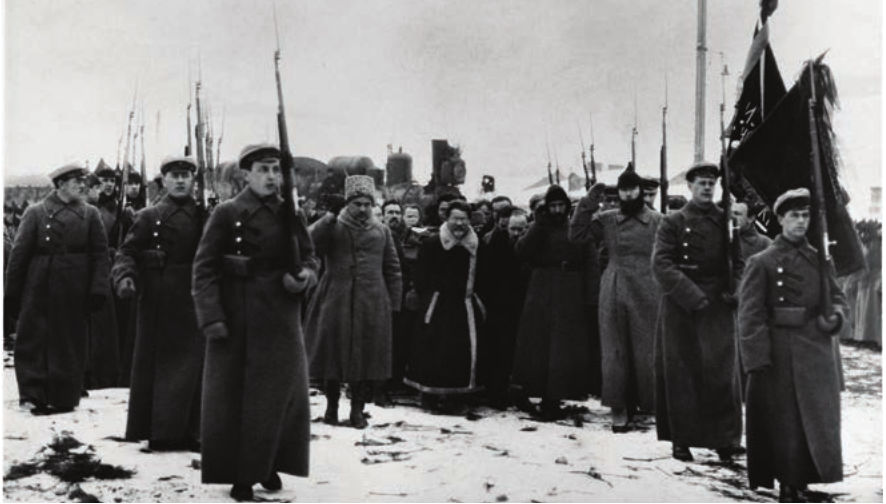
- Serving as a pall bearer at the funeral
- Having Lenin's body embalmed and placed in a tomb in Red Square
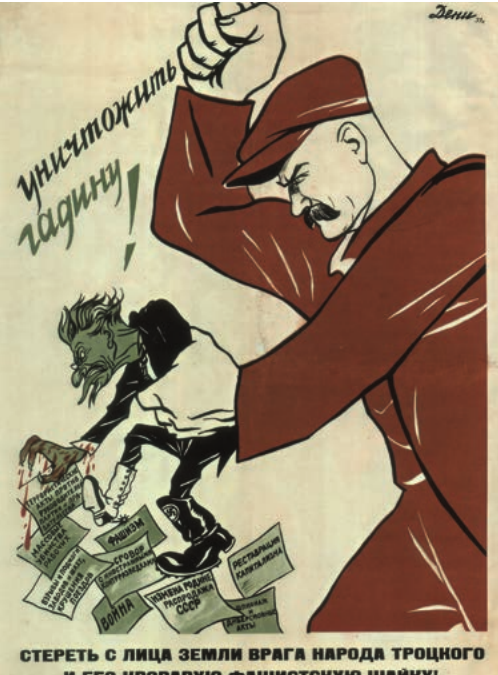
- Using Lenin to criticize Trotsky
Stalin accused Trotsky of lacking Lenin's heroism, optimism and faith. He claimed Trotsky's theory of permanent revolution (which assumed the final success of socialism in Russia depended on worldwide socialism) was a theory of "permanent hopelessness" showing lack of faith in what the Russian people could achieve.
Note
In further discrediting Trotsky, Stalin convinced him to miss Lenin's funeral. Trotsky's failure to attend led to criticism and highlighted his "arrogance" and lack of respect toward Lenin. This manipulation demonstrated Stalin's skill at political maneuvering.
Key questions:
- Why was Lenin deified?
- What was the effect of this deification?
Manipulation and opportunism
Stalin single-handedly eliminated his political opposition throughout the 1920s:
First, he removed Trotsky and his allies in 1923-24.
Second, he removed Zinoviev and Kamenev, who had adopted Trotsky's position in 1925.
Third, when Trotsky, Zinoviev, Kamenev and their followers united into the Left Opposition, Stalin expelled them from the Party.
Finally, when Stalin turned against Bukharin and the Right Opposition in 1928, he used his power within the Party to remove their members, defeat them in debates and have them voted out of the leadership.
Once Stalin became the dominant leader, he made his heroic and willful political style the hallmark of the times. He understood the mood of the people and addressed the concerns of Communists and many workers about the NEP.
Many Soviet citizens in the 1920s were troubled by:
- Inequality and the rise of the new rich in cities (NEP men – wealthy traders)
- Richer peasants in the countryside (kulaks)
- The feeling that the NEP betrayed revolutionary ideals
Stalin effectively developed the concept of "Socialism in One Country" to develop patriotism within Russian society, arguing that Russia could develop into an industrial force on its own.
Important
Socialism in One Country – Stalin's aim to build the industrial base and military might of the Soviet Union before exporting revolution abroad. This doctrine appealed to Russian nationalism and contrasted sharply with Trotsky's theory of permanent revolution that emphasized international revolution.
Summary of reasons for Stalin's emergence
- He was a tireless worker and his early career was supported by Lenin
- His skills in politics and administration were highly relevant to the tasks of the 1920s
- His economic and political pragmatism enabled him to outmaneuver first the Left and then the Right, while always staying with the majority of the Politburo
- He was ruthless in his treatment of his opponents
- His opponents played into his hands and underestimated the threat he posed until it was too late to act effectively against him
- He manipulated events to create a sense of crisis, so his opponents could be accused of being lukewarm about the revolutionary cause
Important
Exam tip: When explaining Stalin's rise to power, avoid focusing on just one factor. Use multiple interconnected reasons to build a comprehensive argument. Stalin's success resulted from a combination of his own skills, the Party structure he controlled, his rivals' mistakes, and the political context of the 1920s.
Remember!
Summary
Key Points to Remember:
- The Bolsheviks consolidated power after the Civil War by purging opposition and creating a bureaucratic, centralized Party structure that Stalin exploited
- The USSR was formed in 1924 as a federation of Soviet Socialist Republics with Moscow controlling key areas like foreign policy, defence and economic planning
- Lenin's death in January 1924 created a power vacuum and triggered an intense struggle for leadership
- The main contenders were Trotsky (advocating rapid industrialization and permanent revolution) and Bukharin (favoring gradual, market-based growth through the NEP)
- Stalin emerged victorious by the late 1920s through his control of the Party apparatus as General Secretary, his ability to form tactical alliances, his manipulation of Lenin's legacy, and his opponents' underestimation of him
- Key factors in Stalin's rise included the Lenin Enrolment (which doubled Party membership with loyal, submissive members), the suppression of Lenin's testament, and Stalin's political skill in positioning himself with the Politburo majority while eliminating rivals one by one