US Society: The Jazz Age, Prohibition, and Crime (HSC SSCE Modern History): Revision Notes
📚Revision Notes
US Society: The Jazz Age, Prohibition, and Crime
Introduction: America in the 1920s
The 1920s represented a period of dramatic social change in the United States. Jazz music, the Charleston dance, and fashionable young women known as flappers symbolised a modern, hedonistic culture that challenged traditional values. However, this cultural revolution sparked a powerful conservative backlash led by groups such as the Ku Klux Klan and the Christian Temperance Movement.
Ku Klux Klan: A white extremist organisation founded after the Civil War in 1866. The KKK promoted violent racism and intolerance, particularly in southern states. During the 1920s, they infiltrated the highest levels of government and used secret language, codes and practices to advance their agenda of white American nationalism.
Conservatism: A political philosophy asserting that tradition and caution should guide responses to social challenges.
Note
The conservative movement gained strength during the 1920s due to rural economic decline, stagnant wage growth, and widening inequality between the wealthy and working classes. Jazz clubs and illegal drinking establishments called speakeasies became targets of right-wing criticism.
Rapid urbanisation accompanied industrial modernisation. Cities like New York, Chicago and Philadelphia grew into metropolises with populations in the millions. Detroit, driven by the automobile industry, exploded from fewer than 100,000 residents before the war to over 1.5 million by 1929.
The origins of Prohibition
What was Prohibition?
Prohibition: The period from 1920 to 1933 when the United States banned the sale, production and transportation of alcoholic beverages. It aimed to control the liquor trade, reduce crime, and promote Christian Temperance values.
The Eighteenth Amendment to the Constitution officially instituted Prohibition in 1920. This represented what supporters called a "noble experiment" designed to curb drinking and anti-social behaviour, particularly amongst working classes, minorities, immigrants and non-white Americans. Advocates believed Prohibition would:
- Decrease populations in poorhouses
- Reduce the tax burden on the federal government
- Improve moral character, public health and hygiene across America
- Strengthen family values and work ethics
The Temperance Movement
The Christian Temperance Movement provided the driving force behind Prohibition. These reformers sought to rebuild Puritan family values and traditional work ethics at a time when American society seemed threatened by urbanisation, European immigration and the social upheaval of World War I.
The movement emerged in response to anti-foreign sentiment that associated drinking cultures with Irish, Italian and German immigrants. Temperance advocates portrayed alcohol as a primary cause of family breakdown and moral decline. The Christian Temperance Union and the Anti-Saloon League (founded 1893) led the campaign for a nationwide ban.
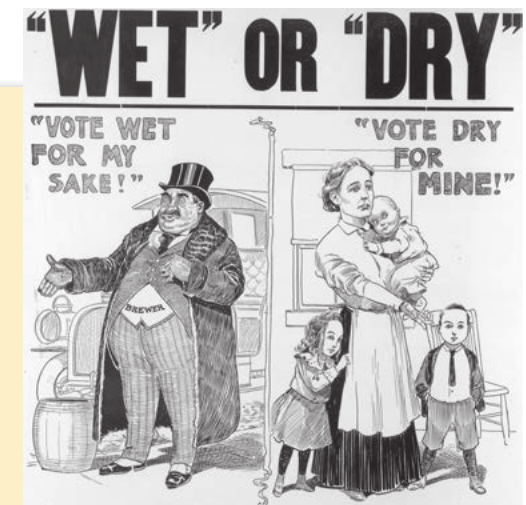
These organisations effectively lobbied politicians and mobilised public opinion. They staged dramatic demonstrations, including raids where they destroyed bars and saloons. Their rhetoric painted alcohol consumption as fundamentally un-American and destructive to society.
World War I and the path to Prohibition
America's entry into World War I accelerated the push for Prohibition. Several arguments gained traction:
- Consuming German beer was portrayed as unpatriotic
- Wartime austerity made alcohol consumption seem wasteful
- American soldiers were prohibited from drinking while serving, so civilians should make the same sacrifice
- Banning beer production (which required barley) would free grain for bread and other essential foods
Note
The Eighteenth Amendment prohibiting alcohol passed Congress in 1919 and took effect in January 1920. The Volstead Act provided the legislative framework for enforcement.
Volstead Act: US legislation that made alcohol illegal under Prohibition and established penalties for violations.
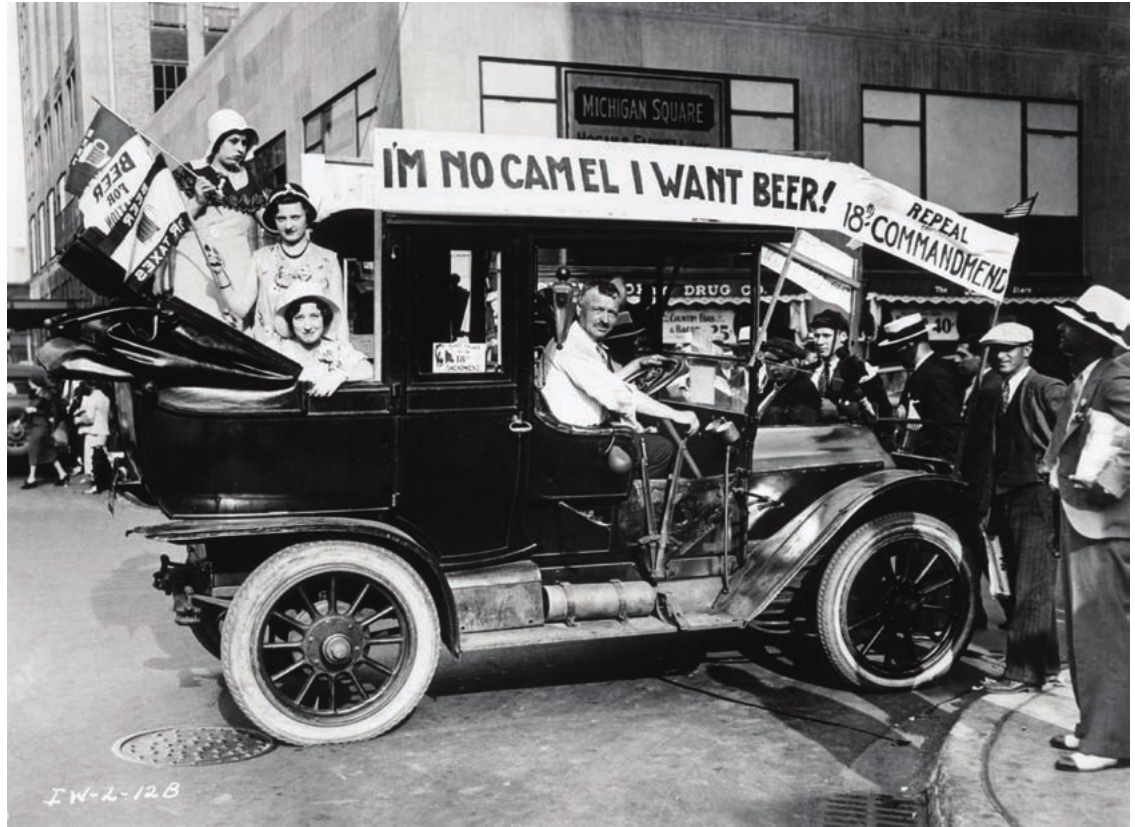
Drys versus Wets: A divided nation
Prohibition deeply divided American society into two camps:
The Drys: Supporters of Prohibition who wanted to eliminate alcohol from America. The term "Dry" indicated support for temperance policies. Drys included:
- Christian and Protestant churches
- The Ku Klux Klan
- Rural Americans
- Some women's rights advocates
The Wets: Opponents of Prohibition who wanted alcohol legalised. This group included:
- Urban populations
- Immigrants (particularly Catholics and Jews)
- Organised criminals who profited from illegal alcohol
- Many working-class Americans
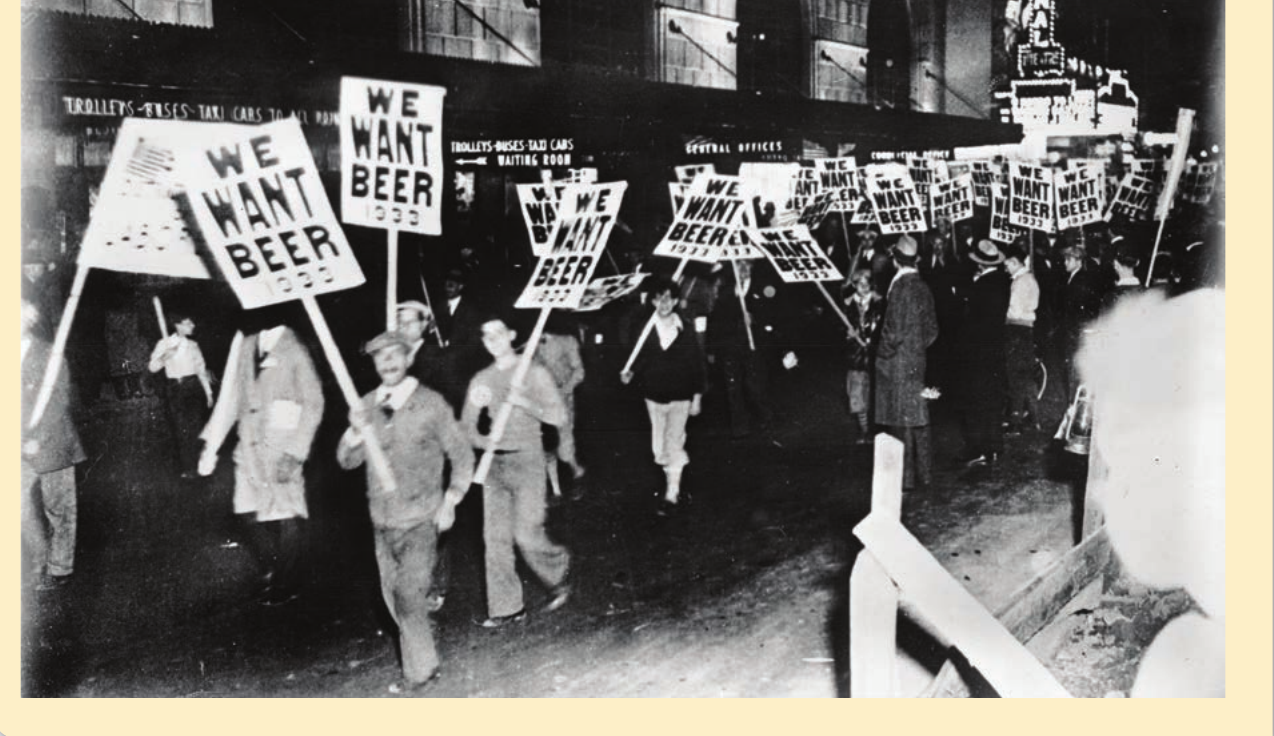
Historian Daniel Okrent observed that Prohibition supporters were highly organised, marching, lobbying and voting, whilst those opposed were "too busy drinking" to mount an effective countermovement initially. However, as Prohibition's negative consequences became apparent, the Wets gained political strength.
Important
The division between Drys and Wets often reflected deeper social fault lines. Prohibition became entangled with xenophobia, with immigrants and religious minorities viewed as "un-American" for resisting the alcohol ban. Racist organisations like the KKK exploited temperance rhetoric to justify discrimination against Black Americans and other minorities.
The impact of Prohibition on American society
Rise of speakeasies and bootlegging
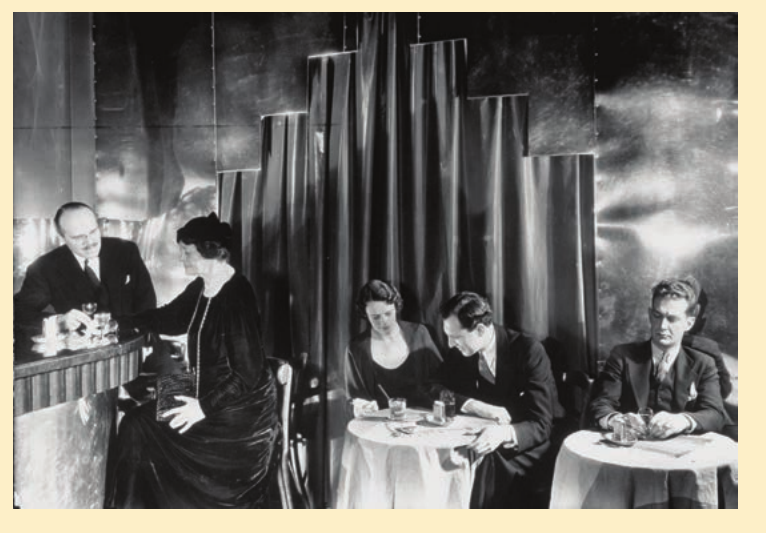
Rather than eliminating alcohol consumption, Prohibition drove the liquor trade underground. Illegal establishments called speakeasies quickly replaced licensed bars and saloons.
Speakeasy: An illegal bar or lounge where alcohol was secretly served during Prohibition. The name came from patrons having to "speak easy" (quietly) about such establishments to avoid detection.
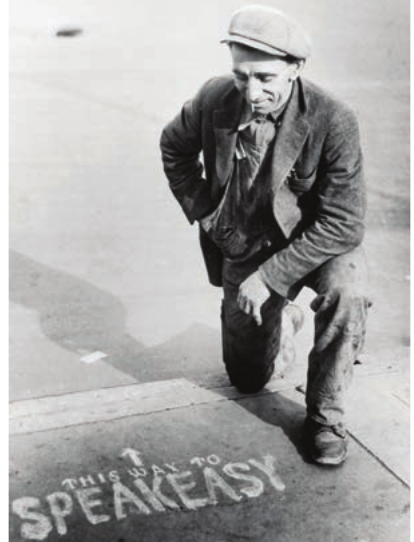
Speakeasies rapidly outnumbered the legal drinking establishments that had existed before 1920. These venues ranged from simple basement operations to elaborate nightclubs with entertainment and dining.
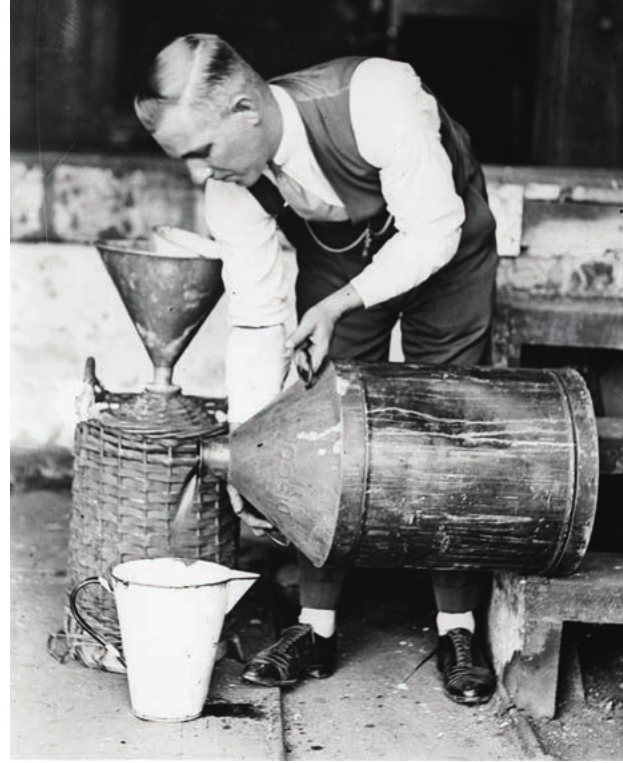
Bootlegging—the illegal production and distribution of alcohol—became a massive underground industry. Criminals operated illegal stills to manufacture moonshine (homemade spirits) and smuggled liquor across state borders from Canada. Various exemptions in the Prohibition laws created loopholes:
- Agricultural exemption: Farmers could legally preserve fruit, leading to a booming "hard cider" industry
- Medicinal exemption: Doctors could prescribe alcohol for medical purposes, and pharmacies could dispense it
- Religious exemption: Ministers, priests and rabbis could provide up to 10 gallons of wine per person annually for sacramental purposes (interestingly, church attendance increased dramatically during Prohibition)
Organised crime and gangsters
Prohibition created enormous profit opportunities for criminal organisations. The illegal alcohol trade generated an estimated $2 billion in profits by the time of repeal in 1933.
Gangster: A criminal who employed violent means and extortion. During the 1920s, gangsters dominated the illegal alcohol industry.
Note
Rival gangs fought brutally for control of bootlegging operations and distribution territories. Chicago became the epicentre of gangster violence and organised crime during the Prohibition era.
Al Capone and the Chicago crime scene
Al Capone emerged as the most notorious gangster of the Prohibition era. Operating from Chicago, Capone built a criminal empire through bootlegging, extortion and violence. His organisation waged war against rival gangs and federal agents like Elliot Ness, who was tasked with prosecuting Prohibition criminals.
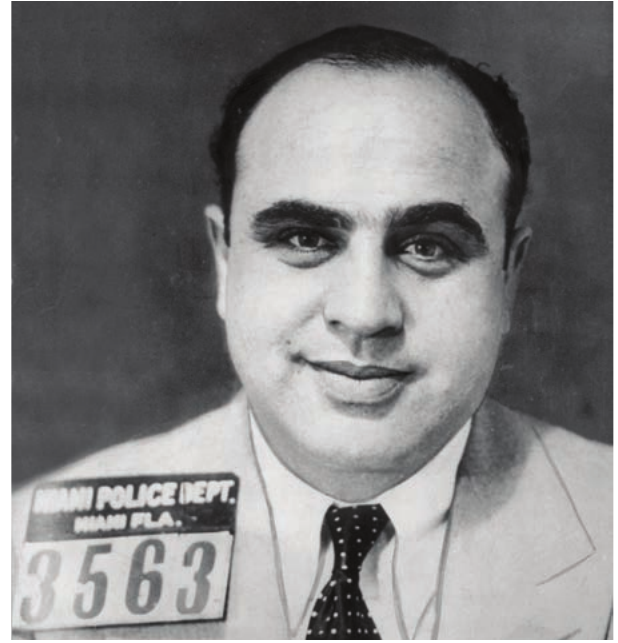
Capone and his contemporaries were linked to over 400 violent deaths during the Prohibition period. He maintained his operations through widespread bribery and corruption, implicating government officials, police and politicians. Lack of effective trade union laws and poor wages made public officials particularly vulnerable to bribes. Capone funnelled over $100 million into his criminal networks.
Important
Ironically, despite his involvement in murder and organised crime, Al Capone was ultimately convicted of tax evasion rather than violent crimes—highlighting the difficulty of enforcing Prohibition laws and prosecuting powerful criminals.
The St Valentine's Day Massacre
The most infamous incident of Prohibition-era violence occurred on 14 February 1929, when Al Capone's men murdered seven members of the rival Bugs Moran gang in what became known as the St Valentine's Day Massacre.
The victims were lured to a garage at 2122 North Clark Street in Chicago, lined up against a wall, and executed with machine guns. Some of the assassins wore police uniforms to deceive the victims into compliance. According to Chicago Police authorities, the massacre resulted from the "illicit gangster-controlled liquor traffic" during Prohibition.
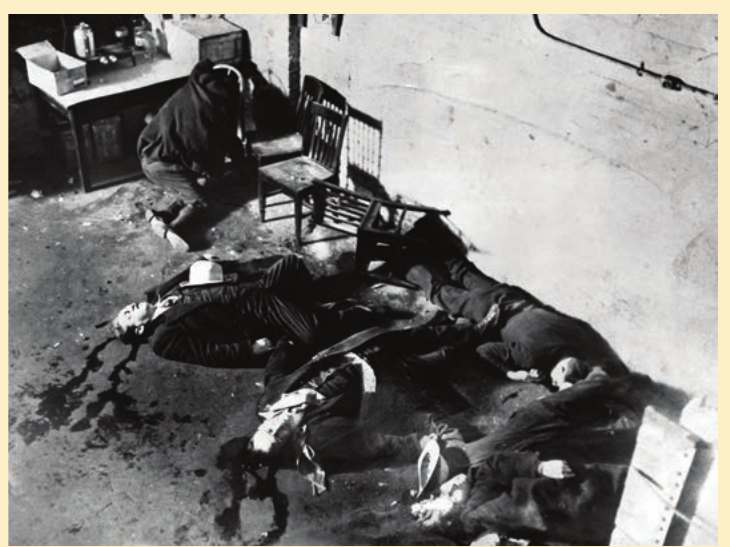
The brutality of the massacre stunned both the public and law enforcement. It demonstrated the extreme violence that Prohibition had unleashed and highlighted the power of organised crime syndicates. The killings received extensive newspaper coverage, bringing national attention to the gangster problem.
Crime statistics and enforcement
Rising crime rates
Prohibition had a devastating impact on crime rates across America. During the nineteenth century, crime rates had been declining. However, once Prohibition took effect, crime rates—particularly homicides—increased significantly.
Example
Crime Statistics During Prohibition:
- Homicide rate in large cities increased from 5.6 per 100,000 population (first decade of the century) to 8.4 per 100,000 during Prohibition
- National average homicide rate reached 10 per cent per 100,000 people
- Arrests for Prohibition violations increased by 102%
- Theft, homicide and black-market racketeering showed the most notable increases
- Drunkenness and disorderly conduct rates increased by 41%
Important
These statistics revealed how ineffective both Prohibition and the Volstead Act were at achieving their stated goals.
Prison populations
Prison overcrowding became a severe problem during Prohibition. Prior to the alcohol ban, approximately 3,000 individuals were incarcerated in federal prisons. During Prohibition, this number skyrocketed to over 26,000 inmates, who were crowded into facilities like the notorious Sing Sing prison.
The number of violations increased by over 1,000%. By 1930, more than two-thirds of federal prisoners were incarcerated for alcohol and drug violations rather than other crimes.
Enforcement challenges
Bureau of Prohibition: The government agency tasked with enforcing Prohibition laws.
Despite federal enforcement efforts, Prohibition proved nearly impossible to police effectively. The Bureau of Prohibition spent over $13.4 million during the 1920s attempting to enforce the ban. The Coast Guard, responsible for intercepting smuggled liquor, spent an additional $13 million annually.
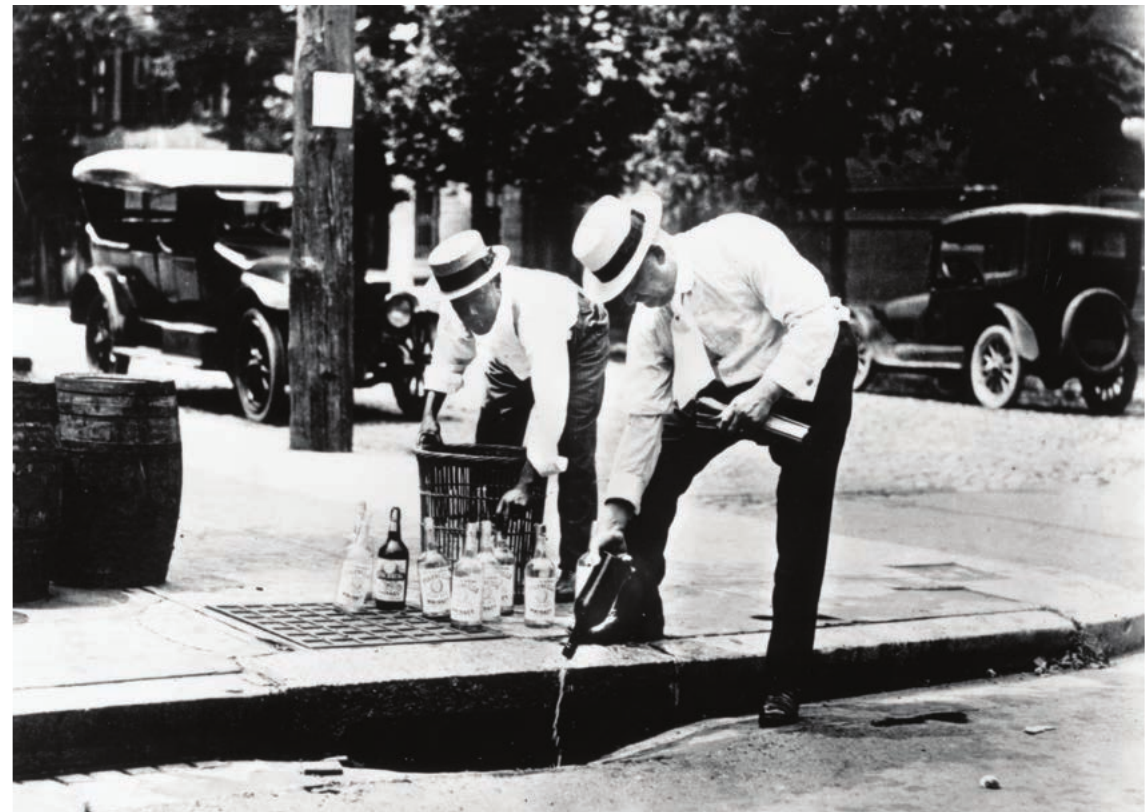
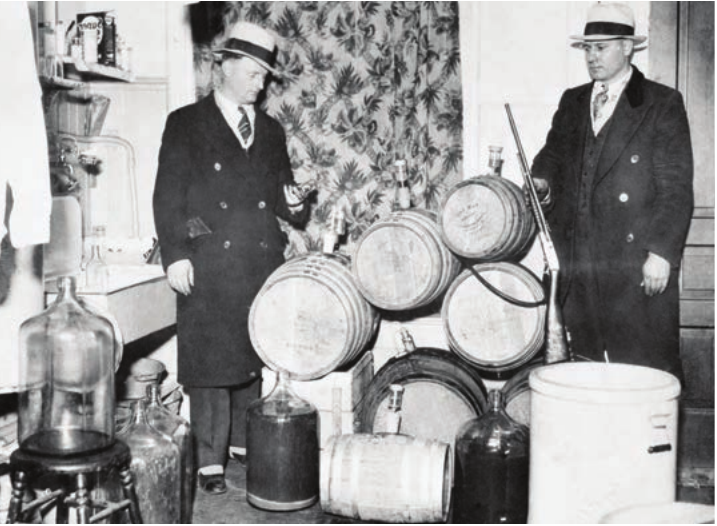
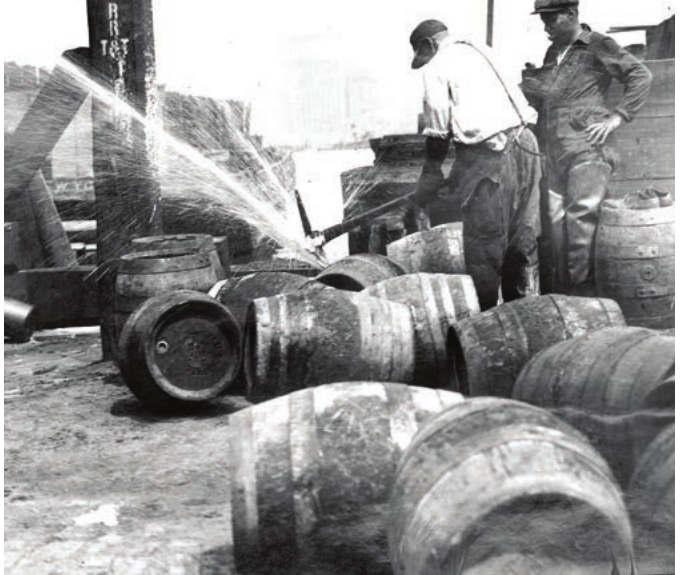
However, enforcement was hampered by:
- Widespread corruption: Criminals bribed police, judges and government officials to ignore violations
- Public non-compliance: Many Americans simply ignored the law and continued drinking
- Inadequate resources: Enforcement agencies lacked sufficient staff and funding to police the entire nation
- Legal loopholes: Various exemptions created opportunities for legal alcohol production
Note
Assistant Secretary of the Treasury Lincoln C Andrews reported that "conspiracies are nation-wide in extent, in great numbers, organised, well-financed and cleverly conducted". Commissioner of Prohibition Henry Anderson warned that "the fruitless efforts at enforcement are creating public disregard not only for this law but for all laws". He noted that "public corruption through the purchase of official protection for this illegal traffic is widespread and notorious" and that "the courts are cluttered with Prohibition cases to an extent which seriously affects the entire administration of justice".
Economic and health consequences
Economic impacts
Prohibition created significant economic problems for the United States:
Lost revenue: The federal government lost substantial tax income from alcohol sales, manufacture and transportation. This revenue loss occurred precisely when the government was spending heavily on enforcement.
Enforcement costs: Beyond the Bureau of Prohibition's budget, enforcement strained court systems and prisons, creating additional financial burdens.
Criminal profits: Whilst the government lost revenue, organised crime syndicates earned an estimated $2 billion from illegal alcohol by 1933. This money funded further criminal activities and corrupted democratic institutions.
The Iron Law of Prohibition
Economists identified what became known as the "Iron Law of Prohibition": strict restriction and policing of an illegal substance results in greater risk and potency in its production. In the United States, anti-foreign sentiment made beer (associated with German immigrants) less popular, whilst spirits became more attractive to both produce and consume due to their higher potency and easier transport.
Example
Price Increases Under Prohibition:
Some economists argued that retail alcohol prices increased significantly:
- Beer prices rose by more than 700%
- Brandy prices increased by 433%
- Spirit prices increased by only 270%
This pricing structure led to increased consumption of highly intoxicating spirits over pre-Prohibition levels, creating greater public health risks.
Health dangers of bootleg liquor
Important
Bootleg alcohol posed serious health risks. Because it was unregulated, illegal liquor often contained dangerous additives and impurities. According to contemporary sources, bootleg beverages were approximately ten times more toxic than medicinal liquors. The concentrated nature of bootleg liquor meant it "almost invariably contains other and more deadly poisons than mere ethyl alcohol".
These health dangers, combined with increased consumption of high-proof spirits, made drinking more hazardous during Prohibition than before the ban.
Alcohol consumption trends
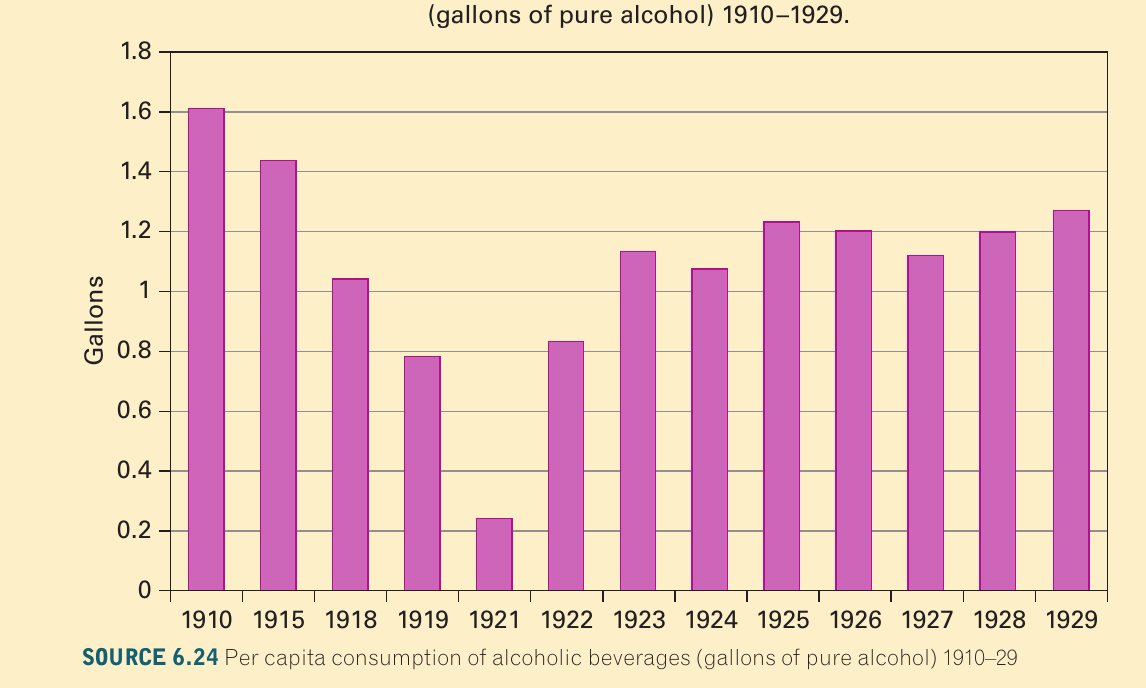
Despite the strict federal ban, alcohol consumption patterns revealed Prohibition's failure:
Note
The graph shows that alcohol consumption:
- Dropped sharply when Prohibition began in 1920 (from 1.6 gallons per capita in 1910)
- Reached its lowest point in 1921 (approximately 0.24 gallons per capita)
- Gradually increased throughout the 1920s
- By 1929, had risen to levels approaching pre-Prohibition consumption
This data demonstrates that after an initial decline, Americans increasingly ignored the law and resumed drinking. Prohibition had failed to achieve its primary objective of eliminating alcohol consumption.
The repeal of Prohibition
Political pressure for change
By the early 1930s, the failures of Prohibition had become undeniable. Crime had increased, corruption was rampant, and the policy clearly wasn't preventing alcohol consumption. The "Wets" gained political strength and pushed for repeal.
When Franklin D Roosevelt and the Democratic Party won the 1932 election, they brought with them a mandate for change. Roosevelt supported ending Prohibition, recognising its destructive social and economic consequences.
Franklin D Roosevelt: The 32nd US President, who served from 1933 until 1945. Roosevelt supported repealing Prohibition as part of his broader programme of reform.
The Twenty-first Amendment
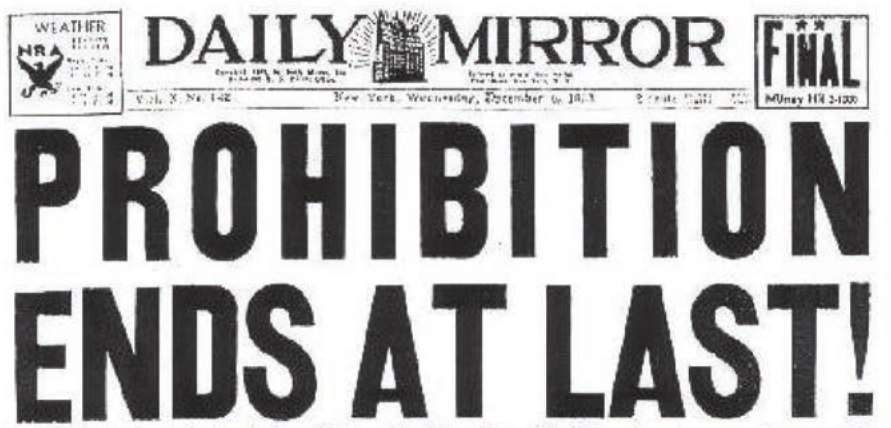
In December 1933, the Twenty-first Amendment to the Constitution was ratified, officially repealing the Eighteenth Amendment and ending Prohibition. This marked the first and only time one constitutional amendment repealed another.
Note
However, the effects of Prohibition persisted beyond 1933. Individual states retained the authority to maintain their own alcohol bans. In some states, such as Oklahoma, Prohibition laws remained in effect until 1959.
Legacy and significance
Constitutional implications
The Eighteenth Amendment represented a fundamental shift in American constitutional principles. The Declaration of Independence and the Bill of Rights (First through Fifth Amendments) are founded on individual liberty and the pursuit of happiness. The Eighteenth Amendment, in contrast, restricted individual choice and empowered the government to limit personal behaviour.
Important
This conservative approach established a precedent for government intervention in private life and curtailing personal liberty. The conflict between individual freedom and government regulation of behaviour remains relevant in modern American politics.
Social divisions and discrimination
Prohibition intensified social divisions in American society. The split between Drys and Wets often reflected deeper conflicts:
Xenophobia: Extreme dislike or fear of foreigners, their customs and religions. Prohibition rhetoric often targeted immigrant communities.
Americanism: A belief in white American nationalism that portrayed Protestant, native-born citizens as "true Americans" whilst marginalising immigrants and minorities.
The temperance movement became entangled with racism. The Ku Klux Klan aligned with Prohibition advocates, using temperance arguments to justify discrimination against Black Americans. These ideas suggested that African Americans should be prevented from drinking alcohol, conflating racist persecution with moral reform.
Note
Migrants, Catholics and Jews who resisted Prohibition were viewed as "un-American" and divisive. This legacy of using legislation to enforce cultural conformity and target minority groups had lasting impacts on American society.
Lessons from Prohibition
Prohibition demonstrated several important lessons:
- Unintended consequences: Well-intentioned policies can produce outcomes opposite to their goals. Prohibition increased rather than decreased alcohol-related problems.
- Limits of enforcement: Laws that lack public support are nearly impossible to enforce, particularly when they target widespread behaviour.
- Criminal opportunity: Banning popular goods creates profit opportunities for organised crime, which can then fund further illegal activities.
- Corruption risks: Prohibition corrupted law enforcement, judiciary and government, undermining democratic institutions and the rule of law.
- Economic costs: The policy cost the government tax revenue whilst requiring massive enforcement spending, creating economic inefficiency.
Note
Economist Mark Thornton summarised: "Although consumption of alcohol fell at the beginning of Prohibition, it subsequently increased. Alcohol became more dangerous to consume; crime increased and became 'organised'; the court and prison systems were stretched to the breaking point; and corruption of public officials was rampant. No measurable gains were made in productivity or reduced absenteeism. Prohibition removed a significant source of tax revenue and greatly increased government spending."
Remember!
Summary
Key Points to Remember:
-
Prohibition (1920-1933) was instituted by the Eighteenth Amendment, which banned the sale, production and transportation of alcohol in an attempt to promote Christian Temperance values and reduce social problems.
-
The Temperance Movement, led by organisations like the Christian Temperance Union and Anti-Saloon League, drove Prohibition through effective lobbying. They gained support by associating alcohol with immigrant cultures and moral decline.
-
Prohibition failed dramatically, leading to increased organised crime, widespread speakeasies, gangster violence (including Al Capone and the St Valentine's Day Massacre), and rising homicide rates from 5.6 to 8.4 per 100,000 population.
-
Economic consequences included lost government tax revenue, enforcement costs exceeding $13 million annually, criminal profits of $2 billion, and prison populations increasing from 3,000 to 26,000 inmates.
-
The Twenty-first Amendment repealed Prohibition in 1933 under President Franklin D Roosevelt, marking the only time one constitutional amendment nullified another. The failure of Prohibition demonstrated the limits of government regulation of personal behaviour and the unintended consequences of well-intentioned but poorly conceived policies.