Civilians at War (HSC SSCE Modern History): Revision Notes
📚Revision Notes
Civilians at War
Introduction
World War II was not just a military conflict fought on battlefields. It was a total war that dramatically affected civilian populations across Europe. This note examines the social and economic impacts of the war on civilians in three major nations: Britain, Germany, and Russia. Each country experienced unique challenges and adopted different strategies to cope with the demands of total war.
Understanding how civilians experienced the war helps us appreciate the full cost of the conflict and explains how different political systems mobilised their populations for the war effort.
The effects of war on Britain
Social effects
Preparations for war
When Britain entered the war in September 1939, there was no celebration or enthusiasm like in 1914. Instead, the British public showed what historians describe as a sense of weary resignation. People hoped simply to get the job done and return to normal life as quickly as possible.
Note
The government introduced conscription in April 1939, even before war was declared. This early preparation showed that Britain was taking the threat seriously.
Social life changed dramatically as the country prepared for war. Practice blackouts became routine to prevent German bombers from targeting cities at night. In a massive evacuation effort, approximately 1.5 million children were moved from cities to the countryside to protect them from anticipated bombing raids. There was also widespread fear of gas attacks, leading to the distribution of gas masks to the entire population.
The Blitz and British morale
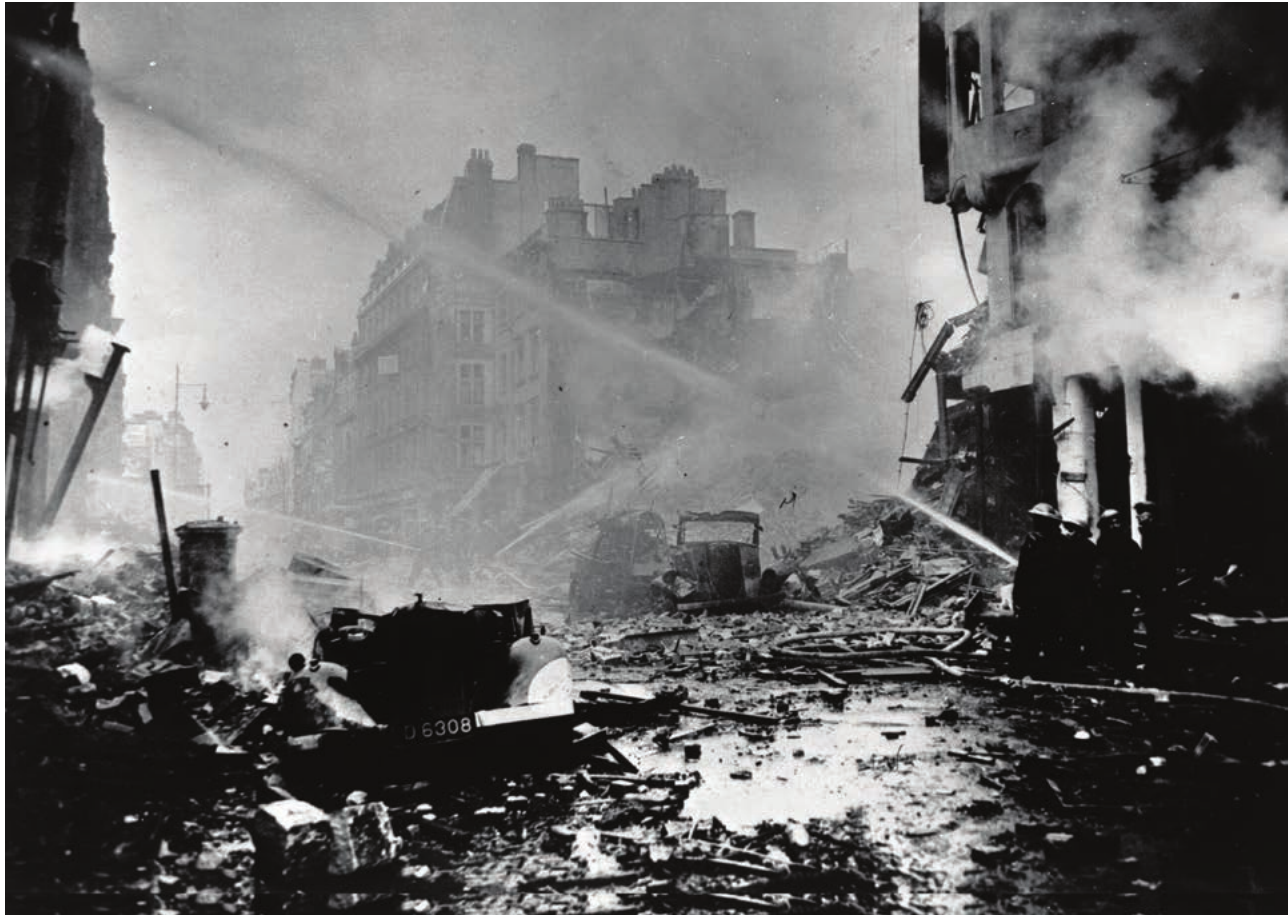
From September 1940 to May 1941, German bombers launched a sustained bombing campaign against British cities, particularly London. This period became known as the Blitz. One of Hitler's main aims was to break British morale and force the country to surrender.
The Blitz was devastating in human terms. Approximately 40,000 civilians were killed and over one million homes were destroyed. However, rather than breaking British spirit, the bombing campaign had the opposite effect. It strengthened resolve and created what became known as the Dunkirk Spirit - a determination to carry on despite adversity.
Important
The British public developed a "we can take it" attitude. King George VI and Prime Minister Winston Churchill toured bombed areas in London's East End, boosting morale. When Buckingham Palace was hit by bombs, it helped create a sense that everyone was in the war together, regardless of class.
The historian Liddell Hart argued that the Blitz completely failed in its objective of destroying British morale.
Propaganda and control
The government established the Ministry of Information under John Reith to manage wartime information and propaganda. While censorship existed, it never reached the extreme levels seen in Germany. The BBC Television service was closed down, and radio became the main source of information for the public.
Entertainment played a crucial role in maintaining morale. Programmes like "Music While You Work" helped keep factory workers productive. The singer Vera Lynn became known as the "Forces' Sweetheart" and her songs helped unite the nation and maintain spirits during difficult times.
Health improvements
Surprisingly, the war period actually saw improvements in public health. Infant mortality fell by 10 per cent during the war, and maternal mortality decreased by an impressive 40 per cent. The government introduced diphtheria immunisation, which reduced mortality from this disease by 75 per cent.
Note
From 1941 onwards, all school children received free milk. By 1945, half of all school children were receiving school meals. These measures, combined with rationing that ensured fairer distribution of food, meant that many working-class children were actually better nourished during the war than before it.
Economic effects
Economic preparations
Britain's preparations for war were extensive and well-planned. Contrary to popular belief, Britain was not unprepared for war. The government had invested heavily in civil defence measures, including the construction of Anderson shelters for gardens and Morrison shelters for inside homes. Gas masks were distributed to the entire population, and barrage balloons were deployed to disrupt low-level bombing raids.
Important
Britain understood early on the concept of total war - the need to mobilise all economic resources for the war effort. Churchill himself acknowledged that Britain's success in the war was largely due to the "blood and sweat" contributed on the home front.
Impact of the Blitz on the economy
Despite the destruction caused by the Blitz, British economic production was never seriously threatened. Factories continued operating, and the war economy grew stronger as the conflict progressed.
Government control of the economy
The government took unprecedented control over the economy. The Essential Works Order of 1941 was introduced by the Minister of Labour to ensure that production was maintained and that key industries, such as railways, remained under government direction. This meant that workers in essential industries could not change jobs without permission.
The Emergency Powers Act gave the government sweeping authority to direct workers, including women, wherever they were needed. This level of control would have been unthinkable in peacetime but was accepted as necessary for the war effort and helped maintain economic stability.
Rationing
The German U-Boat campaign posed a serious threat to Britain's food supply. German submarines attacked merchant ships bringing food and supplies to Britain, threatening the country with starvation.
The British public united in its efforts to save food, and rationing measures were generally well received as fair. Basic foods including butter, bacon, and sugar were rationed. In December 1941, the government introduced a points system that gave each person 16 points to spend at any store for rationed supplies. This system continued throughout the war.
Note
Citizens were encouraged to grow their own food through the Victory Gardens campaign. The Kitchen Front initiative promoted saving and growing food at home for the war effort. Even clothing became less extravagant, focusing instead on practicality. High prices encouraged recycling and making do with what people already had.
Women's contribution
Women experienced significant growth in both social and economic rights during the war. Their contribution was crucial to maintaining the war effort on the home front.
Over two million women worked in various industrial jobs, with many playing key roles in the munitions industry. Approximately 80,000 women served in the Women's Land Army, performing basic farming work to feed the nation and freeing men to fight at the front. Women also worked in the transport industry as drivers, conductors, and canal operators.
Important
By June 1944, an impressive 7.1 million women aged 14-49 were engaged in war work, including the auxiliary services. The war brought about an economic and social revolution for Britain, particularly in terms of women's roles in society.
Historians Cole and Postgate noted that Britain approached the tasks of war in a remarkably united manner, with different social classes working together towards common goals.
The effects of war on Germany
Social effects
Preparations for war
Germany's experience of war was quite different from Britain's. Early victories in the Blitzkrieg campaigns were welcomed by the German population. Hitler's popularity reached its peak in July 1940 after the defeat of France, although this was as much a sign of relief as celebration.
Hitler believed in what Germans called the Dolstoschlegende - the "stab-in-the-back" legend that claimed Germany lost World War I because of a collapse on the home front rather than military defeat. He was determined not to let this happen again and promoted a "business as usual" mentality. He wanted to maintain civilian morale by keeping life as normal as possible.
Allied bombing effects
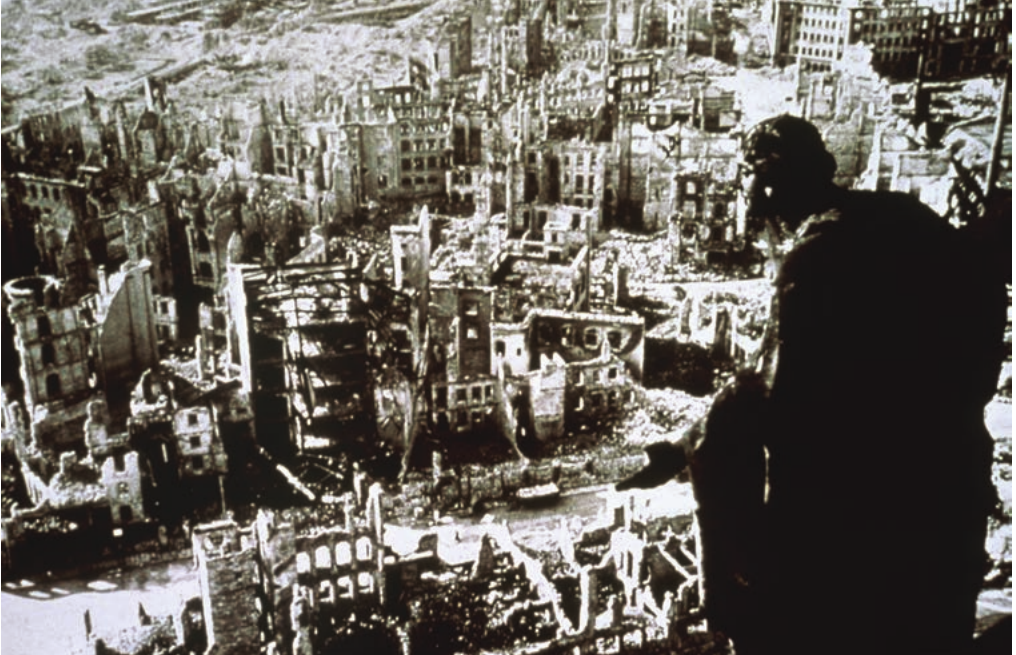
Unlike the Blitz in Britain, Allied bombing of Germany had a massive and devastating impact on morale and social life. Throughout the war, massive strategic bombing operations were conducted by British and American air forces.
Allied bombers used carpet bombing and firebombing techniques that destroyed entire cities. In Hamburg alone, approximately 40,000 people were killed - the same number as died in the entire Blitz on Britain. Other cities like Dresden and Frankfurt suffered similar devastation.
Important
Studies conducted during and after the war showed that over 90 per cent of German civilians reported that bombing was the worst factor of life on the home front. The constant fear of air raids, the destruction of homes, and the massive casualties took a severe toll on German society.
Propaganda and repression
Joseph Goebbels, the Nazi Minister of Propaganda, created an incredibly efficient propaganda machine that expanded into all aspects of German life. Propaganda appeared in newspapers, radio broadcasts, films, speeches, parades, and even sporting events.
Initially, propaganda was effective because it could celebrate genuine military victories, such as the defeat of France. However, as the war continued and hardships increased, propaganda became less convincing. From 1944 until the end of the war, the general population completely distrusted official propaganda.
Terror state
The Nazi regime maintained control through terror. The SS and the Gestapo, under Heinrich Himmler, created a police state that used fear to control the population.
Important
The Night and Fog Decree of 1939 gave authorities the power to arrest and detain people without trial. Concentration camps were not hidden from the German public, and over 3 million Germans spent some time in one during the war. This was not just for Jewish people but also for political opponents, criminals, and others deemed undesirable by the regime.
People were kept in order through fear of the police state, which greatly shaped civilian life in Germany. Due legal process essentially disappeared inside Germany during the war, allowing the SS to control the German public through intimidation. The impact of terror led to an almost complete breakdown of the German family system, as people were afraid to trust even their own relatives.
Economic effects
Economic preparations
Hitler's belief in maintaining "business as usual" meant that Germany was slow to adopt total war measures. Unlike Britain, Germany did not initially mobilise women for labour on a large scale, nor did the government take complete control of industry or focus on mass production. Instead, Germany depended on continued Blitzkrieg victories to sustain the war effort. This approach changed only as German military success began to decline.
Women in Germany did play a part in keeping the war effort going, but their role was limited by Nazi ideology.
Movements to total war
Note
The historian AJP Taylor argued that Germany's movements towards total war came "much too late". It was not until 18 February 1943 that Goebbels publicly acknowledged the need for total war in a famous speech at the Berlin Sportpalast, declaring that "Total War means a shorter war".
Albert Speer's appointment as Armaments Minister in 1942 significantly improved German war production and may have extended the war by two years. Speer introduced organisational improvements including:
- The use of slave labour and prisoners of war (often working them to death)
- Reducing the number of different models of trucks, planes, and weapons (for example, reducing aircraft types from 42 to just five)
- Building underground factories to protect production from Allied bombing
Important
However, Germany never utilised women in factories to the same extent as Britain. Goebbels promoted the Nazi ideology that women would cause unrest in the workplace and should instead focus on "Kinder, Kuche, Kirche" (Children, Church, Kitchen).
Impact of Allied strategic bombing
Allied bombing campaigns had a devastating impact on German production. Economic activity had to be dispersed across the country or moved underground, which severely limited potential output for the war effort.
Critical resources became scarce:
- Oil supplies reached critically low levels
- Chemical production was drastically reduced
- The railway system was severely disrupted
These factors prevented the German war machine from effectively supporting the military effort. Ultimately, Allied bombing contributed to the total collapse of the German economy and Germany's ability to wage war effectively towards the end of the conflict.
The effects of war on Russia
Social effects
Total war
The Soviet Union was a disciplined political system where citizens lived under the tight control of the NKVD (secret police). Labour camps and the secret police ensured that the Soviet Union could demand exceptional human effort from its population.
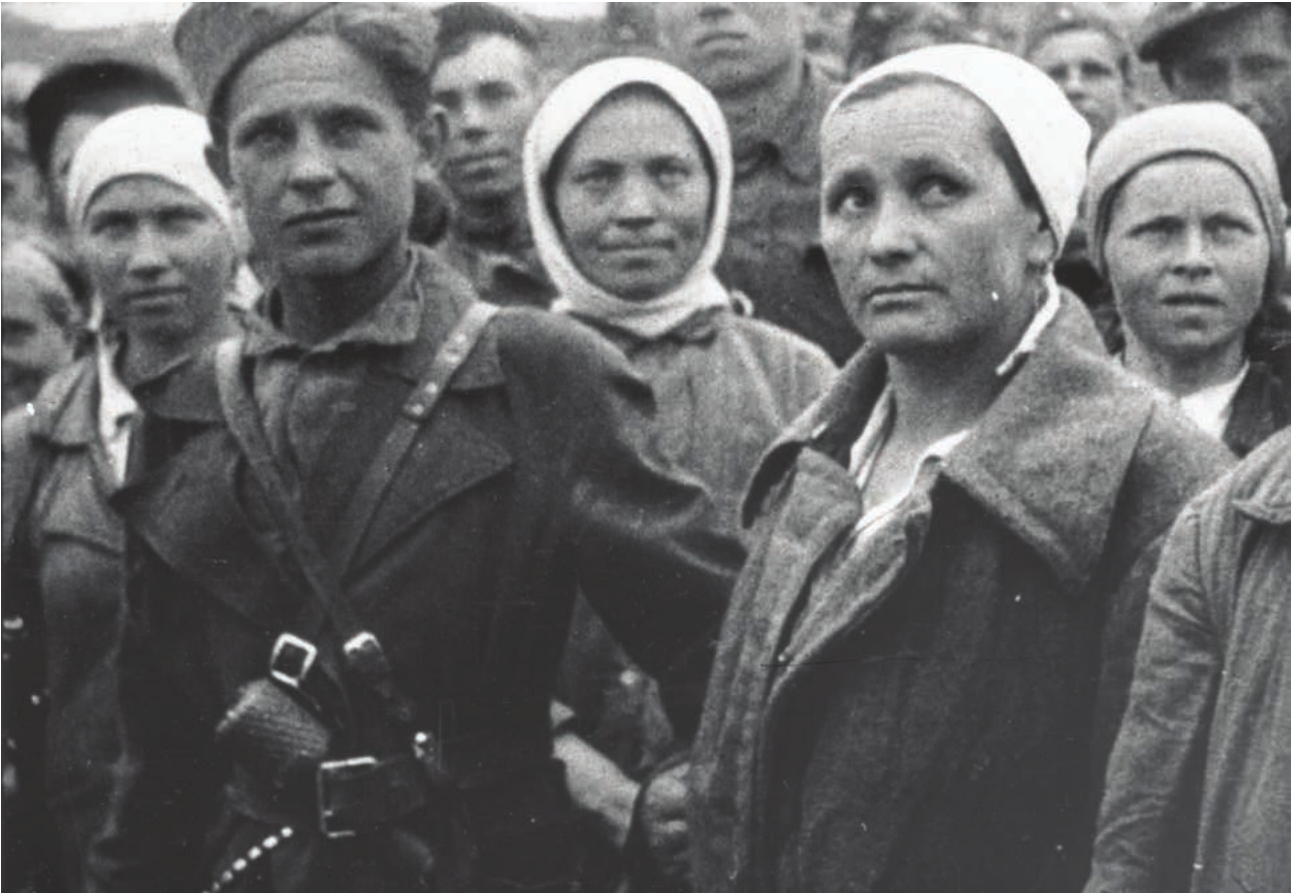
All economic resources and loyalties were directed towards the war effort. Russians responded enthusiastically to this mobilisation. There was genuine nationalism as people viewed Stalin as a symbol of resistance against foreign invaders.
Note
The conflict became known as the Great Patriotic War. The Soviet people saw themselves as defending "Mother Russia" against invasion, which gave the war effort a powerful emotional and patriotic dimension.
Propaganda
Soviet propaganda encouraged Russians to see themselves as brothers, sisters, and children of "Mother Russia". Historical references were made to past heroes, including Peter the Great and General Kutuzov, who had saved Russia from Napoleon's invasion in 1812.
Propaganda had a strongly anti-German tone and embraced Russian patriotism. Poems and plays promoted emotional responses of hatred and revenge towards Germany, helping to maintain fighting spirit even during the darkest periods of the war.
Religion and the church
Surprisingly, the officially atheist Soviet state relaxed its anti-religious stance during the war. Church schools were opened and there was new openness towards training priests. The government even encouraged Muslims to support Russia, hoping to weaken any potential support for German forces.
Note
Anti-religious propaganda essentially came to an end during the war years, as Stalin recognised that religious faith could strengthen resistance to the German invasion.
Economic effects
Economic impact of the war
The Soviet Union suffered more than any other nation in World War II. Approximately 20 million Russians lost their lives - a staggering figure that dwarfs casualties in other countries. The war destroyed towns, factories, villages, railway tracks, schools, and livestock. Many Russians were forced to live in primitive wooden huts after their homes were destroyed.
Important
The losses in the first few months of the war were astoundingly high. During the initial German invasion (Operation Barbarossa), an estimated 5 million Russians lost their lives.
Industrial migration
At the time of the German invasion in June 1941, the Soviet Union was in a critical state. Industrial areas in the western Soviet Union were in danger of being captured or destroyed by advancing German forces.
Stalin organised a remarkable mass migration of industry eastwards, away from the fighting. This operation included relocating entire plants, machines, and factories. Workers moved further to the east, and factories were completely stripped down, transported, and rebuilt in safer locations.
Production achievements
Working conditions were extremely harsh. Workers faced cold temperatures and severe food shortages. However, the level of production achieved in the face of such human suffering was extraordinary.
Significant production took place in terms of aircraft, guns, tanks, and new industrial enterprises. United States Lend-Lease Aid, which began in 1942, proved significantly helpful in developing Soviet industry. Under this programme, America supplied equipment and materials, with the understanding that Russia would pay back the United States after the war.
Note
The Soviet Union adopted a clinical approach to simplicity and rationalisation of industry. Instead of producing many different models, they focused on a few standardised designs, particularly the T-34 and KV tanks and specific aircraft models. This approach maximised production efficiency.
Comparing the three nations
Each nation experienced the war differently based on their political systems, geography, and military situations.
Britain maintained remarkably high morale despite the Blitz, with a united home front and effective government coordination. The British embraced rationing and government controls, and women made crucial contributions to the war effort. Surprisingly, public health actually improved during the war years.
Germany initially tried to maintain a "business as usual" approach, avoiding total war mobilisation until it was too late. The Nazi terror state controlled the population through fear rather than genuine support. Allied bombing devastated German cities and eventually crippled the economy. The regime's ideological commitments, such as limiting women's work roles, hindered the war effort.
Russia suffered by far the greatest casualties and destruction but achieved remarkable industrial feats. The combination of genuine patriotism, state terror, and total mobilisation allowed the Soviet Union to continue fighting despite catastrophic losses. The mass migration of industry eastwards was a logistical achievement that helped ensure Soviet survival.
Summary
Key Points to Remember:
-
Britain's resilience: Despite the Blitz killing 40,000 civilians and destroying over one million homes, British morale remained strong. The "Dunkirk Spirit" and "we can take it" attitude united the nation.
-
Total war mobilisation: All three nations eventually adopted total war measures, but timing mattered. Britain mobilised quickly and effectively. Germany moved to total war too late. Russia practised total war from the beginning through state control and terror.
-
Women's crucial role: Women made vital contributions in all three nations. In Britain, 7.1 million women were engaged in war work by June 1944. Germany limited women's roles due to Nazi ideology. Russian women worked in factories and even served in combat roles.
-
Bombing impacts: Allied bombing of Germany was far more devastating than the German Blitz on Britain. Over 90% of German civilians said bombing was the worst aspect of the war. Strategic bombing crippled German oil production, chemical plants, and railways.
-
Soviet sacrifice: The Soviet Union paid the highest price, losing approximately 20 million people - more than any other nation. Despite this, remarkable industrial achievements, including the mass migration of factories eastwards, enabled the Soviets to continue fighting and ultimately defeat Germany on the Eastern Front.