End of the Conflict (HSC SSCE Modern History): Revision Notes
📚Revision Notes
End of the Conflict
D-Day and the liberation of France
Operation Overlord
In May 1943, British Prime Minister Winston Churchill and US President Franklin Roosevelt set 1 May 1944 as the date for a cross-Channel invasion of France. By early 1944, preparations for this massive operation, known as Operation Overlord, were well underway.
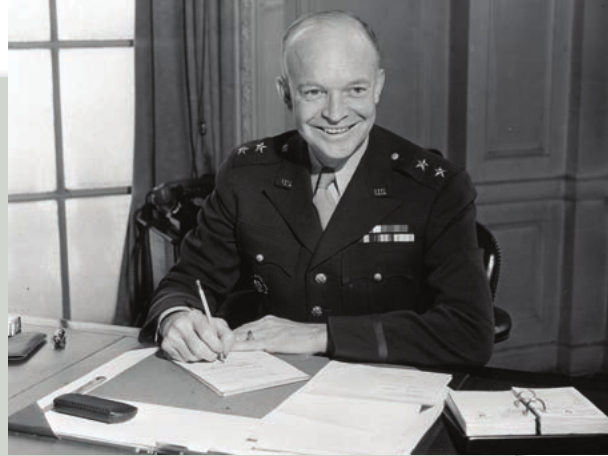
Key leadership decisions:
- President Roosevelt chose General Dwight Eisenhower as Supreme Commander
- British General Bernard Montgomery was selected as ground commander, responsible for operational planning
- General Omar Bradley would lead the American forces
Why Normandy?
The Allies had to make difficult strategic choices about where to land. Although Calais offered the shortest route to the Ruhr (Germany's industrial heartland), the Allies chose Normandy because:
- The Normandy ports could better accommodate the massive invasion force
- It would allow American forces under Bradley to land on the eastern end and advance on Cherbourg
- British forces could simultaneously seize the town of Caen
Note
Deception Tactics Used by the Allies
The Allies employed clever deception strategies to confuse the Germans:
- They built a 'dummy' camp near Dover (opposite Calais) under General George Patton's command
- False radio traffic suggested the invasion might occur in Norway
- Ultra intelligence confirmed the Germans believed these deceptions
Although Hitler expected an invasion in Normandy, his commanders Rommel and Rundstedt expected it at Calais, which divided German defensive planning.
Important
The Critical Weather Decision
Eisenhower originally chose 4 June 1944 as D-Day. However, a storm developed and he faced a tremendously difficult decision:
- If he postponed, tide and light conditions wouldn't be right again until 19 June
- Bad weather would neutralise air support
- Troops were already loaded onto ships
- Postponement risked losing the element of surprise
At 21:30 on 4 June, Eisenhower's weather officer predicted a brief 36-hour break in the storm on 5-6 June. Eisenhower decided to proceed with the invasion.
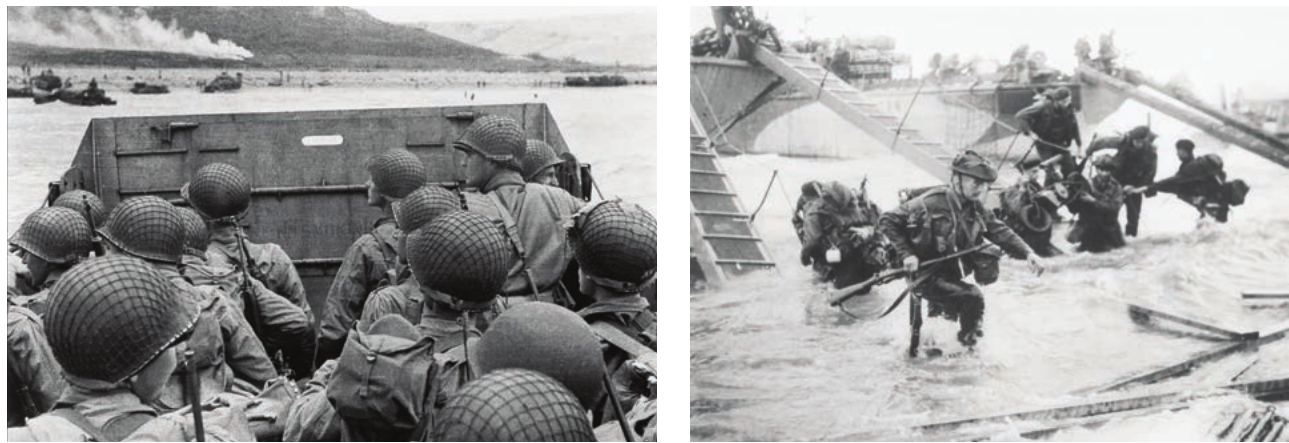
D-Day: 6 June 1944
German commander Erwin Rommel understood that defeating the Allies at the beaches was crucial. He called it 'the longest day', predicting the first 24 hours would be decisive.
The airborne assault:
Allied paratroopers dropped into France during the night of 5 June. These troops faced enormous challenges:
- They carried heavy equipment
- Most pilots were going into combat for the first time
- Their C-47 transport planes were neither armoured nor armed
- Around 80% of the 101st Airborne were expected to become casualties
The paratroopers' drops were chaotic. Few landed where intended - some dropped at sea, some at too-low altitudes, and some drowned in flooded fields. However, this dispersal inadvertently helped the invasion because:
- Germans received reports of invading paratroopers from across Normandy
- The French Resistance cut German communications
- Both factors slowed German response
The beach landings:
The seaborne invasion force landed early on 6 June. The Allies achieved strategic surprise due to:
- Poor weather (the Germans didn't expect an attack)
- Continued German belief that Normandy was a diversion and the main attack would come at Calais
- Delayed German response because Hitler wasn't awakened immediately with the news
- French Resistance actions disrupting German communications
Results of D-Day:
- Landings at Juno, Sword, Gold and Utah beaches were successful
- US troops at Omaha Beach were pinned down for hours before breaking out late in the day
- The Normandy landings were merely the beginning of a protracted and deadly campaign
Note
German Leadership Failures
The German response on D-Day was hampered by their rigid command structure. Hitler's leadership principle meant that Wehrmacht personnel were afraid to take initiative or adapt to battlefield conditions. They waited for orders from distant headquarters that had no understanding of the actual situation on the ground.
The liberation of France
Following the success of D-Day, the question became whether the Allies could liberate the rest of France. By 1 July, almost 1 million Allied troops had landed at Normandy.
The breakout:
The Allied advance from Normandy was initially slow:
- Difficult terrain, including impenetrable hedgerows (trees and bushes), made fighting particularly challenging
- Montgomery was slowed by determined German defences at Caen, which didn't fall until 18 July
- General Patton's Third Army broke out in July, allowing Allied forces to push deeper into France
Operation Cobra (25 July):
This operation aimed to:
- Take advantage of German distractions at Caen
- Break through German defences
- Allow rapid advance into France
French Resistance groups gained control of the Brittany peninsula, while Allied forces trapped an entire German Army group in the Falaise Pocket, where fighting and destruction were particularly intense.
The liberation of Paris:
In mid-August 1944, a debate arose among Allied commanders about Paris:
- Eisenhower wanted to bypass Paris because it had little strategic importance and would slow the Allied advance
- Charles de Gaulle wanted his Free French forces to liberate Paris before the communist Parisian Resistance did
After French workers and police revolted against German occupiers on 15 August, Eisenhower ordered French General Leclerc to advance on Paris on 22 August. The city surrendered on 25 August, with de Gaulle arriving on 26 August.
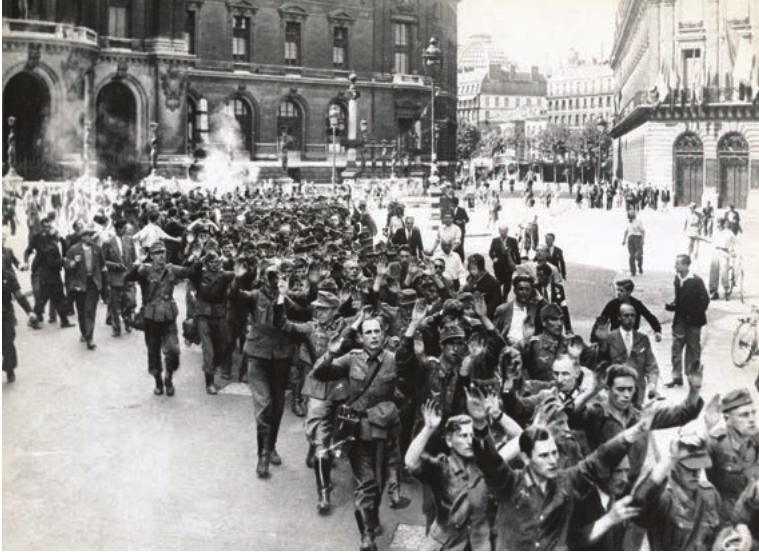
Speed and cost of the French campaign:
Within six weeks of pushing out of Normandy in late July:
- Paris had been liberated
- Allies had reached Belgium
- By September 1944, Allied armies were advancing on Germany
Important
The Staggering Human Cost
However, the human cost was staggering:
- Germany lost 400,000 men
- The Allies lost 200,000 men
The liberation of France converted Germany's declining power in 1943 into military defeat in 1944. The war on three fronts (Western Europe, Italy, and Eastern Europe) meant the Russian advance was considerably stronger. The war in Europe was clearly entering its final stages, and Allied victory was all but certain.
Russian counter-offensives, 1944
The certainty of German defeat on the Eastern Front became clear as German forces crumbled before three great waves of Soviet advances. In summer and autumn 1944, the southern sector of the Eastern Front witnessed catastrophic collapse. The Soviet Army liberated:
- Romania (August)
- Bulgaria (September)
- Yugoslavia (October)
- Hungary (early 1945)
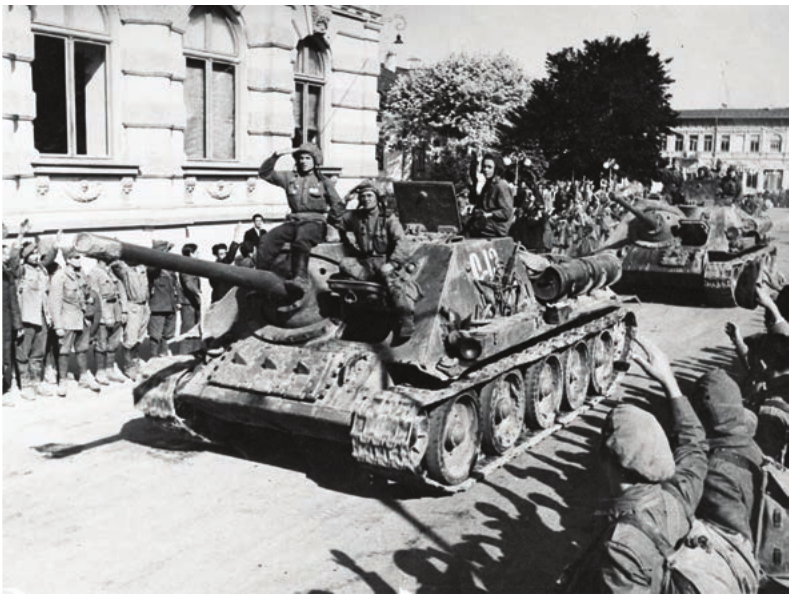
Operation Bagration
Operation Bagration was a vital Soviet offensive that destroyed the German Army Group Centre. Launched just after D-Day in June 1944, it doesn't receive the same attention as D-Day, but the scope of fighting was much larger.
Scale of Operation Bagration:
- Three times as many Germans defended against the Soviet advance as defended Normandy and northern France
- Ten times as many Russians were involved in Operation Bagration as Allied troops who landed on D-Day
- The German Army Group Centre was the anchor for the German front
- Russian victory secured the shortest path to Berlin
Note
Key Terms
- Partisan: A member of a secret armed force whose aim is to fight against an enemy controlling the country
- Maskirovka: A Russian word meaning 'disguise' - the Soviet military technique of deception in World War II
Key dates in Operation Bagration:
| Date | Event |
|---|---|
| 19 June 1944 | Red Army partisan units operated behind German lines, attacking Wehrmacht supply lines and transport |
| 21 June 1944 | Soviets launched massive air attacks |
| 23 June 1944 | Soviet technique of 'maskirovka' employed - Red Army caught Germans by surprise, moving forward under cover of darkness |
| 3 July 1944 | Hitler made the disastrous decision to order Army Group Centre soldiers to stand firm and not change positions despite Soviet advances. This proved fatal as Soviets left enemy units isolated behind them while pushing forward in powerful spearheads. Hitler's orders reflected poor leadership and distrust of German general staff |
Example
Worked Example: Soviet Maskirovka in Action
The Red Army's use of maskirovka (deception) during Operation Bagration demonstrates the effectiveness of military deception:
Step 1: Preparation Phase
- Soviet forces conducted careful reconnaissance while maintaining normal activity patterns
- Radio traffic remained at typical levels to avoid suspicion
Step 2: Deception Implementation
- On 23 June 1944, Soviet forces moved under cover of darkness
- Germans were caught completely by surprise at the point of attack
Step 3: Result
- The element of surprise allowed Soviet forces to break through German defenses quickly
- German Army Group Centre was unable to mount an effective defense
Results of Operation Bagration:
Operation Bagration proved an extraordinary victory for the Red Army:
- Minsk, capital of Belorussia (gained by Germans three years earlier), was captured by Soviet forces
- By end of July, Red Army had moved into Polish territory, taking Lvow (major cultural centre of eastern Poland)
- Military successes emboldened Stalin - expansive land gained through counter-offensives would not be easily relinquished at war's conclusion
The Warsaw uprising
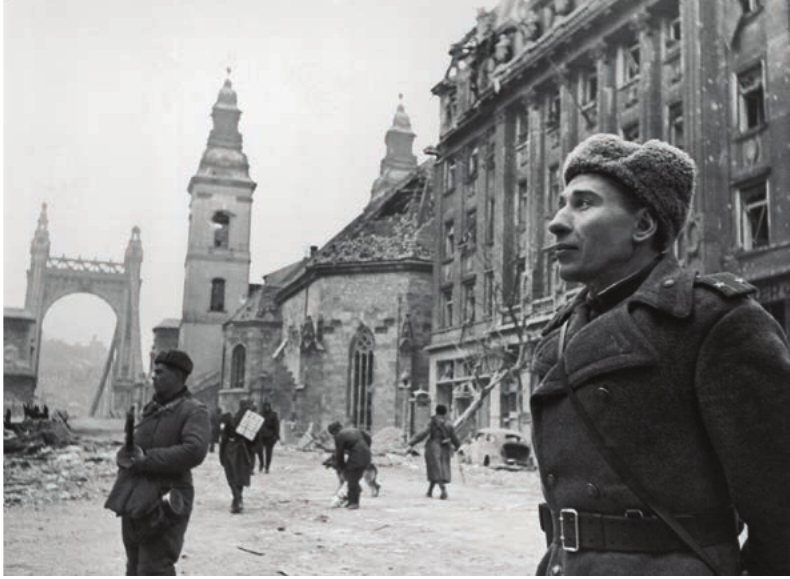
On 1 August 1944, the Polish resistance planned an uprising to take control of Warsaw. If Warsaw could be liberated by Poles rather than by Stalin or his protégés, Poland's independence could not be denied to the victors.
Important
The Tragic Outcome
The uprising began as the Red Army approached Warsaw, nearing the Vistula River. The Home Army expected that in a day or two they could beat back the retreating Germans and take control before the Red Army entered.
However, crucially:
- When the revolt began, the Red Army stopped at the Vistula River
- Soviets claimed the army needed to rest
- Stalin refused Western requests to use Soviet air bases to refuel transport planes dropping supplies to the Home Army
- Nazis moved forces in to crush the revolt, which lasted 63 agonising days
- More than 200,000 inhabitants of Warsaw died
- The German Army dynamited the city, leaving it in total ruin
- After destroying Warsaw, Nazis retreated, and the Red Army resumed its advance westward
Soviet advance continues:
As the Red Army pushed into Finland in September 1944, Germany's satellite states began deserting the Axis. Hitler refused requests to withdraw German troops from Baltic states and form a new defensive line. In January 1945, Soviets moved from Poland, heavily outmatching German forces. By February, the Red Army was just 65 miles from Berlin.
Note
Soviet Conduct During Advance
As the Red Army closed in on Berlin, its advance was often not experienced as liberation. Red Army soldiers engaged in mass rapes as they moved through Poland, Hungary and into Germany. Even in Yugoslavia, a communist ally of the Soviets, rapes were common. When Yugoslav partisan leader Milovan Dilas complained to Stalin, Stalin merely disregarded these abuses, saying Soviet soldiers were 'just having fun'. The Soviet advance would long remain a traumatic memory for many people.
Final defeat 1944-45
Operation Market Garden and the Battle of the Bulge
After the fall of Paris in August 1944, the Allies were poised for their final assault on Germany. However, they debated the best way to break into Germany:
- Montgomery urged a single-thrust strategy aimed at taking the Ruhr
- Eisenhower advocated a broad-front strategy
Allied challenges in late 1944:
- Troop shortage: British were at the limit of their manpower reserves, and United States was stretched by demands of a two-theatre war
- Overconfidence and faulty intelligence: Allies were convinced Germany was on the brink of defeat, but Allied intelligence underestimated German strength in the west
- Logistical problems: Advancing troops were outrunning their supplies. A port closer to the front (Antwerp) was desperately needed, but Hitler controlled the Scheldt estuary, making the port useless
Operation Market Garden (September 1944):
Montgomery advanced a daring plan to jump the Rhine in Holland, thereby outflanking the Siegfried Line (also known as the West Wall - a defensive system of pillboxes and strongpoints built along Germany's western frontier in the 1930s).
Goals of the operation:
- Cross the last river barrier guarding Germany
- Outflank the northernmost fortifications of the West Wall
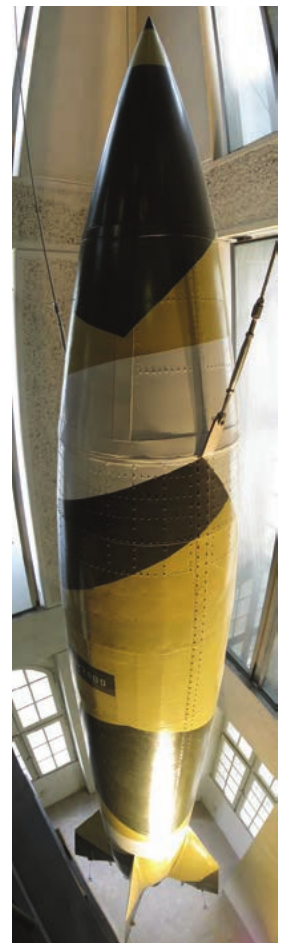
- Threaten Germany's V-2 rocket launching sites in Holland (the world's first long-range guided ballistic missile, developed by Nazis to attack Allied cities)
Why Market Garden failed:
- Allies had to cross numerous rivers and canals and seize many bridges
- They suffered from overconfidence, expecting to easily brush aside two defending German armoured divisions
- Allied forces moved very slowly
The defeat meant no Rhine crossing in 1944. Meanwhile, Patton and the Americans were bogged down in Lorraine. Though First Army took Aachen on 21 October, Allied progress was slow in late 1944 and victory remained elusive.
Battle of the Bulge (December 1944):
Hitler struck back with the Ardennes offensive in December 1944. He hoped one last dramatic stroke would:
- Split the Allies between Montgomery in the north and Americans further south
- Drive a wedge between Allied armies and destroy them piecemeal
- Reach Antwerp through a massive armoured drive
The German High Command worried that Hitler's plan would:
- Weaken Germany's position in the east
- Consume its last troop reserves
Why the Allies were caught off guard:
- Allies assumed the Ardennes was impenetrable, especially in winter
- German radio silence meant Ultra intelligence was of little use
- Despite tell-tale German troop movements, Allies exhibited fatal overconfidence
Hitler's Operation Autumn Fog (16 December 1944):
- Caught outmatched Americans completely by surprise and unprepared
- Allied air power neutralised by bad weather for over a week
- German drive created huge bulge in American lines
- American prisoners were massacred at Malmedy
- Despite being surrounded, isolated American units held out at key road junctions of Saint Vith and Bastogne
- Patton's Army broke the Siege of Bastogne on 26 December
- When weather cleared, Americans rallied air power and halted German offensive by end of January
Important
Consequences of the Battle of the Bulge
The battle further weakened the German Army:
- Hitler sacrificed his last reserves and best armour on an essentially doomed enterprise
- German troops were caught west of the Rhine
- The battle gravely weakened German position in the east on the eve of massive Russian offensive in Poland in January 1945
- The failure represented the last gasp of the Third Reich
The race to Berlin
British and American forces drove towards Germany from the west. The invasion of Germany began when Anglo-American forces crossed the Rhine.
Crossing the Rhine:
The Allied plan called for a three-pronged advance to clear the Rhineland:
- British and Canadian forces proceeded slowly against bitter German resistance, not reaching Rhine until 21 February 1945
- Montgomery understood his troops would have priority to cross the Rhine first
- Cologne fell to US First Army on 5 March
- Two days later, US Third Army crossed the Rhine at Remagen
- On 23 March, Montgomery launched what was to have been the main offensive across the Rhine
- By 25 March, all organised resistance west of Rhine had ceased
- By 27 March, all seven Allied armies had crossed the Rhine
The advance towards Berlin:
Anglo-American forces then raced towards Berlin:
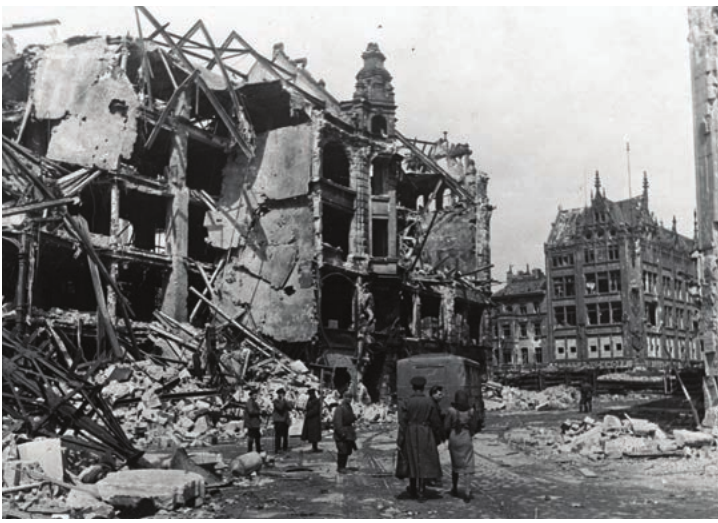
- Next objective was the Ruhr, which was encircled by April
- German forces resisted fiercely, even though they had effectively lost the war
- On 11 April, Simpson's 9th Army reached the Elbe, where Eisenhower ordered him to halt (Simpson was overextended and short of supplies)
Note
The 'Big Three' and Political Considerations
The Big Three (US President Roosevelt, British Prime Minister Churchill and Soviet dictator Stalin) had agreed at the Yalta Conference (held in February 1945 in the Crimea) that Berlin would be part of the Soviet zone of occupation.
The Allies were:
- Unsure of Hitler's whereabouts
- Fooled by German plans to construct an 'Alpine redoubt'
- Eisenhower directed main thrust of Allied assault at Bavaria
The final Soviet drive for Berlin (16 April 1945):
- Soviets unleashed huge artillery barrage against the city
- Russian units linked up west of Berlin on 25 April, invading the city
- Hitler committed suicide in his bunker on 30 April
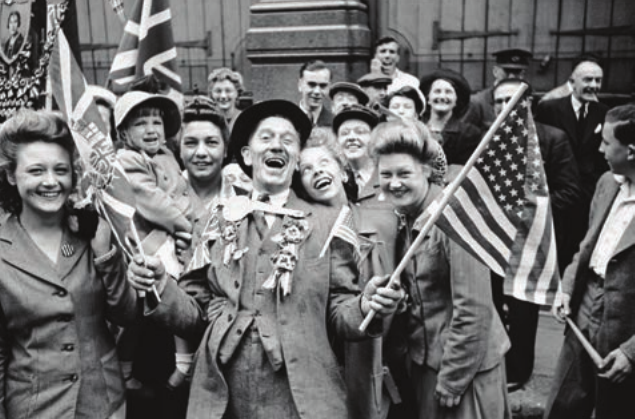
- VE Day (Victory in Europe) was declared in the West on 8 May 1945
Important
The Staggering Cost of World War II
It is estimated that more than 55 million people perished across the world during World War II:
| Country | Deaths |
|---|---|
| Germany | 1,800,000 military dead; 1 million plus missing; 500,000 civilians dead; 4 million who vanished in trek from Eastern Europe to West |
| Great Britain | 390,000 fatalities |
| France | 810,000 |
| United States | 259,000 |
| Japan | 1,800,000 |
| Poland | 4.5 million (over 4 million civilians) |
| Soviet Union | Over 22 million dead, including 11 million soldier deaths (2.5 million died in German captivity) and 7 million civilians - a tenth of entire population |
Furthermore, 6 million people perished during the Holocaust. This was death on a scale never before imagined.
The Nuremberg War Crimes Trials
In the closing stages of war, people gathered thoughts on international efforts that might assure human rights and ground hopes for peace. The United Nations was held up as one such international institution, a successor to the League of Nations.
Another question needed answering: what should be done with defeated Nazi Germany and the crimes committed by the regime?
The disappearance of Nazis:
Contemporary observers such as Hannah Arendt documented a bizarre phenomenon when travelling in post-war Germany: it seemed all the Nazis had disappeared. People now presented themselves as either having been active resistors or passive inward objectors to the Nazi regime. It was difficult to find publicly professed Nazis in the war's aftermath. The regime's collapse had been total, and its ideology discredited.
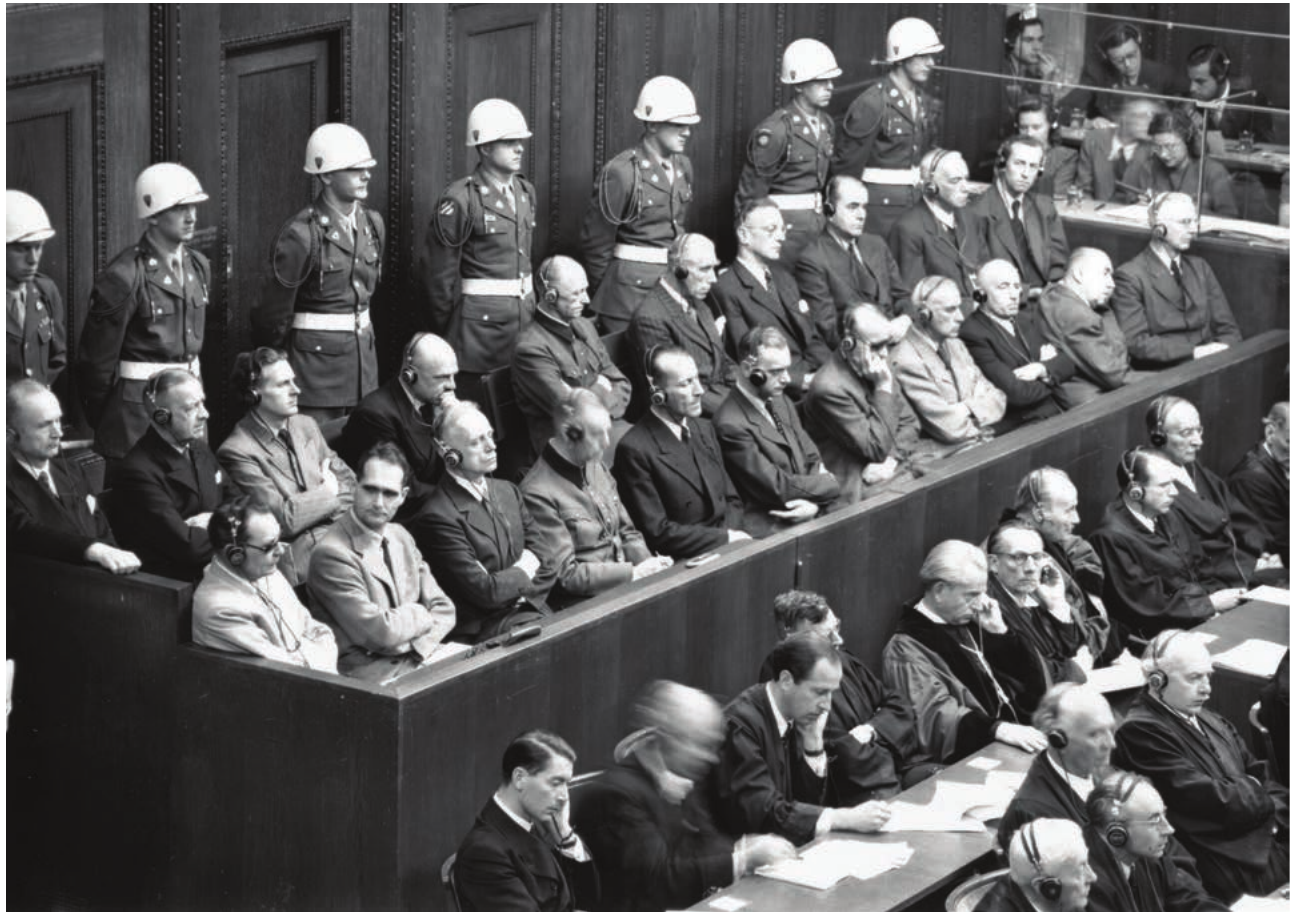
The trials:
In Nuremberg, southern Germany, from 1945 to 1947, prominent Nazi leaders were tried by Allied judges for 'crimes against humanity'. This term was significant because it emphasised new stress on human rights at the forefront of people's minds in the immediate post-war period.
Katyn Massacre: A series of mass executions of Polish nationals carried out by Soviet security agency NKVD in April and May 1940.
Note
Criticism of the Trials
Critics pointed out the irony of Soviet judges passing verdicts against their ideological allies from the Nazi–Soviet Pact – who were now defeated enemies – while Soviet crimes like the Katyn Massacre were not even considered. However, it was perfectly clear that sentences levelled against surviving Nazi leaders were richly deserved.
Important
Broader Significance of the Nuremberg Trials
The Nuremberg trials accomplished something far larger than holding individuals accountable. They were important in:
- Setting down historical facts of the Nazi regime and its crimes
- Spreading common knowledge of these events for future generations
- Making clear that no 'stab in the back' myth (like after World War I) was tenable in Germany during post-war period
- Ensuring history wouldn't repeat itself
The Nuremberg sentences
| Name | Position | Sentence |
|---|---|---|
| Martin Bormann | Hitler's Secretary (tried in absentia) | Death |
| Karl Doenitz | Admiral and Hitler's successor | 10 years' imprisonment |
| Herman Goering | Head of Luftwaffe (committed suicide in his cell) | Death |
| Wilhelm Keitel | Chief of Wehrmacht | Death |
| Joachim von Ribbentrop | Foreign minister | Death |
| Hans Frank | Governor of occupied territories | Death |
| Wilhelm Frick | Author of Nuremberg Laws | Death |
| Julius Streicher | Regional leader, publisher of virulent anti-Semitic literature | Death |
| Alfred Jodl | Hitler's chief military adviser | Death |
| Ernst Kaltenbrunner | SS commander, deputy to Himmler | Death |
| Rudolf Hess | Hitler's former deputy | Life imprisonment |
| Baldur von Schirach | Head of Hitler Youth | 20 years' imprisonment |
| Alfred Rosenberg | Governor of occupied territories | Death |
| Fritz Sauckel | Organiser of forced labour | Death |
| Arthur Seyss-Inquart | Governor of occupied territories | Death |
| Franz von Papen | Former Chancellor and Nazi diplomat | Acquitted |
| Walther Func | Economics minister | Life imprisonment |
| Hjalmar Schacht | Former banker to the Nazi regime | Acquitted |
| Erich Raeder | Head of navy | Life imprisonment |
| Hans Fritzsche | Former Army High Command | Acquitted |
| Albert Speer | Armaments minister | 20 years' imprisonment |
| Constantin von Neurath | Former foreign minister | 15 years' imprisonment |
Reasons for the Allied victory
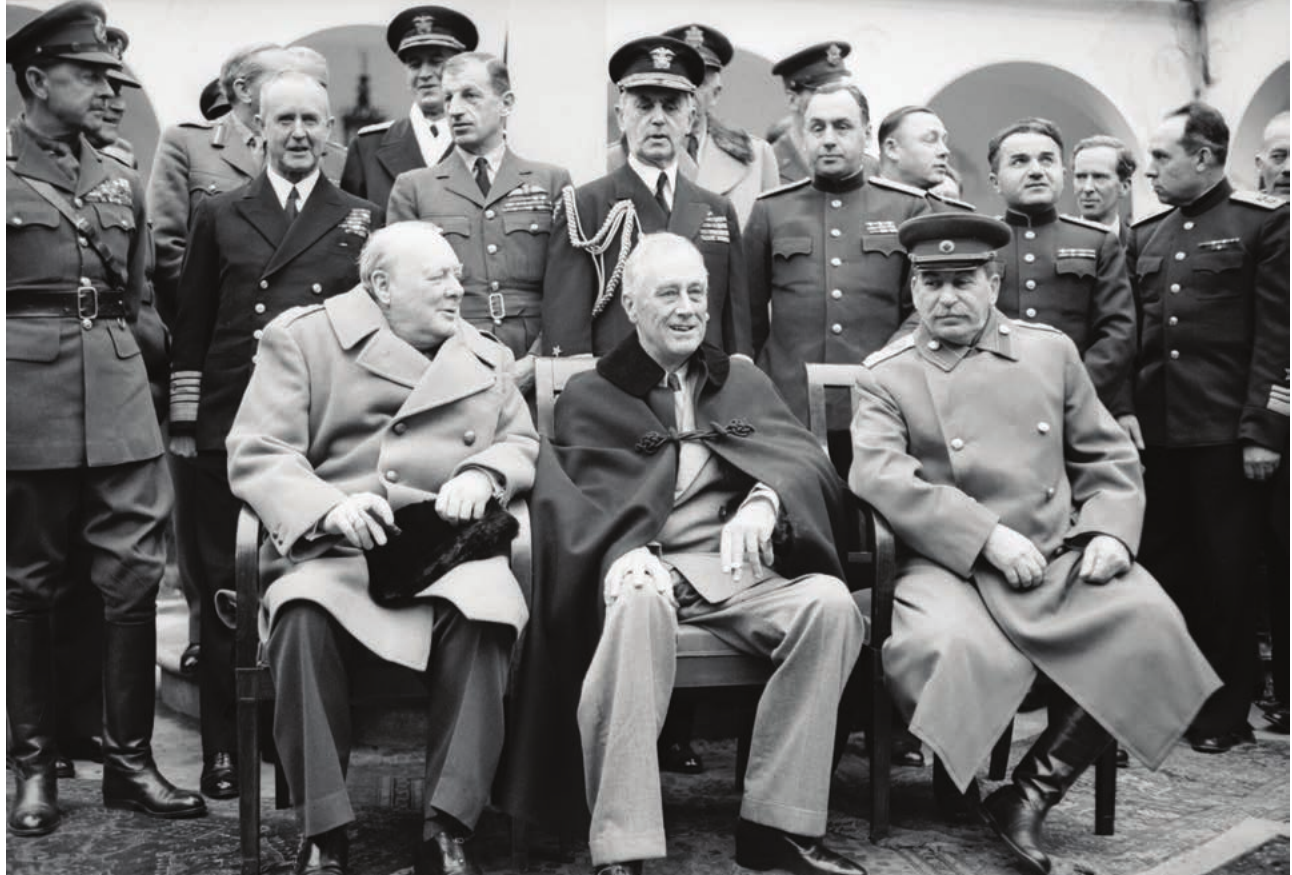
The dynamic nature and sheer scale of conflict in Europe make it hard to identify singular reasons for Allied victory. A combination of key factors accounts for the most rational explanation.
Prior to his execution at Nuremberg, Nazi Foreign Minister Joachim von Ribbentrop identified three primary factors in Allied victory:
- The unexpected resistance of the Red Army
- The extensive resources of the United States
- Allied dominance in the air war
US economist John Galbraith highlighted that Allied strengths were further accentuated by:
- Political shortcomings of the Nazi regime
- Economic shortcomings of the Nazi regime
While Allied strength in key areas accounted for victory to an extent, these strengths were enhanced through the incompetency of the Nazi regime itself.
Summary
Key Points to Remember:
-
D-Day (6 June 1944) was the largest amphibious invasion in history, establishing a crucial Western Front that forced Germany to fight on multiple fronts simultaneously.
-
Operation Bagration was the largest Soviet offensive of 1944, destroying German Army Group Centre and opening the shortest path to Berlin - its scale was actually larger than D-Day.
-
The liberation of France was achieved within six weeks of the Normandy breakout, but at a staggering human cost: Germany lost 400,000 men and the Allies lost 200,000.
-
The Battle of the Bulge (December 1944) was Hitler's last major offensive, which ultimately failed and consumed Germany's last reserves, hastening the Third Reich's collapse.
-
The Nuremberg Trials established the precedent of holding individuals accountable for 'crimes against humanity' and created a historical record that prevented the emergence of another 'stab in the back' myth like after World War I.