Growth of European Tensions (HSC SSCE Modern History): Revision Notes
📚Revision Notes
Growth of European Tensions
The collapse of collective security
The road to World War II was paved with the failure of international cooperation and the breakdown of collective security mechanisms established after World War I. Understanding how and why these systems failed is essential to grasping why war broke out in 1939.
Note
The collapse of collective security wasn't a sudden event but a gradual process throughout the 1930s. Each failure to respond to aggression made the next violation easier and war more likely.
Understanding collective security
Collective security refers to a security arrangement where each state accepts that the security of one nation is the concern of all. When one member is threatened, all members commit to a collective response. This principle formed the foundation of the League of Nations.
Background to the League of Nations
US President Woodrow Wilson championed the creation of the League of Nations after World War I. Its primary purpose was preventing international conflicts, though it also addressed non-political issues with some success.
Wilson's vision rested on three critical articles of the League's Covenant:
Important
The Three Pillars of the League of Nations:
- Article 10: Collective military action against any aggressor nation
- Article 12: International disputes should be taken to arbitration rather than war
- Article 16: Economic sanctions could be imposed on aggressive states
These three articles represented the theoretical foundation of collective security, but their effectiveness depended entirely on member states' willingness to enforce them.
However, serious doubts about the League's effectiveness existed well before Hitler came to power. For example, the League failed to take meaningful action when Japan invaded Manchuria (a region of China) in 1931.
The fundamental flaw of internationalism
The League promoted internationalism - the idea that nations would sacrifice selfish national interests for the common good. This proved to be its greatest weakness.
The interwar period saw a dramatic rise in nationalism across Europe. The League was promoting international cooperation in a world increasingly dominated by aggressive nationalist regimes. Even before the 1930s, the League showed its weakness:
- Italy ignored the League when it bombed the Greek island of Corfu in 1923
- The League proved ineffective in various disputes in Latin America, Egypt, and between China and European nations
- The world's greatest power, the United States, never joined the League
- Germany was only a member from 1926 to 1933
- Major powers repeatedly left or never joined, undermining its authority
Note
The fundamental contradiction of the League was expecting nations to act against their own interests in an era of rising nationalism. This created a gap between the League's idealistic principles and the harsh realities of international politics.
The Abyssinia Crisis
Italy's 1935 invasion of Ethiopia (then called Abyssinia) in Africa represented a crucial turning point. It revealed not only Mussolini's fascist aggression but also the complete weakness of collective security, international opinion, and the global community.
Mussolini aimed to build an African empire for Italy, modelled on Ancient Rome, and to avenge Italy's humiliating military defeat in Ethiopia in 1896.
Italian warfare tactics
Italian forces made devastating use of modern technology in their conduct of war:
- Aeroplanes dropped poison mustard gas
- Artillery shells rained down on Ethiopian forces
- Population centres were bombed from the air - a preview of the greater aerial bombardments to come in World War II
- Italians deliberately followed what they called 'the policy of terror'
- Tenfold retribution in atrocities for any Ethiopian resistance
- Concentration camps were established for captured Ethiopians
Despite the valiant defence by Ethiopian forces, the country was ultimately defeated. In 1936, Ethiopia was annexed to Italy, and the Italian king was declared emperor of Ethiopia.
Weak international response
The League of Nations condemned Italy's invasion in strong diplomatic language. However, when it came to actual action, the League only imposed weak sanctions against Italy. Crucially, it avoided imposing an oil embargo, fearing this would be too provocative.
This feeble response discredited the League of Nations. Speaking to the League assembly in Geneva, the Ethiopian emperor issued a prophetic warning:
Important
"First it was us, next it will be you."
This warning by Ethiopian Emperor Haile Selassie proved tragically accurate. The League's failure to act against Italian aggression sent a clear message to Hitler and other dictators: aggressive expansion would not be met with serious resistance.
Impact on European tensions
The Abyssinia Crisis had significant consequences:
- It demonstrated that collective security had no real teeth
- Hitler praised Mussolini's action
- The relationship between Germany and Italy strengthened
- In October 1936, Italy and Germany formed the Rome-Berlin Axis, an alliance that represented another major step towards World War II
The Spanish Civil War
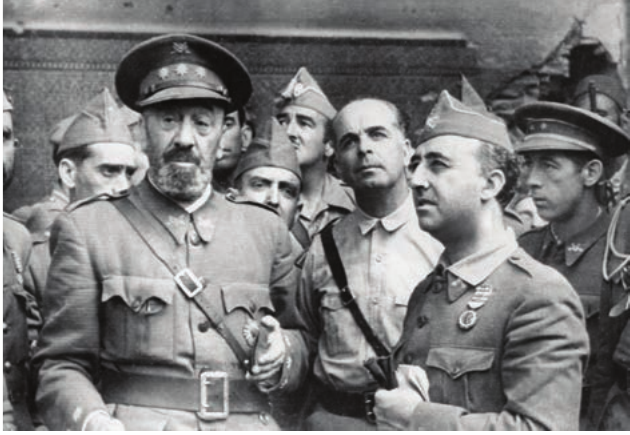
The Spanish Civil War (1936-39) represented a 'dress rehearsal' for World War II. It demonstrated the clash of ideologies, the use of new military technologies, and the involvement of major European powers in a proxy conflict.
The conflict erupts
In July 1936, General Francisco Franco led a military revolt against the Spanish republic. He was supported by:
- The Fascist Phalange
- Nationalist forces
They opposed the Popular Front, which consisted of:
- Democrats
- Socialists
- Anarchists
- Communists who supported the republic
International involvement
The civil war quickly developed an international dimension:
- Fascist Italy and Nazi Germany intervened with supplies, troops, and aeroplanes in support of Franco
- The Soviet Union supplied republican forces, pursuing the anti-fascist strategy of the Comintern (the international communist organisation)
- International brigades of volunteers from other nations joined the fight against fascism
Note
The Spanish Civil War became a testing ground for the broader ideological conflict between fascism and communism that would define World War II. It allowed Germany and Italy to test new military tactics and equipment in real combat conditions.
However, communist forces within the republican camp pursued their own agenda. They purged anarchist allies, jockeyed for position in a future Soviet satellite Spain, and fatally undermined the Republican war effort.
The bombing of Guernica
The April 1937 terror-bombing attack on the town of Guernica by the German Condor Legion marked a turning point in warfare. This three-hour attack:
- Was considered a preview of how future wars would be conducted
- Represented an experiment in destroying civilian populations from the air
- Would be immortalised in Pablo Picasso's famous painting
- Showed how aerial bombardment tactics would be perfected in World War II
Important
The Guernica Bombing: A Preview of Total War
The deliberate targeting of civilians at Guernica represented a new kind of warfare that would characterize World War II. The attack killed hundreds of civilians and destroyed much of the ancient Basque town, demonstrating that future wars would blur the line between military and civilian targets.
Franco used propaganda and 'the big lie' technique to deny the bombing altogether. His forces blamed the people of Guernica themselves for destroying their city - making the victims responsible for the atrocities.
Franco's victory and its significance
By 1939, Franco had won the civil war. He established harsh authoritarian rule (a system enforcing strict obedience to authority at the expense of freedom). Opponents were either:
- Interned in concentration camps
- Killed
The Spanish Civil War took over 500,000 lives. In its sheer brutality and clash of ideological camps, it served as a 'proxy war in advance' of the global conflict to come.
Britain, France and the policy of appeasement
Origins of appeasement
The policy of appeasement was primarily designed to avoid war. The international realities of the 1930s were complex and included:
- Global economic depression
- Guilt among Allied nations about the harshness of the Treaty of Versailles
- The growth of dictatorships across Europe
- War-weariness and horror at the casualties of World War I
These factors created an environment where appeasement seemed the most logical policy option. It was essentially a response to the failure of collective security.
Note
Appeasement is often criticized today, but it's important to understand the context in which it developed. The horrors of World War I were still fresh in memory - Britain alone had lost nearly a million men. The idea of preventing another such catastrophe seemed worth almost any diplomatic concession.
How appeasement emboldened Hitler
As Britain and France made concessions, Hitler's confidence increased dramatically. He was able to systematically destroy the restrictions of the Treaty of Versailles piece by piece.
Hitler grew to despise British and French leaders, viewing them as incredibly weak. Examples of their weakness included:
- Allowing German rearmament
- The Anglo-German Naval Agreement
- Accepting the remilitarisation of the Rhineland
- Permitting the Anschluss (union with Austria)
Domestic impact in Germany
Appeasement had significant effects within Germany:
- Nazi propaganda portrayed Hitler as a man of peace who could acquire land without war
- The 'Führer Myth' grew - Hitler was seen as restoring German nationalism
- It allowed Hitler to dominate his generals and assume more power and control
- Military opposition to Hitler's risky policies was undermined when his gambles succeeded
Important
The Paradox of Appeasement
Rather than satisfying Hitler and preventing war, appeasement had the opposite effect. Each concession increased Hitler's appetite for more territory and convinced him that Britain and France would never fight. The policy meant to preserve peace actually made war more likely.
The Anschluss (March 1938)
On 12 March 1938, Adolf Hitler announced an Anschluss (union) between Germany and Austria after German troops marched across the Austrian border. Austrian-born Hitler was essentially annexing (absorbing) the smaller nation into a greater Germany.
After a plebiscite (direct public vote) confirmed German rule, the Nazis began their ruthless policy of persecuting:
- Political dissidents
- Jewish citizens
The Anschluss violated the Treaty of Versailles, yet met no resistance from Western powers.
The Czechoslovak Crisis (September 1938)
Following the Anschluss with Austria, Czechoslovakia moved to the forefront of Nazi attention.
The Sudetenland issue
The Sudeten German Party was a pro-Nazi group whose stated goal was the secession of the Sudetenland from Czechoslovakia to Germany. The Sudetenland referred to the northern, southern, and western areas of Czechoslovakia inhabited primarily by people of German origin.
After the Anschluss, concern about Nazi invasion was so great in Prague that Hitler felt it necessary to send a reassuring telegram to Czech President Beneš, stating Germany had no territorial designs on Czechoslovakia. At the same time, however, he gave his military orders to 'smash Czechoslovakia in the foreseeable future'. The date was already set: 1 October 1938.
Diplomatic tensions rise
The Sudeten Germans, encouraged by Berlin, were instructed to:
- Make impossible demands
- Provoke incidents
- Make Czech authorities seem to be oppressing the German minority
Tensions rose throughout 1938. By May, the Czechs even partially mobilised their armed forces due to rumours of German invasion.
Treaty obligations
Czechoslovakia had treaties with two major European powers:
- France: pledged to defend Czechoslovakia
- The Soviet Union: would come to Czechoslovakia's aid if France did first
Note
Stalin distrusted the West and suspected they were trying to encourage German expansion eastward at Soviet expense. This mutual suspicion between the Western powers and the Soviet Union would have profound consequences for the crisis.
If Germany invaded the Sudetenland and the Czechs resisted, it would be the tripwire starting a second European war.
Summit diplomacy
British Prime Minister Neville Chamberlain decided to engage in summit diplomacy (face-to-face negotiations between heads of state). Chamberlain visited Hitler in Berchtesgaden (Hitler's retreat in the Bavarian Alps) on 15 September 1938.
They agreed that:
- Chamberlain would convince Britain and France to accept a plebiscite
- The plebiscite would determine whether the Sudetenland wanted to join Germany or remain in Czechoslovakia
Although Chamberlain convinced the British Cabinet and French Prime Minister Eduard Daladier to agree to Hitler's terms, the German Chancellor ignored the agreement. Hitler argued:
- The Czechs were persecuting Germans in the Sudetenland
- He could not hold back the wrath of the German people
- Germany must immediately enter Czechoslovakia
Hitler demanded agreement within 48 hours. Britain and France began mobilising their troops. The Czechs rejected Hitler's demands. Europe stood on the precipice of war.
The Munich Conference
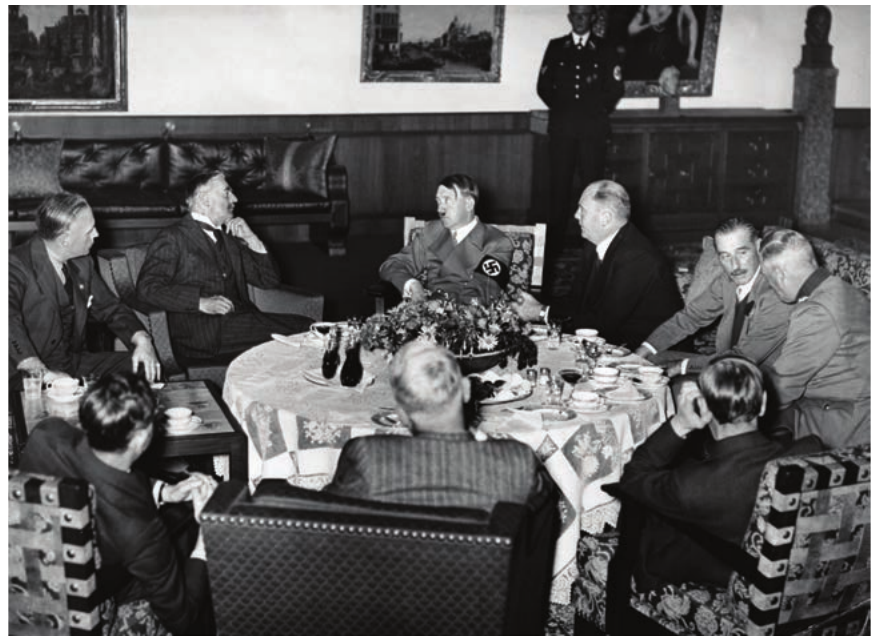
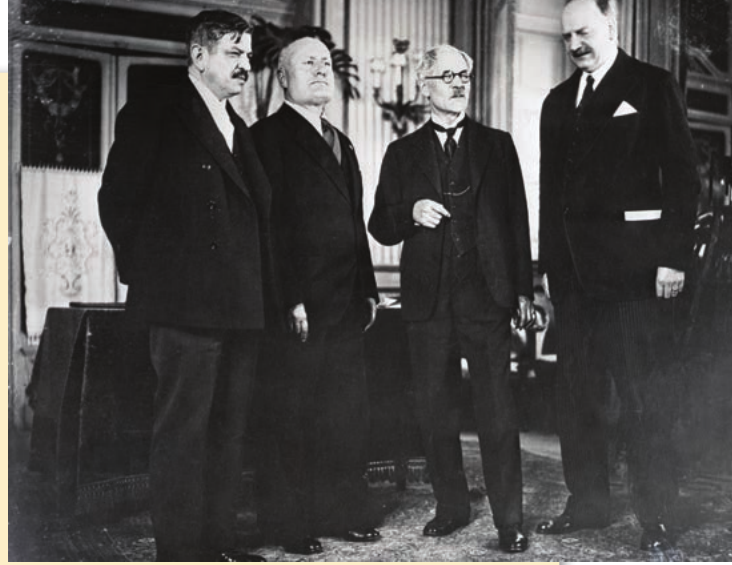
Italy's Benito Mussolini suggested using his influence to bring about a conference to settle the crisis. On 29 September 1938, Chamberlain, Daladier, Mussolini, and Hitler met in Munich for a conference that has lived in infamy ever since.
Important
The Betrayal at Munich:
- Though its purpose was to discuss Czechoslovakia's fate, the Czechs themselves were absent
- Their delegation literally had to stand outside the building, waiting to hear their country's fate
- The Soviet Union was also not invited, despite having treaty obligations to Czechoslovakia
- The Munich Conference gave the Nazis what they wanted
- German troops were permitted to immediately move into Czechoslovakia
- The Sudetenland became part of Germany without a shot fired
- The bad news was brought to Czech delegates with great embarrassment by Britain and France
Hitler achieved exactly what he wanted without war. His popularity in Germany soared. Germany had brought more Germans into the Gross Deutsche Reich (Greater German Empire), and Britain, France, and Italy had all bowed down to Germany.
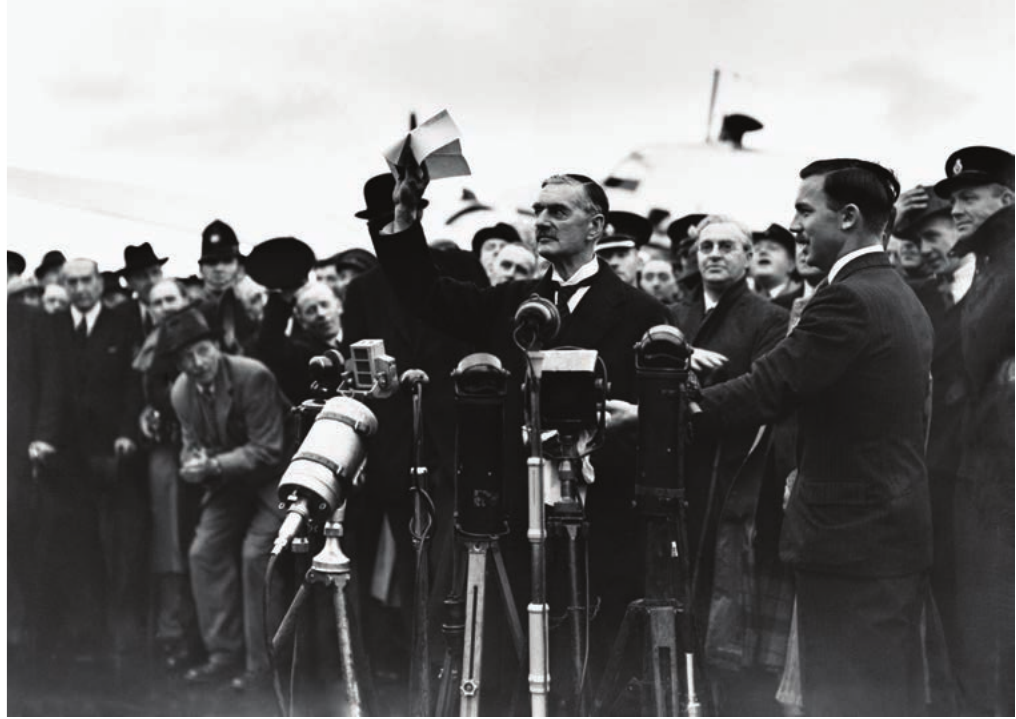
Back in England, Chamberlain famously declared: "I believe it is peace for our time."
Implications of the Munich Conference
The Munich Conference had three critical consequences:
1. Strengthened Hitler's position over the German military
German Army General Ludwig Beck and military conspirators had begun thinking about removing Hitler. They were shocked that the West would accept the Munich Agreement. Hitler had gambled and been proven right; the Army had been proven wrong - just as in 1936 when he remilitarised the Rhineland.
2. Drove the Soviet Union away from the West
The conference convinced Stalin of Western weakness. He believed France and England were anti-communist states not interested in holding back the Nazis, but only in channelling Nazi aggression eastward.
3. Further emboldened Hitler
Hitler saw Britain and France as weak and vacillating, not standing up to their treaty obligations. A year later, Munich would encourage Hitler to believe the West would not intervene when he invaded Poland.
Note
The Munich Conference is often cited as the ultimate failure of appeasement. It demonstrated that trying to satisfy Hitler's demands only led to greater demands. The sacrifice of Czechoslovakia bought neither "peace for our time" nor security for Europe.
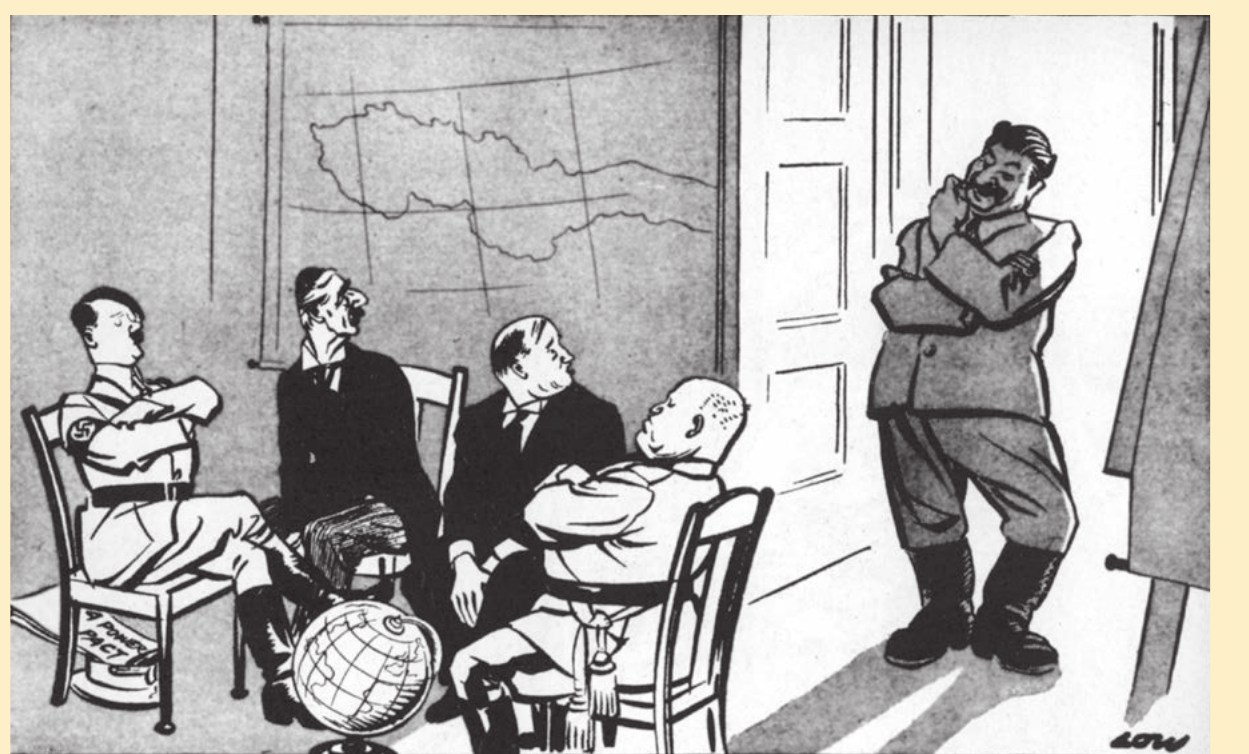
March 1939: The invasion of Czechoslovakia
Three weeks after the Munich Conference, German military plans were already underway for the invasion of what remained of Czechoslovakia.
In March 1939, Germany invaded Czechoslovakia. Until this point, all of Hitler's foreign policy moves could be justified under the principle of national self-determination (the concept that people should choose their own leaders and form independent states). But everything changed when German troops crossed the frontier in March 1939.
Important
The End of Appeasement
The invasion of Czechoslovakia in March 1939 marked a turning point. Hitler could no longer claim he was simply uniting German-speaking peoples. This was naked aggression against a non-German state, and it finally convinced Britain and France that Hitler could not be appeased. War was now inevitable.
The Czech Government was in an impossible position with no real resistance possible. France did not honour its obligations to Czechoslovakia, neither did Russia. Like Austria, the Czech state was absorbed by the expanding German nation.
The Nazi-Soviet Non-Aggression Pact
Poland's vulnerable position
Poland, situated between Germany to the west and Soviet Russia to the east, was in an extremely vulnerable position by the late 1930s. France and Britain made guarantees to protect Poland, attempting another collective security structure. However, they had already abandoned this approach with appeasement and the carving up of Czechoslovakia.
Britain and France wanted the Soviet Union involved to create a credible counterweight to Germany in the east. However, they miscalculated the situation and ultimately decided not to engage seriously with the Soviet Union for several reasons:
- Chamberlain argued it was inconceivable that the Soviet Union and Germany would partner due to their ideological differences
- British policy-making circles were very mistrustful of the communist regime
- There was a general sense that the Soviet Union was weak - its huge army was riddled with political corruption, blinded by ideology, and its leadership had been decimated by Stalin's purges of the 1930s
The pact is announced
In late August 1939, a thunderbolt sent shock waves throughout the diplomatic community. On 23 August 1939, the Germans and Soviets announced they had signed a non-aggression pact.
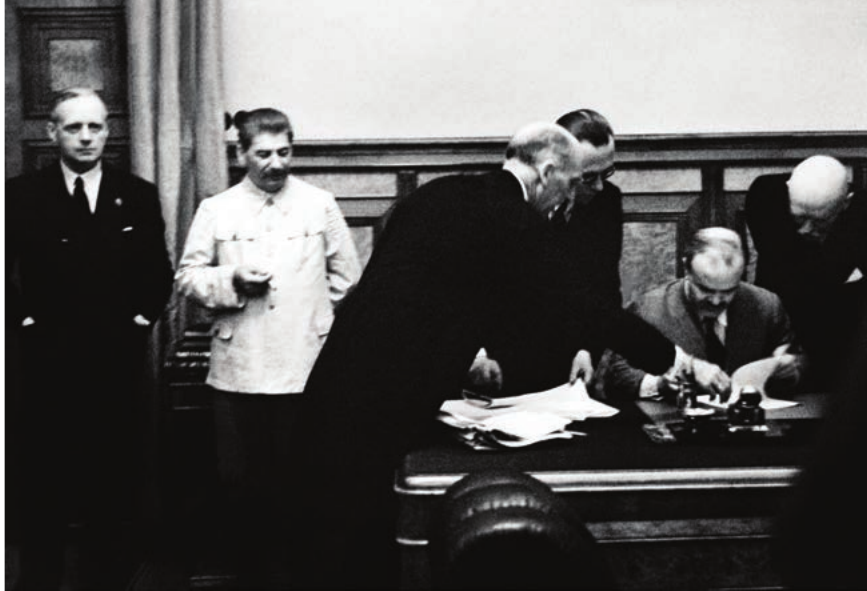
The two sworn ideological enemies had come together, despite years of creating vast amounts of propaganda attacking each other. The Molotov-Ribbentrop Pact (named after the foreign ministers of the Soviet Union and Germany) made war in Europe inevitable.
Why did Hitler sign the Nazi-Soviet Non-Aggression Pact?
Hitler desperately wanted Poland. A two-front war was dangerous, and a deal with the Soviet Union would lead to Poland's quick defeat, allowing Nazi Germany to then deal with the Western nations.
Hitler believed that:
- Neutralising the Soviet Union would avoid the mess Germany found itself in during 1914
- He could avoid fighting a war on multiple fronts
- After defeating Poland and the West, he could then deal with the Soviet Union
In the context of international politics in 1939, this pact made strategic sense for Hitler. It ended the prospect of a two-front war, and he was now determined to attack Poland.
Why did Stalin sign the Nazi-Soviet Non-Aggression Pact?
Stalin was an opportunist. Through his vast intelligence network, he knew about Hitler's ideological beliefs and intentions. This agreement made little ideological sense to either party. However, within the circumstances of 1939, it was extremely important that Stalin sign.
Important
Stalin's Strategic Calculations:
- Buy time: The pact would give the Soviets time to consolidate and strengthen their forces. The Soviet Union was still recovering from Stalin's purges and rapid industrialisation.
- Distrust of the West: Stalin did not trust France and Britain. He believed the Franco-British security guarantee to Poland made war in Europe certain.
- Exhaust Germany: From a Soviet perspective, Nazi Germany would hopefully exhaust itself against France and Britain.
- Territorial gains: A deal with Hitler would give Stalin a share of Poland
- Security buffer: The pact would provide a buffer zone between Germany and Russia
As historian R. Evans noted: "From Stalin's perspective, it provided a respite and opened up the enticing prospect of Europe's capitalist powers, Germany, France and Britain, fighting a war of mutual destruction between themselves."
The pact makes war inevitable
To Hitler, the pact ensured Germany would acquire Polish territory. He counted on it to deter Britain and France from intervening, not believing they would honour their guarantee to Poland.
He also expected Italy's Mussolini to join. In May 1939, Hitler and Mussolini had signed the Pact of Steel, pledging full assistance to each other in the event of war. However, in the last days before the planned attack on Poland, Hitler informed Mussolini with no coordination - it was an alliance largely in name only.
Note
The Nazi-Soviet Pact stunned the world. Two ideological enemies who had spent years denouncing each other suddenly became partners. This shocking development removed the last barrier to Hitler's invasion of Poland and made World War II inevitable.
The stage was now set for World War II.
Summary
Key Points to Remember:
-
Collective security failed because the League of Nations lacked enforcement power, major nations didn't participate fully, and nationalism trumped internationalism in the 1930s.
-
The Abyssinia Crisis (1935-36) exposed the League's weakness when it imposed only feeble sanctions on Italy for invading Ethiopia, emboldening other aggressive powers.
-
The Spanish Civil War (1936-39) served as a dress rehearsal for WWII, with Germany and Italy supporting Franco's fascist forces while the Soviet Union backed republicans, demonstrating modern warfare tactics including aerial bombardment.
-
Appeasement emboldened Hitler by allowing him to systematically violate the Treaty of Versailles without consequences, from rearmament through the Anschluss to the seizure of Czechoslovakia.
-
The Munich Conference (September 1938) represented the failure of appeasement, sacrificing Czechoslovakia without Czech participation, which strengthened Hitler, alienated the Soviet Union, and convinced Hitler the West would not fight.
-
The Nazi-Soviet Pact (August 1939) was the final catalyst for war, allowing Hitler to avoid a two-front war while giving Stalin time to prepare and a buffer zone in Poland, making the outbreak of World War II inevitable.