Stalingrad (HSC SSCE Modern History): Revision Notes
📚Revision Notes
Stalingrad
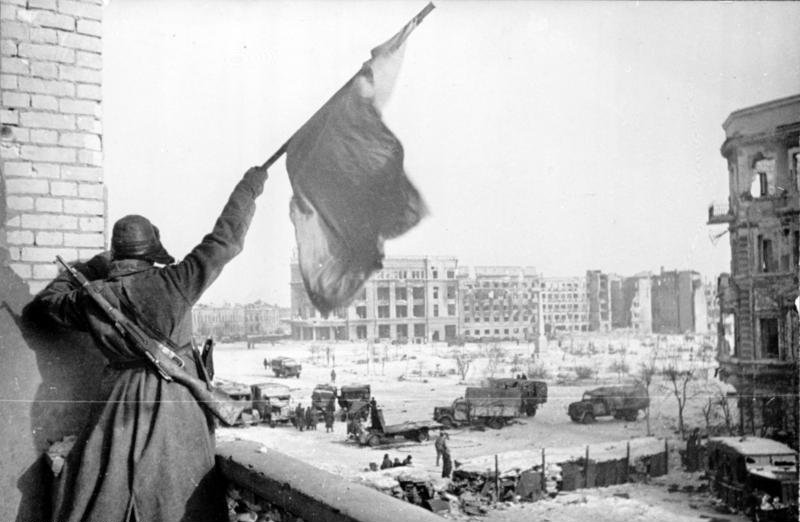
Why Stalingrad mattered: the turning point of the Eastern Front
The Battle of Stalingrad, fought between August 1942 and March 1943, represented the most significant turning point of the war on the Eastern Front. This massive and decisive confrontation marked the moment when Soviet forces stopped the German advance and began pushing back toward Berlin. As historian Antony Beevor noted, everyone understood that the Eastern Front was inflicting devastating and unsustainable casualties on the Wehrmacht far more effectively than any western theatre of war. The Red Army's determination meant that Berlin would eventually suffer the same fate as the ruined city of Stalingrad.
Note
The Eastern Front between Nazi Germany and the Soviet Union became the primary battleground where the Wehrmacht's offensive power was ultimately broken. The scale of combat and casualties on this front dwarfed all other theatres of World War II.
Germany's 1942 spring offensive
Hitler's new strategic objectives
By spring 1942, Hitler had fundamentally changed his strategic approach to the war in the Soviet Union. After abandoning previous efforts to capture Leningrad and Moscow, he adopted new objectives focused on the south. The German plan involved three main goals:
- Drive south of Kiev into southern Russia
- Seize the valuable Caucasus oil fields
- Capture the city of Stalingrad
Soviet vulnerability
The Soviet Union appeared highly vulnerable to this new German offensive. The Red Army possessed fewer tanks in 1942 than it had in 1941, showing the devastating impact of the previous year's fighting. Soviet forces were absolutely exhausted from defending against the initial German invasion. Additionally, the best Soviet units remained positioned in front of Moscow, leaving the southern regions more weakly defended.
Note
Stalin's continued belief that Moscow remained Germany's primary target proved to be a critical miscalculation. This conviction meant Soviet defences were concentrated in the wrong location, leaving the southern approaches dangerously exposed to the German offensive.
Initial German success
The German offensive initially proved highly successful:
- May 1942: German forces defeated the Soviets at Kharkov
- 28 June 1942: The main German offensive began
- July 1942: German forces reached Sebastopol
- Stalin remained convinced that Moscow was Germany's main target, which meant Soviet defences were concentrated in the wrong location
The German drive south
Advance into the Caucasus
Even though Stalingrad had not yet been secured, Hitler ordered an ambitious drive into the Caucasus region. Germany's First Panzer Division proceeded with remarkable speed through September. The German invasion force split into two prongs:
- One heading toward the Grozny oil field
- Another moving toward the Black Sea
This dual advance saw German forces penetrate deep into Soviet territory, creating an impression of unstoppable momentum.
Mounting problems
However, the overconfident German commanders had seriously underestimated Soviet resistance. Several critical problems emerged during late September and October:
Important
Critical German Weaknesses Emerge
Extended front lines: The German front stretched more than 500 miles, making it difficult to maintain adequate force concentration at any point.
Impossibly long supply lines: German supply lines extended 1,300 miles from their bases, creating severe logistical challenges in delivering ammunition, fuel, and provisions.
Stiffening resistance: Russian defenders and local forces, including Chechen fighters, increasingly resisted the German advance.
Mounting partisan activity: Resistance activities behind German lines continued to grow, disrupting communications and supply routes.
Concerned about the slowing pace of the offensive, Hitler fired General Halder as Chief of Staff in November 1942, though this leadership change could not solve the fundamental strategic problems.
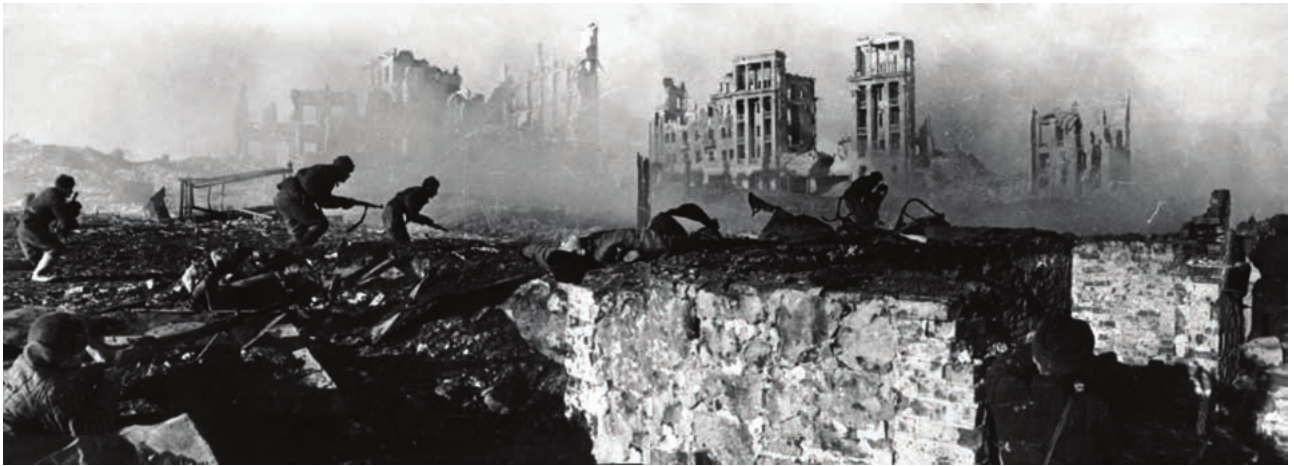
The battle for Stalingrad city
Strategic importance
The Germans had compelling reasons to capture Stalingrad. Control of the city would block Soviet troop movements to the south, cutting off reinforcements and supplies. This strategic position made Stalingrad a crucial objective, and the task of capturing it fell to German General von Paulus's 6th Army.
The German assault
The battle for Stalingrad unfolded through several phases:
22 August 1942: German troops entered the northern suburbs and reached the Volga River.
23 August 1942: The Germans launched a terror air raid using incendiary bombs, attempting to break Soviet morale through devastating bombing.
Urban warfare: the city becomes a battlefield
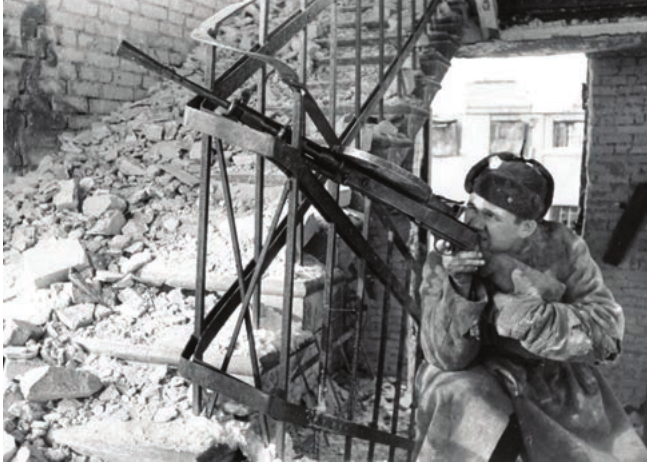
Despite appearing trapped, Soviet forces mounted fierce resistance. The battle acquired enormous symbolic significance for both sides. The Germans felt determined to take the city bearing Stalin's name, while the Russians resolved to hold it at all costs. This mutual determination transformed Stalingrad into a prolonged struggle where both sides suffered enormous casualties.
Note
The Nature of Urban Combat at Stalingrad
The fighting developed unique characteristics that defined urban warfare:
- Block-to-block combat: Every city block became a separate battlefield
- Street-to-street fighting: Each street had to be captured individually
- House-to-house warfare: Individual buildings became fortresses that changed hands repeatedly
- Movement measured in metres rather than kilometres
- The city reduced to rubble and ruins
By early November 1942, the Germans controlled approximately 90 per cent of Stalingrad. However, this statistical dominance concealed the reality that German forces were becoming increasingly exhausted and overstretched.
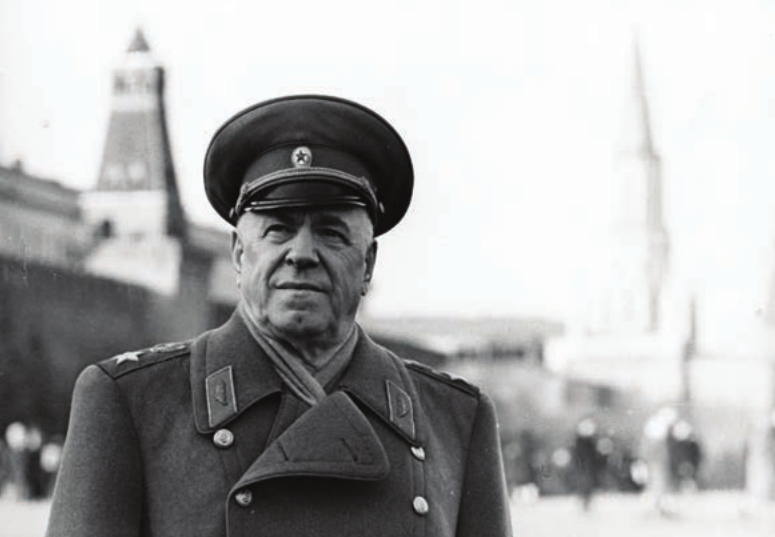
Georgi Zhukov: architect of Soviet victory
The 'Saviour of Moscow' arrives
General Georgi Zhukov (1896-1974) served as Deputy Supreme Commander and Chief of the Red Army throughout virtually all of the Second World War. He had earned his military reputation with a successful action against the Japanese in Mongolia in 1939. After Germany invaded the Soviet Union, Zhukov held a series of important command positions, successfully defending Smolensk, Leningrad, and finally Moscow in autumn 1941. His defence of Moscow earned him the title 'Saviour of Moscow'. Now he would add 'Saviour of Stalingrad' to his achievements.
Planning the counterattack
Zhukov took command in the south and immediately began planning a counteroffensive. His strategy demonstrated brilliant military thinking. Rather than pouring reinforcements into the besieged city, Zhukov deliberately kept reinforcements to a minimum. Instead, he secretly massed Russian troops to the north and south of Stalingrad, preparing for a massive pincer movement.
All preparations for the counterattack remained under tight security. The Germans had no intelligence about the Soviet buildup, leaving them completely unprepared for what would follow.
Note
Operation Uranus: The Soviet Masterplan
Zhukov's strategy of deception proved critical to Soviet success. By keeping city reinforcements minimal while secretly building up forces on the flanks, he created the perfect conditions for a devastating encirclement operation. The Germans, focused on the brutal street fighting in Stalingrad itself, failed to detect the massive Soviet buildup occurring on their vulnerable flanks.
The encirclement: Operation Uranus
19 November 1942: Zhukov launched the counteroffensive. The attack struck simultaneously on the northern and southern flanks of the German position, catching German forces completely off guard.
23 November 1942: The two Russian spearheads linked up approximately 45 miles from Stalingrad, completing the encirclement. The entire German 6th Army and one corps of the 4th Panzer Army found themselves trapped with no escape route.
This pincer movement represented one of the most successful encirclement operations in military history, demonstrating how superior strategy could overcome even well-equipped and experienced enemy forces.
The German defeat
Hitler refuses retreat
When General Paulus requested permission to break out of the encirclement, Hitler refused. The Führer ordered the 6th Army to hold its position and fight to the last man. This decision sealed the fate of approximately 200,000 German soldiers trapped in Stalingrad.
Important
Hitler's Fatal Decision
Hitler's refusal to allow the 6th Army to attempt a breakout represents one of the war's most catastrophic strategic errors. By ordering the trapped forces to stand and fight rather than attempt withdrawal, Hitler guaranteed the complete destruction of one of Germany's most experienced armies. This rigid adherence to "no retreat" policies would be repeated throughout the remainder of the war, leading to further devastating German defeats.
Failed relief attempts
Hitler ordered General Manstein to lead a relief force to break through to Stalingrad, but this effort failed against determined Soviet resistance. The doomed 6th Army remained trapped, with supplies running desperately low during the harsh Russian winter.
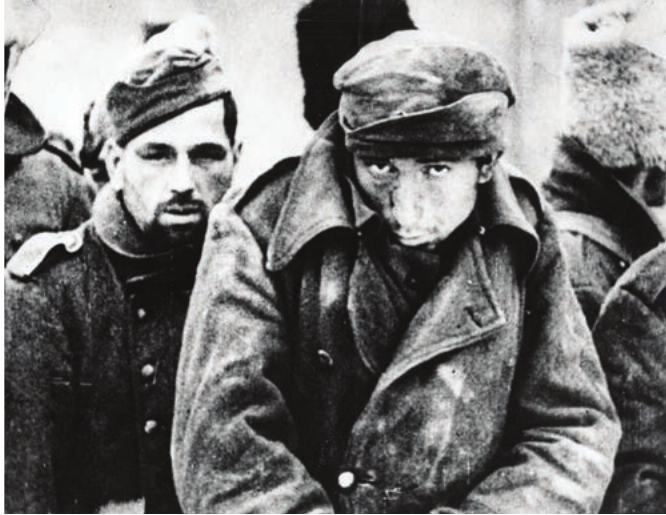
Surrender and casualties
General Paulus held out until 2 February 1943 before finally surrendering. The Battle of Stalingrad resulted in catastrophic German losses:
- 200,000 German troops killed
- 90,000 German soldiers captured
- The complete destruction of the 6th Army as a fighting force
The significance of Stalingrad
The turning point of the Eastern Front
The Battle of Stalingrad had profound implications for the entire war. The summer offensive of 1942, concluding at Stalingrad, marked the end of German offensive capability on the Eastern Front. After Stalingrad, Germany found itself permanently on the defensive, unable to launch major strategic offensives.
Confirmation at Kursk
Desperate to reverse the humiliation of Stalingrad, Hitler planned one final major offensive at Kursk through Operation Citadel. This operation would be remembered as one of the greatest tank battles in history.
5 July 1943: One million German soldiers and 2,700 tanks attacked Russian-held positions at Kursk.
Note
The Battle of Kursk: The Final Test
The Russians had fully prepared for the attack. The Germans failed to gain air superiority and suffered defeat within seven days. As historian Richard Overy observed, the struggle for Kursk tore the heart out of the German Army. Soviet success at Kursk, with so much at stake, represented the most important single victory of the war. Kursk marked the point at which the strategic initiative passed decisively to the Soviet side.
The combined defeats at Stalingrad and Kursk permanently ended any German hopes of victory against the Soviet Union. From this point forward, the Red Army would steadily advance westward, eventually reaching Berlin in May 1945.
Exam tips
Important
Key Points for Exam Success
- When answering questions about Stalingrad, always explain why it was a turning point, not just describe what happened.
- Link military events to their strategic consequences: the encirclement didn't just trap German troops; it destroyed Germany's offensive capability.
- Compare German and Soviet strategies: Hitler's rigid refusal to allow retreat versus Zhukov's flexible, deceptive planning.
- Consider the symbolic importance alongside military significance: Stalingrad represented a battle of wills between Hitler and Stalin.
- Connect Stalingrad to subsequent events like Kursk to show how it permanently shifted the balance of power on the Eastern Front.
Remember!
Summary
Key Points to Remember:
-
Timeline: The Battle of Stalingrad lasted from August 1942 to March 1943, with the Soviet counterattack launching on 19 November 1942 and German surrender on 2 February 1943.
-
Strategic turning point: Stalingrad marked the definitive end of German offensive capability on the Eastern Front. After this defeat, Germany remained permanently on the defensive.
-
Zhukov's brilliance: Soviet General Georgi Zhukov's strategy of secretly massing forces for a pincer movement while keeping city reinforcements minimal demonstrated superior planning that caught the Germans completely unprepared.
-
Catastrophic German losses: Germany lost 200,000 troops killed and 90,000 captured, effectively destroying the entire 6th Army and proving that the Wehrmacht was not invincible.
-
Confirmed at Kursk: The Battle of Kursk in July 1943 confirmed that Germany could no longer mount successful major offensives, marking the point where strategic initiative passed to the Soviet Union for the remainder of the war.