The Holocaust (HSC SSCE Modern History): Revision Notes
📚Revision Notes
The Holocaust
Background to Nazi anti-Semitism
The Holocaust was rooted in Hitler's racial ideology, which portrayed the global Jewish community as carriers of internationalism, democracy and pacifism. German historian Max Domarus described these as the 'three plagues of humanity' that had destroyed nations' racial value. Hitler used this ideology as the foundation for his political programmes, both within Germany and in his foreign policy.
Note
Anti-Semitism refers to discrimination, prejudice or hostility towards Jews. While anti-Semitism existed in German history long before the Nazis, Hitler's regime transformed it from theory into political action.
The Nazi revolution was fundamentally an anti-Jewish revolution. It radicalised existing prejudices and turned ideological hatred into systematic persecution.
Hitler portrayed Jews in dehumanising terms, creating a powerful enemy image that perverted the natural order. Through Nazi racial doctrine, Jews became the physical embodiment of everything Hitler opposed politically and ideologically. This portrayal helped justify increasingly extreme policies.
Untermenschen: Nazi racial hierarchy
Important
The Nazis classified certain groups as Untermenschen, a German term meaning 'subhumans'. Jews and Slavic peoples were placed in this category. According to Nazi ideology, these groups had no right to live, except where Slavs might be needed to work as slaves for German masters. This dehumanising classification laid the groundwork for the genocide that followed.
The war in the Soviet Union
The invasion of the Soviet Union in June 1941 had both geopolitical and ideological objectives. Hitler saw it as a crusade against Judeo-Bolshevism, combining his hatred of communism with his anti-Semitism. This invasion marked the beginning of a racial war against the Jews.
Important
Hitler's 1939 Prophecy
On 30 January 1939, the sixth anniversary of his seizure of power, Hitler made a chilling prophecy. He declared that if international Jewry succeeded in plunging Europe into another world war, the result would not be the Bolshevisation of the world, but the destruction of the Jewish race in Europe. This statement reveals Hitler's intentions even before the war began.
Control over Jewish populations
The invasion of Poland in 1939, followed by the Soviet Union in 1941, put Germany in control of Europe's largest Jewish communities. In October 1939, Heinrich Himmler was named Reich Commissar for strengthening German volkdom (German national character). This title gave him responsibility for Nazi racial policy in occupied territories.
Himmler delegated authority to Reinhard Heydrich in the Reich Security Central Office, where SS specialists worked on finding a solution to the so-called 'Jewish question'. Nazi policy shifted from encouraging emigration before the war to forcing expulsion during it.
The General Government
In September 1939, Heydrich drafted a memorandum entitled 'The Jewish Question in the Occupied Territories'. This document laid out the foundations of Nazi policy in conquered areas. The General Government was the name given to the Polish territory occupied by German forces.
In territories annexed directly to Germany (including parts of Czechoslovakia and Poland), the policy was complete annexation into the Gross Deutsche Reich (Greater German Reich). All non-Germans were to be expelled. These territories would be 'cleansed' of all non-Aryan elements in preparation for future German settlement.
Note
All Jews were to be rounded up and concentrated in selected urban areas of the General Government. Approximately 1 million people were forced into ghettos in 1939-40. By October 1939, the SS began deporting Jews from Austria and Czechoslovakia to the General Government. In a sign of Nazi racial thinking, Aryan children were selected for resettlement in Germany.
Einsatzgruppen operations
Special SS units called Einsatzgruppen were created to execute Nazi racial policy. These men received special training, including indoctrination in Nazi racial doctrine. They numbered about 3000. Their role was to follow the German army and eliminate enemies of the Reich, particularly Jews and communist officials.
It was at this point that Himmler ordered the construction of a camp at Auschwitz to handle the overflow of Jews being brought into the General Government. Auschwitz was a Nazi concentration and extermination camp in annexed Poland that operated from 1940 to 1945.
During the summer of 1941, when the Nazis believed they were winning the war in the Soviet Union, Himmler received a direct order from Hitler. Significantly, this was not a written order (to enable post-war deniability), but an oral command. This marked the beginning of what would become known as the Final Solution.
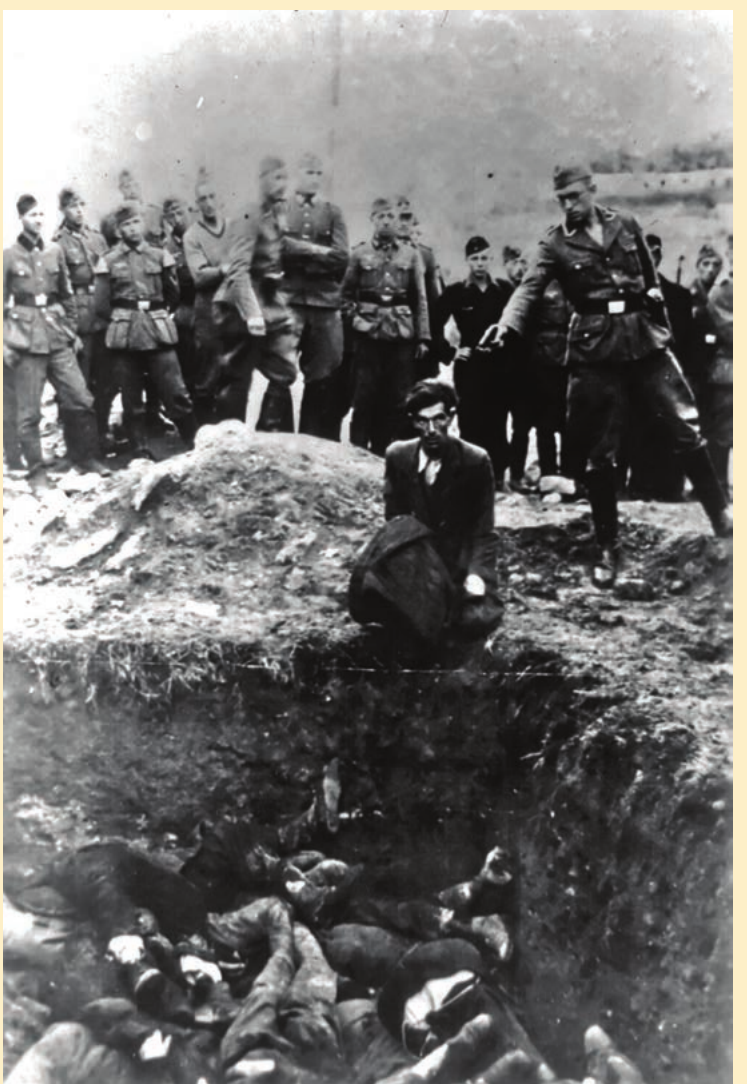
Important
The Einsatzgruppen killed approximately 2 million Jews in Poland and Russia between 1941 and 1942, before the death camps became fully operational.
The Final Solution
The Wannsee Conference was held on 20 January 1942, marking a turning point in Nazi Jewish policy. The conference was chaired by Reinhard Heydrich and attended by just over a dozen Nazi officials. Despite lasting little over an hour, this meeting formalised the decision for systematic extermination.
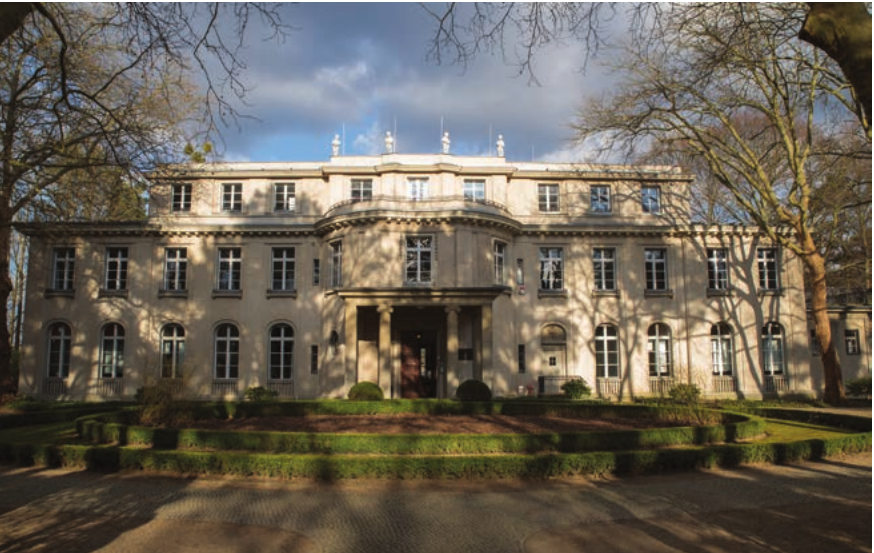
At Wannsee, it was made clear that 'resettlement' was a euphemism for physical extermination. The conference decided to create special concentration camps called vernichtungslager (extermination camps or death camps). Unlike camps in Germany, the sole purpose of these facilities was to kill Jews, not to use them for labour.
Secrecy and deception
Important
The Strategy of Deception
The need for secrecy was emphasised at Wannsee. Heydrich and Hitler were concerned that:
- The German public was not prepared for such a radical decision
- Even some Nazi officials would be shocked
- The Allies could use it for propaganda purposes
- Victims needed to remain ignorant for the system to work efficiently
Jews were required to come to train stations, escorted by the Gestapo or SS, but they had to believe they were being resettled rather than murdered. While victims might have heard rumours about what awaited them, they should not have hard information. This deception was crucial for the scheme to succeed.
Construction and operation of death camps
In spring 1942, the Germans began constructing camps in the east:
- Belzec (near Lublin): opened March 1942
- Treblinka (50 miles from Warsaw): opened July 1942
- Auschwitz: expanded from existing camp housing Russian POWs
The first experiments with gas installations were conducted on 300-400 Russian prisoners already at Auschwitz. The camp was then expanded into a massive killing facility. On 22 July 1942, deportations from the Warsaw ghetto to Treblinka began.
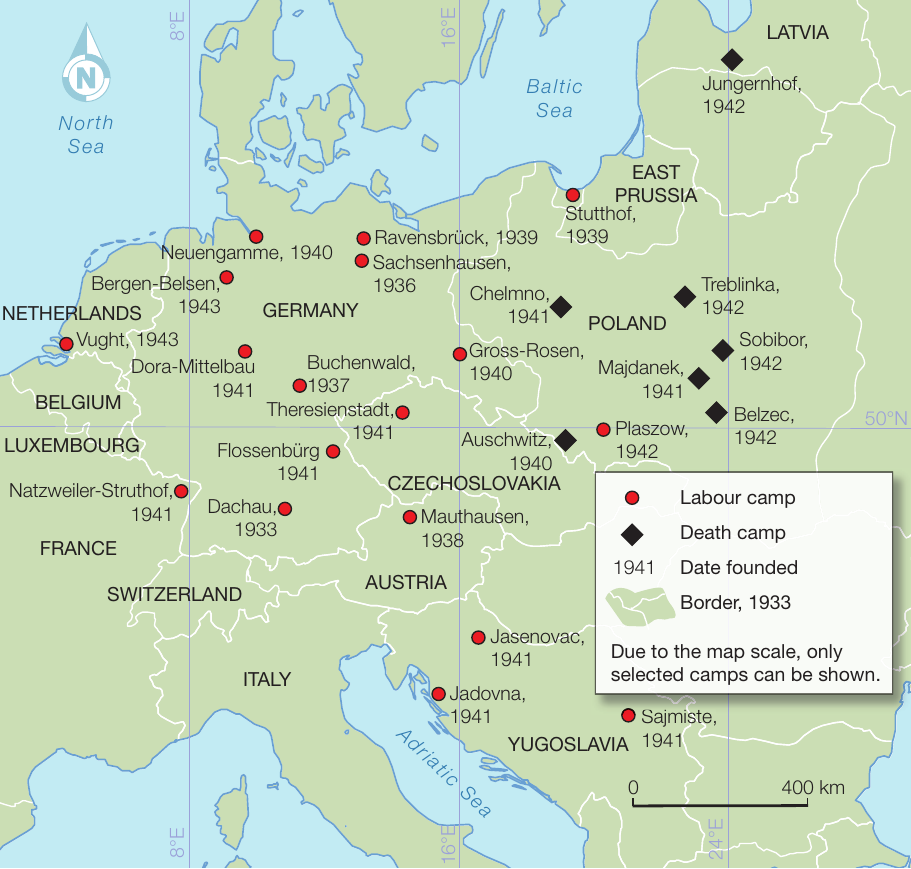
Note
This map shows the extensive network of labour camps (red dots) and death camps (black diamonds) across Nazi-occupied Europe. Note how death camps were concentrated in Poland, away from German cities and closer to the largest Jewish populations.
How the death camps operated
Example
How the Extermination System Worked
The death camps followed a systematic process:
- Trains arrived carrying victims in cattle cars from various European locations
- On the platform, SS officers separated arrivals into two groups
- Those deemed capable of work were sent in one direction
- Those deemed unfit for work (elderly, children, sick) were sent to gas chambers
- Victims were told they were going to shower facilities
- After gassing, bodies were cremated in ovens
- Personal belongings were sorted and sent to Germany
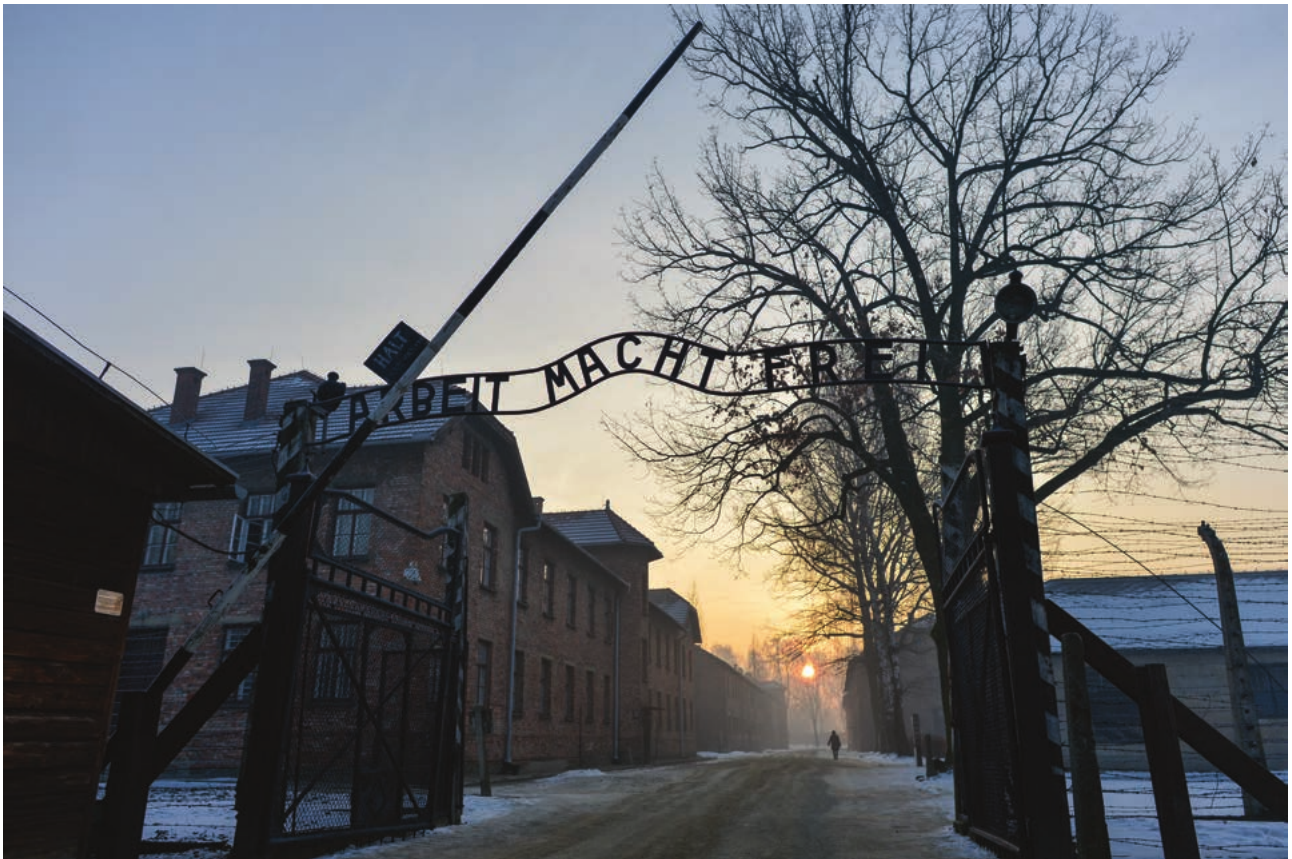
The infamous gate at Auschwitz bore the slogan 'Arbeit macht frei' (Work makes you free) - a cruel deception for those entering the camp.
The death toll
Between 1942 and early 1945, when the camps ceased operations, approximately 4 million Jews died in the death camps. Another 2 million had already been killed by Einsatzgruppen in Poland and Russia, bringing the total to approximately 6 million Jews. Along with Jews, the Nazis murdered Russians, Poles, Roma people, homosexuals and disabled people.
| Region | Original Jewish population | Jews killed | Percentage surviving |
|---|---|---|---|
| Poland | 3,300,000 | 2,800,000 | 15% |
| Soviet Union (occupied areas) | 2,100,000 | 1,500,000 | 29% |
| Hungary | 404,000 | 200,000 | 49% |
| Romania | 850,000 | 425,000 | 50% |
| Germany/Austria | 270,000 | 210,000 | 22% |
Note: These figures are estimates
Note
The statistics reveal the staggering scale of destruction. In Poland, 85% of the Jewish population was murdered. Even in countries with higher survival rates, the losses were devastating.
Historical debate: Planning or radicalisation?
Historians continue to debate Hitler's precise role in launching the genocide and whether it was planned from the beginning or evolved during the war. Hitler rarely put orders in writing and avoided regular bureaucratic procedures, making it difficult to trace his exact actions. However, his role was clearly pivotal in establishing the regime's goals and endorsing increasingly radical policies.
Important
It is crucial to understand that the Holocaust involved more than just Hitler or a small circle of planners. Enormous numbers of officials at all levels - from generals to town mayors to station masters to ordinary guards - were needed to make the Final Solution work. Wherever the Nazis gained power in occupied countries, they found local collaborators willing to help.
Intentionalist perspective: Long-term planning
Intentionalist historians argue that Hitler always planned to exterminate the Jews and that the invasion of the Soviet Union was part of this premeditated strategy. Key points of this interpretation include:
- Hitler decided to establish camps in summer 1941 in anticipation of defeating the Soviet Union
- Goring's order to Heydrich on 31 July 1941 to prepare a plan for 'a complete solution to the Jewish question' shows planning
- Hitler was the most significant figure in bringing the Final Solution into being
- Hitler always intended mass extermination of Jews
Note
Historians such as Hillgruber and Jackel support this view. Historian Saul Friedlander argues that Hitler followed a policy of 'eliminationist anti-Semitism' which naturally progressed to authorising extermination.
Structuralist perspective: Spiralling radicalisation
Structuralist historians claim that extermination camps developed in response to deteriorating situations rather than as part of a long-term plan. Key arguments include:
- Hitler influenced racial policy but did not issue a written order for the Holocaust
- The Holocaust was a product of 'spiralling radicalisation' within the Nazi system
- Problems in the Soviet Union campaign meant the Final Solution evolved rather than being deliberately planned
- Nazi leaders established their 'solution' to consolidate power and control within the party
- The Holocaust resulted from the interaction between Hitler's ideology and initiatives from below
Note
Historians such as Mommsen and Broszat support this interpretation. Christopher Browning suggests that between September 1939 and July 1941, Nazi Jewish policy evolved through three distinct plans for ethnic cleansing before transitioning to implicit genocide.
Exam tip
Important
Analysing the Debate in Exams
When discussing this debate in exams, avoid presenting it as simply 'right vs wrong'. Instead, explain that both perspectives offer insights into different aspects of how the Holocaust developed. You might argue that Hitler's ideology provided the framework (intentionalist view), while the specific timing and methods evolved through radicalisation (structuralist view). This nuanced approach demonstrates sophisticated historical thinking.
Summary
Key Points to Remember:
- The Holocaust was rooted in Nazi racial ideology that portrayed Jews as subhuman and blamed them for Germany's problems
- The invasion of Poland (1939) and Soviet Union (1941) gave Germany control over Europe's largest Jewish communities, enabling the genocide
- The Wannsee Conference (January 1942) formalised the decision for systematic extermination through death camps
- Approximately 6 million Jews were murdered between 1941-1945, along with millions of other victims including Roma, disabled people, and political prisoners
- Historians debate whether Hitler planned genocide from the beginning (intentionalist view) or whether it evolved through radicalisation during the war (structuralist view)