Conflict in Vietnam 1954–64 (HSC SSCE Modern History): Revision Notes
📚Revision Notes
Conflict in Vietnam 1954–64
Introduction
The period between 1954 and 1964 represents a crucial decade in Vietnamese history, marking the transition from French colonial rule to increasing American involvement. Following the French defeat at Dien Bien Phu in 1954, Vietnam found itself divided between a communist North and a US-backed South. This division, rather than bringing peace, set the stage for escalating conflict that would eventually draw the United States into a major war.
Note
This ten-year period laid the foundation for one of the most significant conflicts of the Cold War era. Understanding these events is essential for comprehending how a former colony became the site of a major superpower confrontation.
The Geneva Conference 1954
Following their victory at Dien Bien Phu, the Viet Minh entered the Geneva Conference (April–July 1954) with considerable negotiating strength. Ho Chi Minh hoped to achieve his long-held goal of a unified, independent Vietnam. However, international pressures and competing interests prevented this outcome.
The Chinese, exhausted from the Korean War, were reluctant to support further conflict in Vietnam. Meanwhile, the United States was increasingly concerned about halting communist expansion in Asia. These factors combined to produce a compromise that frustrated Vietnamese nationalist aspirations.
The Geneva Conference established several key outcomes:
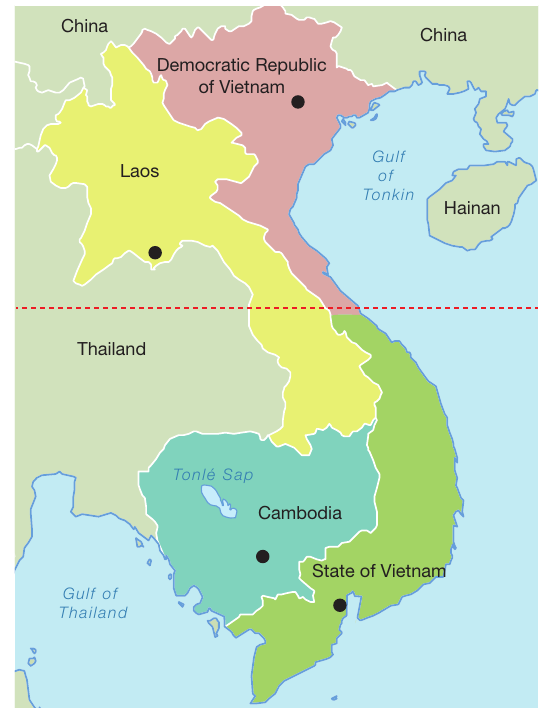
- Vietnam was temporarily divided along the 17th parallel (the geographic location of the 17th latitudinal line)
- North Vietnam became the Democratic Republic of Vietnam, led by Ho Chi Minh and backed by China
- South Vietnam became the State of Vietnam, supported by France and the United States
- Elections were promised for 1956 to reunify the country
- A Demilitarized Zone (DMZ) separated the two regions
Important
While the conference ended fighting between France and the Viet Minh, it created new problems. Vietnam remained divided, and Ho Chi Minh's dream of a unified, independent nation was postponed indefinitely. More significantly, the agreement drew the United States deeper into Vietnamese affairs, replacing France as the main foreign power in the South.
US reasons for involvement in Vietnam
The Domino Theory
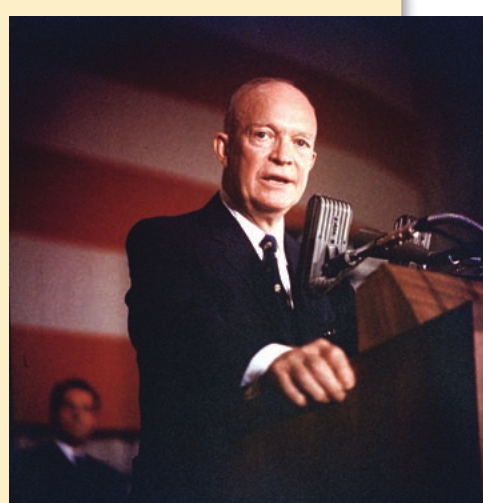
American involvement in Vietnam stemmed primarily from the Domino Theory, which became the foundation of US Cold War policy in Asia. President Dwight D. Eisenhower articulated this theory in April 1954, explaining it through a simple metaphor: if you set up dominoes in a row and knock over the first one, the last one will fall very quickly.
Applied to Asia, this theory suggested that if one nation fell to communism, neighbouring countries would follow in quick succession. American policymakers feared that a communist victory in Vietnam would trigger communist takeovers throughout Southeast Asia, threatening US interests in the entire region.
Note
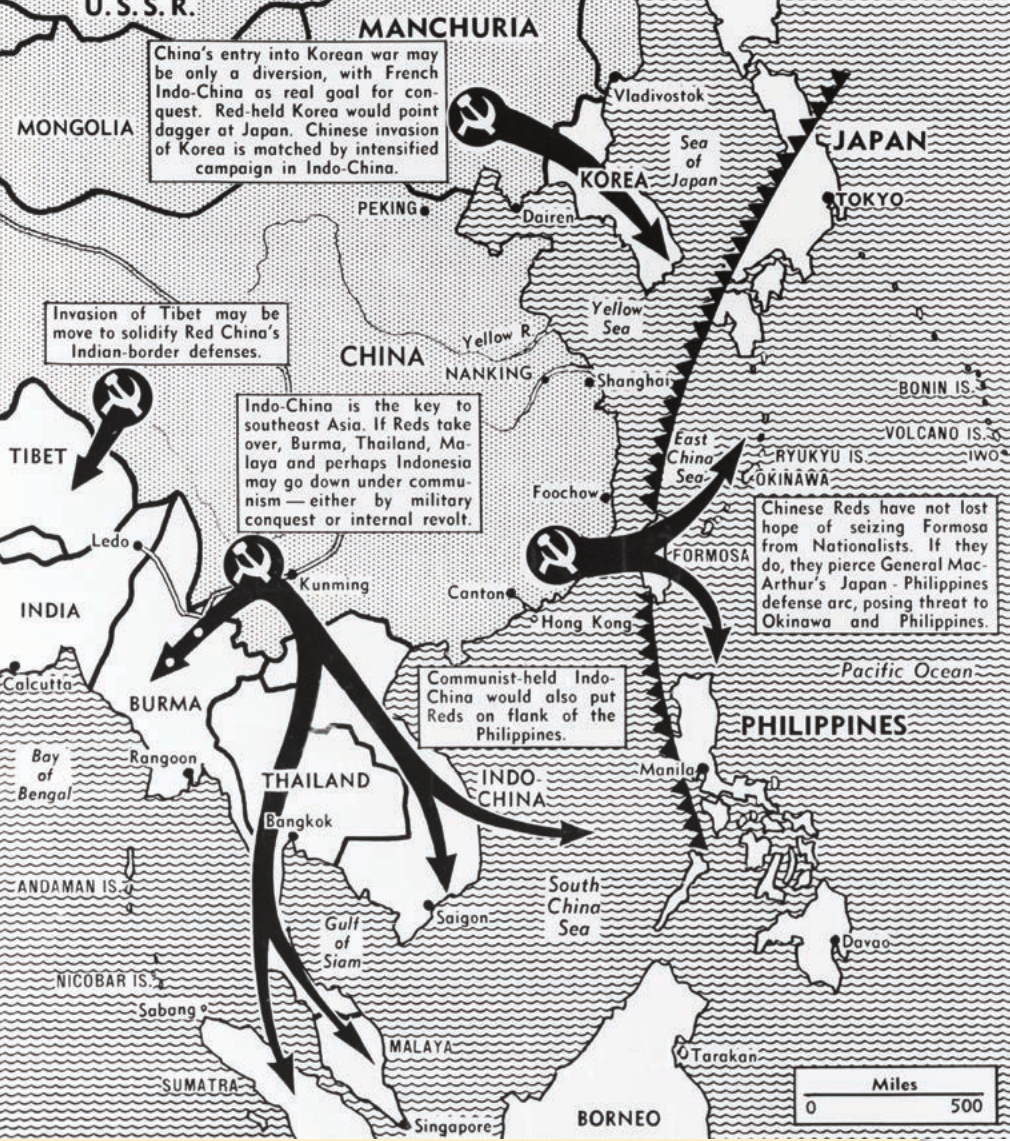
This map from 1950 illustrates American fears about communist expansion in Asia. It shows perceived threats from Communist China and the Soviet Union, including potential invasions of Korea, Tibet, and Indochina. Such propaganda reinforced public support for US intervention in the region.
Escalating American investment
By 1951, US military aid to the French in Indochina reached $450 million annually. This figure increased to $785 million by 1953. When the French withdrew in 1954, the United States had invested nearly $3 billion fighting communism in the region. This substantial financial commitment made it politically difficult for American leaders to simply abandon Vietnam.
Conflicting perspectives
Not all Americans supported involvement in Vietnam. President Eisenhower himself expressed reservations in February 1954, stating he could not conceive of a greater tragedy than getting heavily involved in an all-out war in the region.
However, other voices pushed for intervention. Some pointed to communist atrocities to justify American involvement. Colonel Vo Dai Ton of the South Vietnamese Army described how the Viet Minh executed his mother because her sons had left the communist movement. Such accounts, whether accurate or exaggerated, fueled anti-communist sentiment and support for intervention.
Note
Historian Michael Caulfield later argued that if Americans had fostered their relationship with Ho Chi Minh in 1945, the Vietnam War might never have happened. However, Cold War tensions and larger geopolitical considerations prevented this outcome.
JFK and US foreign policy towards Vietnam (1961-64)
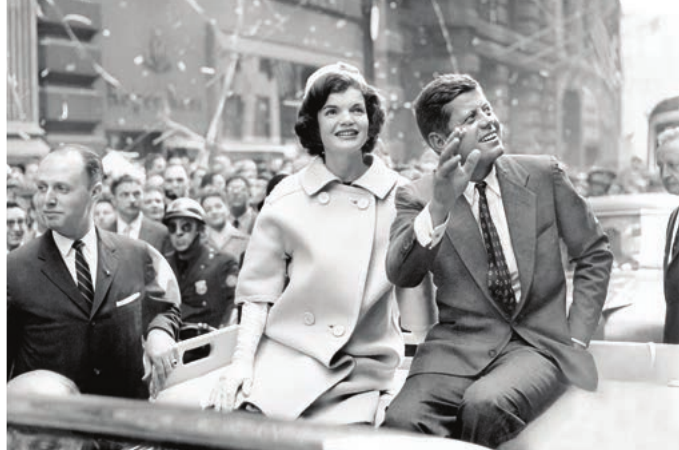
John F. Kennedy became US president in 1961, bringing youthful energy and charisma to the office. His famous inaugural address challenged Americans to "ask not what your country can do for you, but what you can do for your country." While Kennedy pledged to be tough on communism, Vietnam was not initially his primary concern.
Competing priorities
Several issues diverted Kennedy's attention from Vietnam:
Domestic challenges: The growing civil rights movement demanded national attention as protests and violence erupted in American cities. Kennedy had to balance Cold War foreign policy with urgent domestic concerns.
The Cuban crisis: Tension with communist Cuba dominated Kennedy's foreign policy. The failed Bay of Pigs invasion in 1961 embarrassed the administration. Then, in 1962, the Cuban Missile Crisis brought the world to the brink of nuclear war. For 13 days, Kennedy faced off against Soviet leader Nikita Khrushchev, with nuclear missiles within striking distance of both nations.
Proxy war strategy: After avoiding catastrophic nuclear war during the Cuban crisis, Kennedy and the Soviets agreed never to confront each other so directly again. Instead, they would fight conflicts through proxy nations like Korea and Vietnam. This decision had profound implications for US involvement in Southeast Asia.
Important
Despite maintaining a presence in Vietnam since World War II, the US Government knew remarkably little about the country, its people, or the strength of Vietnamese nationalism. As Kennedy's successor, President Lyndon Johnson, would later admit when referring to Diem, he was "the only boy we got out there." This lack of understanding would prove costly as American involvement deepened.
Ngo Dinh Diem and South Vietnam
Diem's background
Ngo Dinh Diem emerged as South Vietnam's leader after the Geneva Accords. An ardent Catholic from an aristocratic family, Diem had fled to the United States after the Viet Minh targeted his family during the Japanese occupation. Though he was a peripheral figure in Vietnamese politics, he became the American choice to lead South Vietnam simply because he was the only candidate they knew.
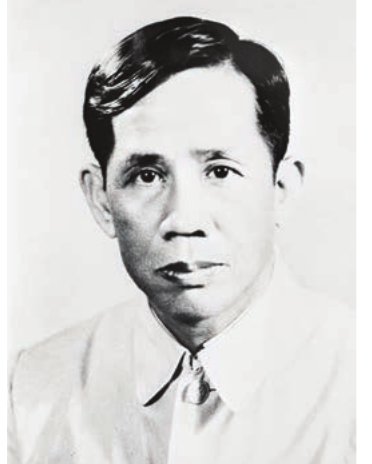
In 1954, Diem was appointed Prime Minister by the French-backed Emperor Bao Dai. He quickly moved to consolidate power through questionable methods. In 1955, he held an election to declare himself President of the Republic of South Vietnam, winning an implausible 98% of the vote. More significantly, in 1956, he refused to hold the reunification elections promised at Geneva – a decision fully supported by the United States.
Diem's problems
Diem faced multiple challenges in governing South Vietnam:
Religious tensions: As a Catholic in a predominantly Buddhist country, Diem represented a small minority. Catholic refugees fleeing North Vietnam gave him some support, but most South Vietnamese were Buddhist peasants who saw him as representing Vietnam's feudal past rather than a democratic future.
Communist presence: While the Viet Minh army withdrew north after Geneva, thousands of communist agents remained in the South, blending into the population as agitators and organizers.
Authoritarian rule: Despite American support for democracy (a system where power is held by elected representatives), Diem ruled as an authoritarian dictator. His regime was characterized by corruption, nepotism, and brutal suppression of opposition.
Important
Common misconception: Students often assume the US supported Diem because he was a strong democratic leader. In reality, he was chosen primarily because he was anti-communist and known to American officials, not because of his democratic credentials. His authoritarian rule directly contradicted American democratic values.
Growth of the Viet Cong
Northern strategy
Le Duan, an aggressive colleague of Ho Chi Minh, led North Vietnam's efforts to undermine Diem's regime. Initially, Diem successfully identified and killed approximately 90% of Communist Party members remaining in the South by 1959. However, Le Duan adapted his strategy.
Since the DMZ between North and South Vietnam was heavily guarded, Le Duan developed an alternative supply route. The Ho Chi Minh Trail was a secret network of jungle paths and roads running through Laos and Cambodia, effectively bypassing the DMZ. This trail became the lifeline for communist insurgency in the South, supplying weapons, equipment, and personnel.
Note
The Ho Chi Minh Trail was not a single road but rather a complex network of paths that constantly evolved to avoid detection. It stretched over 16,000 kilometers and was vital to North Vietnamese operations throughout the war.
Formation of the National Liberation Front
In 1960, over 20 political, religious, and ethnic groups opposed to Diem united to form the National Liberation Front. This guerrilla organisation declared its intention to "overthrow the camouflaged colonial regime of the American imperialists and the dictatorial power of Ngo Dinh Diem."
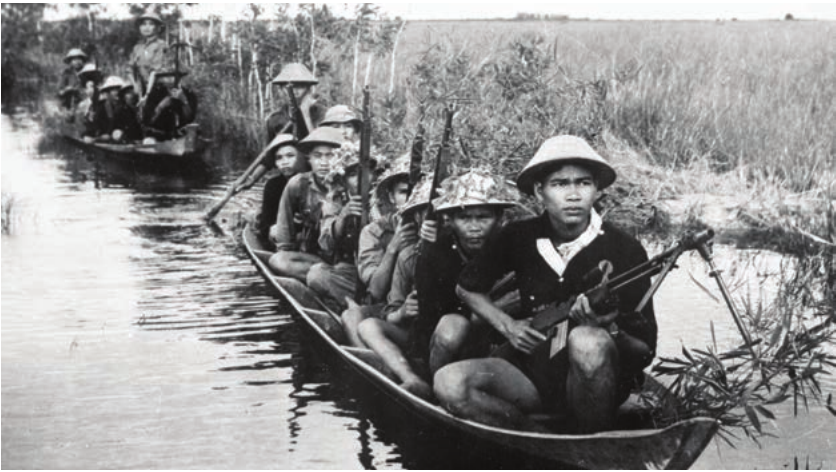
These fighters became known by the nickname Viet Cong (shortened from "Vietnamese Commies"). Supplied via the Ho Chi Minh Trail, they employed guerrilla tactics learned from the Viet Minh to fight against the South Vietnamese Army (ARVN - Army of the Republic of Vietnam).
The Strategic Hamlet Program
Design and purpose
In 1962, Diem's brother Ngo Dinh Nhu, a quasi-fascist who orchestrated many of the regime's repressive policies, designed the Strategic Hamlet Program with US backing. The program aimed to protect South Vietnamese peasants from Viet Cong influence by relocating thousands of village communities from their ancestral lands into fortified settlements surrounded by barbed wire.
The program's stated goals were to:
- Isolate peasants from Viet Cong propaganda
- Provide security through fortification
- Win peasant loyalty through economic development and modern facilities
- Demonstrate the benefits of the South Vietnamese government
Failure and consequences
However, the Strategic Hamlet Program proved to be a catastrophic failure. Journalist Stanley Karnow later wrote that the program often converted peasants into Viet Cong sympathizers rather than government supporters.
Important
Why the Strategic Hamlet Program Failed:
The program failed because:
- Peasants resented being forcibly removed from ancestral lands
- Many had to work without pay digging moats, planting bamboo spikes, and building fences
- Diem's corrupt regime siphoned off resources meant for hamlet development
- The program treated peasants like prisoners rather than citizens to be protected
- The Viet Cong posed less immediate threat to villagers than government officials did
Rather than winning hearts and minds, the Strategic Hamlet Program drove many South Vietnamese into the arms of the Viet Cong, who positioned themselves as liberators fighting against an oppressive regime.
The Battle of Ap Bac (January 1963)
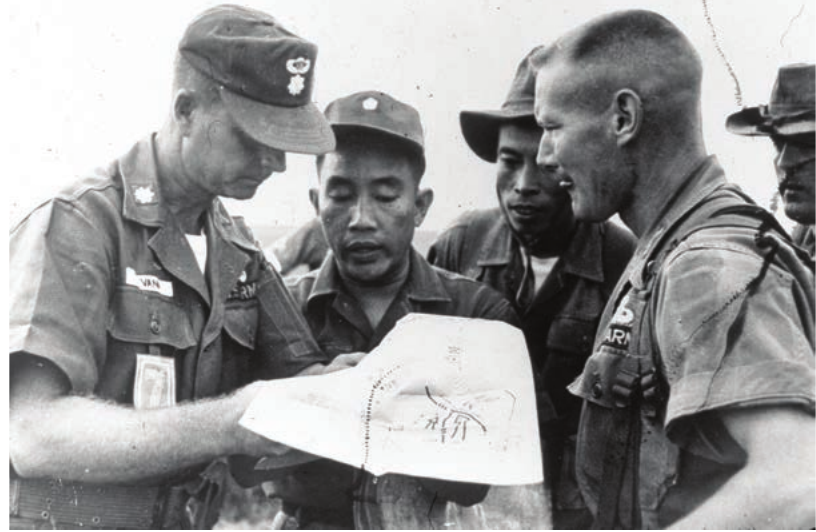
By 1963, approximately 500 US Green Berets and 15,000 US military advisers were stationed in South Vietnam. Despite this support and superior technology, the ARVN's performance remained poor. The Battle of Ap Bac in January 1963 demonstrated these weaknesses dramatically.
In this engagement, 1,500 ARVN troops supported by US helicopters and armoured personnel carriers (APCs) confronted a Viet Cong force of only 300 fighters. Despite their numerical and technological advantages, the ARVN suffered over 200 casualties while the Viet Cong lost only 18 fighters. The peasant guerrillas shot down four helicopters and forced the APCs to retreat using only small arms and rocket fire.
Media criticism begins
The battle's outcome shocked US adviser Lieutenant Colonel John Paul Vann, who sought out journalist Neil Sheehan to express his frustration. Vann complained that the ARVN's performance was miserable and that they refused to learn from their repeated mistakes.
Note
Sheehan published Vann's criticisms in the US media, beginning a trend of critical Vietnam War reporting. Journalists like Sheehan, Stanley Karnow, and David Halberstam increasingly served as a conduit between what was actually happening in Vietnam and the American public back home. This independent reporting would eventually undermine public support for the war.
The Buddhist crisis of 1963
Rising tensions
In a predominantly Buddhist nation, Diem's anti-Buddhist policies created increasing resentment. His regime enforced Catholic morality on Buddhist Vietnam, banned Buddhist flags, and discriminated against Buddhist officials. Buddhist leaders and criminal organizations with their own private armies became powerful enemies of the regime.
Thich Quang Duc's sacrifice
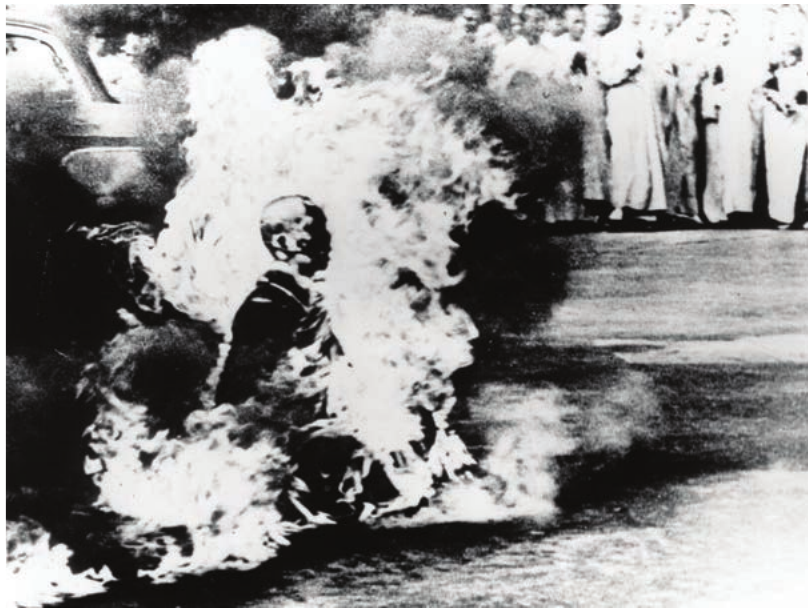
On 11 June 1963, Buddhist monk Thich Quang Duc made the ultimate protest. He walked into a busy Saigon intersection, doused himself with petrol, and set himself alight. Another monk accompanied him, chanting in English and Vietnamese that "a Buddhist becomes a martyr."
Important
US photographer Malcolm Browne captured the shocking image, which appeared on newspaper covers around the world. President Kennedy later stated that "no news picture in history has generated so much emotion around the world as that one." The photograph created an image of chaos in Vietnam that brought American involvement into serious question both publicly and privately.
Madam Nhu's response
The response from Madam Nhu, Diem's sister-in-law and architect of many anti-Buddhist laws, was devastating for the regime's international reputation. She callously remarked: "If the Buddhists wish to have another barbecue, I will be glad to supply the gasoline and a match."
By mid-1963, when ARVN forces attacked Buddhist pagodas across the countryside, Diem had become a liability to the Kennedy administration rather than an asset.
The 1963 coup
US withdrawal of support
After agitating ARVN generals demanded a coup, Kennedy authorized the withdrawal of US aid to South Vietnam unless Diem changed his policies. US Ambassador Henry Cabot Lodge received instructions to announce Kennedy's decision in a way that would "enhance the chances of a coup."
Diem's assassination
On the morning of 1 November 1963, ARVN forces attacked Diem's palace. Fighting erupted across Saigon as the coup unfolded. Fearing for their lives, Diem and his brother Nhu called for loyal forces to send an armoured personnel carrier to evacuate them to safety.
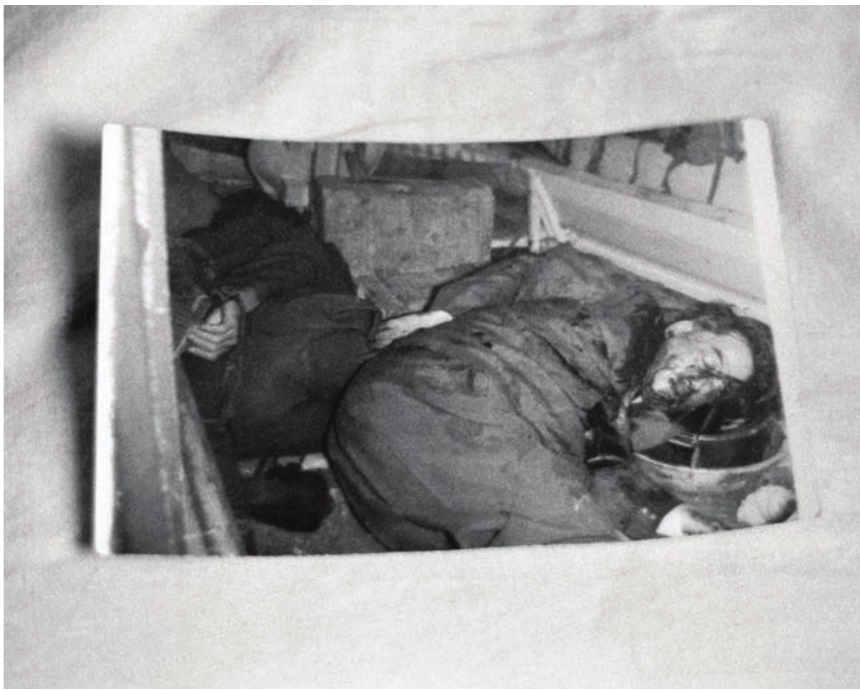
A vehicle soon arrived, but once the brothers were safely inside, ARVN soldiers shot both of them in the head. President Kennedy was personally horrified by the brutal manner of Diem's death, though he remained committed to reducing US involvement in Vietnam.
Kennedy's assassination
By late 1963, Kennedy had begun reconsidering American commitment to Vietnam. Both of his initial goals had failed: Diem had not proven a suitable leader, and the US Government could not halt the Viet Cong's growth. Kennedy was searching for a long-term exit strategy from Vietnam.
Note
However, he never got the chance to implement one. On 23 November 1963, just three weeks after Diem's assassination, President Kennedy was himself assassinated while touring Dallas, Texas. The question of how Kennedy might have handled Vietnam remains one of history's great "what ifs."
Remember!
Summary
Key Points to Remember:
-
The Geneva Conference (1954) ended French colonial rule but divided Vietnam along the 17th parallel into communist North Vietnam and US-backed South Vietnam, postponing rather than resolving conflict.
-
The Domino Theory drove US involvement in Vietnam. American leaders feared that if Vietnam fell to communism, other Southeast Asian nations would quickly follow, threatening US interests throughout the region.
-
Ngo Dinh Diem ruled South Vietnam as an authoritarian leader from 1954-63. Despite US support, his Catholic minority status, corruption, anti-Buddhist policies, and brutal suppression of opposition alienated most South Vietnamese and strengthened the Viet Cong.
-
The Viet Cong (National Liberation Front) formed in 1960 as a coalition of groups opposing Diem. Supplied via the Ho Chi Minh Trail through Laos and Cambodia, they conducted effective guerrilla warfare against the ARVN and demonstrated at Ap Bac that superior US technology could be defeated by well-trained peasant fighters.
-
The Buddhist crisis of 1963 internationalized opposition to Diem's regime. Monk Thich Quang Duc's self-immolation on 11 June 1963 shocked the world, and the photograph by Malcolm Browne became one of the most powerful images of the era, forcing Kennedy to reconsider US support for Diem.
-
The November 1963 assassinations of both Diem (1 November) and Kennedy (23 November) dramatically changed Vietnam's future. Diem's death left South Vietnam without stable leadership, while Kennedy's assassination meant his plans to reduce US involvement were never implemented, leaving his successor Lyndon Johnson to navigate the escalating conflict.