Origins of the Cold War 1945–53 (HSC SSCE Modern History): Revision Notes
📚Revision Notes
Origins of the Cold War 1945–53
Understanding the Cold War
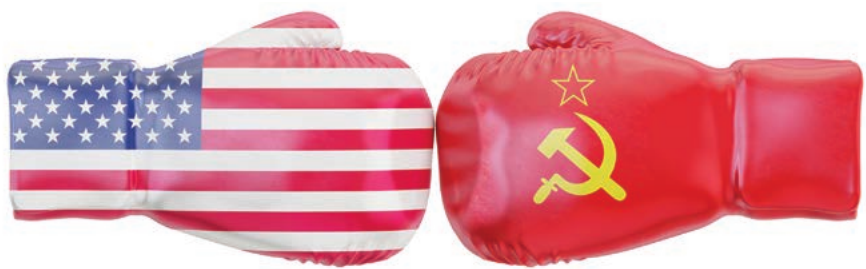
The Cold War was a period of intense political and military tension between two rival superpowers: the United States of America (USA) and the Union of Soviet Socialist Republics (USSR). Unlike a traditional 'hot war' with direct military conflict, the Cold War was characterised by ideological rivalry, nuclear arms buildup, proxy wars, espionage, and diplomatic confrontation. This dangerous period lasted from approximately 1947 to 1991 and came perilously close to nuclear catastrophe on several occasions.
Note
The term "Cold War" reflects the fact that despite intense rivalry and numerous crises, the USA and USSR never engaged in direct military conflict against each other. Instead, they competed through proxy wars, diplomatic confrontations, and an arms race that brought the world to the brink of nuclear war multiple times.
Key terminology:
- Cold War: A state of geopolitical tension between rival powers that stops short of actual warfare
- Superpower: A nation with dominant influence in international affairs, possessing massive military and economic strength
- Containment: The US strategy to prevent the spread of communism around the world
- Armageddon: Originally a biblical term for a final catastrophic conflict; used to describe potential nuclear annihilation
The wartime alliance and growing tensions
The Big Three
During World War II, three major Allied leaders worked together to defeat Nazi Germany:
- Franklin Roosevelt (USA) - President until his death in April 1945
- Winston Churchill (UK) - Prime Minister until July 1945
- Joseph Stalin (USSR) - Soviet Premier and dictator
These leaders formed the core of a multilateral alliance of 26 nations united against the Axis Powers. However, tensions bubbled beneath the surface throughout the war, particularly concerning post-war arrangements.
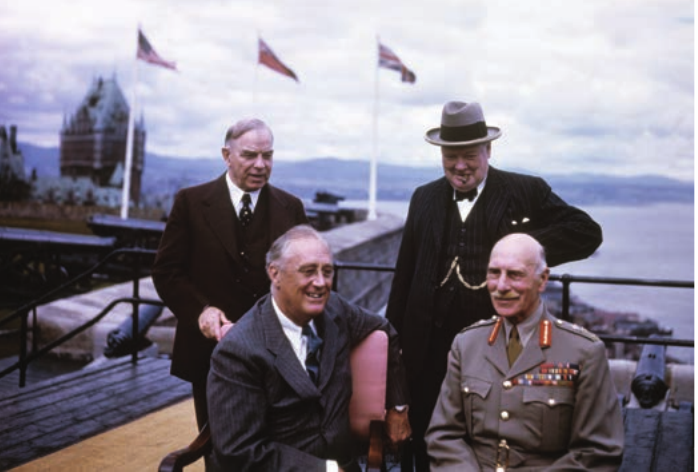
Quebec and Hyde Park meetings (1943)
Churchill and Roosevelt met in Canada between 17-24 August 1943. Stalin was invited but could not attend. The two Western leaders discussed strategic matters and, most significantly, held secret discussions about the atomic bomb. This exclusion of Stalin from atomic matters would have profound consequences for post-war relations.
Important
The Seeds of Mistrust
The deliberate exclusion of Stalin from atomic bomb discussions at Quebec and Hyde Park marked the beginning of a pattern of secrecy that would deeply damage Soviet-American relations. Stalin's spy network had already informed him of the Manhattan Project, making this exclusion appear even more suspicious and hostile to Soviet leaders.
Teheran Conference (November-December 1943)
The first meeting of all three leaders took place in Iran's capital, Teheran, from 28 November to 1 December 1943. Key agreements included:
- British and American commitment to invade Nazi-occupied France by May 1944
- Soviet promise to join the war against Japan after Germany's defeat
- Discussions about the proposed United Nations organisation
- Roosevelt's vision of 'four policemen' (USA, Britain, China, USSR) maintaining world peace
Roosevelt came away optimistic, believing he could work constructively with Stalin. However, this optimism would prove short-lived.
Yalta Conference (February 1945)
The Big Three met at Yalta in Crimea on the Black Sea from 4-11 February 1945, with Nazi Germany's defeat imminent.
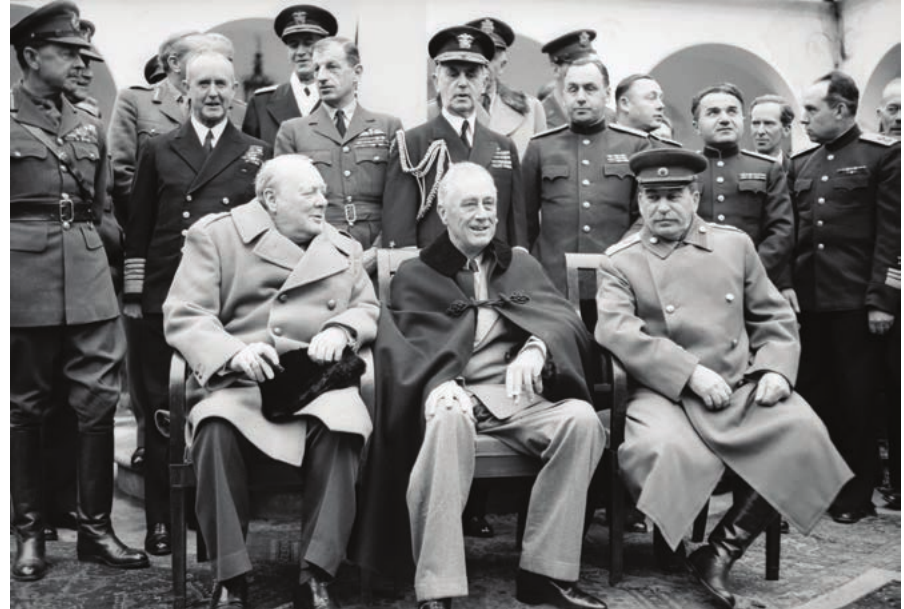
Major agreements reached:
- Germany would be divided into four occupation zones (British, American, French, and Soviet)
- Berlin, located within the Soviet zone, would also be split into four sectors
- Stalin agreed to allow free elections in Eastern European countries
- The USSR would join the war against Japan
- The Soviets agreed to participate in the permanent United Nations
Note
The Yalta Myth
The Yalta Conference is often portrayed as either a great triumph of diplomacy or a betrayal where Roosevelt "gave away" Eastern Europe to Stalin. In reality, Soviet troops already occupied most of Eastern Europe by February 1945, giving Stalin enormous leverage. The agreements reflected this military reality rather than diplomatic weakness.
Hidden tensions:
Despite the cooperative atmosphere, serious problems lurked beneath:
- Stalin had already gained intelligence about the Manhattan Project (the US atomic bomb programme) through his extensive spy network
- Roosevelt and Churchill deliberately excluded Stalin from atomic discussions
- Each leader prioritised their nation's security over world peace
- Historian Robert Dallek noted that both sides made commitments that were 'rhetoric devoid of firm conviction'
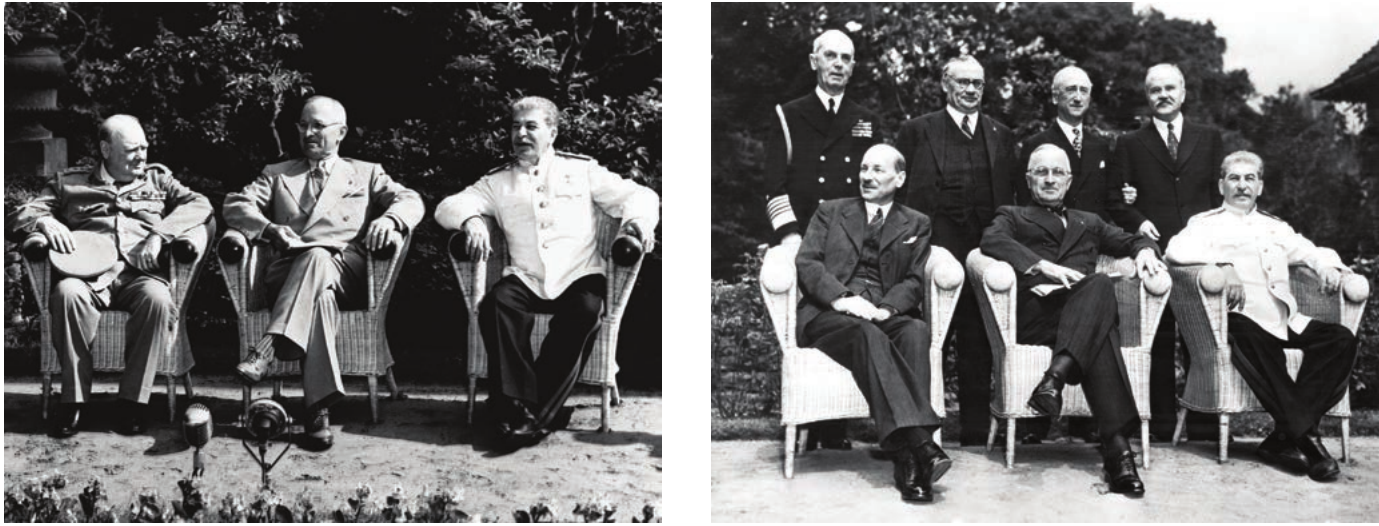
Potsdam Conference (July 1945)
This conference marked a significant shift in the Big Three dynamic. Two new leaders joined Stalin:
- Harry S. Truman replaced Roosevelt, who died on 12 April 1945
- Clement Attlee replaced Churchill, who lost the UK election
Agreements:
- Confirmed Germany's division into four zones
- Berlin would be similarly divided
- Germany would pay reparations
Unresolved issues:
- Peace treaty terms with Germany
- Final border between Russia and Poland
- Enforcement of free elections promise
Important
The Atomic Bomb Revelation
On 16 July, Truman received news of the successful atomic bomb test. He took Stalin aside to inform him, expecting surprise. However, Stalin barely reacted, simply saying he hoped it would be used against Japan soon. Unknown to Truman, Stalin's spies had kept him well-informed about the Manhattan Project.
Historian Robert Dallek argued this secrecy marked the beginning of the Cold War: "How could they not understand how secretiveness about such a revolutionary weapon would revive post-war tensions?"
The atomic bomb issue
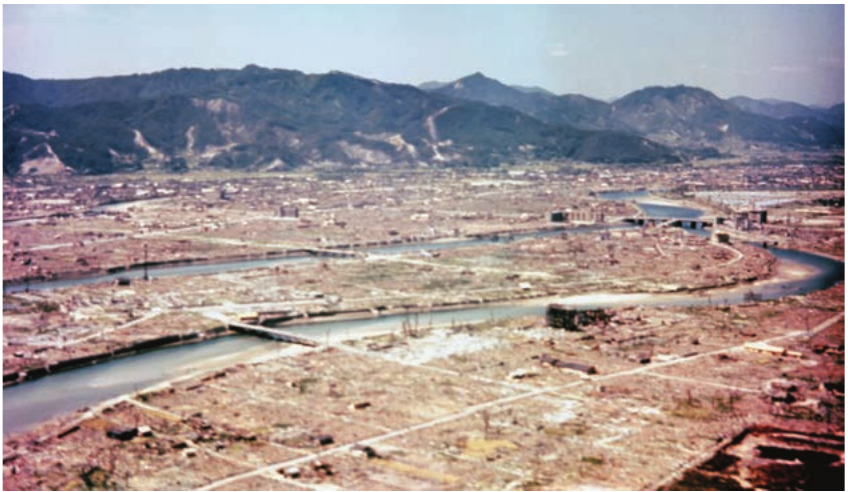
The atomic bombing of Japan
The United States dropped atomic bombs on two Japanese cities:
- Hiroshima: 6 August 1945
- Nagasaki: 9 August 1945
Military context:
The decision was primarily military. The US had already conducted massive firebombing raids on Japanese cities, including the March 1945 Tokyo raid that killed 100,000 people - more than died at Hiroshima. By August 1945, about 60 Japanese cities had been devastated by conventional bombing.
Note
The atomic bombings must be understood in the context of total war practices already in use. The strategic bombing campaigns against both Germany and Japan had already killed hundreds of thousands of civilians. What made the atomic bombs revolutionary was their ability to achieve massive destruction with a single weapon, fundamentally changing military and diplomatic calculations.
Impact on superpower relations:
Stalin viewed the bombings as:
- An act of 'super-barbarity'
- Proof that Japan was already doomed
- A demonstration designed to limit Soviet territorial gains in Asia
- 'A-Bomb blackmail' as American policy
Stalin immediately ordered his scientists to accelerate their atomic programme, declaring: "Hiroshima has shaken the whole world. The balance had been destroyed. That cannot be."
The Baruch Plan (1946)
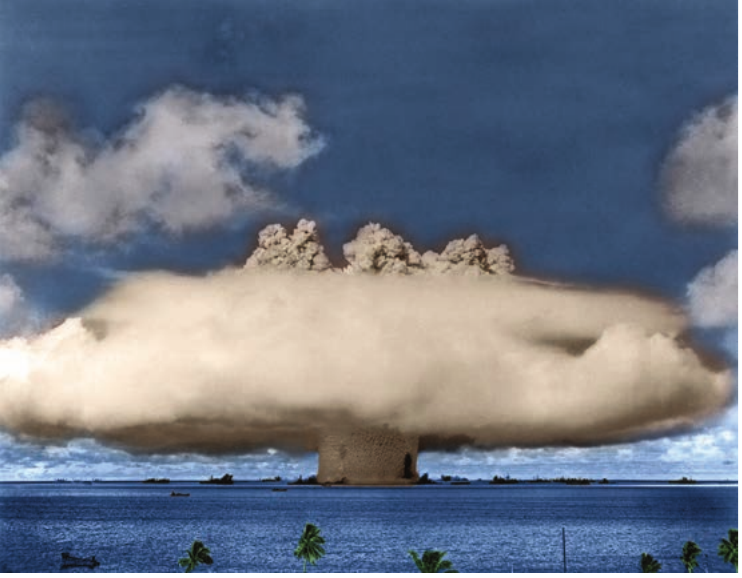
President Truman understood that America's atomic monopoly could not last. He approved a plan for international control of nuclear weapons through a United Nations agency. Bernard Baruch presented this proposal to the UN Atomic Energy Commission on 14 June 1946.
Key provisions:
- Establishment of an Atomic Development Authority
- UN control of all uranium mining
- UN operation of all nuclear facilities capable of producing weapons
- Nations would surrender ability to build nuclear bombs
- Peaceful nuclear energy use would be permitted
Important
Why the Baruch Plan Failed
The timing of the Baruch Plan's presentation undermined its credibility:
- The Soviets submitted counterproposals on 19 June
- On 1 July, the US conducted atomic tests at Bikini Atoll
- A second test followed on 25 July
- The Soviets strongly objected to continued testing during negotiations
- Eventually, the USSR totally rejected the Baruch Plan
Some historians question whether Truman was genuinely committed to international control, particularly given that atomic testing continued during critical negotiations. This represented a major missed opportunity to prevent the nuclear arms race.
Emerging Cold War tensions
Stalin's Bolshoi Speech (9 February 1946)
Stalin needed to reassert communist ideology and explain away America's superior power. In a speech at the Bolshoi Theatre in Moscow, he:
- Depicted victory in the 'Great Patriotic War' as due to socialism's economic superiority
- Blamed the two world wars on inevitable competition within monopoly capitalism
- Stimulated national solidarity around the Communist Party
- Positioned the USSR defensively against capitalism
The American response was one of alarm. Many feared Stalin was preparing for war against the West. Historian Robert Dallek speculated that Stalin would have been better served by taking a softer line, but the 'unyielding ideologues in the Kremlin' could only think in terms of class struggle.
The Long Telegram (22 February 1946)
George Kennan, a US Embassy official with extensive Moscow experience, was asked for an analysis of Soviet policy. His 8,000-word response became known as the 'Long Telegram'.
Note
Kennan's Analysis
Kennan's telegram provided the intellectual foundation for American Cold War policy:
- Stalin's foreign policy was inherently aggressive
- The Russians would oppose America at every opportunity
- The Soviets were determined to destroy the American way of life
- This represented the greatest threat the US had ever faced
Kennan's recommendation: Long-term, vigilant containment of Soviet expansionist tendencies. This concept became the foundation of American Cold War strategy, pursued by every president from Truman to Reagan.
Kennan later published his telegram in Foreign Affairs journal in 1947 under the pseudonym 'Mr X'.
Churchill's Iron Curtain Speech (5 March 1946)
At Westminster College in Fulton, Missouri, former Prime Minister Winston Churchill delivered a landmark speech with President Truman in attendance:
From Stettin in the Baltic to Trieste in the Adriatic an iron curtain has descended across the Continent. Behind that line lie all the capitals of the ancient states of Central and Eastern Europe... all are subject in one form or another, not only to Soviet influence but to a very high and, in some cases, increasing measure of control from Moscow.
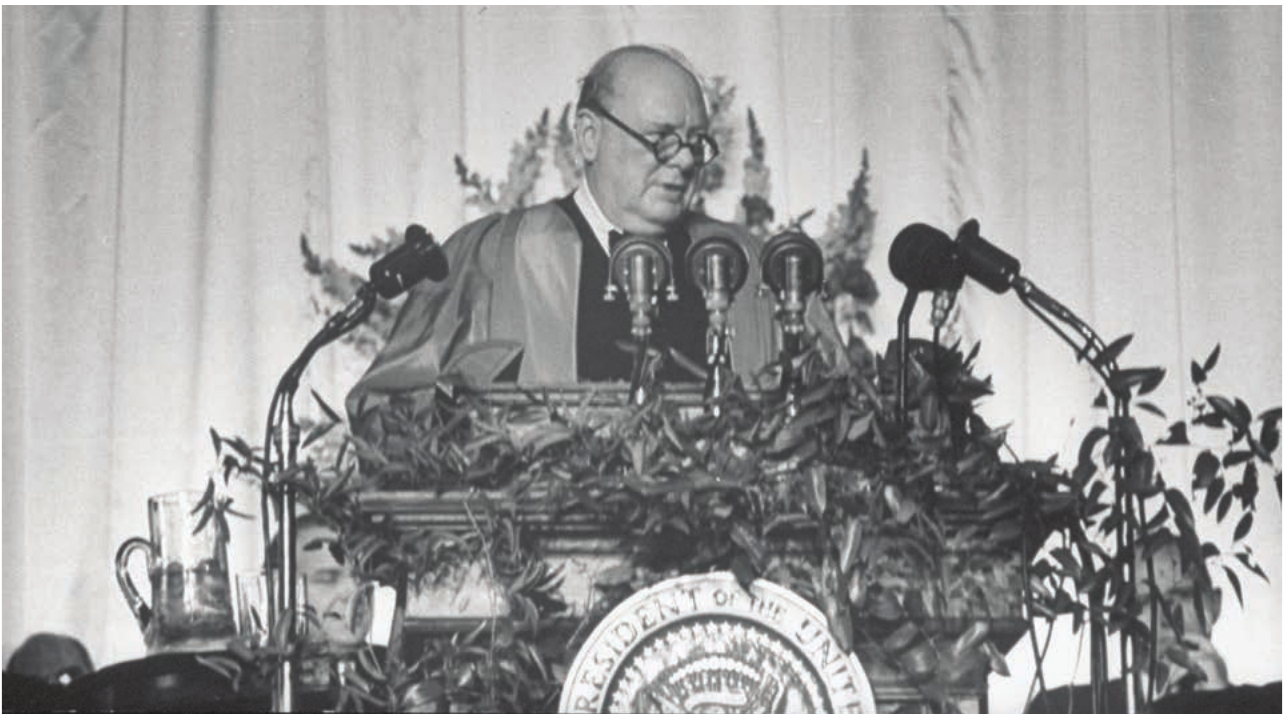
Churchill called for:
- A 'special relationship' between the UK and USA
- Joint action to counter the Soviet threat
- No sharing of nuclear technology with the Soviets
This speech marked a dramatic shift in how Americans viewed the Soviet Union - from wartime ally to primary threat.
Summary
Key Turning Points in Early 1946
Three events in early 1946 fundamentally transformed American attitudes towards the Soviet Union:
- Stalin's Bolshoi Speech (9 February) - Reaffirmed communist ideology and blamed capitalism for world wars
- Kennan's Long Telegram (22 February) - Provided intellectual justification for containment policy
- Churchill's Iron Curtain Speech (5 March) - Publicly declared the division of Europe and called for Western unity
These three events, occurring within a single month, crystallised the ideological and geopolitical divide that would define the Cold War for the next four decades.
The Truman Doctrine
By 1947, Truman and his advisers had significantly hardened their attitudes towards the USSR. The three events of early 1946 had crystallised American thinking about Soviet intentions and the appropriate response.
The catalyst
Fears that the Soviet Union was interfering in Greece and Turkey, combined with the USSR's failure to withdraw from Iran as promised, prompted decisive action.
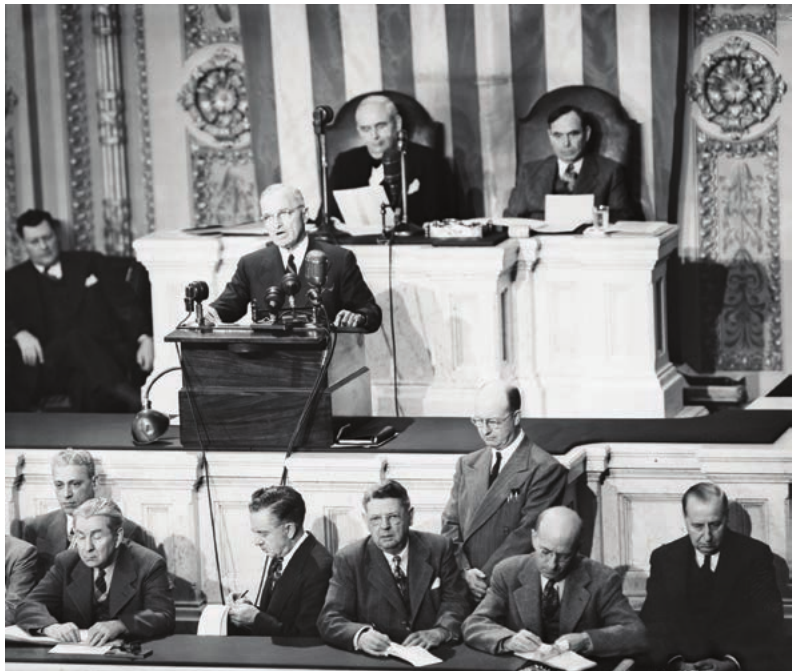
Truman's speech to Congress (1947)
Truman requested $400 million in aid for Greece and Turkey. In justifying this request, he outlined what became known as the Truman Doctrine:
Important
The Truman Doctrine: A Revolutionary Shift
Key principles:
- The United States must assist 'free people' resisting 'totalitarian regimes'
- The spread of authoritarian regimes would 'undermine the foundations of international peace'
- American security depended on the success of democratic nations worldwide
Significance:
This represented a revolutionary break from American tradition of avoiding foreign commitments. Truman signalled the US would now actively counter any Soviet actions deemed expansionist - a policy of containment in action.
Key term: Totalitarian - a system of government that is centralised and dictatorial, requiring complete subservience to the state
The Marshall Plan
George Marshall's initiative (5 June 1947)
Secretary of State George C. Marshall called for a comprehensive economic programme to rebuild Europe. The rapid deterioration of European economies in winter 1946-47, combined with rising fears of communist expansion, prompted this ambitious plan.
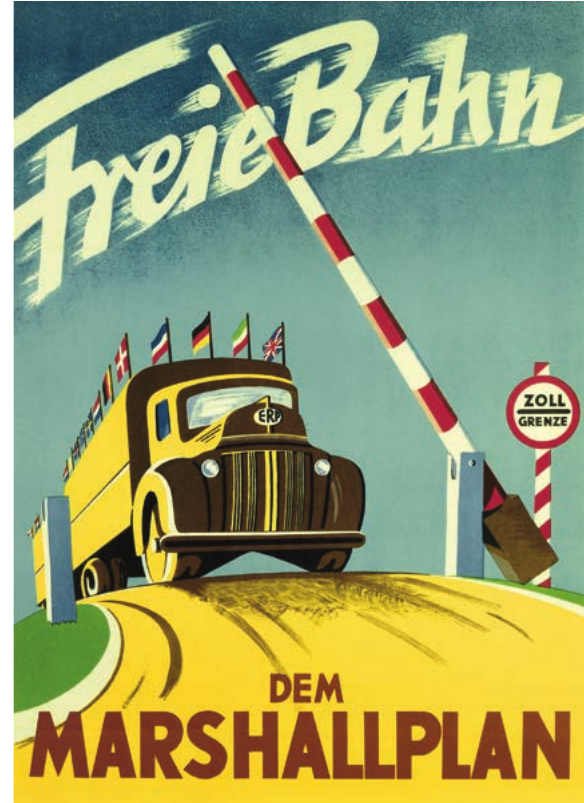
Key features:
- Massive American financial aid for European reconstruction
- Created new markets for American goods, stimulating the US economy
- Led to resurgence of industrialisation in Western Europe
- Eastern European countries weren't excluded, but Soviet concerns about US economic influence prevented communist bloc participation
Note
The Marshall Plan's Dual Purpose
The Marshall Plan served both humanitarian and strategic purposes. While genuinely aimed at preventing mass starvation and economic collapse in Europe, it also:
- Prevented the economic desperation that might drive Europeans towards communism
- Created stable, prosperous markets for American exports
- Integrated Western European economies, making future conflicts between them less likely
- Prepared the ground for eventual European integration
Impact:
Churchill hailed it as 'the turning point in the history of the world'. Historian Nicolaus Mills wrote that 'Western Europe got a post-war version of the New Deal,' avoiding the social and economic unrest that would have held Europe back.
The Marshall Plan laid the groundwork for:
- A stable, post-war Western Europe
- Integration of a reconstructed Germany into the Western economic system
- Germany received $3 billion in Marshall Plan aid
Soviet response:
The USSR formed COMECON (Council for Mutual Economic Assistance) in 1949, effectively tying all Eastern European trade to the Soviet Union.
The Berlin Blockade and Airlift
The crisis (1948-49)
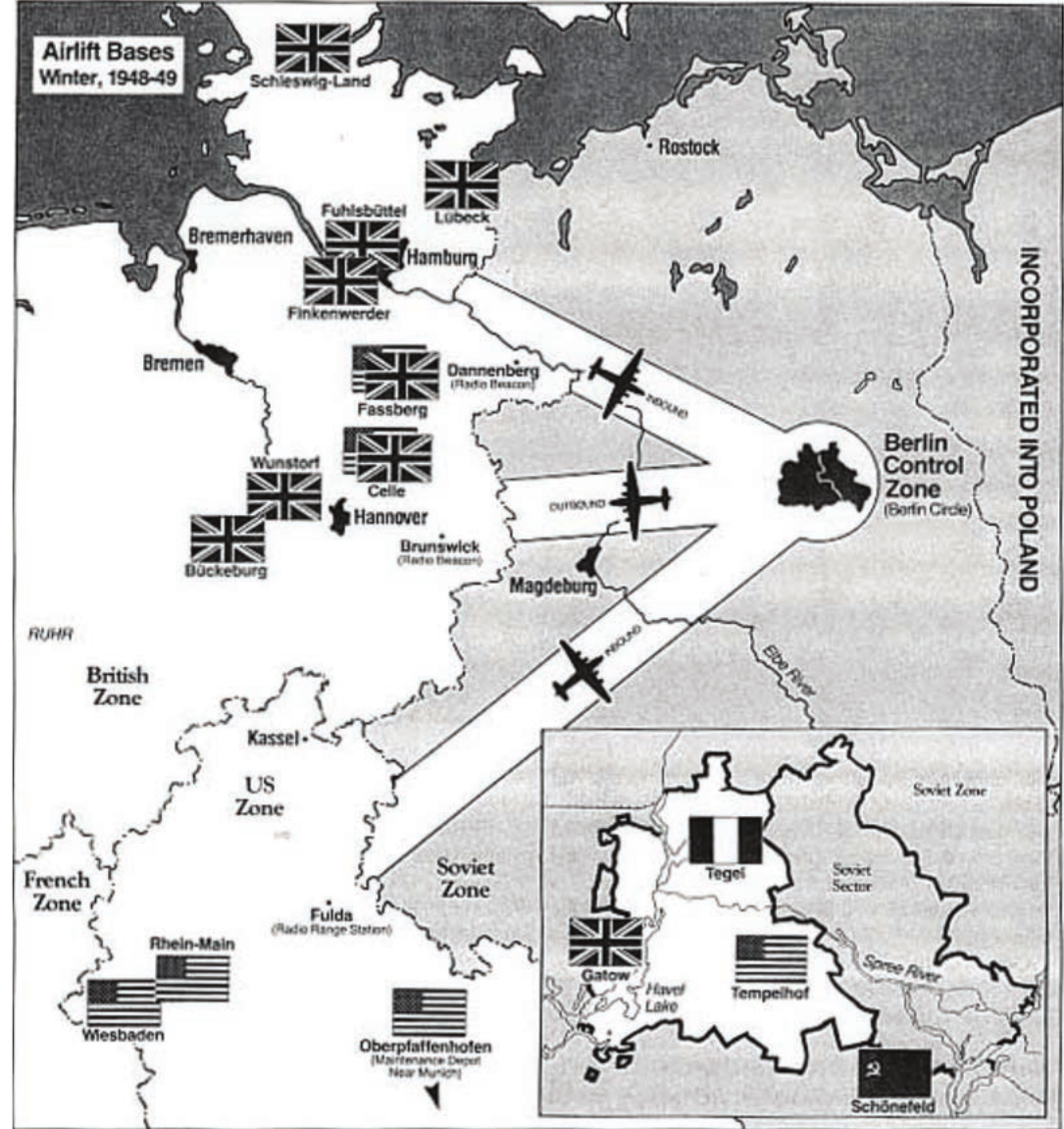
Stalin grew increasingly concerned about Western plans to unite their occupation zones in Germany. When Britain, France, and the United States began merging their zones in 1948, Stalin feared this was a prelude to a united Western Germany that would become the cornerstone of American influence in Europe.
Unable to prevent Western German unification, Stalin decided to force the Western allies out of West Berlin by blockading the city on 24 June 1948.
Important
The Berlin Blockade: A Critical Test
The blockade:
- All three road and rail corridors into West Berlin were closed
- Food and fuel supplies to West Berlin were cut off
- Two million West Berliners faced starvation
- This was a test of the new containment policy
Stalin calculated that the Western powers would either:
- Abandon West Berlin (demonstrating the weakness of containment), or
- Attempt to break the blockade by force (risking war and making the West appear aggressive)
Allied response: the Berlin Airlift
The Western allies refused to abandon West Berlin or resort to military confrontation. Instead, they devised an imaginative solution: airlifting all necessary supplies into the city.
Example
How the Berlin Airlift Worked
Operation details:
- Commenced June 1948
- Continued for eight months
- Ended 12 May 1949 when Stalin lifted the blockade
- Planes landed every few minutes at peak operation
- Delivered food, fuel, and all supplies needed by West Berliners
At its height, the airlift represented an extraordinary logistical achievement. Allied aircraft delivered over 4,000 tons of supplies daily, including everything from coal and food to Christmas presents for Berlin's children. The operation demonstrated Western resolve and technological capability while avoiding military confrontation.
Note
Exam tip: The Berlin Airlift demonstrates how the superpowers avoided direct military confrontation even during crises, establishing a pattern that would continue throughout the Cold War.
Consequences of the Berlin Blockade
The Berlin Blockade had far-reaching consequences that solidified the division of Europe and established the military and political structures that would define the Cold War.
Formation of NATO (4 April 1949)
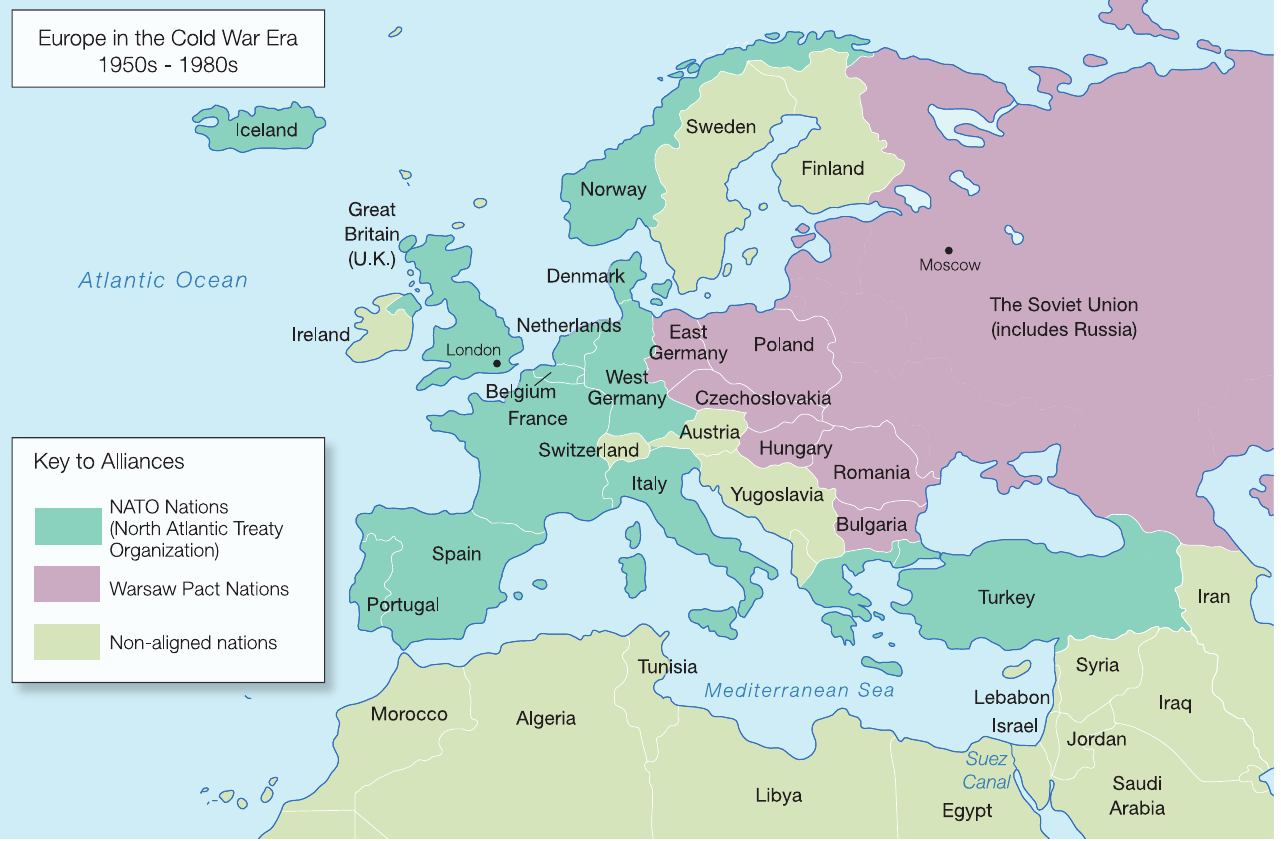
The United States joined with Britain, France, Canada, and several West European countries to form the North Atlantic Treaty Organization (NATO) - a defensive military alliance designed to protect Western Europe from Soviet expansionism.
President Truman stated: "By this treaty, we are not only seeking to establish freedom from aggression and from the use of force in the North Atlantic community, but we are also actively striving to promote and preserve peace throughout the world."
The Soviet Union responded in 1955 by creating the Warsaw Pact, its own security alliance with Eastern European communist states.
Division of Germany formalised
In September 1949:
- Western Germany (Federal Republic of Germany) was created by joining the British, French, and American zones
- The Soviets responded by creating the German Democratic Republic (GDR) - East Germany
- Berlin remained divided between East and West, with West Berlin becoming part of West Germany
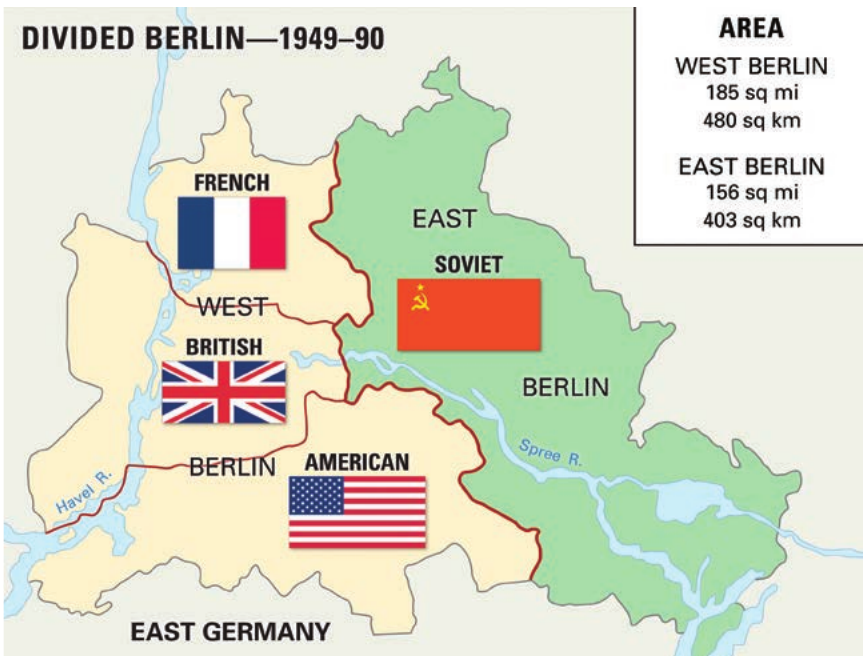
This division would last until 1990.
Communist victory in China (1949)
China's role in World War II
During WWII, President Roosevelt insisted China be included in discussions about the post-war world. He envisioned China as one of the 'four policemen' (USA, USSR, Britain, China) who would maintain world peace. This vision led to China becoming one of the five permanent members of the UN Security Council with veto power.
At the time, China was ruled by Chiang Kai-shek and his Nationalist Party.
The Chinese Civil War
After Japan's surrender in 1945, China plunged into civil war between:
- Nationalist government led by Chiang Kai-shek (supported by the USA)
- Communist revolutionary forces led by Mao Zedong
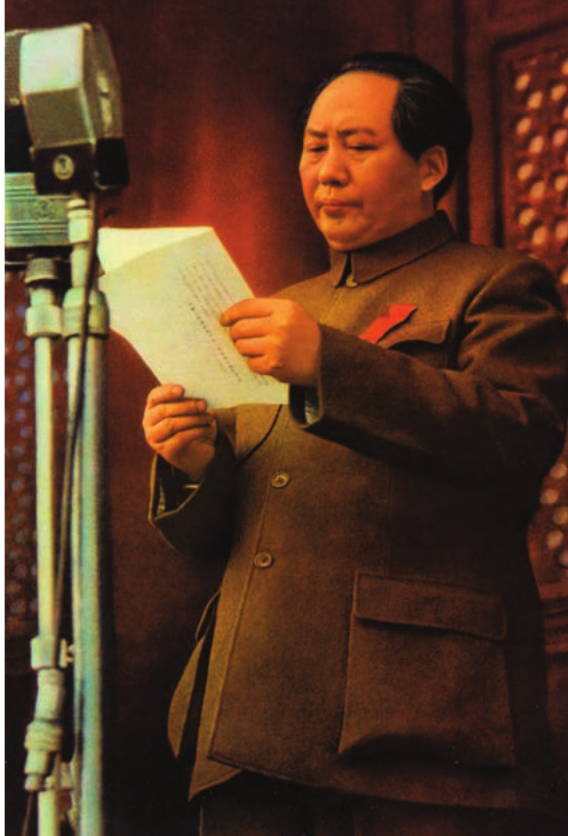
Communist victory (October 1949)
After four years of civil war, the Communists emerged victorious. However:
- The US Navy rescued Chiang Kai-shek and his army, transferring them to Taiwan
- Chiang re-established his Nationalist government on Taiwan, calling it the Republic of China (ROC)
- Mao Zedong proclaimed the People's Republic of China (PRC) on the mainland
The UN representation dispute
Mao's Communist government demanded to replace Chiang's ROC in the United Nations, including the Security Council seat. However, the United States:
- Used its majority in the General Assembly (59 members in 1949, most voting with the USA)
- Threatened to use its veto in the Security Council
- Successfully kept Communist China out of the UN
Note
Impact on US Domestic Politics
'Losing China' became a major political issue in the United States, contributing to McCarthyism and anti-communist hysteria. Politicians who had supported engagement with Communist China faced accusations of treason, and the question "Who lost China?" dominated American political discourse for years. This domestic political pressure made it nearly impossible for any administration to consider recognising Communist China, prolonging the diplomatic isolation of the world's most populous nation.
The Korean War (1950-53)
Background and outbreak
Korea had been divided at the 38th parallel since the end of WWII:
- North Korea: occupied by Soviet forces, communist government established
- South Korea: occupied by US forces, pro-Western government established
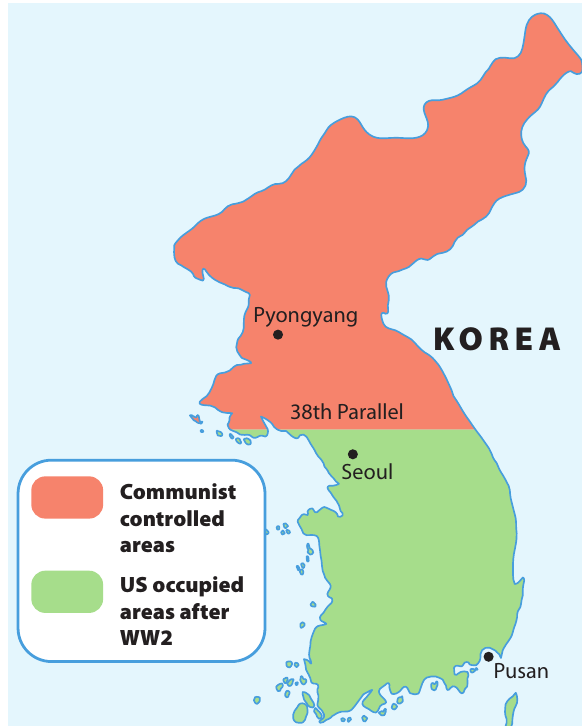
On 24 June 1950, communist North Korea invaded South Korea.
UN response
UN Secretary-General believed this blatant aggression must be opposed to avoid the UN suffering the same fate as the League of Nations.
Important
Security Council Authorisation
Getting Security Council backing was made easy by the absence of the Soviet representative, who had been boycotting the Council for six months over the exclusion of Communist China.
- Resolution passed authorising a US-led coalition to fight North Korea and free South Korea
- 7 July: Resolution established unified UN command under US leadership
- 8 July: President Truman appointed General Douglas MacArthur to lead UN forces
The Soviet boycott proved to be a major strategic error, allowing the UN to authorise military action that the USSR would certainly have vetoed had its representative been present.
Course of the war
Initial North Korean success:
North Korea's army of over 400,000 troops swept down the peninsula, forcing US and South Korean forces back to the south-eastern corner at Pusan.
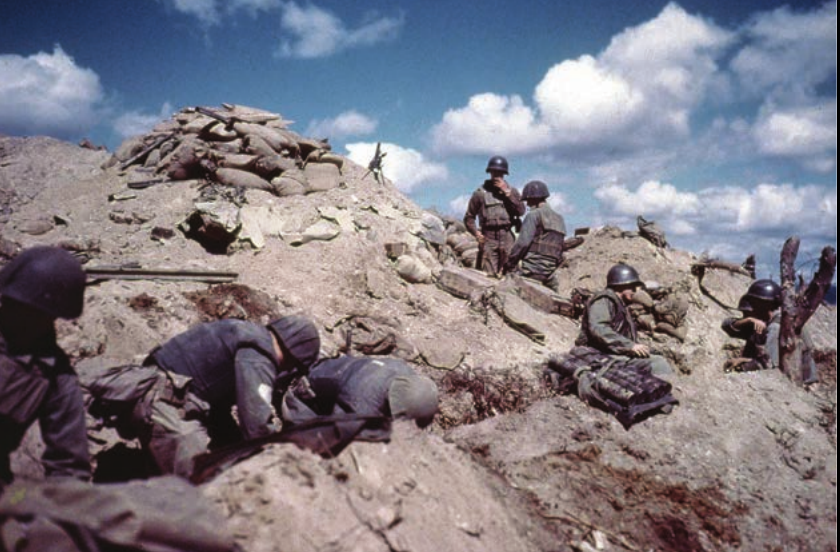
MacArthur's counter-attack (September 1950):
MacArthur landed 70,000 US troops at Inchon, near Seoul, catching North Korean forces by surprise. Within two weeks, UN forces had:
- Recaptured Seoul
- Joined forces advancing from Pusan
- Cut off about half the North Korean invasion force
- Regained all of South Korea up to the 38th parallel by 1 October
Note
Decision to Invade North Korea
The Americans made the fateful decision to cross into North Korea to unify the country. This transformed the war from a defensive operation to liberate South Korea into an offensive campaign to eliminate the communist regime in North Korea. This decision would have catastrophic consequences when China interpreted it as a threat to its own security.
Chinese intervention (30 November 1950):
Over 260,000 Chinese troops crossed the Yalu River and attacked UN forces. Gradually, UN forces retreated to the 38th parallel, where they determined to hold.
Important
MacArthur Fired
- By early 1951, Truman was ready to seek a negotiated settlement
- MacArthur advocated expanding the war and using nuclear weapons against China
- MacArthur made threats that sabotaged Truman's negotiations
- Truman fired MacArthur for insubordination
MacArthur's dismissal demonstrated the principle of civilian control over the military, even at the cost of removing a popular war hero. It also showed Truman's determination to avoid the war escalating into a direct conflict with China or the Soviet Union.
Armistice (27 July 1953):
After two more years of fighting and negotiation, an armistice was finally signed - but no peace treaty was ever concluded.
The Demilitarised Zone (DMZ)
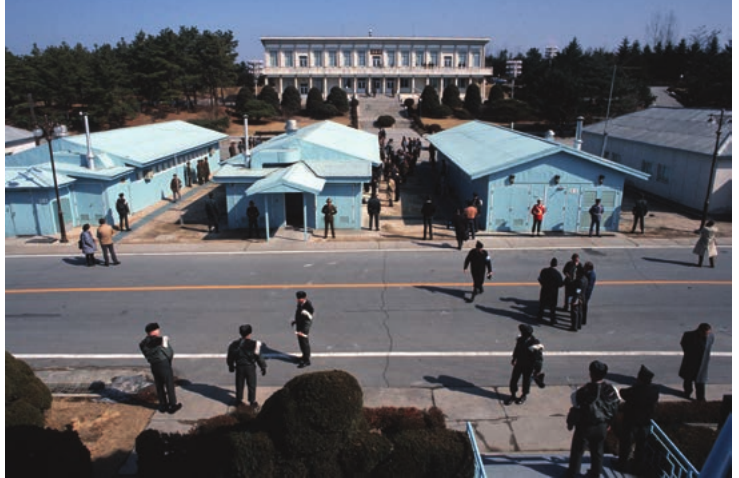
A four-kilometre-wide, 250-kilometre-long no-man's land was established between North and South Korea. The ceasefire village of Panmunjom was founded where the armistice was signed.
Current situation:
- North Korea maintains approximately 1.2 million soldiers (world's fifth-largest fighting force)
- Two-thirds stationed within 60 miles of the DMZ
- 28,500 US soldiers remain stationed in South Korea
- The Korean War has never officially ended
- Recent disputes between North Korea and the US are a legacy of the Cold War
Nuclear considerations during the Korean War
The Korean War saw both superpowers consider using nuclear weapons, demonstrating how close the world came to nuclear conflict during Cold War crises.
Important
Nuclear Threats and Brinkmanship
Truman's nuclear bluff:
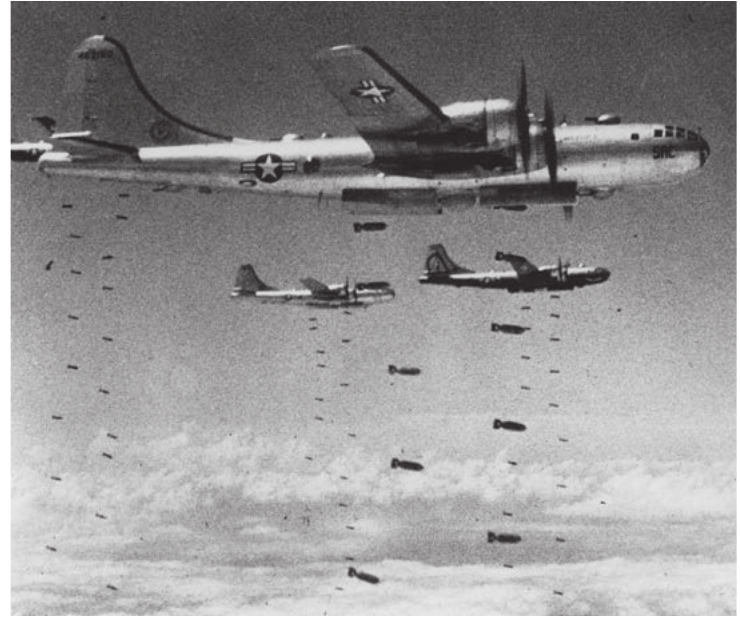
- Placed B-29 bombers in Britain within striking distance of the USSR
- Each plane carried a fully assembled Mark IV atomic bomb (though fissile cores remained in the US)
- Massive conventional bombing of North Korea, including firebombing with napalm
MacArthur's proposals:
- Demanded authority to use 50 atomic bombs
- Wanted to create a radioactive wasteland lasting 60 years
- Believed this would intimidate the Soviets
Truman's position:
- Fired MacArthur but stated he would use 'whatever means necessary' to win, including atomic bombs
- April 1951: Authorised nine nuclear bombs with fissile cores to be transferred to US base in Okinawa
- US Air Force practised atomic bomb runs over North Korean targets with dummy bombs
Eisenhower's approach (1953):
- Became president on 20 January 1953, inheriting the Korean War
- Frustrated by dragged-out negotiations
- Stated 'the taboo which surrounds the use of atomic weapons would have to be destroyed'
- Let communist adversaries know he was more willing to use atomic bombs than Truman
- Vice President Nixon believed this threat helped end the war
Key developments summarised
The formation of rival blocs
By 1949-1950, the world had divided into two clear camps:
Western Bloc:
- Led by the United States
- NATO alliance (1949)
- Marshall Plan economic cooperation
- Capitalist, democratic systems
Eastern Bloc:
- Led by the Soviet Union
- Warsaw Pact (1955)
- COMECON economic cooperation
- Communist, totalitarian systems
Soviet control of Eastern Europe
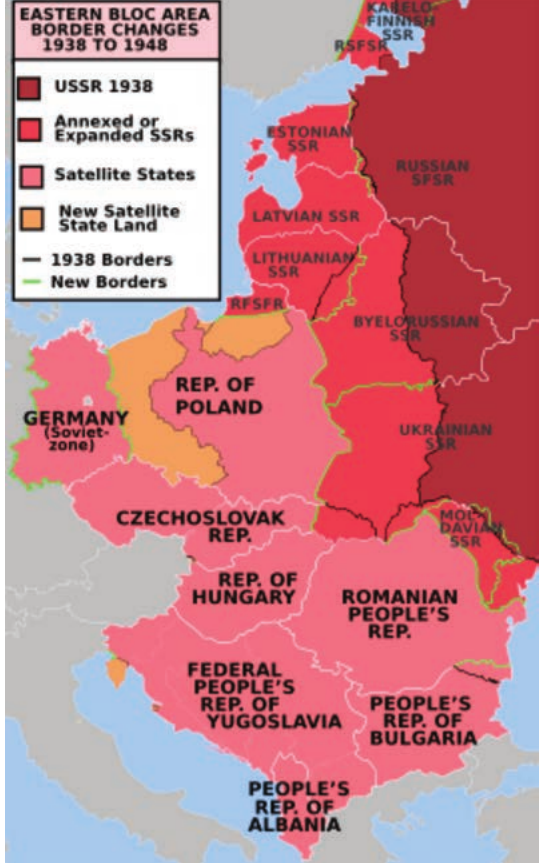
Stalin gradually imposed communist governments on Eastern European countries:
- 1946: Bulgaria and Albania
- 1947: Poland and Romania
- 1948: Czechoslovakia
- 1949: Hungary
Initially, coalition governments were allowed with communists in key positions. Gradually, Soviet agents excluded non-communists, bringing these governments under complete Soviet control.
Ideological rivalry
While geopolitical and security concerns drove much of the conflict, ideological rivalry between capitalism and communism was also significant:
Capitalism (USA and allies):
- Free market economics
- Democratic governance
- Individual liberties
- Private property
Communism (USSR and allies):
- State-controlled economy
- One-party rule
- Collective good over individual rights
- State ownership
Note
However, historian Robert Dallek and others note that even without ideological differences, geopolitical security concerns would likely have created superpower rivalry. Recent tensions between the USA and Russia (no longer communist) support this view - suggesting that national security interests rather than ideology may have been the primary driver of Cold War tensions.
Exam preparation
Important dates to remember
- 1943: Quebec/Hyde Park meetings; Teheran Conference
- February 1945: Yalta Conference
- July 1945: Potsdam Conference
- August 1945: Atomic bombs dropped on Hiroshima and Nagasaki
- February 1946: Stalin's Bolshoi Speech; Kennan's Long Telegram
- March 1946: Churchill's Iron Curtain Speech
- June 1946: Baruch Plan presented to UN
- 1947: Truman Doctrine; Marshall Plan announced
- June 1948 - May 1949: Berlin Blockade and Airlift
- April 1949: NATO formed
- September 1949: USSR tests atomic bomb
- October 1949: Communist victory in China
- June 1950: Korean War begins
- July 1953: Korean War armistice signed
Causes of the Cold War: key factors
1. Breakdown of wartime alliance:
- Different visions for post-war world
- Competing security interests
- Mutual distrust
2. The atomic bomb issue:
- American secrecy about the Manhattan Project
- Exclusion of USSR from atomic discussions
- Use of atomic bombs against Japan
- Stalin's determination to develop Soviet atomic weapons
- Failure of Baruch Plan for international control
3. Ideological differences:
- Capitalism vs communism
- Democracy vs totalitarianism
- However, ideology may not have been the primary cause - security concerns were paramount
4. Geopolitical competition:
- Soviet control of Eastern Europe
- American containment policy
- Formation of rival alliance systems (NATO vs Warsaw Pact)
- Division of Germany and Berlin
5. Missed opportunities:
- Could Roosevelt and Truman have been more open about atomic weapons?
- Should the Baruch Plan have been pursued more vigorously?
- Did American actions push Stalin towards greater defensiveness?
Historiographical debates
Was the Cold War inevitable?
Note
Orthodox view:
- Soviet expansionism made conflict inevitable
- Stalin's totalitarian ideology drove aggressive policies
- The West had no choice but to contain Soviet ambitions
Revisionist view:
- American actions, particularly atomic secrecy and economic pressure, contributed to Soviet defensiveness
- Stalin's primary concern was Soviet security, not world revolution
- More cooperative approaches might have avoided the Cold War
Post-revisionist view:
- Both superpowers bear responsibility
- Mutual misunderstanding and security concerns drove the conflict
- Domestic political pressures in both countries made compromise difficult
Note
Exam tip: When discussing causes, consider multiple perspectives and use specific evidence from events like the Potsdam Conference, the Berlin Blockade, and the Korean War to support your arguments.
Essay planning tips
For questions on "Why did the Cold War begin?":
- Introduction: Define the Cold War and state your argument about which factors were most important
- Wartime alliance breakdown:
- Discuss conferences (Yalta, Potsdam)
- Show how cooperation deteriorated
- Highlight competing visions for post-war world
- Atomic bomb issue:
- Explain secrecy and Stalin's reaction
- Discuss Baruch Plan failure
- Analyse impact on mutual trust
- Ideological and geopolitical factors:
- Soviet control of Eastern Europe
- Truman Doctrine and Marshall Plan
- Formation of rival blocs
- Crystallising events:
- Berlin Blockade
- Communist victory in China
- Korean War
- Conclusion: Weigh the relative importance of different factors and make a judgment about whether the Cold War could have been avoided
Summary
Key Points to Remember:
-
The Cold War emerged from the breakdown of the wartime alliance between the USA, UK, and USSR, with growing mistrust particularly over post-war arrangements in Europe
-
The atomic bomb issue was crucial: American secrecy about the Manhattan Project, the bombing of Japan, and the failure of the Baruch Plan for international control all contributed to Soviet-American tensions
-
The Truman Doctrine (1947) and Marshall Plan (1947) marked decisive American commitments to containing Soviet influence, representing a revolutionary shift in US foreign policy
-
The Berlin Blockade (1948-49) was a critical test of the containment policy, leading to NATO's formation and the permanent division of Germany
-
By 1950-53, the Cold War had become global, with communist victory in China and the Korean War demonstrating that superpower rivalry extended far beyond Europe
-
Throughout this period, both sides avoided direct military confrontation despite coming close on several occasions, establishing patterns that would characterise the entire Cold War