Renewal and End of the Cold War (HSC SSCE Modern History): Revision Notes
📚Revision Notes
Renewal and End of the Cold War
The end of détente
Détente had been more productive than earlier periods of peaceful cooperation between the superpowers. However, it did not eliminate the risk of nuclear war. The Cuban Missile Crisis and Yom Kippur War showed how close the world came to nuclear catastrophe. At least during détente, superpower leaders maintained communication with each other.
The early 1980s marked a dangerous shift. Many historians view this period as the most perilous time during the entire Cold War. In 1983, two separate incidents could have ended life as we know it, though the public remained completely unaware at the time.
The Soviet invasion of Afghanistan (1979)
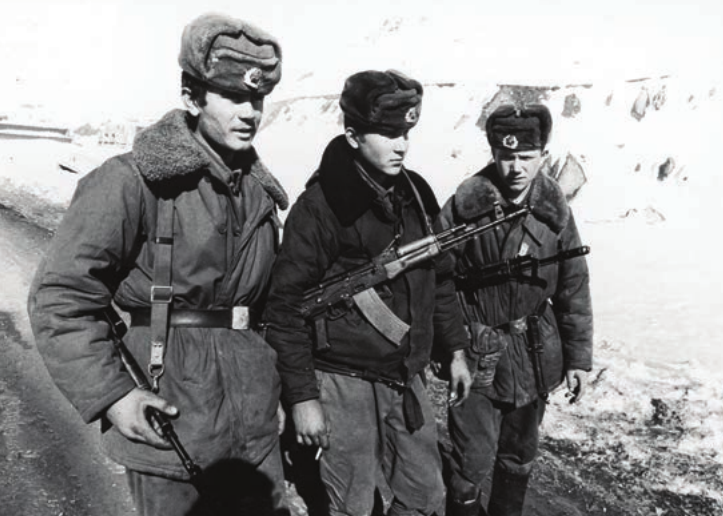
In December 1979, the Soviet Union intervened in Afghanistan to support a pro-Soviet government. This event ended détente.
Note
Understanding Soviet Motivations
The Soviet intervention in Afghanistan was driven by security concerns rather than pure expansionism. The Soviets had been alarmed by the Islamic Revolution in Iran and feared that if the pro-Soviet Afghan regime fell to Islamic insurgents, instability could spread to Muslim-populated Soviet republics in Central Asia. From the Soviet perspective, this was a defensive action to protect their sphere of influence.
International reaction:
- The rest of the world saw this as blatant aggression
- This was the only time during the Cold War that the Soviet Union invaded a country outside the Eastern bloc and outside their traditional sphere of influence
- Western powers feared the Soviets might engage in further adventurism and threaten oil supplies in the Middle East
President Carter's response:
President Jimmy Carter was outraged and took decisive action:
- Sent a sharply worded letter to Brezhnev denouncing the invasion
- In his State of the Union Address, pledged to protect Middle East oil supplies from Soviet invasion
- Imposed economic sanctions on the USSR
- Boycotted the 1980 Moscow Olympics
- Gave military aid to Afghan rebels
The Soviet intervention turned into a costly quagmire. Only after ten years of bloody warfare did Soviet forces finally withdraw in February 1989, under Gorbachev's leadership.
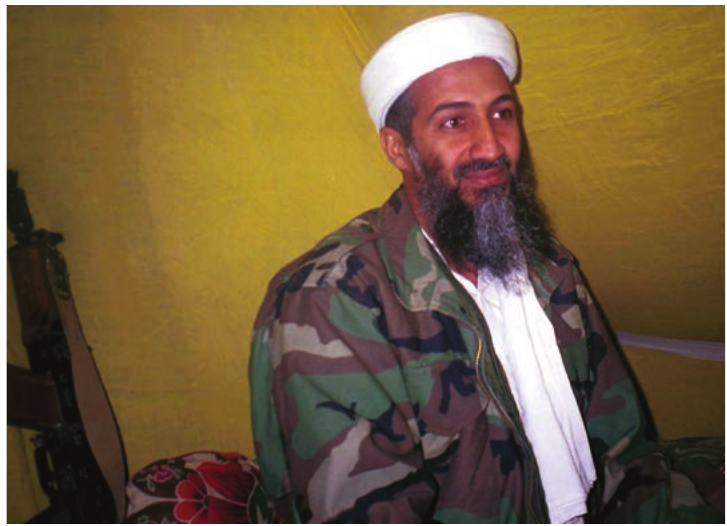
President Carter's foreign policy
In the second half of the 1970s, détente began to weaken. President Jimmy Carter, elected in 1976, initially pursued détente but faced growing opposition.
Carter's approach:
- Carter was a breath of fresh air after the Watergate scandal
- He emphasised promoting human rights as central to foreign policy
- He believed a nation's foreign policy should reflect its highest moral principles
- He normalised relations with Communist China
- He achieved peace between Egypt and Israel (a major breakthrough)
- He signed SALT II with Brezhnev
Key term: SALT II - Strategic Arms Limitation Talks, a treaty signed in 1979 to limit nuclear weapons
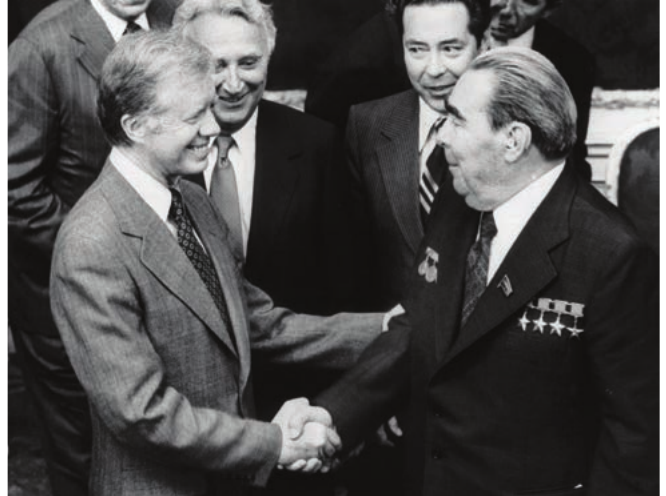
However, Brezhnev was annoyed with Carter's promotion of human rights, particularly when it involved criticism of the Soviet Union's human rights record.
The relationship sours:
When the Soviets invaded Afghanistan in 1979, Carter transformed into a Cold War warrior. He took action against the Soviets and gave serious consideration to developing new nuclear weapons, including:
- The neutron bomb
- The MX missile
- Pershing missiles and cruise missiles to be deployed in Europe
Note
By the end of Carter's presidency, the nuclear arsenals had reached staggering levels:
- The United States had 24,000 nuclear weapons
- The Soviet Union had 32,000 nuclear weapons
The Iranian hostage crisis:
Carter's remaining time as president was dominated by another Middle East crisis: the Islamic Revolution in Iran.
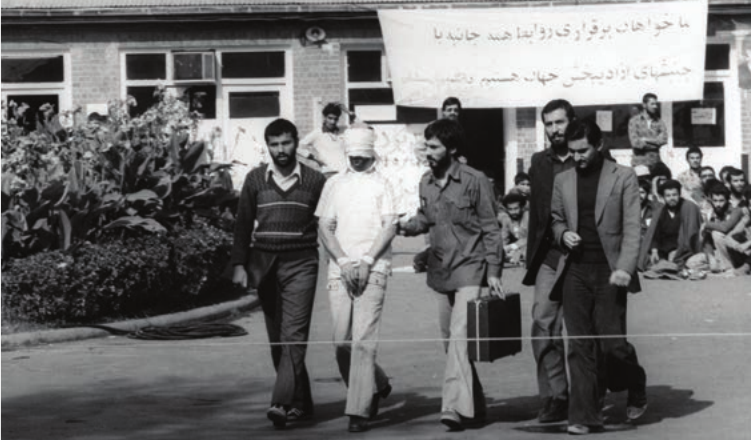
In November 1979:
- The US Embassy in Iran was attacked
- 52 US Embassy staff were taken hostage
- They were held for 444 days
- The Carter Administration engaged in protracted negotiations for their release
- This made the United States appear impotent on the world stage
The end of the 1970s: American perspective
From the American viewpoint, the end of the 1970s was a bleak time:
- The United States had been wearied by the Vietnam War, which lasted until 1975
- Despite détente, Cold War rivalry continued in Africa and elsewhere
- In 1979, the Soviets invaded Afghanistan
- The mood was one of doom and gloom
Important
The Reality Beneath Appearances
Though not appreciated at the time, the United States was actually in a much stronger position than it appeared:
- Conflicts in Angola and the Horn of Africa were at the periphery and of little geopolitical significance
- The United States was in a much stronger position economically
- The Soviet economy had stagnated
- The Soviet Union was falling behind the West in the information revolution
- The Soviet Union was geopolitically weaker, though they were building up nuclear missiles to achieve parity with the United States
Brezhnev's position:
- He was committed to détente
- He also believed that "defence is sacrosanct"
- As part of the World War II generation, he had seen Soviet forces crushed by the Nazi onslaught
- He was determined never to be in that position again
- He too easily gave in to demands of the Soviet military-industrial complex
President Reagan hypes up the Cold War
Ronald Reagan became US President in January 1981. He immediately pursued aggressive policies and rhetoric that intensified the Cold War. Détente was now dead.
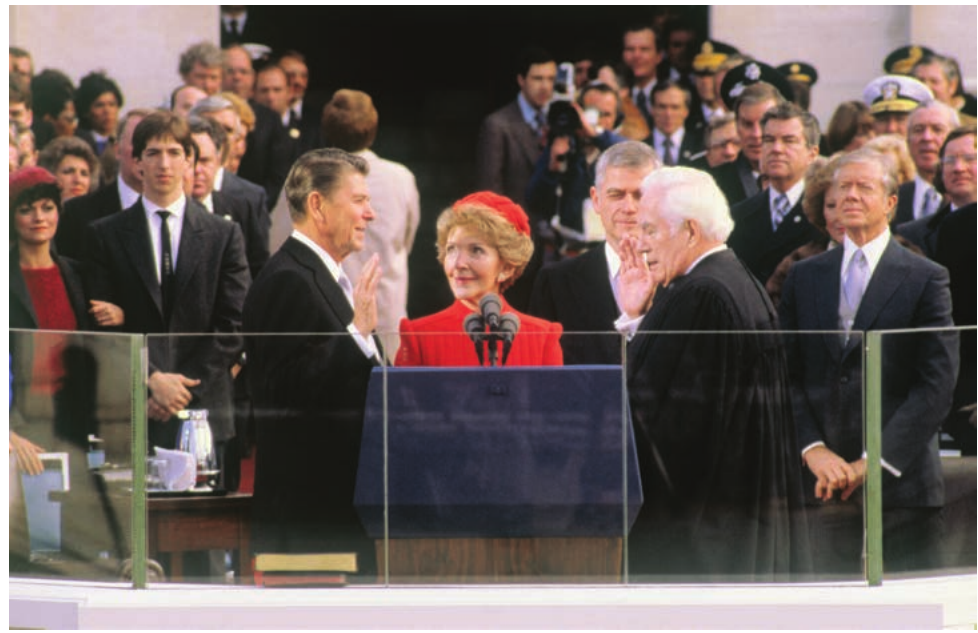
Reagan's approach:
- Pursued "peace through strength" foreign policy
- Dubbed the "great communicator" for his effective rhetoric
- Labelled the Soviet Union the "evil empire"
- Objected to the moral equivalency implied in détente
- Insisted on the superiority of democracy, free enterprise, freedom of conscience and American values
- Viewed the Soviets as godless, collectivist communists
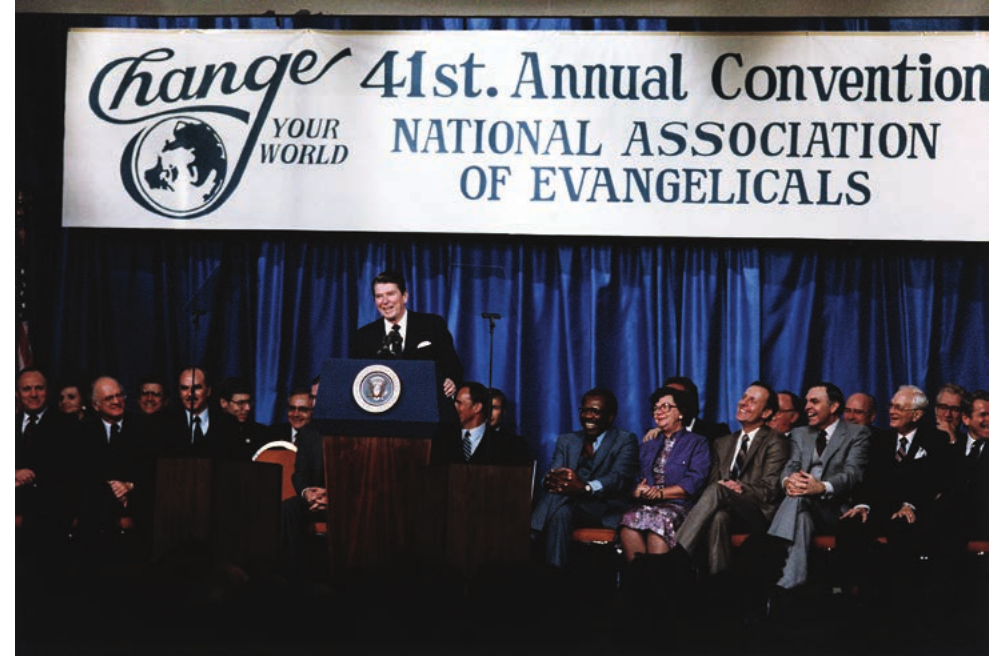
The Reagan Doctrine:
This confrontational approach became known as the Reagan Doctrine. He advocated against communist regimes wherever they existed in this clash between good and evil, against the "enemies of freedom."
Key policy shift: Containment was out. Instead, the West wouldn't contain communism but would transcend it (code for "rollback").
Hard-line initiatives:
The Reagan Administration pursued numerous aggressive policies to pressure the Soviet Union:
- Increasing defence spending substantially for "peace through strength"
- Increasing the size of the navy
- Supporting resistance fighters against Soviet-backed governments in Afghanistan, Angola and Nicaragua
- Invading Grenada to stop a leftist regime taking power
- Planning to build and deploy new nuclear weapons and delivery systems:
- B-1 Bomber
- Trident submarine
- MX missile
- Proposing the Strategic Defence Initiative (SDI or "Star Wars")
The Strategic Defence Initiative (SDI)
One of Reagan's most controversial proposals was SDI:
- A space-based system to shoot down incoming missiles
- Rather fanciful in concept
- Greatly concerned the Soviets
- Though Reagan described it as defensive, the Soviets believed it had offensive implications
- It would free the United States from worrying about a retaliatory strike
- This would allow them to launch a first-strike against the Soviet Union
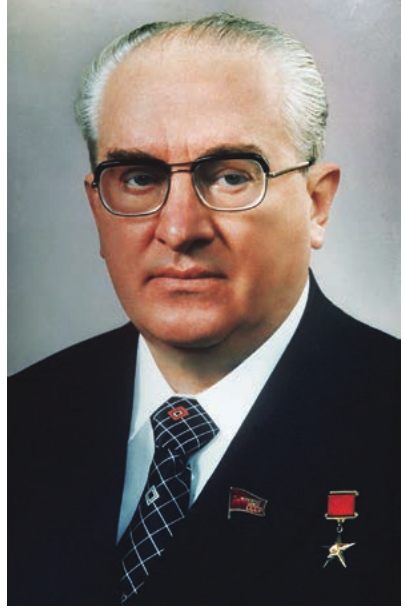
- In February 1983, Soviet leader Yuri Andropov attacked SDI plans as "not just irresponsible but insane"
Key term: First-strike - a surprise nuclear attack intended to destroy an enemy's ability to retaliate
The Soviet war scare (1981-1985)
Reagan's hard-line policies had a galvanising effect on the Soviet Union.
Soviet military build-up under Brezhnev:
- Deployment of new generation ICBMs with MIRVed warheads
- Introduction of longer range SLBMs
- Though Brezhnev had a personal revulsion of nuclear weapons, his fear of US aggression and pressure from the military-industrial complex led to military build-up
- This looked very aggressive from the US standpoint, especially combined with Soviet adventurism in the Third World
Important
The Reagan Administration's Miscalculation
The Reagan Administration thought their hard-line "peace through strength" approach would lead to the Soviets backing down. Instead, the ageing Soviet leadership became paranoid. This miscalculation nearly led to nuclear war.
Operation RYAN:
From 1981 to 1985, the Soviet leadership believed the United States was intent on their destruction and that Reagan's harsh rhetoric signalled intent for a first-strike nuclear attack.
Key term: Operation RYAN - A Soviet intelligence operation to collect information about US plans for a first-strike decapitation attack against the Soviet Union (the acronym means "Nuclear Missiles Attack" in Russian)
Key term: Decapitation attack - A surprise attack on an enemy, targeting their leadership and command and control system
The Soviet KGB and East German Stasi conducted a global intelligence gathering operation as an early-warning system of an imminent first-strike attack by the United States.
KAL-007 incident (1 September 1983)
By the second half of 1983, relations between the superpowers were the worst they had ever been.
Important
The KAL-007 Tragedy
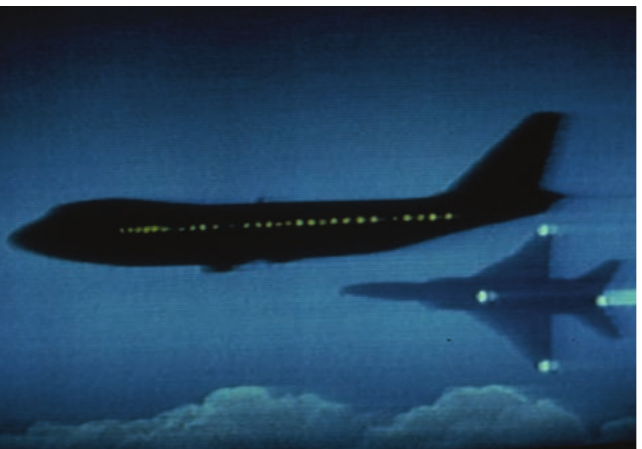
On 1 September 1983, the Soviets shot down Korean passenger airliner KAL-007:
- All 269 passengers were killed
- Initially, the Soviets denied it happened
- They then changed their story, claiming it was a military plane
- The plane had strayed into Soviet airspace
President Reagan called the "Korean Airline massacre" a "crime against humanity that must never be forgotten" and an "act of barbarism and inhuman brutality."
Soviet response:
On 29 September 1983, General Secretary Andropov issued a bitter statement: "If anyone ever had any illusions about the possibility of an evolution to the better in the policy of the present American administration, these illusions are completely dispelled now."
Consequences:
- After KAL-007, the Soviet Politburo gave up any ideas of cooperating with the Reagan Administration
- Soviet paranoia about a US first-strike reached new levels
- The Soviets ceased all communications with the United States
The Serpukhov-15 incident (26 September 1983)
Only a few weeks after KAL-007, an incident occurred that illustrated the extreme level of Soviet paranoia. This incident could have triggered World War III.
Important
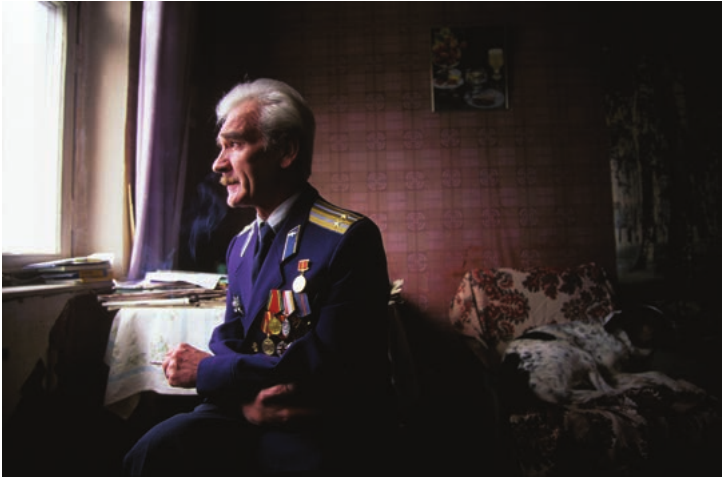
The Man Who Saved the World
On 26 September 1983, Colonel Stanislav Petrov was on duty at Serpukhov-15, a Soviet top-secret early warning command centre. Computers analysed data from satellites to detect a pre-emptive nuclear first strike from the United States.
What happened:
- In the early hours of the morning, the alarm went off
- Red lights flashed warnings that US missiles were heading for the Soviet Union
- The alarms went off several more times as new missiles were detected
- The atmosphere in the facility was tense
Petrov's critical decision:
- His job was to report enemy missile launches to Soviet command
- If he informed his superiors, they would launch a massive nuclear attack against the United States
- Petrov reported it was a false alarm, even though he had nothing to confirm this
- They had to wait 15 minutes to confirm whether he was right
- If he was wrong, it would be the end of all of them
The truth:
- It was a computer error
- The satellites had picked up flashes of light on the horizon
- These turned out to be sunlight reflecting off the horizon, not missile launches
- The computer had misinterpreted these flashes as missiles being launched
Petrov's reasoning:
Petrov was well aware of Soviet military and civilian leadership paranoia about a US first-strike decapitation attack. This weighed heavily on his mind, so he decided to call it a false alarm.
Aftermath:
- President Reagan never learned of this incident
- The Serpukhov-15 incident remained buried in the archives
- Petrov was reprimanded by his commanding officer for not following protocol
- The incident was forgotten until 1998, when Petrov's commanding officer revealed details in his memoir
- In 2006, Petrov received an award from The Association of World Citizens for being "the man who saved the world"
- In 2014, a documentary film was released called "The Man Who Saved the World"
The Reagan reversal (late 1983 onwards)
From the end of 1983, there was a significant shift in Reagan's foreign policy. However, it was barely noticed at the time and historians have tended to gloss over it.
Four events that led to change:
1. KAL-007 intelligence
Reagan received intelligence that the shooting down of KAL-007 was not deliberate but a miscalculation due to human error on the Soviet part. Reagan wondered what would have happened if the Soviets had a human or computer error with their nuclear weapons. From that point on, Reagan began to seriously contemplate the possibility that human error could cause a launch of nuclear missiles.
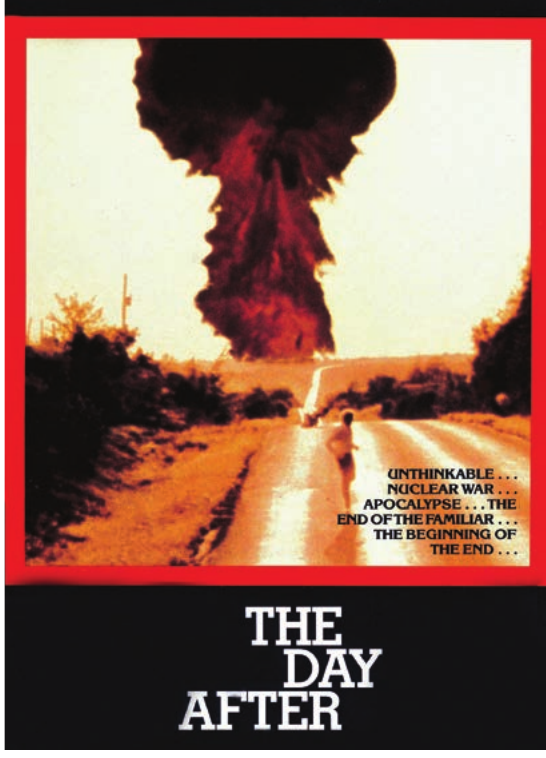
2. The Day After (TV movie)
Note
The Screening:
- The TV movie "The Day After" was screened by ABC on 20 November 1983
- It was watched by 100 million Americans
- President Reagan was given an advance copy and watched it on 10 October 1983 at Camp David
Reagan's reaction:
- In his diary, Reagan admitted to feeling very depressed after watching the movie
- It was rare for him to reveal any emotions
- Reagan was averse to reading books, but he could be powerfully affected by watching films
- He began to dwell more on the aftermath of nuclear war
3. The SIOP briefing
Two weeks later, Reagan received a full Single Integrated Operational Plan (SIOP) briefing.
Key term: SIOP - The US military's secret nuclear war plan
What happened:
- The briefing involved a role-play of presidential decision making in a nuclear crisis
- Reagan was shaken by this briefing
Reagan's diary entry: "In several ways the sequence of events described in the briefings paralleled those in the ABC movie. Yet there were still some people at the Pentagon who claimed a nuclear war was 'winnable.' I thought they were crazy."
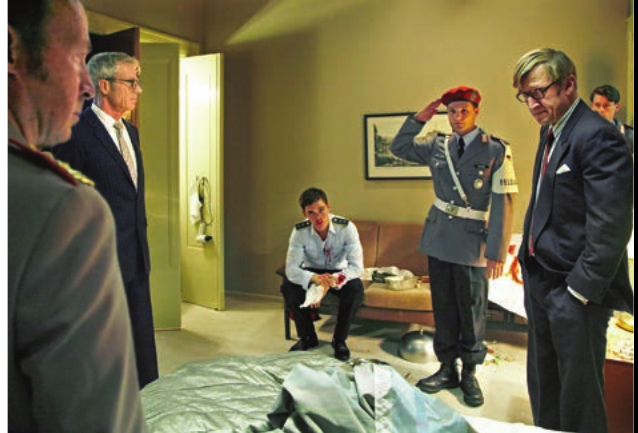
4. Able Archer-83 NATO military exercises
The exercises:
- The October 1983 SIOP briefing had been in preparation for Reagan's role in the Able Archer-83 NATO military exercises
- These occurred between 2 and 11 November 1983
Important
Soviet Nuclear Alert
On 18 November 1983, after the exercises had been completed, Reagan received a secret briefing that shocked him:
- The Soviet Union had placed their nuclear forces on high alert during the Able Archer exercises
- Soviet leader Andropov believed the United States was really planning a first-strike on the Soviet Union
- KGB spies had informed Andropov that Able Archer would include a full-scale simulated release of nuclear weapons against the Soviet Union
- The paranoid Soviet leadership believed Able Archer was a cover for an actual nuclear attack
- The Soviets placed their forces on high alert from 2 to 11 November 1983
Reagan's reaction:
Reagan could barely believe it. He wrote in his diary on 18 November 1983:
I feel the Soviets are so defence minded, so paranoid about being attacked that without being in any way soft on them, we ought to tell them no one here has any intention of doing anything like that. What the hell have they got that anyone would want?
Reagan's decision:
Reagan now thought the United States needed to set up a back-channel with the Soviet leadership to inform them that they had no intention of launching a first-strike. In addition to these events, Reagan was also influenced by his wife, Nancy, to do something on nuclear disarmament.
The reversal speeches (January 1984)
On 16 January 1984, in his Address to the Nations and Other Countries on United States-Soviet Union Relations, President Reagan made three major points:
- "Reducing the chances for dangerous misunderstandings and miscalculations"
- "Eliminating the risk of nuclear war"
- Working with the Soviet Union to fight the "common enemies of poverty, disease, and above all, war"
According to nuclear historian Lawrence Wittner, this was a "remarkable public address calling for peace with the Soviet Union and a nuclear-free world."
State of the Union Address (25 January 1984):
Reagan reinforced this message:
Tonight, I want to speak to the people of the Soviet Union, to tell them it's true that our governments have had serious differences, but our sons and daughters have never fought each other in war. And if we Americans have our way, they never will. People of the Soviet Union, there is only one sane policy, for your country and mine, to preserve our civilisation in this modern age: A nuclear war cannot be won and must never be fought. The only value in our two nations possessing nuclear weapons is to make sure they will never be used. But then would it not be better to do away with them entirely?
Note
Significance of the Reversal
These speeches appeared to have been a sincere gesture. From this point on:
- Reagan dropped his inflammatory rhetoric about the Soviet Union
- He continued raising the possibility of nuclear disarmament negotiations
In her 2000 book "The Reagan Reversal," Beth Fischer argued that Reagan started to pursue a more conciliatory policy after these two speeches. Fischer claimed this January 1984 reversal could be interpreted as the "beginning of the end of the Cold War."
The problem:
At the time, the Soviets made no response. The Soviet leadership was no longer listening. It would not be until 1985, when Mikhail Gorbachev became Soviet leader, that the Soviets responded to Reagan's attempts to reach out on nuclear disarmament.
The impact of the nuclear disarmament movement
Earlier in the Cold War, the nuclear disarmament movement had impact with the global campaign to end nuclear testing in the atmosphere. In 1963, they achieved victory with the Partial Test Treaty. However, from the mid-1960s, the peace movement's focus turned to the Vietnam War. The nuclear disarmament movement shrank, and détente took the urgency out of nuclear concerns (except in the Pacific regarding French nuclear testing).
Revival of the movement (1975-1980)
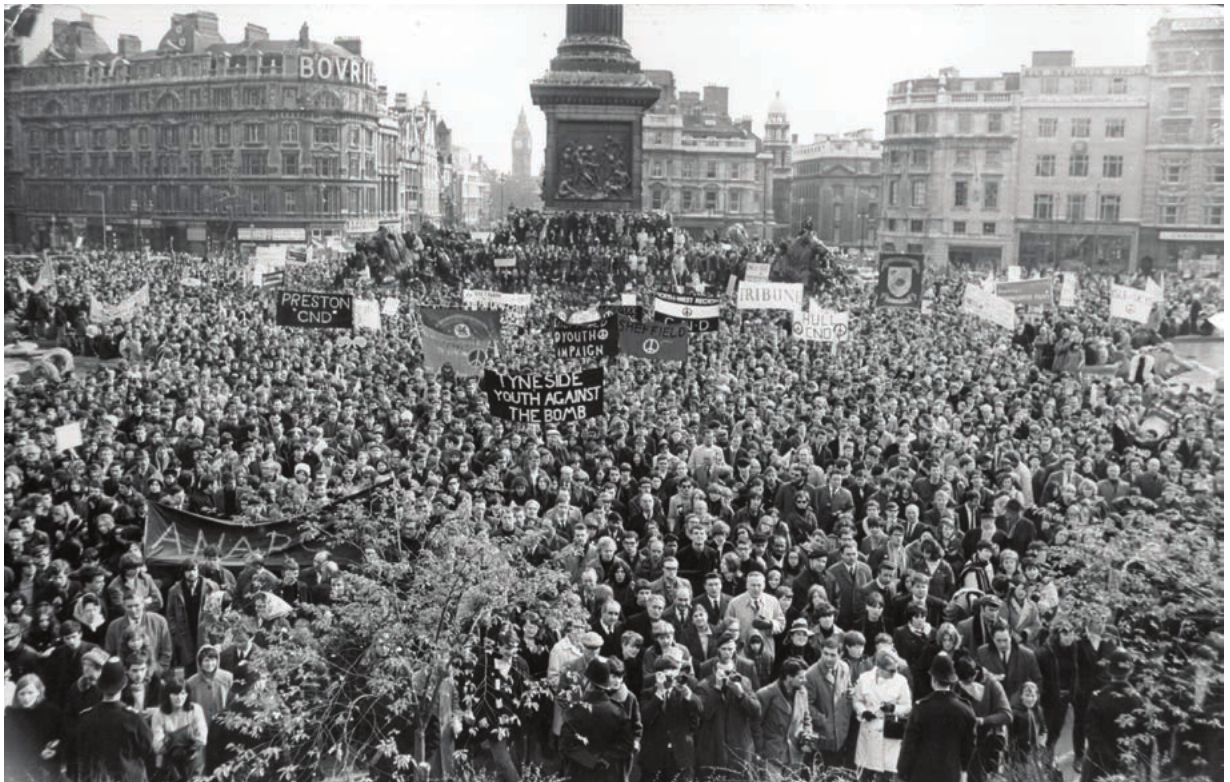
This began to gradually change between 1975 and 1978 as anti-nuclear groups began to revive. Activism escalated from 1979 with several developments:
Key organisations formed:
- Campaign for Nuclear Disarmament (CND): Experienced dramatic revival and growth in membership
- Physicians for Social Responsibility (PSR): Formed in the USA by Australian paediatrician Helen Caldicott. Enrolled 10,000 medical professionals as members. Caldicott gave speeches all over the United States
- International Physicians for the Prevention of War (IPPNW): In December 1980, three American and three Soviet scientists met in Geneva and formed this organisation
- Europeans for Nuclear Disarmament (END): Formed on 28 April 1980 with an "Appeal for European Nuclear Disarmament" drafted by British historian E.P. Thompson
- Nuclear Freeze movement: Established in United States by Randall Forsberg in 1980. Held its first national conference at Georgetown University in March 1981

Factors behind the proliferation
The sudden growth of nuclear disarmament movements by 1980 was driven by:
- The end of détente
- The deterioration in superpower relations
- The emergence of new types of nuclear weapons
- Reagan's aggressive rhetoric (which galvanised many people)
- More weapons in existence than ever (more than 50,000), making the world more dangerous
Nuclear Freeze movement
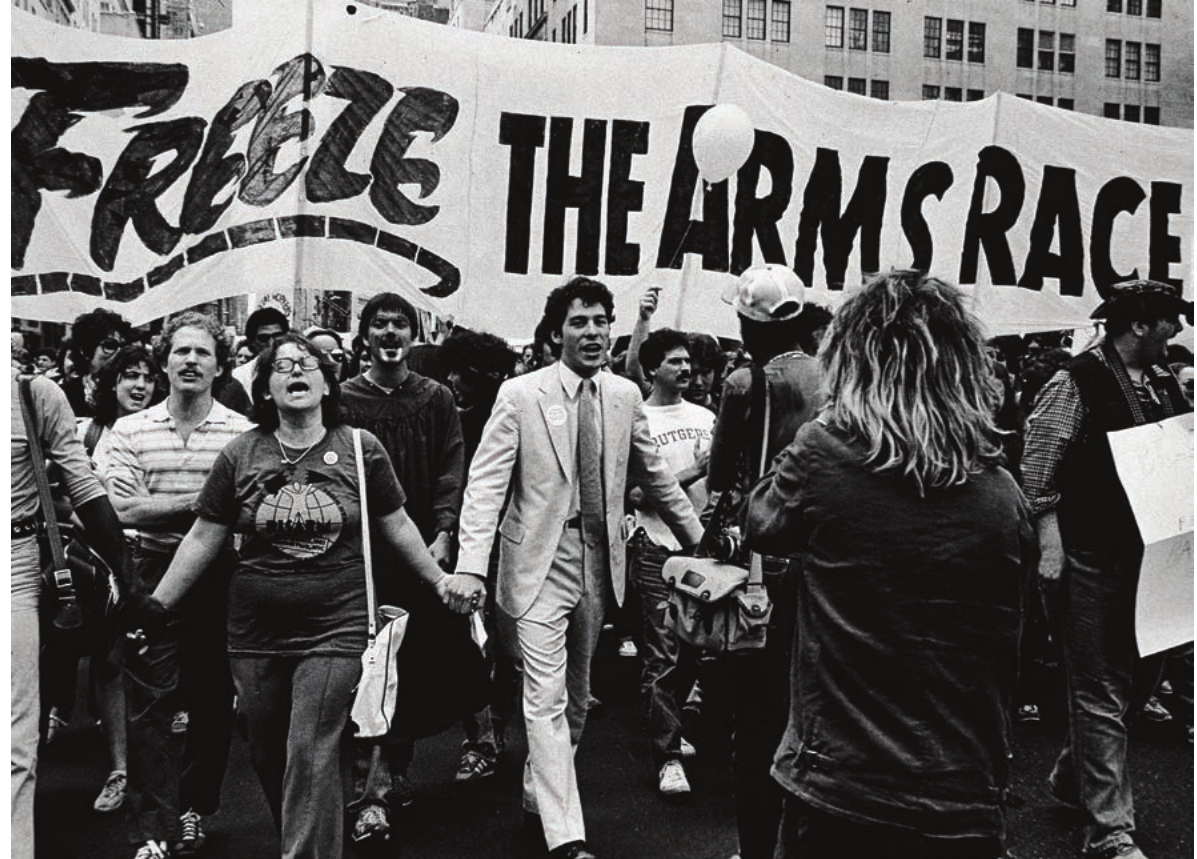
Nuclear Freeze suddenly appeared at the end of 1981, centred on a simple proposition put forward by Randall Forsberg: the United States and Soviet Union should freeze production and deployment of any new nuclear weapons and reverse the arms race.
Growth and impact:
- Initially linked to local initiatives in a decentralised way
- By the end of 1982, it had turned into a national campaign with 20,000 activists in 40 states
- All American peace and disarmament movements eventually focused their efforts on the Freeze
Note
The Historic 12 June 1982 Rally
One million people turned out for a march in New York:
- The largest political rally ever held in American history
- Banner: "Freeze the Arms Race – Fund Human Need"
- Senator Ted Kennedy led the Freeze campaign in Congress, sponsoring Freeze motions
- The Freeze delivered petitions of 2.3 million people to the US and Soviet missions at the United Nations
By November 1983:
- Endorsed by 370 city councils and 71 county councils
- Over 60% of voters supported the Freeze
- Opinion polls showed an average of 72% support and 20% opposition
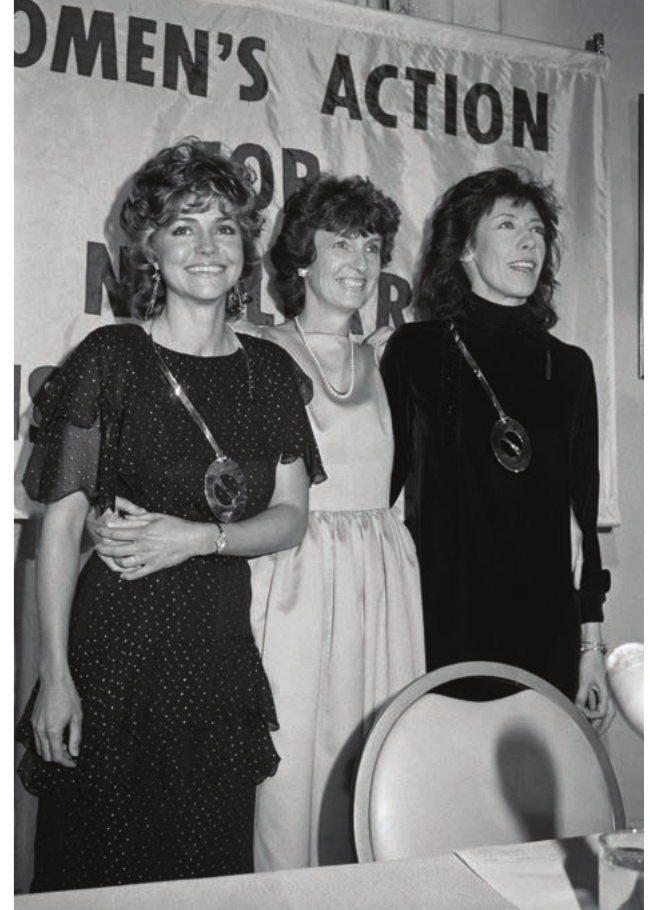
Reagan's response:
Reagan struck out at the movement, saying it was "a very dangerous fraud" that was weakening America. He accused Freeze leaders of being communist sympathisers, and said some were "foreign agents."
Global impact
The opposition by, and persecution of, nuclear disarmament movements by governments around the world in the early 1980s further served to expand the massive grassroots anti-nuclear movement, even in some Communist bloc countries.
This was reflected in:
- Massive protests in Western European countries against deployment of Pershing missiles and cruise missiles in Europe
- Governments were forced to alter their policies
- Reagan's promotion of "Star Wars" was an attempt to make it look like he was doing something to address the threat of nuclear weapons
- In Europe, Reagan offered the "zero option" (a proposal to forestall installation of IRBMs in Europe if the Soviet Union got rid of all of theirs)
Important
The Movement's Success
Globally, the nuclear disarmament movement raised public awareness of the existential threat of nuclear weapons to all life on the planet. It put politicians on notice that they had better ensure their policies dealt with this reality.
The Gorbachev revolution
Mikhail Gorbachev was a convert to the nuclear disarmament movement. In December 1984, Gorbachev visited the United Kingdom as a member of the Politburo. He gave a speech to British parliamentarians, saying the most urgent problem facing the human race was the "prevention of nuclear war." He said the nuclear age needs "new political thinking."
Gorbachev becomes leader
With the death of Yuri Andropov in February 1984, the Soviet leadership was thrown into turmoil.
About Andropov:
- Former KGB leader, seen as hard-liner
- However, he had argued against the Soviet Union invading Poland in 1980 after the emergence of the Solidarity movement
- He appointed reform-minded people to the Secretariat
Key term: Solidarity - An independent labour union in communist Poland, with over 9 million members, and the first ever in a Soviet-bloc country
Chernenko's brief tenure:
Andropov was succeeded by Konstantin Chernenko, who was also afflicted with life-threatening health issues. Chernenko lasted 15 months and died in March 1985.
Gorbachev takes power:
Mikhail Gorbachev became General Secretary of the Communist Party on 11 March 1985.
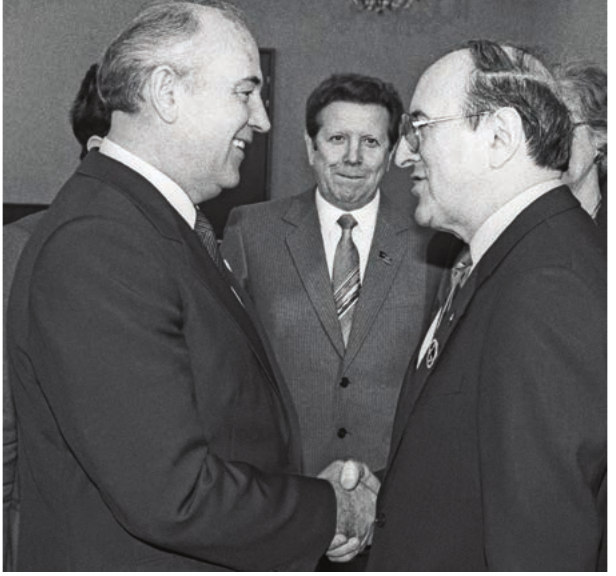
Reagan's outreach:
As explained earlier, President Reagan reversed his hard-line rhetoric and started to reach out to the Soviet leadership from January 1984. The problem was, there was no one listening in the Kremlin. It would be 14 months before there was a response.
Gorbachev's priorities:
Once in power, Gorbachev's main aims were:
- End the Cold War
- Develop economic reform
- Economic reform would be helped by ending the Cold War
The Reagan-Gorbachev summits
A series of summits between the United States and Soviet Union occurred between 1985 and 1991.
Geneva (19 November 1985)
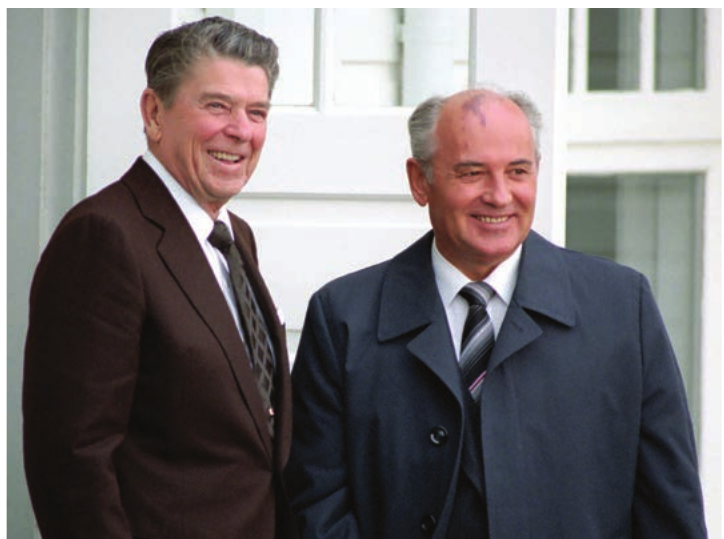
Significance:
- First meeting between Reagan and Gorbachev
- First meeting between American and Soviet leader in eight years
- Nothing of substance was achieved
- They established warm personal relations
Reykjavik, Iceland (11 October 1986)
Important
The Breakthrough Meeting
Key developments:
- Gorbachev offered a plan to abolish all nuclear weapons by the year 2000
- Reagan's SDI program became the sticking point
- Gorbachev would not make an agreement unless Reagan abandoned SDI
- Despite not making any significant agreement, this meeting signalled the beginning of the thaw in the Cold War
- The two leaders connected in their common determination to abolish nuclear weapons
- They discussed a range of other issues
Washington DC (8 December 1987)
The breakthrough:
The two leaders signed the Intermediate Nuclear Forces Treaty (INF):
- Cut out the whole class of IRBMs based in Europe
- 1,752 Soviet missiles and 859 American missiles to be eliminated
- Both leaders saw this as the first step to a bigger treaty cutting all ICBMs
- Gorbachev dropped his demand that Reagan abandon SDI
- He decided to cut IRBMs regardless, to build trust
- This agreement was effectively the beginning of a reversal of the nuclear arms race
Moscow (31 May 1988)
Style over substance:
- This summit was more about style than substance
- Reagan tried to push human rights issues, which Gorbachev did not appreciate
- No arms agreements were made
Reagan's charm offensive:
Reagan charmed the Soviet public, especially with his reply to a reporter. When asked if he thought the Soviet Union was still the "evil empire," Reagan said, "No, I was talking about another time, another era."
Malta (3 December 1989)
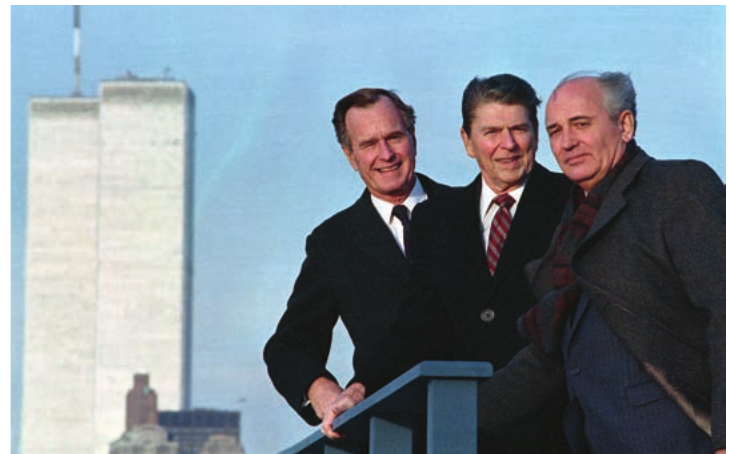
New US President:
George H. Bush won the US presidential election in November 1988. This was his first meeting with Gorbachev as president.
Outcomes:
- Both issued a statement saying Cold War animosities might be coming to an end
- Gorbachev was keen to get rid of all the last vestiges of the Cold War, including the arms race, alliances, the ideological struggle and the mistrust
- Bush was more cautious and non-committal
- Both agreed to work on another treaty to cut ICBMs
Washington (30 May 1990)
German unification issue:
- Discussed the position of Germany
- Leaders in East and West Germany planned to unify Germany
- The United States supported unification and Germany's admission to NATO
- Gorbachev opposed these developments
- Russia feared a pro-Western Germany would be a security threat in the future
- The summit ended with no resolution
Moscow (31 July 1991)
START Treaty signed:
The United States and Soviet Union agreed to the Strategic Arms Reduction Treaty (START):
- Committed both nations to reduce nuclear weapons by 35% over seven years
- George H. Bush described it as "a significant step forward in dispelling half a century of mistrust"
- Mikhail Gorbachev said this promised to be the start of "an irreversible process" of arms reduction
- He said there was "still a lot to do"
Exam tip: Be able to compare and contrast the different summits and explain their significance in ending the Cold War.
Gorbachev's address to the United Nations (7 December 1988)
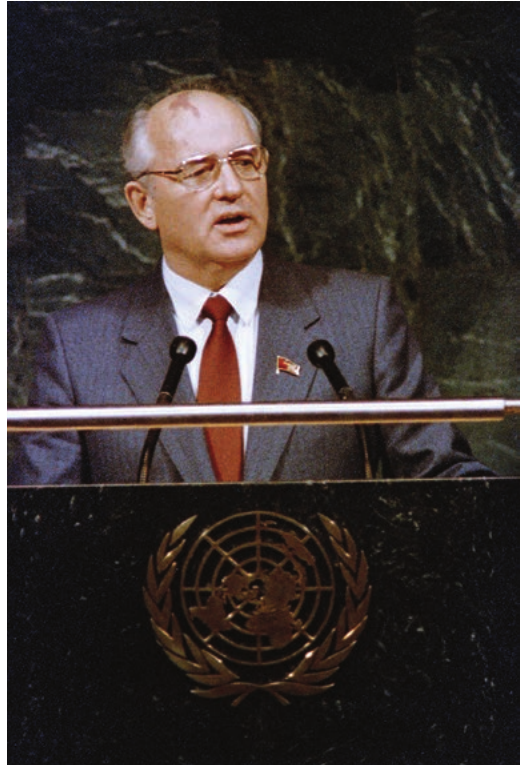
On 7 December 1988, Mikhail Gorbachev addressed the UN General Assembly. This speech marked the ideological end to the Cold War.
Key points from the speech:
Gorbachev declared "the de-ideologisation of interstate relations has become a demand of the new stage."
He made several important announcements:
- Soviet Union's participation with the United Nations
- Unilateral reduction in Soviet armed forces
- Withdrawal of Soviet forces from Eastern European countries
- Commitment to significant reductions in strategic nuclear weapons
Gorbachev's message:
He wanted the world to learn "the lessons of the past and the realities of the present," particularly that "force and the threat of force can no longer be, and should not be instruments of foreign policy."
Disarmament agreements (1968-1991)
There were numerous nuclear weapons treaties negotiated during the Cold War. These can be divided into two categories: bilateral and multilateral.
Bilateral treaties
Definition: Treaties between two nations
Note
Characteristics of Bilateral Treaties:
- Quite a few were just between the United States and Soviet Union
- Brought about through diplomacy and negotiations between the superpowers
- Self-serving nature, with superpowers deciding terms without input from other nations
- Largely ineffective in slowing down the arms race
- For instance, after SALT I, both superpowers kept increasing their nuclear arsenals
- Most only modified the nuclear arms race to suit the two superpowers
- Only INF and START I reversed the arms race (significantly in numbers, but not enough to remove the threat)
| Date | Treaty |
|---|---|
| 1 July 1968 | Strategic Arms Limitation Talks (SALT I) |
| 26 May 1972 | Anti-Ballistic Missile Treaty (ABM) |
| 3 July 1974 | Threshold Test Ban Treaty (TTBT) |
| 18 June 1979 | Strategic Arms Limitation Talks II (SALT II) |
| 8 December 1987 | Intermediate Range Nuclear Forces Treaty (INF) |
| 31 July 1991 | Strategic Arms Reduction Treaty I (START I) |
Multilateral treaties
Definition: Treaties signed between a number of nations
These can be divided into:
- Those initiated by Nuclear Weapons States that served their interests
- Those with broad-based origin designed with the interests of large numbers of nations in mind
| Date | Treaty |
|---|---|
| 1 July 1968 | Nuclear Non-Proliferation Treaty (NPT) |
| 14 February 1967 | Latin America Nuclear Weapons Free Zone Treaty (Treaty of Tlatelolco) |
| 11 February 1971 | Seabed Arms Control Treaty |
| 10 April 1972 | Biological Weapons Convention (BWC) |
| 6 August 1985 | South Pacific Nuclear Weapons Free Zone Treaty (Treaty of Rarotonga) |
The Nuclear Non-Proliferation Treaty (NPT)
The most significant multilateral treaty was the NPT of 1968, which entered into force in 1970.
Main aim: Prevent the spread (proliferation) of nuclear weapons to more countries
Success: If not for this treaty, there may be up to 40 nations with nuclear weapons today, instead of just nine.
The bargain:
It was designed to serve the interests of the five Nuclear Weapons States (NWS) at the time: United States, Soviet Union, United Kingdom, France and China.
The bargain was:
- If Non-Nuclear Weapons States (NNWS) promised not to develop their own nuclear weapons
- The NWS would embark on a path to eliminate their nuclear arsenals
Article VI of the NPT:
Each of the Parties to the Treaty undertakes to pursue negotiations in good faith on effective measures relating to cessation of the nuclear arms race at an early date and to nuclear disarmament, and on a treaty on general and complete disarmament under strict and effective international control.
Important
The Broken Promise
Unfortunately, the NWS ignored this part of the NPT and focused only on prohibiting NNWS from seeking nuclear weapons. Also, once signed in 1968, the NWS kept expanding their nuclear arsenals. The NPT still exists today, and the NWS use it to deny others nuclear weapons while refusing to get rid of their own.
Critical assessment: Removing the threat of nuclear weapons should have been an outcome of the end of the Cold War. Gorbachev wanted it, but neither Reagan nor George H. Bush would go that far. This explains why today nuclear weapons remain as great a threat as ever.
The collapse of communism in Eastern Europe
Mikhail Gorbachev gave the green light to the revolutions in Eastern Europe that led to the collapse of communism there. He aimed to stand firm on the Soviet Union and keep it united with a reformed political and economic system. He succeeded in the first and failed in the second.
Gorbachev's policy on Eastern Europe
Gorbachev never wavered from his belief that countries of the Eastern bloc should be allowed to determine their own form of government and destiny, even if this meant the collapse of communism in those countries.
The Brezhnev Doctrine is dead:
From 1985, Gorbachev made it clear to Eastern bloc leaders that the Brezhnev Doctrine was dead. There would be no further military interventions (as had happened with Hungary and Czechoslovakia). However, he was not believed at first.
On 7 July 1987, Gorbachev gave a speech at the Council of Europe and explicitly repudiated the Brezhnev Doctrine. Gradually, Eastern European countries discovered the scope of Soviet tolerance.
The revolutions of 1989-1990
Poland (June 1989):
- Solidarity won the elections, taking all seats in parliament
- A Solidarity government was formed
East Germany (November 1989):
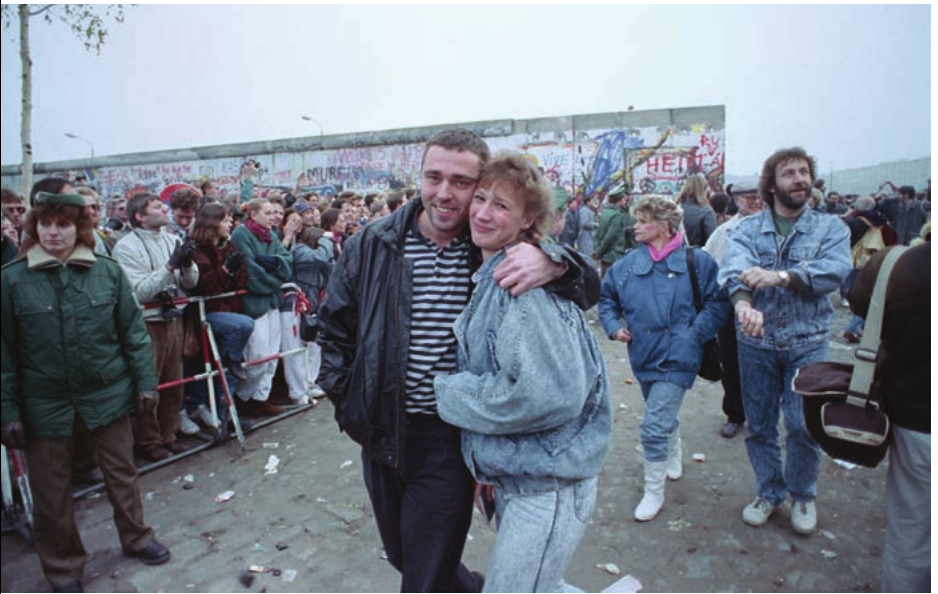
- On 9 November 1989, the Berlin Wall was first opened, then taken down
- First signs of East German Government crumbling accelerated developments in the rest of the Eastern bloc
- March 1990: Free elections in both Germanys
- Germany was then reunified, making it an automatic member of NATO (West Germany had been a member)
Czechoslovakia (24 November 1989):
- Communist Party stood down after massive demonstrations
Hungary (25 March 1990):
- After mass demonstrations, free elections brought democratic opposition to power
Romania (22-25 December 1989):
- Communist leader Nicolae Ceausescu was executed after a popular revolt
- National Salvation Front government was formed
Bulgaria (2 February 1990):
- Communist Government resigned after mass protests
Gorbachev's hopes dashed
Gorbachev had hoped that allowing Eastern bloc countries freedom to choose their governments might lead to new forms of democratic socialism. He hoped they would be favourably disposed to the Soviet Union, ensuring continued Soviet influence through a transformed Warsaw Pact.
The reality:
This was not to be. Once freed from Soviet restraint:
- Eastern European nations withdrew from the Warsaw Pact
- Some started knocking on NATO's door
- Gorbachev was eventually persuaded to allow German reunification within NATO alliance
- In years after the Cold War, NATO expanded eastwards to Russia's borders (an unwise development)
The collapse of communism in the Soviet Union
When Gorbachev came to power, he was determined to reform foreign policy, the political system and the economy. Though his revolutionary foreign policy ended the Cold War and changed the world, his political reforms careered out of control and his economic reforms were too painful.
Glasnost and Perestroika
From 1985 to 1991, Gorbachev embarked on massive reforms that radically changed both the political structures and economy of the Soviet Union.
Glasnost: A policy of openness in discussing economic and political issues
The Soviet leader hoped to transform the Soviet Union into a more modern social democracy by:
- Freeing it from censorship
- Relaxing state controls
The policy received wide praise from around the world.
Perestroika: The restructuring of the political and economic system
Note
Unintended Consequences of Perestroika
His perestroika policies led to:
- Widespread chaos and confusion
- Disruption of the centralised planning system before viable market mechanisms could take over
- Reduced production
- Shortages and social discontent
- Strikes and protests
- With new openness, discontent could be expressed very strongly
Deepening reforms: Gorbachev realised the Soviet Union's economic problems were far deeper than he had imagined. He agreed to further radical reforms recommended by more radical voices.
The failed coup (August 1991)
The momentous political changes led to pushback from Soviet hardliners, culminating in a coup by hard-line elements in the government and military on 18 August 1991.
What happened:
- Gorbachev was put under house arrest
- He was urged to resign but refused
- Massive demonstrations, urged on by new Russian President Boris Yeltsin, led to the failure of the coup
- Though Gorbachev was freed, power had now shifted to Yeltsin
Dissolution of the Soviet Union (December 1991)
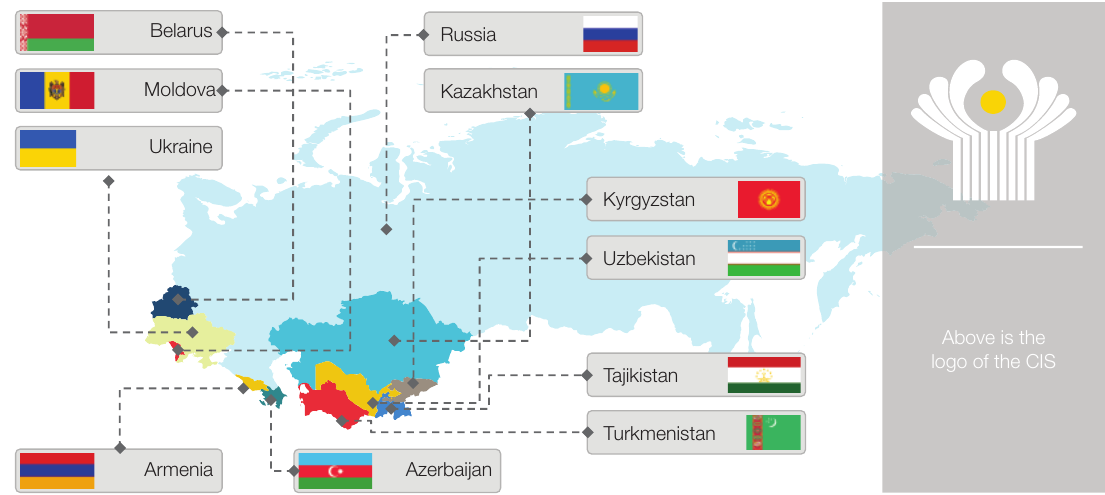
In December 1991, without consulting Gorbachev:
- Yeltsin signed a treaty with leaders of other Soviet republics
- They dissolved the Soviet Union
- Created 12 independent nations
- These were loosely connected in the Commonwealth of Independent States (CIS)
Gorbachev's resignation:
Now that his country, the Soviet Union, had ceased to exist:
- Gorbachev resigned from his post of President
- He passed the nuclear codes to President Yeltsin, leader of Russia
What actually ended?
The confusing aspect about the end of the Cold War is that a number of things came to an end at around the same time. There were five things that ended:
1. The Cold War
- When Gorbachev came to power in 1985, his first priority was to end the Cold War
- After Gorbachev and Reagan finished their discussions at Reykjavik on 11 October 1986, the Cold War began to thaw
- By the time Gorbachev gave his speech at the United Nations on 7 December 1988, the Cold War was over
2. The fear of nuclear war
- When Gorbachev decided to sign the INF on 8 December 1987, even without getting Reagan to abandon SDI, the nuclear arms race began reversing
- The fear of nuclear weapons gradually evaporated over the following few years
- However, the arms race did not end - it merely stalled
3. The communist Eastern bloc and the Warsaw Pact
- When Gorbachev said the Brezhnev Doctrine was dead in July 1987, the communist states of Eastern Europe, one by one, threw off their communist rulers
- They embraced Western-style democratic systems
- In the process, communism died in Eastern Europe and the Warsaw Pact vanished
4. Communism in the Soviet Union
- When Gorbachev embarked on glasnost and perestroika from 1985, he set in motion forces that led to:
- Transformation of the political system
- End of the Communist Party's monopoly of political life in the Soviet Union
5. The Soviet Union
- When Yeltsin negotiated with leaders of other Soviet republics in December 1991 to dissolve the Soviet Union, the Soviet Union ceased to exist as a country
What should have ended but didn't
The one thing that should have ended, but did not, was the nuclear arms race.
Important
The Tragedy of Unfinished Business
For over 50 years, nuclear weapons had dominated the relationship between the Soviet Union and United States. Fear of global catastrophe from nuclear war led to both the arms race and a host of treaties designed to limit and control it.
Despite their many differences, both Reagan and Gorbachev shared fear of nuclear weapons and determination to abolish them. Yet in the end, only one of these two men was willing to go the extra step and proceed on a path to abolish all nuclear weapons on the planet.
History will show which one of these men was right.
Summary
Key Points to Remember:
-
The Soviet invasion of Afghanistan (1979) ended détente. President Carter responded with economic sanctions, boycotted the Moscow Olympics, and provided military aid to Afghan rebels.
-
The early 1980s was the most dangerous period of the Cold War. Reagan's aggressive "peace through strength" approach and inflammatory rhetoric ("evil empire") led to Soviet paranoia about a US first-strike attack.
-
1983 brought the world close to nuclear war twice. The KAL-007 incident (1 September) and the Serpukhov-15 incident (26 September) demonstrated how close humanity came to nuclear catastrophe due to miscalculation and computer error.
-
Reagan reversed his hardline approach in January 1984. Influenced by intelligence about KAL-007, the TV movie "The Day After," the SIOP briefing, and the Able Archer crisis, Reagan began calling for peace and nuclear disarmament from January 1984.
-
The nuclear disarmament movement had significant impact. Organisations like Nuclear Freeze, CND, IPPNW, and END raised public awareness and put pressure on governments to address the nuclear threat.
-
Gorbachev was committed to ending the Cold War. He pursued "new political thinking," ended the Brezhnev Doctrine, allowed Eastern European revolutions, and signed major arms control treaties (INF 1987, START 1991).
-
Five things ended between 1985-1991: The Cold War itself, the fear of nuclear war, the communist Eastern bloc and Warsaw Pact, communism in the Soviet Union, and the Soviet Union as a country.
-
Nuclear weapons were not eliminated. Despite Gorbachev's commitment to abolishing all nuclear weapons, Reagan and Bush would not go that far, which is why nuclear weapons remain a threat today.