The Origins of the League of Nations (HSC SSCE Modern History): Revision Notes
📚Revision Notes
The Origins of the League of Nations
Introduction
The devastation of World War I created an urgent need to prevent future conflicts on such a catastrophic scale. The idea of establishing international mechanisms to maintain peace was not entirely new, but the war gave it unprecedented momentum. The League of Nations emerged from a combination of pre-war peace movements, wartime advocacy groups, and most importantly, the determined leadership of US President Woodrow Wilson.
Note
The League of Nations represented the first major attempt to create a permanent international organization dedicated to maintaining world peace. Its creation marked a fundamental shift from traditional balance of power diplomacy to collective security arrangements.
The intellectual foundations
Before World War I began, several organisations had already been working towards international cooperation and peaceful conflict resolution. These groups laid the groundwork for what would eventually become the League of Nations.
Early international organisations
The International Parliamentary Union (IPU), established in Britain in 1889, created the first formal platform where governments could meet and discuss their disputes peacefully rather than resorting to war. This was followed by the International Peace Bureau (IPB) in 1891, which coordinated peace societies worldwide and organised annual peace congresses.
The most significant pre-war initiatives were the Hague Conferences of 1899 and 1907. These conferences aimed to codify the laws of war and, more ambitiously, to create binding international mechanisms for peaceful dispute resolution. The conferences established a voluntary Permanent Court of Arbitration based in The Hague, though many supporters hoped this was just the first step towards more powerful and mandatory international institutions.
Note
A third Hague Conference was planned for 1914 but had to be postponed due to the outbreak of war. However, a small unofficial conference did take place at The Hague in April 1915. This meeting resulted in the formation of the Central Organisation for a Durable Peace, with representatives from nine European nations and the United States. Throughout the war, this organisation continued meeting to develop proposals for lasting peace, with many prominent American peace activists staying involved.
Wartime development of League ideas
The emergence of a new urgency
From the very start of World War I, there was a pressing sense that the post-war world must be fundamentally different. A vocal minority in both Britain and the United States argued that the war's most important outcome must be a complete transformation of the international system. They identified the root causes of war as imperial rivalry, the arms race, secret diplomacy, and balance of power politics.
In 1915, Cambridge academic Goldsworthy Lowes Dickinson coined the specific term 'league of nations'. His proposal called for a permanent world body where collective security would replace the old balance of power diplomacy. This concept quickly gained popularity among peace groups, particularly the Union of Democratic Control (UDC) in Britain.
Pro-league organisations
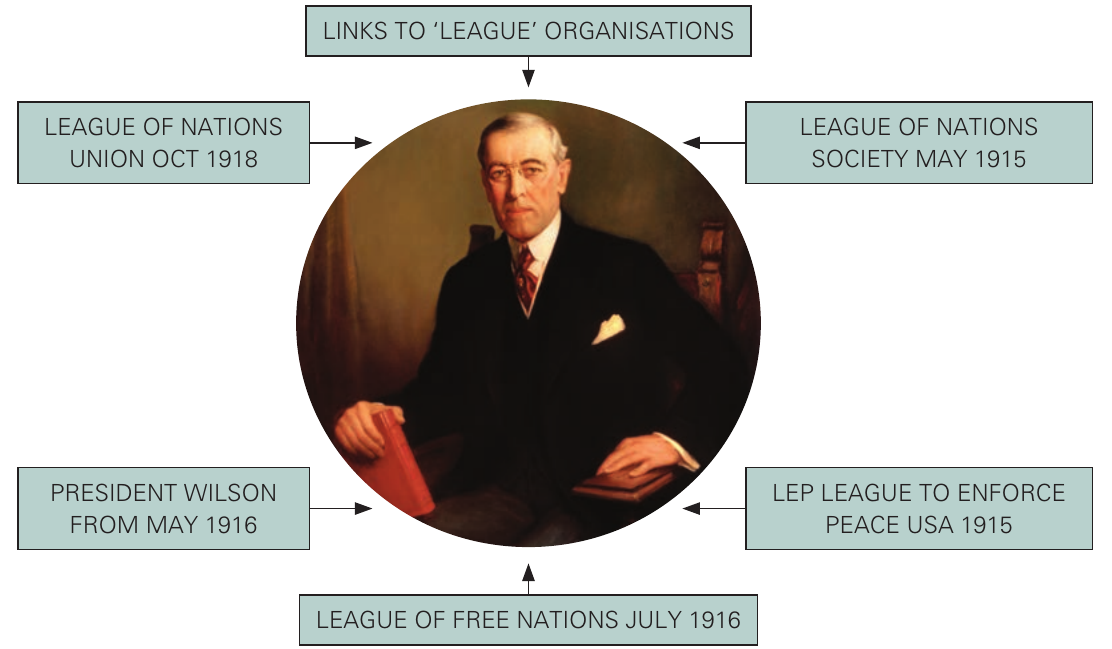
Between 1915 and 1918, numerous organisations formed in Britain to advocate for a league of nations. In the United States, the League to Enforce Peace was established in June 1915 and became the largest pro-league organisation. These groups were heavily influenced by British peace activists and engaged in extensive cross-Atlantic dialogue about peace terms, international arbitration, and reforming the international system.
One particularly significant event was the International Women's Congress at The Hague at the end of April 1915. At this remarkable conference, 1500 women gathered to attempt mediating an end to World War I. Over three days, they produced twenty resolutions about reforming the international order, several of which called for establishing a 'society of nations' and a permanent international court at The Hague. The congress commissioned two delegations of women to visit European heads of state in both neutral and warring countries to promote their peace plan.
Important
The Women's Congress at The Hague demonstrated that support for international cooperation extended beyond government officials and diplomats. This grassroots peace movement, particularly the active involvement of women, showed that ordinary citizens recognised the urgent need for new approaches to preventing war.
Influential voices for peace
Prominent intellectuals, journalists, and political activists in Britain and the United States kept the discussion about post-war peace alive throughout the conflict. Henry Massingham, editor of The Nation newspaper in London, was particularly influential. He encouraged diverse viewpoints in his publication, and by the end of 1916, a growing consensus among his contributors supported the idea that a negotiated peace would offer the best chance for achieving a just and lasting settlement.
Massingham argued that nations must find a way to live together under international law, similar to how individuals live under national law. He warned that basing peace on hatred and erecting economic barriers would prevent Europe's recovery and mean that those who died in the war had died in vain.
Woodrow Wilson as champion of the League
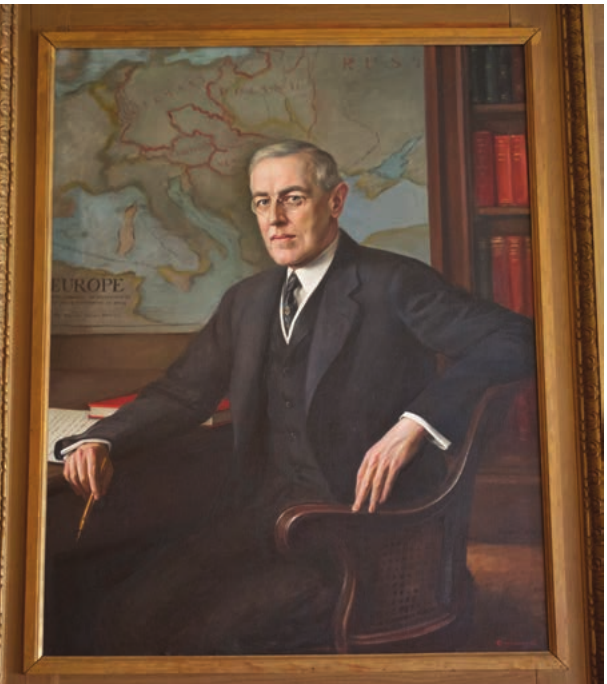
All the discussion and advocacy for a league of nations might have remained theoretical without the crucial decision by President Woodrow Wilson to make it his primary goal. Wilson was a passionate believer in liberal internationalism – a philosophy emphasising international progress, interdependence, multilateral cooperation, and international organisations. This ideology had its roots in the ideas of British liberal thinkers Richard Cobden and John Bright, creating a common ideological heritage between Wilson and British Radical politicians who were members of the UDC.
Important
Wilson's Role Was Decisive
Without President Wilson's personal commitment and political leverage, the League of Nations might never have been established. His determination to make the League a reality, even at the cost of compromising on other peace aims, was the single most important factor in its creation.
Wilson's public commitment
President Wilson initially sympathised with peace initiatives but hesitated to give them his full backing. For example, he refused to support the Women's Hague Congress or the Ford Peace Ship in 1915, despite agreeing with their underlying principles. However, British Radicals and American peace activists continued pressing Wilson to articulate a progressive internationalist vision for the post-war world and to mediate an end to the war.
Finally, in May 1916, Wilson made a dramatic speech at a League to Enforce Peace meeting. This marked the first time an international statesman had publicly committed to creating a 'league of nations' after the war. Wilson's endorsement prompted cautious public commitments from British Foreign Secretary Lord Grey and German Chancellor Bethmann-Hollweg as the war reached a stalemate in summer 1916.
The Peace Without Victory speech
On 22 January 1917, President Wilson delivered his 'Peace Without Victory' speech, which progressive internationalists on both sides of the Atlantic regarded as highly significant. In this speech, Wilson condemned both sides in the war and blamed imperialism, militarism, and the arms race for the conflict. This League rhetoric gave a morale boost to the recently formed League societies in the United States and Britain.
However, Germany's announcement of unrestricted submarine warfare in January 1917 ended further discussion about the League for nearly a year. After the United States entered the war in April 1917, Wilson remained strangely silent about the League for the rest of the year. His strategy appeared to be winning the war first, then addressing the League question.
The Fourteen Points
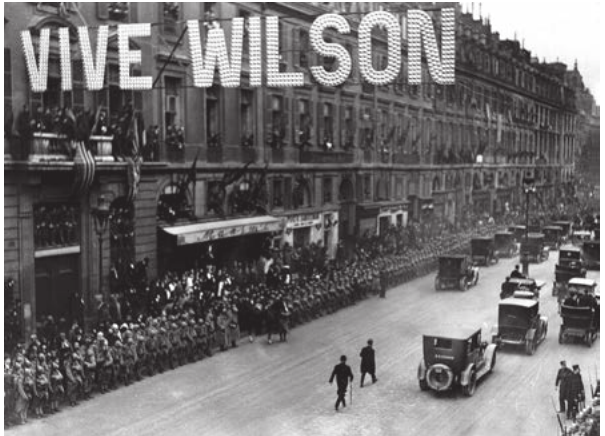
Following the Bolshevik Peace Offer in December 1917 and facing opposition from British and French leaders to a moderate peace, Wilson decided to break his silence. In January 1918, he delivered his famous Fourteen Points speech to the US Congress.
The speech outlined a plan for reconstructing Europe and reforming the international order after the war. The last and most crucial point stated:
Note
The Fourteenth Point
A general association of nations must be formed under specific covenants for the purpose of affording mutual guarantees of political independence and territorial integrity to great and small states alike.
This point became the foundation for the League of Nations and represented Wilson's vision for a new international order based on collective security rather than military alliances.
These Fourteen Points were intended to form the basis of the peace settlement. However, the British, French, and Italian leaders initially showed little interest in either the Fourteen Points or Wilson's League. This changed dramatically in October 1918 when the German Government requested an armistice based on the Fourteen Points. Wilson then placed real pressure on the Allied leaders to accept his plan and bring an immediate end to the war. Only after prolonged negotiations did they finally agree to a peace based on the Fourteen Points, though with significant reservations. The war ended one week later.
Creation through the Treaty of Versailles
When leaders of the Allied and Associated Powers gathered for the Versailles Peace Conference in 1919, they were far from united in their goals. President Wilson was determined to establish his League of Nations no matter what, whilst other leaders – Lloyd George of Britain, Clemenceau of France, and Orlando of Italy – were more interested in securing territorial gains and reparations than in creating a League.
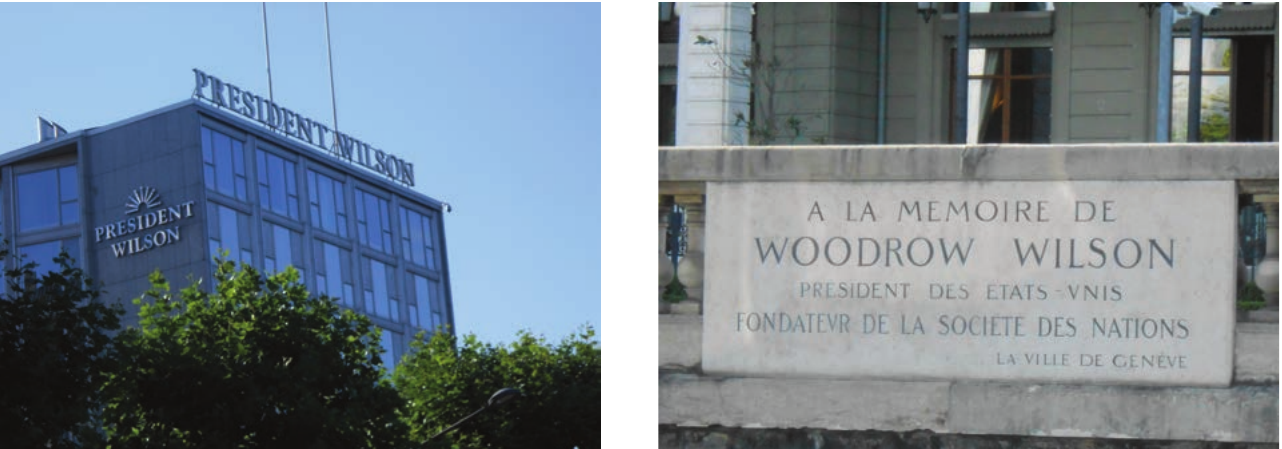
Wilson found himself forced to compromise on nearly every one of his Fourteen Points except the last one – the creation of the League of Nations. On this point, the American President was absolutely determined. He ensured that the League was debated first, before any other issues in the peace settlement. As a result, the twenty-six articles establishing the League of Nations occupy the entire first section of the Treaty of Versailles, which was signed on 28 June 1919, exactly five years after the assassination of Archduke Franz Ferdinand.
Important
Wilson's Strategy at Versailles
Wilson prioritised the League above all else at the peace conference. By insisting that the League be discussed first and included as the opening section of the Treaty of Versailles, he ensured its creation even though he had to sacrifice many of his other peace objectives. This strategic decision demonstrated his conviction that a permanent international organization was essential for preventing future wars.
Remember!
Summary
Key Points to Remember:
-
The League of Nations had intellectual roots in pre-war organisations like the International Parliamentary Union (1889), International Peace Bureau (1891), and the Hague Conferences (1899, 1907)
-
During World War I, numerous pro-league organisations formed in Britain, Europe, and the United States, with the term 'league of nations' coined by Goldsworthy Lowes Dickinson in 1915
-
The International Women's Congress at The Hague in April 1915 produced influential resolutions calling for a 'society of nations' and demonstrated significant grassroots support for international cooperation
-
President Woodrow Wilson became the crucial champion of the League, first publicly committing to it in May 1916 and making it the fourteenth point of his famous Fourteen Points speech in January 1918
-
Wilson's determination ensured that the League of Nations was included as the first section of the Treaty of Versailles in 1919, though he had to compromise on his other peace aims to achieve this goal