World War I: The Nature of the War (HSC SSCE Modern History): Revision Notes
📚Revision Notes
1917: Hope and Despair
Introduction: A year of uncertainty
The year 1917 began with widespread uncertainty across Europe. After years of devastating warfare, people on all sides desperately wanted peace, yet military leaders continued planning for major breakthroughs. This tension between hope and despair defined the entire year.
At the start of January 1917, the disappointments of the previous year created a strange mood. On the one hand, talk of peace filled the air, and American President Wilson believed that warring nations might accept a compromise settlement. On the other hand, politicians and military commanders oscillated between seriously considering peace proposals and preparing for what they hoped would be the decisive offensive that would finally break the stalemate.
Note
The situation was complex for both sides. The Allies had experienced a moderately successful year in 1916, but victory remained distant. Meanwhile, the Central Powers had not captured significant new territory, though they sensed an opportunity to remove Russia from the war, which could dramatically shift the balance of power.
Peace initiatives of early 1917
The Allied reply to the American Peace Note (10 January 1917)
On 10 January 1917, the Allied governments sent their formal response to President Wilson's peace proposal. This marked a significant moment because, for the first time, the Allies publicly stated their war aims to the world.
The Allied response presented their position in noble terms. They acknowledged Wilson's well-intentioned proposals but expressed deep distrust of the German government, arguing that Germany could not be trusted to honour any peace agreement. The Allies declared they were not fighting for selfish goals but for humanity's future and the rights of small nations like Belgium and Serbia.
Important
The Allied statement contained a significant omission: it made no mention of the secret treaties they had signed amongst themselves, which detailed how they planned to divide up territory and resources after victory.
Despite this selective honesty, the Allied reply achieved its diplomatic objectives: it rejected the American peace initiative without offending the United States and successfully presented the Allied cause to international public opinion.
President Wilson's 'Peace Without Victory' speech (22 January 1917)
Germany remained strangely silent following Wilson's peace initiative. The American President had hoped that a positive German response would start the peace process. To encourage Germany to engage and keep peace discussions alive, Wilson delivered a dramatic address to the United States Congress on 22 January 1917.
This speech, known as the 'Peace Without Victory' speech, put forward a revolutionary argument. Wilson proposed that a just and lasting peace could only emerge from a settlement where neither side faced destruction or humiliation. Instead, peace must be negotiated from a position of equality between the warring nations.
Wilson's analysis was particularly striking. He argued that no single country had caused the war. Instead, he identified broader forces as the culprits: imperialism, militarism, secret diplomacy, and the alliance system itself. This analysis echoed arguments made by the Union of Democratic Control, a British peace organisation, since September 1914.
Note
Key concept: Wilson's 'Peace Without Victory' represented a fundamentally different approach to ending the war compared to the total victory sought by both sides' military leaders.
Unfortunately, Germany had stopped listening. By this time, hardliners within the German leadership had won the internal debate. They argued that Chancellor Bethmann-Hollweg's peace attempts had failed and that time was running out. Germany must now intensify its war effort through unrestricted submarine warfare, aiming to cut Britain's supply lines and force surrender. The hardliners believed Germany could not sustain a prolonged conflict and needed to achieve victory quickly.
German strategic decisions
Resumption of unrestricted submarine warfare (February 1917)
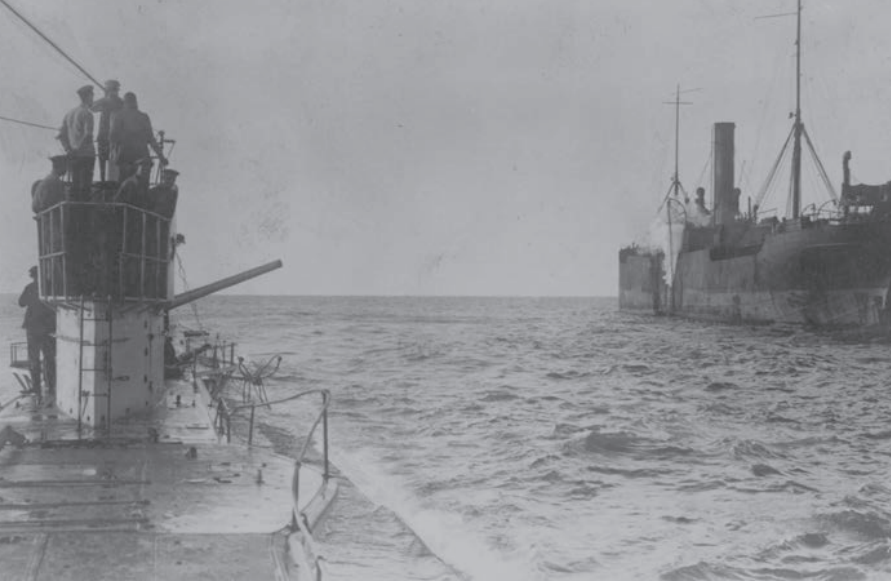
Germany had used unrestricted submarine warfare earlier in the war but abandoned it after diplomatic protests, particularly from neutral America. With the Sussex Pledge, Germany had agreed to follow cruiser rules for its submarine operations.
Note
Understanding cruiser rules: Under these naval regulations, a U-boat had to surface before attacking an unarmed neutral merchant ship. The submarine crew would search the vessel and allow passengers and crew to evacuate before sinking it. This process made submarines vulnerable to attack and significantly reduced their effectiveness.
Important
Unrestricted submarine warfare: This aggressive strategy allowed German U-boats to torpedo any ship on sight without warning. All vessels heading toward Britain became targets, regardless of whether they were civilian, neutral, or military.
On 1 February 1917, Germany announced it would resume unrestricted submarine warfare. General Ludendorff and Field Marshal Hindenburg, who increasingly controlled German military strategy, believed this was the only way to break the stalemate. With Bethmann-Hollweg's peace initiative having produced no results and no prospect of an acceptable compromise peace, they saw no alternative but to escalate the war effort.
President Wilson's reaction combined sadness and anger. However, he initially resisted calls to join the war on the Allied side. Instead, Wilson implemented a policy of 'Armed Neutrality', authorising American naval vessels to fire on any submarines they encountered. The United States maintained this position for several months while monitoring German submarine attacks.
Note
Exam tip: Remember that Germany's decision to resume unrestricted submarine warfare was directly linked to its assessment that time was running out - they believed they had to win quickly or face inevitable defeat.
German retreat to the Hindenburg Line (February-April 1917)
Ludendorff made a significant strategic decision: rather than launching new attacks, Germany would wait for the Allies to make the first move. Between February and April 1917, German forces executed a surprising withdrawal on the Western Front.
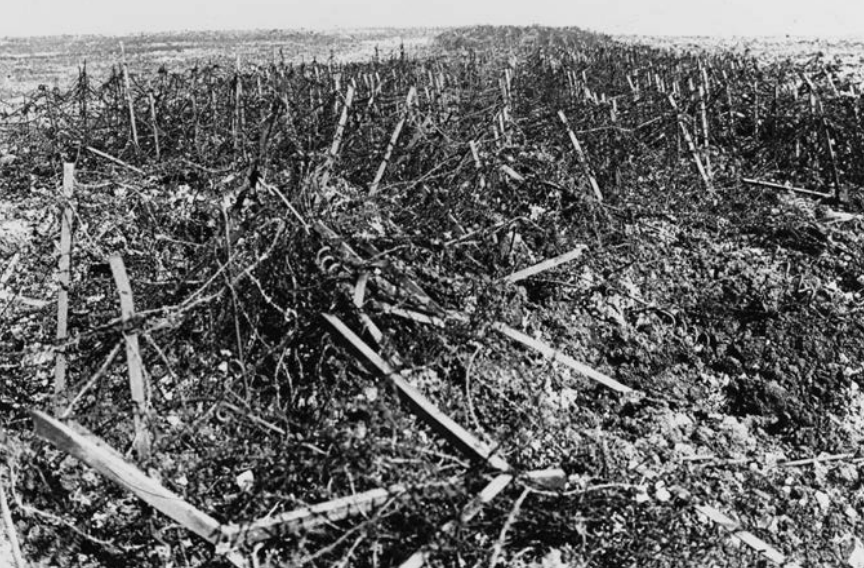
The Germans retreated approximately 32 kilometres eastward to a newly fortified defensive position that became known as the Hindenburg Line. This strategic withdrawal offered several advantages:
- Shorter front line: By pulling back, the Germans created a more compact defensive position that required fewer divisions to defend
- Stronger defences: The Hindenburg Line featured a complex network of fortifications with defensive positions arranged in depth
- Strategic reserves: German commanders positioned significant reserve forces some distance behind the front lines, ready to counter any Allied breakthrough
- Reinforcements from the East: Following the March Revolution in Russia, Germany could transfer some troops from the Eastern Front to strengthen positions in the West
Important
The Allies failed to fully appreciate the strength of this new German defensive position. In April 1917, French General Nivelle launched a major offensive that turned into a complete disaster, resulting in over 150,000 casualties. This catastrophic failure severely damaged French troop morale.
Over the following six weeks, many French units verged on mutiny. The situation was so serious that if the Germans had known about it, they could have exploited this weakness. On 15 May 1917, General Petain replaced Nivelle as Commander-in-Chief of French forces. Petain successfully quelled the mutinies and restored discipline and order to the French army.
Revolutionary changes in Russia
The March Revolution (March 1917)
Dramatic political upheaval shook Russia in March 1917. The autocratic Tsar Nicholas II, who had ruled Russia as an absolute monarch, was overthrown in a spontaneous revolution driven by war-weariness, food shortages, and political discontent.
A 'Provisional Government' took control of Russia. This new government represented a coalition of liberals and socialists and committed itself to establishing democratic rule in Russia. The political transformation had immediate implications for the war.
The Provisional Government made a bold declaration: it renounced all the secret treaties that the Tsar had signed with the Allied powers. Instead, it called for a peace based on the principle of 'no annexations and no indemnities'.
Note
Understanding 'no annexations and no indemnities': This meant Russia would not seek to gain any territory beyond recovering its own original borders, and it would not demand war reparations or economic compensation. The new democratic Russian government was essentially willing to accept a peace where Russia gained nothing except the return of its own territory.
However, the Provisional Government faced a dilemma. While it wanted a moderate peace, it was not willing to abandon its allies completely. Russia had signed the Pact of London on 4 September 1914, in which all Entente powers pledged not to seek a separate peace with the Central Powers. The Provisional Government felt bound to honour this commitment, even though continuing the deeply unpopular war threatened its own survival.
Important
Russia's position revealed a fundamental tension in 1917 - the new democratic government wanted peace but felt obligated to continue fighting out of loyalty to its allies, even though this decision would ultimately contribute to its own downfall.
American entry into the war
Wilson's decision to declare war (6 April 1917)
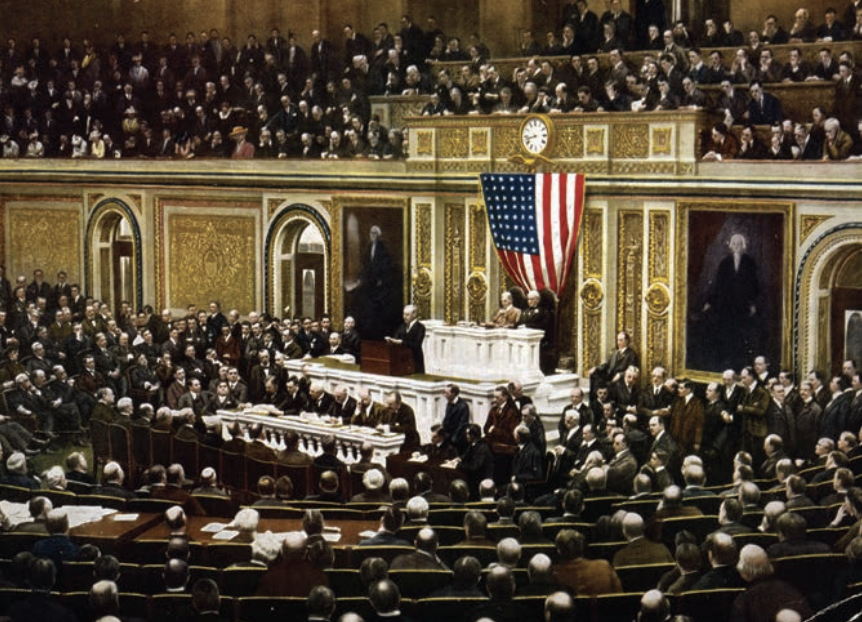
After months of maintaining American neutrality, President Wilson finally decided to bring the United States into the war on the Allied side. On 2 April 1917, Wilson addressed Congress to make his case for war.
Several factors influenced Wilson's decision:
- Germany's resumption of unrestricted submarine warfare
- The Zimmermann Telegram (a German diplomatic message proposing a military alliance with Mexico against the United States)
- Growing public sentiment in America favouring intervention
Important
Wilson's primary motivation was more strategic. He believed that only by joining the war could America have a seat at the post-war peace conference. This would give him the opportunity to:
- Help shape the nature of the peace settlement
- Ensure it was based on fair and democratic principles
- Most importantly, establish a 'league of nations' that could prevent future wars
In his speech to Congress, Wilson framed American participation in idealistic terms. He declared that the United States had 'no selfish aims and ambitions' but was fighting to 'make the world safe for democracy'. This phrase became one of the most famous statements of the war.
American mobilisation
Once committed to the Allied war effort, America undertook a massive military build-up. The situation of American forces highlighted the scale of the task:
- Navy: The American navy was well-prepared and could immediately assist the British navy in enforcing the blockade of Germany and conducting anti-submarine operations
- Army: America's army was tiny - ranked only seventeenth in the world, behind even Portugal's army
To address this dramatic shortage of soldiers, President Wilson immediately introduced conscription (mandatory military service). His ambitious goal was to transport and maintain an army of five million men in Europe.
Note
Reality check: Despite this goal, the actual arrival of American forces in Europe proceeded very slowly. It would be many months before significant numbers of American soldiers reached the Western Front.
The US as an 'Associated Power'
President Wilson made a careful diplomatic distinction when America joined the war. He did not call the United States an 'ally' of Britain, France, and the other Entente powers. Instead, he designated America as an 'Associated Power'.
This terminology was deliberate and significant:
- Preserved independence: America did not share the Allied war aims as stated in their secret treaties
- Maintained moral position: Wilson could claim America was fighting for democracy and justice, not for colonial territories or reparations
- Signalled future intentions: Wilson warned the Allied governments that if necessary, he would make his own separate peace settlement at the war's end
Note
Wilson believed this gave him leverage over the Allies. As he told his adviser Colonel House, the Allied powers would be 'financially in our hands' by the end of the war because they would depend entirely on massive American loans to continue fighting.
The American President also calculated that if the war continued until 1919 or 1920 (as many predicted), it would ultimately be a five-million strong American army that delivered the final blows against Germany. This would make Wilson the dominant figure at the peace conference.
However, events did not unfold as Wilson expected:
- American troop deployment to Europe continued at only a trickle
- General Pershing, commander of the American Expeditionary Force (AEF), refused to allow American soldiers to serve under Allied commanders
- Pershing insisted on building a fully independent American army in France before committing to battle
- Only a small portion of American forces saw significant action before September 1918
Renewed peace efforts mid-1917
The prospects for peace in 1917
Despite the failure of the early 1917 peace initiatives, hope for a negotiated settlement remained alive among European civilian populations. Several factors encouraged this optimism:
- Russia's moderate position: The new democratic Russian Provisional Government had renounced territorial ambitions, showing that at least one major power was willing to accept a peace without conquests
- American democratic entry: The United States had joined the war pledging to make the world 'safe for democracy' and work toward a just and lasting peace, not territorial gains
- Growing peace movements: In Britain and other Allied countries, organisations were advocating for a revision of Allied war aims
Note
Peace advocates, particularly groups like the Union of Democratic Control, argued that only by formulating moderate war aims could the Allies encourage Germany to negotiate. If the German government believed the Allies intended the permanent destruction of Germany as a nation, there would be no possibility of a negotiated settlement.
The Reichstag Resolution (19 July 1917)
Optimism increased significantly in mid-1917 when the German Reichstag (the lower house of parliament) began asserting itself against the military-dominated government. On 19 July 1917, the Reichstag passed a resolution with 66 per cent support that declared Germany sought a peace of 'mutual understanding and reconciliation'.
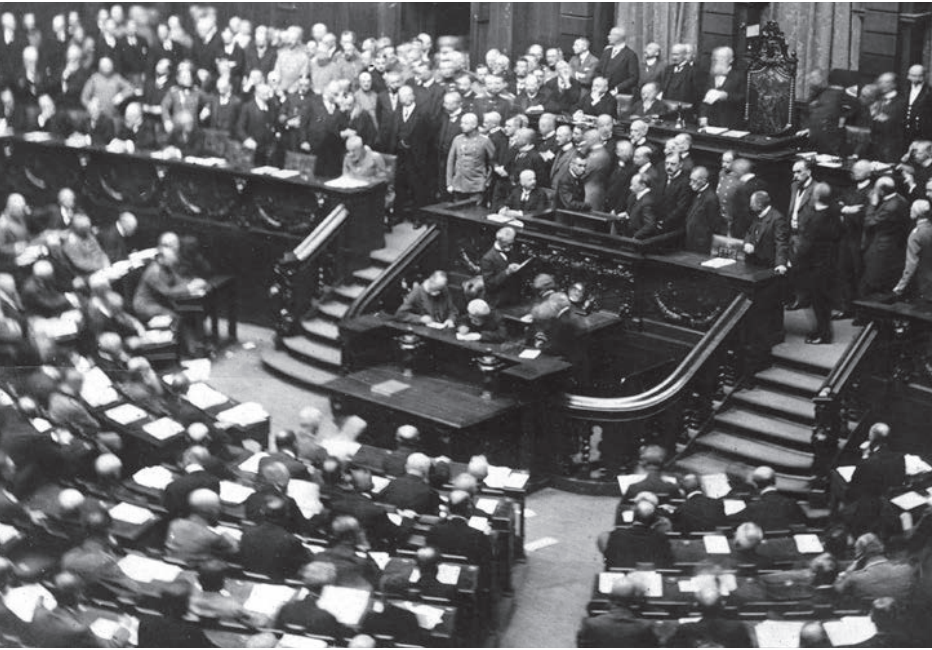
Key points of the Reichstag Resolution:
- Renounced the annexation of foreign territory
- Rejected any economic spoils of war
- Called for a negotiated peace based on compromise
This vote gave hope to peace advocates on the Allied side. It suggested that Germany's moderate politicians might be able to pressure their government to seek a negotiated settlement by the end of the year.
Important
However, the resolution had a critical weakness: it was merely a statement of parliament's wishes without concrete commitments from Germany's actual leaders - the military commanders and the Kaiser. Without specific undertakings from those who controlled German war policy, the Allies could not be expected to respond substantially to parliamentary resolutions.
Note
Exam tip: The Reichstag Resolution of July 1917 is important because it shows internal divisions within Germany between moderates who wanted compromise peace and hardliners who wanted total victory. This internal conflict would continue until Germany's defeat in 1918.
The Papal Peace Note (August 1917)
In August 1917, Pope Benedict XV attempted to revive peace negotiations by issuing his own comprehensive peace proposal. The Papal Peace Note, as it became known, was published in newspapers around the world.
Benedict's seven-point peace plan:
The Pope's proposal advocated for peace based on 'status quo ante bellum' - a Latin phrase meaning 'the state in which things were before the war.' In practical terms, this meant every nation would return to its original borders as they existed before August 1914.
Benedict's peace plan bore many similarities to President Wilson's earlier proposals. The Pope also attempted to achieve something previous mediators had tried and failed to accomplish: securing a German commitment to withdraw from Belgium and restore its independence.
The Reichstag Resolution and the increasing boldness of moderate politicians in Germany encouraged Pope Benedict to believe the timing was right for mediation. However, despite extensive negotiations, Benedict could not secure a concrete German commitment to give up Belgium. Nevertheless, the Pope decided to proceed with his peace initiative anyway.
When the Papal Peace Note was released in mid-August, it received extensive press coverage. Benedict hoped that President Wilson might support his initiative, given the similarities between their proposals. Meanwhile, Allied leaders carefully avoided making an immediate response. They worried that engaging with the Pope's proposal would encourage widespread public discussion of war aims and peace terms. They also feared Wilson might embrace the plan and attempt to force them to the negotiating table.
Important
Wilson's response killed the peace initiative:
On 27 August 1917, Wilson issued his reply to the Papal Peace Note. His response held out the possibility of peace with the German people but explicitly rejected peace with Germany's current leaders. Headlines proclaimed: 'No peace with the Hohenzollerns' (the ruling dynasty of Germany).
Wilson's reply effectively ended the Papal Peace Note initiative. The Central Powers took time to consider the proposal and made a conciliatory but non-committal response. Around the same time, socialist parties from various European countries organised the Stockholm Conference to discuss peace, but American and Allied leaders refused to grant passports to their socialists to attend.
Many advocates of peace revision saw the rejection of these initiatives as deeply unfortunate. Europe was entering its fourth year of war with no end in sight. Many experts predicted the conflict would continue until at least 1920.
Military campaigns of 1917
The Third Battle of Ypres (Passchendaele): 31 July - 6 November 1917
While peace initiatives failed, Allied military commanders remained convinced they could break the stalemate through offensive action. British commander General Haig was particularly determined to launch a major attack in Flanders, in the northern sector of the Western Front.
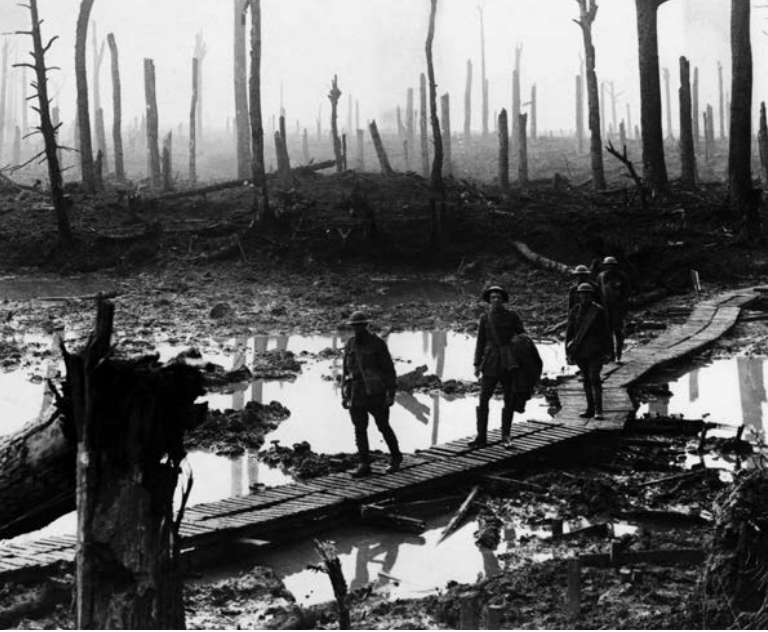
Haig's plan:
- Break through German defences around the Ypres salient (a bulge in the front line)
- Advance up the Belgian coast
- Capture German submarine bases there
On 31 July 1917, Haig launched what became known as the Third Battle of Ypres, later referred to as Passchendaele after the village that became the battle's focal point.
Important
The campaign's disastrous start:
The offensive encountered immediate problems. The heavy artillery bombardment that preceded the infantry attack destroyed the entire drainage system of the region, turning the battlefield into a swamp. To make matters worse, weather reports correctly predicted heavier than usual rainfall in August. The battlefield quickly became a nightmare of mud, water-filled shell craters, and impassable terrain.
Despite these terrible conditions, Haig ordered further attacks to continue. In early October, against the advice of his subordinate generals, Haig decided to press ahead with an attempt to capture Passchendaele ridge. He argued this would give British forces an easier defensive position to hold during winter.
The campaign continued for another month into November. Canadian troops eventually captured the ridge, but the weather had deteriorated further. With winter approaching and conditions worsening, Haig finally decided to end the campaign.
Important
The terrible cost:
- British casualties: over 300,000
- German casualties: approximately 275,000
- Territorial gain: The British had captured some ground, but the Germans maintained an unbroken front line
- Strategic outcome: The Germans were not demoralised, and the campaign had not achieved its objectives
Haig's justification and criticism:
General Haig defended his costly offensives at the Somme in 1916 and Passchendaele in 1917 by arguing they were 'wearing down' the German army through attrition. However, to many observers, including Prime Minister Lloyd George, it appeared this strategy might wear down the British forces first.
Note
Exam tip: Passchendaele represents the failure of attrition strategy in 1917. While Haig believed massive casualties would eventually break German morale, the offensive demonstrated that both sides could sustain enormous losses without achieving decisive results. The human cost raised serious questions about Allied military leadership.
The Bolshevik Revolution (7 November 1917)
Russia's deteriorating situation
By early November 1917, the military situation looked increasingly unfavourable for the Allies. Russia, weakened by years of war and seething with internal revolution, had become the weak link in the Allied coalition.
Since March 1917, the Russian Provisional Government had repeatedly warned its alliance partners that Russia could not sustain the war effort indefinitely. Over the following months, the Russian government urgently requested that the Allies convene a conference to discuss and revise their war aims.
The Russian argument was straightforward: As long as Germany believed Allied war aims involved destroying and dismembering the Central Powers, the Germans would never consider negotiated peace. Therefore, the Allies should moderate their demands to encourage peace talks.
Important
However, the other Allied leaders - Lloyd George of Britain, Orlando of Italy, and Clemenceau of France - showed no interest. They remained determined to fight until complete victory and to claim the territorial spoils they had promised each other in the secret treaties.
This left the Russian Provisional Government in an impossible position. It was forced to continue fighting a war that had become deeply unpopular among Russian soldiers and civilians, while receiving no support from its allies for the peace initiatives that might have saved the government.
Bolshevik seizure of power
On 7 November 1917 (25 October by the old Russian calendar), the Bolsheviks, a radical socialist revolutionary group led by Vladimir Lenin, seized power in Russia. The Bolshevik Revolution transformed the war situation:
Immediate consequences:
- The revolutionary government ended Russia's participation in the war
- Russia signed an armistice with Germany
- The Bolsheviks issued a peace decree inviting all European nations to end the fighting
- Revolutionary propaganda calling for peace and social revolution found receptive audiences throughout war-weary Europe
Important
Impact on the Allies:
The situation now looked very bleak for Britain, France, and Italy. American troops had only trickled into Europe so far, meaning there was no way the Allies could compensate for the loss of the massive Russian armies for many months. The Eastern Front, which had tied down large numbers of German and Austro-Hungarian forces, would soon cease to exist, allowing the Central Powers to concentrate their forces in the West.
To make matters worse, the Bolsheviks' revolutionary propaganda threatened to undermine morale on the Allied home fronts. Their calls for an immediate end to the war and their exposure of the secret treaties embarrassed Allied governments and gave ammunition to peace movements in Allied countries.
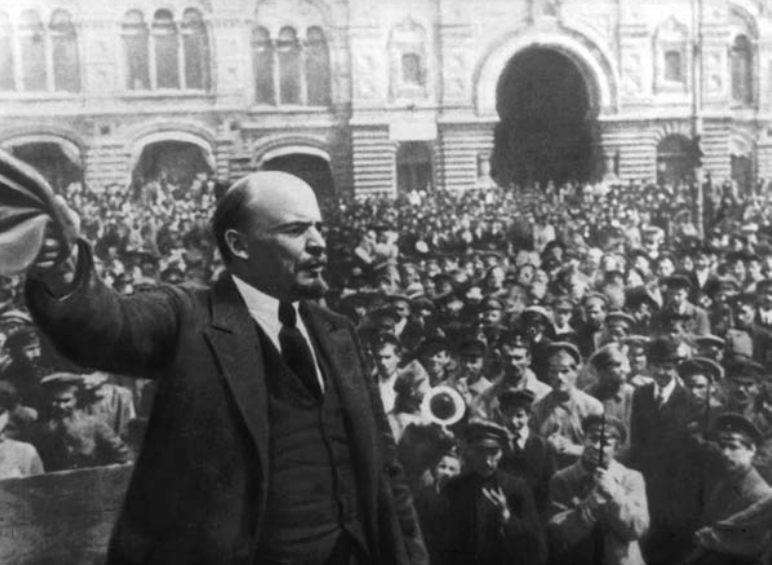
Looking ahead to 1918:
As 1917 ended, it remained unclear which side would ultimately prevail. Many people predicted the war would continue until 1920 or beyond. The Germans saw hopeful signs in the east, where they could negotiate a harsh peace treaty with the Bolsheviks and transfer troops to the Western Front. Meanwhile, the Allies held out hope that their next major offensive would finally achieve the elusive breakthrough, and that the growing American presence in France would eventually tip the balance in their favour.
Remember!
Summary
Key points about 1917:
-
Peace initiatives failed repeatedly: The Allied reply, Wilson's 'Peace Without Victory' speech, the Reichstag Resolution, and the Papal Peace Note all ultimately failed to bring negotiations, showing how committed both sides were to total victory
-
Germany made critical strategic decisions: The resumption of unrestricted submarine warfare and the retreat to the Hindenburg Line represented Germany's attempt to win quickly before American forces could make a decisive difference
-
Three revolutions transformed 1917: The March Revolution brought democracy to Russia, American entry represented a democratic power joining the Allies, but the Bolshevik Revolution in November removed Russia from the war entirely
-
Military stalemate continued: Despite the massive casualties at Passchendaele (over 575,000 combined), neither side achieved a breakthrough on the Western Front
-
The year ended in uncertainty: Russia's exit from the war threatened Allied prospects, but growing American involvement offered hope for the future - the outcome remained genuinely unclear as 1917 ended