1918: Allied Victory (HSC SSCE Modern History): Revision Notes
📚Revision Notes
1918: Allied Victory
The Allied situation at the beginning of 1918
At the start of 1918, Allied victory was far from certain. Russia had withdrawn from the war following the Bolshevik Revolution, and was about to sign a harsh peace treaty with Germany. This meant Germany could transfer up to a million soldiers from the Eastern Front to the Western Front.
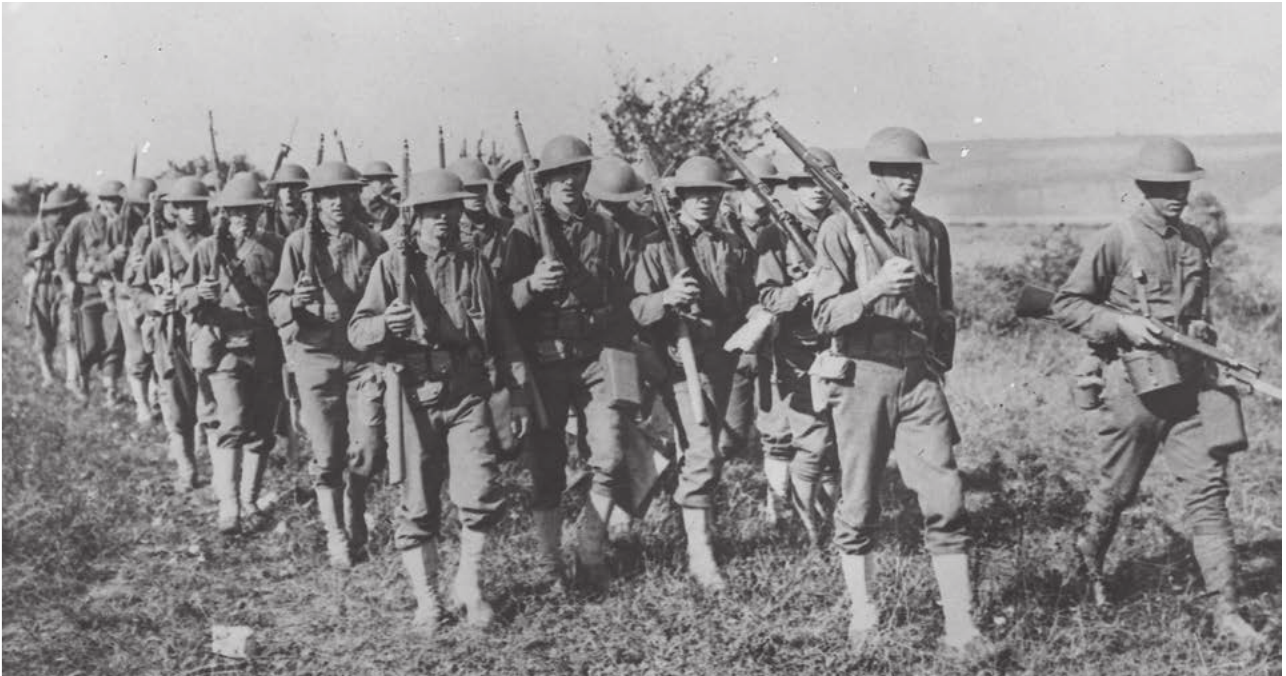
Meanwhile, American forces were arriving in France very slowly. Although the rate of arrival was increasing, the American Expeditionary Force (AEF) was not yet ready for combat. General Pershing refused to let his troops fight under Allied command, insisting on waiting until enough American soldiers had arrived to form a complete American army. The AEF therefore spent its time training and holding quiet sections of the front line.
Important
Allied commanders expected a major German offensive in spring 1918 and believed that, even if they survived this attack, the war would continue until 1919 or 1920 before Germany could be finally defeated. This pessimistic outlook reflects just how dire the Allied situation appeared at the beginning of 1918.
Note
American Expeditionary Force (AEF): The name given to the American army transported across the Atlantic during 1917 and 1918. The AEF did not become a fully functioning combat unit until the final months of the war.
The Treaty of Brest-Litovsk and German offensive plans
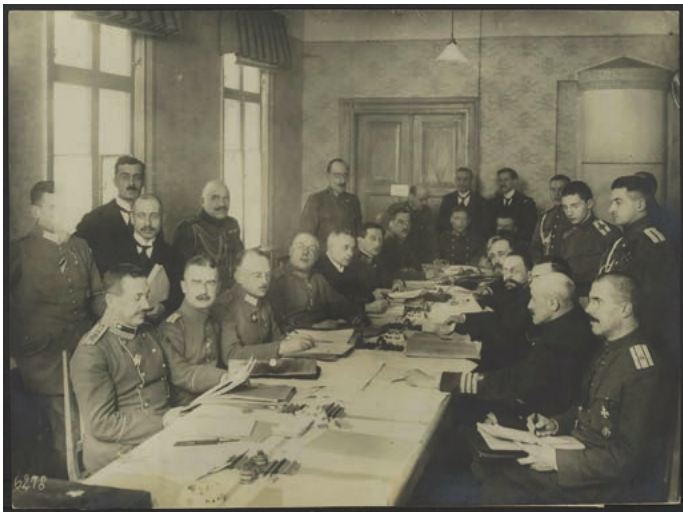
In March 1918, Germany and Russia signed the Treaty of Brest-Litovsk. This was an extremely harsh agreement that the Bolshevik government had no choice but to accept. The treaty meant Germany could now transfer at least a million troops to the Western Front.
Note
Treaty of Brest-Litovsk: The peace treaty signed on 3 March 1918, formally ending Russia's participation in World War I. The treaty imposed extremely harsh conditions on Russia, but the new Bolshevik government had no alternative but to agree.
General Ludendorff planned a massive spring offensive. His aim was to split the Allied lines, separating the French and British armies, and then systematically destroy them before the American army became too strong.
Historical debate: Was Brest-Litovsk a mistake?
Important
A Strategic Miscalculation?
Historians Robin Pryor and Trevor Wilson argued that Ludendorff made a serious error in imposing such harsh terms on Russia. They suggested that with a less harsh eastern policy, Germany could have moved an additional 500,000 troops to the Western Front. Instead, Ludendorff's determination to expand German territory in the east actually weakened the German position in the west. This shows how allowing military leaders to dominate all aspects of policy proved foolish for Germany.
President Wilson's Fourteen Points speech, 8 January 1918
Following the Bolshevik Revolution, Allied leaders worried they were losing the propaganda war with their own populations. Many people suspected their governments of prolonging the war for imperialistic reasons. The situation worsened in November 1917 when the Bolsheviks released secret treaties from the Tsar's files. These documents, published in newspapers worldwide, revealed all the secret agreements the Allied countries had made with each other.
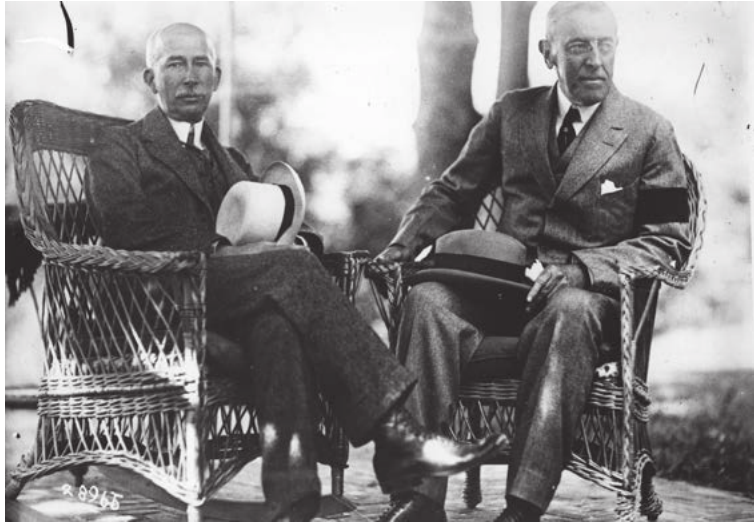
To counter this, British Prime Minister Lloyd George gave a speech at Caxton Hall on 5 January, arguing that Allied war aims were clear and just. This was followed on 8 January by President Wilson's Fourteen Points speech. Wilson spoke against secret diplomacy and called for a just peace based on territorial adjustments and the creation of a League of Nations.
Note
Wilson's speech was aimed not only at German and Russian populations, but also at Lloyd George and Clemenceau. The Fourteen Points became one of the defining documents of the war, shaping expectations for the post-war settlement.
The Fourteen Points
- No secret treaties
- Freedom of the seas
- Free trade with no economic barriers between countries
- Reduction of armaments by all countries
- Colonies to have a say in their future
- German troops to leave Russia
- Independence for Belgium
- France to regain territory including Alsace-Lorraine
- Italy's borders to be redrawn based on nationality
- Self-determination for national groups of Austria-Hungary
- Self-determination for national groups in the Balkans
- Self-determination for national groups in the Ottoman Empire
- Poland to be an independent state
- A League of Nations should be established to guarantee peace
Ludendorff's Spring Offensive, March 1918
On 21 March 1918, Germany launched its Spring Offensive. The goal was to drive a wedge through the Western Front, divide the French from the British, and push the British into the sea.
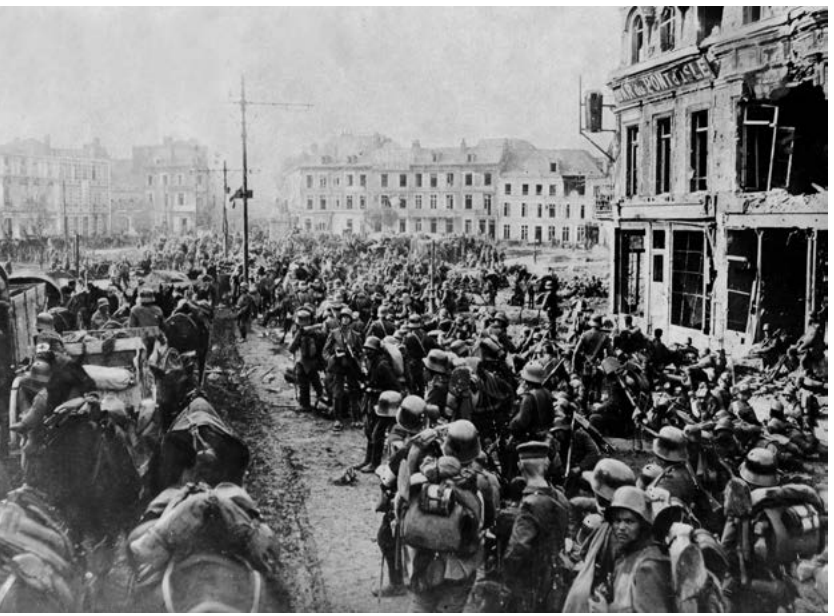
For the first time in four and a half years, the stalemate was broken and the conflict became a war of movement. Ludendorff's gamble to defeat the Allied forces before American troops became decisive seemed to be working. German forces swept across no-man's-land and advanced deep into Allied territory. The British and French were forced to retreat.
American forces were now in France, but numbered less than two million - still at least half the planned amount. More significantly, they were not yet fully deployed and had not seen any combat action.
Note
The Offensive Loses Momentum
However, the Spring Offensive began to lose momentum. German supply lines could not keep up with the advance, and the Germans were unable to quickly move their heavy artillery to their new front lines to support their infantry. By July 1918, the war on the Western Front returned to its static features. The Germans appeared to be running out of steam and resumed their highly effective defensive warfare tactics.
The Battle of Le Hamel, 4 July 1918
On 4 July 1918, a small but significant battle took place at Le Hamel on the Western Front. The battle was led by General John Monash, newly appointed Commander of Australian troops on the Western Front.
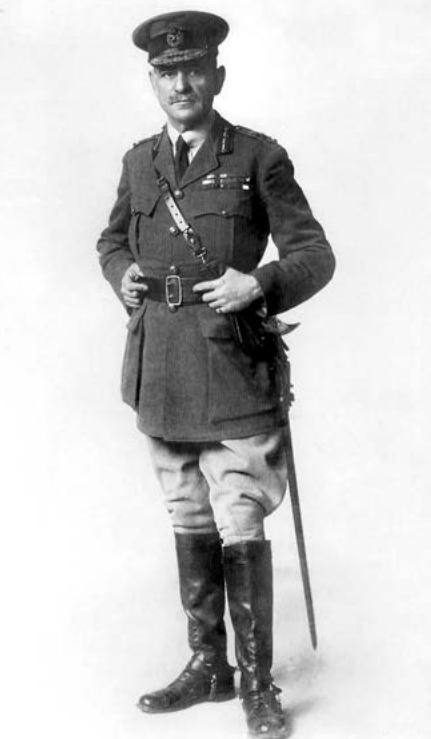
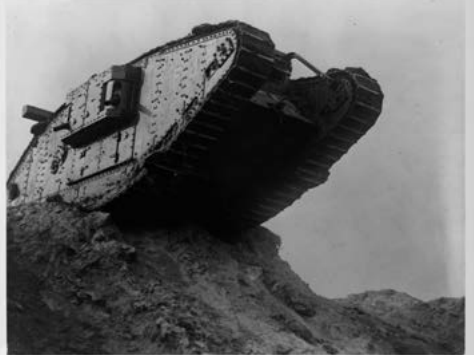
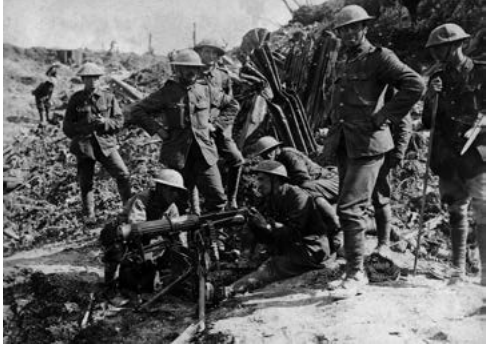
Although relatively small, the battle was a resounding success. It was over in just 90 minutes, with Australian forces capturing all their objectives. Finally, the Allies seemed to have found a formula that could break the stalemate.
A key feature was the use of tanks. These British tanks were a vast improvement on earlier prototypes, being faster and more manoeuvrable. Monash assigned groups of infantry to each tank and had them train together.
Note
Monash's Winning Formula
Monash's success was attributed to:
- Meticulous planning and logistics
- Effective combination of all technological developments (artillery, tanks, and aircraft)
- Coordinated infantry and tank operations
British commanders were ordered to study the tactics Monash had used at Le Hamel.
The Battle of Amiens, 8-11 August 1918
On 8 August 1918, the Allies launched an attack at Amiens. The battle began with highly effective British artillery but was spearheaded by Australian and Canadian forces. The main feature was the mass use of tanks.
After three days of battle, Allied forces broke through the German line and the Germans were forced to retreat. The Allies had originally planned only to capture and hold a small part of the German line (as at Le Hamel), but instead found the Germans in full retreat and decided to take advantage. This marked the beginning of the Hundred Days Offensive, in which Allied forces relentlessly moved forward as the Germans retreated.
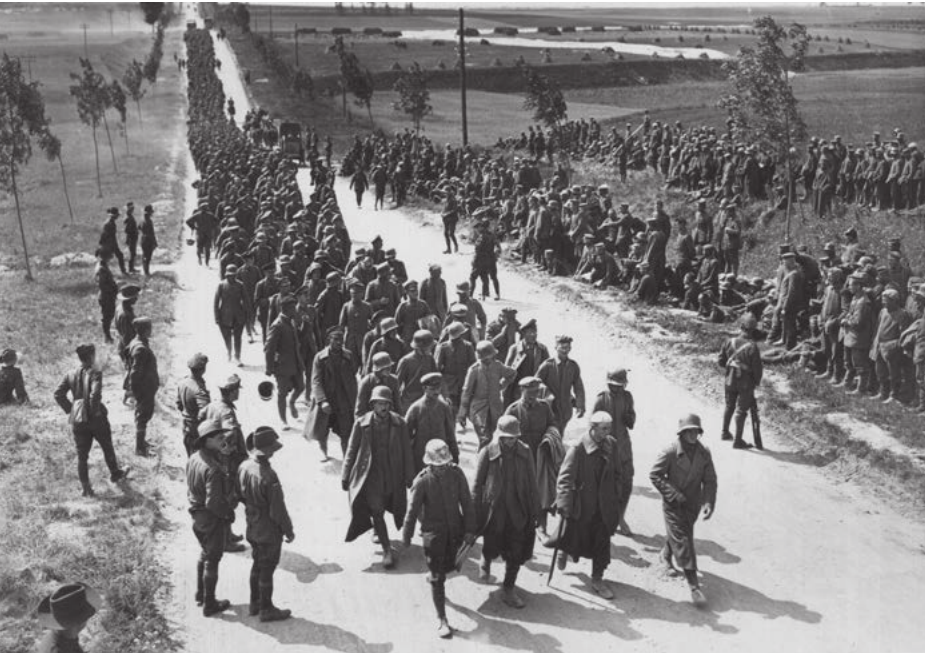
American forces had also joined full-scale fighting at last, though they did not experience great success initially. Allied casualties remained high, but at least they were progressively moving forward.
Important
After this battle, Ludendorff reportedly said it was the 'black day of the German Army'. This assessment reflects the significance of the defeat and marked a turning point in German morale.
Note
Hundred Days Offensive: The final period of World War I from August to November 1918, characterised by continuous Allied advances and German retreat.
The Allies smash through the Hindenburg Line, 29 September 1918
Although the Germans had retreated, their withdrawal was orderly. They took up positions in the heavily fortified Hindenburg Line, a massive defensive system featuring concrete fortresses.
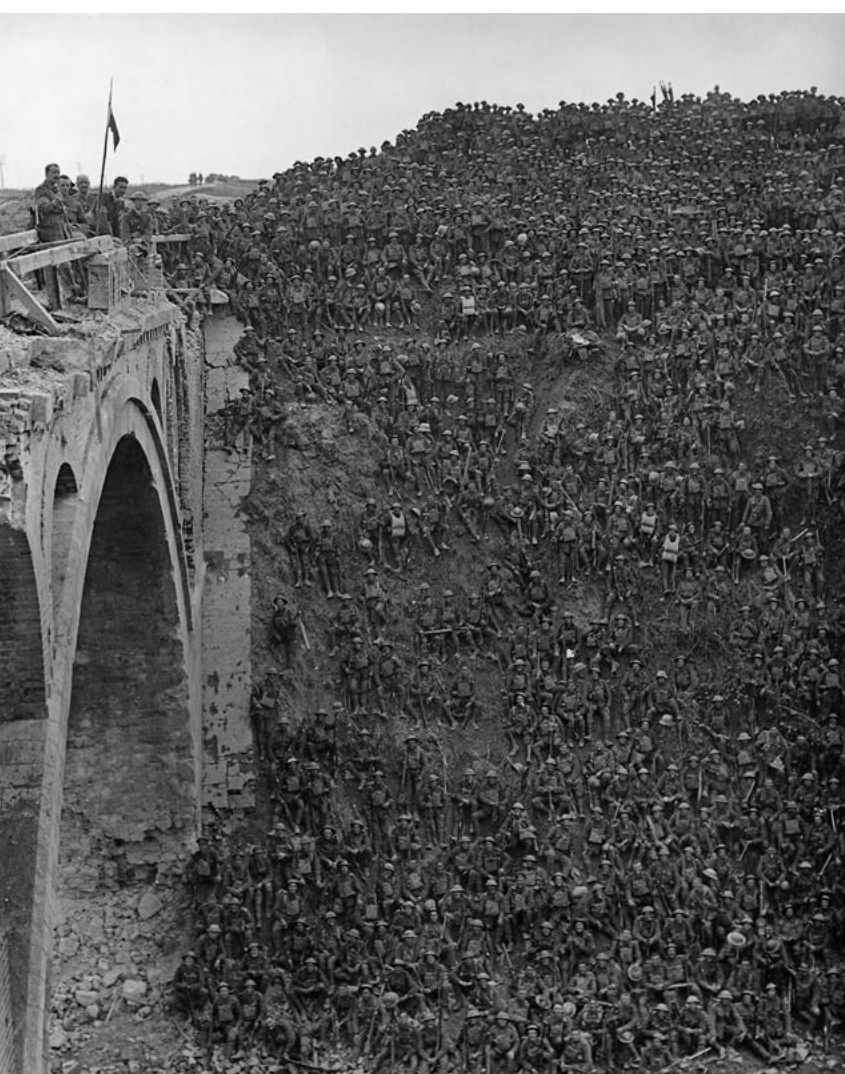
However, on 29 September 1918, the Allies broke through the massive concrete fortress at St Quentin and smashed through the Hindenburg Line. The Germans resumed their retreat, though it remained orderly. They were still not beaten.
Up to this point, Germans believed they could hold their now much shorter front line, survive the next few months, and counter-attack with fresh troops in 1919.
Important
The Turning Point
The breakthrough at Mont St Quentin shook the German Supreme Command. General Ludendorff believed nothing could stop the Allied advance. He recommended to the Kaiser that the German government seek a negotiated settlement - something the German High Command and political leadership had refused to consider in previous years when various peace opportunities had been presented. Now, with their last desperate gamble having failed, they had little left to bargain with.
The Germans hoped the Allies would accept an early end to the war, because Allied forces had not yet advanced onto German soil. They had merely recaptured what the Germans had taken at the war's beginning. The Germans hoped for a peace based on Wilson's Fourteen Points.
Note
Hindenburg Line: A massive German defensive system on the Western Front, featuring heavily fortified positions and concrete bunkers.
The new German Chancellor requests an armistice
On 3 October 1918, the Kaiser appointed the moderate Prince Max of Baden as Chancellor. Prince Max's first act was to send a note to President Wilson (via Switzerland) requesting peace negotiations based on the Fourteen Points. He then began instituting sweeping democratic reforms that the socialist-led Reichstag majority had been requesting since the Reichstag Resolution of July 1917.
The Allies were not quick to respond. Firstly, the leaders of France, Britain and Italy were annoyed that the armistice request went to President Wilson rather than to them directly. Secondly, they had the German military on the Western Front in retreat, and believed it was only a matter of time before the German Army was finished. The question was how long it would take to thoroughly defeat Germany.
For six weeks, notes passed between Prince Max and President Wilson, while Wilson had to consult Lloyd George and Clemenceau about each proposal. Each time, Wilson was forced to demand harsher conditions for Germany to satisfy the British and French.
Note
Revolution Threatens Germany
Meanwhile, Prince Max's government became desperate as revolution was breaking out across Germany. The German government worried that without an armistice, Germany would descend into anarchy.
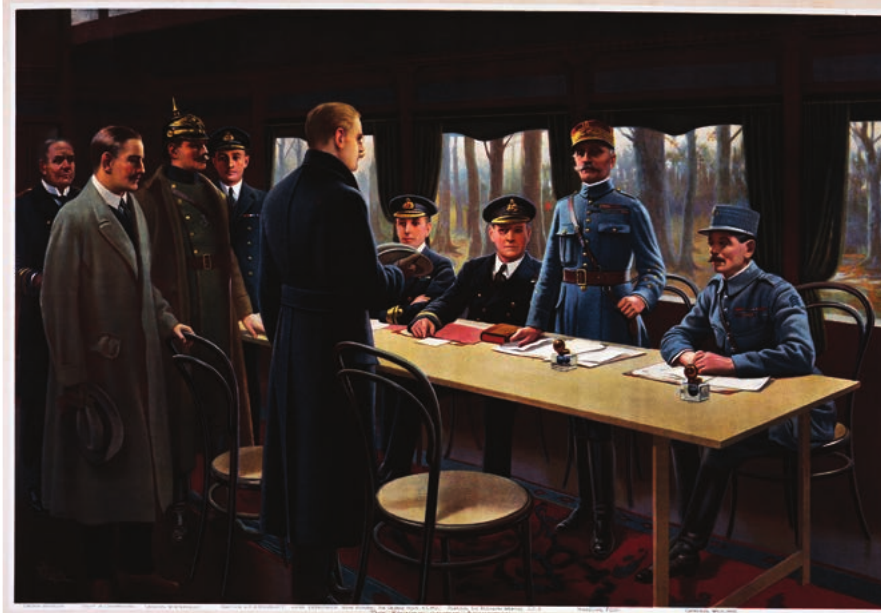
Finally, the Allies agreed to an armistice and peace based on Wilson's Fourteen Points, with one condition: the Allied military would conduct the armistice negotiations. The negotiations were led by French General Foch, who imposed harsh conditions.
At 11 am on 11 November 1918, the fighting stopped.
Note
Armistice: An agreement to stop fighting, effectively a ceasefire. The armistice of 11 November 1918 ended combat in World War I, though the formal peace treaty came later.
Remember!
Summary
Key Points to Remember:
- At the beginning of 1918, Allied victory was uncertain due to Russia's withdrawal and the slow buildup of American forces
- The harsh Treaty of Brest-Litovsk freed German troops for a Spring Offensive, but historians argue the harsh eastern policy weakened Germany's western campaign
- Wilson's Fourteen Points speech in January 1918 aimed to counter propaganda and provide a vision for a just peace
- The German Spring Offensive of March 1918 initially succeeded in breaking the stalemate but eventually ran out of momentum by July 1918
- New tactics combining tanks, infantry, artillery and aircraft proved successful at Le Hamel (4 July) and Amiens (8-11 August), beginning the Hundred Days Offensive
- Breaking through the Hindenburg Line on 29 September 1918 convinced German leaders to seek peace negotiations
- After six weeks of negotiations between Prince Max and President Wilson, an armistice was agreed, with fighting stopping at 11 am on 11 November 1918