The End of the War and the Making of the Peace (HSC SSCE Modern History): Revision Notes
📚Revision Notes
The End of the War and the Making of the Peace
Introduction
After four devastating years of conflict, World War I finally drew to a close in late 1918. However, the process of ending the fighting and establishing peace proved nearly as contentious as the war itself. Disagreements between Allied leaders over how to treat defeated Germany would shape the peace settlement and have lasting consequences for international relations.
The armistice negotiations
Negotiations between Germany and the Allies
In the final weeks of the war, Prince Max of Baden, the new German Chancellor, engaged in intensive negotiations with American President Woodrow Wilson. Over six weeks, notes passed between the two leaders as Germany sought an end to the fighting. However, Wilson did not negotiate alone. Each time Germany proposed new terms, Wilson had to consult with British Prime Minister David Lloyd George and French Prime Minister Georges Clemenceau. These Allied leaders consistently pushed for increasingly harsh conditions, forcing Wilson to demand more from the Germans with each exchange.
Note
The armistice negotiations were a complex diplomatic process involving multiple parties. While Germany negotiated primarily with Wilson, the British and French leaders maintained significant influence over the terms, progressively demanding harsher conditions as the negotiations continued.
Germany's desperate situation
Meanwhile, Germany's internal situation was deteriorating rapidly. Revolution was breaking out across the country, and Prince Max's government feared that without an armistice, Germany would descend into complete anarchy. This desperate situation put tremendous pressure on German negotiators to accept whatever terms were offered.
The armistice agreement
Eventually, the Allies agreed to an armistice based on Wilson's Fourteen Points, but with one crucial condition: the Allied military, not civilian leaders, would conduct the actual armistice negotiations. French commander General Foch led these negotiations and imposed harsh conditions on the German delegation.
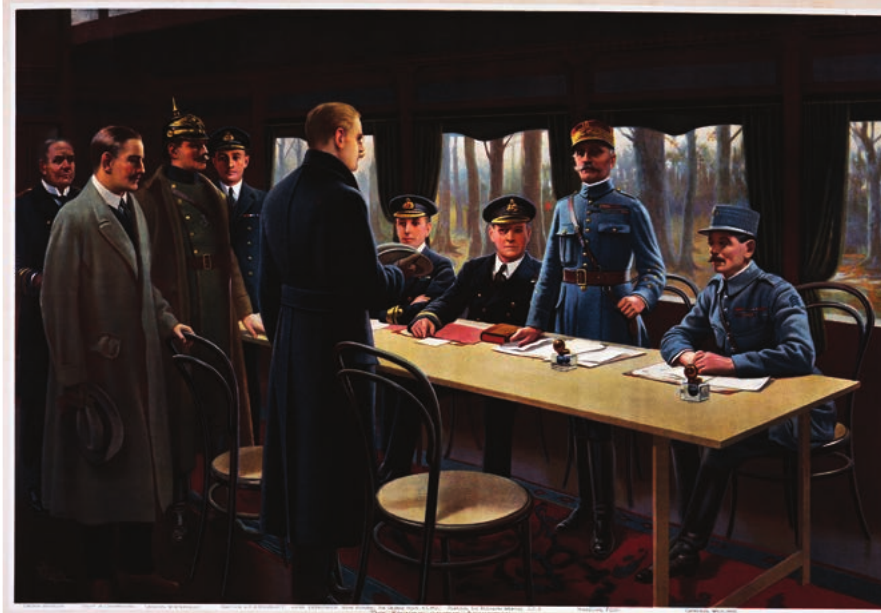
Finally, at 11 am on 11 November 1918, the fighting stopped. This specific time and date would become one of the most memorable moments in modern history.
Important
Remember: "11/11 at 11" - The armistice took effect at exactly 11 am on 11 November 1918. This precise timing is a key detail frequently tested in exams and has become symbolically significant in commemorating the end of World War I.
The Paris Peace Conference
Delay before the conference
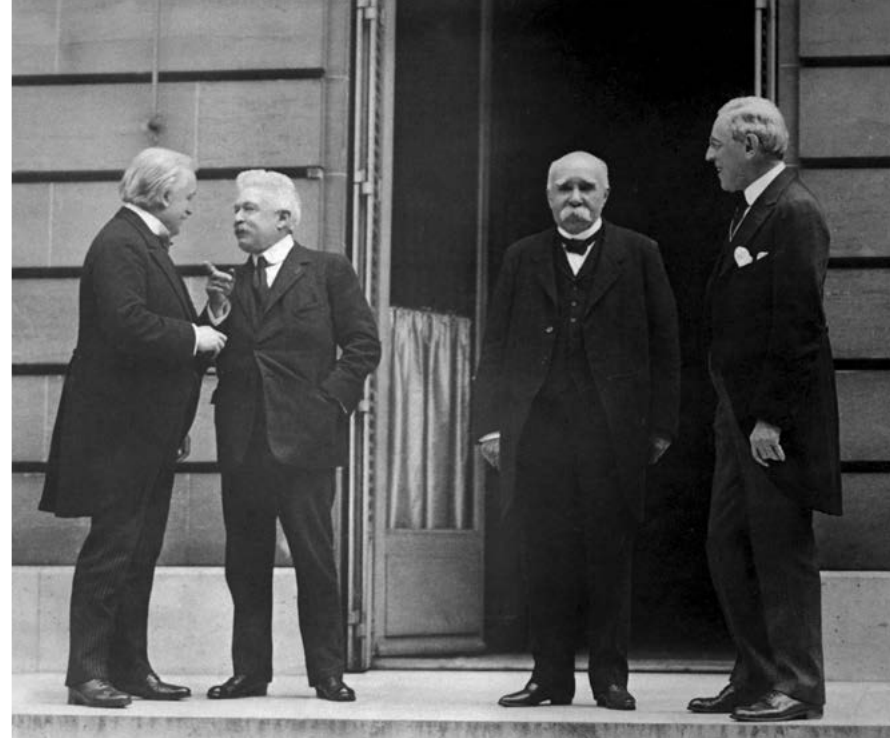
The victorious Allied powers now positioned themselves for peace negotiations. Preparations began for a major peace conference, but it was delayed for several months. Lloyd George wanted to hold a general election in Britain, the first in nearly eight years. He calculated that conducting the election while his government still enjoyed the glory of victory would be advantageous, before the British public began questioning the war's terrible cost in human lives.
Conflicting visions for peace
When the Paris Peace Conference finally began in 1919, fundamental disagreements emerged about how to treat defeated Germany. The conference brought together the major Allied leaders, but they had very different ideas about the peace settlement.
Important
The Great Divide at Paris
The Paris Peace Conference revealed a critical split in Allied war aims:
President Woodrow Wilson's position:
- Germany and its allies should be treated firmly but fairly
- No harsh or crippling economic penalties
- Peace should be based on his Fourteen Points
- Opposed secret treaties between Allies
- Priority: establishing a League of Nations to prevent future wars
Lloyd George and Clemenceau's position:
- Germany deserved harsh punishment
- Germany should lose significant territory
- Germany must be destroyed as an economic competitor
- Secret treaties between Allies should be honoured
- Allies should divide the spoils of victory
Note
Key term: The Fourteen Points were President Wilson's plan for a just and lasting peace, which he had outlined in January 1918.
Additionally, Italian leader Vittorio Orlando also pushed for the secret treaties to be honoured. Wilson strongly opposed this approach, believing it violated the spirit of justice outlined in his Fourteen Points.
Wilson's difficult compromises
During months of intensive negotiations, Wilson found himself forced to compromise on many of his principles. He sacrificed various aspects of his peace plan to achieve what he considered the most important goal: creating a League of Nations.
Note
Key term: The League of Nations was an international organisation proposed by Wilson to maintain world peace and prevent future conflicts through collective security and diplomacy.
Wilson had campaigned consistently for this idea since his "League to Enforce Peace" speech in May 1916. He had made it a central foreign policy commitment during his 1916 election campaign.
Despite the compromises required, Wilson ultimately succeeded in securing agreement to establish the League of Nations.
The Treaty of Versailles
The Germans were compelled to sign the Treaty of Versailles on 28 June 1919. This date was symbolically significant - it marked exactly five years since the assassination of Archduke Franz Ferdinand, the event that had triggered the war.
Terms of the treaty
The Treaty of Versailles was widely recognised as harsh and vindictive towards Germany. Its punishing nature became even more severe when massive reparations were added to the territorial and military restrictions.
Note
Key term: Reparations are financial compensation payments that a defeated nation must pay to the victors for war damages.
Important
The Harsh Reality of Versailles
The Treaty of Versailles imposed severe penalties on Germany that went far beyond what Wilson had originally envisioned:
- Significant territorial losses
- Strict military restrictions limiting Germany's armed forces
- Enormous financial reparations that would burden Germany's economy for decades
- Full acceptance of war guilt
The harsh terms of Versailles would have significant long-term consequences for European stability and international relations in the decades to come. Many historians argue that the punitive nature of the treaty contributed to the conditions that led to World War II.
The 'League Fight' in the United States
Senate opposition
Wilson's triumph at Paris turned bitter when he returned home. The United States Senate refused to ratify the Treaty of Versailles. This began what historians call the "League Fight" - a fierce political battle that lasted several months.
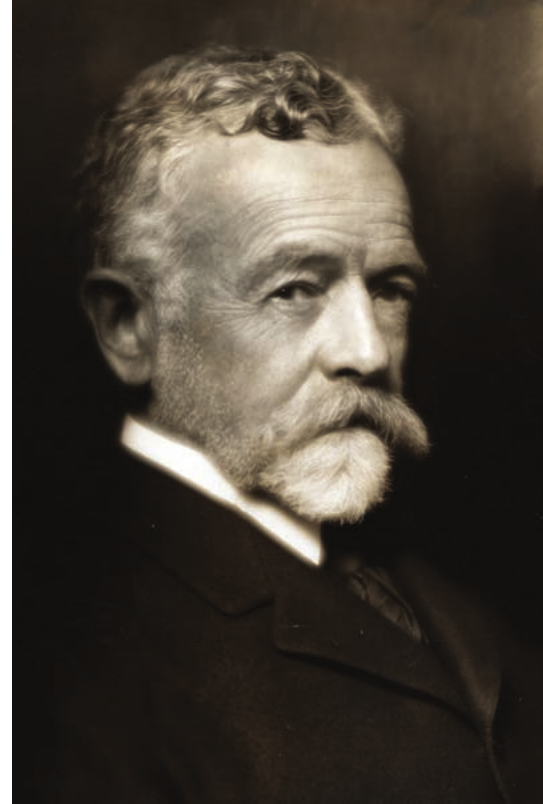
The conflict pitted President Wilson, a progressive-internationalist who believed in American engagement with world affairs, against unilateralists in the Senate who opposed American involvement in international commitments. The opposition was led by Republican Senator Henry Cabot Lodge.
Note
Key terms:
- Progressive-internationalist: someone who believes in international cooperation and engagement
- Unilateralist: someone who favours independent national action without international commitments
- Ratify: to give formal approval to a treaty, making it legally binding
Lodge's opposition
Senator Lodge's position was complicated by his previous support. He had backed the League to Enforce Peace concept and had supported American entry into the war. However, he became completely opposed to Wilson's specific version of the League of Nations.
Wilson's campaign and illness
The furious President decided to take his case directly to the American people. He embarked on a whistle-stop railway campaign across the United States, hoping to generate enough public support to pressure the Senate into ratifying the treaty.
In September 1919, while travelling by train, Wilson suffered a stroke. His campaign came to an abrupt halt. He returned to Washington, where he suffered another, more serious stroke that paralysed one side of his body. Wilson remained bedridden for the remainder of his presidency.
Important
Wilson's Stroke: A Turning Point
Wilson's illness in September 1919 proved catastrophic for his League of Nations vision. The stroke:
- Ended his national campaign to rally public support
- Left him physically incapacitated and unable to negotiate effectively with the Senate
- Paralysed him for the rest of his presidency
- Effectively ended any realistic chance of Senate ratification of the Treaty of Versailles
This personal tragedy had profound implications for international relations, as the absence of American participation would significantly weaken the League's ability to maintain world peace.
The end of American hopes for the League
Wilson's Democratic Party lost the November 1920 election. With that defeat, American hopes of joining the League of Nations died. The United States never signed the Treaty of Versailles, and never became a member of the League of Nations - the very organisation that Wilson had sacrificed so much to create.
This absence of American participation would significantly weaken the League's effectiveness in maintaining international peace during the 1920s and 1930s.
Summary
Key Points to Remember:
-
The armistice ending World War I was signed at 11 am on 11 November 1918, following harsh negotiations conducted by French General Foch.
-
The Paris Peace Conference in 1919 revealed deep divisions between Wilson (who wanted fair treatment of Germany) and Lloyd George/Clemenceau (who demanded harsh punishment and territorial gains).
-
President Wilson compromised many of his Fourteen Points principles to secure his primary goal: the establishment of a League of Nations to prevent future wars.
-
The Treaty of Versailles, signed on 28 June 1919, was recognised as a harsh and vindictive peace settlement, particularly with the addition of massive reparations imposed on Germany.
-
Despite Wilson's efforts, the United States Senate refused to ratify the Treaty of Versailles. Following Wilson's illness and the Democratic election defeat in 1920, the US never joined the League of Nations - significantly weakening the organisation that was meant to guarantee world peace.
Critical Connection: The failure of the United States to join the League of Nations is a crucial turning point. Be able to explain both why this happened (Senate opposition, Wilson's illness, election loss) and its significance for international relations and the League's subsequent inability to prevent future conflicts.