Significant People and Schools of Thought (HSC SSCE Studies of Religion): Revision Notes
📚Revision Notes
Significant People and Schools of Thought
Introduction
This unit examines the lives and contributions of significant individuals and schools of thought that have shaped Buddhism as a religious tradition. Students studying this topic need to understand how these figures contributed to the growth of Buddhism and assess their impact on the tradition itself. This requires knowledge of both their achievements and any controversies surrounding them.
The syllabus allows for study of various significant people and schools of thought. The key requirement is to analyse their impact specifically on Buddhism as a religious tradition, rather than focusing solely on their influence on world events. Two major figures are examined in detail: King Asoka and the XIV Dalai Lama.
King Asoka (304–232 BCE)
Overview of Asoka's significance
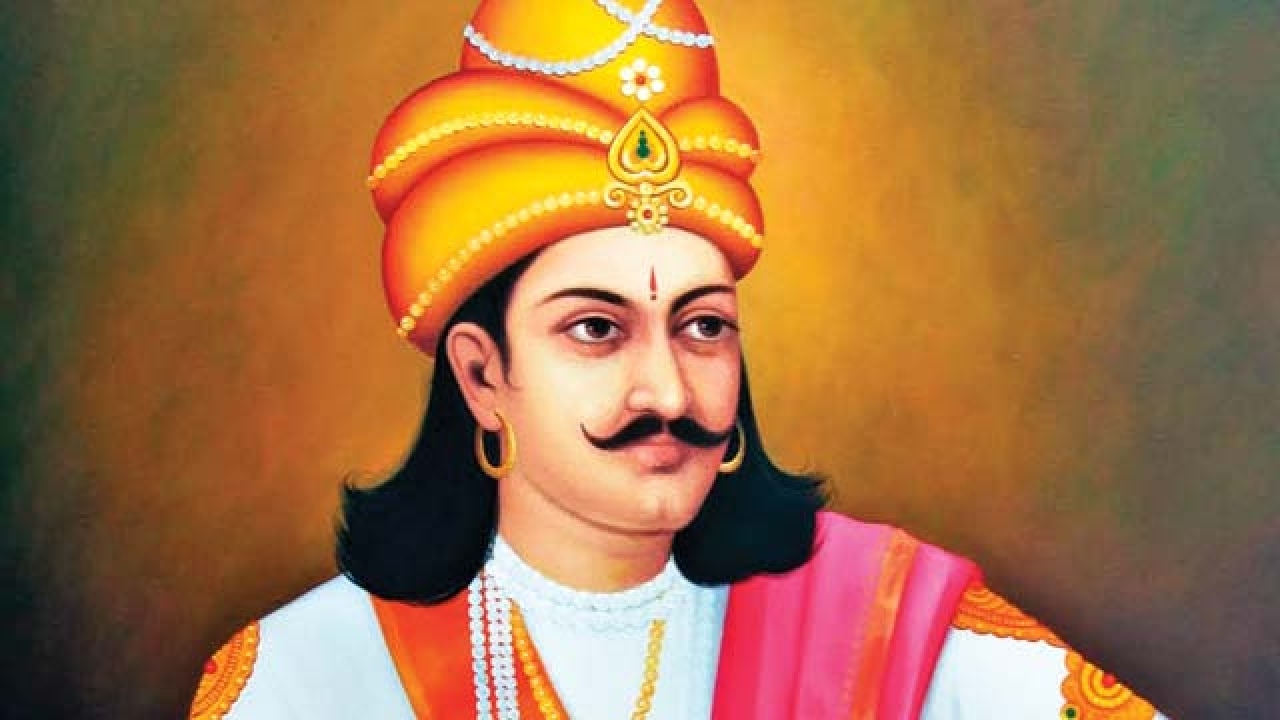
King Asoka stands as possibly the greatest ruler in Indian history. He governed a vast empire that nearly matched the current borders of India and extended beyond them in several areas. As the grandson of Candragupta, the founder of the Mauryan dynasty (circa 327–180 BCE), Asoka ruled from 273–232 BCE. His reign became a turning point for Buddhism, transforming it from a minor movement into a major world religion.
Early life and conversion
Asoka's early years were marked by violence and political intrigue. He was raised in King Bindusara's court but faced exile when his half-brothers, jealous of his military and political skills, forced him out. During this period, Buddhist monks may have cared for him when he was wounded in battle, potentially sparking his initial interest in Buddhism.
When his father died, Asoka rushed back to the palace and ruthlessly killed all family members who might challenge his claim to the throne, including his own brothers. After establishing himself as ruler in 270 BCE, he invaded the nearby kingdom of Kalinga. The resulting battles proved catastrophic, with possibly up to half a million people killed or injured.
Important
The enormous bloodshed from the Kalinga war profoundly affected Asoka, marking the pivotal moment that transformed him from a ruthless conqueror into a compassionate Buddhist ruler. This transformation became the foundation for his later contributions to Buddhism.
Transformation through Buddhism
Consumed by guilt, he stopped fighting and turned to Buddhism for guidance on how to live as a good person. He began travelling throughout India, visiting sites where the Buddha had taught after achieving enlightenment. This period saw the establishment of official Buddhist pilgrimage sites.
Asoka adopted practices similar to Buddhist monks. He gave up eating meat and introduced the principle of ahimsa (non-violence) into his governance. He promoted acceptance of all religions and, although now Buddhist himself, continued to fund other faiths. Asoka made clear his distaste for religions that proclaimed themselves the only true path while denouncing others.
Note
Asoka's approach to religious tolerance was revolutionary for his time. By funding and supporting multiple religions while being Buddhist himself, he demonstrated a practical application of Buddhist compassion that extended beyond the Buddhist community.
Major achievements and reforms
Asoka's care for all living beings extended far beyond typical royal concerns. He established numerous hospitals for both people and animals. He ordered the replanting of forests to restore environments. He convened the Third Buddhist Council at Pataliputra (see relevant chapter for details), which led to the inclusion of the Adhidhamma Pitaka in the Buddhist scriptures (Tripitaka).
After this council, Asoka launched an ambitious missionary programme. He sent Buddhist teachers to distant lands including:
- Greece
- Egypt
- Ghandara
- Kashmir
- The Himalayan regions
- South and east to Mysore, Burma, Malaya and Sumatra
He sent his own children - his son Mahendra and daughter Sanghamitra - to Sri Lanka, which became a crucial centre for preserving Buddhism. His 13th Rock Edict records attempts to spread Buddhism to the kings of Syria, Egypt and Macedonia.
The Rock and Pillar Edicts
Asoka had rules protecting the lives and religions of his subjects carved into numerous rocks and stone pillars throughout his empire. These inscriptions, known as the Rock Edicts or Pillar Edicts, many of which still stand today, provide direct evidence of his policies and philosophy. The conversational style suggests Asoka dictated the content himself, making these valuable primary sources of his actual words.
In these edicts, Asoka wrote extensively about Dharma (also dhamma). He used this term both in its Buddhist sense and more universally to mean:
- Morality
- Active social concern
- Religious tolerance
- Ecological awareness
- Observance of ethical precepts
- Renunciation of war
He spoke of reverence for those deserving respect and prohibitions against vice such as envy and injustice.
Example
Worked Example: Asoka's Transformation Through His Own Words
His 14th Rock Edict powerfully illustrates his transformation:
"In the past, for many hundreds of years, killing or harming living beings and improper behaviour towards relatives, and improper behaviour towards Brahmans and ascetics, has increased. But now due to [Asoka's] dhamma practice, the sound of the [war] drum has been replaced by the sound of the dhamma."
This edict shows the dramatic shift from a militaristic ruler to one guided by Buddhist principles of non-violence and moral conduct.
Contribution to Buddhism
Asoka's contributions to Buddhism were extensive and lasting. He popularised Buddhist pilgrimage by marking significant sites in the Buddha's life with impressive monuments. At Lumbini, the Buddha's birthplace, he cancelled taxes. These pilgrimages and monuments made Buddhist pilgrimage central to Indian religious life, and the practice remains important globally today.
Asoka constructed more Buddhist monasteries and stupas than any other ruler. While Buddhist texts claim he built 84,000 of each, this is clearly an exaggeration, but it indicates the massive scale of construction during his reign. However, his generosity had an unintended consequence. Many non-Buddhists dressed as monks and nuns to take advantage of royal patronage, introducing a problem called nominalism into the Buddhist community.
Note
Nominalism refers to people who take the name of a religion but do not genuinely practise it, usually for political and social benefits. This became a significant challenge for the Buddhist Sangha during Asoka's reign and required careful management.
Political influence on Buddhism
Asoka carefully managed the Buddhist monastic community (Sangha). He passed laws stating that anyone who caused splits in the community by starting breakaway groups would lose their status as a monk or nun. He viewed maintaining Sangha unity as his royal duty. This established a precedent that later Buddhist rulers followed, though government interference was not always beneficial for Buddhism.
Important
A Double-Edged Legacy
While Asoka's protection of the Sangha helped Buddhism flourish, his political control over the monastic community set a precedent for government interference in Buddhist affairs. This pattern was repeated by later rulers, sometimes with negative consequences for Buddhist independence and authentic practice.
Following Buddhist principles, Asoka promoted ideals that made his nation fairer and more just. His advocacy for religious tolerance was necessary since most of his subjects were Hindu rather than Buddhist. By refusing to impose Buddhism on them, he demonstrated how all Indians could unite under one government system. Peace became a central policy in the latter part of his reign, with ahimsa (non-violence) particularly emphasised.
Environmental and social reforms
Asoka demonstrated an advanced understanding of justice and compassion. His hospitals for both humans and animals showed care extending far beyond typical rulers of his era. He protected endangered species and created reserves where they could live safely. He replanted destroyed forests to ensure good environments for animals and people. These initiatives represented practical applications of Buddhist teachings throughout his kingdom.
Note
Asoka's environmental policies were remarkably progressive for the third century BCE. His creation of animal hospitals, protection of endangered species, and forest replanting demonstrate how Buddhist principles of compassion and non-violence extended to all living beings, not just humans.
Impact on Buddhism
Until Asoka's time, Buddhism remained a marginal movement in India. After Asoka, Buddhism gained fame as the religion of the imperial court. Asoka established the ideal model of a Buddhist ruler. Kings throughout the Buddhist world, in countries like Burma and Thailand, attempted to follow his example.
Asoka became both a historical figure and a legendary one. Many myths arose after his death that exaggerated his influence, but Buddhists have consistently held him up as an exemplary ruler. By sending missionary groups to neighbouring nations, Asoka was instrumental in spreading Buddhism beyond India during the third century BCE. His missionaries ensured Buddhism survived in Sri Lanka even when it nearly disappeared from India. His vision for missionary work enabled Buddhism to survive and become a world religion.
However, Asoka's reign had some negative consequences. His dynasty fell into disarray after his death, possibly because his extensive spending on Buddhist buildings weakened the state. His control over the Sangha set a precedent for political interference in Buddhist affairs that was not always beneficial.
Modern legacy
Asoka himself exemplifies dramatic personal transformation through Buddhism. Today, he holds importance beyond Buddhism. Indian nationalists use his example to remind all Indians that their country was once united, humane, peaceful and strong. This proved particularly significant during the struggle for independence from British colonial rule (1700s–1947). When India gained independence, Asoka came to symbolise enlightened government and Indian unity. The Asoka Chakra appears on the Indian flag today.
Historical sources
As Buddhism's first major patron, Buddhists eagerly preserved Asoka's memory. When Buddhism spread to China, many Buddhist texts travelled east. These were translated into Chinese while the originals were eventually lost. Most knowledge of Asoka's life comes from at least six collections of stories about him. The earliest, the Asokavadana, was translated into Chinese around 300 CE and survives today. The primary sources remain his Pillar Edicts, written in a conversational style about proper citizen conduct. No ruler before Asoka left such a permanent and accessible record.
The XIV Dalai Lama (born 1935 CE)
Background and significance
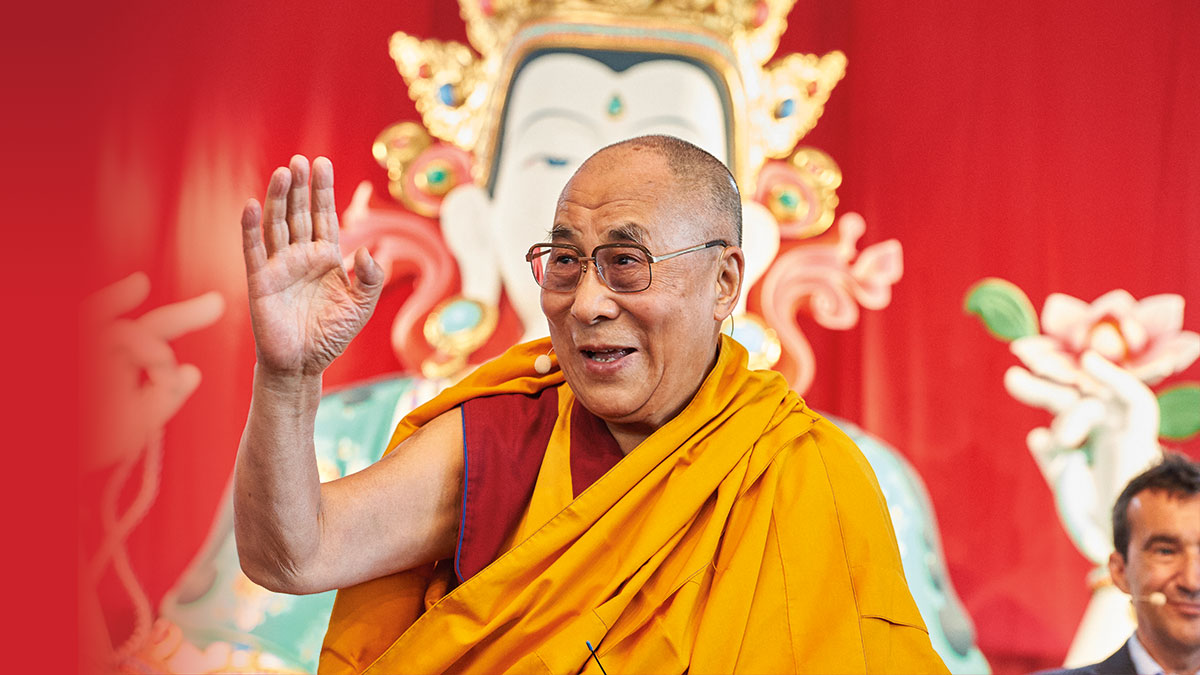
For hundreds of years, the mountainous nation of Tibet has been ruled by religious rather than political leaders. Tibetans believe that each Dalai Lama is the reincarnation of the Great Bodhisattva of Mercy, known as Quan Yin (Chinese name) or Avalokiteshvara (Sanskrit name). When a Dalai Lama dies, Tibetans must seek out the next reincarnation of this Bodhisattva. In religious terms, all Dalai Lamas represent the same soul moving through successive lives.
Vajrayana Buddhism context
Tibetan Buddhism belongs to the Vajrayana tradition, a subset of Mahayana Buddhism with distinct characteristics. Sometimes called Thunderbolt or Diamond Buddhism, Vajrayana has been influenced by the native Bon animistic religion and Hinduism, making it a more mystical and spiritualised form of Buddhism. It includes deities and rituals quite different from other Buddhist traditions. Vajrayana Buddhism stresses the importance of prajana (wisdom that distinguishes reality from illusion) and experience over emptiness. In this tradition, people are governed by religious rather than political leaders, with the Dalai Lama believed to be the reincarnation of the Bodhisattva of Compassion.
Note
Understanding Vajrayana Buddhism
Vajrayana Buddhism's unique characteristics set it apart from other Buddhist traditions. Its incorporation of mystical practices, deities, and rituals from native Tibetan Bon religion and Hinduism created a distinctive form of Buddhism that emphasises direct experiential wisdom and the guidance of spiritual teachers.
Early life and education
The current holder of this title, Lama Tenzin Gyatso, is the 14th reincarnation of this soul. Born Lhamo Dhondrub to a peasant family in northeast Tibet, he was identified as the next Dalai Lama at age two in 1937. He was enthroned as Tibet's leader on 22 February 1940 in the capital city of Lhasa, when he was only five years old.
After extensive education in Buddhist philosophy and practice, the Dalai Lama became Tibet's fully active leader in 1950. This coincided with China's invasion of Tibet, initiating decades of conflict that continue to shape his role today.
Exile and the Tibetan crisis
Between 1950 and 1959, the Dalai Lama engaged in extensive consultations with Chinese Communist Party leaders, attempting to convince them to grant Tibet freedom or at least treat Tibetans with respect and kindness. Tibetans believe the invaders refused to compromise. By 1959, Tibetan resistance against Chinese occupation intensified, triggering severe repression from the Communist Party.
At this critical point, the Dalai Lama decided to leave Tibet. Today, more than 100,000 Tibetans live with him in Northern India, where they receive protection. The Dalai Lama resides in Dharamsala with many Tibetan refugees. This location hosts schools and cultural centres ensuring the continued development of Tibetan religion and culture. Theological schools and religious centres work to preserve Tibetan Buddhist traditions.
Important
The exile of the Dalai Lama and over 100,000 Tibetan refugees in 1959 marked a crisis point for Tibetan Buddhism. However, this diaspora also enabled the preservation and global spread of Vajrayana Buddhism, transforming a regional tradition into a worldwide spiritual movement.
Democratic reforms and peace advocacy
In 1963, the Dalai Lama developed a democratic constitution intended for implementation when Tibet gains freedom. Throughout his struggles, he has consistently encouraged peaceful solutions to the Tibetan crisis. For this commitment to non-violence, he was awarded the Nobel Peace Prize in 1989. This year also saw major freedom demonstrations in Beijing, making it extremely difficult for the Chinese Communist Party. The Dalai Lama's rising global presence increased their discomfort, leading to worldwide public criticism of China's invasion and ongoing settlement of Tibet.
While the Dalai Lama heads only Vajrayana (Tibetan) Buddhism, he has become the public face of Tibet and, for many people worldwide, represents the entire Buddhist tradition.
Contribution to Buddhism
The Dalai Lama has regularly published books on Tibetan Buddhism, Buddhism generally, and the application of Buddhist teachings to contemporary life. He sponsored an English translation of the Tibetan Book of the Dead, writing its foreword. Famous supporters, particularly in the United States including actors like Richard Gere, have joined his cause. Nevertheless, when not travelling, the Dalai Lama lives simply in a small cottage in Dharamsala, rising early to meditate like other monks and working on Tibetan issues through writing and meetings.
His message of peace and promotion of Buddhism as a tool for peace, combined with his peaceful nature, have attracted thousands of supporters. He emphasises Buddhist values including:
- Compassion
- Forgiveness
- Non-violence
- Contentment
- Self-discipline
Note
The Dalai Lama refers to these values as secular ethics or humanitarian values consistent with Buddhist teachings. This approach makes Buddhist wisdom accessible to people of all faiths and backgrounds, expanding Buddhism's influence beyond traditional religious boundaries.
He remains committed to promoting religious harmony.
Preservation of Vajrayana Buddhism
The Dalai Lama's contribution to Tibetan Buddhism has become most evident in the exiled community. He has promoted the development and expression of Vajrayana Buddhism, significantly influencing Buddhism's global promotion. He has ensured Vajrayana Buddhism's survival during a period of existential threat. He established theological schools and provided general Tibetan education for the exiled community, ensuring cultural and religious continuity.
The Dalai Lama has reached out to other religious traditions, meeting with leaders of most faiths and promoting interfaith dialogue. He has also encouraged other religious and secular groups to adopt Buddhist meditation practices, spreading Buddhist influence beyond traditional boundaries.
Global influence
The Dalai Lama has significantly promoted Buddhism globally. His books and writings enjoy widespread popularity, and his ability to express Buddhist teachings in straightforward language has made Buddhism attractive to many people. He speaks frequently at conferences, demonstrating personal qualities of tolerance, compassion and kindness that embody Buddhist ideals.
However, his greatest contribution has been on the world stage. As a well-travelled and popular world leader who has visited Australia several times, he promotes world peace and encourages individuals, not just world leaders, to pursue non-violent efforts to achieve it. He assures people that world peace can result from individual efforts. Besides the Nobel Peace Prize, he has received numerous international honours.
He has advocated for Tibetan freedom through exclusively non-violent means. He has spoken on various issues of international concern including:
- Human rights
- Women's rights
- Health
- The environment
- Sexuality
For many Westerners, he has become Buddhism's face, so when he addresses non-religious matters, he is often viewed as representing the Buddhist position.
Important
Distinguishing Religious and Political Roles
It is important to distinguish between the contribution the Dalai Lama has made on the world stage and his impact specifically on Buddhism as a religious tradition. While he has become an international figure speaking on various global issues, his religious impact focuses on preserving Tibetan Buddhism, making Buddhism accessible globally, and promoting Buddhist values of peace, compassion and non-violence.
Impact on Buddhism
The Dalai Lama has made significant impact on Buddhism by ensuring Tibetan Buddhism's survival during crisis. He has made Buddhism more accessible to Buddhists worldwide, across all variants. He has facilitated greater understanding of Buddhism in the West, winning many converts and helping it grow as a religious tradition.
The Dalai Lama's efforts have raised Buddhism's status globally, encouraging people to see it as a religion of peace. He is a powerful presence who gently but firmly advocates for change, transformation of the heart, and justice for his people. He offers a vision of ethics - a form of natural spirituality revealing universal qualities in human nature.
Other significant people and schools of thought
The syllabus includes several other important figures and movements in Buddhism, including:
Note
Additional Significant Figures and Movements
People:
- Nagarjuna (circa 150–250 CE): Founder of the 'middle path' of Mahayana Buddhism and influential early Buddhist philosopher
- Vasubandhu (fourth century CE): Indian Buddhist scholar monk and founder of the Yogacara school
- Guru Rinpoche/Padmasambhava (eighth century CE): Brought tantric Buddhism to Tibet and is often considered the 'second Buddha'
- Sister Dhammadinna (nineteenth/twentieth century CE): American-born Buddhist nun who helped establish Buddhism in Australia in the 1950s
- Tenzin Palmo (born 1940): Second woman ordained in the Tibetan tradition who founded a nunnery in North India
- Chen Yen (born 1937): Taiwanese Buddhist nun who developed emphasis on compassionate work and Buddhist charity worldwide
Schools of thought:
- Mahayana Buddhism: A significant variant emphasising that all Buddhists can achieve enlightenment
- Pure Land Buddhism: A Mahayana school in China and Japan attractive to ordinary people, emphasising faith and devotion to Buddha Amitaba for salvation to a Pure Land
- Won Buddhism: A Korean school emphasising the laity's role and meditation practice
- Soto Zen Buddhism: Japanese school influenced by Chinese Buddhism, emphasising meditation and simplicity
Summary
Summary
Key Points to Remember:
- King Asoka transformed Buddhism from a minor Indian movement into a major world religion through his patronage, missionary activities, and exemplary rule based on Buddhist principles
- Asoka established key Buddhist practices including pilgrimage to significant sites, built numerous monasteries and stupas, and convened the Third Buddhist Council
- The principle of ahimsa (non-violence) became central to Asoka's rule, replacing warfare with peaceful governance and religious tolerance
- The XIV Dalai Lama has ensured the survival of Tibetan Buddhism during crisis and made Buddhism accessible to global audiences
- The Dalai Lama exemplifies Buddhist values of compassion, non-violence and peace advocacy, earning the Nobel Peace Prize and numerous international honours
- Both figures demonstrate how significant individuals can shape Buddhism's development and spread, though their historical contexts and specific contributions differ substantially