Origins (HSC SSCE Studies of Religion): Revision Notes
📚Revision Notes
Origins
Pre-Islamic Arabia: the cultural and historical context
Geography and peoples
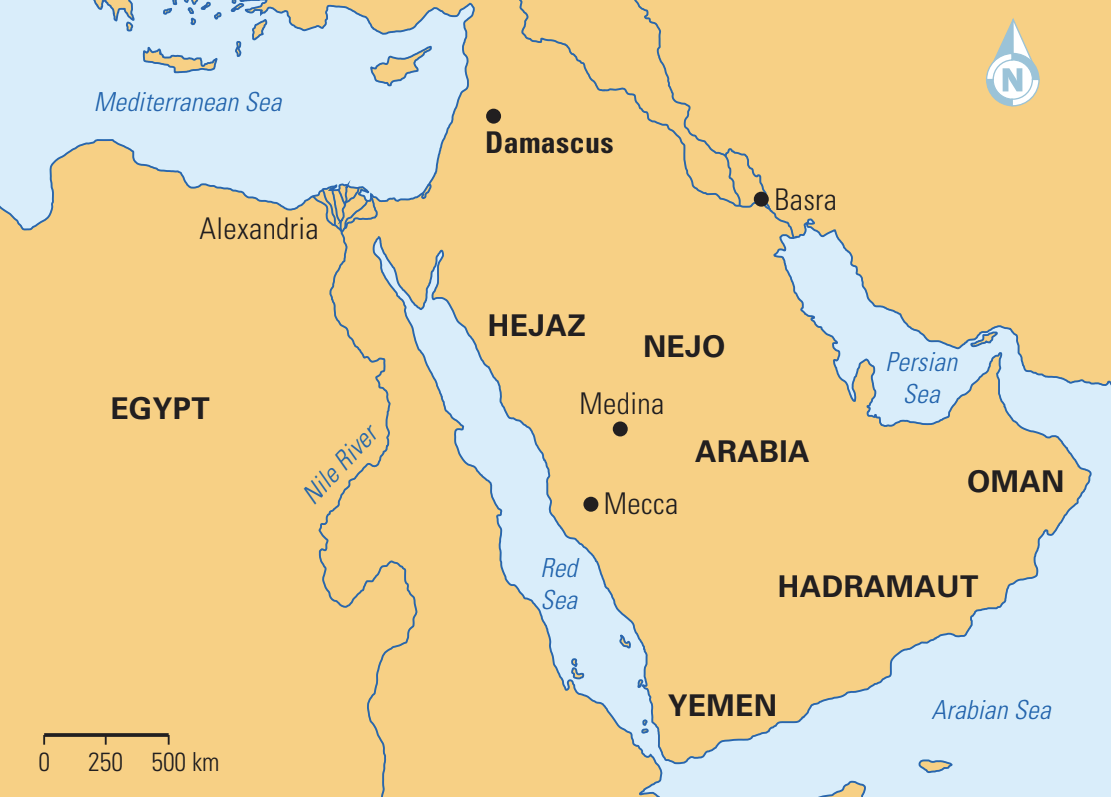
Islam emerged approximately 1,400 years ago in the Arabian Peninsula, beginning with the Prophet Muhammad who was born in Mecca and later migrated to Medina. Understanding the context of pre-Islamic Arabia is essential for comprehending how Islam developed.
The Arabian Peninsula was home to diverse populations, including nomadic Bedouin tribes who moved across the desert and permanent settled communities in towns and cities. These groups coexisted but maintained distinct lifestyles and customs.
Note
The diversity of peoples in pre-Islamic Arabia—from desert nomads to urban traders—created a complex social landscape that would significantly influence the development and spread of Islam.
Key locations:
- Mecca: A major trading city in the Hejaz region where Muhammad was born. It served as an important commercial hub and religious site
- Medina: Located several hundred kilometres north of Mecca, this city became Muhammad's home after his migration (Hijra) in 622 CE
The peninsula was bordered by powerful empires: the Byzantine Empire to the northwest, the Sassanid Empire to the northeast, and Yemenite rulers to the south. This geopolitical position influenced Arabia's religious and cultural development.
Economic activities
The Arabian Peninsula's economy centered on three main activities:
- Trade – This was the most significant economic activity. Arabian camel caravans transported goods from India and the Far East to Mediterranean markets, creating vital trade routes
- Pastoral activities – Bedouin tribes moved with their herds across the desert
- Agriculture – Settled communities cultivated crops in fertile areas
Mecca's prominence as a trading post made it wealthy and influential, attracting merchants and travellers from across the region.
Religious diversity before Islam
Pre-Islamic Arabia was religiously diverse. The peninsula hosted multiple faith traditions:
- Polytheistic religions: Most Arabs worshipped multiple gods and goddesses, with different tribes having their own deities
- Judaism: Jewish communities existed in various parts of Arabia
- Christianity: Christian groups were present, particularly in regions influenced by the Byzantine Empire
- Zoroastrianism: This Persian religion, which teaches about the struggle between good (Ahura Mazda) and evil (Angra Mainyu), had followers in Arabia
Note
This religious plurality meant that ideas about monotheism were not completely foreign to Arabs when Islam emerged. The presence of Jewish and Christian communities provided existing models of monotheistic worship that would have been familiar to some Arabs.
Social and religious conditions of Arabia
Tribal and clan structure
Pre-Islamic Arabian society was organized around kinship bonds rather than national identity. The most important social connections were:
- Clan: Small groups of related families who lived and worked together
- Tribe: Larger units formed from multiple clans sharing common ancestry
A person's identity, security and status depended entirely on their clan membership. There was no central government or unified Arab nation. Instead, clans operated as independent units with their own customs and leaders.
Important
Blood Feuds and Their Consequences
This tribal system had significant consequences. When a clan member was wronged or harmed, other members were obligated to seek vengeance. This custom led to frequent blood feuds between clans, as each group retaliated for perceived injustices. These cycles of revenge could continue for generations, creating ongoing conflict across the peninsula.
The Age of Ignorance (Jahiliyyah)
Muslims refer to pre-Islamic society as Jahiliyyah, meaning the "Age of Ignorance." This term reflects the Islamic belief that society lacked proper moral and spiritual guidance before Muhammad's revelations. The period was characterized by tribal warfare, revenge killings, and what Muslims view as moral confusion.
The concept of Jahiliyyah emphasizes that Islam brought education, liberation and enlightenment to Arabian society. It represents a contrast between the darkness before Islam and the light that Islam brought.
Status of women
Women's position in pre-Islamic Arabia varied considerably depending on tribal customs and traditions. Different tribes held different attitudes:
- Some tribes gave women low status because they could not participate in warfare, which was highly valued
- Other tribes allowed women significant freedom and economic power. Women could become successful business owners and accumulate wealth
Example
Example: Khadijah's Business Success
Muhammad's first wife, Khadijah, exemplifies women who enjoyed economic independence in pre-Islamic Arabia. She operated profitable camel trading businesses and employed Muhammad before marrying him. Her example shows that some pre-Islamic women enjoyed economic independence and social respect, challenging simplistic views of the period.
The Ka'ba and polytheistic worship
The Ka'ba is a cube-shaped building in Mecca that holds central importance in Islamic history and practice. Muslims believe the Prophet Abraham and his son Ishmael built the Ka'ba centuries before Muhammad's birth. According to Islamic tradition, it was originally the first house of worship dedicated to the One God (Allah).
However, by Muhammad's time, the Ka'ba had become a polytheistic temple. It housed approximately 360 idols representing various gods and goddesses worshipped by different Arabian tribes. Local clans and travelling merchants visited the Ka'ba to worship their chosen deities, making it a pilgrimage site for polytheists across the peninsula.
Polytheistic beliefs at the Ka'ba:
The pre-Islamic Arabs recognized Allah as a supreme transcendent god, but not as the only god. Instead, they believed Allah existed alongside numerous other deities who had more direct influence on earthly affairs. Three goddesses held particular importance:
- Lat
- Manat
- Uzza
These three were believed to be daughters of Allah and received widespread worship across Arabia. The presence of these female deities alongside male gods reflects the complex religious landscape of pre-Islamic Mecca.
Important
Economic Interests in Polytheism
The Ka'ba's status as a pilgrimage destination made Mecca economically prosperous, as visitors came to worship and conducted trade. This economic benefit meant Meccan leaders had vested interests in maintaining the polytheistic system when Muhammad later began preaching monotheism. Understanding this economic dimension is crucial for comprehending the initial resistance to Islam.
Key terms
| Term | Definition |
|---|---|
| Bedouin | Nomadic Arab tribes who lived in the desert |
| Clan | A small group of related families forming a basic social unit |
| Jahiliyyah | The "Age of Ignorance" – Islamic term for pre-Islamic society |
| Ka'ba | Cube-shaped building in Mecca, central to Islamic worship |
| Mecca | City in modern Saudi Arabia where Muhammad was born and received revelations |
| Medina | City north of Mecca where Muhammad migrated in 622 CE |
| Polytheism | Belief in and worship of multiple gods |
| Tribe | Larger social group composed of multiple clans |
| Zoroastrianism | Persian religion teaching the struggle between good and evil gods |
Exam guidance
When answering questions about the origins of Islam:
- Analyse: Explain how pre-Islamic conditions created the context for Islam's emergence. Consider economic, social and religious factors
- Evaluate: Assess the significance of the tribal system or polytheistic beliefs in shaping early Islamic teachings
- Assess: Examine how Muhammad's message responded to specific features of Arabian society
Note
Writing Strong Answers
Strong answers will make clear connections between pre-Islamic Arabia and Islam's development, using specific examples like the Ka'ba's transformation or the tribal system's limitations. Always support your arguments with concrete historical evidence from the pre-Islamic period.
Remember!
Summary
Key Points to Remember:
- Islam originated in the Arabian Peninsula around 1,400 years ago in a context of religious diversity including polytheism, Judaism, Christianity and Zoroastrianism
- Pre-Islamic society was organized around clans and tribes rather than nations, leading to blood feuds and cycles of revenge
- Muslims call the pre-Islamic period Jahiliyyah (Age of Ignorance), emphasizing Islam's transformative impact
- The Ka'ba in Mecca was originally built by Abraham but had become a polytheistic temple housing 360 idols by Muhammad's time
- Trade networks made Mecca wealthy and influential, with the Ka'ba serving both religious and economic functions as a pilgrimage site