Sacred Texts and Writings (HSC SSCE Studies of Religion): Revision Notes
📚Revision Notes
Sacred Texts and Writings
Introduction
Islam is fundamentally built upon divine revelation. Muslims believe that Allah communicated his final and complete message to humanity through the Prophet Muhammad. This revelation forms the foundation of Islamic faith and practice. Two key sources preserve and transmit this sacred knowledge: the Qur'an and the Hadith. Together, these texts provide Muslims with comprehensive guidance for belief, worship, law, and daily life. Understanding these sacred writings is essential for grasping how Islam functions as both a religious and social system.
The Qur'an
Origin and revelation
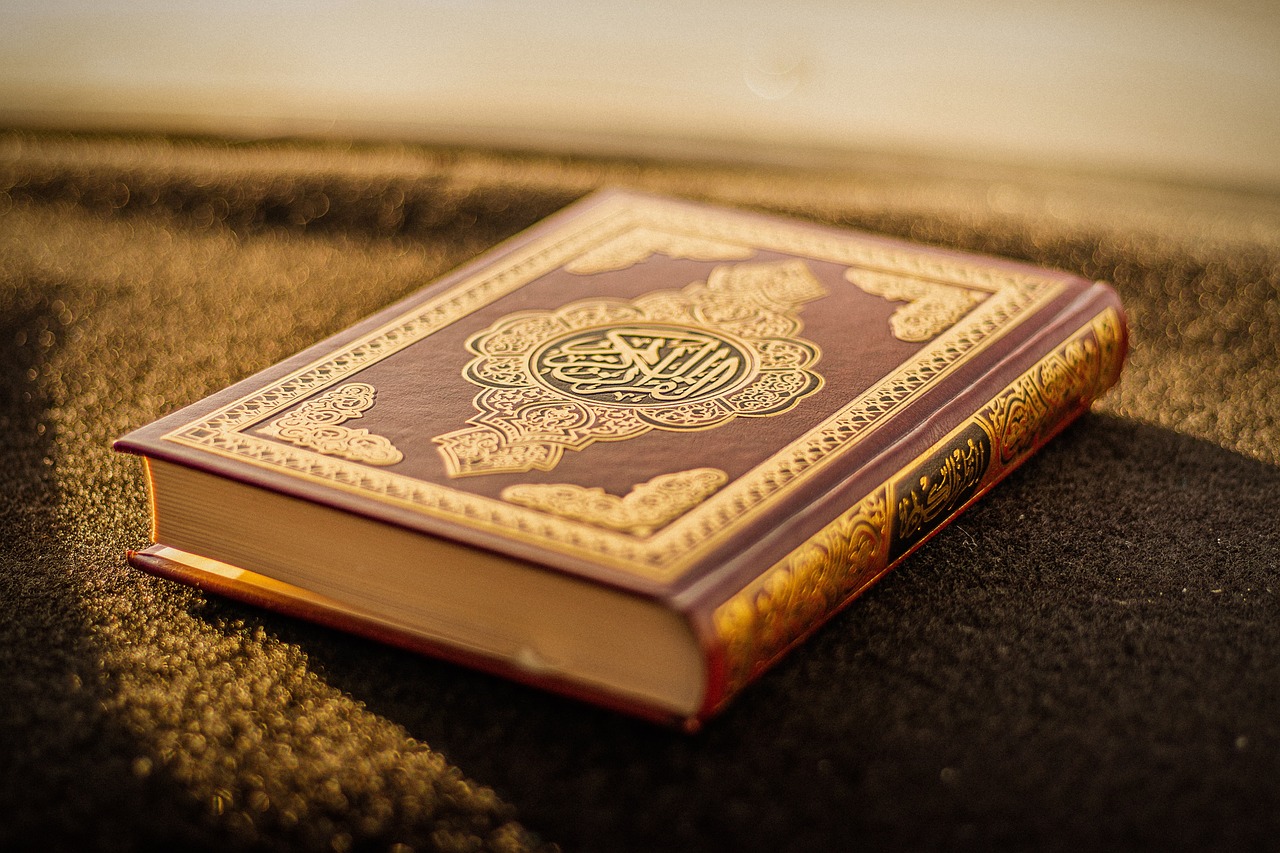
The Qur'an represents Islam's central sacred text. Muslims believe it contains the literal word of Allah, revealed to Muhammad over a period of 22 years. This lengthy revelation process began when Muhammad was meditating in a cave outside Mecca. During this profound spiritual experience, the Archangel Gabriel appeared to him and began transmitting Allah's message.
Important
From the Muslim perspective, Muhammad did not write or compose the Qur'an himself. Instead, he served purely as a receiver and transmitter of divine revelation. This distinction is crucial: Muslims firmly maintain that Allah alone is the author of the Qur'an, with Muhammad acting as his chosen messenger.
The circumstances of revelation shaped the content of different parts of the Qur'an. Scholars identify two main periods of revelation corresponding to key phases in early Islamic history. The Meccan revelations, received while Muhammad lived in Mecca, primarily focus on fundamental theological concepts. These passages emphasise the oneness of Allah and call people to abandon polytheism and accept monotheistic faith. Later, after Muhammad migrated to Medina, the revelations shifted focus. The Medinan passages provide more practical guidance for organising the growing Muslim community, covering topics like prayer, fasting, charity, pilgrimage, legal matters, and social justice. This progression reflects how Islam developed from a persecuted religious movement into an established community with its own social structures.
Literary and cultural significance
The Qur'an holds exceptional importance in Arabic literary history. Before its appearance, Arabian culture expressed itself almost exclusively through poetry. The Qur'an changed this landscape dramatically by introducing the first major work of extended prose written in Classical Arabic. While it contains highly poetic sections, its overall composition represents a unique stylistic innovation for its time.
Note
Muslims view this literary excellence as evidence of the text's divine origin. They argue that an unlettered merchant like Muhammad could not possibly have produced such a sophisticated and unprecedented literary work without divine assistance. For believers, the Qur'an itself constitutes Islam's sole miracle—its linguistic beauty and structural complexity serving as proof of its supernatural source.
Structure and organisation
The Qur'an consists of 114 chapters, each called a sura. These suras follow an unusual organisational pattern: they are arranged roughly from longest to shortest, rather than chronologically or thematically. This means the order in which Muslims read the Qur'an differs from the order in which Muhammad originally received the revelations. Scholars have spent considerable effort attempting to determine the chronological sequence of revelation by analysing the content, style, and historical context of each sura. This non-chronological arrangement can make the Qur'an challenging for new readers to follow, as related topics appear scattered throughout the text rather than grouped together systematically.
Compilation and preservation
The Qur'an as we know it today was compiled approximately 20 years after Muhammad's death, during the rule of the third caliph, Uthman. During Muhammad's lifetime, his companions memorised the revelations and wrote them down on various materials, but no single complete written text existed. After Muhammad died, there was concern that knowledge of the Qur'an might be lost as the original companions who had memorised it began to die.
Note
Caliph Uthman therefore ordered scholars to gather all the written fragments and oral recitations to create one authoritative text. This careful compilation process established a single, standardised version of the Qur'an. Unlike some other religious scriptures, which exist in multiple versions with variations, there is only one universally accepted text of the Qur'an across all Muslim communities worldwide.
Language and translation
Classical Arabic holds special sacred status for Muslims because the Qur'an was revealed in this language. Muslims maintain that the Qur'an is only truly the Qur'an when written and recited in Classical Arabic.
Important
Translations into other languages, while useful for understanding, are considered interpretations rather than the actual Qur'an itself. This belief stems from the conviction that every word, sound, and rhythm of the Arabic text carries divine meaning that cannot be perfectly captured in another language. The nuances, multiple meanings, and poetic qualities of the original Arabic would inevitably be lost or altered in translation.
As a result, Muslims worldwide, regardless of their native language, learn to recite the Qur'an in Classical Arabic. For centuries, memorising the entire Qur'an in Arabic formed the foundation of traditional Islamic education. Many Muslims can recite lengthy passages or even the complete text in Arabic, though they may not understand the Arabic language fully. These individuals typically study translations or commentaries in their own language to grasp the meaning while continuing to recite in Arabic for worship purposes.
Treatment and respect
The physical Qur'an receives extraordinary reverence from Muslims. This sacred text must be handled with the utmost respect at all times. Muslims follow specific practices to honour the book:
- They often wrap the Qur'an in cloth to protect it from damage and keep it clean
- When placing the Qur'an in a bookcase or on a shelf, Muslims always position it on the highest level, ensuring no other books sit above it
- Muslims will only touch the Qur'an after performing ablution—a ritual washing that achieves a state of physical and spiritual purity
- During the month of Ramadan, the annual period of fasting, Muslims make special efforts to read the Qur'an
- Many Muslims aim to read the entire text during this blessed month, with portions recited each evening
- Short passages from the Qur'an must also be recited during the five daily prayers
This practice symbolically acknowledges the Qur'an's supreme status among all written texts and reinforces the sacred nature of engaging with Allah's word.
Religious authority
The Qur'an functions as the ultimate source of religious authority in Islam. When Muslims face questions about belief, law, or practice, they turn first to the Qur'an for guidance. The text addresses fundamental theological concepts, ethical principles, legal matters, and spiritual practices.
Important
The Qur'an's authority is absolute and unquestionable from a traditional Muslim perspective. All other sources of Islamic knowledge and law must align with the Qur'an's teachings. If any contradiction appears between the Qur'an and another source, the Qur'an always takes precedence.
This supreme status means that mastery of the Qur'an's contents forms an essential foundation for Islamic scholarship and religious leadership.
The Hadith
Definition and purpose
While the Qur'an provides Islam's foundation, it does not address every situation Muslims might encounter. This is where the Hadith becomes crucial. The term "Hadith" refers to collections of narrations describing the Prophet Muhammad's words, actions, and tacit approvals. These reports preserve how Muhammad lived, what he said, how he made decisions, and how he responded to various circumstances.
Note
Since Muslims believe Muhammad was a prophet guided directly by Allah and lived a sinless life, his example provides a practical model for how to live as a Muslim. The Hadith serves to supplement and clarify the Qur'an.
When an issue arises that the Qur'an does not explicitly address, Muslims examine the Hadith to see if Muhammad dealt with a similar situation. This collection thus became essential for developing Shari'a (Islamic law). The Hadith covers an extraordinarily wide range of topics—from detailed instructions about performing daily prayers, to Muhammad's judgements in criminal cases when he governed Medina, to his advice on personal relationships and business dealings. Together, the Qur'an and Hadith provide Muslims with comprehensive guidance for every aspect of life.
Compilation and authentication
Unlike the Qur'an, which was compiled shortly after Muhammad's death, the Hadith collections took much longer to assemble. Muhammad's companions and early Muslims certainly transmitted his sayings and described his actions from the beginning. However, major written Hadith collections did not appear until 100 to 150 years after the Prophet's death. This significant time gap created concerns about authenticity and accuracy.
Important
To address these concerns, Muslim scholars developed sophisticated methods for verifying Hadith reliability. They traced the chain of transmission (isnad) for each hadith, documenting who reported it to whom, going back to the original companion of Muhammad who witnessed the event or heard the statement. Scholars investigated the character, memory, and reliability of each person in this chain.
They developed classifications to indicate how trustworthy a particular hadith was, ranging from "authentic" to "weak" or even "fabricated." This rigorous authentication process represents one of the earliest examples of historical critical methodology.
Different collections
Not all Hadith collections carry equal authority. Many individual scholars compiled their own collections, applying different authentication standards and including different reports. Generally, Sunni Muslims and Shi'a Muslims recognise different Hadith collections as most authoritative. Sunni Muslims particularly value certain collections that underwent especially rigorous authentication. The varying reliability of different collections means Muslim scholars must carefully evaluate sources when using Hadith to make legal or theological arguments.
Religious authority
After the Qur'an, the Hadith represents the second most important religious authority in Islam. When the Qur'an does not provide explicit guidance on a matter, Muslims consult the Hadith. Islamic legal scholars rely heavily on these collections when developing rulings on contemporary issues. The Hadith thus plays an indispensable role in translating Islam's core principles into practical guidance for Muslims navigating the complexities of daily life across different times and cultures.
Qur'anic extracts demonstrating principal beliefs
The Qur'an contains numerous passages that articulate Islam's fundamental theological concepts. These verses provide the scriptural foundation for core Islamic beliefs and shape how Muslims understand their faith.
Tawhid (oneness of God)
The absolute oneness of Allah represents Islam's most fundamental doctrine. The Qur'an repeatedly emphasises this monotheistic principle, which Muslims call tawhid.
Example
Qur'anic Declaration of Divine Oneness
One particularly important verse states: "Allah! There is no God but He – the Living, the Self-subsisting, Eternal" (Qur'an 3:2).
This declaration captures several key aspects of Islamic monotheism:
- Only one God exists
- This God is eternally alive and active
- This God depends on nothing else for existence
- This God exists beyond time
These attributes distinguish the Islamic understanding of God from polytheistic beliefs and from Christian Trinitarian theology, which Muslims believe compromises divine oneness.
Angels
Angels occupy an important place in Islamic theology. Muslims believe these spiritual beings exist to serve and worship Allah continually. The Qur'an describes their nature: "They celebrate His praises night and day, nor do they slacken" (Qur'an 21:20). This verse emphasises that angels possess no free will and never tire in their worship. They exist in a state of perfect submission to Allah's will. The most important angel in Islamic belief is Gabriel (Jibril), who served as the intermediary between Allah and Muhammad, delivering the Qur'anic revelation.
Books of Allah
Muslims believe Allah has sent revelations to humanity throughout history, not only through Muhammad but through earlier prophets as well. The Qur'an itself makes clear that it represents a unique divine communication: "This Qur'an is not such as can be produced by other than Allah" (Qur'an 10:37). This verse asserts the Qur'an's supernatural origin and its inimitable nature.
Note
Muslims believe that while previous scriptures given to other prophets were genuine divine revelations, they became corrupted over time through human alteration. The Qur'an, by contrast, has been perfectly preserved and represents Allah's final, complete, and uncorrupted message to humanity.
Rusul (prophets)
Islam teaches that Allah has sent prophets to every human community throughout history to call people to monotheistic worship. The Qur'an states: "We (Allah) sent into every nation a messenger saying 'Serve Allah and avoid false gods'" (Qur'an 16:36). This verse reflects Islam's inclusive understanding of prophethood. Muslims believe that figures from Jewish and Christian traditions—including Abraham, Moses, and Jesus—were genuine prophets sent by Allah. Muhammad, however, holds special status as the final prophet, completing the line of messengers and bringing Allah's definitive revelation.
Al-Akhira (life after death)
Muslims believe firmly in life after death and divine judgement. The Qur'an explains the purpose behind mortality: "He created death and life that He may try you according to which of you is best in works" (Qur'an 67:2).
Note
This verse presents earthly existence as a test. Death and the possibility of life are not punishments but rather opportunities—humans live knowing they will die so that they can choose to do good works and earn paradise. This belief in ultimate accountability shapes Muslim ethical behaviour, as believers understand their actions have eternal consequences.
Fate and predestination
The relationship between divine omniscience and human free will represents a complex theological question in Islam. The Qur'an affirms Allah's complete knowledge: "Know you not that Allah knows all that is in Heaven and on the earth" (Qur'an 22:70). This verse establishes Allah's comprehensive awareness of everything that occurs. Muslims balance this belief in divine knowledge and power with the conviction that humans possess genuine free will and bear responsibility for their choices. The phrase "Insha Allah" (if Allah wills) that Muslims commonly use acknowledges Allah's ultimate control while recognising human agency.
Ethical and moral guidance
The Qur'an provides extensive ethical instruction alongside its theological teachings. Sura 49 offers particularly rich examples of Islamic moral values.
Example
Ethical Teachings from Sura 49
The chapter addresses believers directly, calling them to act with proper intentions:
On Humility: "O Ye who believe! Put not yourselves forward before Allah and His Apostle; but fear Allah: for Allah is He Who hears and knows all things" (Qur'an 49:1). This verse counsels humility before divine authority and cautions against presumption.
On Patience: "If only they had patience until thou couldst come out to them, it would be best for them: but Allah is Oft-Forgiving, Most Merciful" (Qur'an 49:5). Islam repeatedly stresses patience, particularly when facing difficulties or provocations, viewing it as a sign of spiritual maturity.
On Unity: "The Believers are but a single Brotherhood: So make peace and reconciliation between your two [contending] brothers; and fear Allah, that ye may receive Mercy" (Qur'an 49:10). This verse presents the Muslim community as a family whose members must work to resolve conflicts peacefully.
On Social Behaviour: "O ye who believe! Avoid suspicion as much [as possible]: for suspicion in some cases is a sin: And spy not on each other behind their backs" (Qur'an 49:12). This verse prohibits gossip, suspicion, and spying on others—actions that damage community trust and harmony. The comparison to eating dead flesh emphasises how repugnant such behaviour should be to Muslims.
Summary
Key Points to Remember:
-
The Qur'an is Islam's central sacred text, revealed to Muhammad over 22 years through Archangel Gabriel, compiled under Caliph Uthman, and considered the word of Allah only in Classical Arabic
-
The Qur'an contains 114 suras arranged from longest to shortest, must be treated with utmost respect, and serves as the ultimate religious authority in Islam
-
The Hadith are collections of Muhammad's words and actions compiled 100-150 years after his death, underwent rigorous authentication processes, and serve as the second most important religious authority after the Qur'an
-
Qur'anic verses provide scriptural foundation for Islam's core beliefs including tawhid (oneness of God), angels, prophets, life after death, divine knowledge, and ethical conduct
Essential Terminology:
- Qur'an: Central Muslim text containing Allah's revelation
- Hadith: Narrations of Muhammad's words and deeds
- Suras: Chapters of the Qur'an
- Shari'a: Islamic law and moral code
- Fiqh: Islamic jurisprudence and legal interpretation
- Tawhid: Oneness of God
- Qiyas: Reasoning by analogy in Islamic law
- Ijma: Consensus of the community