Sacred Texts and Writings (HSC SSCE Studies of Religion): Revision Notes
📚Revision Notes
Sacred Texts and Writings
Introduction to Jewish sacred texts
Judaism has several writings considered sacred, including the Tanakh (Hebrew Bible), interpretative texts such as the Midrash, Mishnah and Talmud, and later legal codes like the Mishneh Torah written by Moses Maimonides. This note focuses primarily on the Tanakh and the Talmud, which are the foundational texts of Jewish religious life and practice.
The Hebrew Bible: the Tanakh
Structure and meaning
The Hebrew Bible is known as the Tanakh, a word formed as an acronym from the initial letters of its three main sections. Understanding this structure is essential for grasping how Jewish scripture is organised and understood.
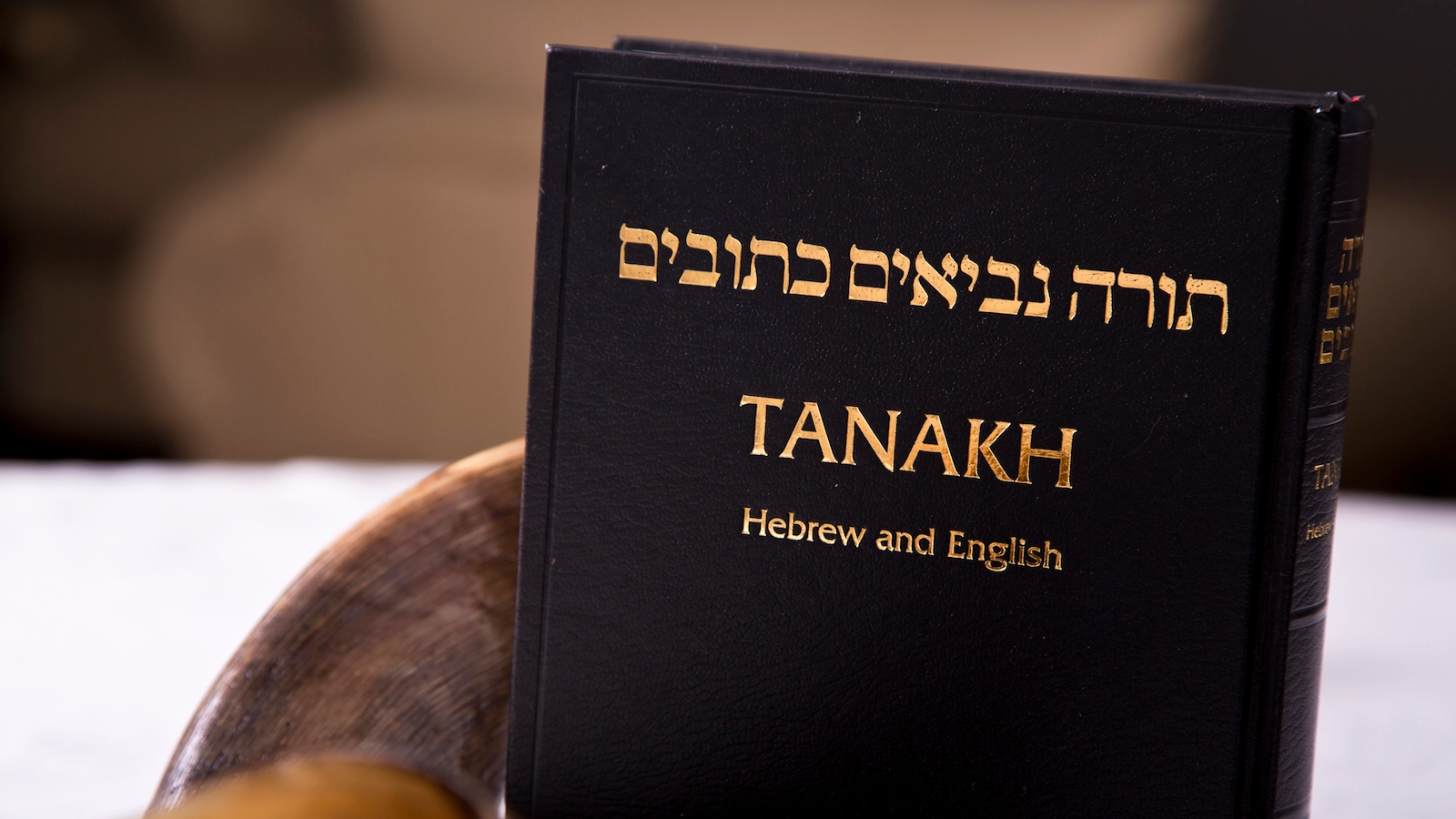
The three sections are:
Torah (Law) – This comprises the first five books of the Bible, also called the Pentateuch (from the Greek meaning "five scrolls"). These books cover the period from creation through to Moses and contain the foundational laws and narratives of Judaism.
Nevi'im (Prophets) – This section contains the writings of individuals called by God to serve as His spokespeople. Prophets played a crucial role in maintaining the relationship between God and the Jewish people, particularly during times of crisis or moral decline.
Ketuvim (Writings) – These are collected writings comprising various literary genres that were formally recognised as scripture (canonised) in the second century CE.
Note
Understanding the Acronym
The word TaNaKh is formed from the first letters of its three sections:
- Torah (Law)
- Nevi'im (Prophets)
- Ketuvim (Writings)
Tanakh can be spelled in several ways (Tanakh, Tanach, Tanak, Tenach) and may be pronounced differently depending on the tradition.
Language and its significance
The Tanakh consists of 24 books written predominantly in Hebrew, with a small section in Aramaic. Maintaining the original Hebrew text has profound significance within Judaism. This is not merely for historical accuracy but because Hebrew itself is regarded as a divine language – the language through which God communicated His will to humanity.
The tradition of interpretation
Jewish reading of scripture is inseparable from interpretation. Rabbinic literature speaks of "70 faces of Torah", reflecting the belief that each word or phrase in the text has at least 70 valid interpretations. This rich interpretative tradition recognises that sacred texts contain multiple layers of meaning that can be uncovered through careful study and discussion.
Translation has been part of this interpretative process since the time of the Second Temple. The earliest translations were into Aramaic, which was the spoken language of Jewish people at that time. These Aramaic translations represent the earliest Jewish commentaries on the Torah, as the act of translation inevitably involved interpretation and explanation.
Note
The Septuagint: A Historic Translation
A particularly significant translation is the Septuagint, which rendered the Tanakh into Greek sometime between the third and first centuries BCE. The Septuagint (often represented by the Roman numeral LXX) became important not only for Greek-speaking Jewish communities but also for early Christianity.
Authorship: traditional and critical views
Traditional Jewish and Christian views maintain that the Hebrew Bible accurately presents historical events written in the order they occurred, often soon after the events themselves. According to this perspective, the Torah was revealed directly by God to Moses, making it divinely authored.
However, during the nineteenth century, Christian theologians developed what became known as the Documentary Hypothesis. By analysing vocabulary styles, subject matter and word usage, scholars identified several distinct voices or writing styles within the Hebrew scriptures. This hypothesis suggests that the Torah emerged from four or more independent texts that were edited together at various times to form the Tanakh we know today.
Note
The Documentary Hypothesis: Multiple Sources
The main sources identified include:
-
The Yahwehist source (Y) – This writer predominantly uses the divine name YHWH when referring to God. Scholars suggest this source was written around 950 BCE in the Kingdom of Judah.
-
The Elohist source (E) – Written approximately 850 BCE, this source uses "Elohim" as the name for God.
-
The Deuteronomist source (D) – Possibly composed around 600 BCE, this voice is found mainly in the Book of Deuteronomy.
-
The Priestly source (P) – Composed around 500 BCE when Jewish people had already experienced exile in Babylon, this source reflects priestly concerns and perspectives.
-
Editorial voices (R for Redactor) – Various editors worked to join these sources into a more complete and cohesive narrative.
Though this remains primarily a hypothesis, it helps explain why certain parts of the Tanakh have different emphases and writing styles. It also suggests the possibility that sections such as Genesis, which shares similarities with Mesopotamian creation stories, were added later as the text developed. While the Documentary Hypothesis originated in Christian biblical criticism, many Jewish scholars now accept it, though it has no bearing on religious practice or the sacred status of the texts.
The prophetic vision
The role of prophets
The second section of the Tanakh, Nevi'im, focuses on prophets, though prophetic activity was not limited to the figures mentioned in this section. A prophet is defined as someone who passes God's message to the rest of the community, acting as an intermediary between the divine and human realms.
Prophets were called by God to speak on His behalf, particularly during times when religious observance was being neglected or when crisis threatened the Jewish community. Prophecy was not a hereditary role that passed from parent to child; rather, it was a gift bestowed upon certain individuals chosen by God. The primary function of prophets was to maintain the relationship between God and the Jewish people, sustaining the community with faith and wise counsel during challenging times.
Important
The True Function of Prophets
It is important to understand that predicting the future was not the main function of prophets. Instead, they interpreted current events in light of God's will and called people back to faithful observance of the Covenant.
Prophets in Jewish tradition
Judaism acknowledges that many prophets existed whose lives and teachings were not recorded in scripture. The scriptures preserve the wisdom of 55 prophets of Israel, seven of whom were women. This number does not include the thousands of prophets recorded as living during the time of Elijah (mentioned in 1 Kings), nor does it include prophets who were not Israelite, though Jewish tradition accepts that they too existed.
Some of the most significant prophets include Abraham, Sarah, Isaac, Jacob, Moses (regarded as the greatest of all prophets), Aaron, Miriam, King David, and King Solomon. These figures appear in the early books of the Tanakh. Later prophets from the eighth century BCE onwards – including Amos, Isaiah, Micah, Jeremiah and many others – played crucial roles during the period leading up to the Babylonian exile.
Warning against false prophets
Jewish scripture shows awareness of the danger posed by false prophets. In Deuteronomy 18:18-20, God warns against those who might presumptuously claim to speak in His name without true divine calling. This passage emphasises that false prophets – those who speak without God's command or who speak in the name of other gods – face severe consequences.
Prophets and the Covenant
The most significant aspect of prophetic messages was the maintenance and protection of the Covenant between God and Israel. During the final days before the Babylonian exile, prophets such as Amos, Isaiah, Micah, Jeremiah and others reminded the people that they had broken the Covenant and abandoned social justice. They specifically condemned the mistreatment of foreigners, widows and orphans – acts that violated the Covenant's requirements (see Isaiah 1:17-23, Jeremiah 22:3, Ezekiel 22:7, and Zechariah 7:10).
Note
Prophets and Social Justice
This connection between prophetic teaching and ethics demonstrates why the prophetic vision is central to both the sacred texts and the ethical teachings of Judaism. As divinely inspired spokespersons for God, the prophets' messages form an essential part of the Tanakh, reminding the Jewish people of their obligations to both God and their fellow human beings.
The Talmud
Structure and composition
The Talmud is essentially a collection of discussions and comments by rabbis on the Tanakh, covering laws, customs and ethical teachings. It was completed between 500 and 600 CE and represents centuries of Jewish scholarly debate and interpretation.
The Talmud consists of two main parts:
The Mishnah – This is an edited selection of rabbinic discourse that occurred during the period of the Second Temple. It was redacted (compiled and edited) by approximately 200 CE. The Mishnah preserves oral traditions and legal discussions that had been passed down through generations.
The Gemara – This component provides commentary on and extension of the Mishnah. The Gemara represents further rabbinic discussion and analysis of the laws and teachings found in the Mishnah.
Two versions: Jerusalem and Babylonian
There are two versions of the Talmud, each reflecting the scholarly activity of different Jewish communities:
The Jerusalem Talmud was completed somewhat earlier than its Babylonian counterpart, probably before 425 CE when Emperor Theodosius took firmer control of religion across the Roman Empire. Despite its name, this Talmud likely originated from the region around the Jewish intellectual centres of Tiberias, Sepphoris and Caesarea in northern Israel. It is written in an Aramaic dialect, and there remains considerable scholarly debate about its exact dating.
The Babylonian Talmud is considered the most authoritative version. Its history is less certain than that of the Jerusalem Talmud. Tradition attributes its beginnings to the Jewish community in Babylon, but the text underwent more than 300 years of editing and reformation before reaching its final form.
Important
The Talmud's Central Role
The Talmud serves as the key text that defines Judaism as it developed after the destruction of the Second Temple. It was written during the same period that Christianity was evolving as a separate religion. Due to this "parting of the ways" between Judaism and Christianity, the Talmud did not become part of Christian sacred texts.
No aspect of Jewish law was developed without reference to the Talmud. It functions as the lens through which Jewish people read and understand the Torah, and it formed the foundation for all subsequent developments of Halacha (the legal code of Judaism based on Torah teachings and their interpretation by rabbinic authorities over the generations).
Extracts demonstrating principal beliefs
God as creator of the universe
The most famous passage describing God's creation of the universe appears in Genesis 1:1-2:3. This account describes the seven days during which God created the world, including heaven and earth, day and night, sea and land, vegetation, animals, and finally man and woman. God's power to create is expressed in Genesis 1:31: "And God saw every thing that He had made, and, behold, it was very good."
A second creation account appears in Genesis 2:7 onwards, which includes the narrative of the Garden of Eden and describes how Eve was created from Adam's rib. While the two accounts are similar, the second provides more detailed information about Adam and Eve and their relationship with God.
God is one: monotheism
The concept of monotheism (belief in one God) is central to Judaism. The clearest statement of this belief appears in Deuteronomy 6:4, which forms the beginning of the Shema, one of Judaism's most important prayers:
Note
The Shema: Judaism's Declaration of Faith
"Hear, O Israel: the Lord our God, the Lord is one."
This statement from Deuteronomy 6:4 is recited daily by observant Jews and represents the foundational declaration of Jewish monotheism.
Judaism is widely acknowledged as one of the first monotheistic religions, though this development occurred gradually. Early passages in the Tanakh suggest that while other gods may exist, the God of Israel is the only one who should be worshipped (Exodus 20:3). By the time of Deuteronomy, the absolute oneness of God had been firmly established.
This monotheism differs from the dualistic religious systems Judaism encountered, such as Zoroastrianism, which featured separate gods of light and darkness representing good and evil. Judaism teaches that there is a single God who is the source of both good and evil. Satan is described as an "accuser" rather than an independent powerful spirit (Job 2:3-6).
God as omnipotent
God's omnipotence (all-powerfulness) is inferred from His creation of the world. A central tenet of Judaism holds that the all-powerful God delivers justice to those who follow His commandments and punishes those who disobey. An example of God's power appears in Exodus 14:26-31, where God parts the Red Sea to save the Israelites from pursuing Egyptian forces. Throughout the Tanakh, God is portrayed as an all-knowing, all-powerful being.
The Covenant: the Ten Commandments
The Ten Commandments, known in Hebrew as Aseret HaDibrot (the Ten Statements), appear twice in the Torah – in Exodus 20:2-14 and Deuteronomy 5:6-21. There are subtle differences between the two versions, with the Deuteronomy account placing greater emphasis on the divine name.
These commandments represent the most succinct expression of divinely inspired moral law. They form the basis for ethical behaviour and provide the legal framework that has influenced Western society as a whole.
Example
The Ten Commandments
The Ten Commandments can be summarised as follows:
- I am the Lord your God. You shall have no other gods before me.
- You shall not make any graven image (idol).
- You shall not take the name of the Lord your God in vain.
- Remember the Sabbath day, to keep it holy.
- Honour your father and your mother.
- You shall not murder.
- You shall not commit adultery.
- You shall not steal.
- You shall not bear false witness against your neighbour.
- You shall not covet your neighbour's house or anything that belongs to your neighbour.
The first four or five commandments concern humanity's relationship with God, while the remaining commandments detail how humans should behave towards one another. This division reflects the dual focus of Jewish ethical teaching: devotion to God and justice towards fellow human beings.
Beyond these ten, Jewish tradition identifies 613 commandments (mitzvot) throughout the Hebrew Bible, though some debate exists about which specific laws constitute the 613. These commandments provide detailed guidance covering every aspect of life, including relationships, agriculture, clothing, diet and ethics. They demonstrate that Judaism offers a comprehensive plan for living, not merely a set of religious rituals.
Summary
Key Points to Remember
-
The Tanakh is the Hebrew Bible, divided into three sections: Torah (Law), Nevi'im (Prophets) and Ketuvim (Writings), comprising 24 books written predominantly in Hebrew.
-
Jewish tradition emphasises interpretation, with "70 faces of Torah" representing the belief in multiple valid meanings. Early translations into Aramaic and Greek (Septuagint) were themselves acts of interpretation.
-
Prophets served as intermediaries between God and the Jewish people, calling them back to the Covenant rather than predicting the future. At least 55 prophets are recorded in scripture, including 7 women.
-
The Talmud, completed 500-600 CE, consists of the Mishnah (rabbinic discourse redacted by 200 CE) and Gemara (commentary on the Mishnah). The Babylonian Talmud is considered most authoritative and serves as the key text defining Judaism.
-
Key passages demonstrate core beliefs: Genesis 1 shows God as creator; Deuteronomy 6:4 (the Shema) affirms God is one; Exodus 14 displays God's power; and the Ten Commandments in Exodus 20 and Deuteronomy 5 establish the foundation of the Covenant and Jewish ethical life.