Indigenous Knowledge of the Australian Ecosystem (VCE SSCE Biology): Revision Notes
📚Revision Notes
Indigenous Knowledge of the Australian Ecosystem
Introduction
Indigenous Australians have developed a deep and sophisticated understanding of the Australian ecosystem over more than 60,000 years. This extensive knowledge has enabled them to survive and thrive in Australia's harsh landscape, making Australian Aboriginal culture the oldest existing human culture on Earth. Their understanding encompasses adaptations of species, interdependencies between organisms, and sustainable land management practices.
Note
The longevity of Indigenous Australian culture is remarkable - over 60,000 years of continuous cultural knowledge transmission represents an unparalleled achievement in human history. This timescale is approximately 12 times longer than recorded Western history.
Indigenous Australian ways of knowing
Indigenous Australian Ways of Knowing is a system of knowledge and beliefs cultivated and preserved by Indigenous Australians. This knowledge system focuses on interconnections and relationships within systems and between nature and people, taking a holistic approach to understanding the world. The term holistic refers to an approach to knowledge that views all things as intimately connected.
This differs from many areas of Western science, which often seek to understand the world by focusing on small parts of a system (such as molecular biology or cell theory). However, both Indigenous Ways of Knowing and Western science have developed through comparable processes.
Important
Holistic vs Reductionist Approaches:
The key difference between Indigenous Ways of Knowing and much of Western science lies in perspective:
- Holistic approach: Views ecosystems as interconnected wholes, focusing on relationships between all components
- Reductionist approach: Studies individual parts in isolation to understand the whole
Both approaches are valuable and can complement each other in developing comprehensive understanding.
How Indigenous knowledge was developed
Indigenous Ways of Knowing have been generated through rigorous processes including:
- Questioning - asking about natural phenomena and their causes
- Observation - carefully watching patterns in nature
- Investigation - exploring relationships and connections
- Experimentation - testing ideas and practices
- Application - using knowledge in practical ways
These processes have been repeated across generations for thousands of years, similar to how Western science has developed. The knowledge generated through these methods has proven highly effective, allowing Indigenous people to survive in Australia for over 60,000 years.
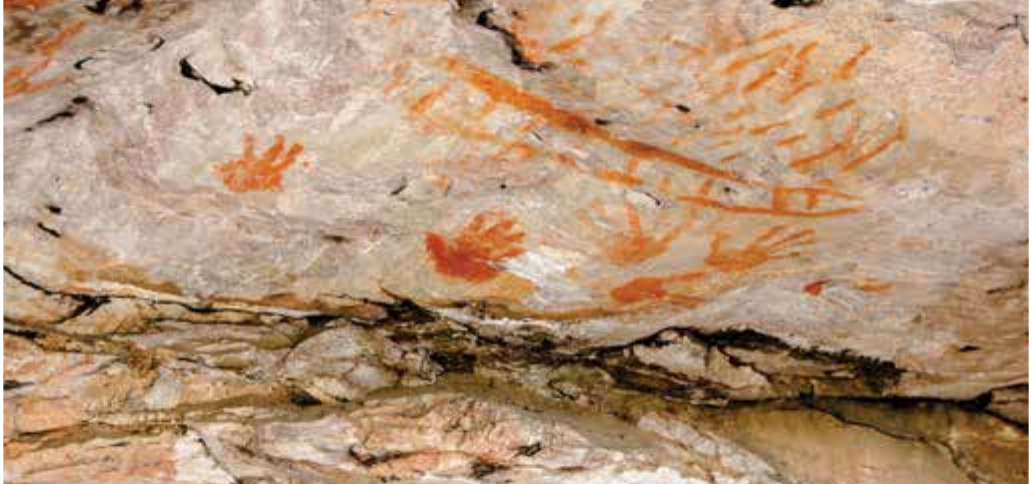
Australian Aboriginal art, such as these rock paintings showing emu tracks and handprints at the Gulgurn Manja Shelter in The Grampians National Park, represents the oldest unbroken form of art in the world. These cultural expressions reflect the depth and continuity of Indigenous knowledge.
Scope of Indigenous ecosystem knowledge
Indigenous Australians possess detailed knowledge of their native ecosystems covering:
- Natural cycles and seasons
- Climate patterns and changes
- Adaptations of different species to their environments
- Interdependencies between different species
- Sustainable resource utilization
This knowledge has been used to inform economic practices, food gathering, and resource management for millennia.
Indigenous understanding of adaptations
The concept of Country
Country is an area that is traditionally owned and looked after by an Aboriginal language group or community, or by certain people within that group. However, the term indicates more than simply a geographical area. It is also a concept that encompasses the spiritual meaning and feelings of deep connection and attachment associated with that area.
Important
Understanding Country:
Country represents three interconnected dimensions:
- Physical: The place itself and all the animals, plants, and people that live there
- Temporal: Past, present, and future connections to the land
- Spiritual: Deep spiritual meaning and connections for communities and individuals
For Indigenous people, Country is a living entity. Well-managed Country is considered 'healthy Country', while poorly managed Country is 'sick' and needs human intervention to restore it to good health.
Cultural fire management
One of the most significant ways Indigenous Australians have contributed to understanding Australian ecosystems is through their use of fire to maintain Country. This practice demonstrates a sophisticated understanding of plant adaptations to fire.
Historical context
When Indigenous Australian people first arrived in Australia over 60,000 years ago, the continent was already experiencing environmental changes:
- Rainfall was decreasing
- Temperatures were increasing
- Vegetation was transitioning from rainforest and grassland towards more arid and semi-arid woodlands and forests
In this increasingly fire-prone environment, pyrophilic plant species came to dominate. The term pyrophilic refers to a plant for which fire is a necessary part of its life cycle.
Plant adaptations to fire
Wild bushfires occurred frequently in this drier landscape. As a result, many plants adapted to tolerate fire and heat. Species in the Eucalyptus genus developed several important adaptations:
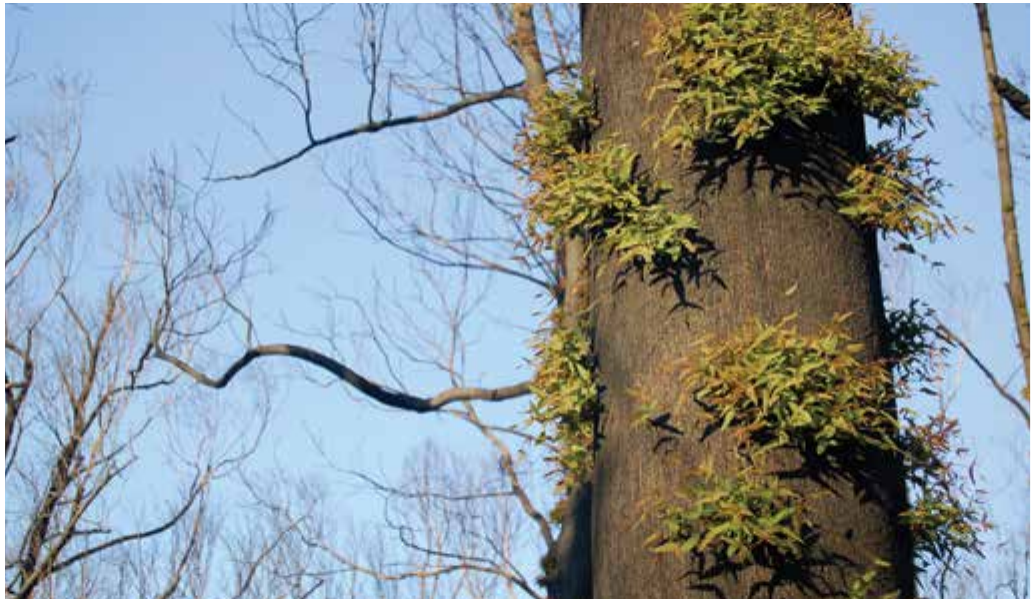
- Production of epicormic shoots after fires (epicormic shoots are fresh growth from a plant that is stimulated to develop after the plant has been damaged)
- Seeds that survive the intense heat generated by bushfires
Example
Worked Example: Epicormic Shoot Regeneration
Epicormic shoots demonstrate a remarkable adaptation to fire:
Step 1: Fire burns through eucalyptus woodland, damaging or destroying leaves and small branches
Step 2: Heat from fire triggers dormant buds beneath the bark to activate
Step 3: Within weeks of the fire, fresh green shoots emerge directly from the trunk and main branches
Step 4: These shoots rapidly develop leaves and begin photosynthesis, allowing the tree to recover
This adaptation means eucalyptus trees can survive fires that would kill most other tree species, making them ideally suited to fire-prone Australian environments.
This image shows epicormic shoots growing on a eucalyptus tree after a bushfire, demonstrating the plant's remarkable ability to regenerate following fire damage.
How Indigenous people used fire
To live successfully in this arid environment, Aboriginal Australians had to understand these fire-related adaptations and learn how to use fire strategically. They utilized fire in various ways:
- Clearing shrubs from grasslands and woodlands
- Promoting growth of various plant species
- Breaking up Country to reduce the intensity and extent of wildfires (creating fire breaks)
Note
Benefits of Preserving Tree Canopy:
Cultural burning preserved the tree canopy, which provides multiple benefits:
- Provides shade and food for animals
- Offers protection that animals can use to escape from fire below
- Reduces carbon emissions (tree canopies release large amounts of carbon when burned)
Benefits of cultural burning
Plants stimulated to grow by fire served as food for both grazing animals and Indigenous Australians. Many useful plants grew as a result of this practice.

Arthropodium milleflorum (Vanilla Lily) is one example of a plant that produces edible tubers and benefits from fire management practices.
When planning burns, Indigenous Australians would:
- Burn in small patches
- Leave other areas to regenerate for cover
- Provide safe areas for people and animals during burning
These controlled burnings produced several beneficial effects:
- Stimulated various seeds in the soil to sprout
- Removed shrubs and old, woody plants that interfered with growth of plants eaten by animals
- Created space for new growth (some woody plants cease flowering after 12 years, so burning provides space for new, flowering growth)
- Benefited animals such as nectar-eating possums and birds
Cool burns characteristics
While exact fire management practices varied across different regions of Australia, there were common characteristics. Aboriginal managers would walk Country and observe where fire was needed. Signs that might trigger a decision to burn included:
- Presence of long, dry grass
- Large amounts of leaf litter on the ground
- Dead standing shrubs
- Choked and impassable areas
- Fire hazards around camps, paths, and areas of fire-sensitive vegetation like rainforest
The fires created under Aboriginal management were smaller, more frequent, and less damaging than wild bushfires. These fires are often referred to as cool burns.
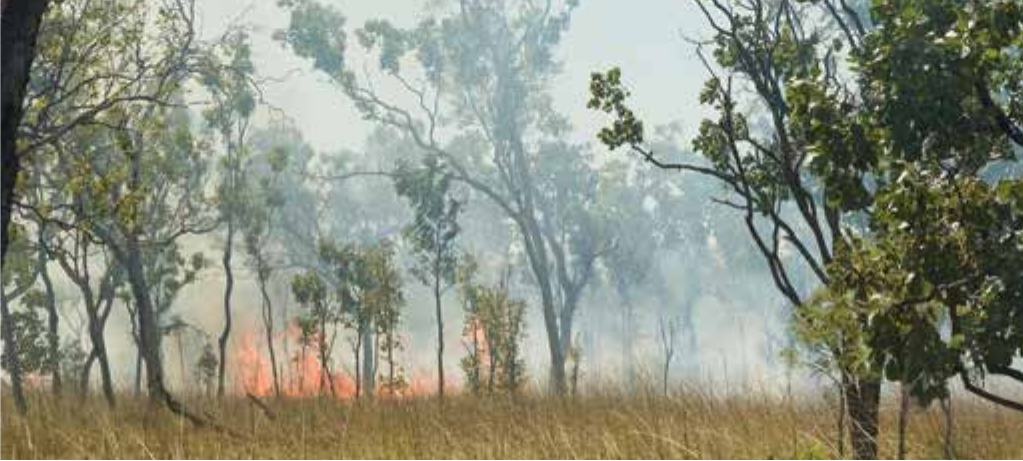
Cultural burning conducted in accordance with Indigenous fire knowledge results in small, controlled fires that reduce the risk of catastrophic bushfires.
Note
Cool Burn Outcomes:
Cool burns resulted in multiple ecosystem benefits:
- Overall reduction in fuel loads in the ecosystem
- Less intense wild bushfires
- Preservation of important ecosystem components such as habitat trees and hollows
- Promotion of local biodiversity
- Creation of a complex patchwork of different vegetation types
This patchwork pattern is called a fire mosaic. The fire mosaic is the pattern created by Indigenous Australian cultural fire management in which some areas of land are burned while others are left to regenerate. This mosaic was significantly more varied than unmanaged landscapes and created an environment that was:
- Safe from uncontrolled, intense bushfires
- Able to support growth of various plants
- Productive for animal food sources
Comparison with modern fire management
Indigenous 'cool burns' contrast significantly with current 'hazard reduction burns' conducted across Australia in preparation for bushfire season. Modern burns are conducted on a large scale and often ignited from helicopters.
| Aspect | Indigenous 'cool burns' | Hazard reduction burns |
|---|---|---|
| Purpose | Fuel reduction, weed control, healing Country, cultural practices, access to Country | Fuel reduction only |
| Burn speed | Slow | Fast |
| Temperature | Low | High |
| Height | Knee-height | Over 1.5 metres |
| Impact on wildlife | Low – speed and intensity allows animals to escape, leaves/seeds/roots/soil intact, animal habitats preserved | High – speed means animals cannot escape, leaves/seeds/roots/soil destroyed, animal habitats burned to ash |
| Time for environment to recover | Short | Long |
Important
Critical Differences in Fire Management:
The table above reveals fundamental differences between traditional and modern approaches:
- Cool burns operate at knee-height with low temperatures, allowing wildlife to escape
- Hazard reduction burns reach over 1.5 metres high with high temperatures, often trapping and killing wildlife
- Cool burns have minimal ecological impact and quick recovery times
- Hazard reduction burns cause significant habitat destruction requiring long recovery periods
These differences highlight why Indigenous fire knowledge is increasingly being recognized as essential for effective bushfire management.
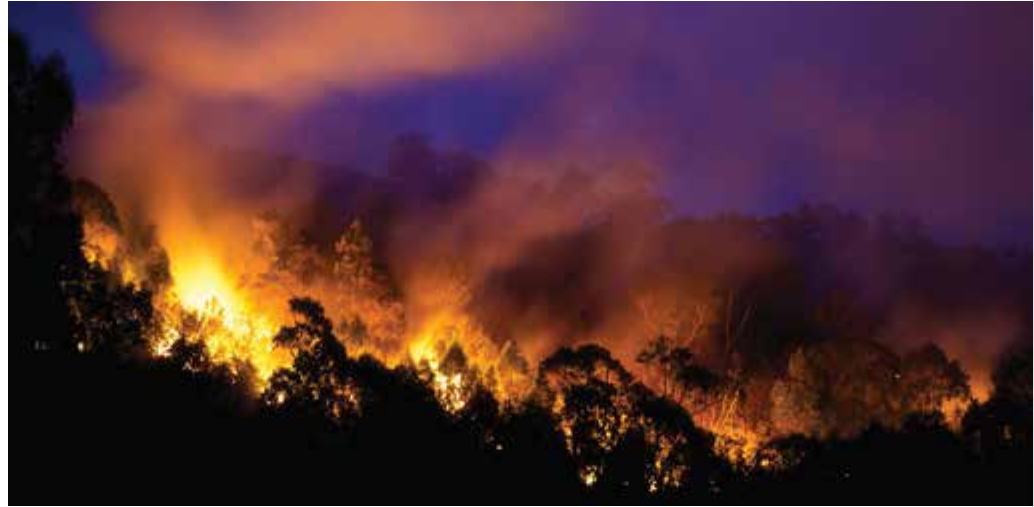
In areas without proper land management, fires can burn uncontrollably at extremely high temperatures, causing significant damage to wildlife both immediately (through the fire itself) and long-term (through habitat destruction).
Cultural and spiritual aspects of fire management
The fire management principles used by Aboriginal people are not merely practical techniques, but also cultural and spiritual practices. Cultural use of fire is a socially and ecologically complex practice, governed by:
- Kinship relationships
- Eldership
- Spiritual connections to Country
- Environmental interactions with fire
Young Indigenous people learn about fire management through:
- Practical instruction and observation
- Dreamtime stories (the set of stories and beliefs of some Indigenous Australians, particularly about the world and its creation)
- Ancestors who demonstrate the proper way to care for Country using fire
- Understanding the dangers and responsibilities of fire management
According to the legends of the Woiwurrung people (who lived on the banks of the Yarra River), Waung the crow was responsible for stealing fire from a woman named Kar-ak-ar-ook and bringing it to humanity.
Modern recognition of Indigenous fire management
In Victoria, there has been a recent push for greater Indigenous involvement in planning and managing bushfire seasons. As Australia experiences longer, more intense bushfire seasons due to climate change, it is becoming increasingly clear that Indigenous fire knowledge is valuable.
In areas of the Northern Territory where Indigenous fire management has been implemented:
- Bushfires have become more easily controlled
- Fewer fires travel large distances
- Less habitat is completely destroyed
The Victorian Traditional Owner Cultural Fire Strategy is an initiative that:
- Acknowledges Aboriginal fire knowledge
- Seeks to include and learn from Aboriginal fire management principles
- Employs Aboriginal cultural burning across the state
- Recognizes that Indigenous fire knowledge can reduce hazardous wildfires, promote biodiversity, and restore cultural values of land
Indigenous understanding of interdependencies
Indigenous Australians have a sophisticated understanding of interdependencies between species within ecosystems. This is clearly demonstrated in their knowledge of the mutualistic relationship between quandong trees and emus.
The emu
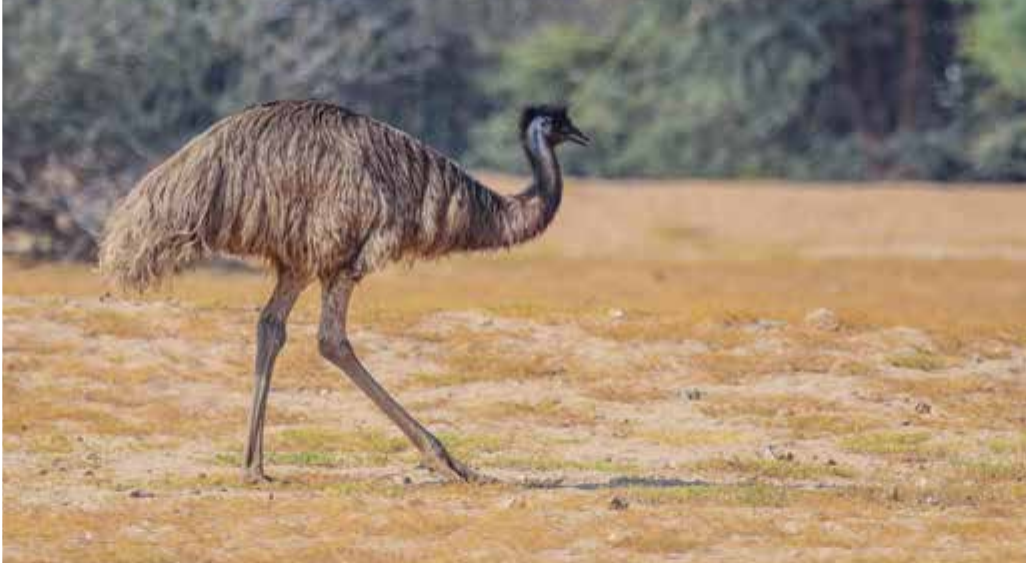
The emu (Dromaius novaehollandiae) is the largest bird in Australia. Emus have several distinctive characteristics:
- Large bodies with tiny wings (flightless)
- Can survive up to two weeks without eating
- Possess calf muscles (the only bird species with this feature)
- Can travel up to 25 kilometres per day
Emus eat a diet primarily consisting of fruit and seed plants. Like many other birds, emus:
- Swallow their food whole
- Process food along their digestive tract
- Use their gizzard (where rocks and grit help break up consumed matter) to digest food
- Excrete digested materials as faeces
The quandong tree
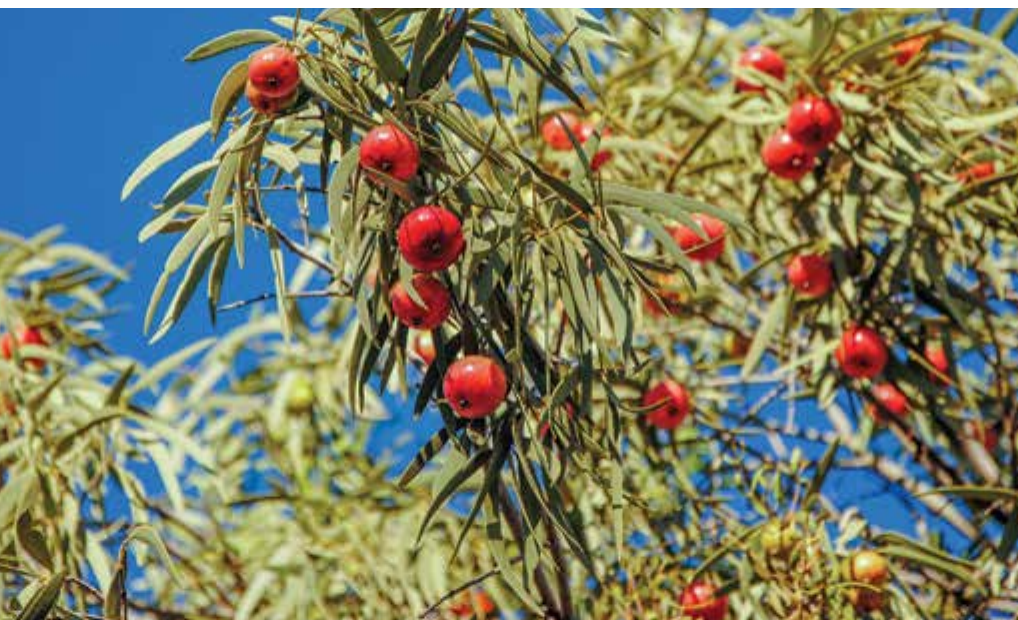
The quandong (Santalum acuminatum) is a species of parasitic tree that grows on the roots of a host plant. The tree has the following characteristics:
- Bears large quantities of fruit throughout spring and summer
- Produces very nutritious flesh containing high amounts of vitamin C and other nutrients
- Has seeds surrounded by a very hard, durable seed coat
- Difficult for seeds to germinate due to the tough coating
- Despite germination challenges, widely distributed through arid and semi-arid Australia (from the Kimberley in Western Australia to the Murray Darling region of Victoria)
The mutualistic relationship
Mutualism refers to interactions between two organisms of different species where both parties experience some overall benefit.
Example
Worked Example: The Emu-Quandong Mutualistic Relationship
This relationship demonstrates how two species can benefit each other through natural processes:
Step 1 - Emu consumes fruit:
- Emu eats the fruit of the quandong tree for nutrition and energy
Step 2 - Seed processing:
- As the seed moves through the emu's digestive tract, the hard seed coating softens
- This softening allows the seed to germinate more easily (the hard coat normally prevents germination)
Step 3 - Seed dispersal:
- Emus excrete the softened seed in their faeces
- The emu droppings provide a source of fertilizer for the young plant
- Because emus travel up to 25 km per day, seeds are dispersed widely
Step 4 - Optimal placement:
- Emu behavior patterns mean quandong seeds are distributed to appropriate habitats
- Seeds are placed in shade, near host trees, and near water sources
Mutual Benefits:
- Emu: Receives nutrition and energy from eating the fruit
- Quandong: Achieves seed softening, seed dispersal, fertilizer for seedlings, and placement in suitable growing locations
Indigenous knowledge and use of the emu-quandong relationship
This relationship between the emu and quandong tree is thoroughly understood by Indigenous Australians. They have used this knowledge in several practical ways:
- Looking for quandong trees where emus reside, particularly near water and shady areas where birds rest
- Recognizing that seeds passing through the emu's digestive system are softened
- Understanding that softened seeds can be more easily cracked and processed for food and oil
Uses of quandong
Indigenous people have utilized quandong in multiple ways:
| Use | Part of plant | Method |
|---|---|---|
| Food | Fruit flesh | Aboriginal people eat the fruit fresh, or roll it into flat sheets or balls which are dried in the sun. This process concentrates sugars and nutrients, resulting in 'fruit leather' that can be stored as emergency food. |
| Food | Kernel | The kernels are full of lipids that can be eaten as energy-rich and nutritious food. |
| Medicine | Leaves and seed oil | Leaves are used by bush medicine practitioners to treat arthritis. Oil from seeds has been used to treat general pain. |
| Fire | Seed oil | The oil is applied to firesticks to aid in starting fires as it is flammable. |
| Increase distribution | Seeds | Aboriginal people have distributed digested quandong seeds in arid areas to ensure future harvests and to attract emus. Emus then eat the fruits, digest the seeds, and continue the cycle of seed softening and dispersal. |
Cultural and economic significance
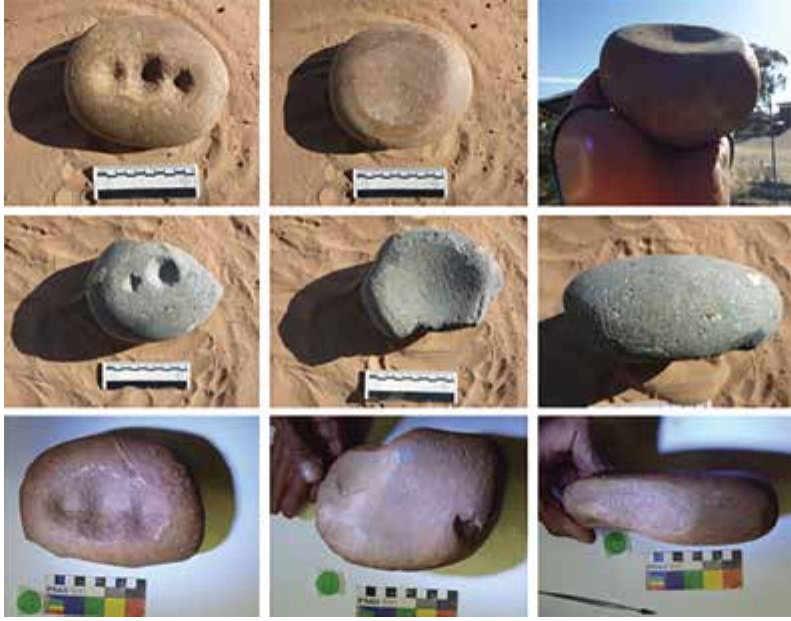
Quandongs have played a central role in the history of Aboriginal Australians in certain regions. In the Riverina area of southern New South Wales (home to language groups including the Yorta Yorta and the Wiradjuri):
- Large assemblages of stone anvils used for cracking seeds have been discovered
- Hard stones are very rare in this region
- This suggests Indigenous people transported stones for many tens of kilometres to areas where quandongs grew
- This demonstrates the significant cultural and economic importance of quandongs
Note
Evidence of Quandong Importance:
The archaeological evidence of stone tools transported over long distances reveals:
- Quandongs were valuable enough to justify carrying heavy stones for tens of kilometres
- This indicates quandongs were not just a minor food source but a central economic resource
- The effort required demonstrates the cultural significance of these trees to Indigenous communities
Intellectual property considerations
Quandongs are now developing significant economic potential as food products. Several important considerations apply:
Important
Respecting Indigenous Intellectual Property Rights:
When discussing the commercial potential of quandongs, it is essential to recognize:
- Aboriginal people have played an important role in establishing the quandong industry
- Indigenous groups hold millennia of knowledge about quandongs
- In Aboriginal culture, plants and animals have cultural importance
- Particular knowledge holders have responsibility to care for specific plants and animals
- Aboriginal knowledge allowed Western science to discover these plants initially (early European explorers accompanied by Aboriginal guides were often given quandong fruit to prevent scurvy)
- It is important to acknowledge the intellectual property rights of Indigenous Australians when discussing the economic potential of quandongs
Remember!
Summary
Key Points to Remember:
-
Indigenous Australian Ways of Knowing represent over 60,000 years of systematic observation, experimentation, and knowledge development, making it the oldest existing human culture on Earth.
-
Cultural fire management through 'cool burns' demonstrates sophisticated understanding of plant adaptations. These small, frequent, low-temperature fires create a fire mosaic that promotes biodiversity, reduces catastrophic wildfire risk, and maintains healthy Country - contrasting sharply with modern large-scale hazard reduction burns.
-
The emu-quandong mutualistic relationship shows Indigenous understanding of interdependencies: emus eat quandong fruit and soften seeds through digestion, while dispersing them with natural fertilizer to suitable habitats. Indigenous Australians have utilized this relationship for food, medicine, and cultivation for millennia.
-
Country is more than just land - it encompasses the physical place, all living things (past, present, and future), and the spiritual connections and cultural responsibilities associated with that area.
-
Indigenous fire knowledge is increasingly recognized as valuable for modern bushfire management, with initiatives like the Victorian Traditional Owner Cultural Fire Strategy incorporating traditional practices to address climate change challenges.