Cells as the Basis of Life (VCE SSCE Biology): Revision Notes
📚Revision Notes
Cells as the Basis of Life
What are living things?
Understanding what makes something 'alive' is fundamental to biology. To be classified as living, an organism must meet specific criteria and be composed of cells.
The eight criteria of life
All living organisms must demonstrate the following eight characteristics. A helpful way to remember these is through the mnemonic MRS GREEN:
Movement - Living organisms can generate their own movement. This includes bacteria swimming through liquid, humans walking, and plants growing towards light sources.
Respiration - All living things extract energy from organic molecules like carbohydrates, fats, and proteins through cellular respiration. This can occur with oxygen (aerobic) or without it (anaerobic).
Sensitivity - Living organisms detect and respond to changes in their environment. For example, plant shoots grow towards light sources in response to light stimulus.
Growth - All living things increase in size and complexity over time. Human development from infancy to adulthood is a clear example of this.
Reproduction - Living organisms can produce offspring. This includes simple cell division in bacteria and complex sexual reproduction in animals.
Equilibrium - Living things maintain homeostasis, keeping their internal environment relatively stable despite external changes. Homeostasis refers to the maintenance of stable internal conditions in the body despite changes outside. This enables organisms to survive fluctuating temperatures and water availability.
Excretion - All organisms produce waste products that must be removed. If wastes like urine or dead cells accumulate, they can become toxic to the organism.
Nutrition - Living things obtain nutrients from their surroundings. These nutrients provide energy, support growth, and help maintain equilibrium. Some organisms consume food to obtain nutrients (heterotrophs), while others manufacture their own nutrients from simple inorganic substances (autotrophs).
Important
Why this matters: bacteria vs viruses
Understanding what defines life helps explain why different pathogens require different treatments.
Bacteria are living organisms that meet all eight criteria - they can respire, consume nutrients, maintain homeostasis, and excrete wastes independently. This is why antibiotics work against bacterial infections.
Viruses, however, are not alive. They cannot independently respire, obtain nutrients, maintain homeostasis, or excrete wastes. They also require host cells to reproduce. This is why antibiotics don't work against viral infections - viruses aren't living organisms and function entirely differently to bacteria.
Cell theory
Beyond meeting the eight criteria for life, all living organisms also follow the principles of cell theory.
Important
The Three Principles of Cell Theory
- All living things are made up of cells
- Cells are the smallest and most basic units of life
- All cells arise from pre-existing cells
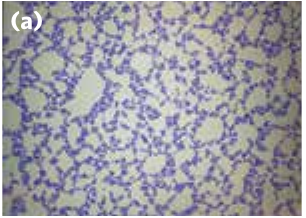
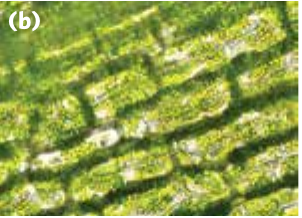
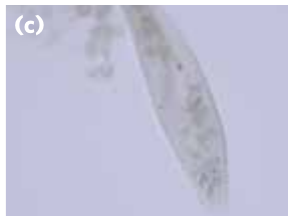
These principles might seem obvious now, but they represent important scientific discoveries. Before the invention of modern microscopes, people didn't understand how cells worked or where they came from.
Note
Historical context: before cell theory
Before cell theory was established, a very different idea dominated scientific thinking. Aristotle's theory of 'spontaneous generation' suggested that organisms could arise randomly from unrelated objects. People believed fleas generated from dust and maggots appeared spontaneously from dead flesh.
This theory persisted for nearly 2,000 years until the 19th century, when scientists demonstrated that maggots only appeared on dead flesh because flies had laid eggs there. This disproved spontaneous generation and confirmed that all cells come from pre-existing cells. Though cell theory seems obvious today, it was a crucial discovery that transformed our understanding of biological systems.
Prokaryotes and eukaryotes
Living organisms can be classified into two major groups based on their cellular structure: prokaryotes and eukaryotes.
Comparing prokaryotic and eukaryotic cells
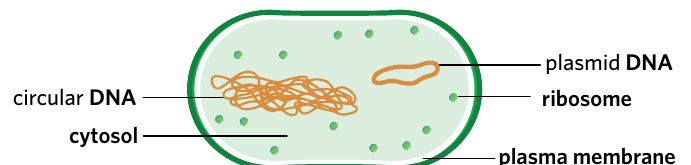
Prokaryotes are single-celled organisms that lack a nucleus and contain a circular loop of DNA. Both bacteria and archaea are prokaryotic.
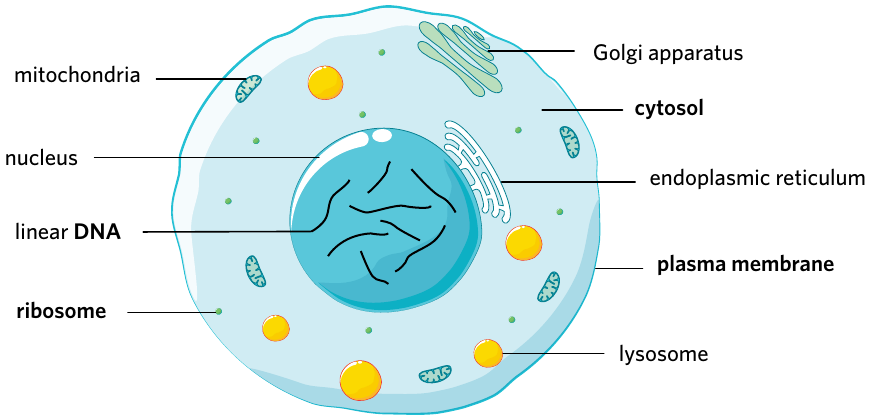
Eukaryotes are organisms (either single-celled or multicellular) that have a nucleus and contain linear strands of DNA. Animals, plants, fungi, and protists are all eukaryotic.
Both prokaryotic and eukaryotic cells contain certain structures:
- Plasma membrane (also called cell membrane) - a phospholipid bilayer with embedded proteins that separates the cell's interior from its exterior environment
- Cytosol - the aqueous fluid surrounding the organelles inside a cell
- Ribosomes - small structures made of RNA and protein where protein synthesis occurs. They either float freely in the cytoplasm or attach to the rough endoplasmic reticulum
- DNA (deoxyribonucleic acid) - a double-stranded nucleic acid chain made of nucleotides that carries the genetic instructions needed for cell and organism survival
However, eukaryotic cells have several features that prokaryotic cells lack:
Membrane-bound organelles - Eukaryotic cells contain many structures enclosed by phospholipid bilayers (membranes). Prokaryotic cells generally lack these, except for vesicles.
DNA organisation - Eukaryotic cells have multiple linear strands of DNA packaged into chromosomes (structures made of protein and nucleic acids that carry genetic information) within a nucleus (a double membrane-bound organelle that protects and confines the cell's DNA). Prokaryotic cells have one circular chromosome plus additional small circular DNA loops called plasmids (small, circular loops of DNA separate from chromosomes, typically found in bacteria). Prokaryotes lack a nucleus.
Cell size - Eukaryotic cells are larger (approximately micrometres) while prokaryotic cells are smaller (approximately micrometres). Note: .
Cell replication - Eukaryotic somatic cells (any cell that isn't a reproductive cell) typically duplicate through mitosis (the cell division process involving complete separation of sister chromatids and nuclei). Eukaryotic germline cells (cells involved in generating gametes) divide into four gametes (reproductive cells containing half the genetic material of somatic cells - in humans, these are sperm and eggs) through meiosis (a specialised form of cell division for producing gametes). Prokaryotic cells replicate through binary fission (the simpler replication method used by prokaryotes).
Domains and kingdoms of life
All living organisms fit into one of three domains: Archaea, Bacteria, and Eukarya.
Archaea and Bacteria are both prokaryotic domains. Eukarya is the eukaryotic domain, which is further divided into four kingdoms to distinguish between different types of organisms: Animalia, Fungi, Plantae, and Protista. Since Archaea and Bacteria are also considered kingdoms, there are six kingdoms of life in total.
The six kingdoms explained
Animalia - Eukaryotic multicellular organisms including coral, worms, insects, fish, and humans.
Archaea - Prokaryotic unicellular organisms including species like Aeropyrum pernix, Thermosphaera aggregans, and Ignisphaera aggregans.
Bacteria - Prokaryotic unicellular organisms including Escherichia coli, Staphylococcus aureus, and Wolbachia species.
Fungi - Eukaryotic organisms that can be unicellular or multicellular, including yeast, moulds, and mushrooms.
Plantae - Eukaryotic multicellular organisms including mosses, ferns, conifers, and flowering plants.
Protista - Eukaryotic organisms that can be unicellular or multicellular, including algae, Toxoplasma gondii, and Plasmodium species.
Summary
Key Points to Remember:
- Living organisms must meet all eight criteria of life: Movement, Respiration, Sensitivity, Growth, Reproduction, Equilibrium, Excretion, and Nutrition (MRS GREEN).
- Cell theory states that all living things are made of cells, cells are the basic units of life, and all cells come from pre-existing cells.
- Prokaryotic cells lack a nucleus and membrane-bound organelles, have circular DNA, are smaller ( μm), and replicate by binary fission.
- Eukaryotic cells have a nucleus and membrane-bound organelles, contain linear DNA in chromosomes, are larger ( μm), and replicate by mitosis or meiosis.
- All life is classified into three domains (Archaea, Bacteria, Eukarya) and six kingdoms (Archaea, Bacteria, Animalia, Fungi, Plantae, Protista).