The Periodic Table (VCE SSCE Chemistry): Revision Notes
📚Revision Notes
The Periodic Table
Introduction
The periodic table is one of the most recognizable tools in modern chemistry. Developed over 150 years ago, it provides a systematic way to organize all known chemical elements and understand their properties.
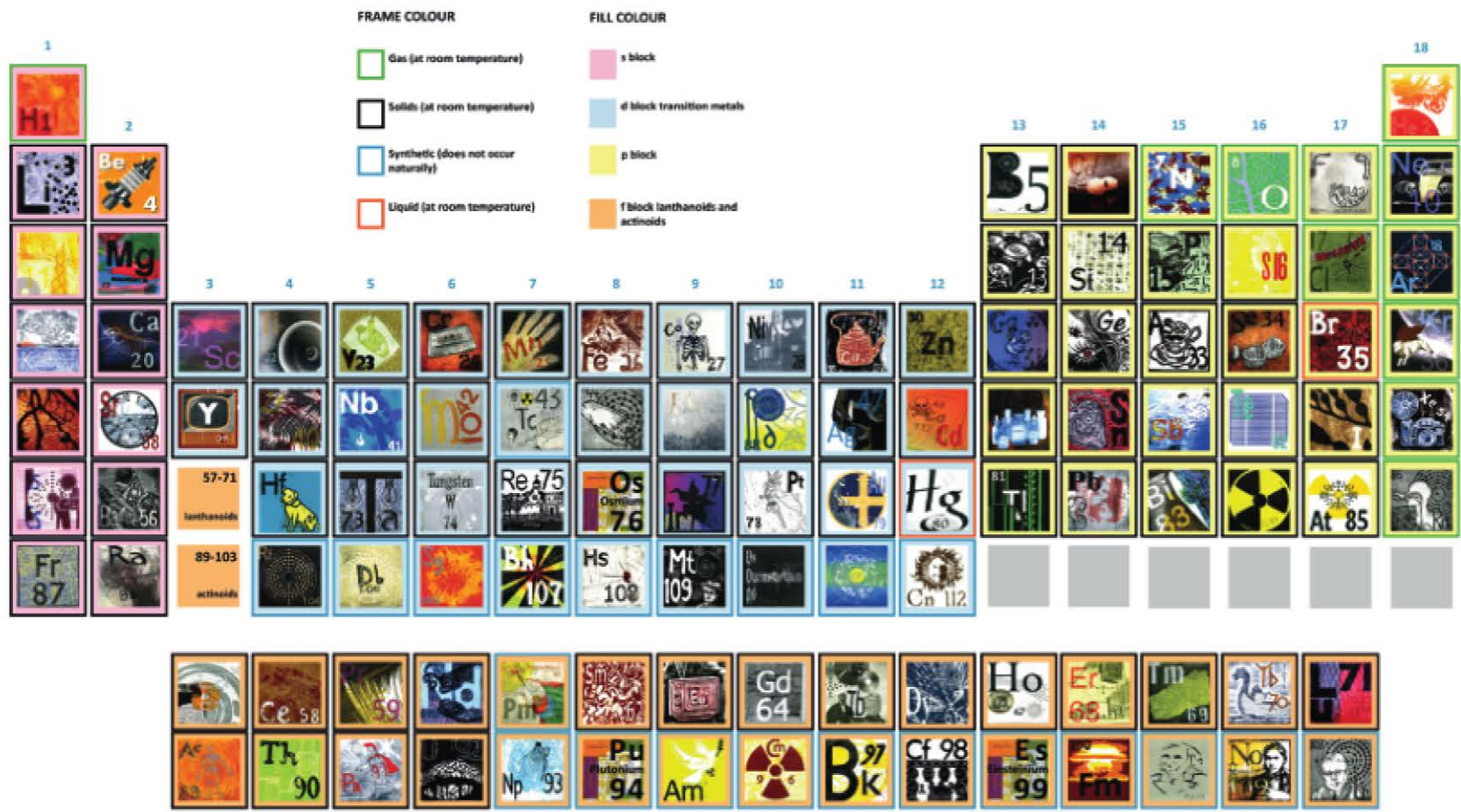
Note
As scientists discovered more elements and developed a better understanding of atomic structure, they needed a way to organize this growing body of knowledge. The periodic table fulfills this need by arranging elements in a logical pattern that reveals important relationships between them.
Historical development
Mendeleev's contribution
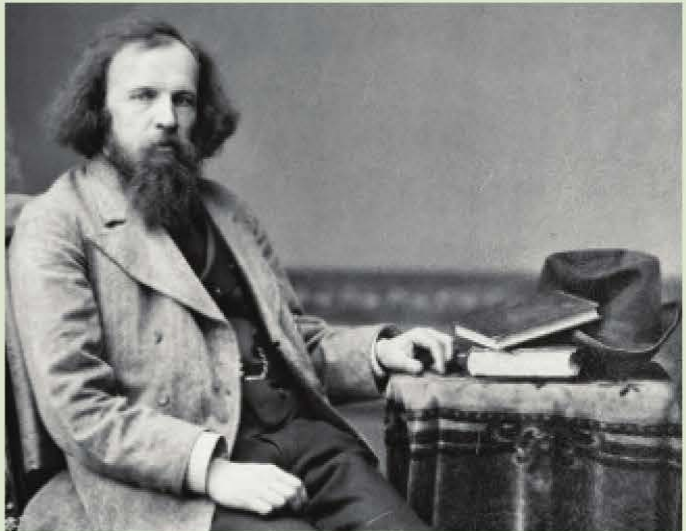
Russian chemist Dimitri Mendeleev developed the first periodic table in 1869. His groundbreaking work was based on the observation that atomic properties seemed to vary in repeating patterns.
The power of prediction
When Mendeleev first proposed his periodic table, he made a bold decision: he left gaps for elements that had not yet been discovered. Even more remarkably, he predicted the properties of these unknown elements.
Initially, the scientific community largely ignored or ridiculed his work. However, when gallium was discovered five years later and its properties matched Mendeleev's predictions almost exactly, the scientific community began to take his periodic table seriously.
Example
The Accuracy of Mendeleev's Predictions
The table shows how accurately Mendeleev predicted the properties of element 31 (which he called 'eka-aluminium'), later discovered as gallium:
- Atomic mass: predicted , actual
- Density: predicted , actual
- Melting point: predicted low, actual
These remarkably close predictions validated Mendeleev's approach and convinced scientists of the periodic table's power.
One remarkable aspect of the periodic table is that it has remained relevant even as our understanding of atomic theory has developed. It was created before protons, neutrons, or electrons were even proposed. Each new development in atomic theory has revealed underlying patterns in the table that Mendeleev could not have known about.
The modern periodic table structure
Today we know that the atomic number (the number of protons) is what makes one element fundamentally different from another. The modern periodic table arranges elements in order of increasing atomic number.
Key features
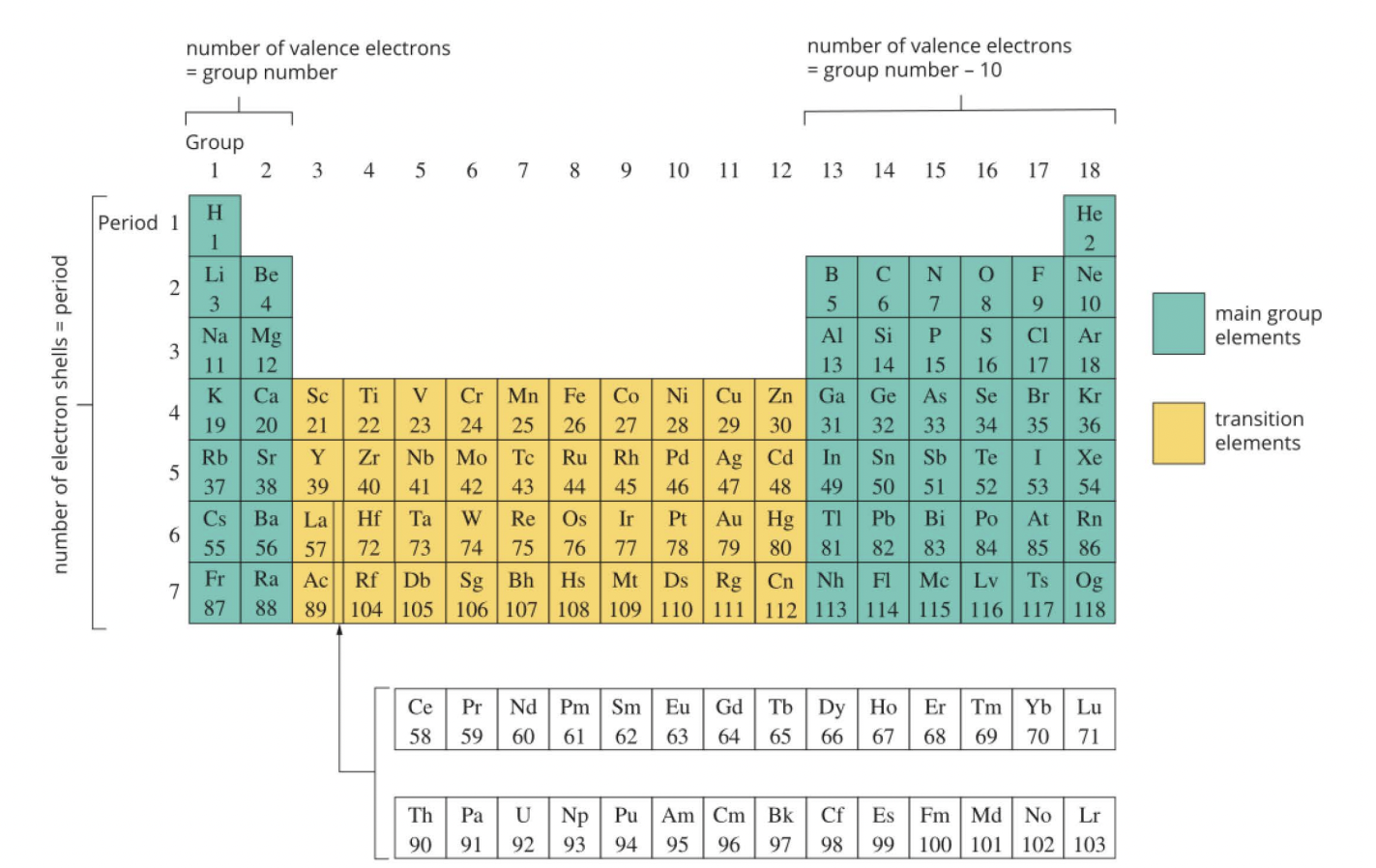
The modern periodic table has several important organizational features:
- Arrangement: Elements are arranged in order of increasing atomic number
- Periods: Horizontal rows numbered 1-7
- Groups: Vertical columns numbered 1-18
- Main group elements: Elements in groups 1, 2, and 13-18
- Transition metals: Elements in groups 3-12
Note
Chemists use the number of electrons in the outer shell (valence electrons) to organize elements into columns. Color-coding is often used to highlight different aspects of the table, making it easier to identify patterns and relationships.
Groups
Elements in the periodic table are arranged into vertical columns called groups. Groups are numbered from 1 to 18.
Valence electrons and groups
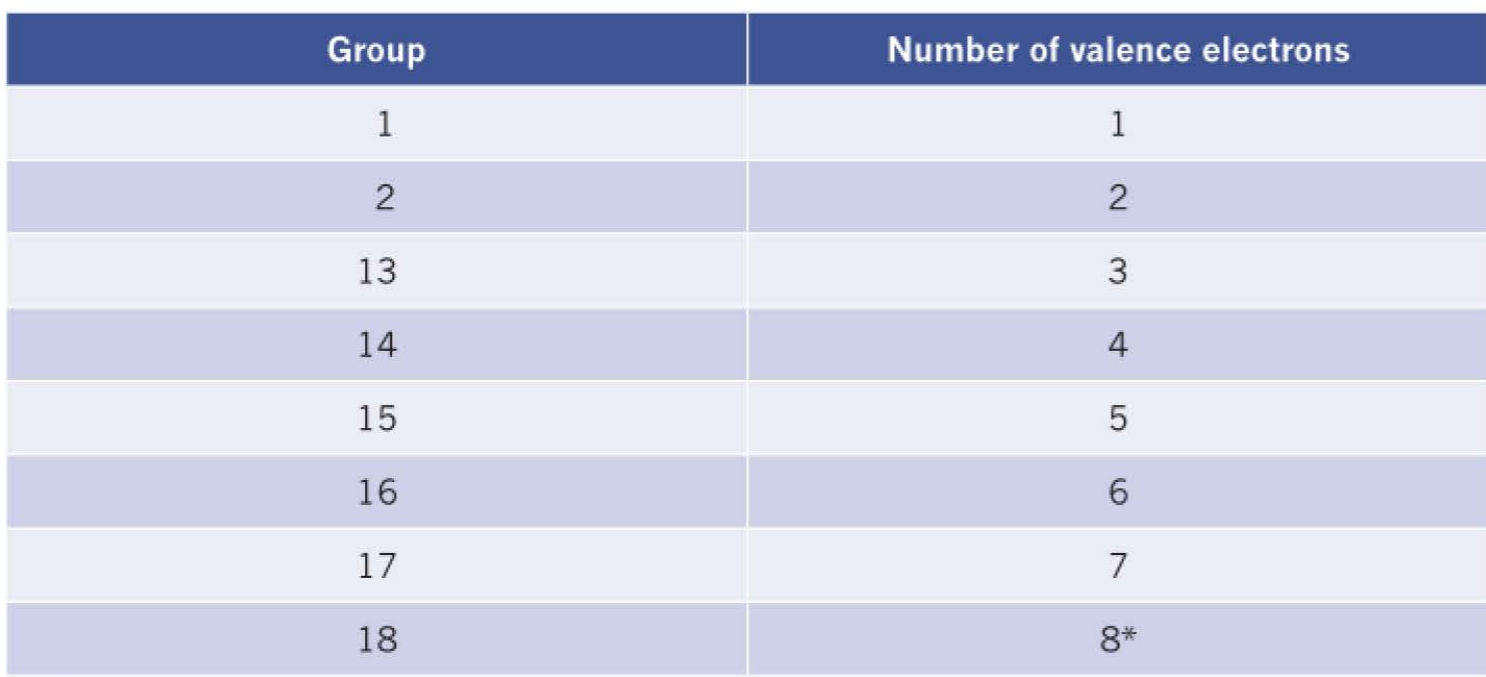
For main group elements, the group number can be used to determine the number of valence electrons (outer-shell electrons) in an atom of the element.
Important
Formulas for Determining Valence Electrons:
For groups 1 and 2:
- Number of valence electrons = group number
- Example: Magnesium is in group 2, so it has 2 valence electrons
For groups 13-18:
- Number of valence electrons = group number - 10
- Example: Oxygen is in group 16, so it has valence electrons
- Example: Neon is in group 18, so it has valence electrons
Important exception: Helium is located in group 18 but only has 2 valence electrons (not 8). It is placed in group 18 because it is unreactive, like other group 18 elements.
Why groups matter
The valence electrons are the electrons involved in chemical reactions. Since elements in the same group have the same number of valence electrons, they exhibit similar chemical properties.
Examples of groups with similar properties
Alkali metals (group 1, excluding hydrogen):
- All relatively soft metals
- Highly reactive with water and oxygen
- Electronic configurations show one electron in an s-subshell:
Halogens (group 17):
- All colored elements
- Highly reactive
- Electronic configurations show highest-energy subshell of :

Noble gases (group 18):
- Very stable electron arrangement
- Helium and neon have full outer shells
- Other noble gases have a stable octet (8 electrons) in their valence shell
- Very low reactivity because they already have stable electronic configurations
- Do not tend to lose or gain electrons
The arrangement of electrons in atoms is responsible for the periodicity (periodic pattern) of element properties.
Special groups in the periodic table
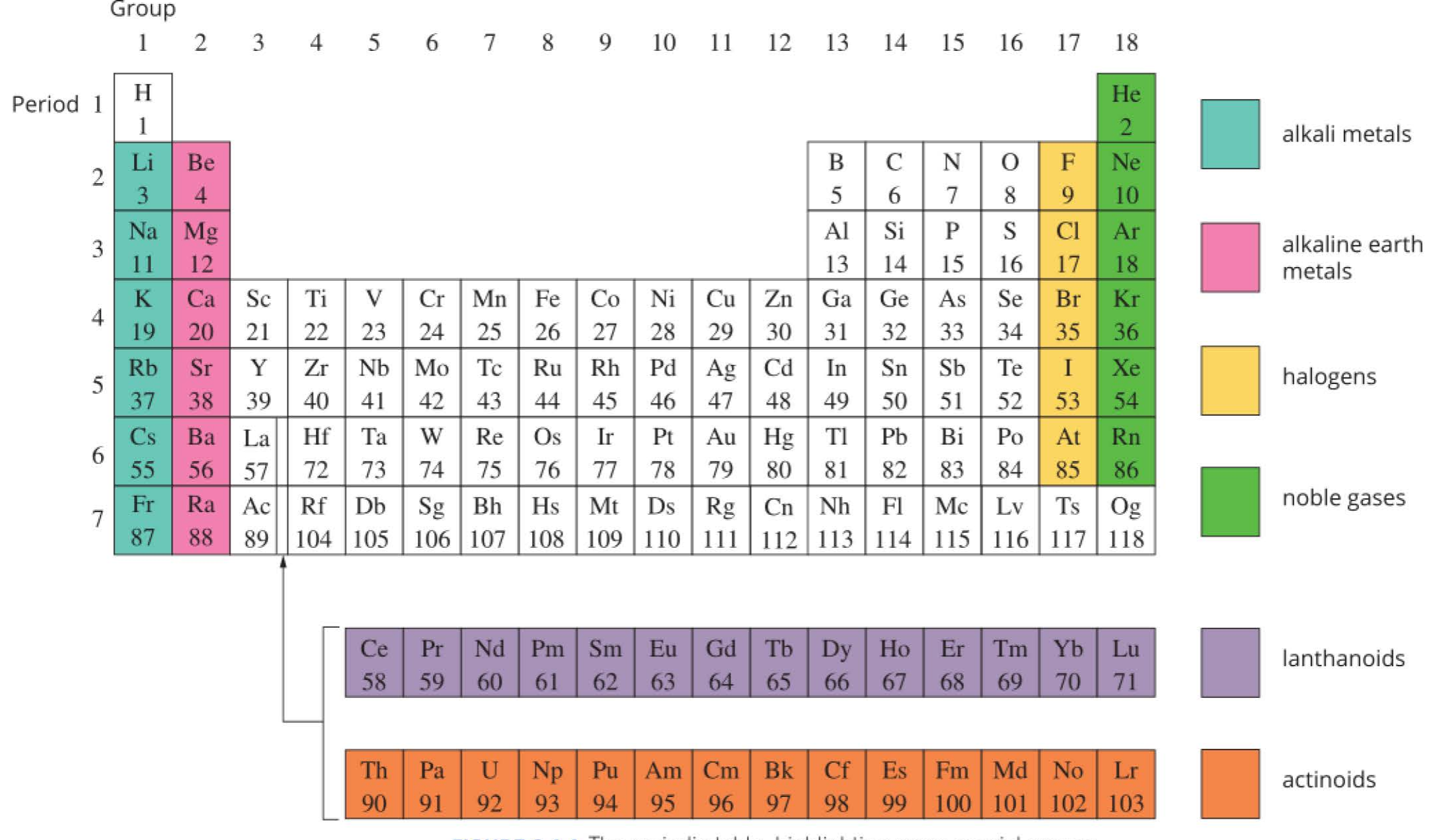
The periodic table contains several special groups with specific names:
- Alkali metals: Group 1 (excluding hydrogen)
- Alkaline earth metals: Group 2
- Halogens: Group 17
- Noble gases: Group 18
- Lanthanoids: Elements 58-71
- Actinoids: Elements 90-103
Helium supplies at risk

On Earth, most helium is found underground with other natural gases. If a natural gas deposit contains commercially viable amounts of helium, it is extracted from the mixture. The largest commercial deposits are currently in the US, Qatar, and Algeria.
While helium is well known for use in balloons, it has many other important applications:
- Medical research and diagnostic equipment
- Cooling nuclear reactors and rockets
- Providing unreactive atmospheres for arc welding
Important
Critical Issue: Once helium is released into the atmosphere, it is virtually impossible to recover. This means we are depleting limited helium sources, with some scientists estimating supplies could run out within 25-30 years.
Periods
The horizontal rows in the periodic table are called periods and are numbered 1-7.
What periods tell us
The period number provides information about the electronic configuration of an element. Specifically:
Period number = number of occupied electron shells in the element's atoms
Example
Using Period Number to Determine Electron Shells
- Magnesium and chlorine are both in period 3, meaning their outer shell is the third shell:
- (electrons in shells 1, 2, and 3)
- (electrons in shells 1, 2, and 3)
- Elements in period 5 all have outer shell electrons in the fifth shell
Blocks
As understanding of atomic theory developed into Schrödinger's quantum mechanical model, a new pattern emerged in the periodic table. The table can be divided into four main blocks based on the type of subshell that contains the highest energy electrons.
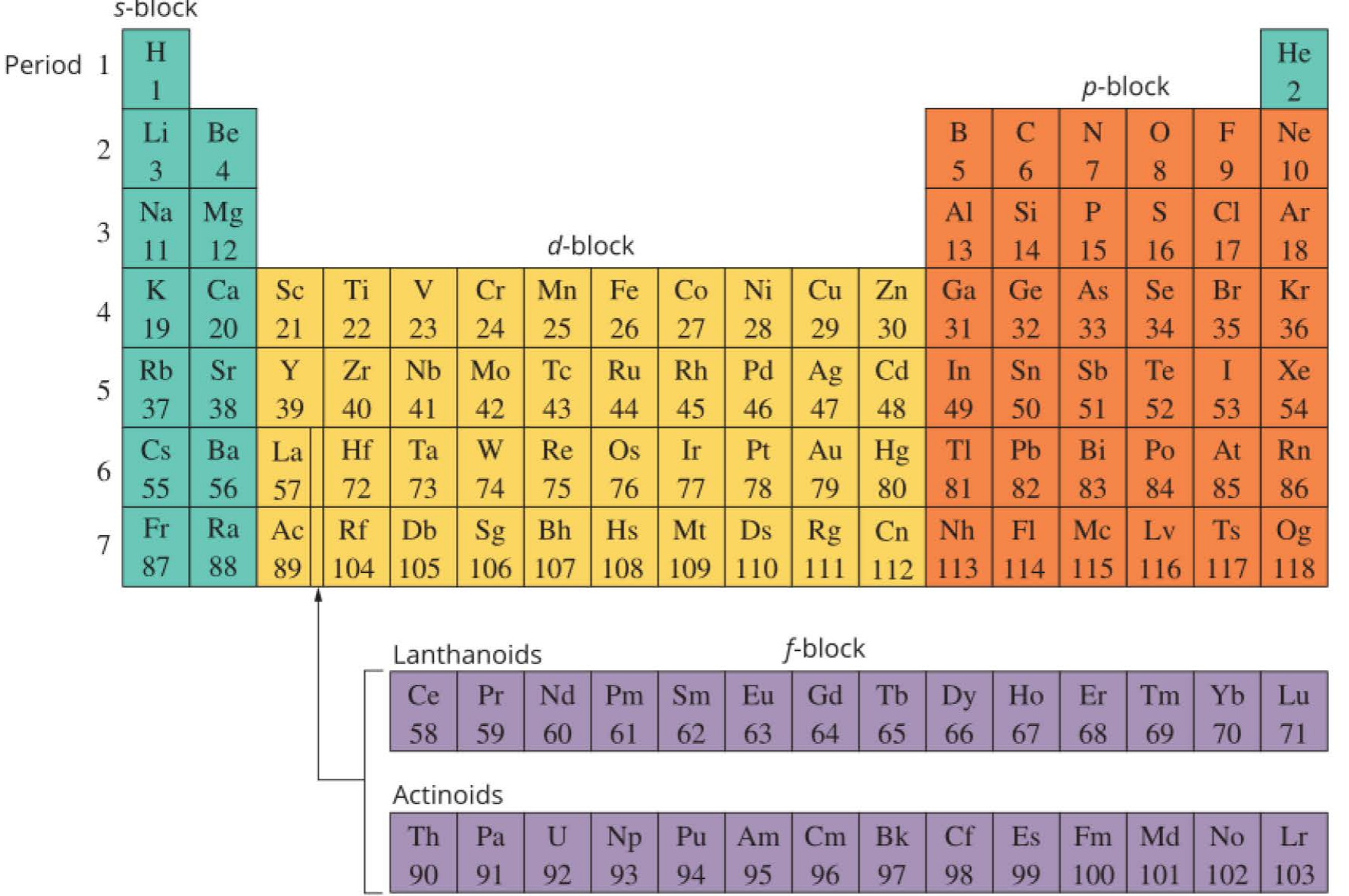
The four blocks
Note
The elements in each block all have the same type of subshell as their highest energy subshell. This organization helps predict electron configurations and chemical behavior.
- s-block: Groups 1 and 2 (highest energy electrons in s-subshells)
- p-block: Groups 13-18 (highest energy electrons in p-subshells)
- d-block: Groups 3-12, also called transition metals (highest energy electrons in d-subshells)
- f-block: Lanthanoids and actinoids (highest energy electrons in f-subshells)
Naming elements
Ancient elements
Twelve elements were known in ancient times, including gold, silver, mercury, and sulfur. The original names for these elements were derived from Latin. People at that time did not understand the modern definition of an element.
Searching for new elements
In the eighteenth and nineteenth centuries, scientists developed methods to extract gaseous elements from air and isolate solid elements from the ground. Elements often took names from Latin words describing where they were found:
- Silicon (Si) - from silex, meaning sand
- Calcium (Ca) - from calx, meaning limestone
- Mercury (Hg) - from hydrargyrum, meaning silver water
As analytical techniques improved, naming became more imaginative, with names derived from:
- Greek roots
- Detected characteristics (e.g., argon from Greek ἀργόν, meaning inactive)
- Places (e.g., germanium from germania, meaning Germany)
- Mythology (e.g., vanadium after the Scandinavian goddess Vanadis)
By 1869, when Mendeleev constructed the first modern periodic table, 64 elements were known.
Synthetic elements
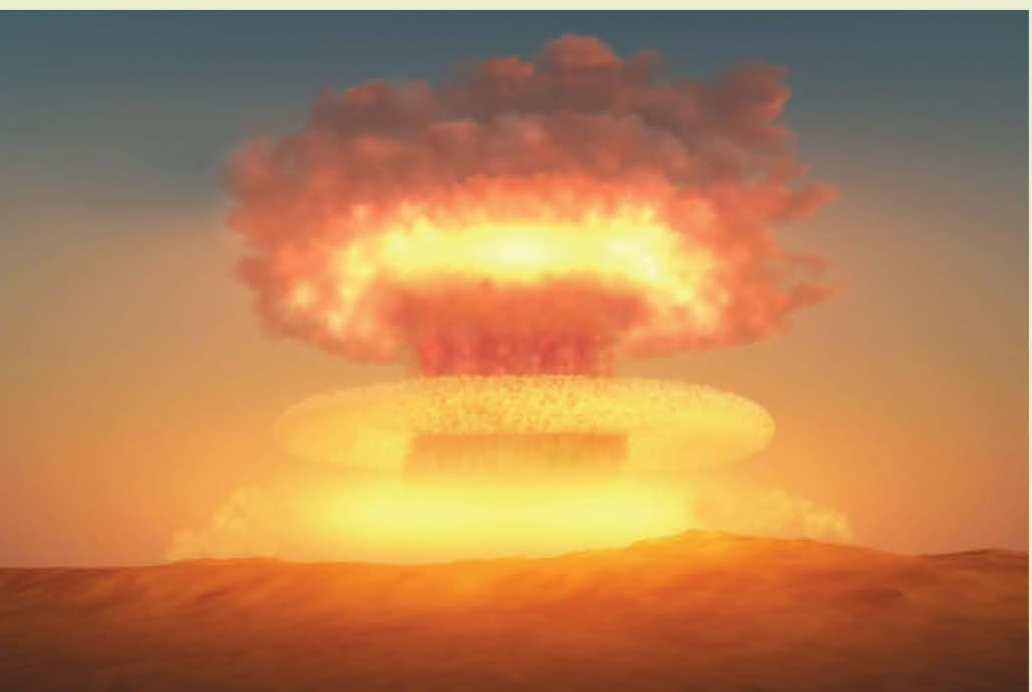
The first synthetic element, technetium, was made in 1936. Many new elements were discovered after 1940, some during thermonuclear bomb tests.
More recently, elements have been discovered using particle accelerators. This has brought the total number of known elements to 118. Synthetic elements have large, unstable nuclei. Many were named after scientists or places (e.g., einsteinium, americium).
Note
Since 1999, the International Union of Pure and Applied Chemistry (IUPAC) has decided the names of all new elements. The most recent additions were in 2012 (elements 114 and 116) and 2016 (elements 113, 115, 117, and 118).
Critical and endangered elements
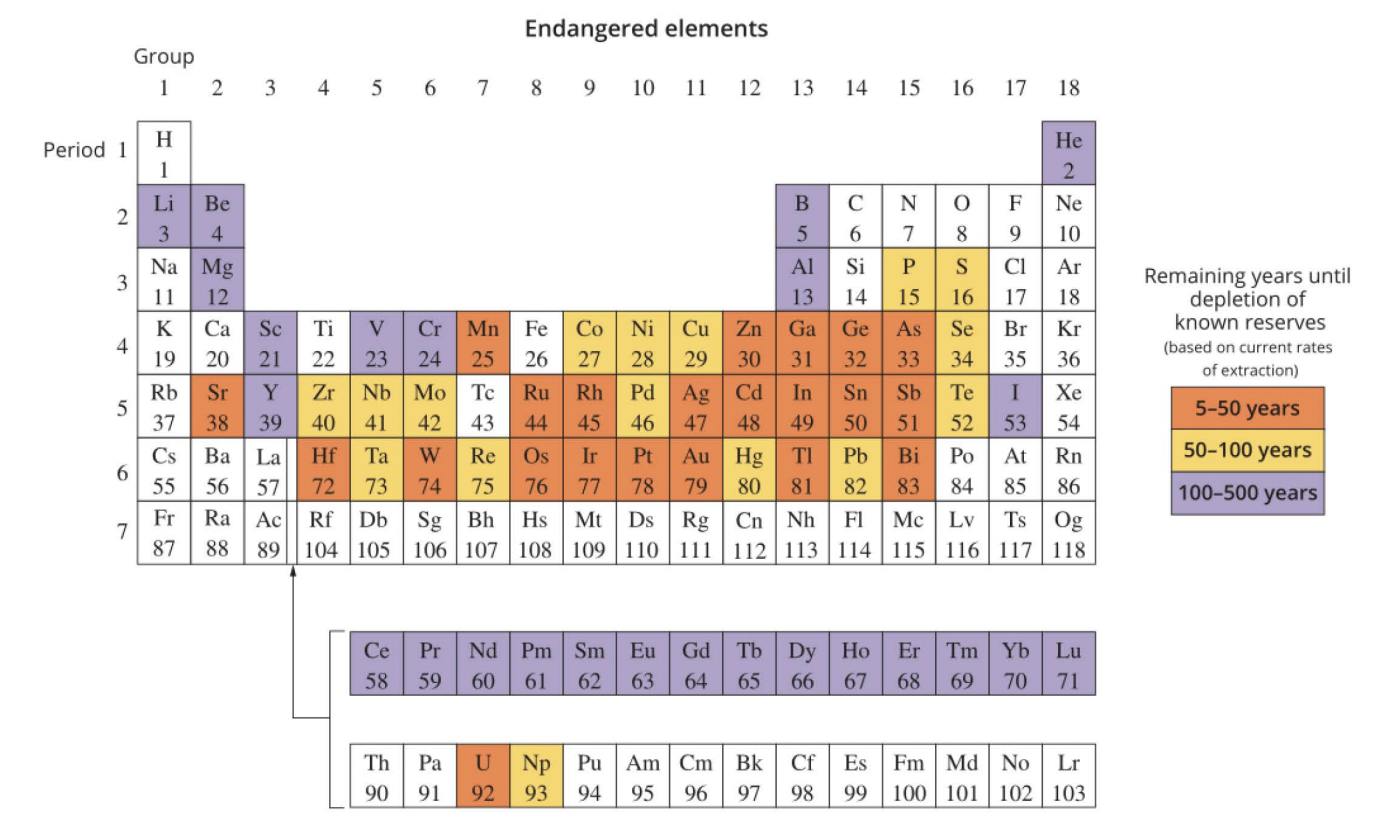
Of the 118 elements in the periodic table, many exist in only very small quantities on Earth. In recent decades, some rare elements have been used in bulk for the first time to produce new electronics, medicines, and catalysts.
Important
Sustainability Crisis: Our use of these materials is not sustainable. There is currently very little recycling or recovery of these elements. As a result, over 40 elements have been identified as endangered, with supplies of some predicted to run out in less than 100 years.
What makes an element critical?
Critical elements are elements heavily relied upon by industry and society in areas such as renewable energy, electronics, food supply, and medicine. Some scientists believe unhindered access to these elements is required for society to function. Critical elements face supply uncertainty for several reasons:
1. Limited deposits (endangered elements)
Only small deposits are available on Earth, and these are disappearing rapidly. Examples include iridium, platinum, osmium, and palladium.
2. Supply centered in conflict areas (conflict elements)
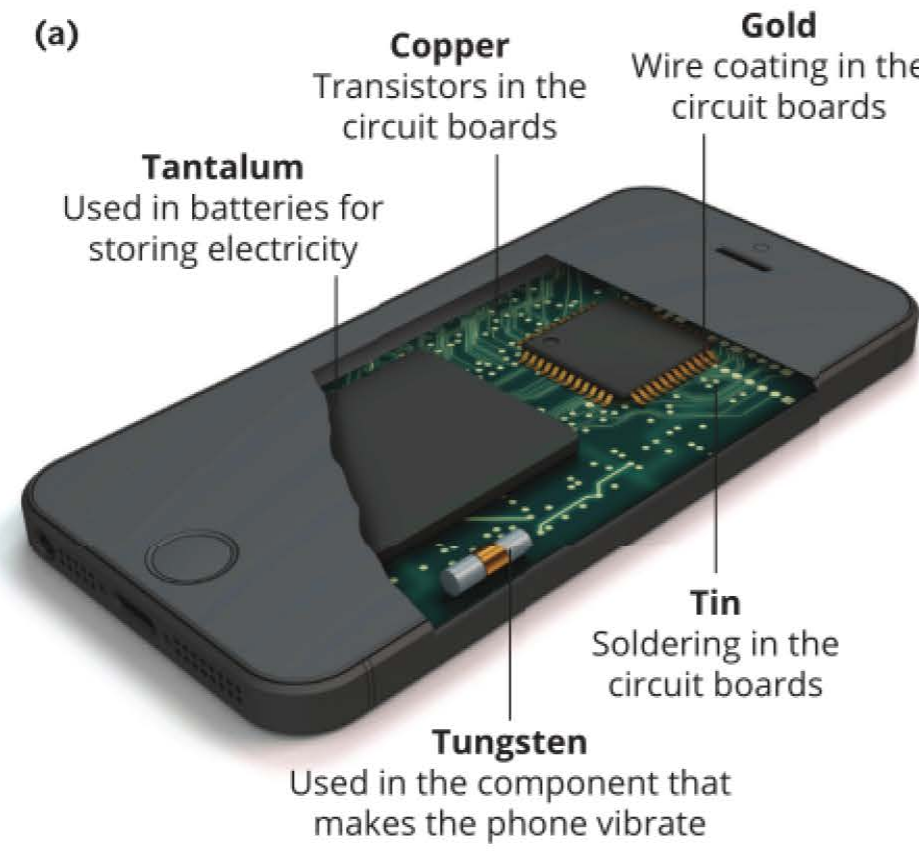
These elements are mined in areas of war and conflict, often using child labor, making their use non-sustainable. Examples include tin, gold, tungsten, and tantalum, which are essential in mobile phone production.

3. Little to no recycling
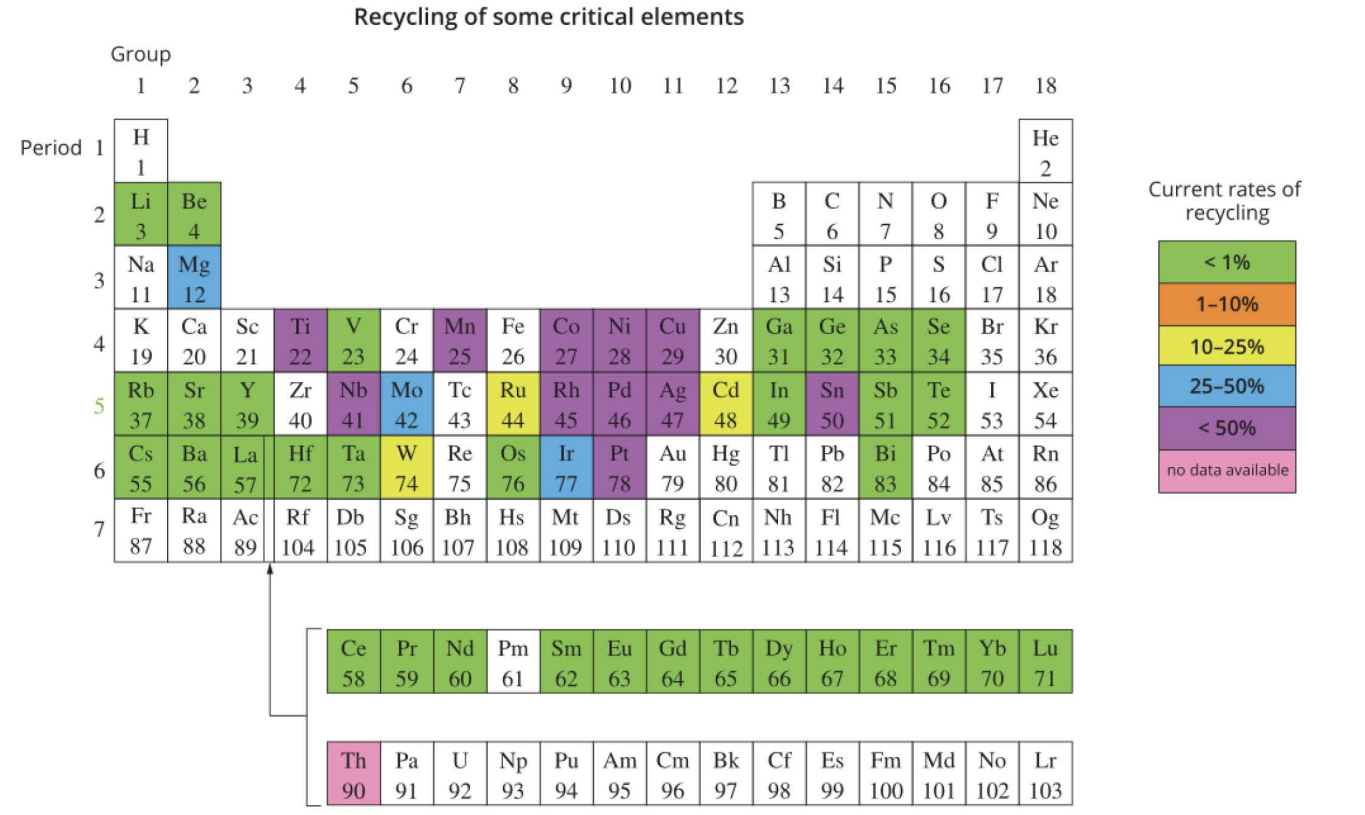
There is minimal recovery of these elements, so reserves are being depleted. Examples include the rare earth elements (lanthanides).
Note
The diagram shows current recycling rates for various elements. Many critical elements have recycling rates below 1%, meaning nearly all extracted material is lost rather than recovered for reuse.
4. Concentrated deposits (critical raw materials)
These elements have significant economic importance, no viable substitutes, and deposits concentrated in a small number of countries, putting supply at risk:
- Tungsten, antimony, molybdenum, germanium, gallium, and indium: concentrated in China
- Platinum, palladium, rhodium, ruthenium, and vanadium: concentrated in South Africa
5. Increased use due to new technologies
Recent expansion of new technologies has greatly increased demand for certain elements:
- Helium in medical technologies
- Phosphorus in fertilizers
Recycling campaigns
Recycling campaigns have been developed globally to make products more sustainable. One notable example was the 2020 Tokyo Olympic Games, when the Japanese people collected approximately 79,000 tonnes of old mobile phones and other electronic waste. This was recycled to recover precious metals to make 100% of the gold, silver, and bronze Olympic medals.

A new approach to recycling: phosphorus
Phosphorus plays a crucial role in producing the world's food. It is used to create fertilizers that enable greater crop yields.

However, it is estimated that phosphorus supplies will become depleted sometime this century. Experts predict this could have serious consequences for world food supplies. To maintain overall supply, it may be necessary to recover phosphorus from animal and human waste.
One suggested method is recovery from human urine using a toilet with a urine diversion and dehydration unit. The phosphorus can eventually be precipitated out as calcium phosphate.
Note
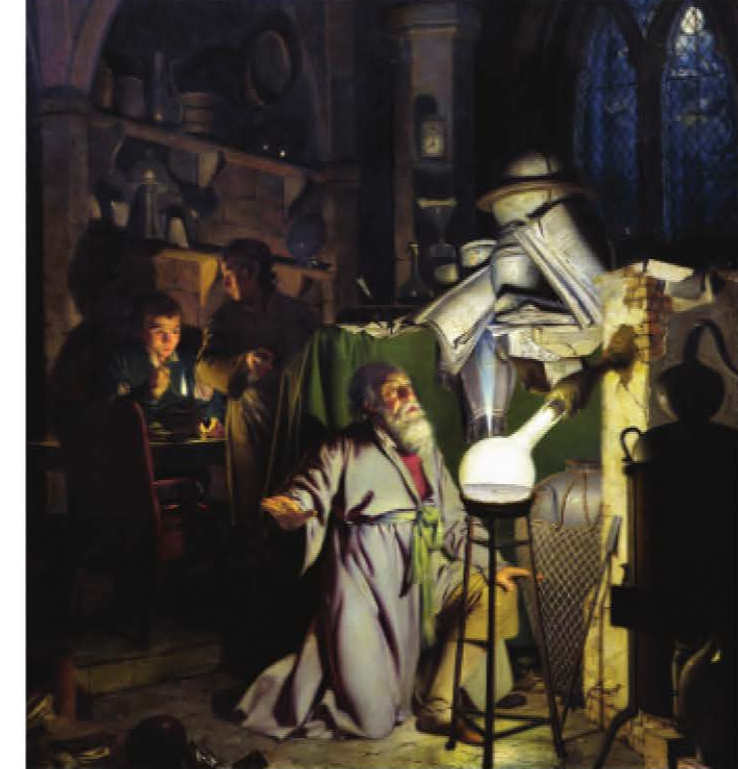
Historical Connection: There is historical precedent for this method. Phosphorus was first discovered in human urine by alchemist Hennig Brand in 1669, while he was searching for the mythical 'philosopher's stone'. His method reportedly began with almost 6,000 litres of urine.
Remember!
Summary
Key Points to Remember:
- The periodic table, developed by Mendeleev in 1869, organizes elements by increasing atomic number and reveals patterns in their properties.
- Groups (vertical columns) indicate the number of valence electrons: for groups 1-2, valence electrons equal the group number; for groups 13-18, valence electrons equal the group number minus 10.
- Periods (horizontal rows) indicate the number of occupied electron shells in an element's atoms.
- The table is divided into blocks (s, p, d, f) based on the highest energy subshell containing electrons.
- Elements in the same group have similar chemical properties because they have the same number of valence electrons.
- Over 40 elements are endangered or critical due to limited supplies, lack of recycling, concentrated deposits, or supply from conflict areas.
- Sustainable use of elements requires increased recycling and recovery efforts to prevent depletion of critical resources.