Key Skills (VCE SSCE Health and Human Development): Revision Notes
📚Revision Notes
Key Skills
Describe and justify different types of aid
Understanding the skill
This skill requires you to identify and explain the three main types of aid and determine which type is most appropriate for different situations. You need to understand how each type of aid works and why it might be the best choice based on the circumstances described.
The three types of aid
Australia provides three main types of aid:
- Emergency or humanitarian aid: Rapid assistance provided during crises to meet basic survival needs such as food, water, shelter and medical care
- Bilateral aid: Direct assistance from one country to another to support longer-term development goals
- Multilateral aid: Funding provided through international organisations like the United Nations, which allows resources to be pooled and expertise to be shared
Note
The key difference between these aid types lies in their purpose and delivery method. Emergency aid responds to immediate crises, bilateral aid builds long-term development partnerships between countries, and multilateral aid leverages the expertise and resources of international organisations.
How to apply this skill
When analyzing a scenario, you should:
- Identify which type(s) of aid are being provided
- Explain the purpose of this aid type
- Link the aid to DFAT's priorities where relevant
- Justify why this type of aid is most appropriate for the situation described
Case study: Humanitarian assistance to Haiti (2016)
Following Hurricane Matthew in October 2016, Australia provided urgent assistance to Haiti through DFAT. The hurricane killed at least 546 people, destroyed thousands of homes, and caused a surge in cholera cases, leaving more than 1.4 million Haitians requiring humanitarian assistance.
Australia's response included:
- $1.5 million to UNICEF to improve access to clean water and sanitation
- $1 million to the International Organization for Migration to provide shelter
- Distribution of hygiene kits and clean water to 800 families through Plan International
- Australian humanitarian experts deployed through RedR Australia
Example
Worked Example: Analyzing the Haiti Response
Step 1: Identify the type of aid
This response represents emergency or humanitarian aid. It aligns with DFAT's priority of 'Building resilience: humanitarian assistance, disaster risk reduction and social protection.'
Step 2: Justify why this aid type is appropriate
Humanitarian aid was the most appropriate response because the hurricane created an immediate crisis. People lacked access to clean water and sanitation, which caused a cholera epidemic. Many had no shelter after their homes were destroyed. These situations threatened lives and required immediate action to provide basic survival needs.
Step 3: Explain the use of partnerships
To improve effectiveness, DFAT partnered with multilateral organisations including UNICEF and the International Organization for Migration. Working through the United Nations allowed resources to be pooled, extending Australia's ability to address the crisis whilst avoiding waste. The International Organization for Migration provided expertise in emergency shelter provision.
DFAT also partnered with the NGO Plan International to distribute hygiene kits and clean water. NGOs bring valuable expertise in emergency situations where fast, flexible responses are needed. They have local knowledge of areas and people, helping to reach those most in need.
Practice case study: Undersea Telecommunications Cable Project
Australia is supporting Papua New Guinea and Solomon Islands to build their economies through a major telecommunications infrastructure project. The project involves constructing high-speed undersea cables from Australia to PNG and Solomon Islands, enabling faster and more reliable internet connections.
Background: PNG's existing undersea cable to Sydney is nearing the end of its useful life. Solomon Islands has no undersea cable link and relies on expensive, unreliable satellite communications. The project is part of Australia's International Cyber Engagement Strategy to bridge digital divides across the Indo-Pacific.
Expected outcomes: The project will support entrepreneurship, digital skills development and integration of these Pacific countries into the global marketplace.
Important
Practice Questions:
- What type of aid does this project represent?
- Which DFAT aid priority does this project support?
- How will this project promote health and wellbeing and human development?
Explain and evaluate the role of NGOs in promoting health and wellbeing and human development globally
Understanding the skill
To address this skill effectively, you need to identify different NGOs, explain their work, and evaluate how well they promote health and wellbeing and human development. Many NGOs such as World Vision, the Red Cross and Oxfam work across multiple countries, focusing on smaller community-based projects, often in collaboration with governments and other agencies.
Note
Key Questions to Guide Your Analysis
When examining an NGO's role, consider:
- Does the organisation have specific focus areas or priorities?
- How does it support individuals and communities?
- How does this work promote health and wellbeing?
- What is human development and how does the NGO promote it?
Analyzing NGO programs
When presented with a case study, use these steps:
- Identify the NGO's role in the project
- Determine the program's aim
- Explain how the program is delivered
- Evaluate the program's effectiveness
- Explain how the program promotes health and wellbeing
- Explain how the program promotes human development
Case study: World Vision Tippy Taps initiative in Senegal
World Vision implemented a peer education program in Senegal, West Africa, to reduce diseases such as diarrhea and dysentery through improved hygiene practices.
The context: Mbadakhoune in the Mbirkelane department of Senegal is an agricultural community with a thriving local market held every two weeks. People from surrounding areas gather to buy and sell goods, frequently meeting and greeting with unwashed hands, creating ideal conditions for disease transmission.
The program: Children and young people participated in a peer education program where they learned about:
- The importance of hygiene and hand washing
- How to teach other community members
- How to install and use Tippy Taps
A Tippy Tap is a simple, foot-operated hand-washing facility made from an empty 5-liter container, three stakes and a cord.
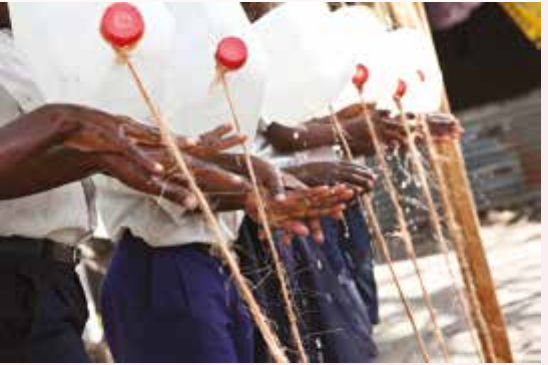
The peer educators installed Tippy Taps at key locations throughout the village with easy-to-follow instructions. Working with the local committee for child protection coordinator, they spent their summer holidays spreading the message to local villages.
Project outcomes: The program made an immediate impression. Villagers quickly requested hand-washing facilities for their homes and outside mosques. A community elder reported: "In the past we used to leave the toilets without washing our hands, but since the LCPC coordinator and children have passed through the village to tell us about bodily hygiene and to set up some Tippy Taps, we have started to adopt better handwashing habits."
Example
Worked Example: Evaluating the World Vision Project
Step 1: Identify World Vision's role
World Vision works with children, families and communities worldwide to overcome poverty and injustice. They deliver projects aimed at improving health and wellbeing, particularly for pregnant women, mothers and children. Their goal includes reducing under-five and maternal mortality through core interventions.
Step 2: Determine the project aims
The Senegal project specifically aimed to reduce diarrhea and dysentery caused by poor hand hygiene, especially when people gathered at the local market.
Step 3: Explain program delivery
World Vision funded and supported a peer education initiative targeting children and young people. This represents a small, targeted regional project - the type of work for which NGOs have particular expertise. NGOs typically focus on community-involved projects and can work effectively in rural areas where other aid may not reach.
Step 4: Evaluate effectiveness
The project successfully changed behavior. The immediate demand for hand-washing facilities in homes and outside mosques demonstrated community engagement. The community elder's testimony confirmed that people adopted better hand-washing habits as a direct result of the project.
Step 5: Explain promotion of health and wellbeing
Improved hygiene will reduce disease spread among villagers, improving physical health and wellbeing. With better physical health, emotional health and wellbeing will also improve as people feel happier. Fewer cases of diarrhea and dysentery will reduce under-five and maternal mortality rates.
Step 6: Explain promotion of human development
Better health and wellbeing creates conditions for human development. When children are healthy, they can attend school and develop knowledge and skills. This builds their capacity to earn income and gain employment, providing resources for a decent standard of living including food, clothing, shelter and medical care. This helps people lead longer, healthier and happier lives. When people are healthy, educated and have a decent standard of living, they become empowered to participate in community decision-making processes.
Practice case study: Reducing drug-resistant tuberculosis on Australia's border
DFAT recognizes that health crises threaten economic and human development. Antimicrobial resistance is a major global health threat that could cause an additional 10 million deaths yearly by 2050 if not addressed. The Australian Government works with Australian NGOs in Papua New Guinea to reduce the global threat of drug-resistant TB.
The program: With funding from the Australian NGO Cooperation Program (ANCP), the Burnet Institute is tackling drug-resistant TB on Daru Island in PNG. Recognizing that unfinished TB treatment leads to drug-resistant strains, a team of five peer counselors called TB-PALS (people affected by, living with, or having survived TB) support patients to complete their treatment.
TB-PALS provides education and counseling to support patients and families through lengthy treatment. This patient-oriented approach, funded by the Australian Government, keeps patients in care and enables cure from TB.
Important
Practice Questions:
- What are NGOs? Provide two examples.
- How is aid provided by NGOs effective in complementing Australia's aid program?
- How does this program promote health and wellbeing and human development?
Summary
Key Points to Remember:
-
Australia provides three types of aid: emergency/humanitarian aid for crisis situations, bilateral aid for direct country-to-country development support, and multilateral aid through international organisations.
-
When justifying aid types, consider the situation's urgency, the purpose of the aid, and how it aligns with DFAT priorities.
-
NGOs play a crucial role in delivering community-based projects, particularly in rural areas, bringing local knowledge and expertise in flexible, targeted interventions.
-
Effective aid often involves partnerships between government agencies, multilateral organisations and NGOs to pool resources and expertise.
-
Aid promotes health and wellbeing by addressing immediate health threats and improving living conditions, which in turn promotes human development through education, income generation and community empowerment.