Changes in Australia’s Health Status Over Time (VCE SSCE Health and Human Development): Revision Notes
📚Revision Notes
Changes in Australia's Health Status Over Time
Since the early 1900s, Australia has experienced remarkable transformations in the patterns of disease and illness affecting its population. These changes reflect improvements in living conditions, medical advances, public health interventions, and shifts in lifestyle factors. Understanding these historical trends helps us appreciate current health challenges and the progress made over more than a century.
Note
Understanding historical health trends is essential for:
- Recognizing the impact of public health policies and medical advances
- Identifying persistent health challenges that require ongoing attention
- Appreciating how far we've come while acknowledging areas still needing improvement
- Informing future health strategies based on past successes and failures
Life expectancy trends
Life expectancy serves as a fundamental indicator of a nation's health status, measuring the average number of years a person can expect to live if current death rates remain unchanged. The most commonly used measure is life expectancy at birth, which provides insight into overall population health.
Australia has witnessed dramatic improvements in life expectancy since 1900. Males born in 2019 can expect to live 80.9 years on average, representing a substantial increase from just 53.8 years in 1900. Similarly, females now have a life expectancy of 85.0 years compared to 57.5 years in 1900. This represents approximately a 40 per cent increase in life expectancy at birth over this period, demonstrating the profound improvements in Australia's health status.
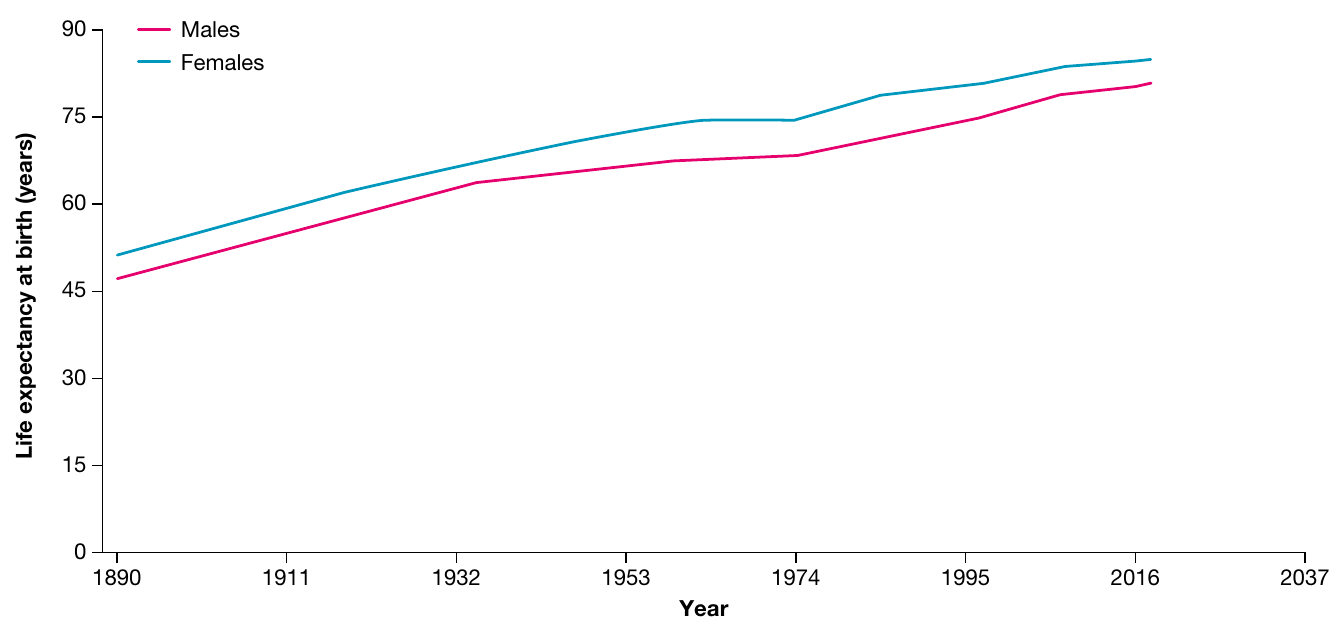
These gains in longevity have not occurred uniformly across the entire period. Analysis of historical data reveals distinct phases of improvement. Between 1900 and 1961, there was steady progress, with male life expectancy increasing by 14 years and female life expectancy rising by 17 years. However, between 1961 and 1972, life expectancy improvements plateaued significantly. Male life expectancy actually decreased slightly from 67.9 to 67.8 years, whilst females experienced only marginal improvement from 74.2 to 74.5 years. This stagnation coincided with peak death rates from cardiovascular diseases and increased prevalence of lifestyle-related diseases such as cancer.
Important
The 1961-1972 plateau in life expectancy improvements demonstrates how specific disease patterns can dramatically impact overall health status. This period coincided with:
- Peak cardiovascular disease death rates
- Rising prevalence of lifestyle-related diseases
- Increased cancer mortality from smoking uptake
This historical example highlights the importance of addressing emerging health threats before they become widespread.
Since 1972, life expectancy has resumed its upward trajectory. Importantly, gains have not been limited to life expectancy at birth. Those aged 65 or more have experienced considerable improvements, with increases of 7.7 years for males and 6.7 years for females. Even amongst the oldest Australians aged 85, life expectancy has increased by 2.3 years for males and 2.5 years for females.
Infant mortality decline
A major contributor to increased life expectancy has been the dramatic reduction in infant mortality. In 1912, infant mortality rates stood at 80 deaths per 1,000 live births for males and 63 per 1,000 for females. By 2019, these rates had plummeted to just 3.7 for males and 2.9 for females, representing a reduction of over 95 per cent.
| Year | Males | Females |
|---|---|---|
| 1912 | 80 | 63 |
| 2019 | 3.7 | 2.9 |
This massive decline in mortality amongst children aged 0-4 years, particularly infants under one year old, has been fundamental to overall life expectancy improvements. In the early 1900s, deaths of children aged 0-4 accounted for more than 25 per cent of all deaths.
Note
The dramatic reduction in infant mortality reflects multiple factors working together:
- Improved sanitation and public health infrastructure
- Better maternal and child healthcare services
- Widespread immunization programs
- Enhanced nutrition and food safety standards
- Advances in medical treatments for childhood diseases
Population ageing
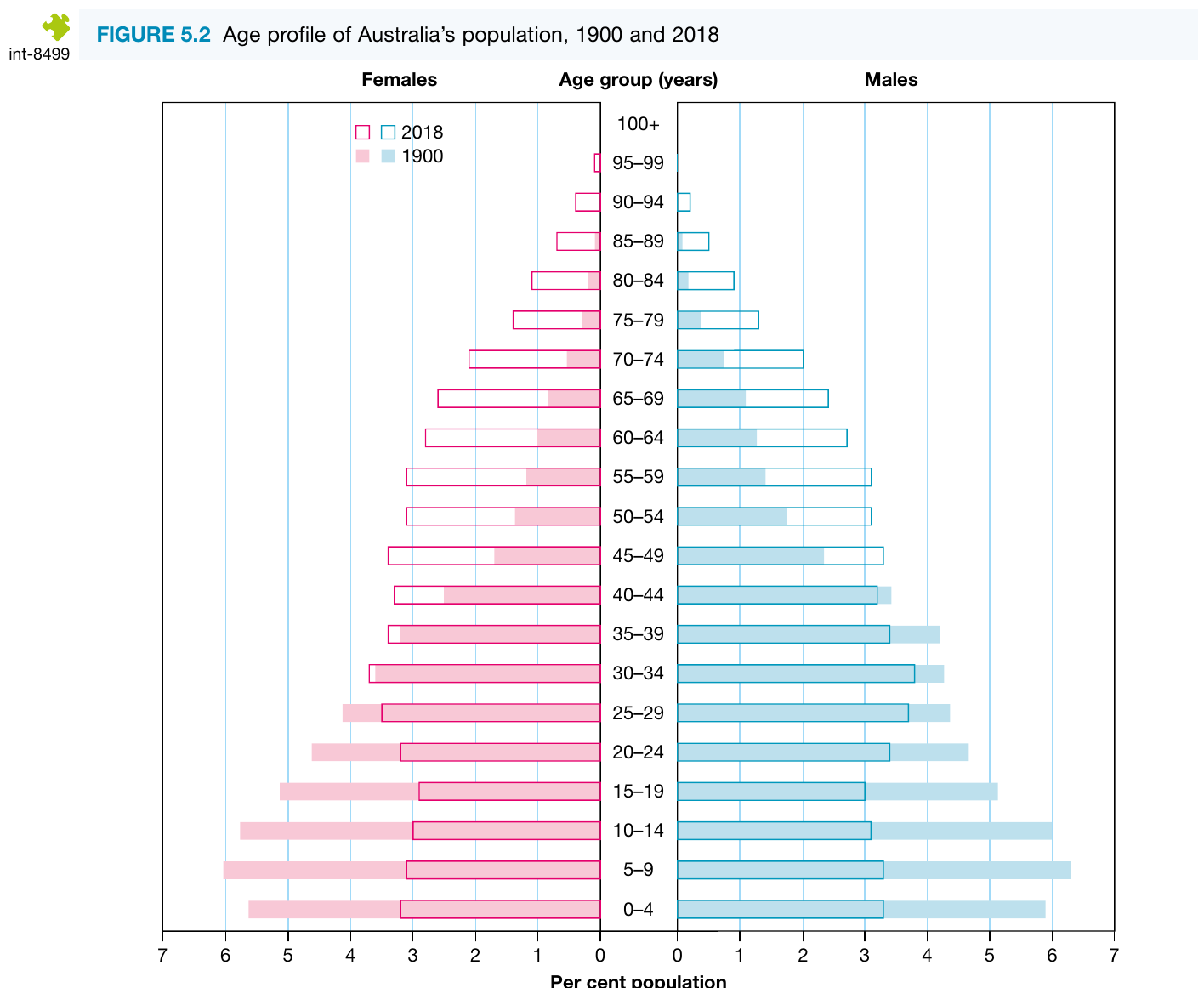
Accompanying increased life expectancy and lower fertility rates (the number of live births per 1,000 women aged 15-49 in one year), Australia's age profile has transformed considerably since 1900. The population structure has shifted from a young, pyramid-shaped distribution to an older, more rectangular profile, reflecting both people living longer and fewer births.
Overall death rates
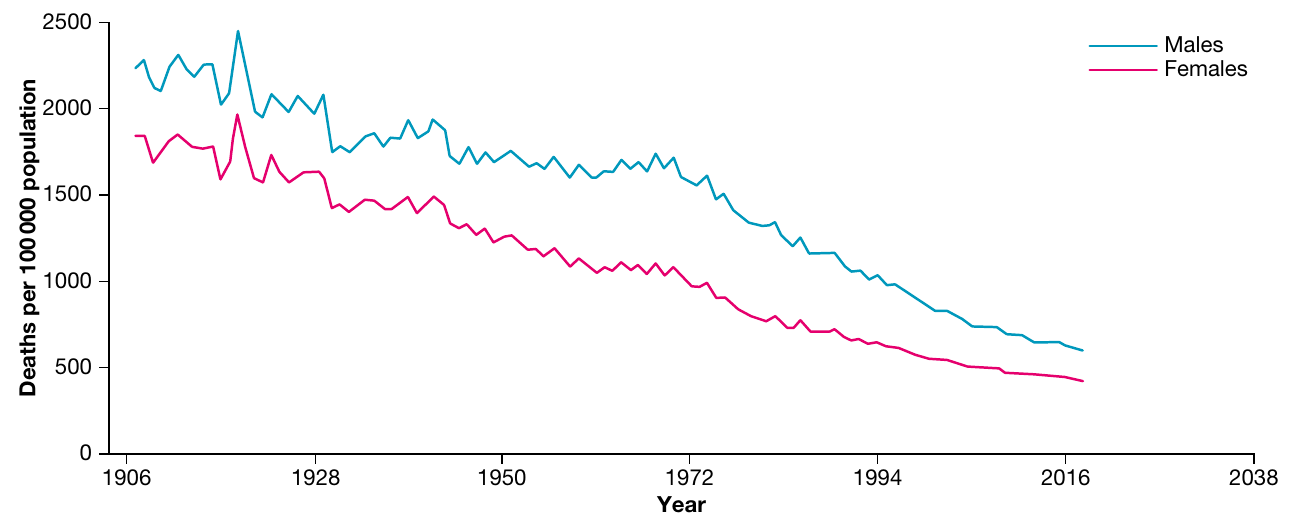
Corresponding with improvements in life expectancy, overall death rates have decreased substantially. Between 1907 and 2018, age-standardised death rates fell by 73 per cent for males and 77 per cent for females, demonstrating the significant progress made in preventing premature mortality.

Patterns of mortality
Whilst life expectancy and death rates provide important overall measures of health status, examining the types of diseases responsible for deaths reveals more detailed patterns of change. The diseases common in early twentieth-century Australia differ substantially from those prevalent today, though they can be grouped into five broad categories that together accounted for approximately 60 per cent of all deaths at the century's beginning and 83 per cent by its end.
Note
The Five Major Disease Categories:
The following categories have accounted for the majority of Australian deaths throughout the twentieth century:
- Infectious and parasitic diseases
- Cancers (neoplasms)
- Cardiovascular diseases
- Respiratory diseases
- Injury and poisoning
However, the contribution of each category to overall mortality has changed dramatically over time.
Infectious and parasitic diseases
Infectious diseases are conditions caused by micro-organisms such as bacteria, viruses, parasites or fungi that can spread directly or indirectly between people. This category includes diseases such as COVID-19, tuberculosis, polio, smallpox, hepatitis, and sexually transmitted infections including syphilis and other venereal diseases. Syphilis is a bacterial infection typically transmitted through sexual contact that, without treatment, can damage vital organs including the heart and brain and prove life-threatening. It can also pass from mother to unborn child.
Parasitic diseases occur when organisms such as worms, skin mites, body lice and protozoa enter the body through contaminated food or water, or through contact with infected individuals. Once inside the body, these parasites can cause illness and sometimes death.
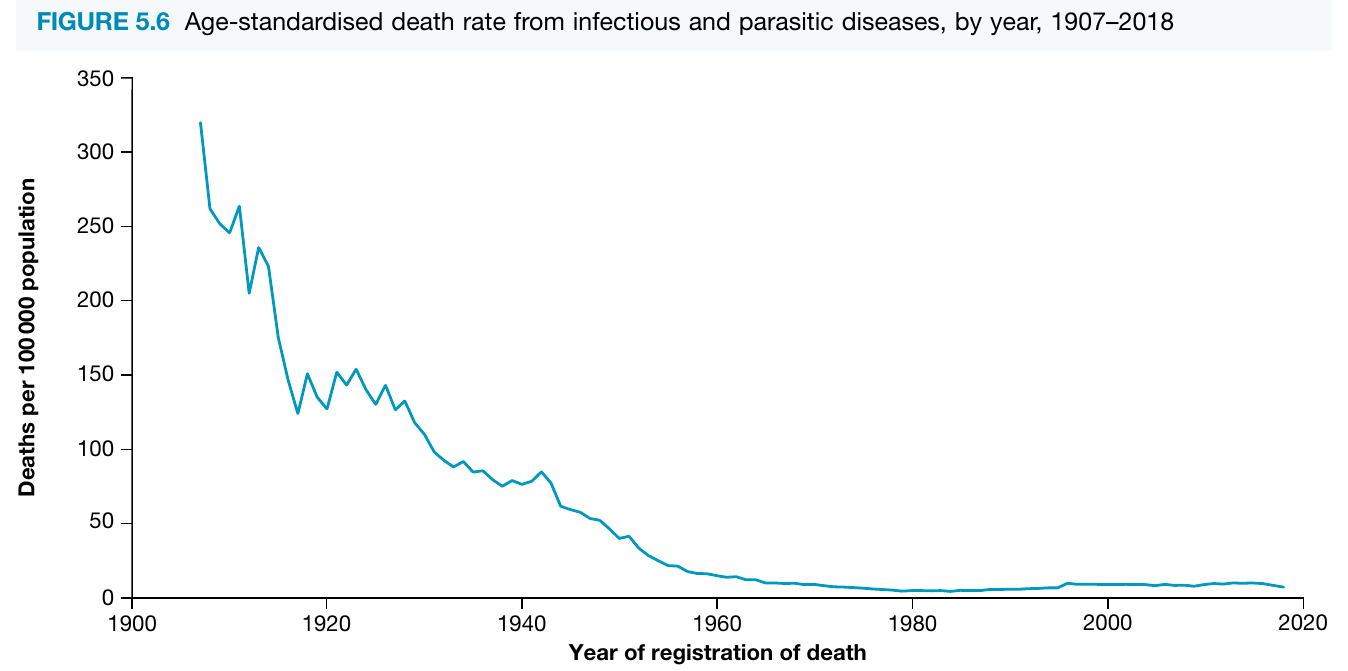
In the early twentieth century, infectious and parasitic diseases represented the leading cause of death in Australia, contributing to 13 per cent of all mortality. Living conditions during this period differed markedly from today. Water and food supplies frequently suffered contamination, streets were often littered with rubbish, and public health infrastructure including sewage disposal systems, safe water supplies and food safety controls remained poorly developed or non-existent.
Important
Living Conditions in Early 1900s Australia:
The unsanitary conditions of the early twentieth century created ideal environments for disease transmission:
- Contaminated water and food supplies
- Inadequate or non-existent sewage disposal systems
- Poor street sanitation with widespread rubbish
- Lack of food safety controls
- Minimal public health infrastructure
These conditions led to frequent outbreaks of deadly diseases, with children bearing the greatest burden of illness and death.
These unsanitary conditions led to outbreaks of numerous diseases including diarrhoea, cholera, smallpox, polio, tuberculosis, measles, whooping cough and diphtheria. Children bore the greatest burden of these illnesses. In 1911 alone, gastroenteritis, diphtheria, scarlet fever, whooping cough and measles caused the death of one in every 30 live-born children, resulting in extremely high infant mortality rates.
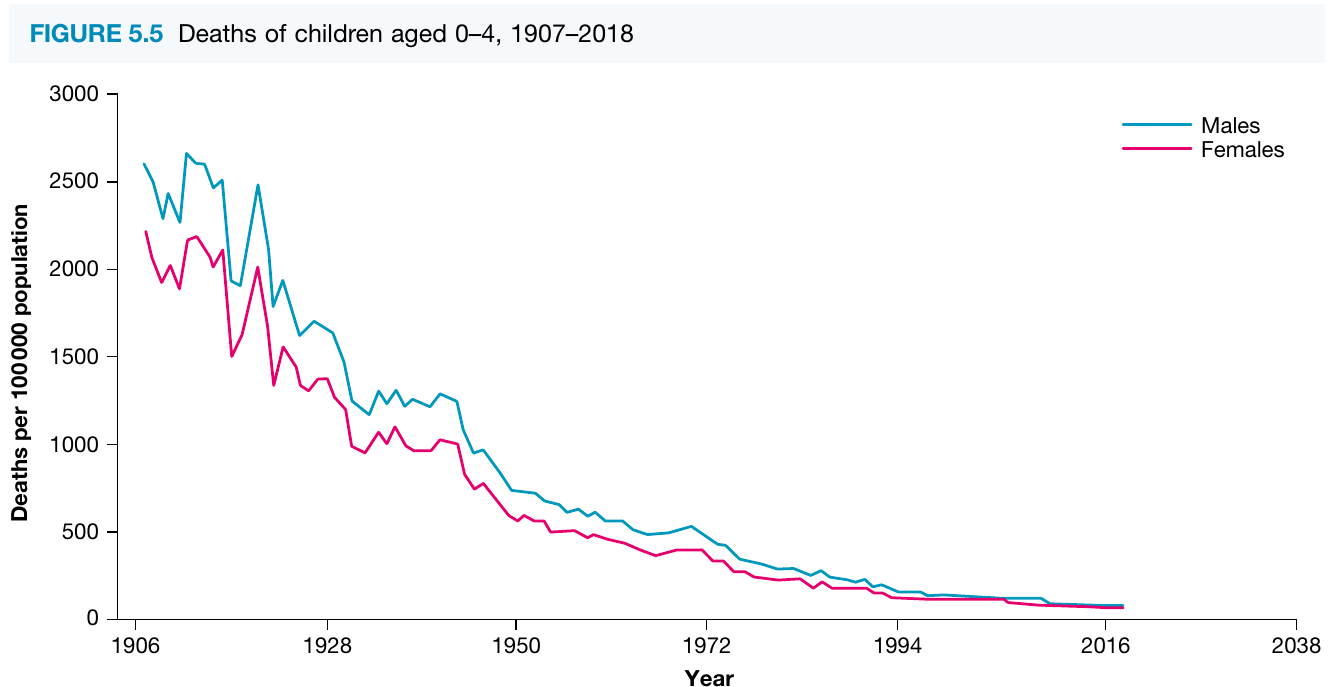
Throughout the twentieth century, death rates from both diarrhoea and tuberculosis declined dramatically. This corresponded with an overall reduction in deaths from infectious diseases since 1900. However, in the latter part of the century, emerging diseases such as HIV/AIDS and hepatitis C caused a slight increase in infectious and parasitic disease mortality.
Cancer (neoplasms)
Cancer death rates followed a different pattern, increasing throughout most of the twentieth century and reaching their peak in the mid-1980s before gradually declining between 2000 and 2018. This rise was largely attributable to increased lung cancer incidence, which resulted from the widespread uptake of cigarette smoking that began in the 1920s.
For males specifically, cancer death rates peaked during the 1980s at nearly 290 deaths per 100,000 population before falling to 247 per 100,000 by 2000. This decline reflected the reduction in male smoking rates that commenced in the mid-1970s, demonstrating the delayed but significant impact of smoking cessation on cancer mortality.
Note
The Delayed Impact of Smoking on Cancer Mortality:
The pattern of cancer deaths illustrates an important public health principle - the long delay between exposure to risk factors and disease outcomes:
- Smoking uptake began in the 1920s
- Cancer death rates peaked in the mid-1980s (approximately 60 years later)
- Male smoking rates began declining in the mid-1970s
- Cancer death rates for males began falling in the 1980s-1990s (10-20 years later)
This demonstrates why prevention efforts must be maintained over long periods to see measurable results.
Stomach cancer represented the largest cause of cancer deaths in the 1920s but subsequently decreased for both males and females in following decades.
Cardiovascular disease
Cardiovascular diseases, also known as circulatory diseases, affect the heart and blood vessels, interfering with blood circulation throughout the body. The two most significant forms are ischaemic heart disease (including coronary heart disease and heart attacks) and cerebrovascular disease (primarily strokes).
Since 1900, cardiovascular diseases have ranked amongst the major causes of death in Australia. Death rates from these conditions increased steadily, reaching their peak in the mid-1960s. Although cardiovascular disease mortality has declined substantially since then, these conditions remain one of Australia's leading causes of death.
The decline in cardiovascular disease deaths since the 1960s reflects improvements in prevention, treatment and management of these conditions, including better control of risk factors such as high blood pressure and cholesterol, advances in medical and surgical interventions, and healthier lifestyle choices.
Respiratory diseases
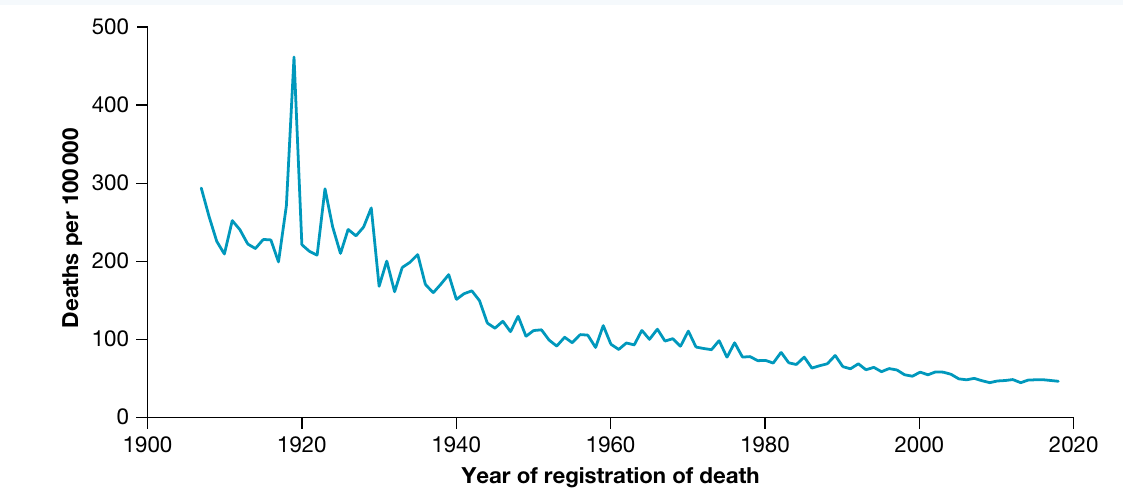
Respiratory diseases affect the lungs and other components of the breathing system. This category includes COVID-19, pneumonia, influenza, asthma and chronic obstructive pulmonary disease (COPD). In 1907, pneumonia and influenza represented the primary causes of respiratory disease deaths, but by 2000, COPD had become the leading cause.
Apart from the dramatic spike caused by the 1919 Spanish influenza pandemic, death rates from respiratory diseases fell dramatically across the twentieth century. By 2000, these rates had declined to less than 10 per cent of 1907 levels. Pneumonia deaths also decreased considerably since 1900. Future data may show a similar spike resulting from COVID-19 mortality.
Important
Impact of Pandemic Events:
The 1919 Spanish influenza pandemic caused a dramatic spike in respiratory disease deaths that stands out in historical data. This reminds us that:
- Pandemic events can temporarily reverse long-term health improvements
- Infectious diseases remain a persistent threat despite overall declines
- Similar patterns may emerge in future data from the COVID-19 pandemic
- Public health infrastructure must remain prepared for emerging infectious diseases
In the early twentieth century, respiratory infection deaths were particularly common amongst mining industry workers, where minimal occupational health and safety regulations left workers exposed to harmful mining dust inhalation.
Deaths from asthma decreased during the first half of the twentieth century before experiencing three distinct peaks in the 1950s, 1960s and late 1980s. Since the 1980s, asthma mortality has reduced by 70 per cent.
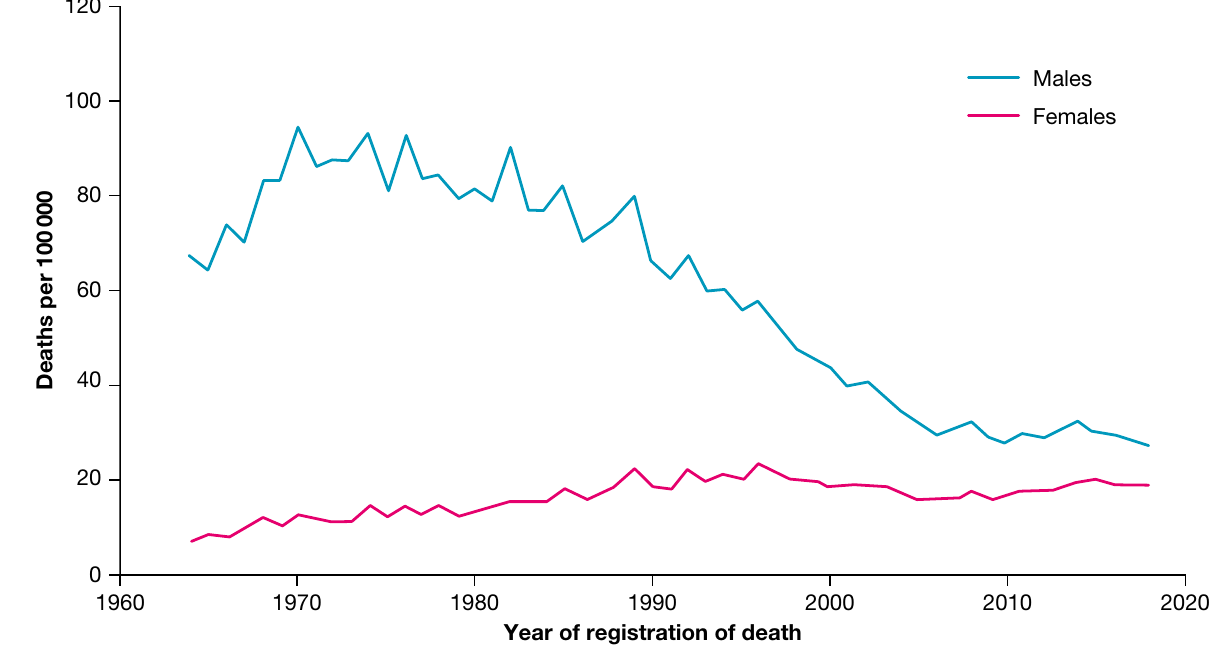
COPD mortality patterns differed between genders. Amongst males, COPD deaths increased in the late 1960s before decreasing significantly between 1970 and 2018. For females, however, death rates from COPD increased slightly between 1964 and 1996. Since 1996, female death rates have declined, though 2018 rates remained higher than those in 1964.
Injury and poisoning
This category encompasses deaths from motor vehicle and other accidents, suicide, assault, poisoning, drowning, burns, falls, and complications from medical and surgical care. Since 1900, death rates from injury and poisoning have more than halved for both males and females, with the most rapid decline occurring from the 1970s onwards.
Motor vehicle crash deaths peaked in 1970 at 49 deaths per 100,000 population for males and 18 per 100,000 for females. By 2000, these rates had fallen to 14 and 6 per 100,000 for males and females respectively. This substantial decline reflected various public health interventions introduced by government, commencing with the mandatory wearing of seatbelts in 1970.
Note
Public Health Interventions and Road Safety:
The dramatic reduction in motor vehicle deaths demonstrates the power of evidence-based public health policies:
- Mandatory seatbelt legislation (1970) marked the beginning of significant decline
- Subsequent interventions included speed limits, drink-driving laws, and vehicle safety standards
- Death rates fell by over 70% for males and 66% for females between 1970 and 2000
- This success story shows how legislative changes can save thousands of lives

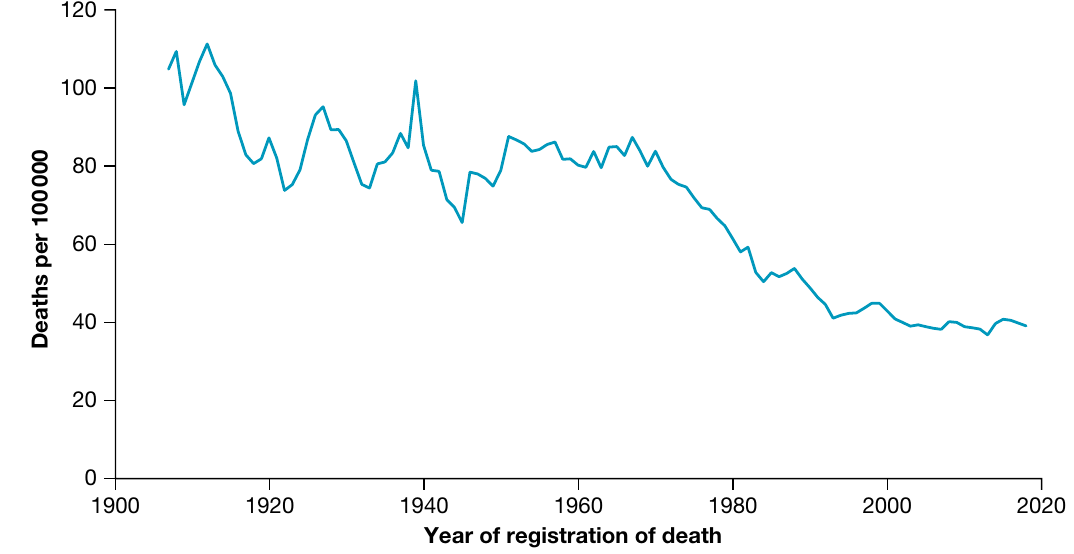
Male death rates from injury and poisoning were significantly affected by war deaths. During World War I and World War II, many Australian men served overseas, but deaths occurring abroad were not included in Australian official mortality statistics.
Work-related accidents contributed substantially to accidental deaths since 1900. Working conditions in early twentieth-century Australia were hazardous, involving exposure to toxic substances and physical injury risks due to limited occupational health and safety regulations. Workers often received additional payment called 'danger money' for agreeing to work in risky or hazardous environments.

Summary
Key Points to Remember:
-
Life expectancy in Australia has increased by approximately 40% since 1900, with males now living an average of 80.9 years and females 85.0 years, compared to 53.8 and 57.5 years respectively in 1900.
-
The massive decline in infant mortality has been a major driver of increased life expectancy, with rates falling from 80 (males) and 63 (females) deaths per 1,000 live births in 1912 to just 3.7 and 2.9 respectively in 2019.
-
Disease patterns have shifted dramatically over the twentieth century, with infectious diseases declining as the major cause of death whilst cancer and cardiovascular disease initially increased before later declining.
-
Death rates from injury and poisoning have more than halved since 1900, with public health interventions such as mandatory seatbelts significantly reducing motor vehicle deaths from their 1970 peak.
-
Between 1961 and 1972, life expectancy improvements plateaued when cardiovascular disease deaths reached their peak, highlighting how specific disease patterns can impact overall health status trends.