Variations in Health Perspectives and Priorities (VCE SSCE Health and Human Development): Revision Notes
📚Revision Notes
Variations in Health Perspectives and Priorities
Understanding how different groups view health and wellbeing is essential for providing appropriate care and support. People's perspectives (viewpoints and attitudes) and priorities (what they consider most important) vary significantly based on age, gender, culture, religion and socioeconomic status.
Note
Key terms:
- Perspective: A person's point of view and attitude towards health and wellbeing
- Priority: When greater importance is placed on some aspects of health and wellbeing than others
Age-related variations
Perspectives on health across different age groups
Health perspectives become increasingly complex as we age. Different age groups understand and view health in distinct ways.
Early primary school children (prep to grade 4)
Young children's understanding of health focuses on basic physical concepts. Their views centre on what makes a healthy body, with emphasis on growing up and staying safe. At this stage, health is viewed in simple, concrete terms.
Young people (ages 8-15)
When surveyed in the 2014 National Health Survey, young people in this age group associated health primarily with:
- Diet, nutrition and weight management
- Healthy versus junk food
- Sports and physical fitness
- Personal hygiene
- Mental health concerns including depression and anxiety
Young adults (ages 15-24)
For this age group, health perspectives strongly connect to body image and physical appearance. Young adults who feel positive about their physical appearance are more likely to perceive themselves as healthy. Regular physical activity also contributes to their sense of good health.
Note
Social media plays a powerful role in shaping health perspectives for young people. A person with many Instagram followers, posting images of social events and an apparently "perfect body", may be considered to have good health and wellbeing. However, these platforms often show only selected aspects of a person's life, not the complete picture of their health.
Early adulthood (ages 25-39)
Similar to teenagers, people in early adulthood place significant emphasis on physical appearance and body image. Those with positive body image are more likely to view themselves as having good health. Online profiles continue to influence perceptions of health and wellbeing during this life stage.
Middle adulthood (ages 40-64)
Health perspectives during middle adulthood shift toward illness prevention. This change occurs because chronic diseases such as cardiovascular disease and cancers often develop during this period. When asked about health and wellbeing, people in this age group typically emphasise being free from illness and disease.
Later adulthood (ages 65+)
Older adults share similar health perspectives with middle-aged adults regarding illness prevention. However, health and wellbeing also encompasses the ability to live independently and maintain physical mobility. These practical aspects of daily living become increasingly important priorities.
Self-assessed health status
Younger Australians generally rate their health more positively than older people. According to Australian Bureau of Statistics data from 2017-18, 69% of young males rated their health as excellent or very good, compared with only 31% of people aged 85 years and over.
Priorities across different age groups
Children
Young children do not set their own health priorities. Instead, parents and carers make health decisions on their behalf. For example, a parent might prioritise reducing their child's sugar and salt intake. Without parental guidance, children would likely consume excess sugar and salt, as they have limited understanding of what causes poor health.
As children enter their early teenage years, they begin making more independent health decisions. For instance, when given lunch money, a teenager will choose either a nutritious meal or one high in saturated and trans fats, depending on how much priority they place on physical health.
Note
Social health becomes a key priority during childhood and early adolescence. Young people place great importance on spending time with friends rather than family, often valuing peer interactions more highly than family relationships.
Youth (ages 12-17)
Physical health remains a priority for young people aged 12-17, including:
- Weight control
- Physical fitness
- Diet and nutrition
However, relationships and peer acceptance also rank as high priorities during this stage. The desire for peer acceptance can lead to pressure around risk-taking behaviours. Many young people identify avoiding harmful practices as important for maintaining health, including:
- Drug and alcohol abuse
- Dangerous driving
- Unsafe sexual practices
Important
Good mental health becomes increasingly important for young adults. Depression and anxiety are the leading causes of poor mental health in this age group, with major contributing factors being stress, school demands, study pressures and body image concerns.
Early adulthood (ages 18-39)
During early adulthood, the body reaches its physical peak, making fitness a significant priority. Other important health priorities include weight control and body image.
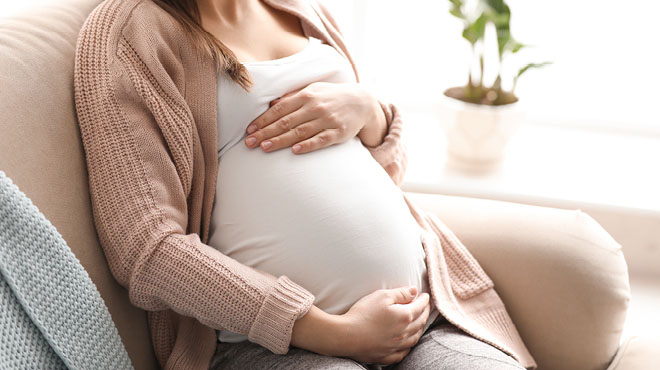
Emotional health becomes increasingly important as young adults navigate major life changes. This period often involves securing a first full-time job, buying a house, getting married or having children. Managing emotions effectively becomes essential for handling the stress that can accompany these significant life transitions.
Middle adulthood (ages 40-64)
Preventative health practices become a major priority due to increased risk of cardiovascular disease and cancers. The Australian government provides free breast and bowel cancer screening for people over 50, recognising this high-risk period.
For women, accepting and adjusting to physiological changes such as menopause can be particularly challenging during this life stage.
Later adulthood (ages 65+)
Key priorities for older adults include:
- Maintaining physical activity to preserve mobility and independence
- Preventative health practices such as breast and prostate cancer checks
- Mental stimulation and cognitive functioning, particularly after retirement
- Social connections and family relationships

Many older adults become grandparents, which provides opportunities to enhance mental, emotional and physical health through meaningful family engagement.
Note
Cognitive refers to the mental action or process of acquiring knowledge and understanding through thought, experience and the senses.
Gender-based variations
Perspectives on health
Men and women assess their overall health status similarly. In 2017-18, 57% of men and 56% of women rated their health as excellent or very good. However, research reveals important differences in how genders view health.
Key gender differences:
Females typically demonstrate greater health consciousness than males and adopt a more holistic view of health that encompasses all dimensions. In contrast, males often associate health primarily with physical fitness and the physical dimension of health.
Research shows that males and females perceive health behaviours differently:
- Men are less likely than women to perceive themselves as being at risk of illness or injury
- Males are less accurate in reporting their levels of being overweight
- Young men tend to connect health with fitness, particularly the ability to perform well in their chosen sport
- Young women view health more comprehensively, considering diet, exercise routines, appropriate body shape and positive mental state together
Priorities
Changing male priorities
Male health priorities appear to be shifting, partly due to increased social media influence and the desire to present themselves as physically attractive to peers. Young men now place greater focus on consuming nutritious foods, not just engaging in regular physical activity.

Note
A recent study examining popular social media posts found that 68% of posts using hashtags like #cleaneating and #eatclean featured men, challenging the stereotype that weight loss and clean eating content primarily targets women.
Female priorities
Women have traditionally prioritised physical health, with many girls and women striving for what they perceive as a "more desirable physique". This focus is often influenced by unrealistic body image expectations. Consequently, consuming nutritious foods and exercising regularly have been major priorities for females.
Shared priorities
Social health is equally important for both males and females, although friendship groups may form through different activities and interests.
Mental health priorities
Mental health has historically been a greater priority for females, who tend to seek assistance more regularly and easily than males. Women are generally more open about their feelings and more likely to problem-solve and share personal matters with family and friends. However, males have recently begun focusing more on mental health matters and are gradually becoming more willing to open up and seek help when needed.
Cultural variations
Different cultures hold distinct perspectives and priorities regarding health and wellbeing.
Western cultures
Countries like Australia generally view health and wellbeing within the context of professional medical practice and intervention. Health is understood through the lens of modern medicine, with emphasis on medical diagnosis, treatment and prevention.
Traditional Vietnamese culture
Some Vietnamese people believe that health, wellbeing and illness may result from supernatural phenomena – events that cannot be explained by science or natural laws, including influences from gods, ghosts or other supernatural beings. This belief system leads people to prioritise prayer and other spiritual or cultural interventions over medical treatment.
Asian cultural perspectives
In many cultures, particularly some Asian groups, the eldest male family member makes decisions about health and wellbeing for the entire family. The health of the family as a whole is prioritised above individual needs.
Important
In cultures where an individual's behaviour reflects upon the family's honour, mental disorders may be associated with shame and failure. People from these cultures may be reluctant to discuss mental health problems or accept help from health professionals, as receiving assistance requires self-disclosure – the process of revealing personal information, feelings, thoughts, fears, likes and dislikes to another person.
Traditional Chinese medicine
Chinese medicine adopts a holistic perspective, viewing each body part as interconnected. The practice focuses on restoring harmony, which encompasses health, good weather and good fortune.
Chinese medicine practitioners prioritise using:
- Acupuncture (a form of alternative medicine using thin needles inserted into the body)
- Herbal remedies
- Specific foods
These treatments aim to recover and sustain health rather than relying on prescription medication.
Indian Ayurvedic medicine
Ayurveda (from Sanskrit words Ayu meaning "life" and veda meaning "knowledge of") is a traditional holistic Hindu science of health and medicine. This practice recognises the human being in all dimensions, with treatment aiming to achieve balance across all areas.
Ayurvedic practice involves balancing three doshas (dynamic energies) that exist within each person's body and mind:
- Vata
- Pitta
- Kapha
When one dosha becomes too predominant, practitioners prescribe specific nutritional and lifestyle changes to restore balance. Herbal supplements may also be recommended to support the healing process. Ayurvedic treatments include yoga, meditation, specialised diets and herbal medicines.
Socioeconomic variations
Socioeconomic status (SES) measures a person's social and economic position based on income, education and occupation. Significant variations exist in health perspectives and priorities between different socioeconomic groups.
Perspectives
People from different socioeconomic backgrounds have varying perspectives on what constitutes good health. Those from the lowest socioeconomic groups generally have lower health literacy – meaning less understanding of health information and healthy behaviours.
For example, people from the lowest SES groups are significantly more likely to smoke cigarettes (see table below) and tend to be less concerned about the health implications than those from higher SES groups.
Priorities
For people from the most disadvantaged socioeconomic groups, health and wellbeing is often not a major priority. They must first address more immediate needs such as:
- Securing shelter
- Obtaining food
- Providing education for children
- Finding and maintaining employment
Important
Health and wellbeing becomes a secondary concern, which explains why socioeconomically disadvantaged people show poorer outcomes on health indicators and higher rates of risk factors in national health surveys.
National Health Survey findings:
People with lower socioeconomic status rate their own health status more negatively, with higher rates of illness and disease. They are less likely to use preventative healthcare services. For instance, only 50% of women from low-SES groups participated in cervical cancer screenings, compared to 60% of women in high-SES groups.
Several factors contribute to these differences:
- Lower levels of education and health literacy
- Delayed healthcare seeking (often waiting until diseases have progressed)
- Higher stress levels leading to unhealthy coping behaviours
- Limited financial resources for preventative healthcare
Health inequalities by socioeconomic status
| Health risk factor | Year | Lowest socioeconomic group (%) | Highest socioeconomic group (%) | Rate ratio: lowest/highest |
|---|---|---|---|---|
| Daily smoking | 2017/2018 | 21.7 | 6.8 | 3.3 |
| Inactive or insufficiently active | 2017/2018 | 87.7 | 76.9 | 1.3 |
| Overweight or obese | 2017/2018 | 71.8 | 62.6 | 1.6 |
| High blood pressure | 2017/2018 | 25.0 | 20.4 | 1.2 |
Source: ABS 2017-18
The table shows that people from the lowest socioeconomic group are 3.3 times more likely to smoke daily compared to the highest group, demonstrating significant health inequalities.
Important
Exam tip: When discussing how income affects health status for low-SES groups, remember that Australia's Medicare system provides all people with access to low-cost or free healthcare regardless of income. Better exam responses will link lack of income to inability to afford sports memberships, gym access, or nutritious foods, and explain how these factors affect health status.
Religious variations
Different religions practised throughout the world and within Australia hold varying priorities and practices relating to health and wellbeing. While perspectives on health are generally common across religions, some emphasise clarity of mind and body more than others (particularly Hinduism and Buddhism).
Spirituality is considered an important aspect of health and wellbeing across all religions. For many religious followers, spiritual health is as important as physical health, leading to perspectives that emphasise the interrelation between dimensions – especially spiritual, mental and physical health.
Buddhism
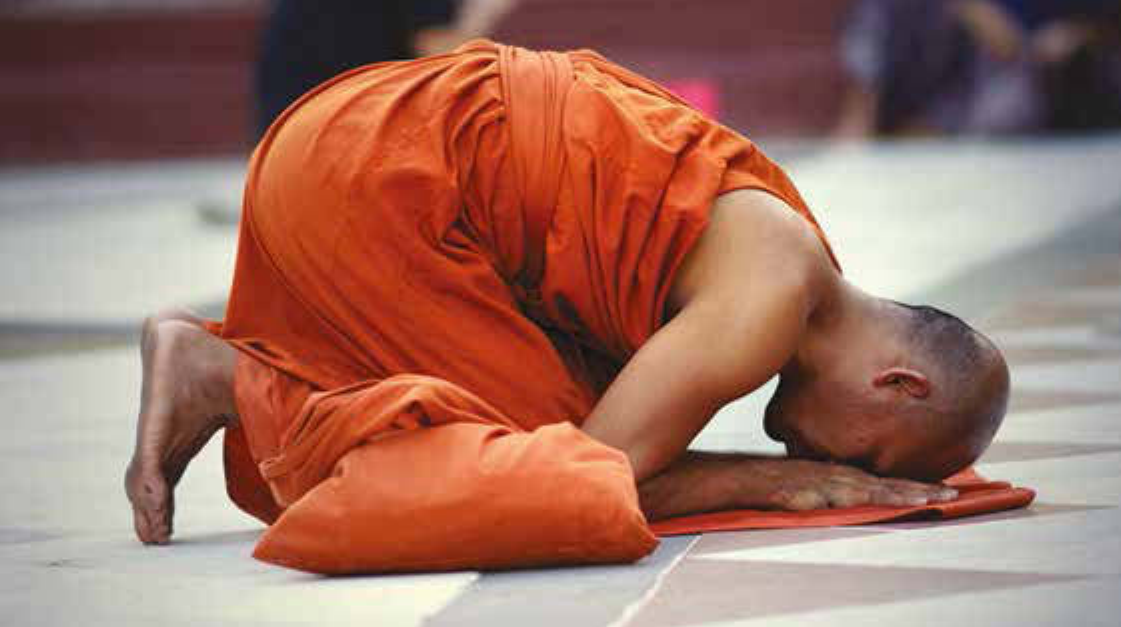
Buddhism is the fourth-largest religion globally, mainly practised in southeast Asia, though many people from Western cultures have also adopted these practices. Buddhist practices aim to achieve clarity of mind, striving for balance between mind and body through breathing, physical postures and mindfulness.
Key priorities and practices:
Spiritual health is what Buddhists believe is the key to promoting overall health and wellbeing. Buddhists aim to follow the Noble Eightfold Path using meditation, study of scriptures and rituals. These practices help individuals work towards the enlightened state of Nirvana – a place of peace and happiness where suffering ends and the cycle of rebirth ceases.
Buddhist beliefs affecting health:
- Some Buddhists believe illness can be prevented through spiritual focus, with cures obtained by changing mindset and using herbs
- Conception marks the beginning of life, making birth especially precious; contraception (methods preventing pregnancy) is acceptable
- End-of-life practices emphasise having an alert mind without excessive pain; medication is allowed unless it dulls consciousness
- Dietary practices involve abstaining from alcohol and drugs as they impair mental clarity; many Buddhists follow vegetarian diets
- Western medicine, including intensive care units, is often avoided as these environments don't provide peace and quiet
- Some Eastern medical practices using animal products are also avoided
- Organ donation is acceptable, and blood donation is considered honourable
Hinduism
Hinduism is one of the world's oldest religions, practised by 13% of the world's population, predominantly in India. Physical health is nurtured through Ayurveda (described earlier). Similar to Buddhism, spiritual health is essential to Hinduism. Community worship, helping those in need, and societal welfare are considered more important than individual needs.
Hindu practices and beliefs:
- Sickness and injury are believed to be caused by karma – the spiritual principle of cause and effect where a person's intentions and actions influence their future
- Vegetarianism is common; non-vegetarians often avoid beef and pork
- Fasting is practised as a method of purifying the body
- Contraception is acceptable; many families prefer having sons, with some women continuing to have children until a son is born
- Artificial life support is discouraged as it interferes with karma
- Treatment by a medical practitioner of the same sex is preferred
- Women often consult their husbands for advice on medical matters
Islam
Islam is the second-largest religion globally, with over 1 billion believers. Muslims believe in one God, Allah, and commit to the Five Pillars of Islam:
- Bearing witness to the existence of one God and the prophethood of Muhammad
- Praying five times daily
- Giving alms to the poor
- Fasting during the month of Ramadan
- Performing a pilgrimage to Mecca for those who are able
Through commitment to these five pillars, Muslims maintain belief and faith, social support, and the ability to lead healthy and productive lives.
Muslim practices and beliefs:
- For every illness there is a cure, except for ageing and dying
- Fasting from dawn to dusk during Ramadan (a month of intense prayer) brings the faithful closer to Allah, reminds them of the less fortunate, and develops self-control
- Traditional medicines, called "medicine of the prophet", serve as alternatives to modern medicine:
- Black seed (black caraway) is believed to cure every ailment except death
- Honey is listed in the Quran as a source of healing
- Olive oil supports coronary health
- Dates are used to break the fast during Ramadan
- Life is considered sacred:
- Contraception is allowed
- Abortion is not permitted unless there is risk of maternal mortality
- Male circumcision is encouraged but not enforced
- Alcohol consumption is forbidden
- Pork consumption is forbidden
- Treatment by a medical practitioner of the same sex is preferred

Example
Real-world Example: Bachar Houli
Bachar Houli is a devout Muslim playing at the highest level of AFL football for the Richmond Tigers. Despite his demanding training and playing schedule, Houli prays five times daily in observance of the five pillars.
Being open about his faith, Houli has become a role model for young Australians, was named a 2020 AFL Multicultural Ambassador, and founded the Bachar Houli Foundation, which builds young leaders within the Muslim community through football development programmes.
Christianity (Catholicism)
Christianity encourages people to care for their health and wellbeing. The church teaches that life and physical health are precious gifts from God. Catholicism is the world's largest Christian denomination.
Catholic practices and beliefs:
- No particular dietary restrictions exist, although Catholics are encouraged to abstain from meat on Fridays during Lent
- Fasting is expected on Ash Wednesday and Good Friday
- Sexual activity is approved by God within marriage with the focus on procreation
- Most contraception methods are not supported by the Catholic Church
- Baptism (the sacrament of admission into Christianity) is very important, especially for babies experiencing poor health
- Administering the last rites (one of the sacraments) before death is considered very important
Summary
Remember!
Key Points to Remember:
-
Perspectives and priorities on health vary significantly across age, gender, culture, religion and socioeconomic status
-
Age influences how people view health: young people focus on fitness and appearance, middle-aged adults prioritise illness prevention, and older adults emphasise independence and mobility
-
Gender differences exist: females tend to have more holistic health views whilst males traditionally focus more on physical fitness, though social media is changing male priorities
-
Cultural variations mean Western cultures emphasise medical intervention whilst other cultures may prioritise spiritual or traditional healing practices like Chinese medicine or Ayurveda
-
Socioeconomic status significantly affects health perspectives and priorities: lower SES groups face competing priorities (shelter, food, employment) that take precedence over health, leading to lower health literacy and higher risk behaviours
-
Religious beliefs shape health priorities differently: Buddhism and Hinduism emphasise spiritual health and mind-body balance, Islam follows the Five Pillars for healthy living, and Christianity views health as a gift from God with specific practices around major life events