Healthy and Respectful Relationships and Development (VCE SSCE Health and Human Development): Revision Notes
📚Revision Notes
Healthy and Respectful Relationships and Development
Understanding the key concept
The way we relate to others has a profound impact on how we develop as individuals. Healthy and respectful relationships support growth across all areas of development, whilst unhealthy relationships can hinder progress and wellbeing. This note explores how positive connections with family, friends, coaches, and teachers influence our physical, social, emotional, and intellectual development.
Physical development and healthy relationships
When it comes to physical development, the growth of both gross motor skills (large body movements like running and jumping) and fine motor skills (precise movements like hand-eye coordination) benefits significantly from having healthy and respectful relationships.
How relationships support physical growth
Positive connections with friends and sports coaches who encourage participation in recreational activities directly promote physical development. When these relationships are supportive and motivating, individuals are more likely to engage in activities that build their physical capabilities.
Example
Example: Team sports environment
Consider a netball team where players enjoy friendly relationships with their teammates and coach. In this positive environment, players feel motivated to attend training sessions and weekly matches. Regular participation leads to improvements in:
- Hand-eye coordination
- Running and agility
- Jumping ability
- Throwing and catching skills

The impact of unhealthy relationships
In contrast, when the relationship with a coach becomes unhealthy, physical development suffers.
Important
Warning signs of unhealthy coaching relationships:
When coaches create negative environments, physical development can be seriously hindered. Signs include:
- Setting unrealistic expectations
- Shouting at players during training
- Using put-downs or negative criticism
In such environments, players lose motivation to attend training, and their motor skills stop developing at the rate they should.
Social development and healthy relationships
Social development is intrinsically linked with healthy and respectful relationships. In fact, it's difficult to develop socially without positive connections with others, as these relationships provide the context in which social skills are learned and practised.
Key social skills enhanced by healthy relationships
Supportive and respectful relationships help develop:
Communication skills - Learning how to express yourself clearly and listen to others effectively
Conflict resolution abilities - Understanding how to work through disagreements in constructive ways
Values and beliefs - Developing your own sense of right and wrong through interactions with others
Note
The importance of safe environments
In relationships characterised by respect, honesty, and loyalty, people can practise these social skills without fear of embarrassment or being put down by others. This safety is essential for growth.
Building self-identity
Being yourself and feeling comfortable with who you are is fundamental to developing a strong self-identity. This only becomes possible when the people around you:
- Offer genuine support
- Accept you for who you are
- Don't judge you harshly
Important
These conditions exist only in healthy and respectful relationships, not in unhealthy ones where criticism and judgment are common.
Emotional development and healthy relationships
Healthy and respectful relationships allow for and promote the emotional development of people at all life stages. These connections create the conditions needed for people to understand, express, and manage their emotions effectively.
Safe expression of emotions
When relationships are supportive and people can be honest with each other, emotions can be expressed without fear of rejection or ridicule. In relationships with low levels of stress and minimal conflict, individuals are able to:
- Express their own emotions openly
- Recognise emotions in others
- Provide emotional support when needed
Contrasting healthy and unhealthy emotional responses
The way emotions are handled differs greatly between healthy and unhealthy relationships.
Example
Example: Expressing jealousy in different relationship types
In an unhealthy relationship: An emotion such as jealousy might be expressed indirectly as anger or frustration, because it feels unsafe to be honest about the real feeling.
In a healthy and respectful relationship: A person experiencing jealousy would feel comfortable talking about their feelings with their friend or partner, leading to a satisfactory resolution through open discussion.
Emotional development in childhood
Healthy and respectful family relationships are particularly important for fostering emotional development in young children.
Example
Example: Responding to a child's tantrum
When a young child throws a tantrum, the response makes a significant difference:
Supportive approach (healthy relationship): Parents help the child understand why they feel frustrated and guide them towards better ways of expressing their emotions. This support enables the child to learn about their emotional world and develop more effective expression strategies as they mature.
Dismissive approach (unhealthy relationship): Simply telling the child not to tantrum or ignoring the behaviour doesn't help them understand their emotions or learn to manage them effectively.
Intellectual development and healthy relationships
Intellectual development involves mental processes such as:
- Building knowledge and understanding
- Developing problem-solving abilities
- Enhancing imaginative and creative skills
- Expanding language capabilities
All of these characteristics are strengthened through healthy and respectful relationships with supportive family members, friends, and particularly teachers in formal educational settings.
The role of peer relationships in learning
Friendship groups that support learning and intellectual development create positive conditions for growth. When a child is part of such a group, they won't hold back at school due to fear of embarrassment or bullying from other students.
Example
Example: Supportive study groups
A friendship group might work together on homework assignments, encouraging each other and sharing ideas. This collaboration increases:
- Problem-solving skills through group discussion
- Learning depth through peer explanation
- Motivation to engage with challenging material
- Confidence in trying new approaches
Teacher-student relationships and intellectual growth
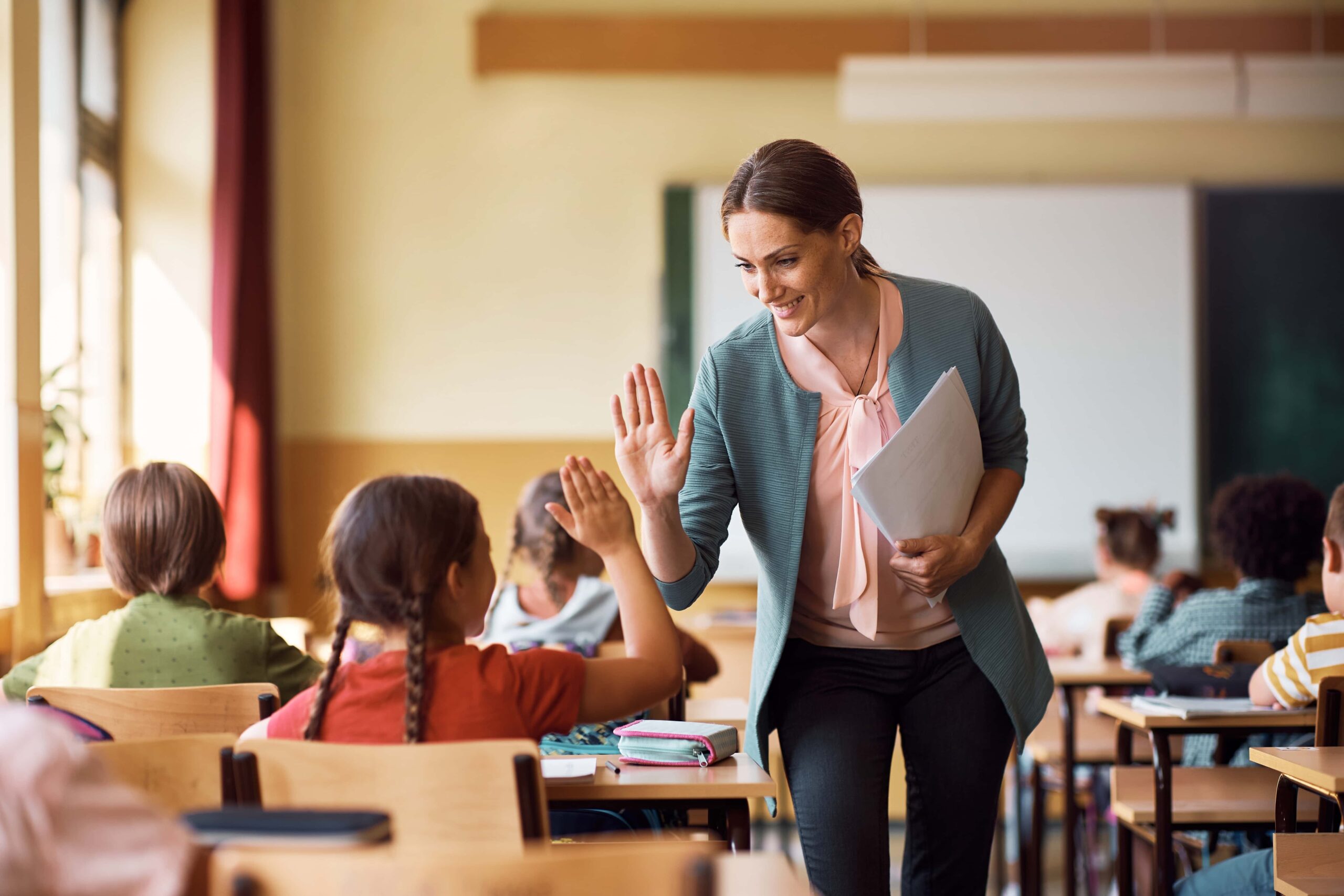
Teachers who develop good relationships with students through creating a safe, caring learning environment encourage students to take intellectual risks. This risk-taking is essential for advancing creativity and problem-solving abilities.
Note
Characteristics of supportive learning environments:
- Students feel safe offering their thoughts without fear of being wrong
- Mistakes are viewed as learning opportunities
- Questions are welcomed and encouraged
- Individual learning styles are respected
The consequences of negative learning environments
In contrast, classrooms where teachers shout and embarrass students, or where students put each other down or engage in bullying, severely hinder intellectual development.
Important
How negative environments suppress learning:
In environments lacking respect and support:
- Students become bored and disengaged
- Motivation to learn decreases
- Fear of being wrong prevents participation
- Intellectual curiosity is suppressed
- Creative thinking is stifled
These conditions create barriers that prevent students from reaching their full intellectual potential.
Exam tips
Note
Exam Success Strategies:
- When discussing relationships and development, always consider all four areas: physical, social, emotional, and intellectual
- Use specific examples to illustrate your points about how relationships impact development
- Remember to contrast healthy and unhealthy relationships to show you understand the difference
- Consider different relationship types (family, friends, coaches, teachers) as they each play unique roles in development
- Be prepared to explain both positive impacts of healthy relationships and negative consequences of unhealthy ones
Remember!
Summary
Key Points to Remember:
-
Healthy relationships support development across all four areas - physical, social, emotional, and intellectual growth all benefit from positive connections with others.
-
Physical development thrives with encouragement - supportive coaches and friends motivate participation in activities that build motor skills, whilst negative relationships discourage engagement and hinder progress.
-
Social and emotional skills require safe environments - people can only develop communication abilities, conflict resolution skills, and healthy emotional expression when they feel safe from judgment and criticism.
-
Intellectual development needs risk-taking - supportive relationships in educational settings encourage students to take creative risks and explore new ideas without fear, whilst negative environments suppress curiosity and learning.
-
Self-identity develops through acceptance - feeling comfortable being yourself only happens when surrounded by people who support and accept you without harsh judgment.