Education, Employment, and Income (VCE SSCE Health and Human Development): Revision Notes
📚Revision Notes
Education, Employment, and Income
Understanding how education, employment, and income affect young people's health is crucial for appreciating the broader sociocultural influences on youth wellbeing. These three interconnected factors form the foundation of socioeconomic status and significantly shape health behaviours and health outcomes during the youth life stage.
Education
The role of education in youth health
Young people typically spend a substantial portion of their time in formal learning environments such as schools, universities, and TAFE institutions. These educational settings serve multiple important functions beyond academic learning. They provide opportunities for youth to acquire knowledge and develop skills necessary for entering the workforce, whilst also creating spaces for relationship building and personal challenge. Through these experiences, young people can enhance their social, emotional, and mental health and wellbeing.

Note
The quality of education available to a young person often depends on the resources their educational institution can access. For instance, schools with advanced technology resources, such as robotics equipment or specialised programs, can offer students enhanced opportunities for future career development and engagement in learning.
Education and health status
There is a strong positive relationship between educational attainment and health outcomes. Individuals with higher levels of education consistently report fewer physical health problems and experience better mental health and wellbeing compared to those with lower educational qualifications. This connection occurs through several pathways.
Firstly, more educated individuals are more likely to notice and respond to health promotion messages, such as participating in cancer screening programs. They demonstrate greater awareness of healthy behaviours, including proper sun protection methods and avoiding tobacco smoking. This increased health literacy enables them to make informed decisions about their wellbeing.
Note
The educational environment itself serves as an important setting for health promotion. Schools teach children about proper nutrition and provide regular opportunities for physical activity through Physical Education classes and competitive sports programs. These experiences enhance physical fitness and contribute to improvements across all dimensions of health and wellbeing, not just physical health.
The benefits extend to social and mental health as students learn teamwork, build confidence, and develop healthy habits that can last a lifetime.
Finally, higher levels of education typically lead to better employment opportunities with improved pay. This financial advantage can reduce stress levels and provide greater income to afford private health insurance and nutritious food. As a result, rates of morbidity from conditions such as obesity and mental health disorders tend to be lower among more educated populations.
Employment
Employment trends among youth
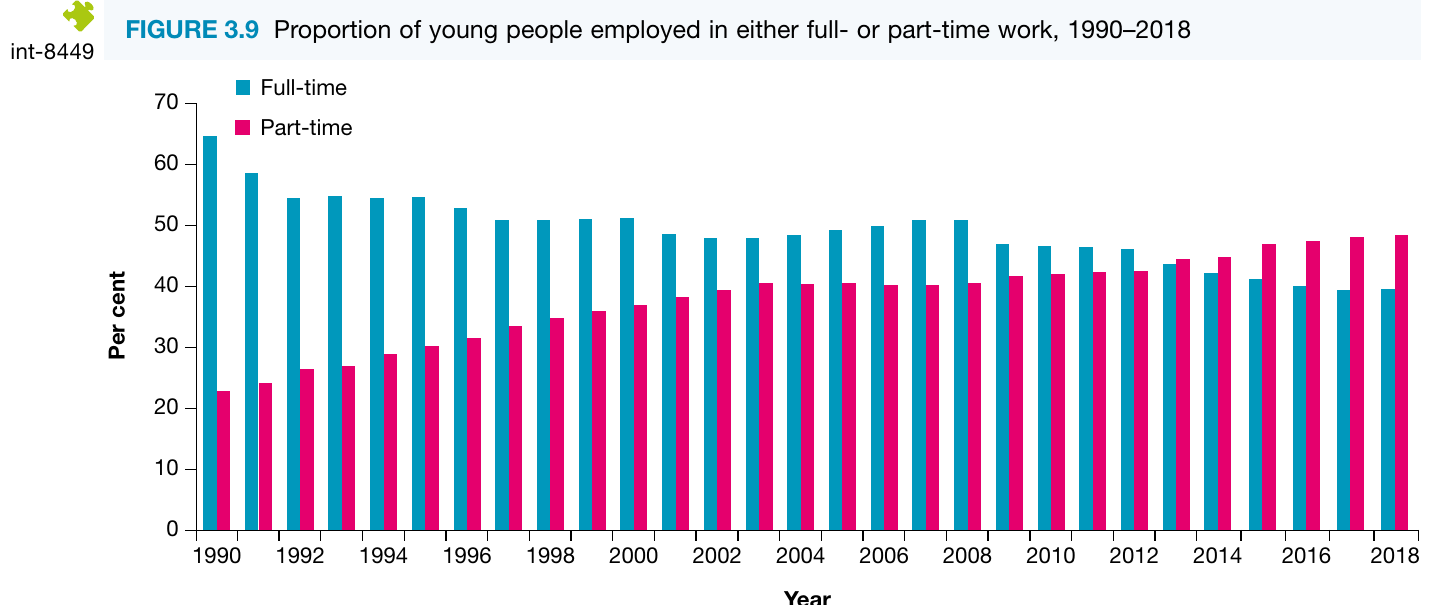
The landscape of youth employment in Australia has transformed dramatically over recent decades. According to Australian Bureau of Statistics data from December 2018, the proportion of young people aged 15–24 engaged in part-time work (48%) exceeded those in full-time employment (40%). This represents a significant shift from 1990, when full-time workers among youth were three times more numerous than part-time workers.
Important
The primary driver of this trend is the increasing rate of young people remaining in school to complete Year 12, alongside growing numbers pursuing further education after high school. Jobs increasingly require higher-level skills and qualifications, creating demand for a more educated and qualified workforce.
This shift means that many young people now balance part-time employment with their ongoing education.
Education level and employment opportunities
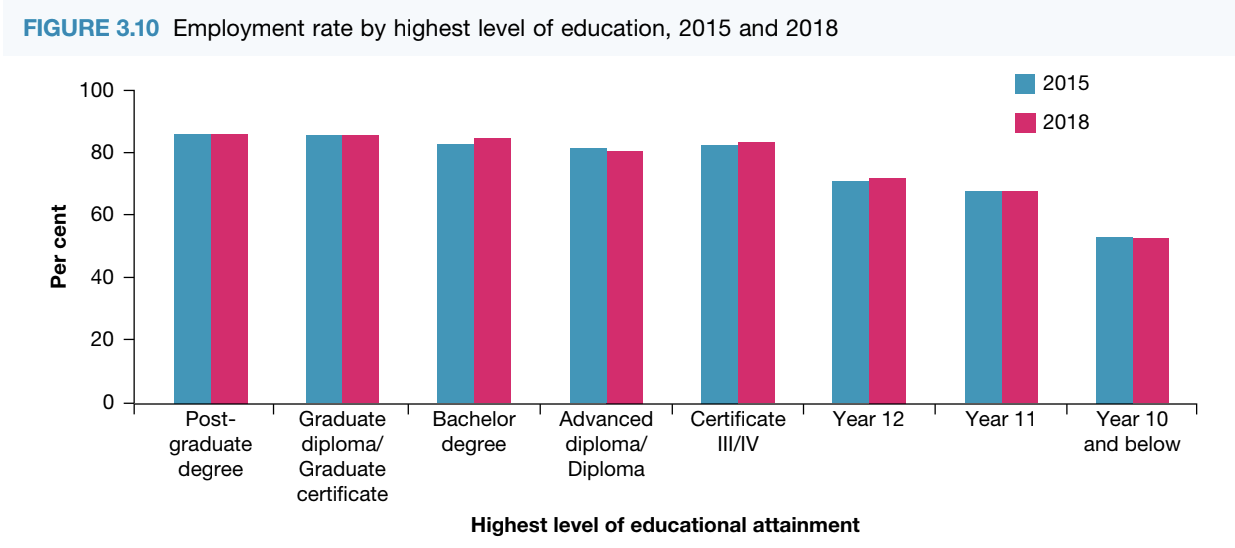
There is a clear positive relationship between educational attainment and employment rates. Data from the Australian Institute of Health and Welfare demonstrates that individuals who complete further education, such as diplomas or degrees, experience substantially higher employment rates compared to those who leave school early.
Note
Exam tip: When interpreting data trends in graphs, try covering the axes with your hands to see the overall pattern first. For example, in the employment by education graph, you can observe a clear downward trend moving from left (higher education) to right (lower education). This shows that as education levels decrease, employment rates also decrease. Remember, you can also read this relationship in reverse: when education levels increase, employment rates increase. This bidirectional understanding helps you describe trends accurately in exam responses.
Benefits of employment for youth health and wellbeing
Many young people take on their first part-time job whilst still at school, or leave education early to enter full-time employment. Beyond earning an income, employment offers numerous benefits for developing skills and enhancing health and wellbeing across all five dimensions.
Through work, young people acquire both general and job-specific skills. General skills might include food preparation, cleaning, working cooperatively with others, and taking responsibility. These transferable capabilities prove valuable throughout life and contribute to personal development.
Employment provides important opportunities for social connection. Positive workplaces enable young people to develop communication skills and build productive relationships with colleagues and customers. These social interactions enhance social health and wellbeing by creating networks and fostering a sense of belonging.
Mental health and wellbeing also benefit from employment experiences. Learning new skills and successfully completing work tasks builds self-esteem and confidence. Young people gain a sense of competence and achievement that contributes positively to their mental wellbeing.
Some workplaces, particularly those involving trade apprenticeships or physically demanding roles, can improve physical health and wellbeing by increasing strength and physical endurance. This enhanced fitness contributes to better overall physical health outcomes.
Employment can also provide young people with a sense of purpose and meaning, promoting spiritual health and wellbeing through the feeling of contributing to something beyond themselves.
Risks and challenges in youth employment
Whilst employment offers many benefits, young workers face particular risks that can negatively impact their health status. Occupational health and safety laws in Australia aim to ensure employers provide safe environments for all workers, including young people. These regulations cover the physical workspace, safe machinery use, proper training, and adequate supervision.
Important
Despite these protections, research indicates that injury rates among young workers (aged 15–24) are disproportionately high compared to other age groups.
Several factors contribute to these elevated injury rates:
- Young people may not always receive proper training
- May not fully understand their workplace rights and responsibilities
- Often don't perceive themselves as high risk
This combination can lead to preventable injuries.
The physical work environment poses various risks to youth health and wellbeing. Those working outdoors face exposure to UV radiation, extreme heat, and cold weather. Tools and equipment used in many youth jobs can cause injuries such as strains and cuts. Tasks like shelf stacking can build strength but also increase the risk of back injuries if proper technique isn't used.
Many young people work in fast-food outlets and commercial kitchens, where specific hazards include:
- Burns from hot water, deep fryers, ovens, and other hot equipment
- Falls and injuries from slippery floors
- Cuts and lacerations from knives and other sharp objects
Other high-risk industries commonly employing young people include construction, retail, and manufacturing sectors.
Beyond physical risks, working conditions can significantly impact mental health and wellbeing. Unpleasant or unfavourable work environments can affect self-esteem and contribute to feelings of depression or dissatisfaction.
Note
Understanding these risks helps young workers advocate for proper safety measures and recognise when working conditions may be harmful to their health and wellbeing.
Income
Family income and youth resources
When examining income's impact on young people, we must consider family income as the most significant financial influence for youth. For young people living at home and pursuing full-time education, parental income directly determines the money available for both essentials and discretionary spending.
Family income influences access to necessities such as food, education, transport, and healthcare. It also affects participation in recreational activities, including dining out, music lessons, and internet connectivity. These resources play important roles in maintaining healthy body weight, staying socially connected, and accessing healthcare services when needed. Adequate access to these resources can improve health status by reducing rates of morbidity and mortality.
Income and neighbourhood quality
The neighbourhood where a young person grows up is largely determined by family income, and neighbourhood characteristics significantly impact health outcomes. High-poverty neighbourhoods, compared to low-poverty areas, typically have fewer high-quality public and private services. They may lack well-resourced community centres, schools, healthcare providers, and support services.
Important
Additionally, high-poverty neighbourhoods often experience:
- Higher rates of crime and street violence
- Greater exposure to negative peer influences
These environmental factors can substantially affect youth health and wellbeing across multiple dimensions.
Social health and wellbeing is particularly influenced by the types of relationships young people form in their neighbourhoods. Peer groups in different socioeconomic contexts may hold different values, leading to varying influences on youth behaviour. Productive, positive relationships lead to increased confidence and self-esteem, promoting positive mental health and wellbeing outcomes. However, negative peer influences can have the opposite effect, potentially leading to harmful behaviours and reduced wellbeing.
Income and participation in activities
Access to resources for both life's essentials and recreational activities promotes social and mental health and wellbeing. Feeling a sense of belonging holds particular importance for young people, often involving attendance at social events requiring financial investment. Participation in sports clubs, for example, can be expensive, with family income determining which activities youth can access.

Note
These participation disparities have real consequences for health outcomes. Young people unable to access certain activities may miss opportunities for physical activity, social connection, and skill development that their higher-income peers enjoy.
Socioeconomic status
Understanding SES and the social gradient of health
The levels of education, income, and occupation are typically considered together as a person's socioeconomic status (SES). Socioeconomic factors represent important influences on health and wellbeing in Australia, with a clear pattern emerging: generally, the higher a person's income, education, or occupation level, the greater their level of health.
Important
Social gradient of health: the higher a person's income, education, or occupation level, the healthier they tend to be.
Individuals from lower socioeconomic groups face greater risk of poor health and experience higher rates of illness, disability, and death compared to those from higher socioeconomic groups.
SES and health behaviours
Research demonstrates that young people from different socioeconomic backgrounds across Australia have distinct experiences and challenges that impact their health behaviours and health status.
Whilst negative behaviours such as alcohol consumption and illicit drug use among young people have generally decreased or remained steady over the past decade, significant SES disparities persist. The 2019 National Drug Household Strategy Survey found that young people who were daily smokers and lived in the lowest SES areas had rates almost four times higher than those from the highest SES areas (18% compared to 5%).
Note
Interestingly, the pattern reverses for some substances. Young people living in the highest SES areas were more likely to engage in risky drinking and to report cocaine and ecstasy use in the previous 12 months compared to those living in the lowest SES areas. This demonstrates that whilst overall health outcomes favour higher SES groups, specific risk behaviours may vary across socioeconomic levels.
Participation in activities by SES
Participation in community and school groups represents an important aspect of everyday life for young people, associated with preventative health behaviours and improved health status. Belonging to groups provides youth with a sense of purpose, confidence, and resilience. In the case of sporting groups, participation enhances physical activity and fitness levels.
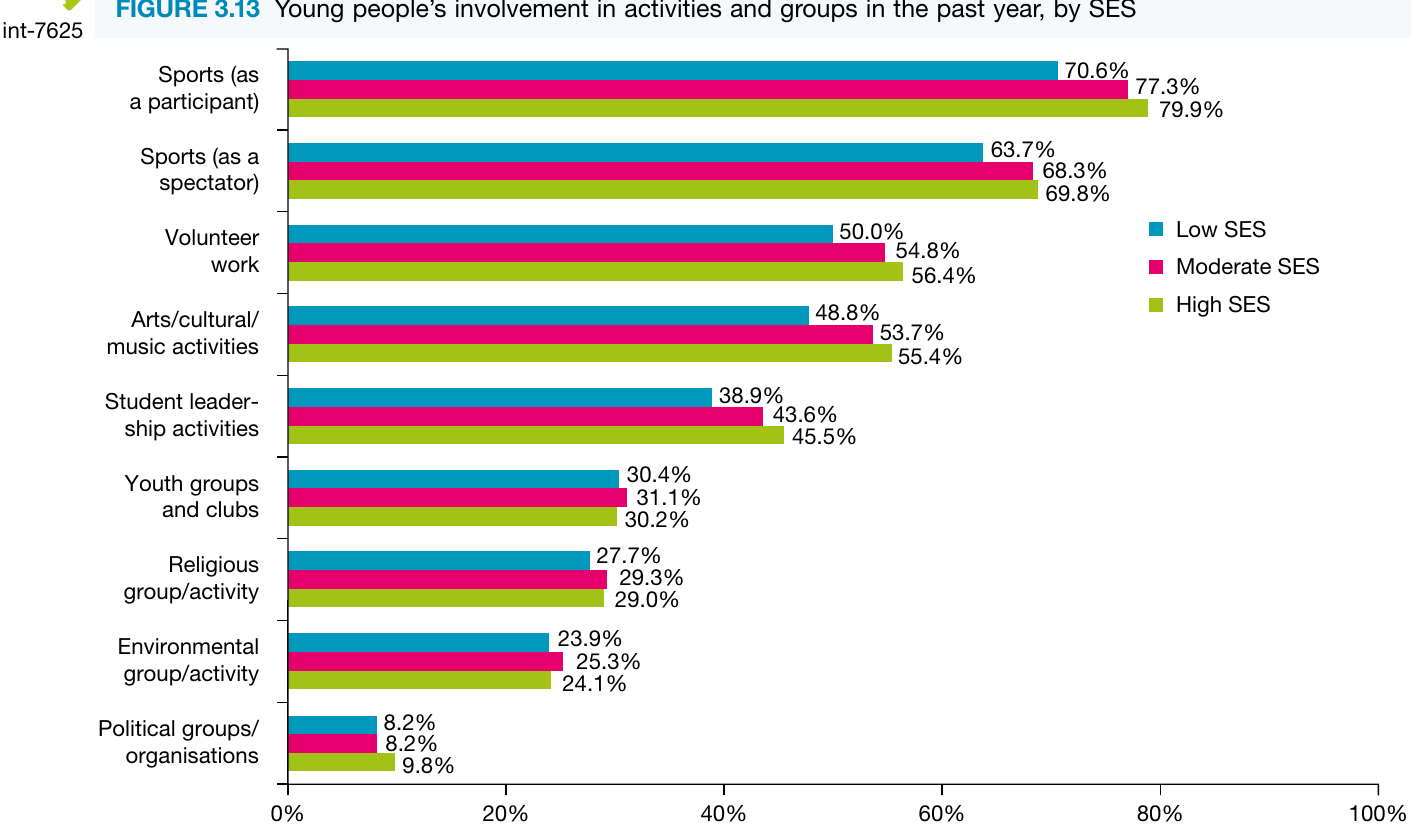
Involvement in sporting and other organised activities has also been shown to reduce antisocial behaviour among young people. However, data from the Mission Australia Youth Survey reveals significant disparities in participation rates across socioeconomic groups.
Important
The data clearly shows that young people from low SES areas participate less in nearly all common activities compared to those from moderate and high SES areas. Sports participation shows the largest gap, with approximately 71% of low SES youth participating compared to about 80% of high SES youth. Similar patterns appear across volunteer work, arts and cultural activities, and student leadership opportunities.
These participation differences have important implications for health status. Young people who feel connected to their community through group involvement experience enhanced mental and emotional health and wellbeing, making them less likely to suffer from mental illness compared to those feeling disconnected. Regular participation in physical activities through sports and recreation assists with weight management, reducing the risk of obesity-related conditions such as type 2 diabetes and cardiovascular disease later in life. Overall, these positive engagement patterns contribute to increased life expectancy and better quality of life.
Remember!
Summary
Key Points to Remember:
-
Education matters for health: Higher levels of education lead to better health status, increased awareness of healthy behaviours, and improved employment opportunities with higher income.
-
Youth employment has shifted: Since 1990, youth employment has changed from predominantly full-time to equal proportions of full-time and part-time work, largely due to increased educational participation.
-
Employment brings benefits and risks: Work provides income, skills, and enhanced wellbeing across all dimensions, but young workers face higher injury rates and must be aware of occupational health and safety protections.
-
Family income shapes opportunities: Family income determines neighbourhood quality, access to essential resources, and participation in recreational activities, all of which significantly impact youth health and wellbeing.
-
The social gradient of health is real: The higher a person's income, education, or occupation level, the healthier they tend to be, with lower SES groups experiencing higher rates of illness, disability, and death, as well as lower participation in beneficial community activities.