Family, Peer Group, Housing, and Access to Health Information (VCE SSCE Health and Human Development): Revision Notes
📚Revision Notes
Family, Peer Group, Housing, and Access to Health Information
Introduction to sociocultural factors
Understanding how social and cultural conditions affect young people's health is essential for promoting wellbeing during this crucial life stage. Sociocultural factors are the social and cultural conditions into which people are born, grow, live, work and age. These include socioeconomic status, social connections, family and cultural influences, food security, early life experiences, and access to affordable, culturally appropriate healthcare.
According to the Australian Institute of Health and Welfare (AIHW), sociocultural factors help explain health trends and why some groups experience better or worse health outcomes than others. These factors directly influence health behaviours and overall health status.
Note
Health behaviours are actions that have either a positive or negative impact on health. For example, smoking cigarettes negatively affects health, while regular exercise has a positive impact. Both are considered health behaviours because they directly influence wellbeing.
The main sociocultural factors affecting youth health include family, peer group, employment, education, housing, income, and access to health information. This note focuses on four key factors that have particularly strong influences during the youth life stage.
Family
The role of family in youth health
Family plays a fundamental role in shaping young people's health and wellbeing. The family environment provides the setting where young people are raised and where daily interactions significantly influence their health behaviours and choices as they transition into adulthood. Research consistently shows that parents, guardians, relatives and family friends are crucial sources of support for young people when they need help with important issues.
Families provide essential resources including:
- Shelter and safe living spaces
- Food and nutrition
- Clothing and basic needs
- Emotional support and guidance
- Educational opportunities and encouragement
Positive family environments
A supportive family environment typically features close family relationships, effective communication and strong parenting skills. These characteristics are associated with positive health status outcomes. When young people experience stable, nurturing family environments, they benefit in multiple ways across all dimensions of health and wellbeing.

Changes in family structures
Modern society has seen increasing diversity in family structures. Social and cultural changes have led to:
- More single-parent families
- Same-sex families
- Blended families and step families
Note
Step family: A family formed after the remarriage of a divorced or widowed person that includes a child or children.
Blended family: A family consisting of a couple, the children they have had together and their children from previous relationships.
Divorce and separation are increasingly common, meaning many young people grow up in two different home environments. These changes can significantly affect young people's health and wellbeing.
Impact of family environment on health
Positive impacts of stable family environments:
Mental and emotional health:
- Reduced stress and anxiety levels
- Increased confidence and self-esteem
- Building resilience and inner strength
- Lower risk of depression and mental disorders
- Better overall self-assessed health status
Physical health:
- Encouragement of healthy eating habits
- Support for regular physical activity
- Weight management support
- Reduced risk of obesity and related conditions
- Lower risk of cardiovascular disease and type 2 diabetes
Social health:
- Development of effective communication skills
- Learning to form productive relationships
- Building supportive friendship networks
- Understanding social interactions
Challenges from unsettled family environments:
Important
When young people experience family conflict, divorce or unstable home situations without strong parental guidance, they may face several challenges:
- Engage in risky behaviours such as unsafe sexual practices, tobacco use and illicit drug experimentation
- Experience increased stress and anxiety affecting mental health
- Have poorer self-assessed health status
- Face greater emotional challenges
However, it's important to note that family structure changes don't always produce negative effects. Many young people develop resilience, inner strength and determination through navigating family transitions, which can support a positive transition into independent adult life.
Family influence on nutrition
Families play a crucial role in establishing healthy eating patterns. When families encourage nutritious food consumption, young people experience:
Short-term benefits:
- Better weight management
- Adequate iron intake, reducing anaemia risk
- Improved energy levels
- Better concentration and academic performance
Long-term benefits:
- Reduced obesity risk
- Lower risk of cardiovascular disease
- Stronger bones and better bone density
- Improved overall health status throughout life
Family influence on physical activity
Family support for physical activity is vital for youth health. Families often provide:
- Transportation to sporting activities
- Equipment for sports and exercise
- Financial support for club memberships
- Encouragement and role modeling
Regular exercise and participation in recreational or sporting activities benefits all dimensions of health:
Physical health:
- Weight management
- Improved fitness levels
- Reduced risk of lifestyle diseases
Mental health:
- Lower stress and anxiety
- Increased confidence and self-esteem
- Reduced depression risk
Social health:
- Team bonding and friendship development
- Social skill building
- Community connection
Note
When young people develop regular exercise habits during youth, they're more likely to maintain these behaviours throughout life, leading to:
- Decreased risk of obesity, cardiovascular disease and type 2 diabetes
- Increased life expectancy
- Better quality of life
Social skills development
Family is the first social group individuals belong to, making it the primary environment for learning social skills. Through family interactions, young people learn:
- How to communicate effectively with others
- The importance of maintaining productive relationships
- How to build supportive friendship networks
- Appropriate social behaviours and expectations
These skills improve social health and wellbeing and provide a foundation for relationships throughout life.
Peer group
The growing influence of peers
During youth, peer groups become increasingly influential in decision-making and behaviour. Many young people turn to friends first for support and advice rather than family members. This shift reflects the importance of peer relationships during this developmental stage.
Note
Peer influence is the social influence a peer group exerts on its members, as each member attempts to conform to the expectations of the group.
Positive peer influence
Peer influence can significantly benefit health and wellbeing in several ways:
Physical health benefits:
- Encouragement to participate in sports and exercise
- Improved fitness levels
- Better weight management
- Reduced obesity risk
- Promotion of healthy eating habits
Mental health benefits:
- Emotional support during uncertain times
- Increased confidence and self-esteem
- Reduced depression and mental disorder risk
- Lower stress and anxiety levels
Social health benefits:
- Expanded social networks
- Formation of new relationships
- Development of communication skills
- Sense of belonging and connection
The importance of friendships
Friendships are particularly valuable during youth because young people often face uncertainties during this life stage. Key aspects of positive friendships include:
- Providing constant support through challenges
- Offering a safe space for sharing concerns
- Building emotional resilience
- Creating opportunities for social interaction
While young people often have wide friendship networks, having several close friends for emotional support is especially important. Positive, respectful friendships enhance mental health by instilling confidence and reducing mental health risks.
Negative peer influence and risk-taking
Youth is often a stage of experimenting and taking risks. Negative peer pressure can lead young people to engage in harmful health behaviours.

Common risky behaviours:
- Binge drinking and underage alcohol consumption
- Illicit drug use
- Drink driving
- Unsafe sexual practices
- Dangerous stunts and challenges
Important
These behaviours can severely impact health status. According to statistics, accidents are the greatest cause of youth death, with car accidents causing 45% of these deaths.
Case study: When Schoolies celebrations go too far
Schoolies is a week-long celebration that has become a traditional experience for school leavers. While it can be an enjoyable reward for completing school, it's also associated with significant risk-taking behaviours.

Example
Case Study: Schoolies Week Risk-Taking Behaviours
Drug Arm Australasia's 2017 Schoolies report revealed concerning patterns of risky behaviour:
Alcohol-related incidents:
- Three-quarters of attendees became intoxicated
- One in five passed out during the week
- One quarter suffered injuries
- Just over one third experienced hangovers
- About one quarter vomited from drinking
Fatal consequences:
In 2018, Sydney teenager Hamish Bidgood fell from his Surfers Paradise high-rise balcony after apparently inhaling nitrous oxide (laughing gas). This tragedy occurred despite police warnings about dangerous balcony behaviour, known as 'ledging', only days earlier.
Social media videos show teenagers engaging in extremely dangerous activities:
- Balancing on balcony edges
- Drinking from shoes while on ledges
- Taking substances while in precarious positions
The combination of alcohol, drug taking, high-rise balconies and peer pressure has proven deadly. Similar deaths occurred in 2012, including 17-year-old Isabelle Colman who fell from the 26th floor of a Gold Coast apartment.
Important lessons:
This case study demonstrates the powerful link between peer influence, health behaviours and health outcomes. It shows how:
- Peer pressure can override personal safety judgment
- Risk-taking behaviours directly impact physical health and survival
- Group environments can escalate dangerous activities
- Mental health and decision-making abilities are impaired by substances
However, it's also worth noting that celebrations like Schoolies can have positive impacts when managed safely, including:
- Building social connections and friendships
- Creating positive memories and experiences
- Supporting mental wellbeing through enjoyable activities
- Marking important life transitions
Housing
How housing affects youth health
Young people typically spend considerable time at home, making the housing environment a significant influence on health status. Various aspects of housing conditions can either support or hinder health and wellbeing.
Indoor air pollution
Note
Indoor air pollution occurs when the air inside a house or building contains pollutants such as fine particles and carbon monoxide. It is often caused by inefficient cooking and heating practices.
Common sources include:
- Dust accumulation
- Tobacco smoke
- Poor ventilation
- Inefficient heating systems
Health impacts:
- Increased asthma symptoms and morbidity
- Other respiratory conditions
- Reduced capacity for physical activity
- Higher rates of depression (due to activity limitations)
- Increased obesity risk (from reduced activity)
Kitchen facilities
Youth is a period of rapid growth and development requiring specific nutrients to support healthy development. Kitchen facilities directly affect nutritional health in several ways.
When kitchen facilities are inadequate:
- Availability of nutritious home-cooked meals decreases
- Essential nutrient intake may be insufficient
- Young people may rely more on food purchased outside the home
- Higher consumption of foods with saturated fat, sugar and salt
- Increased risk of diet-related illnesses
Important
Long-term consequences of inadequate kitchen facilities:
- Greater risk of obesity
- Higher likelihood of type 2 diabetes
- Increased cardiovascular disease risk
- Poorer overall health status
Overcrowding
Living in overcrowded housing creates multiple health challenges for young people:
Mental health impacts:
- Difficulty finding personal space
- Increased stress and anxiety
- Higher rates of mental health issues
- Reduced privacy and autonomy
Physical health impacts:
- Greater risk of infectious disease transmission
- Higher rates of illnesses like tuberculosis and hepatitis
- Poorer overall health status
Facility strain:
- Overuse of bathroom facilities
- Limited kitchen access
- Inadequate laundry facilities
Note
Statistics:
According to AIHW data from 2011:
- 12% of Indigenous Australians lived in overcrowded households
- 3.4% of non-Indigenous Australians lived in overcrowded households
- Indigenous Australians experienced poorer health status with greater rates of infectious disease
Drinking water quality
Water quality significantly affects health, particularly dental health. Ground water naturally contains some fluoride, but in Australia, over 70% of the population has access to artificially fluoridated water.
Benefits of fluoridated water:
- Prevention of tooth decay
- Reduced cavities
- Improved dental health status
- Similar to how folate is added to breakfast foods, fluoride enrichment improves population health
Whether young people have access to fluoridated water can affect their dental health outcomes throughout life.
Housing safety
Unsafe housing environments can cause preventable accidents leading to injury and premature death. Common hazards include:
Major safety risks:
- Falling from unmaintained stairs or railings
- Swimming pool accidents and drowning
- Electrocution from household electrical faults
- Fire hazards from faulty wiring or heating
- Structural failures in poorly maintained buildings
Important
These accidents can have serious consequences for physical health and survival, making safe housing conditions essential for youth wellbeing.
Household location
Where a family lives significantly influences health behaviours and status:
Positive location factors:
- Access to parks and recreational spaces
- Safe walking and cycling paths
- Sports facilities and community centres
- Healthy food retailers
Benefits of positive locations:
- Increased physical activity participation
- Better weight management
- Reduced obesity and related conditions
- Lower stress and anxiety levels
- Stronger community connections
- Decreased mental illness risk
Negative location factors:
- High concentration of fast-food outlets
- Limited recreational spaces
- Safety concerns limiting outdoor activity
- Food deserts with limited fresh food access
Consequences of poor locations:
- Increased consumption of energy-dense processed foods
- Weight gain and obesity
- Higher risk of obesity-associated conditions
- Reduced physical activity opportunities
Homelessness among young people
While most young people have stable housing, homelessness affects a significant number of youth in Australia. According to ABS statistics, 27,680 young people aged 12-24 years experience homelessness.
Forms of youth homelessness:
- Staying in supported accommodation for the homeless
- Sleeping in temporary accommodation
- Couch surfing with friends or acquaintances
- Sleeping on the street
- Living in severely crowded dwellings

Key causes of youth homelessness:
- Overcrowding and poor housing conditions linked to poverty
- Family violence (a major pathway to homelessness)
- Lack of emergency housing options
- Family breakdown
- Financial hardship
Important
Mental health impacts:
Young people experiencing homelessness face significant mental health challenges:
- Higher rates of mental health problems
- Increased anxiety and depression
- Behavioural difficulties
- Greater risk of substance abuse
- Increased criminal behaviour risk
Educational impacts:
- Decreased school engagement
- Frequent disruptions from housing moves
- Poor academic achievement
- Limited educational opportunities
Nutritional challenges:
A 2015 Australian study on food insecurity among homeless youth revealed concerning eating patterns:
Poor dietary quality:
- Much higher consumption of cheap energy-dense foods
- Excessive soft drink intake as an energy source
- Lower intake of fresh nutritious foods
- Insufficient fruits, vegetables and dairy products
Meal patterns:
- Frequent meal skipping, especially breakfast
- Missing out on valuable nutrients like calcium and fibre
- Irregular eating schedules
Example
Long-term health consequences of homelessness:
Food insecurity and poor nutrition among homeless youth can lead to:
Immediate health issues:
- Dental decay
- Anaemia
- Dehydration
- Underweight or overweight status
- Hypertension
Long-term conditions:
- Type 2 diabetes
- Cardiovascular disease
- Osteoporosis
- Chronic health problems
- Reduced life expectancy
- Poorer overall health status
These challenges are particularly concerning given the high nutritional needs during youth for growth and development.
Access to health information (including through digital technologies)
The importance of health information access
Access to health information is critical for equipping young people with the knowledge and skills needed to make informed decisions about their health and wellbeing. Formal health education in schools provides a safe environment for exploring healthy decision-making and understanding consequences. However, young people often need specific information addressing their individual health concerns.
Barriers to accessing health information and services
Research has identified several barriers preventing young people from accessing health information and services:
Common barriers:
- Concerns about confidentiality and privacy
- Discomfort disclosing health concerns to adults
- Limited knowledge of available services
- Not having their own Medicare card
- Fear of not being treated respectfully by healthcare providers
- Inconvenient service locations
- Inflexible opening hours
- Out-of-pocket costs creating financial barriers
- Transportation challenges
Note
Gender differences:
Studies show males are generally less likely to access healthcare than females, suggesting additional barriers may exist for young men.
Impact of barriers:
When these barriers are overcome, more young people can access health services, enabling:
- Preventative healthcare approaches
- Early intervention for health concerns
- Better health outcomes
- Improved overall health status
The internet as a health information source
When young people cannot access healthcare services or feel too embarrassed to ask friends or parents about health concerns, they often turn to the internet. According to Mission Australia's 2020 youth health survey, 48% of respondents have used the internet to seek advice on health and wellbeing issues.
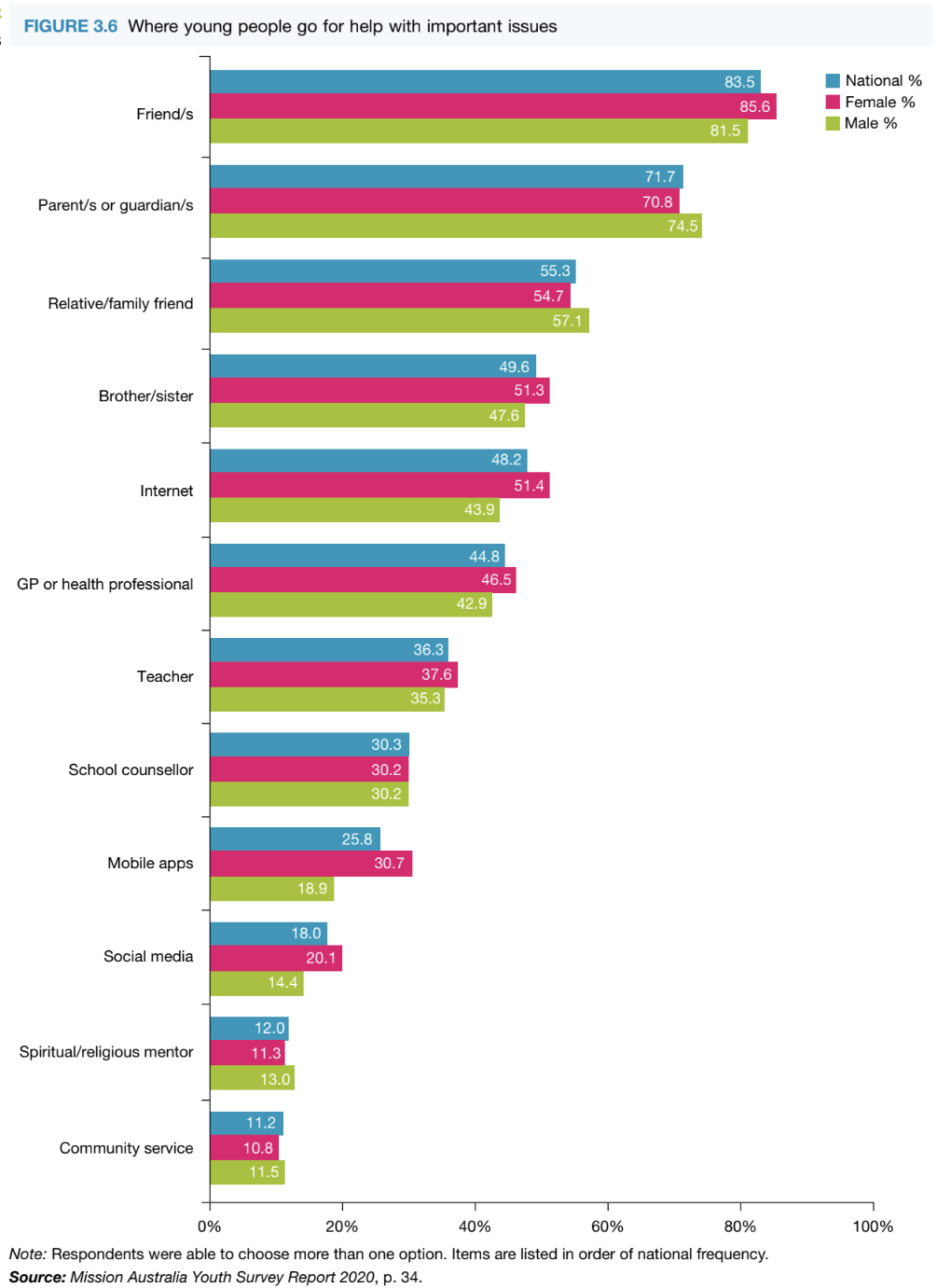
Why young people prefer online health information:
- Immediately addresses location barriers
- Provides anonymity and confidentiality
- Available 24/7 regardless of service hours
- Reduces embarrassment about sensitive topics
- No cost barriers
- Accessible from any location
Common online health-seeking behaviours:
- Checking symptoms before seeing a doctor
- Researching medication side effects
- Seeking second opinions through online reviews
- Participating in health forums
- Accessing mental health resources
Example
Popular youth health resources:
Many young people use websites specifically designed for youth health concerns. For example, ReachOut.com is a well-known youth mental health website where young people can:
- Access reliable mental health information
- Share positive stories and experiences
- Learn from others who have overcome mental health difficulties
- Find support and strategies for coping
Online forums for sensitive topics
The internet provides valuable support for young people discussing topics they find difficult to address in person, particularly if they feel marginalized or isolated.
Common sensitive topics:
- Sexuality and sexual identity
- Gender identity
- Mental health concerns
- Relationship issues
- Body image worries
- Substance use questions
Benefits of online health forums:
- Feeling empowered through gaining knowledge
- Reduced isolation through connecting with others
- Decreased embarrassment about sensitive issues
- Access to diverse perspectives and experiences
- Support from peers facing similar challenges
Health and wellbeing benefits:
When used appropriately, online health information can improve:
Physical health:
- Better illness prevention
- Early symptom recognition
- Improved health status through informed decisions
- Better medication adherence
Mental health:
- Reduced stress and anxiety
- Decreased feelings of isolation
- Better coping strategies
- Lower stigma around mental health
Important
While the internet is an excellent health information source, it's also important that young people feel supported in accessing mainstream health services such as GPs and specialists for comprehensive care and professional medical advice.
Digital health technologies
According to the World Health Organization Western Pacific Region (WHO WPRO) 2018, digital health technology enables individuals, families and communities to maintain and improve their health through timely access to quality services.
Note
Digital health technologies refer to a range of technologies used to treat patients and collect and share health information.
Types of digital health technologies:
- Electronic health records
- Telehealth consultations
- Mobile health and wellness applications
- Wearable devices (fitness trackers, sleep trackers)
- Health monitoring apps
- Online symptom checkers
- Digital mental health tools
The growth of telehealth
Telehealth services became extremely popular during the COVID-19 pandemic as a way to protect patients and healthcare workers from potential infection.
Telehealth usage statistics:
- During March and April 2020: 20% of GP visits used telehealth
- Same period in 2019: Less than 1% of GP visits used telehealth
- This represents a massive increase in digital healthcare access
This dramatic increase demonstrated that telehealth effectively addresses many barriers to healthcare access, and many young people continue using these services.
Benefits of digital health technologies
Digital technologies benefit young people and other users in multiple important ways:
Improving healthcare access:
- Telehealth overcomes physical barriers caused by remoteness
- No travel required for consultations
- Reduced waiting times
- Access to specialists regardless of location
- Services available outside traditional hours
Supporting self-management:
- Users can track their own health data
- Better understanding of health patterns
- Increased health literacy
- Greater engagement in personal healthcare
- Empowerment through knowledge
Enhanced monitoring:
- Wearable devices track vital signs during daily life
- Continuous health data collection
- Early detection of concerning changes
- Better management of chronic conditions
- Real-time feedback on health behaviours
Targeted communication:
- Health event alerts sent to specific populations
- Personalized health advice and reminders
- SMS reminders for medications or appointments
- Tailored information for demographic groups
- Culturally appropriate health messages
Note
These technologies make healthcare more accessible, personalized and effective for young people, helping to overcome many traditional barriers to health information and services.
Remember!
Summary
Key Points to Remember:
-
Sociocultural factors like family, peer group, housing and access to health information significantly influence young people's health behaviours and health status throughout their lives.
-
Family environments shape health through multiple pathways including nutrition, physical activity encouragement, emotional support and social skill development. Both stable and changing family structures can impact youth health positively or negatively.
-
Peer influence becomes increasingly important during youth and can promote healthy behaviours like exercise and good nutrition, but can also lead to risk-taking behaviours such as substance use and dangerous activities that threaten health and safety.
-
Housing conditions affect health through indoor air quality, kitchen facilities, overcrowding, water quality, safety and location. Homelessness among youth creates severe challenges for nutrition, mental health, education and long-term health outcomes.
-
Digital health technologies including telehealth, mobile apps and wearable devices help overcome traditional barriers to health information access, enabling young people to better manage their health, access services remotely and receive personalised health support.